Hitchhiking the Globe: The Story of a Rebel Who Circled the World in Protest (10 Photos)
For Juan Villarino, hitchhiking is far more than just "playing at being poor," as critics often joke about globetrotting Europeans. For him, it is the pursuit of the kind of world he actually wants to live in. 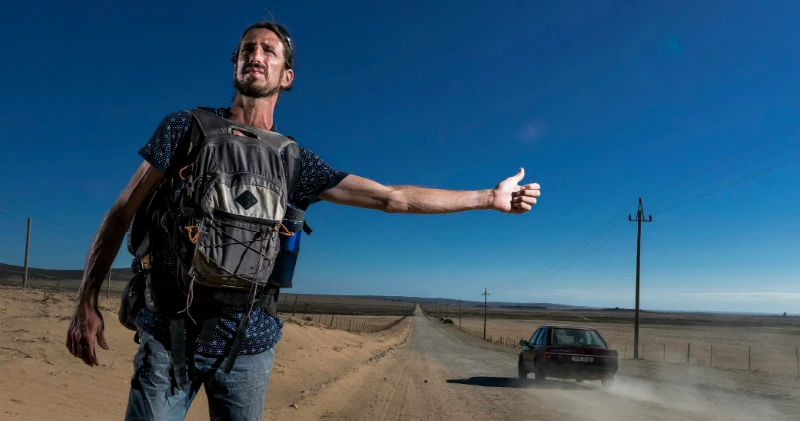
Equal parts Don Quixote and Che Guevara, Villarino insists his journeys are a rebellion not just against boredom, but against the superficiality of modern life.
“An office job is far more dangerous than hitchhiking,” he once wrote in one of his manifestos.
Over the years, the Argentine peace rebel has logged more than 160,000 kilometers—enough to circle the globe four times—and caught 2,350 rides across 90 countries. By traveling entirely on the kindness of strangers, Juan proves that it is possible to live in peace and trust people rather than fear them, and that human culture cannot be divided by borders on a map or airport security gates. 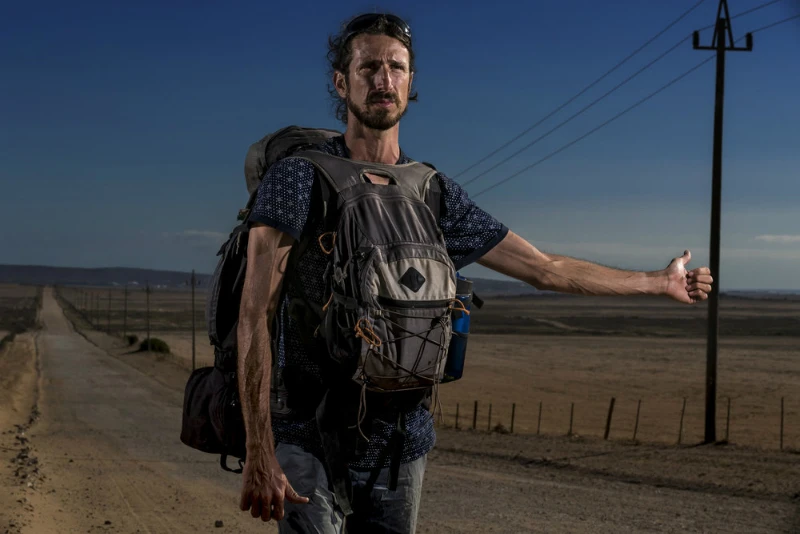
Photo: Brent Stirton
Villarino first answered the call of the open road at age 23. It was 2001, and an economic collapse was tearing through his native Argentina: hyperinflation wiped out life savings, his friends took to the streets in protest, and his parents were forced to downsize to an apartment with no spare room for their son.
Faced with a bleak reality, Juan decided to drop out of his psychology program at the National University of Mar del Plata.
“I saw firsthand how people could work their entire lives for a career, for a house—and watch it all vanish overnight.”
Juan Villarino 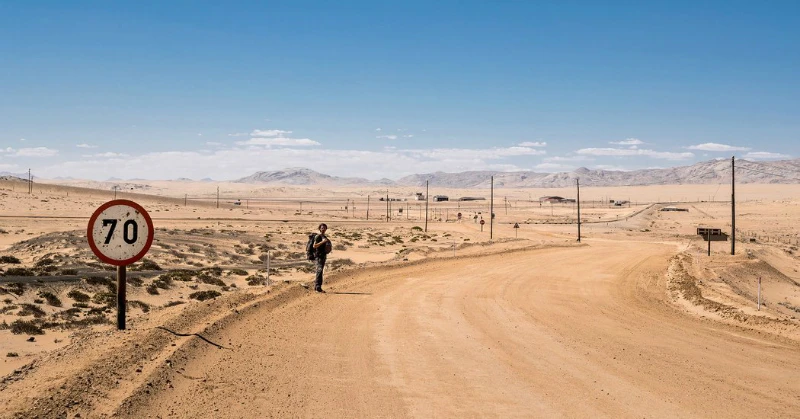
Photo: Brent Stirton
In 2003, Juan moved to Northern Ireland, working odd jobs at a cheese factory, bouncing at a nightclub, and working as a hotel porter—sending part of his wages back home to his parents in Buenos Aires.
A few years of hard labor and $4,000 in savings later, he made the defining decision of his life: to spend his years wandering the globe. Living on a shoestring budget of five dollars a day, he set out along the classic hippie trail, traveling overland from Europe to India with stops in Turkey, Syria, Iran, Iraq, Afghanistan, and Pakistan.
His Middle Eastern trek was driven less by wanderlust than by politics—a direct challenge to the media's portrayal of Arabs and Muslims during the US military campaigns in Iraq and Afghanistan. 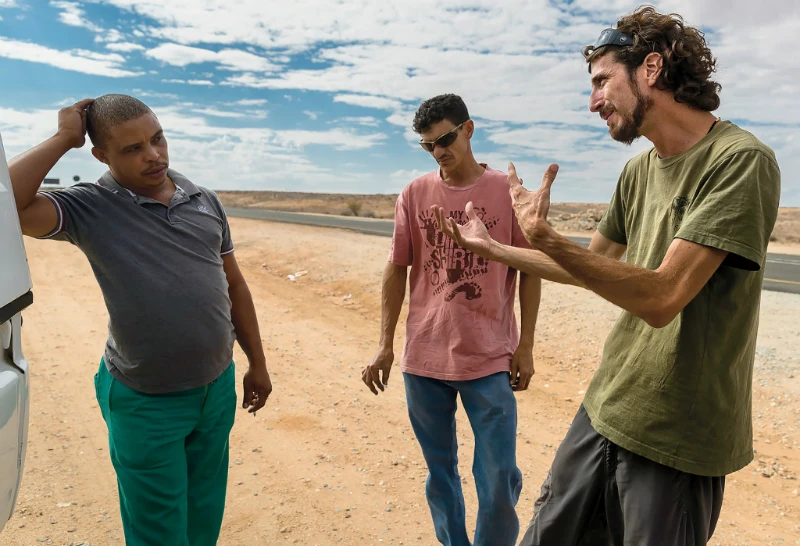
Juan talks with a driver in Namibia. Photo: Brent Stirton
During his time in Belfast, Juan had marched against the Iraq War alongside socialist groups, but he soon felt that conventional protests accomplished little. He wanted to do something tangible, something that would genuinely make people take notice.
His journey through the region inspired his first book,
Hitchhiking the Axis of Evil
. In it, he writes that his travels are an effort to showcase human kindness, arguing that "in this day and age, simply demonstrating human decency is a political statement in itself."
“Hitchhiking is an act of reconciliation between the haves and the have-nots. I intentionally put myself in a position of complete vulnerability to see how people respond—what brings out the best in them.”
Juan Villarino 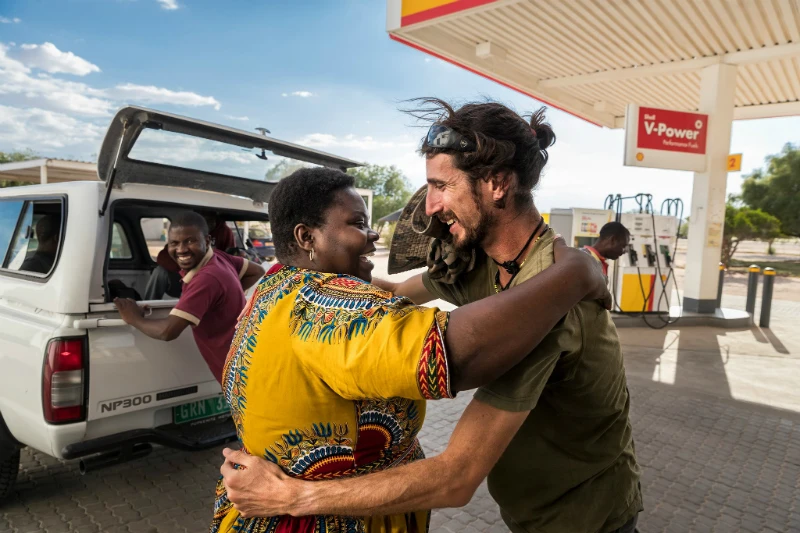
Parting ways after a ride to Keetmanshoop. Photo: Brent Stirton
At the Afghan border, Juan nearly lost his nerve and turned back. But pushing through the fear, he hitched a series of rides and reached the city of Herat. That night, he stayed in a local home and slept with a knife tucked under his pillow. The next morning, much to his shame, he woke up to find that his hosts—the very people he feared might kidnap him—had prepared him breakfast.
After traveling with a companion who was later kidnapped further down the line, Juan made it to Kabul and eventually wrapped up his first major expedition in Thailand. There, he checked into a hostel to work on his manuscript.
“Of course, there are bad actors everywhere—people fed on the lies and ignorance pushed by politicians and warlords. But even in war-torn Afghanistan, there are ordinary people who will open their doors without a second thought, give you shelter, and share your dreams. You are never the only one longing for peace.” 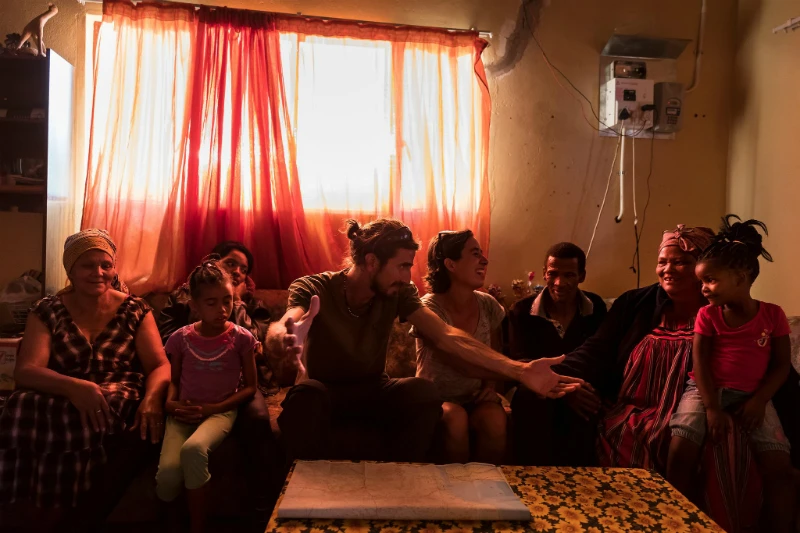
Visiting a local family. Photo: Brent Stirton
Juan sold the manuscript to a publisher, and the book turned him into an overnight cult hero in Argentina. In one famous incident in Buenos Aires, three muggers accosted him on the street; recognizing who he was, they ended up praising his work and offering him money instead. 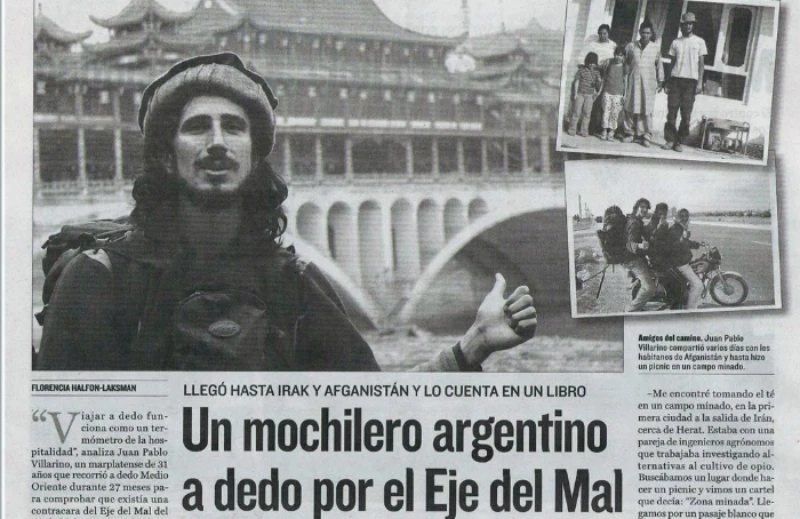
From a profile on Juan in an Argentine newspaper
Back home, he met his partner, Laura, and the two have been exploring the world through the kindness of strangers ever since. Together, they co-authored
Invisible Routes
(Caminos Invisibles), using book sales to fund their nomadic lifestyle and support educational and cultural outreach projects they run on the road.
They live entirely on the move—no desk jobs, no permanent address, and no utility bills—getting by on just seven dollars a day between the two of them. 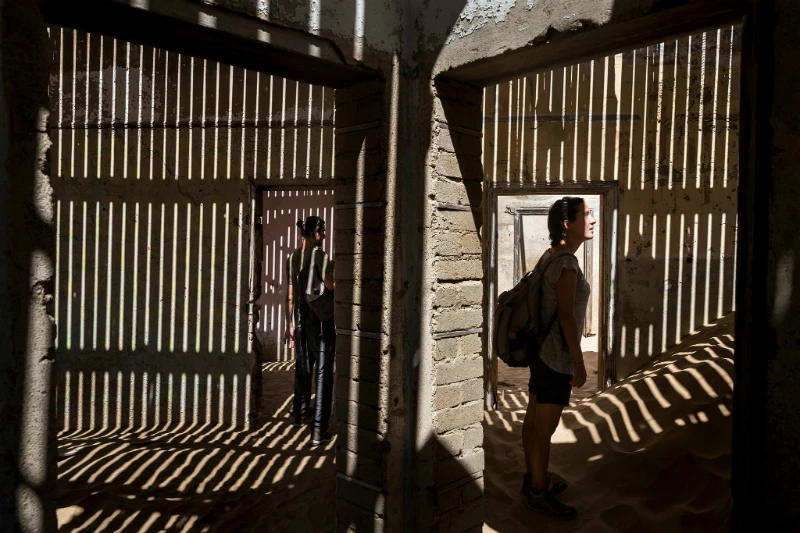
In an abandoned mining town. Photo: Brent Stirton
For all their idealism, Juan and Laura are seasoned realists. Surviving as full-time nomads requires quick thinking, street smarts, and an understanding of human psychology.
“You don’t catch a ride with an outstretched hand and an upturned thumb. You catch it with a smile. A driver has about three seconds to make up their mind, and that choice is driven by subconscious cues—facial expressions, body language, and subtle vibes.”
Juan Villarino
To Juan, hitchhiking is first and foremost an exercise in communication and rapport, not an endurance test.
You should never hitch sitting down—it obscures your body language, withholds visual information, and instantly breeds mistrust. The goal is to look as approachable as possible. Juan deliberately dresses the part of an inoffensive traveler: sensible hiking boots, a sturdy pack, and strictly no sunglasses or hats, keeping his face and eyes fully visible. 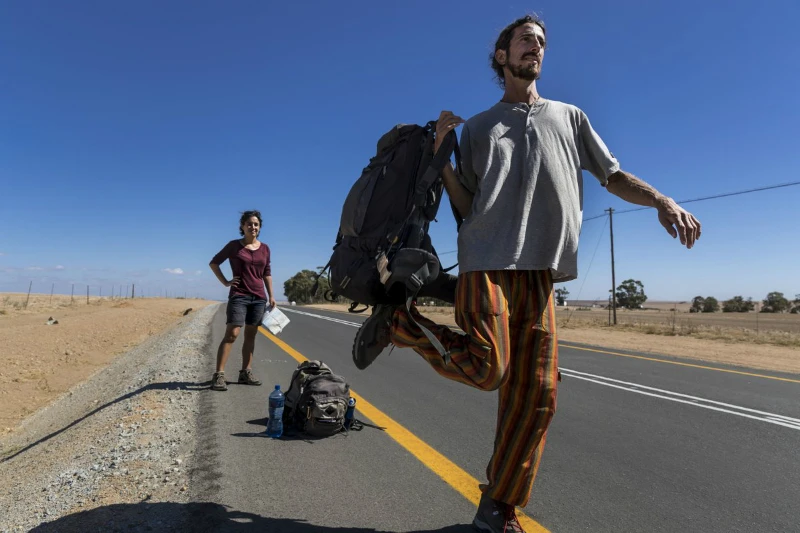
Photo: Brent Stirton
For a pair of self-described wanderers, their daily routine is remarkably disciplined. By 8:00 AM, they are already on the shoulder of the highway, ready to catch long-haul drivers just setting out for the day. 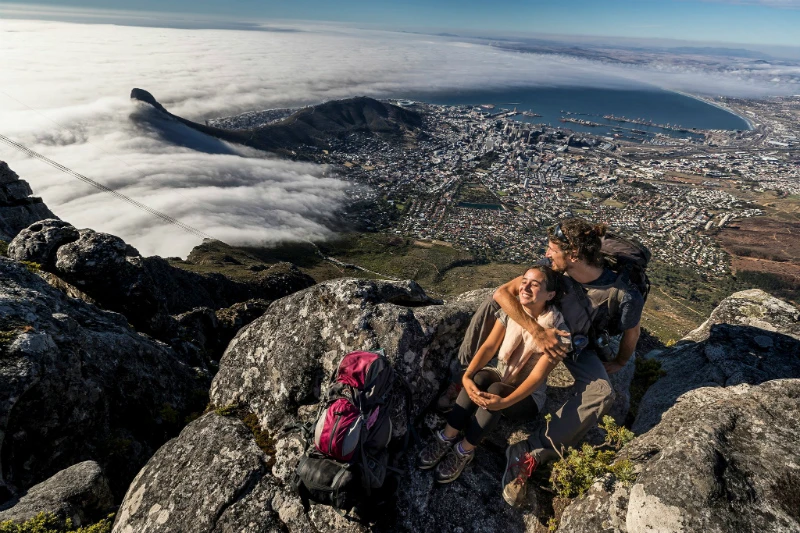
One car a minute is a luxury; one every five minutes is when Juan starts to worry. A car every twenty minutes means you are truly in the middle of nowhere. Once in Tibet, he waited two full days before a single vehicle came along.
“Whether a car stops or not is entirely up to you. The only weapon I carry is a goofy, disarming smile.”
Juan and Laura on Table Mountain near Cape Town. Photo: Brent Stirton