7 Most Impressive Displays of Animal Intelligence (7 Photos)
Animals are far smarter than we give them credit for: they can solve puzzles, learn words, and communicate with each other in surprisingly complex ways. 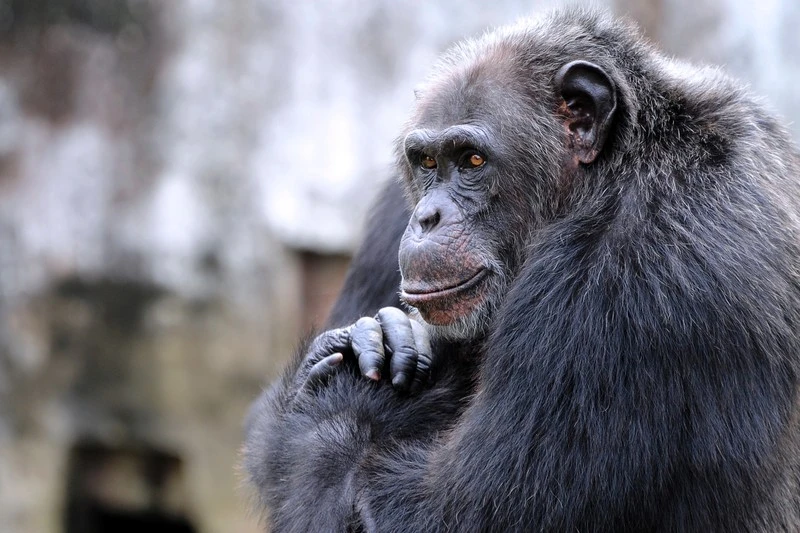
Crows Can Solve Puzzles at the Level of Five-Year-Old Children
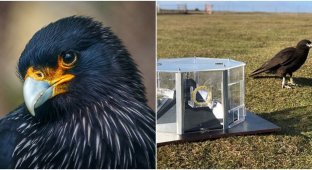
As it turns out, crows are remarkably adept problem solvers. In one study, birds were presented with water-filled cylinders containing a floating treat. The crows quickly realized that to reach the reward, they needed to raise the water level, so they began dropping nearby objects into the cylinder. What's more, they figured out that dropping dense objects that sank to the bottom raised the water level faster than floating ones, and they prioritized cylinders with higher initial water levels. In even more clever experiments, crows managed to bend pieces of wire into hooks to retrieve food from narrow tubes. Overall, researchers concluded that when it comes to problem-solving, crows perform on par with five- to seven-year-old children. 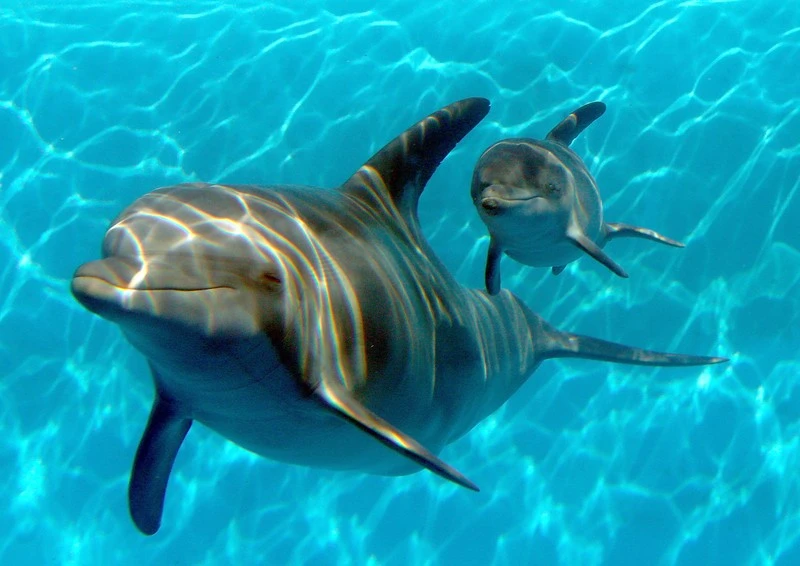
Dolphins Call Each Other by Unique Individual Names
Dolphins are exceptionally intelligent creatures. In captivity, they are easily trained to perform complex tasks in exchange for treats, and they are even known to mimic human behavior just for fun. In the wild, dolphins use sea sponges to protect their snouts while foraging for spiny fish on the seafloor, then use the spines to flush out eels from rocky crevices. Each dolphin also possesses a distinct characteristic whistle that acts as its personal name. A dolphin will swim toward a whistle that belongs to a familiar companion and will usually ignore one from a stranger. When a mother loses her calf, she repeatedly sounds its unique whistle until they are reunited. 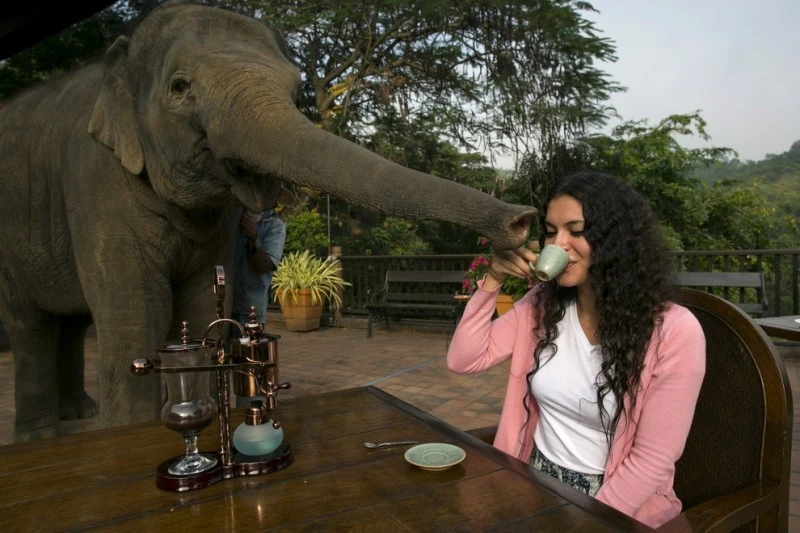
Elephants Can Cooperate with One Another and Show Empathy
After years of observing elephants, scientists discovered that they are capable of complex teamwork and coordination. Related family units bond to form large clans that travel together, communicating over long distances using low-frequency rumbles. They will sometimes form defensive circles around their calves to protect them from predators, or even conduct well-coordinated raids to steal calves from rival clans to demonstrate dominance.
In addition, elephants are capable of showing deep empathy. While most animals show little interest in deceased members of their species—either ignoring or eating them—elephants display intense emotional reactions to elephant remains, lingering nearby and showing clear signs of distress. In one experiment, African elephants were presented with the skulls of an elephant, a buffalo, and a rhinoceros; the elephants focused their attention specifically on the skull of their own kind. Researchers have also observed elephants comforting one another. When an elephant is distressed, it typically makes anxious sounds and flares its ears. Other members of the clan will approach, stroking its head with their trunks or gently placing their trunks in its mouth to reassure it. 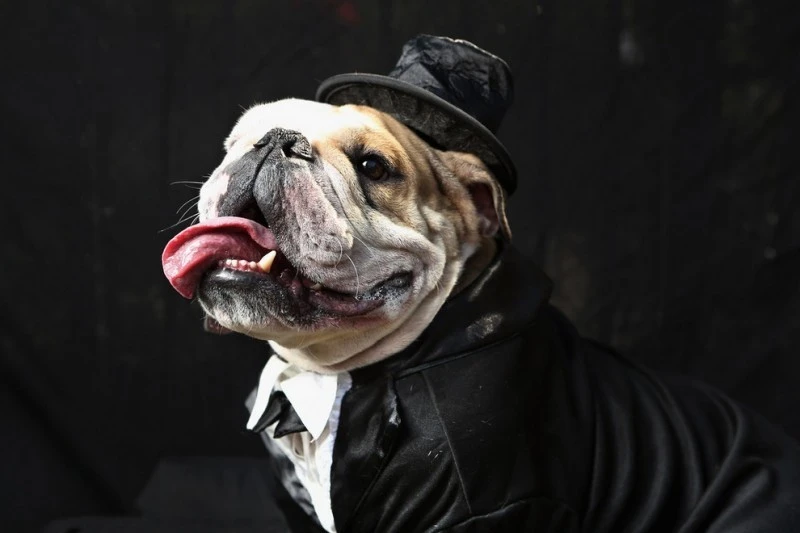
Dogs Can Learn Hundreds of Words
There is no shortage of evidence showcasing canine intelligence, but one of the most striking examples is a Border Collie named Chaser. Psychologist John Pilley trained Chaser to recognize the names of 1,022 individual toys. When Pilley called out a specific toy, Chaser selected the correct one 95% of the time. Pilley later taught Chaser verbs in addition to nouns, enabling the dog to follow complex commands like picking up a toy, nudging it with her nose, or placing a paw on it. Achieving this level of comprehension required immense time and effort, but it stands as a breathtaking feat of canine intelligence. 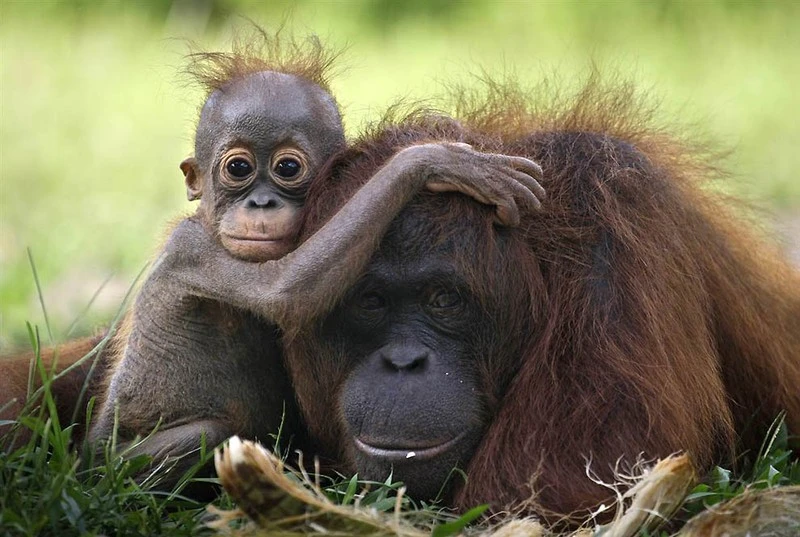
Chimpanzees Are Phenomenal at Memory Puzzles
Given that chimpanzees are our closest living relatives, their high intelligence is hardly a surprise. Yet in certain areas, their cognitive abilities can directly rival—and even surpass—our own. A chimp named Ayumu, living at a research institute in Kyoto, Japan, gained worldwide fame for his extraordinary visual memory. When nine numbers are flashed on a screen for just a fraction of a second, Ayumu can recall their exact positions from memory, beating human competitors almost every time. Scientists still don't fully understand how Ayumu does it, but they suspect he processes visual data instantaneously, taking a mental snapshot of the layout rather than counting the numbers sequentially. 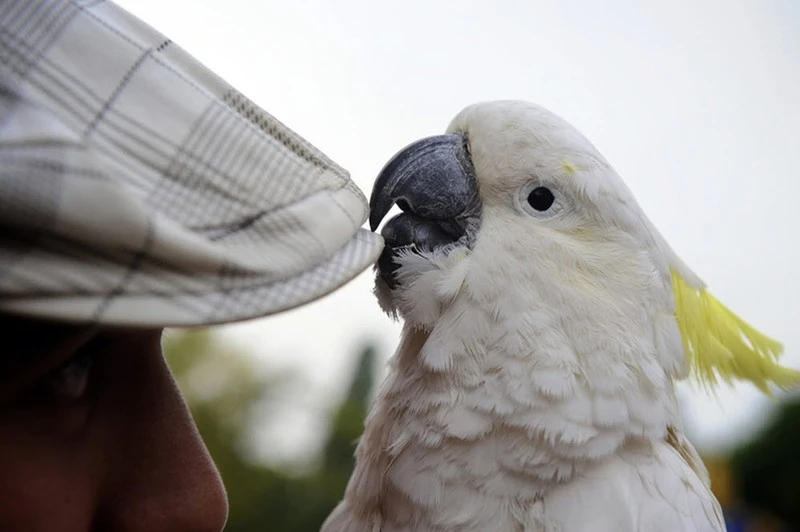
Cockatoos Are Capable of Picking Locks
Much like crows, cockatoos are adept at solving intricate puzzles to get to a treat. These tests can be remarkably complex—for instance, opening a box containing a cashew nut by pulling out a pin, unscrewing and removing a bolt, turning a small wheel, and finally lifting a latch. This takes a lot of effort since cockatoos lack fingers. One bird spent nearly two hours cracking the mechanism, ultimately succeeding and proving that birds are capable of setting and achieving multi-step goals. Other birds in the study watched the pioneer and subsequently solved the puzzle much faster. When researchers altered the test by changing the order of the five steps, the cockatoos adapted and cracked the lock once again. 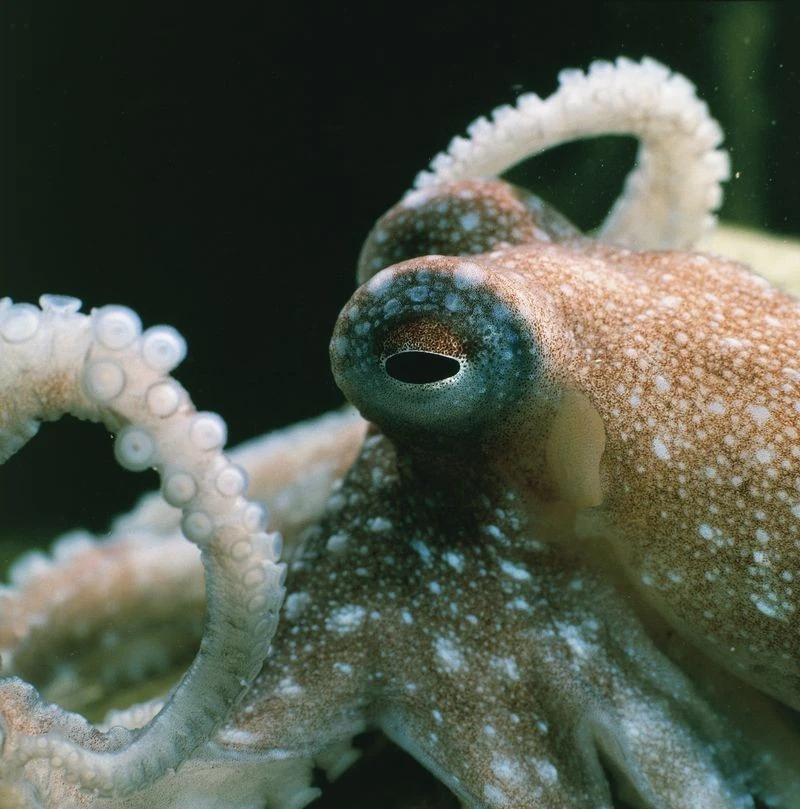
Octopuses Are Highly Intelligent, but Their Thought Process Is Strange and Alien to Us
Studying octopus intelligence is tricky for several reasons: they are aquatic, rarely survive long in captivity, and mostly dwell in the deep ocean. Because their environment is so different from ours, it makes sense that their intelligence evolved to tackle entirely different challenges. An octopus has the largest brain of any invertebrate, containing more neurons than a human brain. However, 60% of those neurons are located in its arms, meaning an octopus essentially has smart limbs. If an arm is severed, it can crawl on its own, grasp food, and move it toward where its mouth used to be. Octopuses also show aesthetic preferences and may even be colorblind, yet they gather stones of specific colors to camouflage their dens, and many species change skin color to blend into their surroundings. Some scientists speculate that octopuses can actually sense color through their skin and react to it directly.