The Pig Skyscraper: Inside the World's Largest High-Rise Swine Farm (13 photos)
The word "pigsty" usually conjures images of a low-slung, dingy shed—dimly lit, foul-smelling, and packed with muddy pigs. But modern livestock facilities bear little resemblance to those grimy old barns. Since 2022, the city of Ezhou in China's Hubei province has been home to the world’s largest and most radical pig farm. Rising 26 stories high, the towering facility stands as tall as London's Big Ben. Together with an identical twin tower, the complex is built to raise 1.2 million pigs a year. Here is a look inside this "pig skyscraper"—where feed rides a conveyor to the top floor and manure is turned into clean energy. 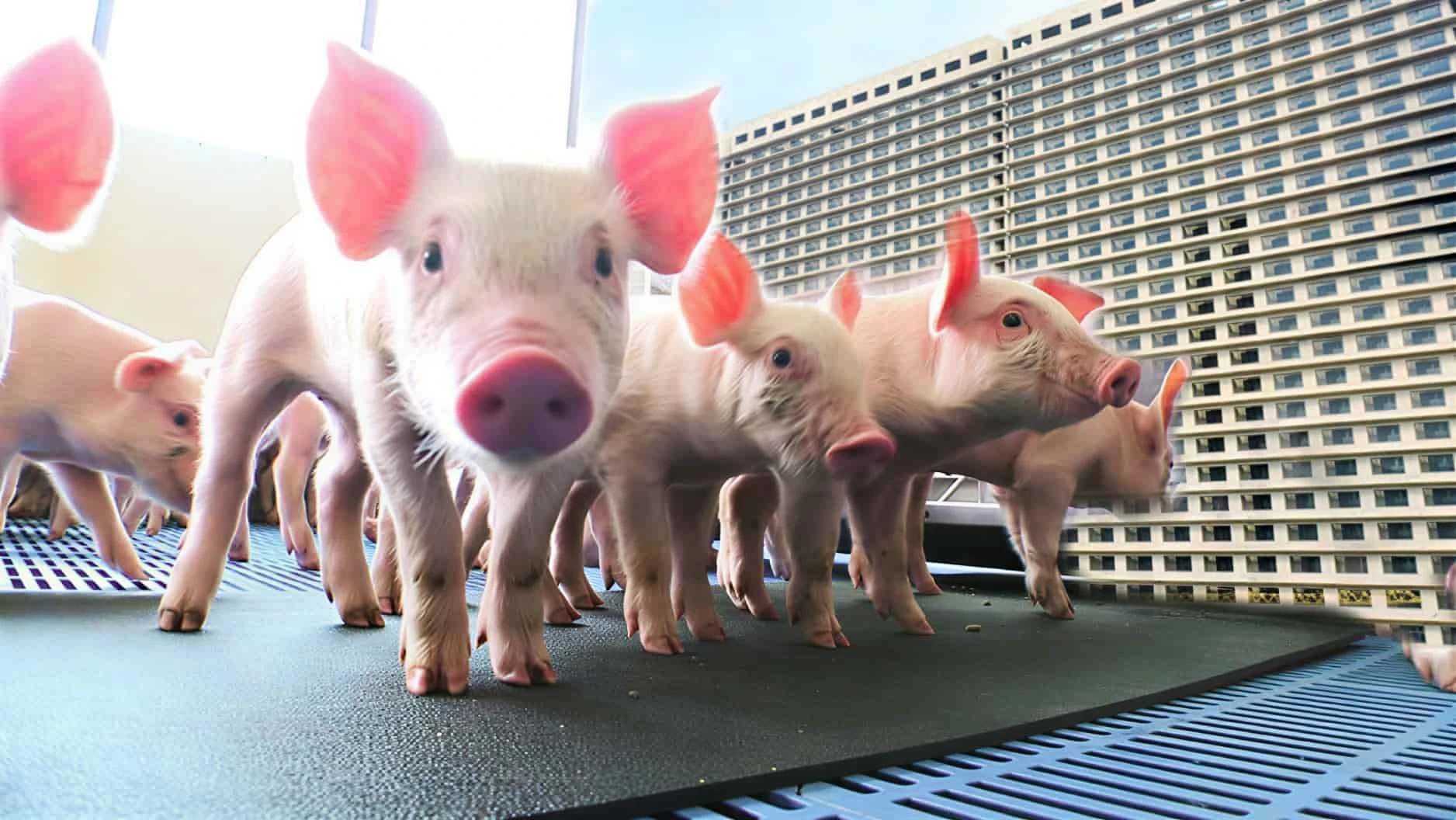
Pork: A National Priority
In China, the price of pork is a matter of national security. The country consumes roughly half of the world's pork supply, making the meat a key driver of inflation indexes—and a subject of constant state oversight. In November 2019, for instance, pork prices doubled year-over-year, accounting for nearly two-thirds of the overall spike in consumer prices.
Whenever prices climb too high, authorities release tens of thousands of tons of frozen pork from national reserves to cool the market. In December 2019 alone, the government dumped 40,000 tons onto the market. Conversely, when prices drop and farmers face losses, the state steps in to buy up surplus meat. On top of that, local vendors have even mastered the art of counterfeiting meat with impressive skill. 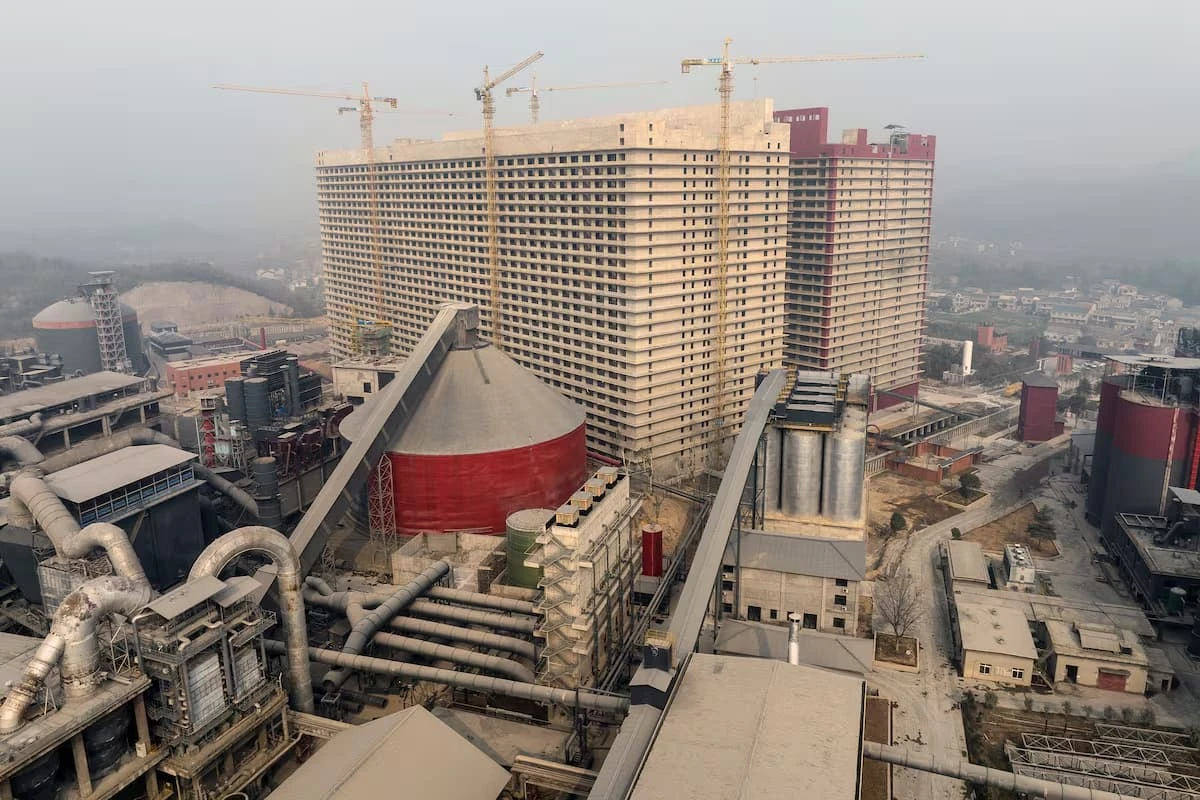
Inside the high-rise, pigs spend their entire life cycle: from breeding to shipping for slaughter
This makes pig farming a highly lucrative industry. Between 2018 and 2019, an outbreak of African swine fever wiped out nearly half of the country’s herd, which previously stood at over 400 million animals. In response, Beijing lifted restrictions on multi-story farming in 2019, enabling producers to raise far more animals on smaller footprints while maintaining strict biosecurity to keep viruses out. 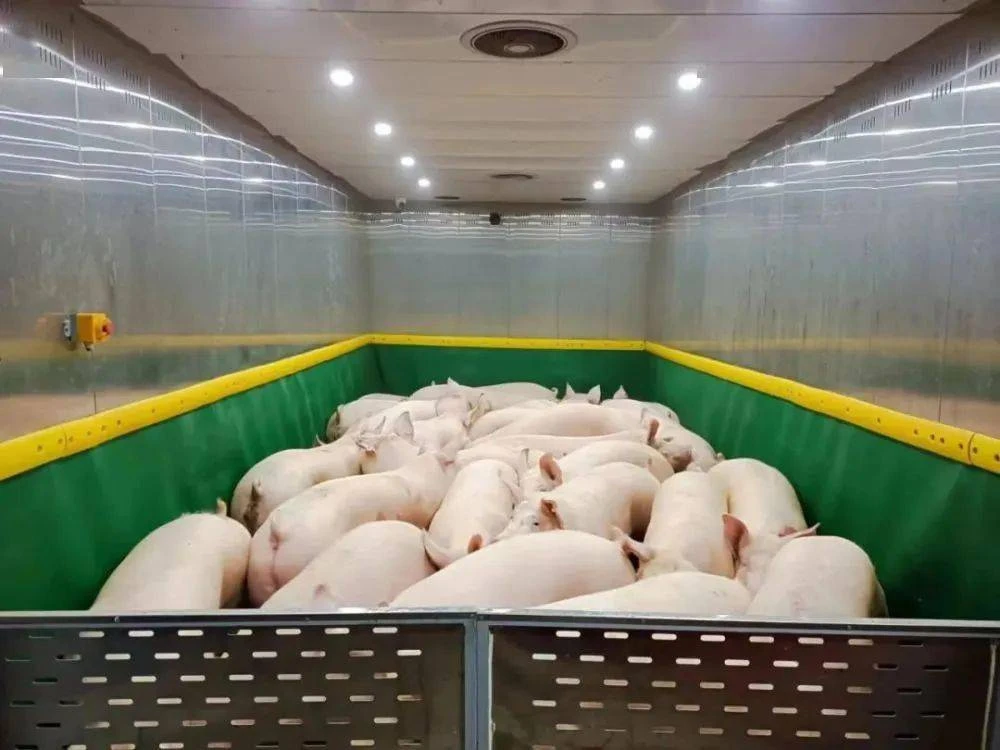
Enclosed housing protects pigs from deadly viruses—the driving force behind China's vertical farming push
It isn't just traditional agricultural giants building skyward. While industry leaders like Muyuan Foods and New Hope Group pioneered high-rise farming, newcomers from completely unrelated sectors quickly followed suit.
A Cement Producer Turns Pig Farmer
Among these newcomers is Hubei Zhongxin Kaiwei Modern Animal Husbandry. Its controlling shareholder is a local cement producer whose manufacturing plant, Hubei Xinshiji Cement, sits right next door. As CEO Jin Lin explained, the company saw agriculture as a promising growth market—and conveniently built the massive facility using its own construction materials. 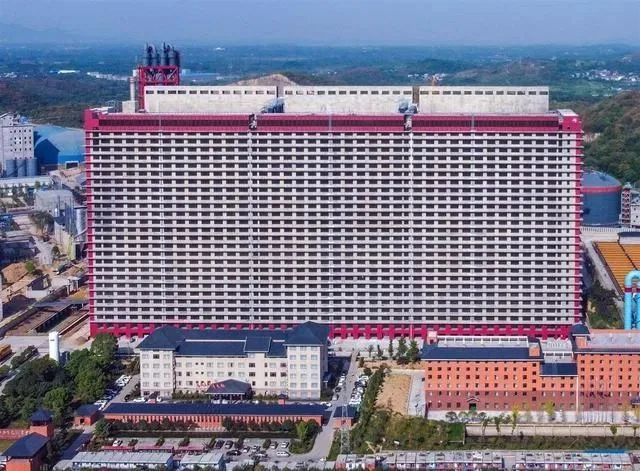
From a distance, the farm looks like a typical Chinese apartment building—except the windows aren't for humans
The project cost 4 billion yuan (around $557 million). The first batch of 3,700 breeding sows arrived in late September 2022. Shortly after, a second identical tower was erected behind the first.
Located on the southern outskirts of Ezhou along the Yangtze River, the site lies roughly 80 kilometers from Wuhan. A small village sits right across the road from the towers. On Chinese social media, the structures have been dubbed the "Bajie Mansions"—after Pigsy, the iconic pig-monk from the classic novel
Journey to the West
. 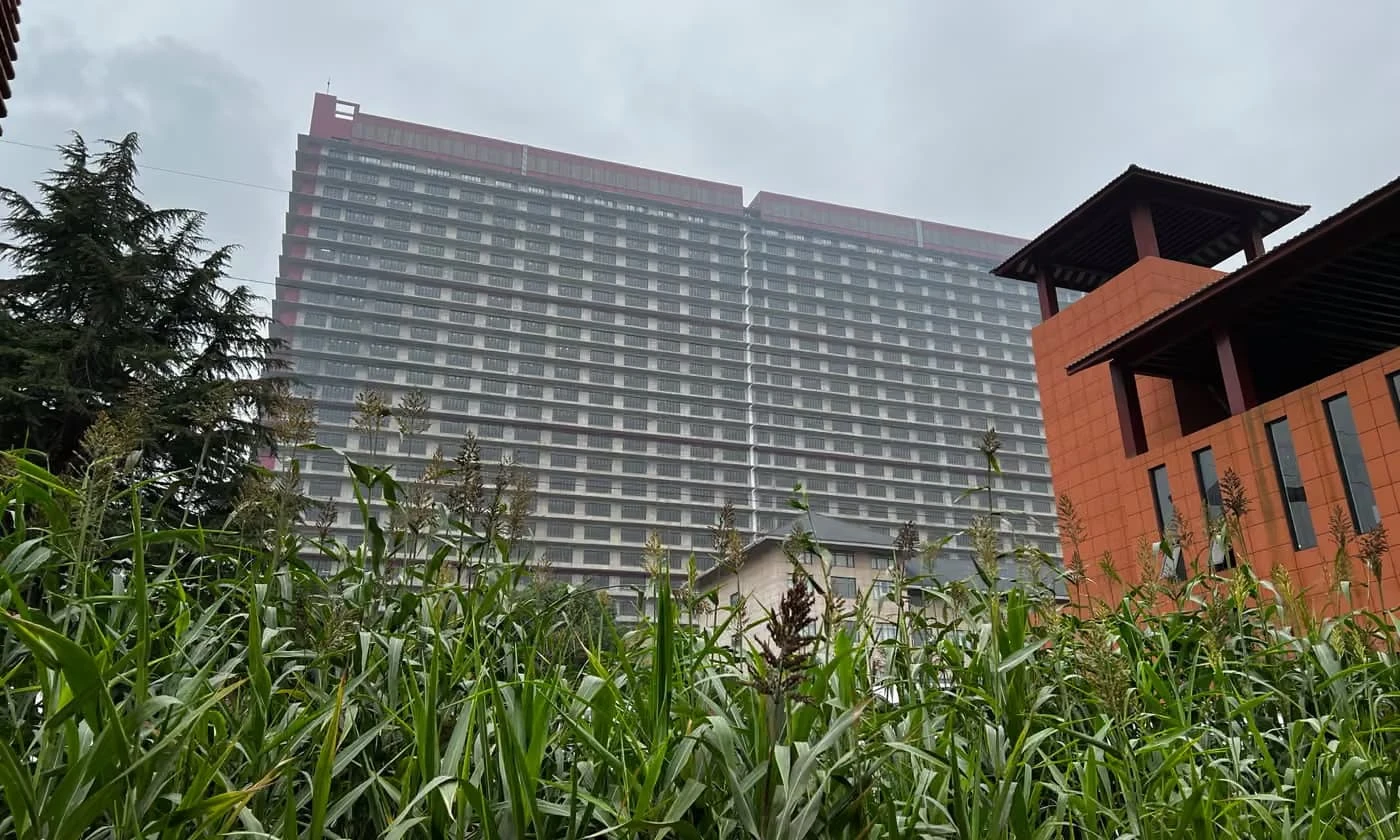
Towers loom over nearby village homes, standing roughly as tall as London's Big Ben
Company president Zhuge Wenda admitted to
The New York Times
that China's pork industry lags decades behind the world's most advanced nations. The skyscraper farm, he noted, is designed to bridge that gap.
A Self-Contained Farm on Every Floor
The sheer scale of the complex can be mind-boggling. Each tower spans roughly 390,000 square meters. Together, they can produce 1.2 million pigs annually and house up to 650,000 animals at any given time. While the bottom two floors host administrative and utility facilities, every floor above operates as an independent, fully functioning farm. 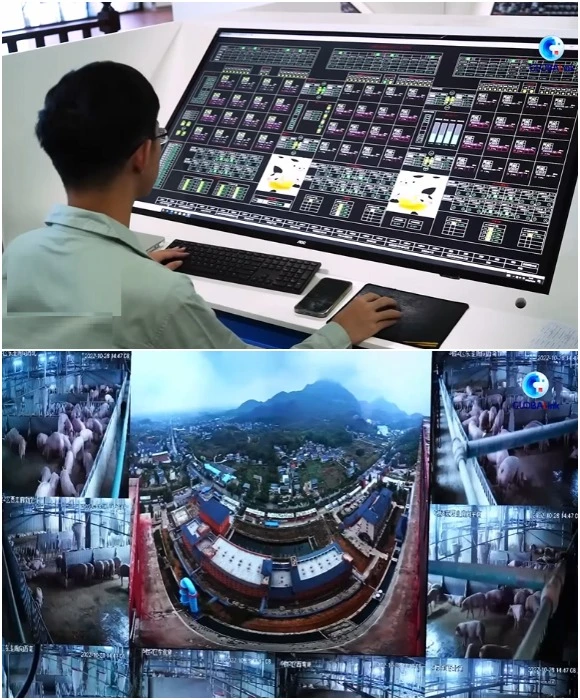
Technicians monitor every floor in real time from a central control room using high-definition cameras
A single floor houses around 1,000 breeding sows and features designated areas for gestation, farrowing, nursing, and fattening. Each level churns out up to 25,000 pigs per year. To transport animals between floors, the facility uses six massive industrial elevators.
Feed is carried by conveyor belts to massive top-floor silos, distributing over 450 tons of food daily to more than 30,000 automated feeding stations. Portions are customized automatically based on each pig's age, weight, and health status. 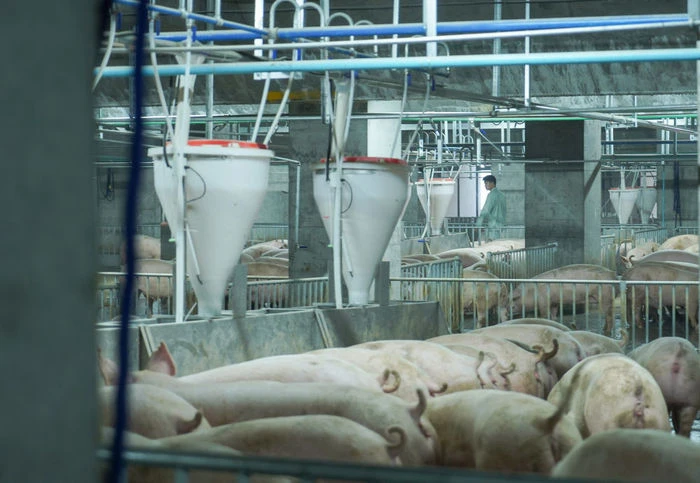
Feeders dispense meals automatically on command, eliminating the need for workers to haul food across floors
Sensors continuously track temperature, humidity, and toxic gas levels. Everything is controlled remotely, with veterinarians on duty around the clock. The neighboring cement plant generates waste heat, which the company harnesses to warm the animal housing, office spaces, and water supply. With just over 800 employees on site, that works out to about 1,500 pigs per worker.
What Happens to the Waste?
Unsurprisingly, waste management is one of the biggest challenges in a high-rise pig farm. The process is fully automated, keeping the floors exceptionally clean. Manure is weighed, collected, and processed for reuse. Reporters from
The New York Times
likened the facility's clinical precision to a Foxconn plant assembling iPhones. 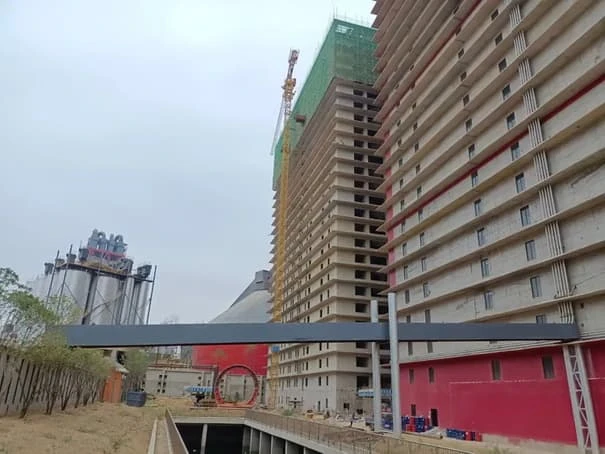
Feed travels into the tower on conveyors. Advocates say vertical farming drastically saves land
The waste disposal system is surprisingly resource-efficient. Manure is funneled into anaerobic digesters to decompose without oxygen. The company projected generating up to 120,000 cubic meters of biogas per day. Once desulfurized, the gas is burned to produce electricity, heating, and hot water.
It sounds like a clean, closed-loop system that should satisfy environmentalists. According to the company, advanced air treatment neutralizes over 90% of foul odors, though these figures have yet to be independently verified. 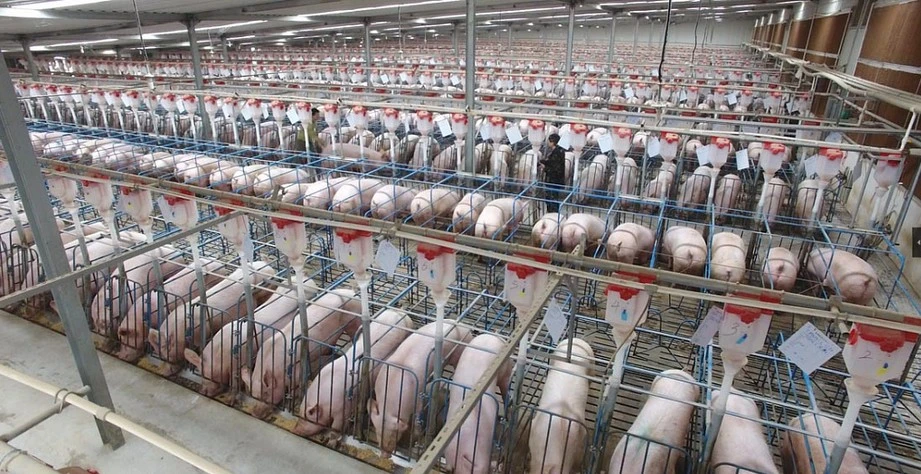
Automated feeders dispense tailored portions based on each pig's age, weight, and health
The growth rate is equally impressive. Pigs raised in these high-tech towers reach market weight in just a few months—a process that traditionally took rural farmers nearly a year.
Why Critics Are Concerned
The ambitious project has no shortage of critics. Animal welfare advocates oppose industrial livestock farming on principle, while epidemiologists warn of disease risks. If a deadly virus breaches the facility's defenses, it could sweep through hundreds of thousands of animals in days. The African swine fever epidemic proved just how catastrophic such outbreaks can be.
For nearby residents, stench is the primary concern. A farmer in his 50s from the neighboring village told
The Guardian
he dreads the potential smell once the facility reaches full capacity. Thirty years ago, he raised two or three pigs in his own yard, taking roughly a year to grow each one. 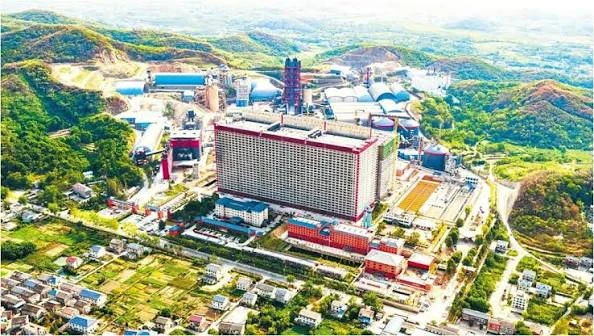
The village sits right across the road, leaving residents worried about foul odors and disease risks
Professor Zhu Zengyong of the Chinese Academy of Agricultural Sciences takes a broader view. In his opinion, the livestock industry is moving irreversibly toward full automation, raising the bar ever higher for producers. 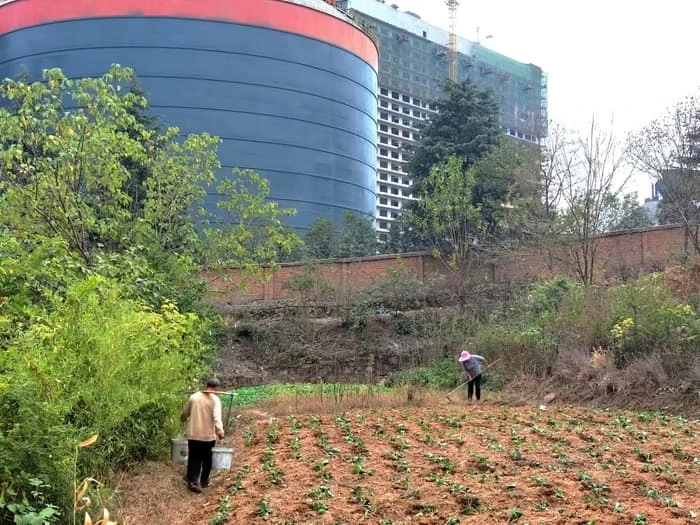
Beside the high-tech tower, local residents continue to tend their fields as they always have
Proponents argue that high-rise farms are smarter, cleaner, and safer than traditional facilities. They feature higher levels of automation and biosecurity, making it far easier to enforce strict sanitation protocols and keep outsiders from entering.
Pig Skyscrapers Spreading Across China
The Ezhou complex is just the beginning; high-rise pig farms are springing up across China. While most are smaller, the previous record holder was a 13-story facility operated by Yangxiang on Yaji Mountain in Guangxi. 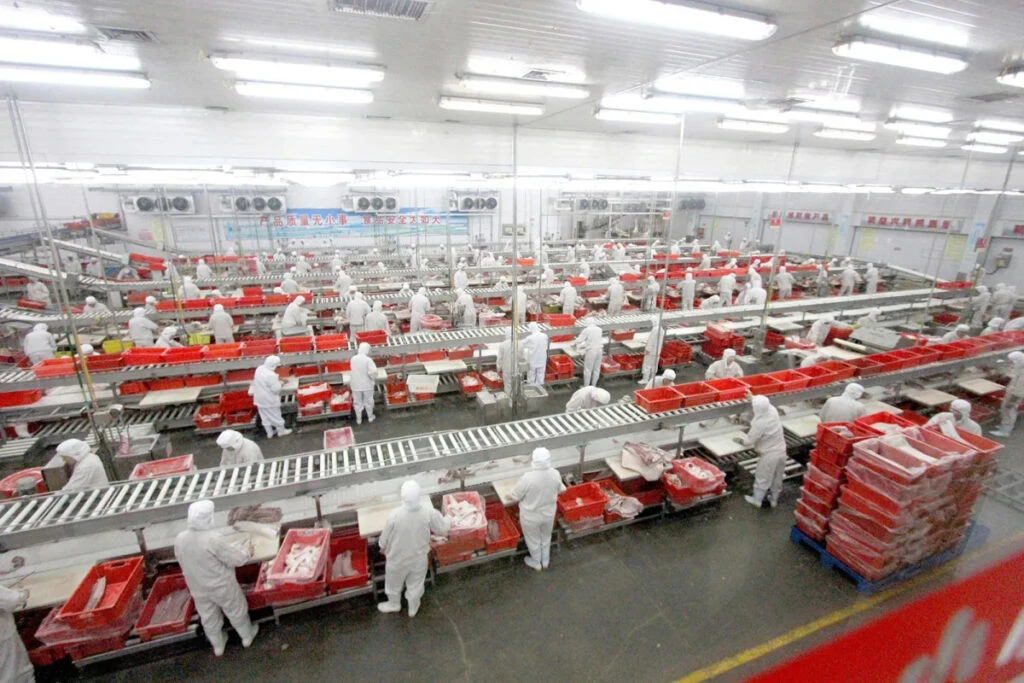
A pork processing plant in Zhengzhou. China consumes roughly half of the world's pork
Media outlets have dubbed these facilities "hog hotels." Access is strictly restricted, surveillance cameras monitor every corner, and veterinary teams live on site. The Yaji Mountain complex was designed for 30,000 breeding sows on just 4.5 hectares. By comparison, a conventional large-scale farm in northern China requires 5 hectares to keep just 8,000 sows.
Vertical pig farms help China reduce its dependence on meat imports while saving precious land. Yet critics continue to debate whether the trade-offs of such high-density efficiency are worth it. 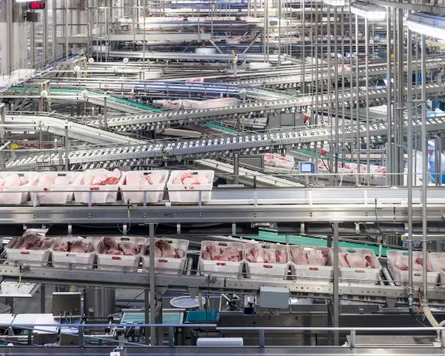
Conveyor belts transport processed meat directly into cold storage
The pig skyscraper in Ezhou offers a striking glimpse into the future of livestock farming—where pigs live in concrete high-rises, eat on automated schedules, and their waste powers the building.
Are high-rise pig farms a marvel of human ingenuity or an ecological disaster in the making? Can livestock production on this scale ever be truly humane? Share your thoughts in the comments!