Why a Wall Was Built Across a Fault Line (2 photos)
In New Zealand's Maruia Valley stands a low concrete wall. Built straight across the Alpine Fault to monitor tectonic movement, it remained perfectly straight for decades. 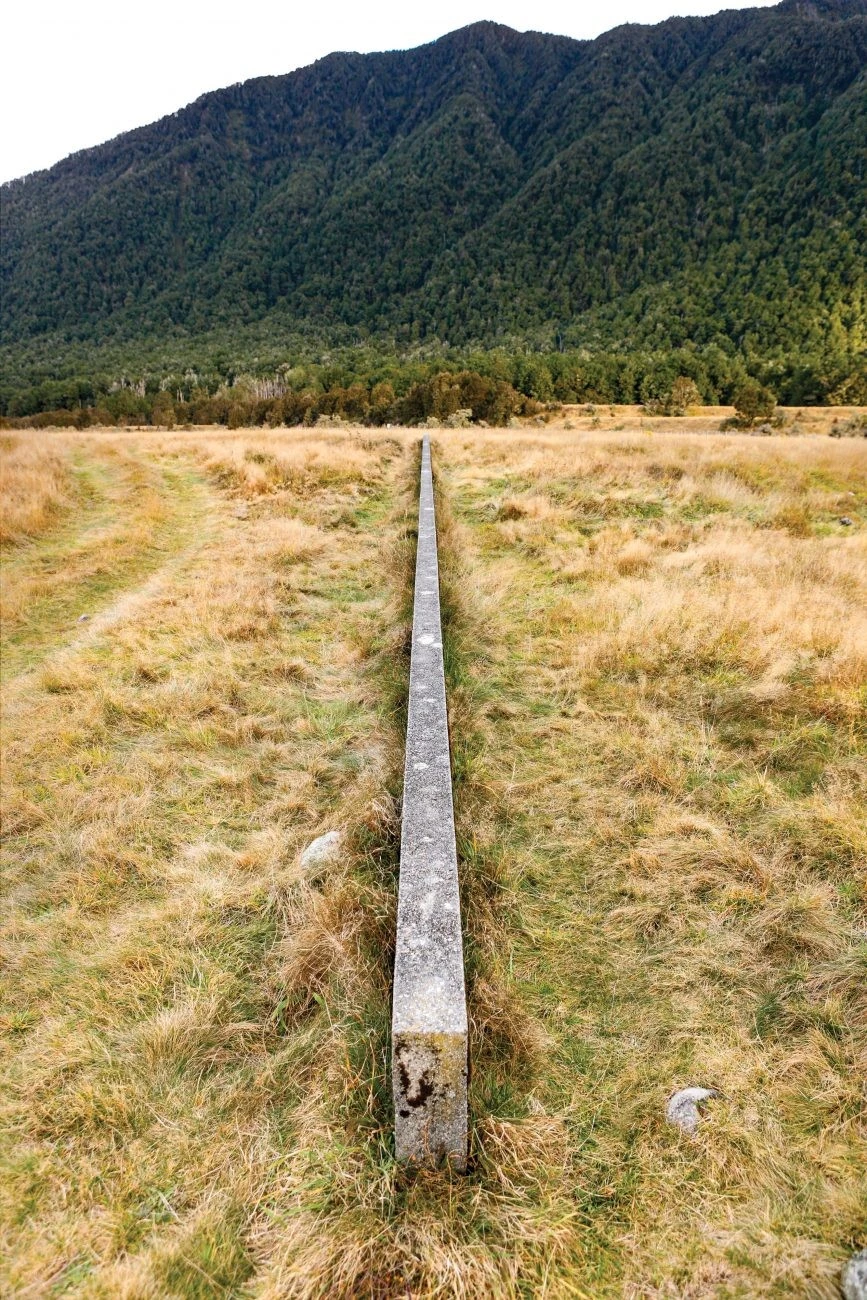
The Evison Wall straddles the Alpine Fault. Most of the concrete structure is buried underground. Photo: Rob Suisted.
In 1964, geophysicist Frank Evison came up with a simple way to test whether the fault was gradually creeping. If the land on either side shifted, the concrete structure would show it—bending, cracking, or pulling apart.
About half a meter of the wall was left above ground, with another 1.4 meters buried in the soil. Metal surveying marks were embedded in the concrete to measure any movement. This is where the Pacific and Australian tectonic plates meet.
A casual passerby could easily mistake the wall for an old building foundation. Yet its continuing straightness has proven to be a vital finding: no gradual surface creep has been detected along this section. In 2023, New Zealand Geographic noted that the wall was still perfectly straight.
That doesn't mean the fault is harmless. Geological studies show it is prone to sudden, massive shifts during major earthquakes. Stress builds up beneath the surface while the ground above remains locked. While the wall helps track surface movement, it can't predict when the next big quake will strike. 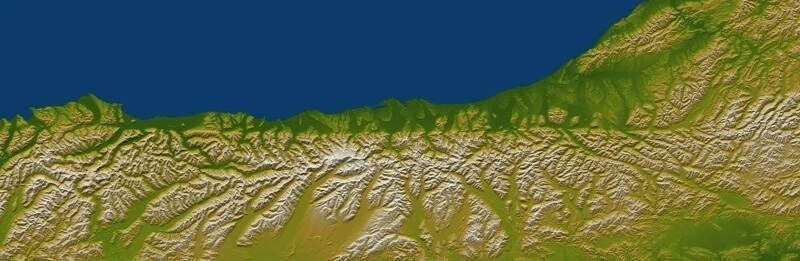
Topography of the South Island based on NASA data. The Alpine Fault runs along the western flank of the Southern Alps. Photo: NASA/JPL/NGA; public domain.
Evison spent decades researching earthquake forecasting. In 1967, he became the first professor of geophysics at Victoria University of Wellington, continuing his research until his death in 2005. Statistician David Rhoades later carried on his work on forecasting models.
As for the scientist's family, his daughter Margaret says they have a running joke: that wall is the only thing keeping the Alpine Fault together.