How a Father and Son Solved the Mystery of the Dinosaurs' Extinction (4 photos)
For decades, scientists struggled to explain what wiped out the dinosaurs after their 160-million-year reign on Earth. Theories abounded—ranging from gradual climate change and global volcanic eruptions to widespread disease and competition from emerging mammals. Yet none could fully account for the suddenness of the extinction recorded in the geological record. 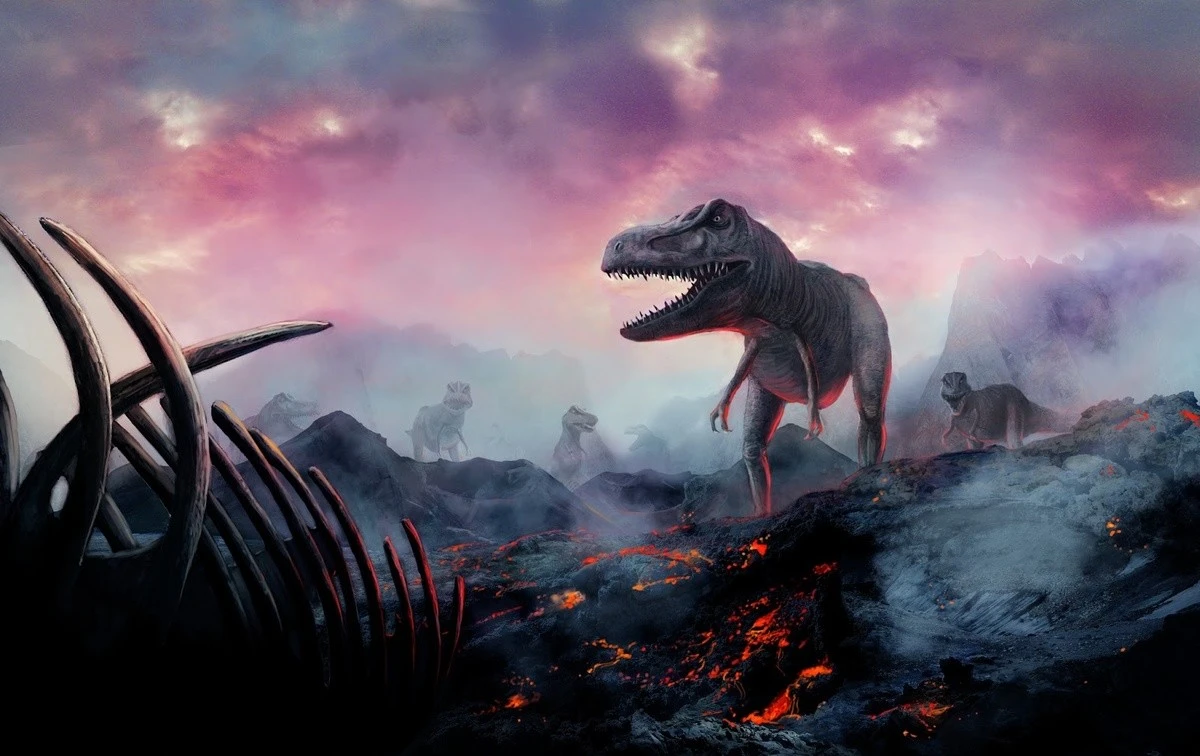
The breakthrough came in the late 1970s, courtesy of a rather unlikely scientific duo.
An Unconventional Approach
Luis Alvarez, a Nobel laureate in physics, and his son Walter Alvarez, a geologist, were studying a thin clay layer in rock formations near the Italian town of Gubbio. This layer marked the Cretaceous-Paleogene (K-Pg) boundary—a point in Earth's history roughly 66 million years ago, precisely when the dinosaurs vanished.
Walter wanted to determine how long it had taken for this mysterious layer of clay to form. His father suggested an unconventional method: measuring the concentration of iridium, a rare chemical element, within the rock. 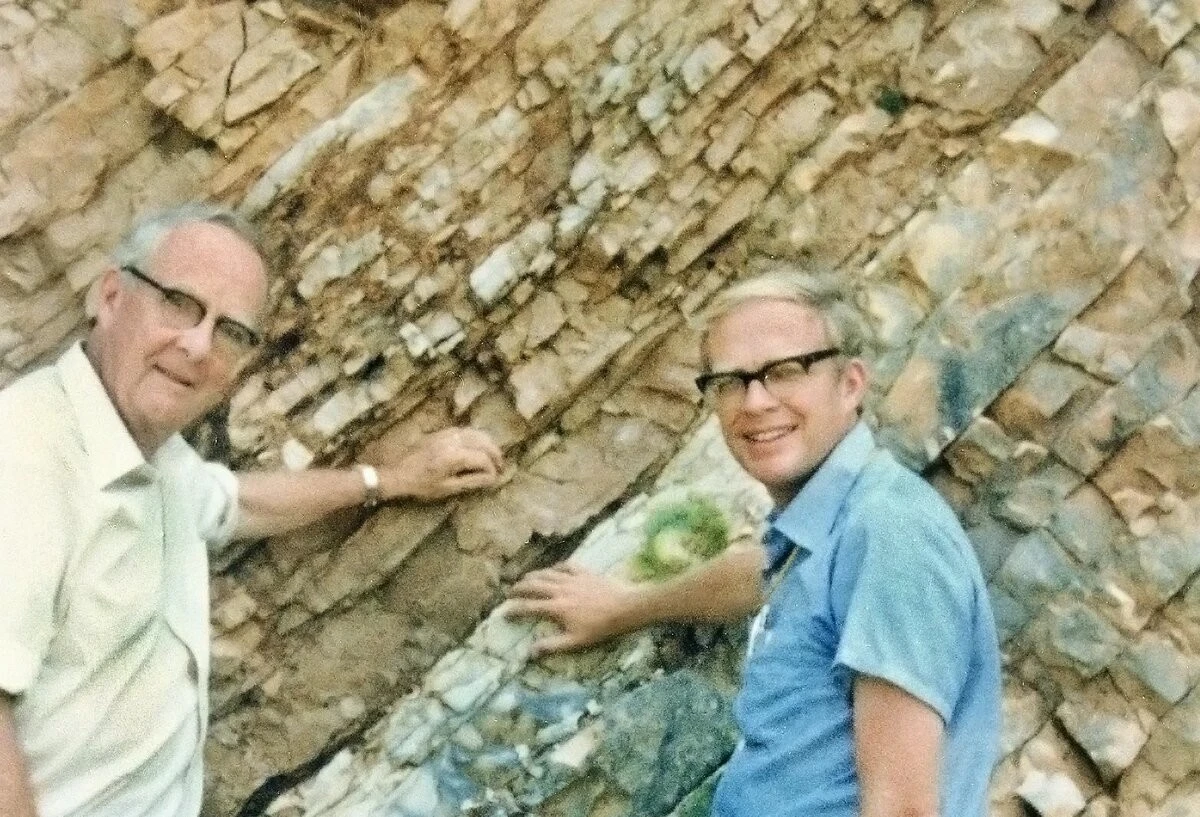
Luis and Walter Alvarez
Why iridium? While extremely rare on Earth’s surface, iridium is abundant in asteroids and comets. The reason is simple: as a heavy metal, most of Earth's original iridium sank into the planet’s core during its formation. Any iridium found in sedimentary rock usually accumulates at a steady, predictable rate, delivered by a constant "cosmic rain" of micrometeorites.
The results stunned the father-son team: iridium levels in the thin clay layer were dozens of times higher than in the surrounding rock. Such a massive spike couldn't be explained by the slow fallout of cosmic dust.
In 1980, the Alvarez team published a groundbreaking paper in Science, proposing a bold hypothesis: the iridium anomaly at the K-Pg boundary could only be explained by the impact of a massive asteroid or comet. Based on their calculations, the impacting body—likely an asteroid—had to be roughly 10 kilometers in diameter. The impact of a space rock that size would inevitably trigger catastrophic consequences for the entire planet’s biosphere.
Skepticism in the Scientific Community
Predictably, the scientific community greeted the Alvarez hypothesis with heavy skepticism. Many paleontologists were outright hostile, dismissing the duo's work as absurd. They argued that a physicist and a geologist, lacking formal training in paleontology, had no business proposing such a radical explanation for one of evolutionary history's greatest mysteries.
The paleontologists' primary counterargument was straightforward: if such a colossal asteroid had indeed struck Earth, where was the evidence—specifically, an impact crater of the right age and size?
Discovering Chicxulub
Ironically, the missing piece of the puzzle had already been found shortly after the Alvarezes published their theory, though neither they nor their critics realized it at the time.
In the late 1970s, geophysicists working for the Mexican state oil company, Pemex, mapped a massive circular structure off the Yucatán Peninsula, buried under hundreds of meters of sediment and extending into the Gulf of Mexico. However, the discovery wasn't made public at the time. As a commercial enterprise, Pemex was focused on oil reserves and profits rather than geological anomalies, so the data sat in company archives for nearly a decade until researchers began cataloging impact structures around the globe. 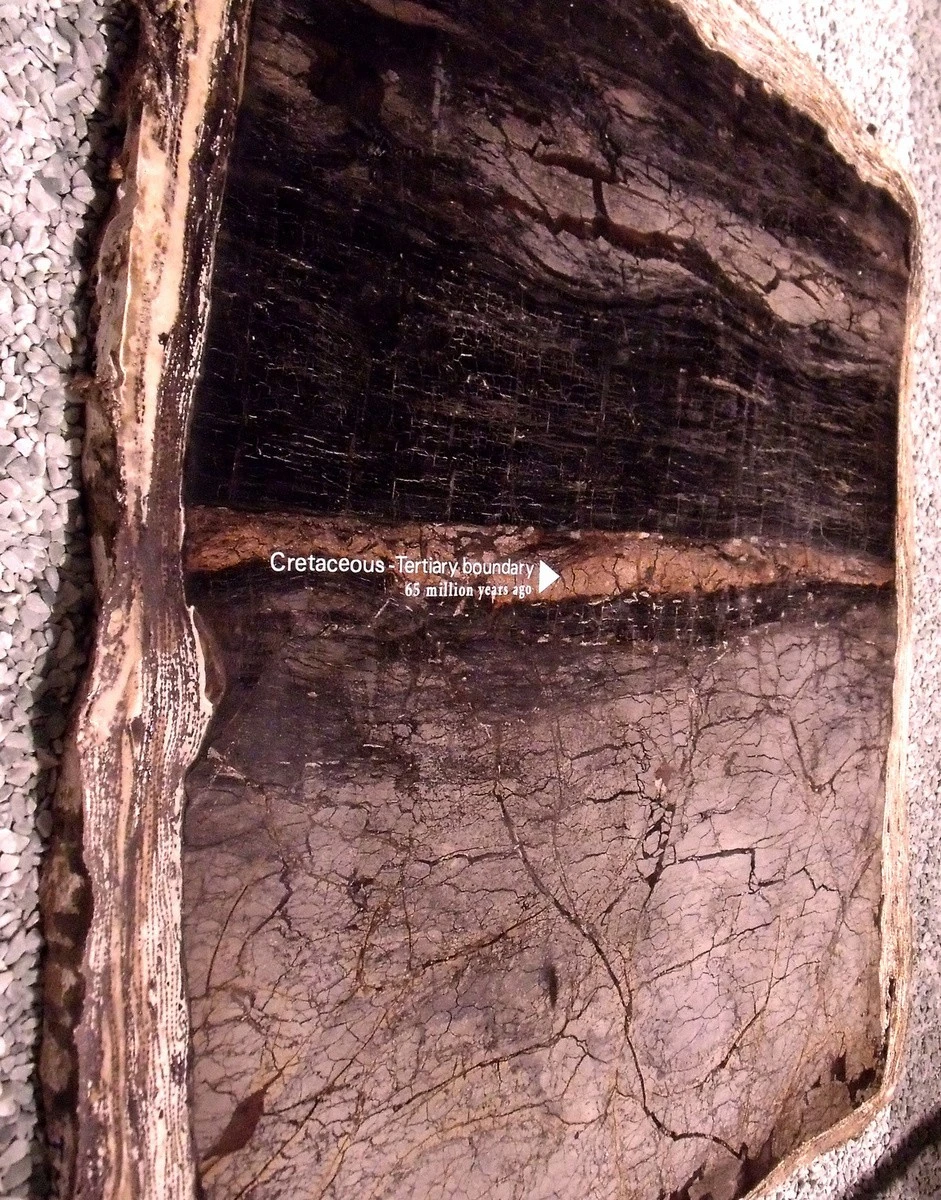
The arrow points to the Cretaceous-Paleogene (K-Pg) boundary
In the late 1980s, independent research teams analyzing this discarded Pemex geophysical data concluded that the structure was the remnant of an ancient impact crater. It was named Chicxulub, after a nearby town. Scientists estimated the crater's diameter at roughly 180 kilometers. Later radiometric dating showed its age perfectly matched the K-Pg boundary—the exact window when the dinosaurs went extinct.
Triumph of the Theory
The discovery of the Chicxulub crater provided the smoking gun that vindicated the Alvarez team. Subsequent studies only bolstered the evidence: geological layers of that era worldwide revealed other signatures of a global catastrophe—microscopic shocked quartz grains (whose crystal structure was deformed by extreme pressure), tiny spherules of flash-melted rock, and evidence of massive tsunamis and planet-wide wildfires. 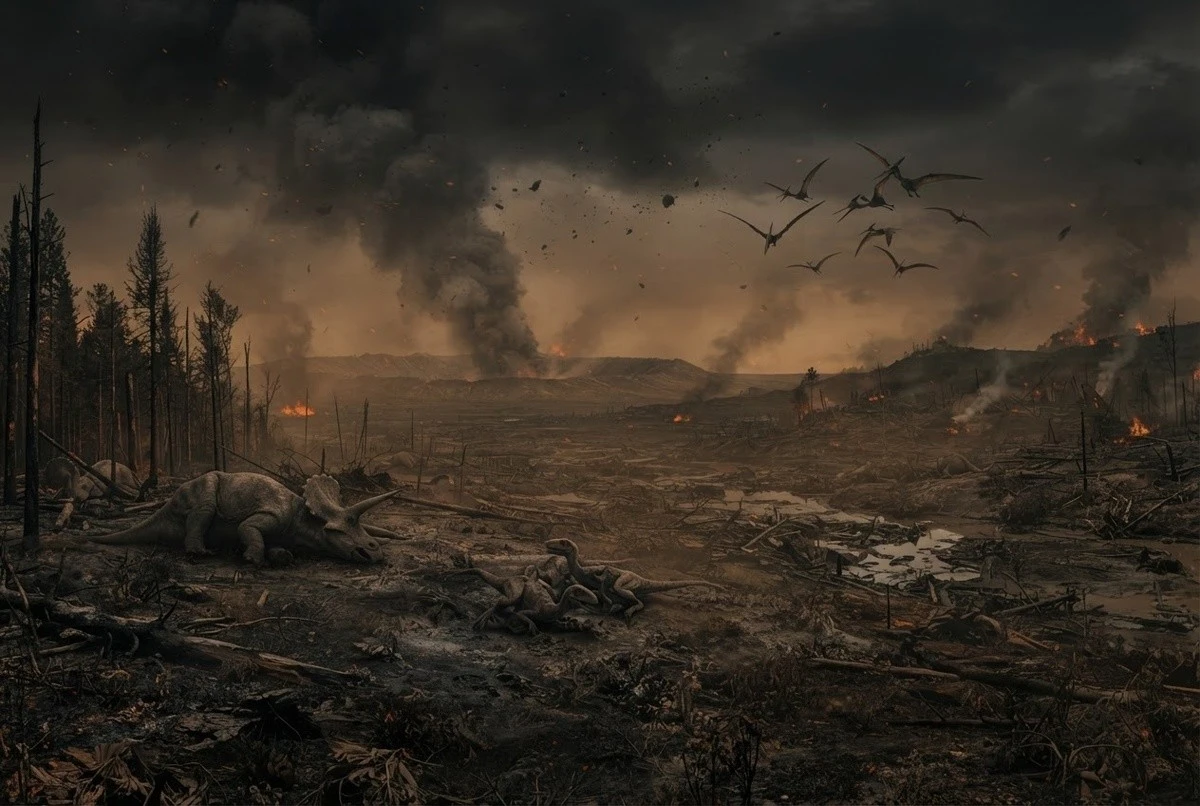
By the early 1990s, the impact hypothesis—once dismissed as wild speculation—had become the widely accepted scientific theory explaining the end-Cretaceous mass extinction. Sadly, Luis Alvarez did not live to see full vindication; he passed away on September 1, 1988.
Today, equipped with advanced computer modeling, scientists continue to refine the details. We now know the asteroid impact triggered a devastating domino effect: mega-tsunamis, widespread wildfires, and a prolonged "impact winter," where dense clouds of dust and soot blocked out sunlight for years, leading to the collapse of most global food webs.