Sweet Sausage and Daily Staples: What Ordinary People Eat in China (33 photos)
Dmitry Berdasov reports: Growing up, I was always told that China was overcrowded and that people there ate nothing but rice. Having visited China several times now, I know that’s far from the truth. Let's take a tour through a local supermarket in Qingyi, a provincial city of 800,000 people. Fewer than ten European families live here, so the store caters almost exclusively to Chinese locals. It’s the largest supermarket in town, though there are a few smaller grocery stores around. That said, many locals prefer neighborhood corner stores, even if prices there are slightly higher and the selection is much smaller. 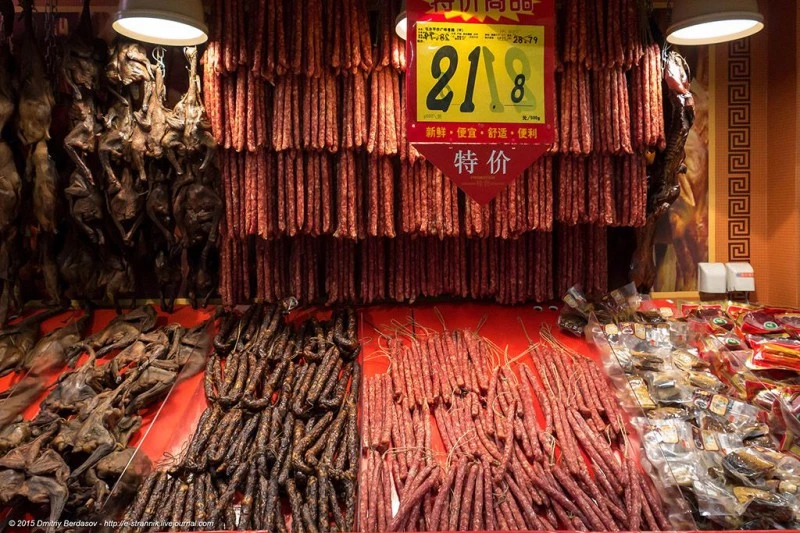
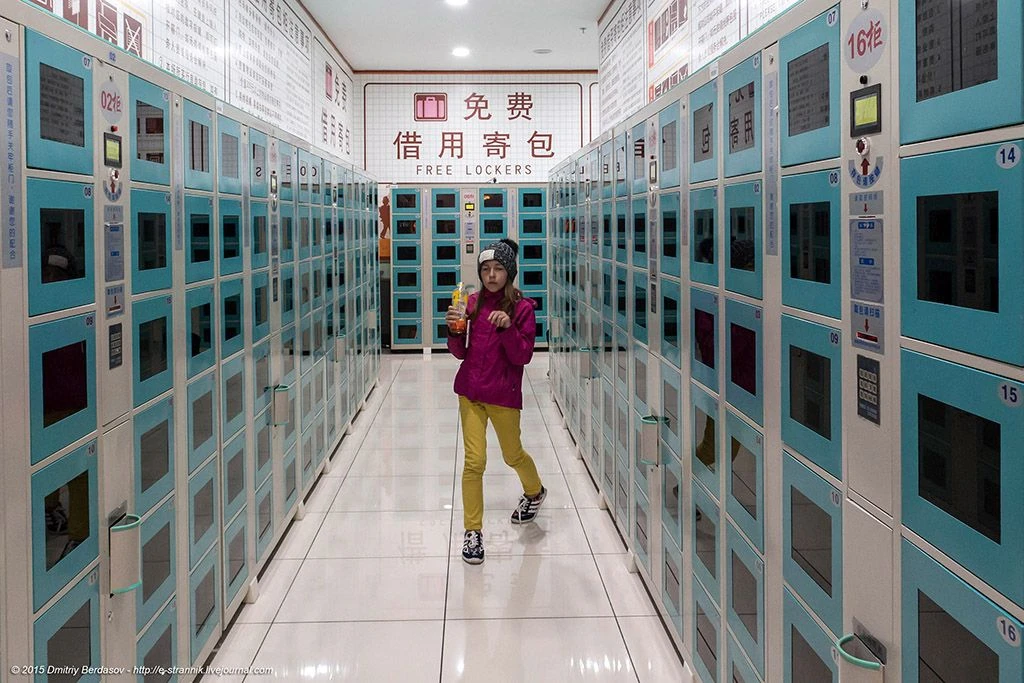
First things first: we leave our personal belongings in an automated locker. It’s free, but to get a shopping cart, you need to insert a 1 yuan deposit into the handle. 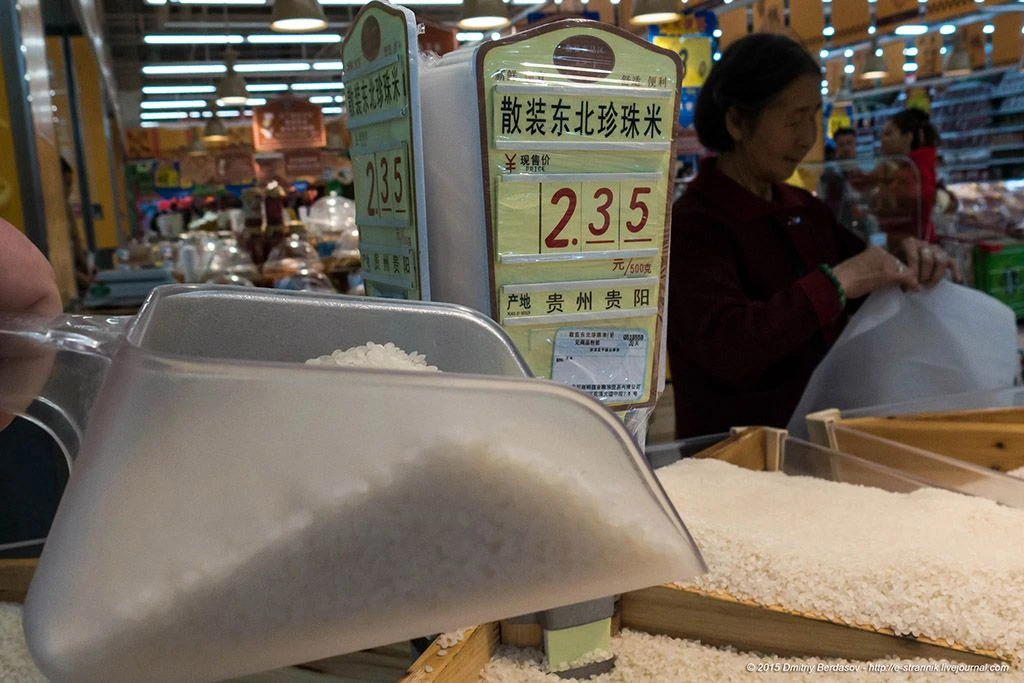
Since we mentioned rice, let’s start our shopping trip there. Prices in Chinese stores are listed in yuan per 500 grams (about a pound). To put it into perspective, 1 kilogram of rice costs about $0.56. That is a very reasonable price considering local wages. 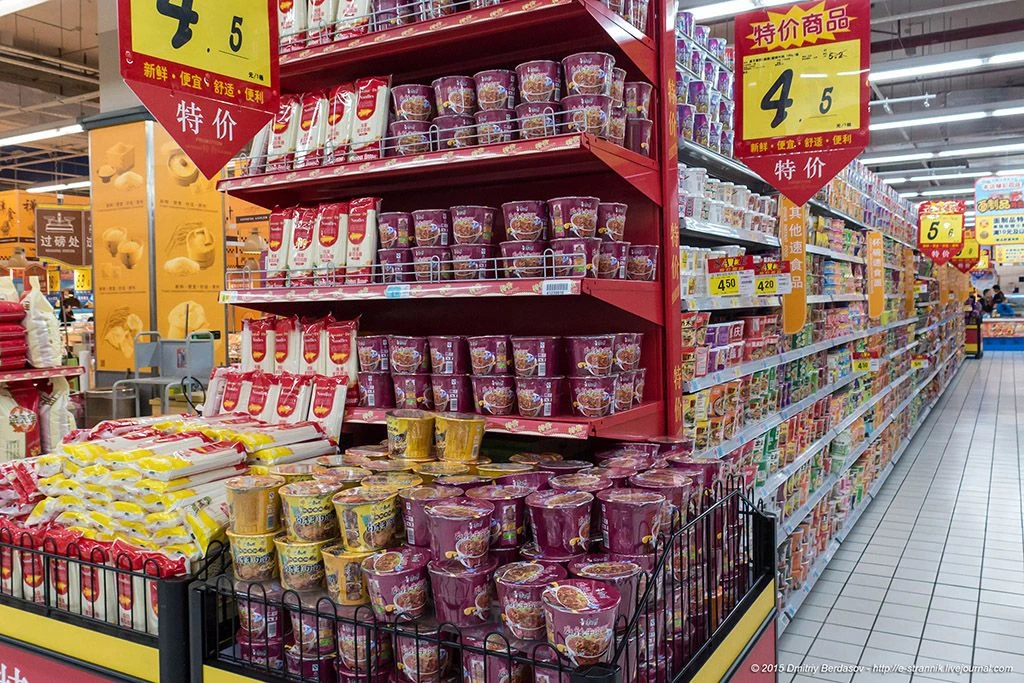
The second most important staple in China is noodles. While many people make their own from scratch, I headed over to the instant noodle aisle. The sheer variety is mind-blowing. The sauces in each bowl are all different, and unlike dry seasoning packets, these come with rich, preserved sauces in pouches. A single container can include up to five different ingredient packets. 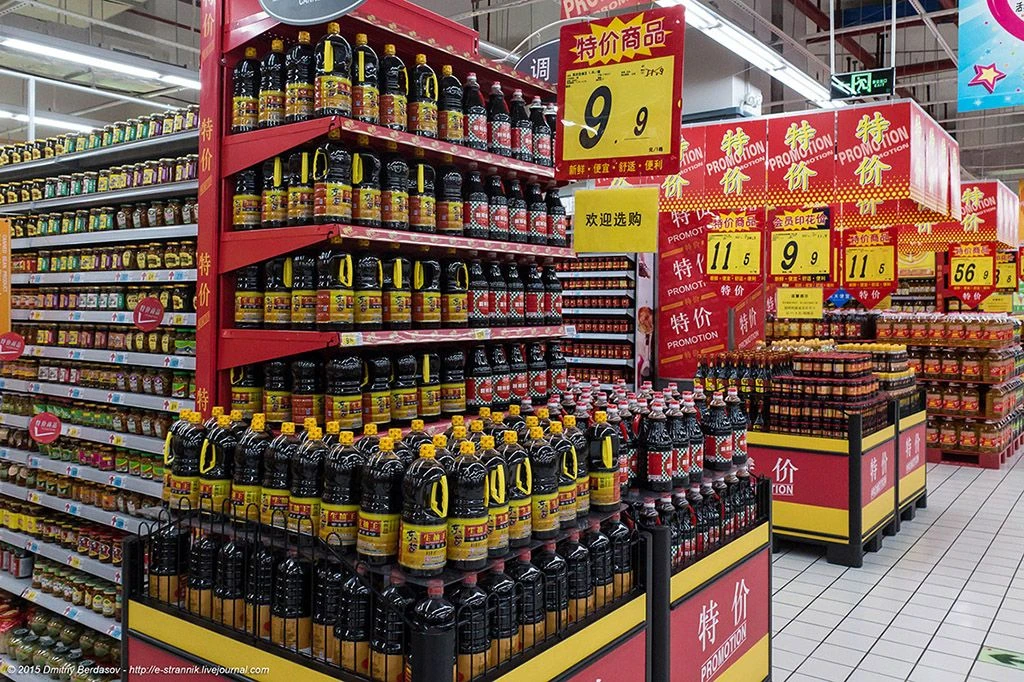
No Chinese dish is complete without soy sauce. Check this out: a 2-liter bottle costs just $1.20! 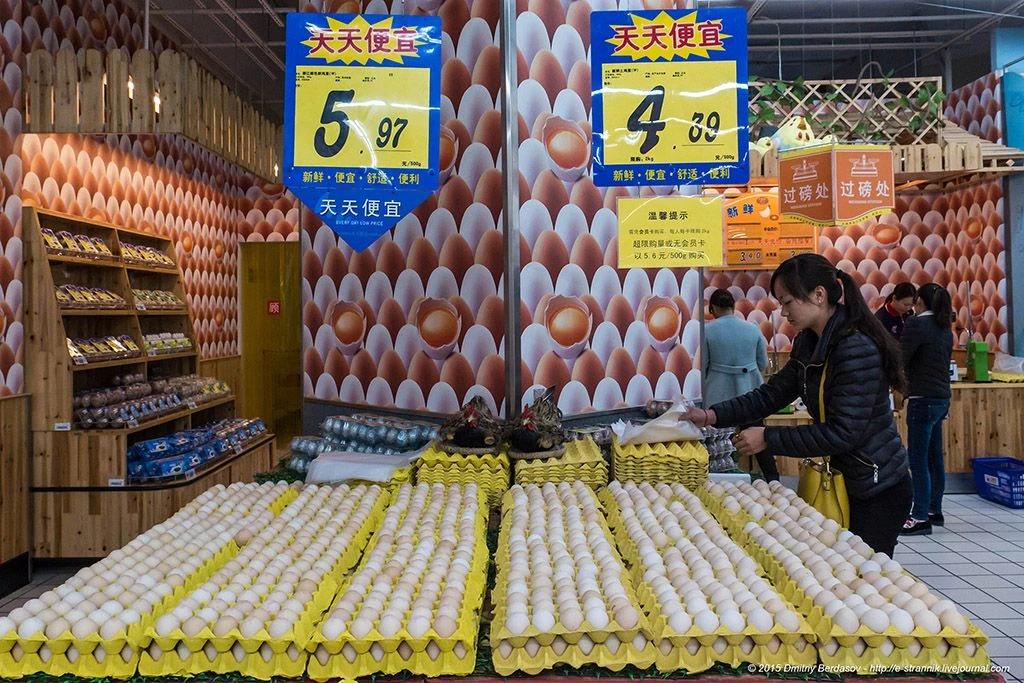
Surprisingly, eggs are sold by weight here. I didn’t buy any, so I'm not sure what a dozen weighs. 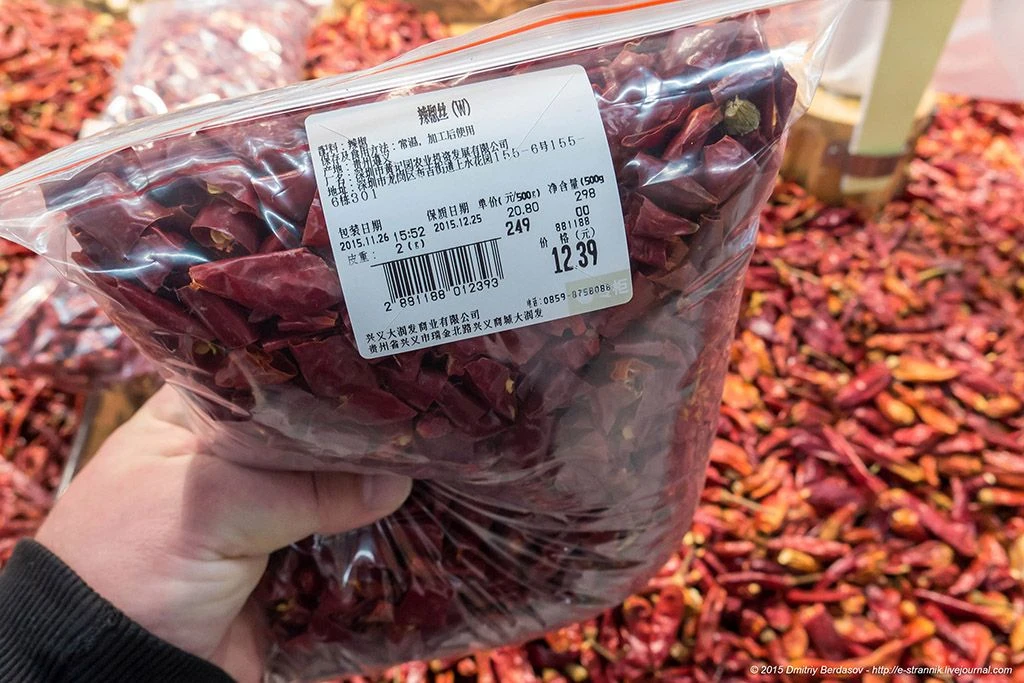
Chili peppers. I bought $1.48 worth, which should easily last me a year. 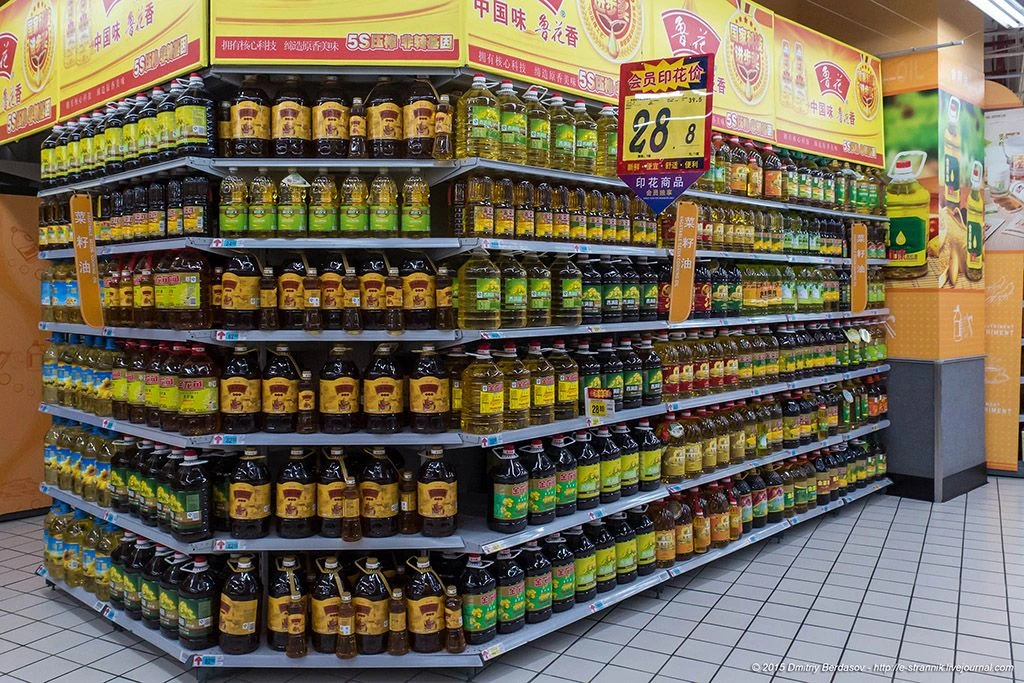
Cooking oils: sunflower, corn, canola, sesame. Something for every taste. 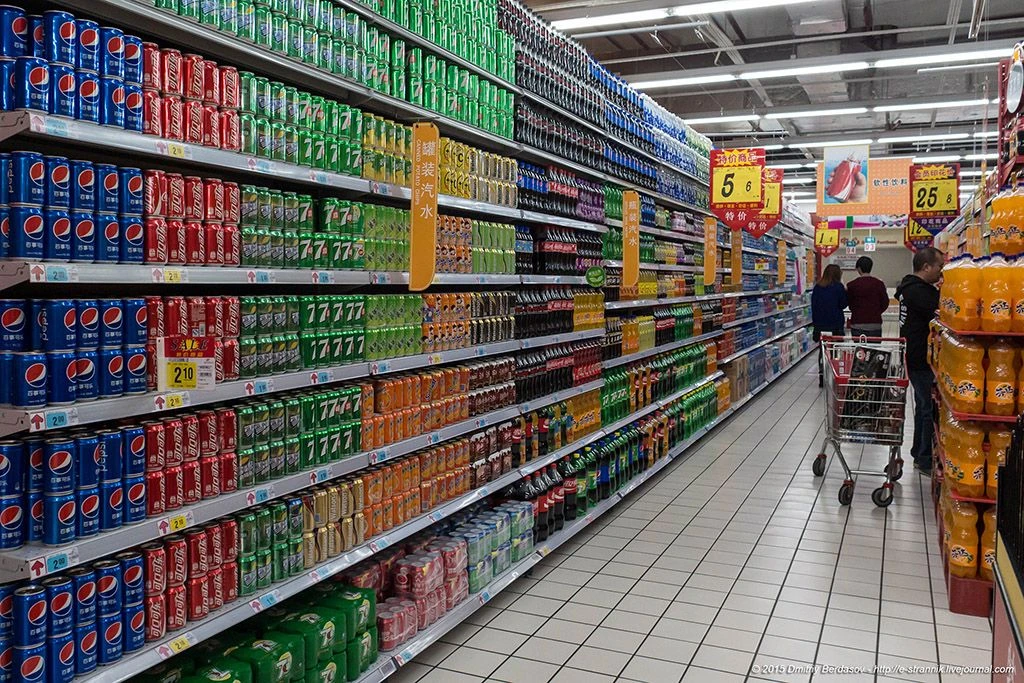
A full range of beverages, from bottled mineral water to juices, including freshly squeezed options. 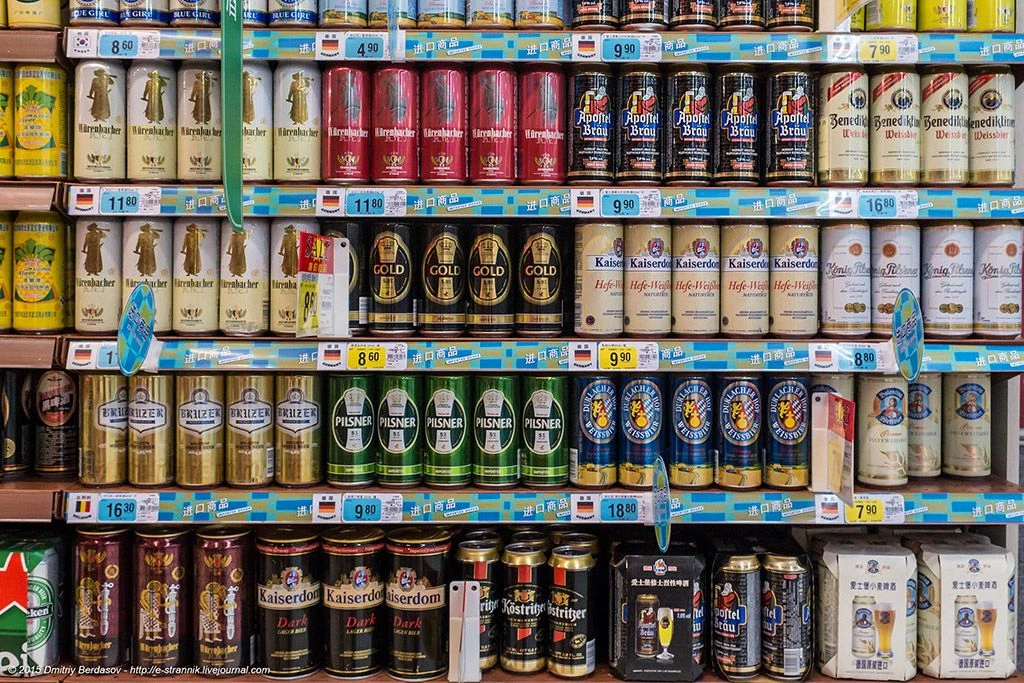
Beer ranges from local Chinese brands to imported German brews. By the way, almost all domestic Chinese beer has a lower alcohol content—even local Tuborg sits at just 3.1%. Prices run from $0.30 for Chinese brands up to $2.40 for imports. 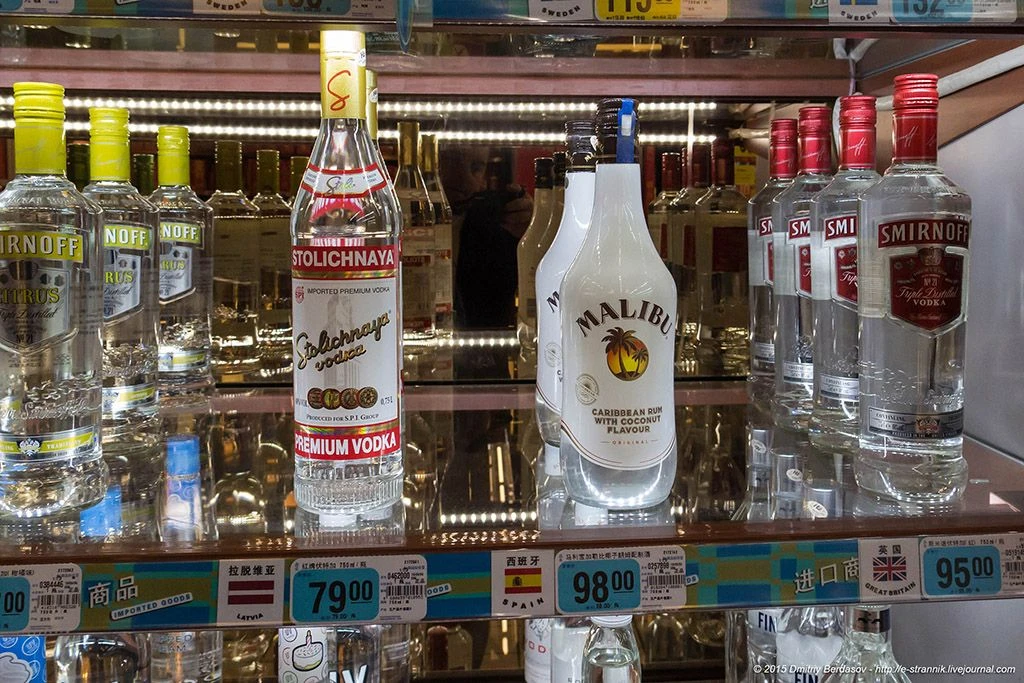
A hot topic back home: toilet paper! They have EVERY kind imaginable! 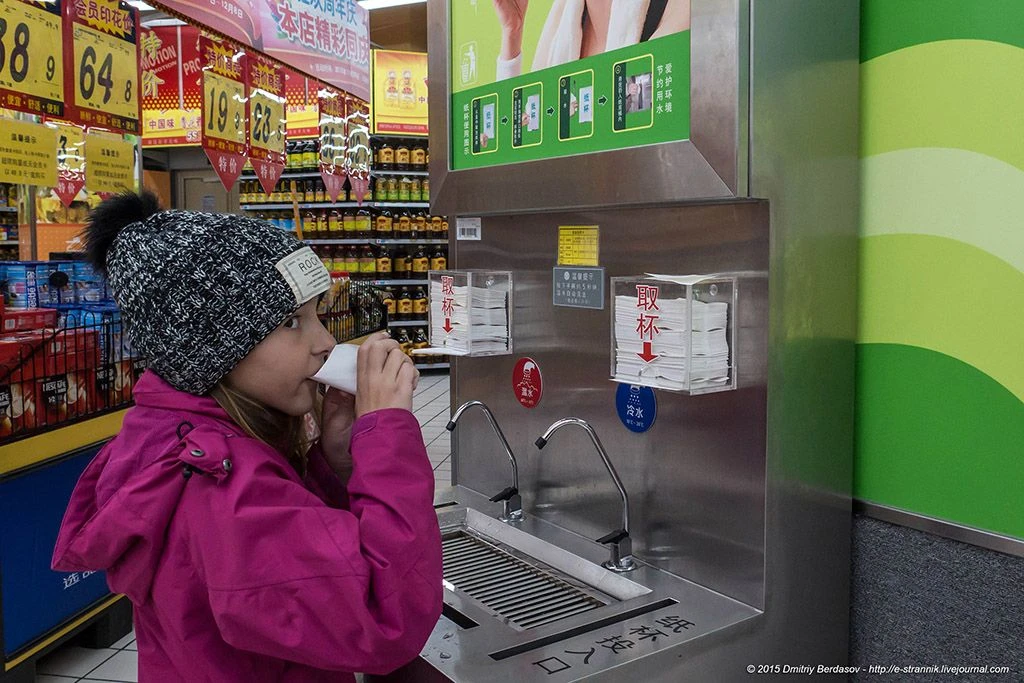
Time for a quick drink of water! ???? You can drink right out of a paper pouch. They offer chilled water (15–20°C) and warm water (20–35°C). Talk about customer care! 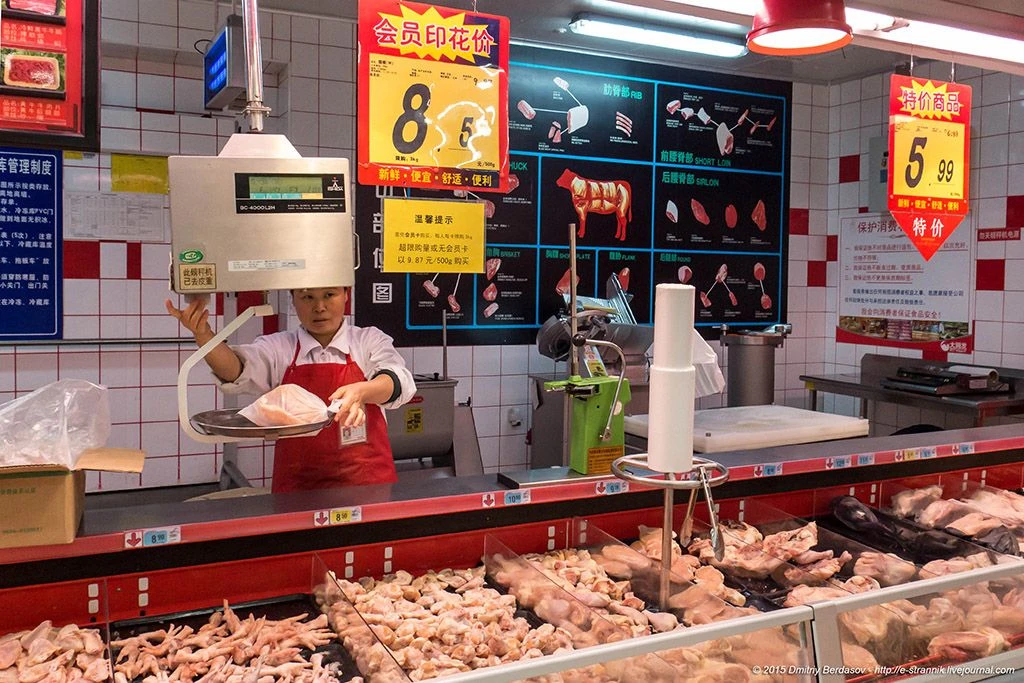
Meat aisle: Chicken is the primary staple in the Chinese diet, averaging around $1.56 per kilogram. 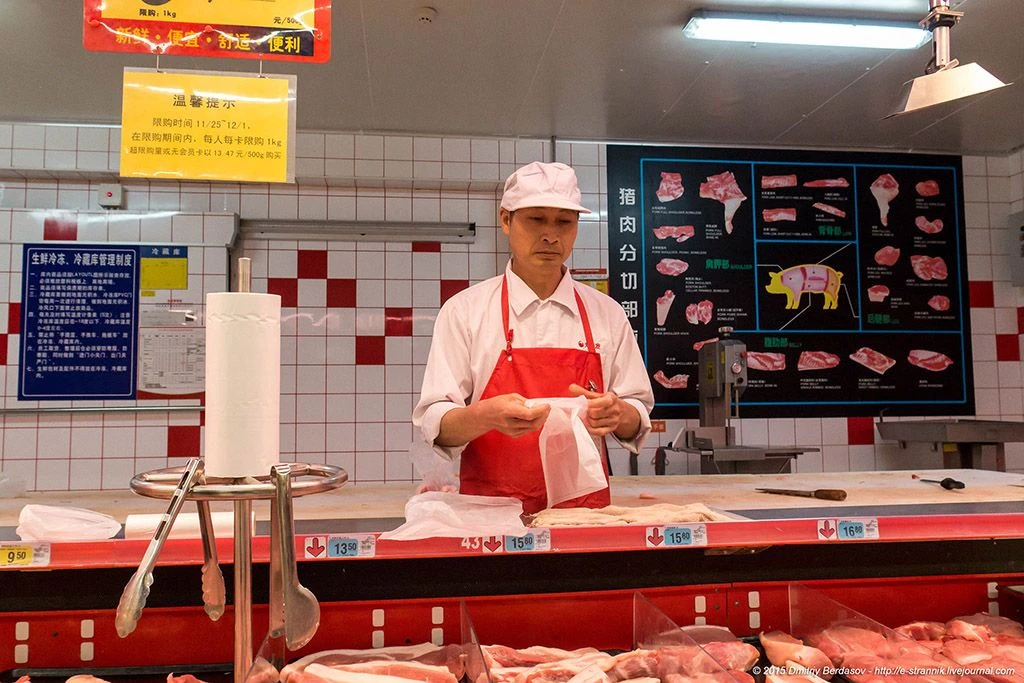
Pork comes in second. For $3.60, you get a great cut. 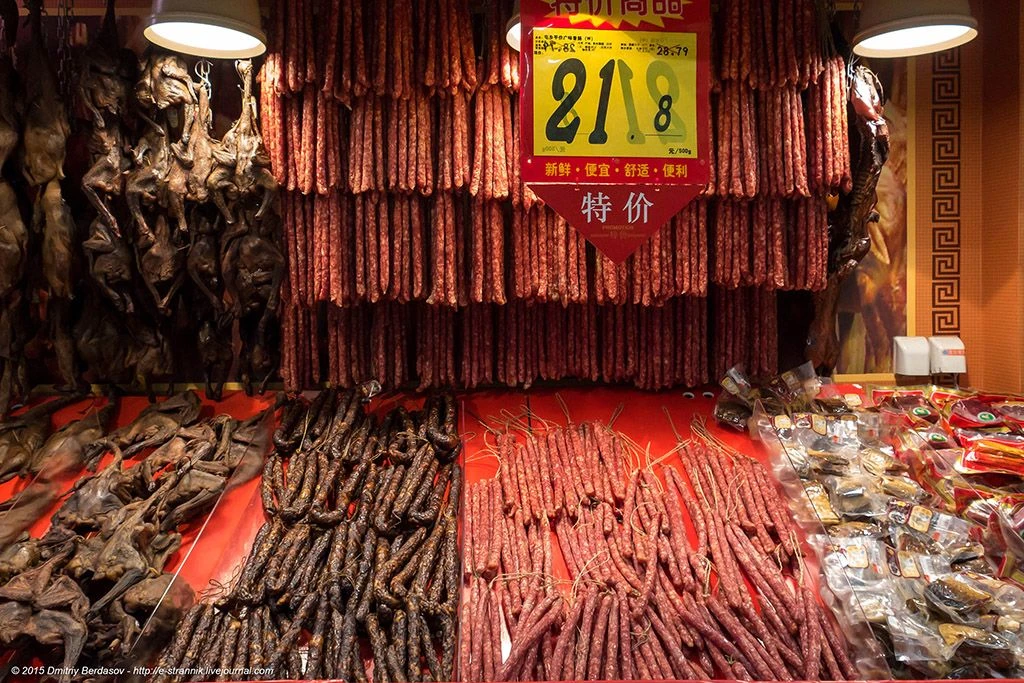
The sausage here is quite unique—it's sweet! I actually liked it, but my family wouldn't touch it. 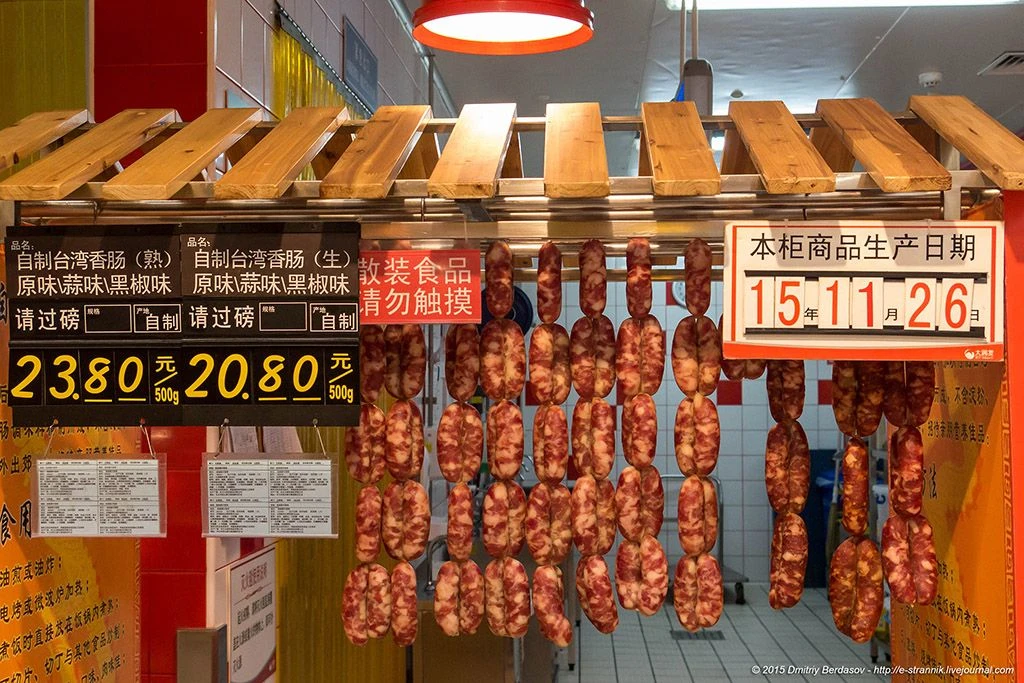
Grilling sausages are made right in the supermarket. The display case even shows the production date! At $4.80 per kg, they are fresh and completely preservative-free. 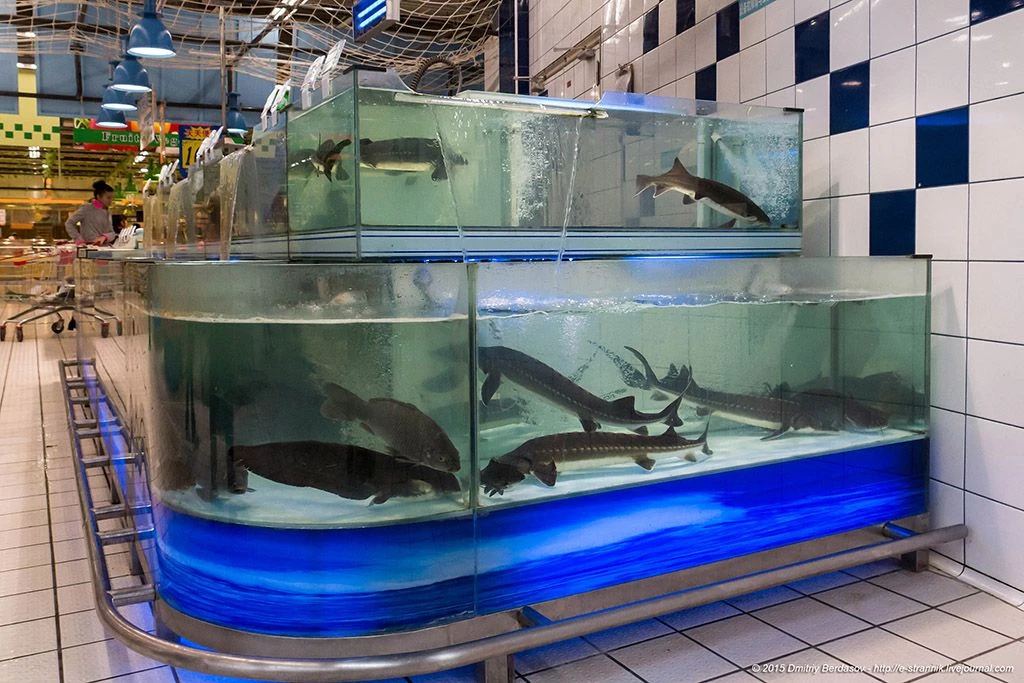
The seafood section. Wow, look at this variety! 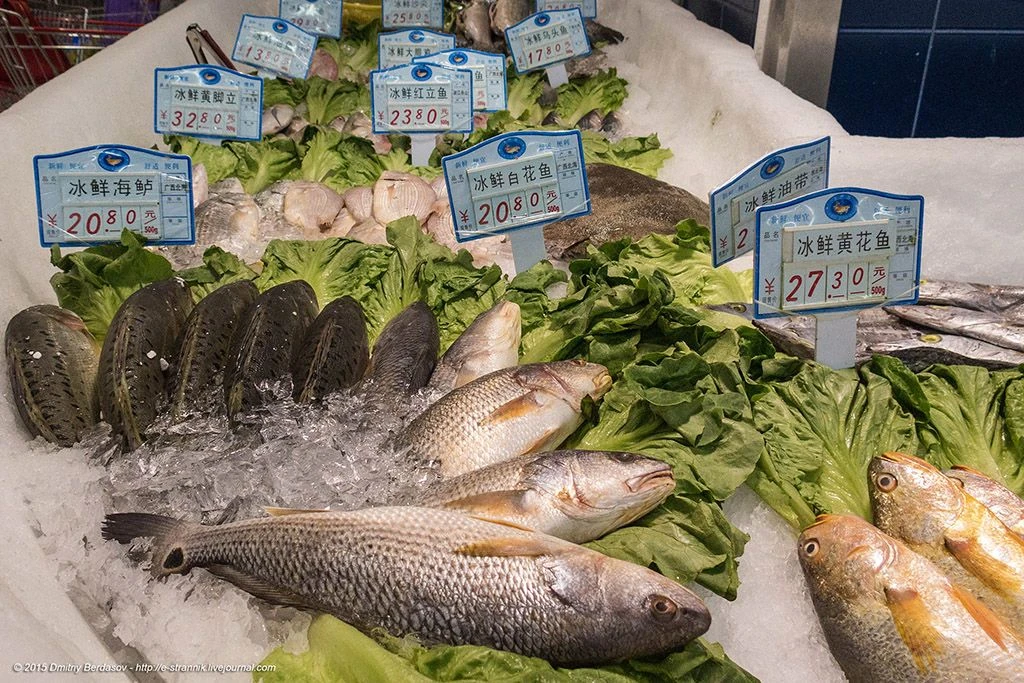
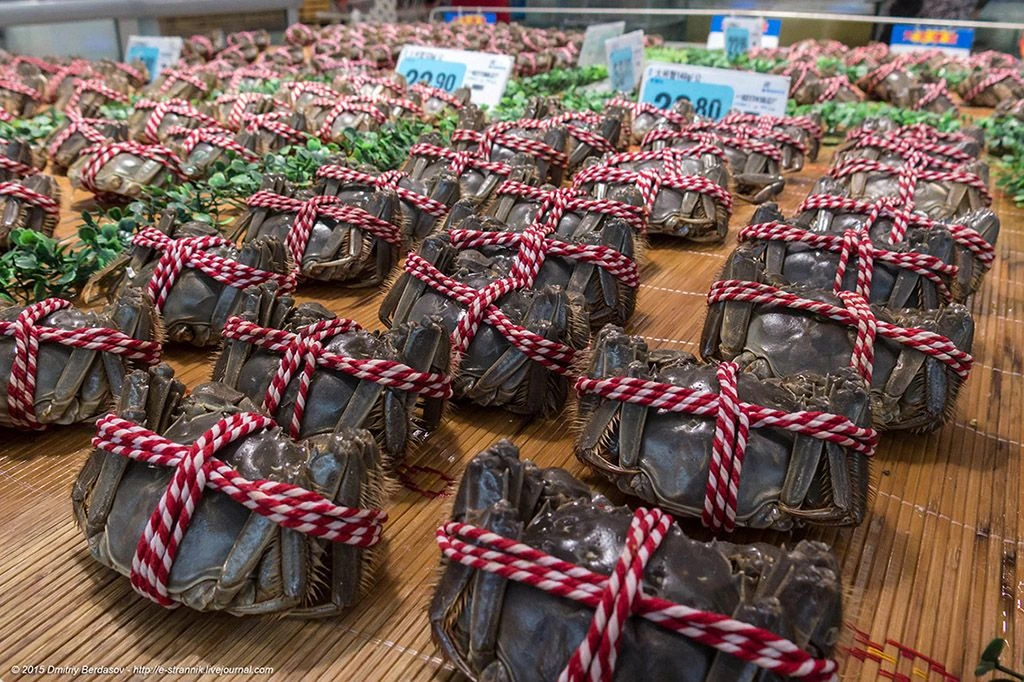
Fresh crabs for just $4.80 a kilo. Mind-blowing! 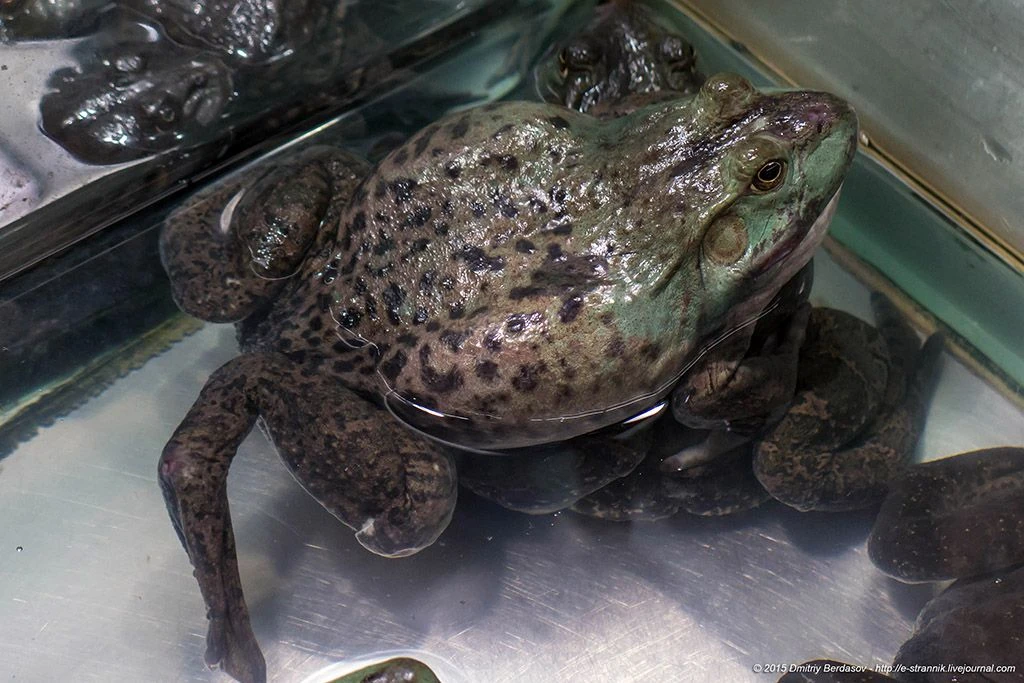
Besides familiar seafood, there are also small turtles for soup and bullfrogs selling at $3.84 per kilogram live weight. 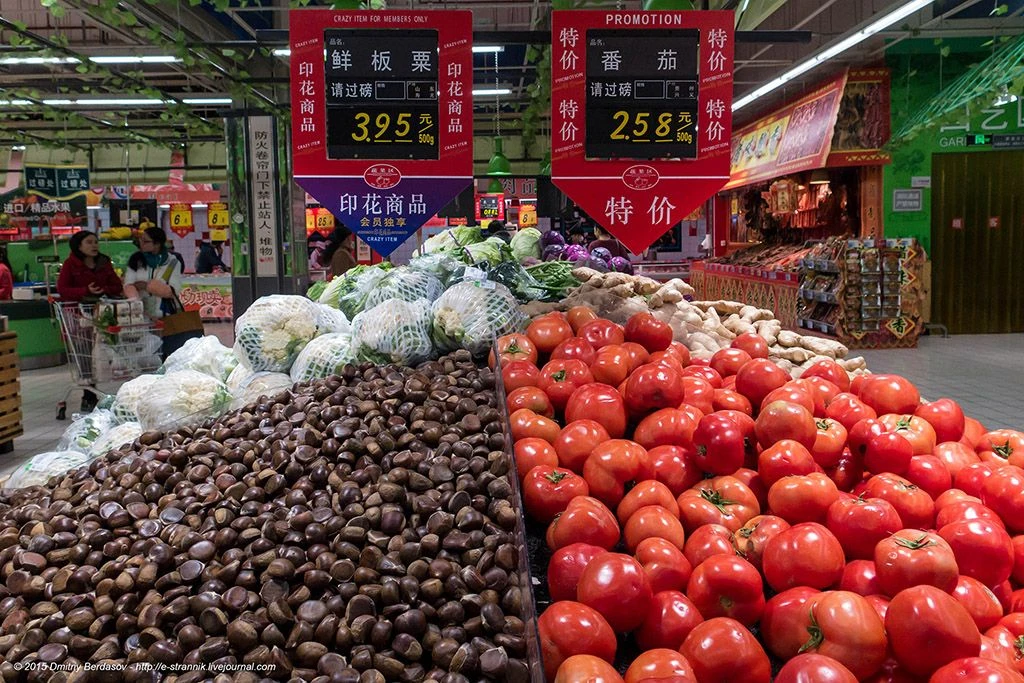
I got another shock in the produce aisle. 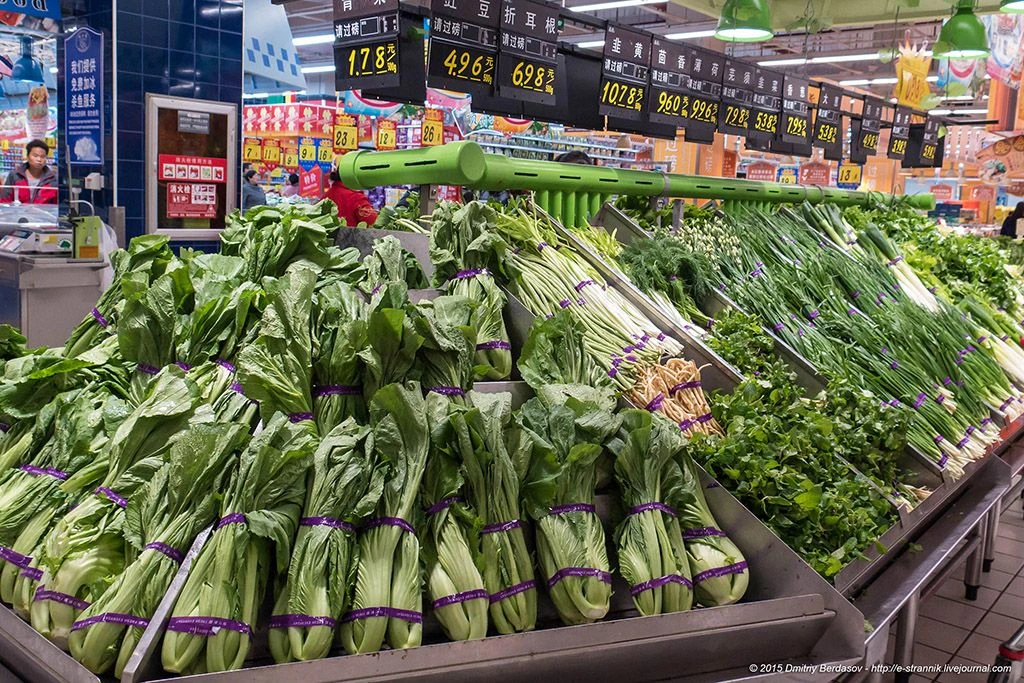
Ultra-fresh leafy greens are automatically misted with water from overhead green pipes. 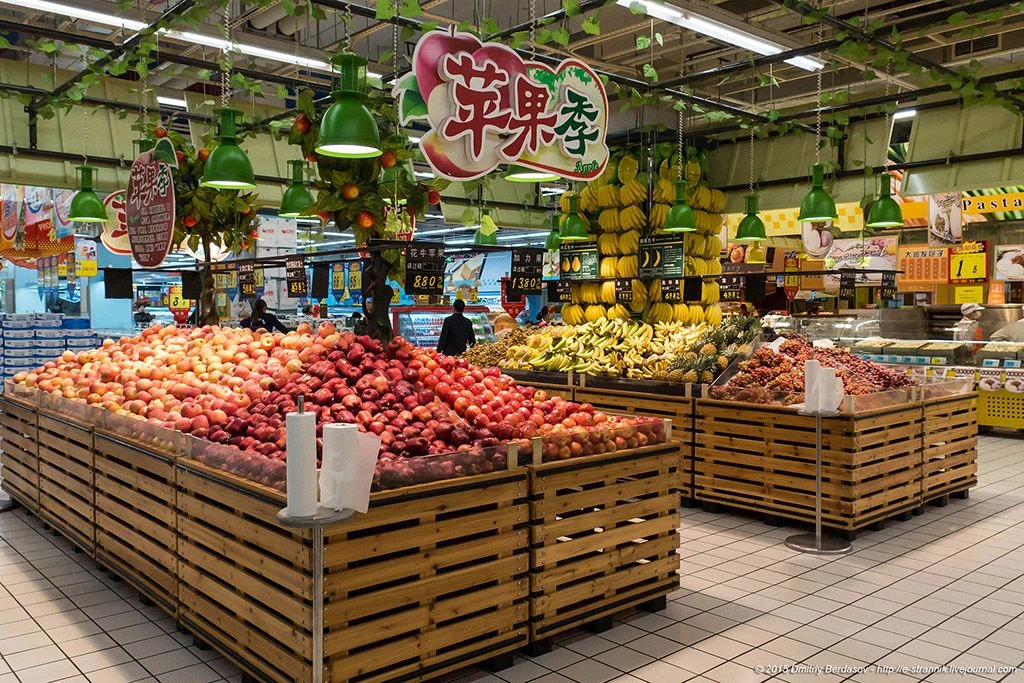
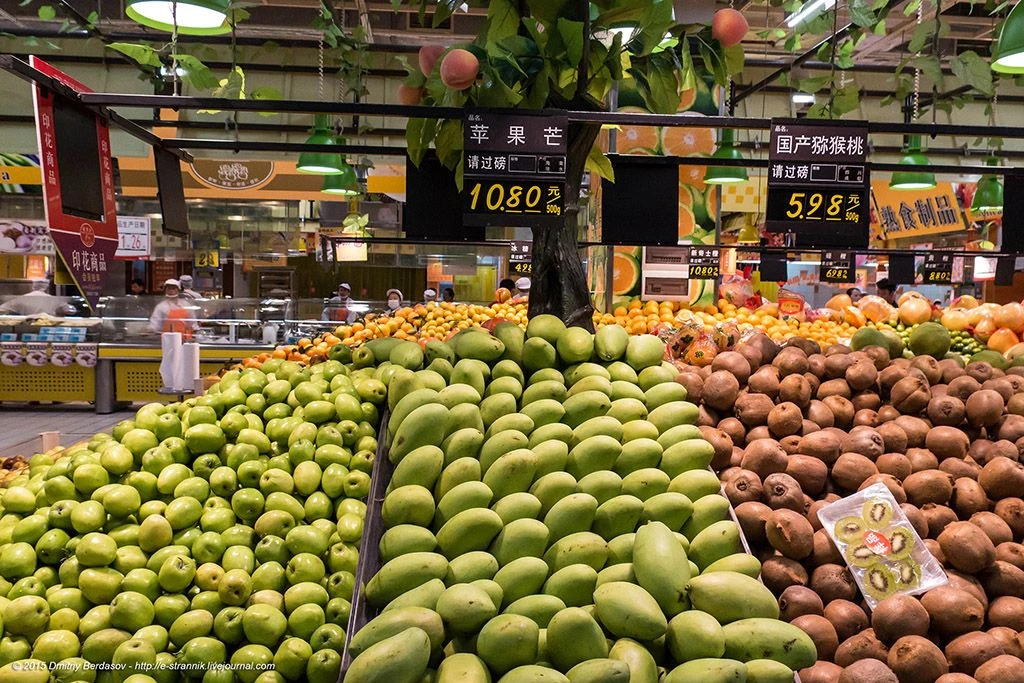
Fresh mangoes for only $2.40! 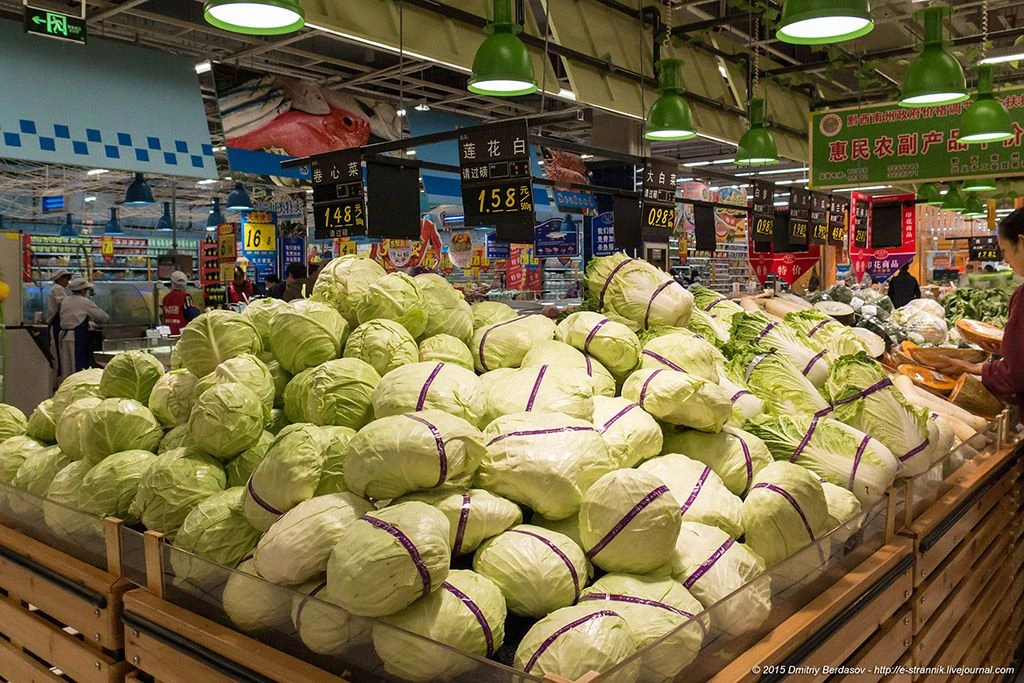
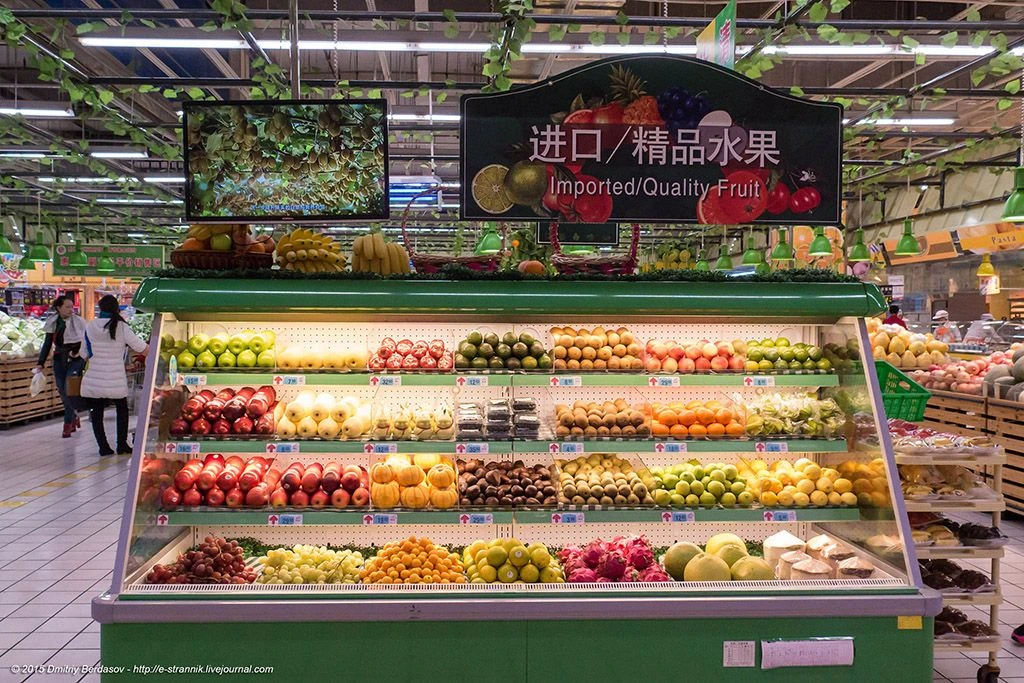
Imported fruit is noticeably pricier, but still accessible. 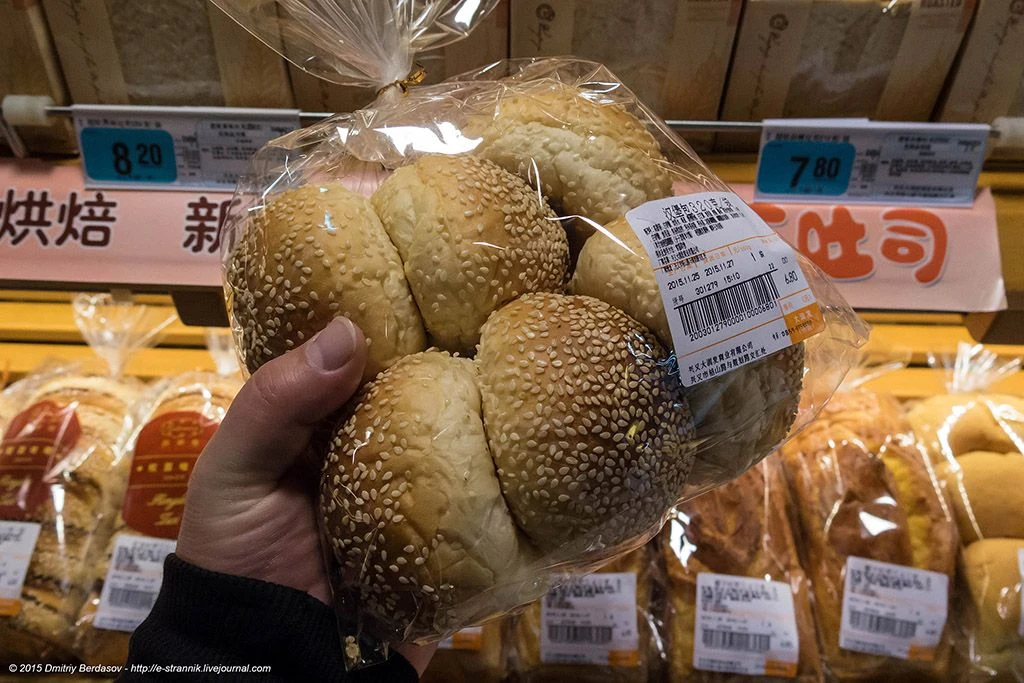
There is bread as well, though locals rarely eat it. 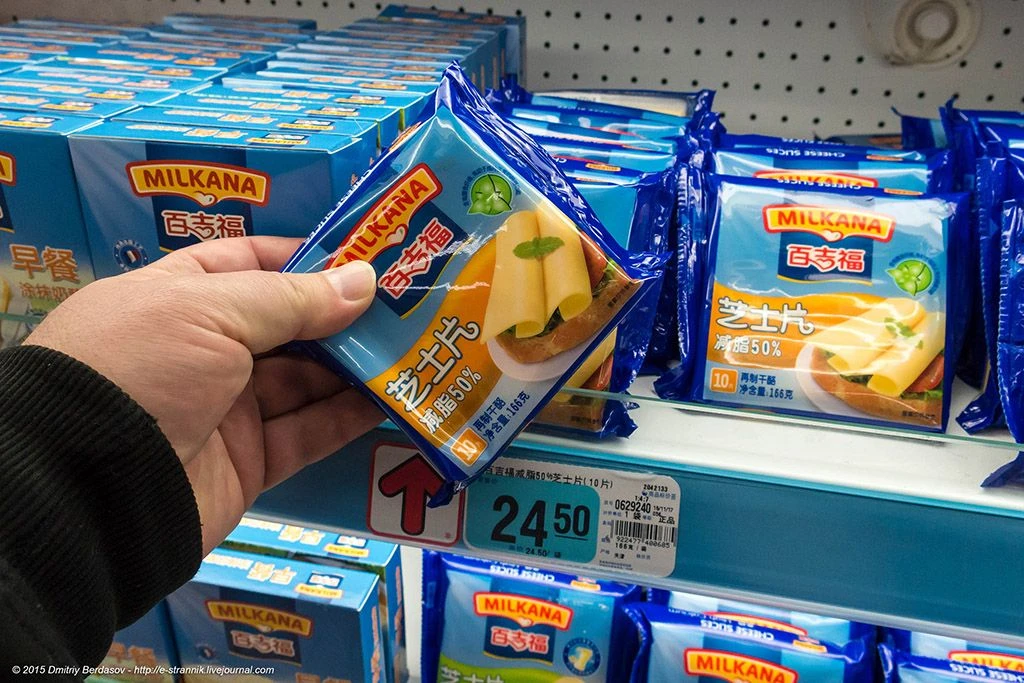
Dairy products are expensive. A liter of milk goes for $1.20, and cheese is even pricier with a very limited selection. It's just not part of the traditional diet. 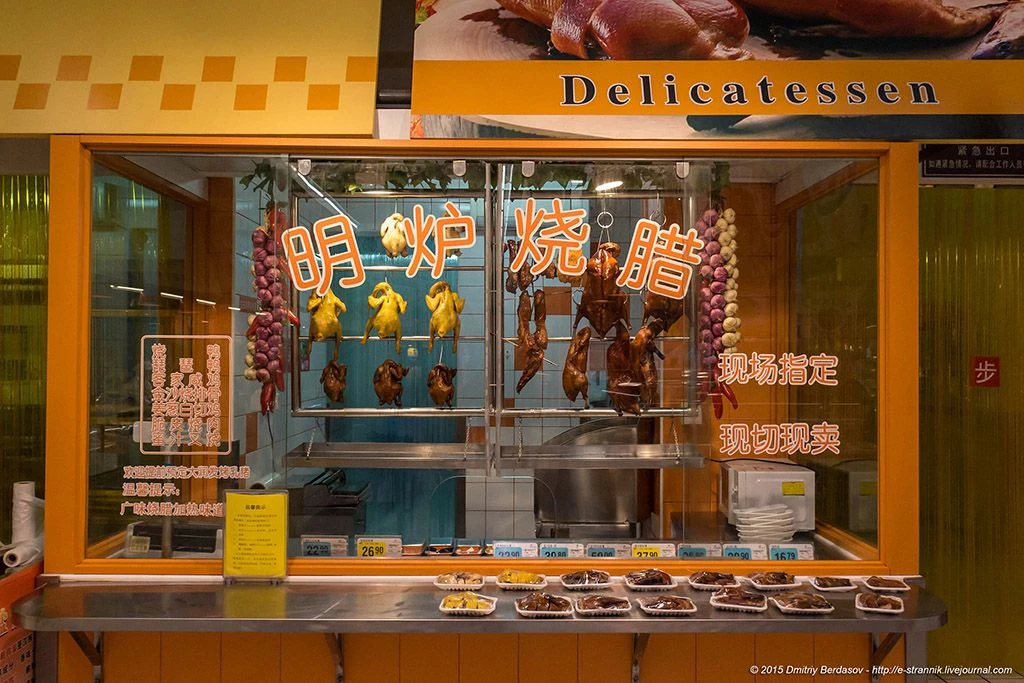
Most locals don't cook at home; they eat at street-side eateries or pick up prepared meals. You can find plenty of ready-to-eat items here too. 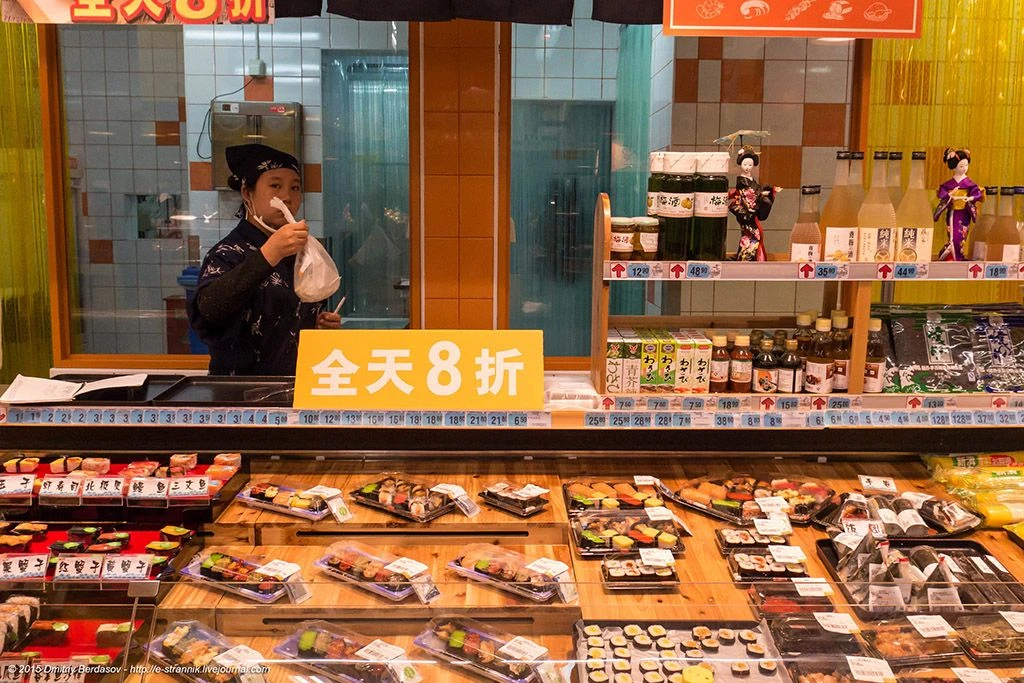
A vegetarian sushi set costs just $0.96. 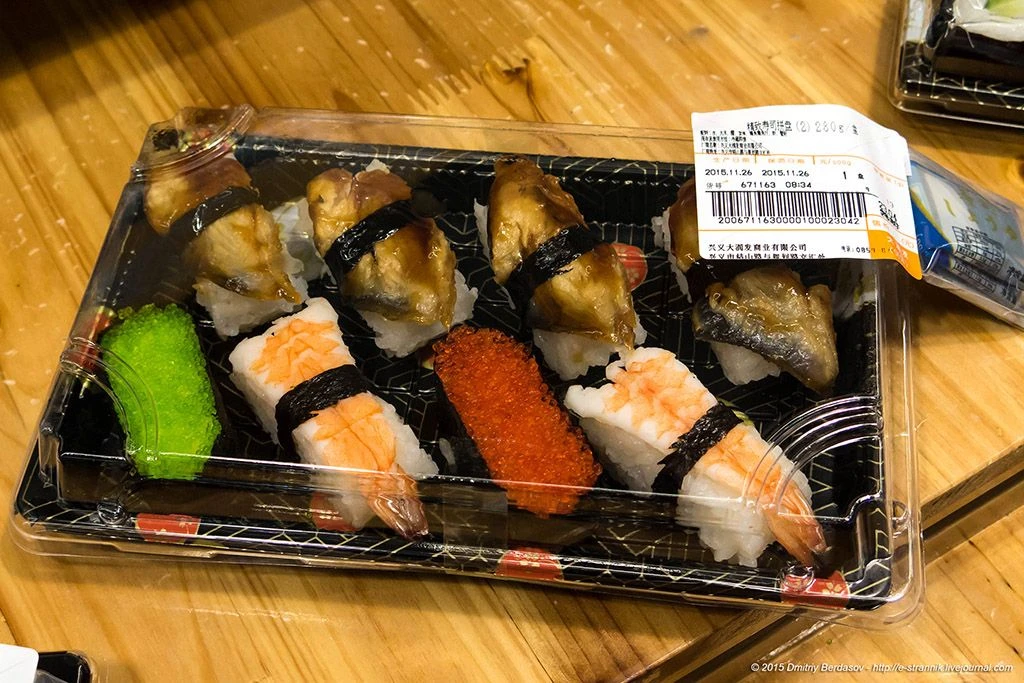
More gourmet sets are naturally a bit pricier. 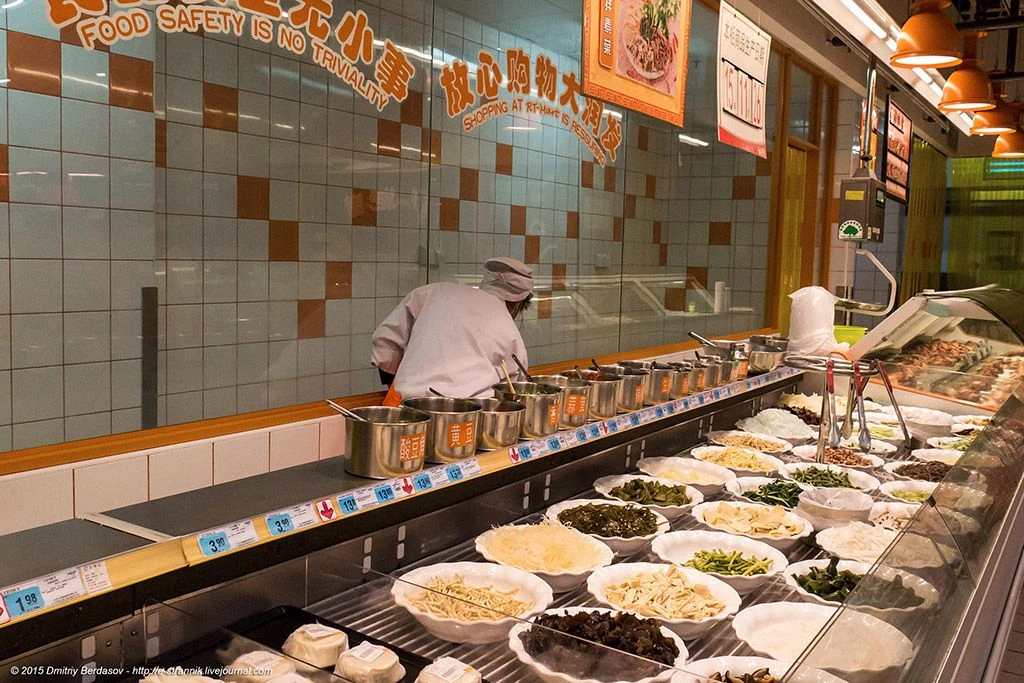
There is also a huge selection of hot Chinese noodle and rice dishes. 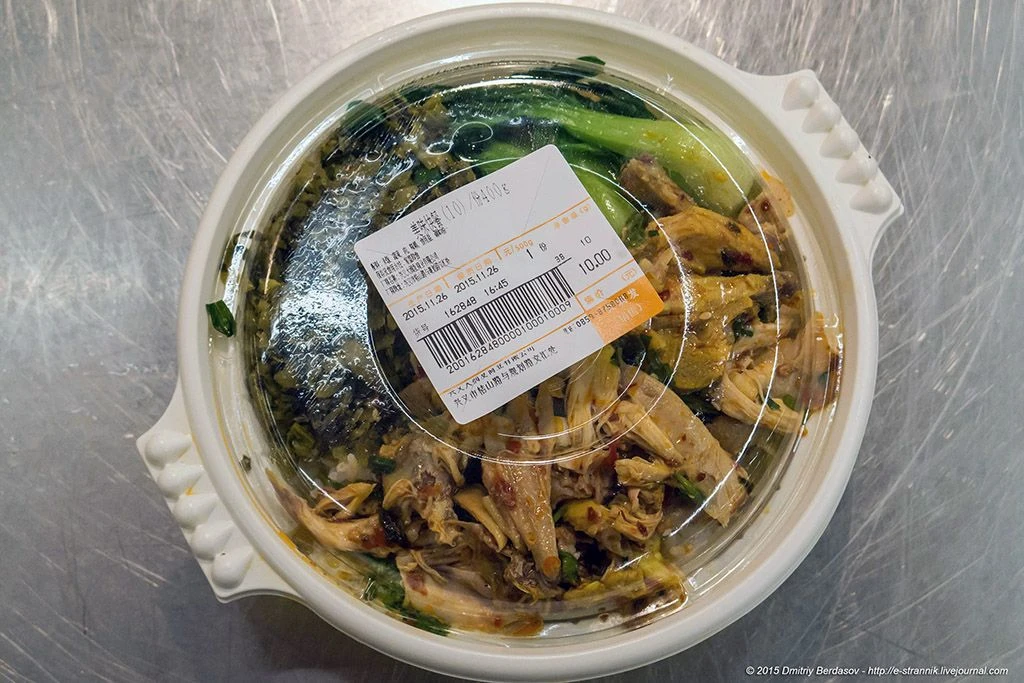
A complete Chinese dinner for just $1.20.