The Ice Maiden of Ukok: How an Altai Shamaness Lay Frozen for 2,500 Years — and Became a Curse to Those Who Disturbed Her (16 photos)
In the summer of 1993, archaeologist Natalia Polosmak arrived at the remote Ukok Plateau and set her sights on a burial mound her colleagues considered barren. Beneath a ransacked grave, her team uncovered a second, untouched burial chamber. Inside rested the mummy of a young woman, entombed in ice for two and a half millennia. The press quickly crowned her the "Siberian Ice Maiden," or "Princess of Ukok," though researchers soon challenged the royal title. Meanwhile, locals continue to blame the awakening of her mummy for earthquakes and other misfortunes across the Altai. Here is the story of how archaeologists unearthed Ak-Kadyn, what medical science revealed about her life, and why the battle over her remains rages in courtrooms to this day. 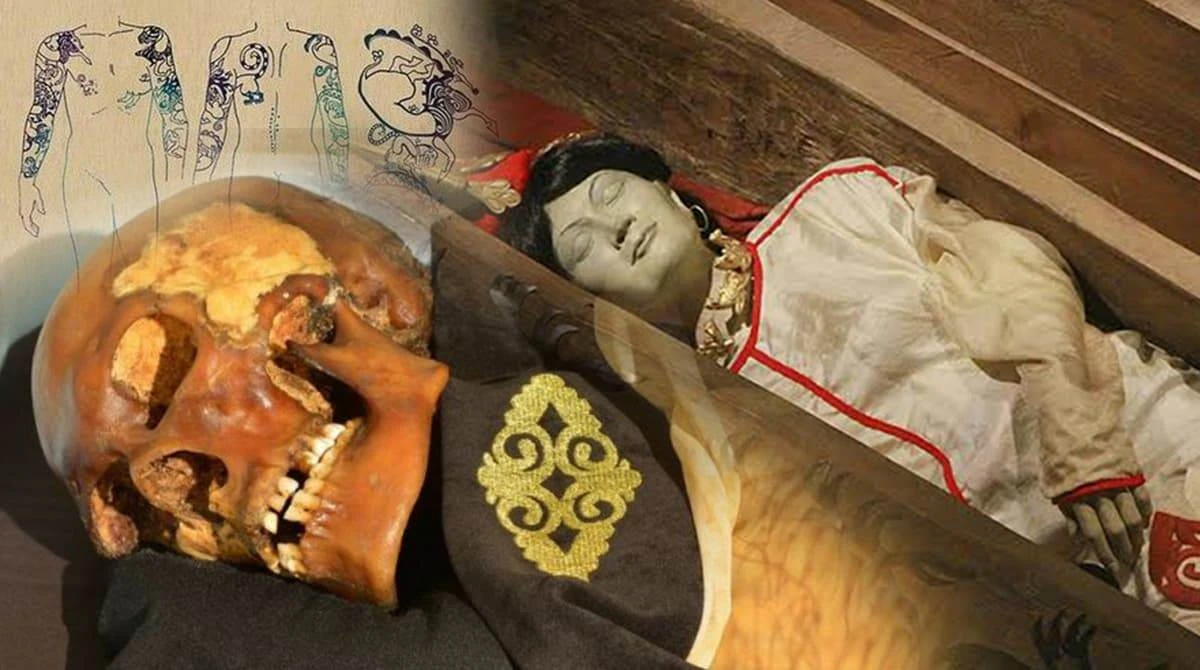
The Burial Mound No One Believed In
It all started with one researcher's sheer determination. In the summer of 1993, Natalia Polosmak traveled to the Ukok Plateau—a high-altitude steppe rising 2,500 meters above sea level, wedged along the borders of Kazakhstan, Mongolia, and China. She decided to excavate the Ak-Alakha-3 kurgan, despite fierce discouragement from her husband and colleague, Academician Vyacheslav Molodin. He was convinced the site had been looted long ago and offered nothing worth digging for. 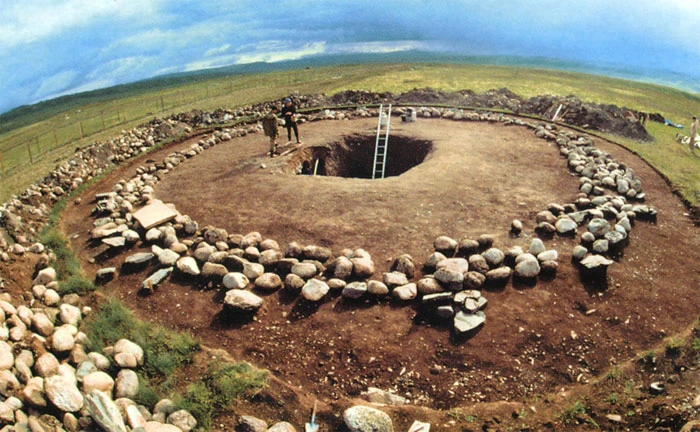
Excavations of the Ak-Alakha-3 mound on the Ukok Plateau: beneath a looted layer, archaeologists uncovered a second, untouched burial chamber
The upper grave proved to be from a later period and indeed thoroughly plundered, holding only the skeleton of a man and three horses. Directly beneath it, however, lay an intact Pazyryk chamber that had flooded and frozen solid centuries ago. This natural subterranean freezer preserved its contents pristine for twenty-five centuries.
An Ice Capsule at 2,500 Meters
Inside the lower chamber sat a solid larch-log sarcophagus, flanked by the remains of six saddled horses. The steeds had been ritually sacrificed to accompany their mistress into the underworld. Archaeologists spent days gently melting the ice, moving with painstaking caution: any haste risked tearing the delicate, remarkably preserved flesh. 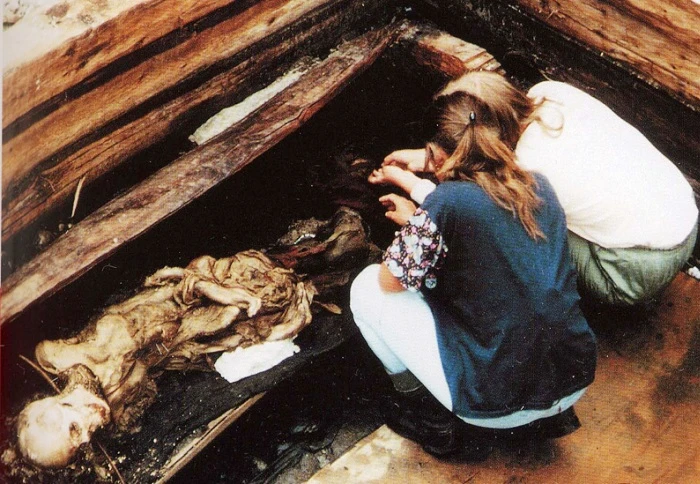
Archaeologists beside the opened ice chamber—melting the ice took days to avoid damaging the ancient remains
When the lid was finally lifted, it became instantly clear: this find would revolutionize our understanding of the Pazyryk culture—the nomadic Iron Age tribes of Scythian stock who inhabited the Altai Mountains between the 5th and 3rd centuries BCE. 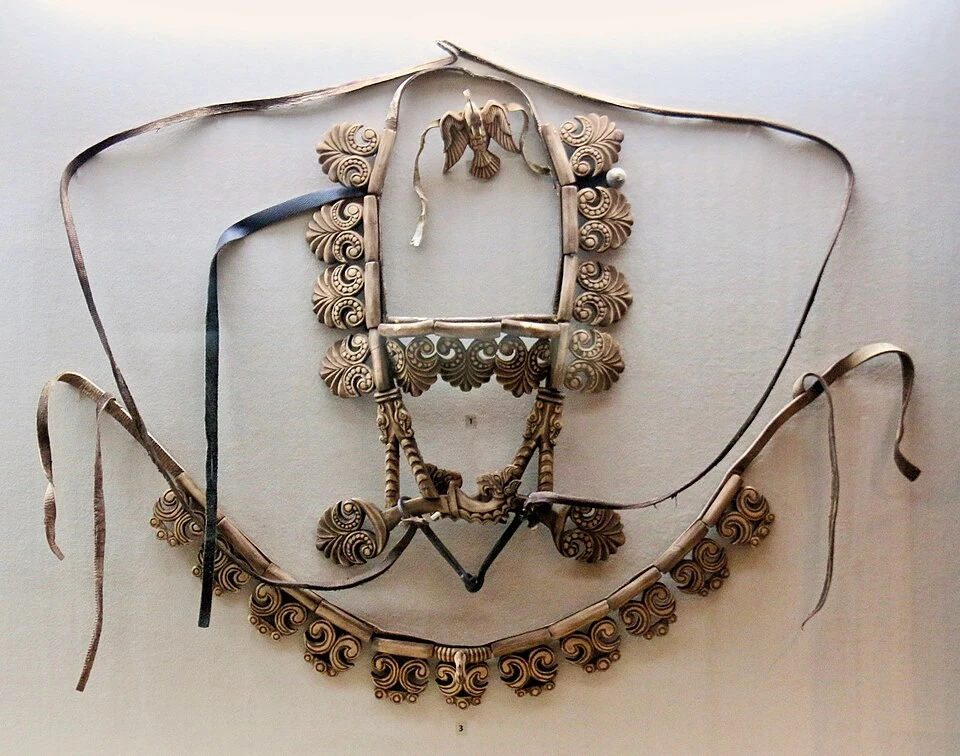
Harness belonging to one of the six horses sacrificed to guide their mistress through the afterlife
The mummy was airlifted by helicopter to the scientific hub of Novosibirsk's Akademgorodok. There, geneticists, paleopathologists, and embalming experts took charge of her study.
Preserved in Ice
Researchers were greeted by the body of a woman aged 25 to 28, embalmed with great care by her contemporaries. Her internal organs had been removed and the cavities packed with fragrant herbs, while the burial chamber itself was deliberately engineered to fill with ice. 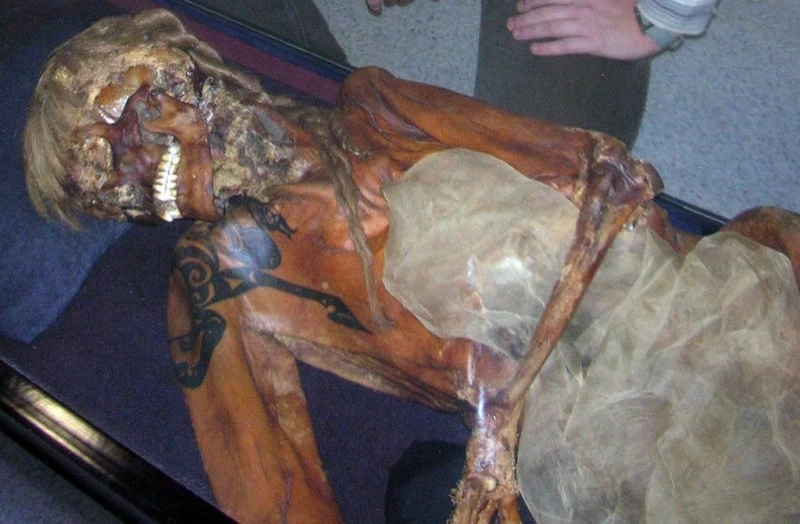
Thanks to the perpetual permafrost, the woman's body remained astonishingly intact
She was found wearing a towering, 90-centimeter headdress fashioned from hair, wool, and felt. Underneath, her own natural hair was neatly braided. 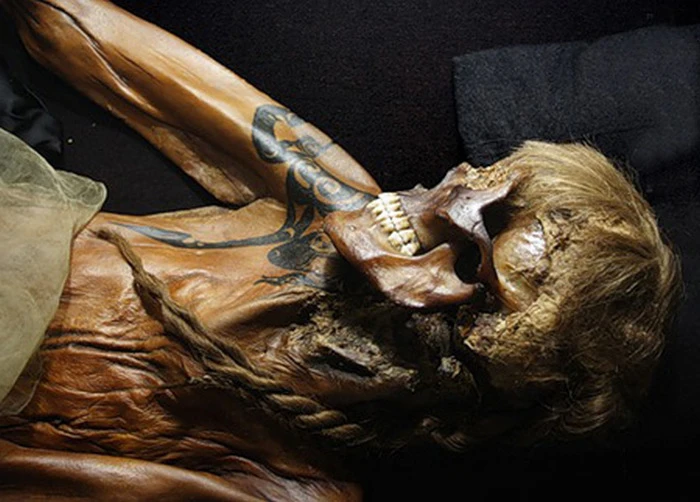
Ak-Kadyn's natural hair, braided beneath a massive 90-centimeter wig made of hair, wool, and felt
Researchers believe such an elaborate hairstyle and towering headpiece clearly marked her out as a figure of high status within Pazyryk society.
Tattoos That Outlived Two and a Half Millennia
The most striking revelation came in the form of intricate body art. Inked onto the woman's shoulder was a mythical beast—a deer bearing the horns of an ibex and the predatory beak of a griffin. 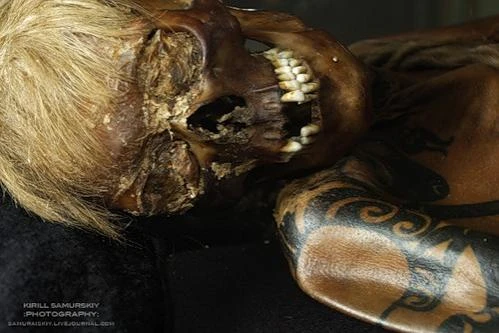
Shoulder tattoo: a mythical deer with ibex horns and a griffin's beak
Running from her shoulder down to her wrist were depictions of an argali sheep, a snow leopard, and winged predators. Polosmak argued that these designs were far more than simple decoration; they served as a complex symbolic visual language denoting rank, lineage, and pivotal life milestones. 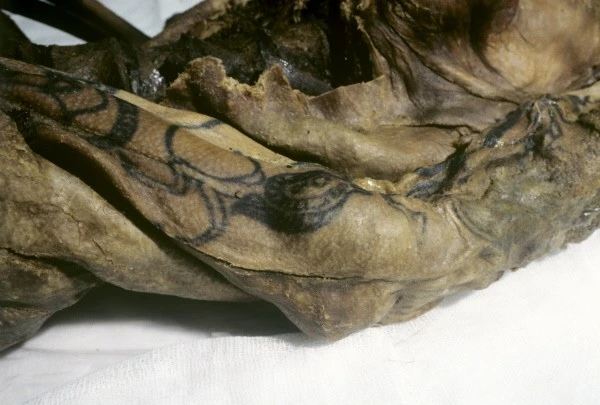
An argali sheep and snow leopard tattooed on her arm, executed with astonishing precision 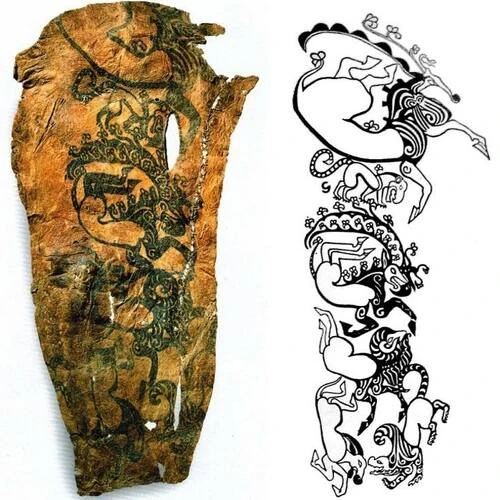
The woman's arms are adorned with masterful zoomorphic tattoos
The press immediately dubbed the find the "Princess of Ukok," while native Altai communities came to revere her as Ak-Kadyn—the "White Lady." The archaeologists who discovered her, however, reject the royal title, viewing her instead as a member of the Pazyryk middle tier who likely held a prominent ritual or spiritual role.
A Diagnosis Delivered by Modern Medicine
Uncovering what caused Ak-Kadyn's death took years. In 2010, advanced MRI scans identified a primary tumor in her right breast. Researchers Andrey Letyagin and Andrey Savelov described findings consistent with terminal, late-stage breast cancer. They concluded she had fought the disease for five to seven years, suffering excruciating chronic pain and physical wasting in her final months. 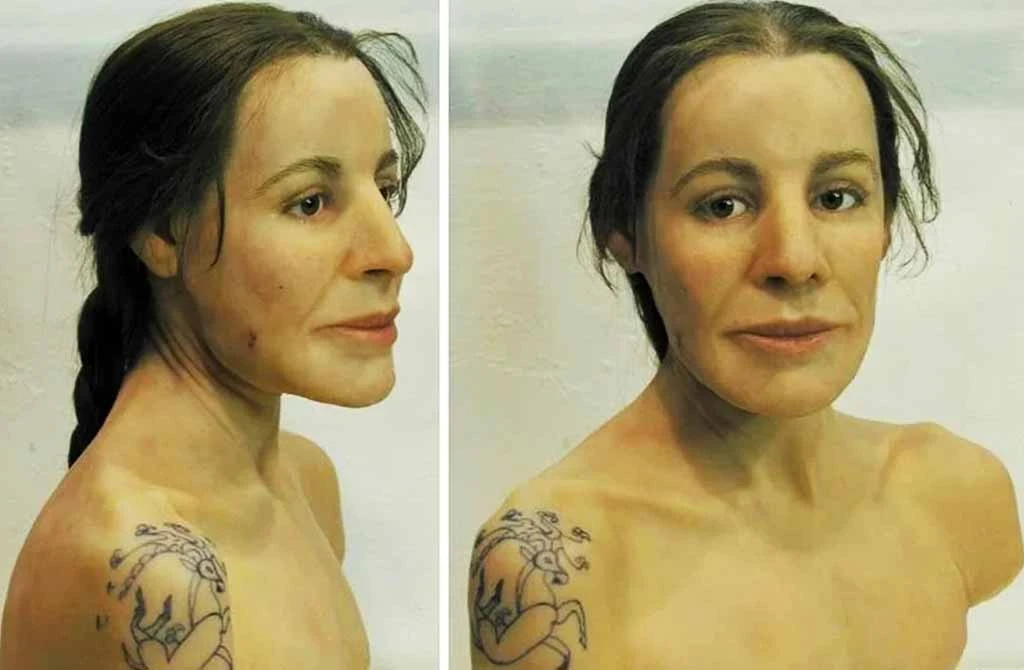
The first facial reconstruction of Ak-Kadyn, created in 1995
In Pazyryk belief, prolonged, debilitating illness often served as a divine initiation into shamanic calling. Researchers suspect this very affliction may have elevated Ak-Kadyn to holy status among her people. Anthropologically Caucasoid in appearance, the Pazyryk people share closer genetic affinities with indigenous Samoyedic peoples of Siberia than with modern Altaians. 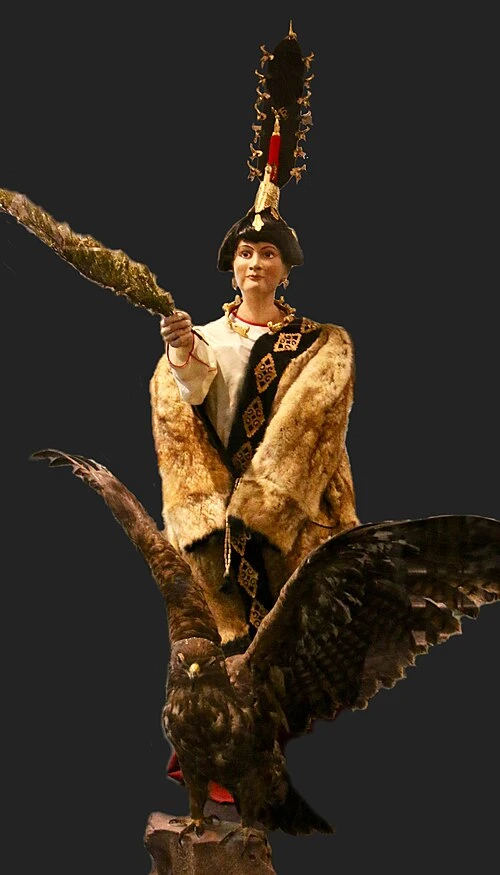
An updated forensic reconstruction of Ak-Kadyn, unveiled in 2022 by Novosibirsk scientist Dmitry Pozdnyakov
The Wrath of Disturbed Spirits
For nearly two decades, from 1993 until 2012, the mummy was kept in Novosibirsk's Akademgorodok—hundreds of miles from her resting place. To many Altaians, this separation felt like desecration. In local lore, Ak-Kadyn guarded the threshold between the realm of the living and the underworld, and her absence was seen as an open door to calamity. 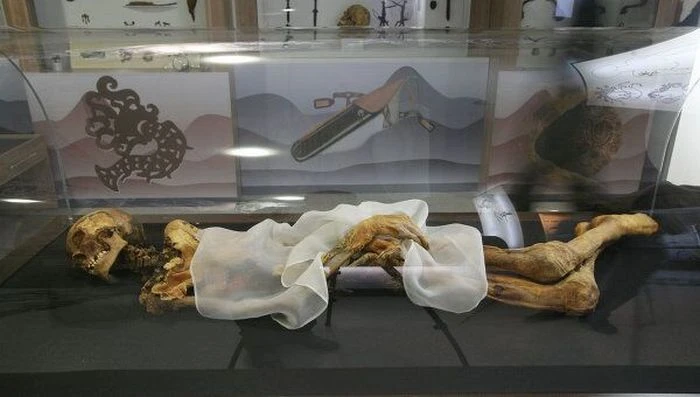
The mummy was housed at Novosibirsk's Akademgorodok for almost twenty years, until 2012
On September 27, 2003, the Kosh-Agach region was struck by the 7.3-magnitude Chuya earthquake—the most violent in the region's recorded seismic history. Nearly 1,900 homes were damaged, and the entire village of Beltir had to be rebuilt on a new site. Although no lives were lost, local residents, lawmakers, and spiritual elders directly attributed the disaster to the displaced mummy.
The Journey Home
On September 20, 2012, the mummy was finally returned to the regional capital of Gorno-Altaysk by helicopter, sealed within an armored bioclimatic capsule. The Anokhin National Museum underwent a major overhaul to receive her, outfitting a dedicated wing with climate-controlled display cases and building a mausoleum-like chamber. 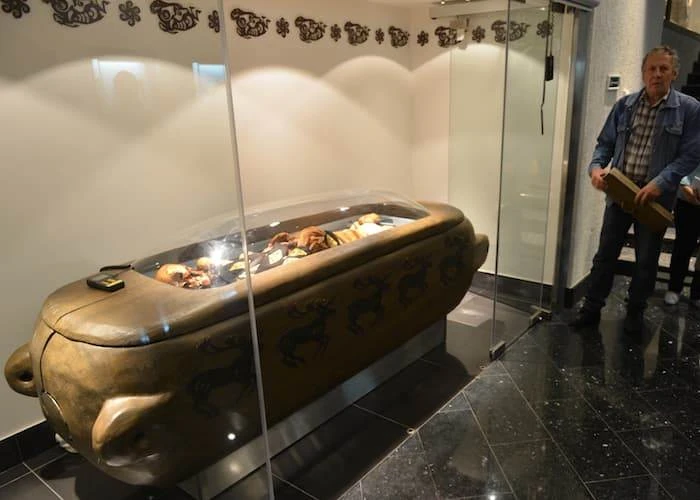
A specialized crypt was constructed for the mummy at the Anokhin National Museum in Gorno-Altaysk
Every few weeks, specialists treat her remains with specialized preservation formulas. Her initial conservation was handled by the same prestigious Moscow laboratory responsible for maintaining Lenin’s body. Public viewings remain strictly limited to designated days according to the lunar calendar.
A Feud Still Raging in the Courts
Returning to Gorno-Altaysk did little to quell the controversy. In the summer of 2014, the Altai was battered by devastating flash floods and massive hailstorms. The Council of Elders of the Altai Republic interpreted the extreme weather as another warning sign and demanded the mummy be reburied in her original tomb. Activists gathered some 22,000 signatures—representing nearly a tenth of the republic's entire population. 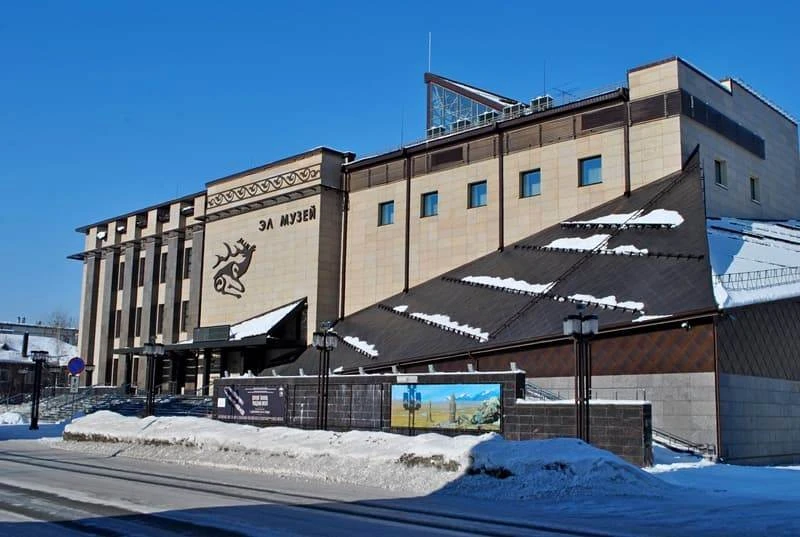
The Anokhin National Museum in Gorno-Altaysk—the epicenter of ongoing legal battles over the mummy
In December 2015, a coalition of local residents filed a formal lawsuit with the Gorno-Altaysk City Court. The suit was spearheaded by shaman Akay Kine, leader of the Kin Altai spiritual center. On February 3, 2016, the court dismissed the petition, ruling that the Ice Maiden is a cultural asset of federal significance, placing her legal custody under the Russian Ministry of Culture rather than regional authorities. Subsequent appeals were likewise rejected. Akay Kine vowed to take the case to international tribunals, though the legal battle has since stalled.
Was She Really a Princess?
Many in the scientific community contend that the archaeological reality has been entirely overshadowed by modern mythology. Academician Vyacheslav Molodin remains adamant:
"She was no princess at all, but an ordinary representative of the middle tier of Pazyryk society. The uproar surrounding our discovery inevitably flares up whenever something happens in the Altai: an election, an earthquake, or a hole in the regional budget." — Academician Vyacheslav Molodin 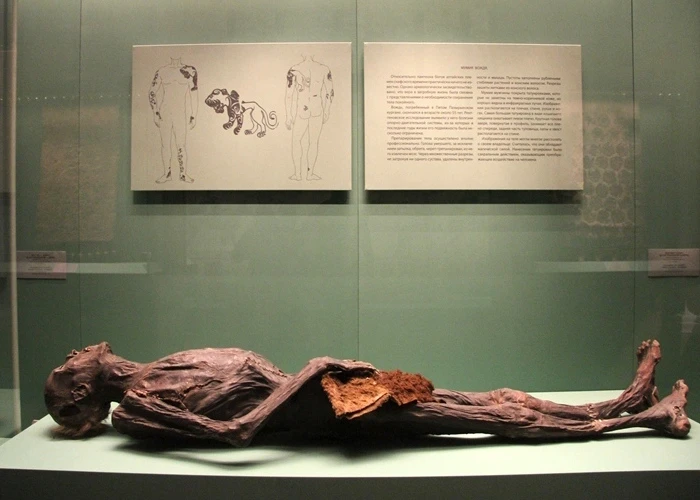
One of the Pazyryk mummies unearthed by Sergei Rudenko's expedition, now housed in the Hermitage Museum—whose return no one demands
Molodin also points to broader archaeological context: since 1929, numerous Pazyryk mummies have been recovered across the Altai. The most famous of these burials were excavated between 1947 and 1949 by archaeologist Sergei Rudenko in the Ulagan River Valley. For Altai activists, however, the comparison falls flat; they maintain that Ak-Kadyn holds a sacred, irreplaceable role in ancestral memory and must be returned to the earth.
The Right to Eternal Rest
The story of Ak-Kadyn transcends mere archaeological intrigue. It highlights the profound clash between scientific discovery and the sovereign right of indigenous peoples to determine the fate of their ancestors. As the Ice Maiden lies beneath the museum glass in Gorno-Altaysk, visitors are inevitably left with a lingering dilemma: was unlocking the secrets of her past worth disturbing her eternal rest? 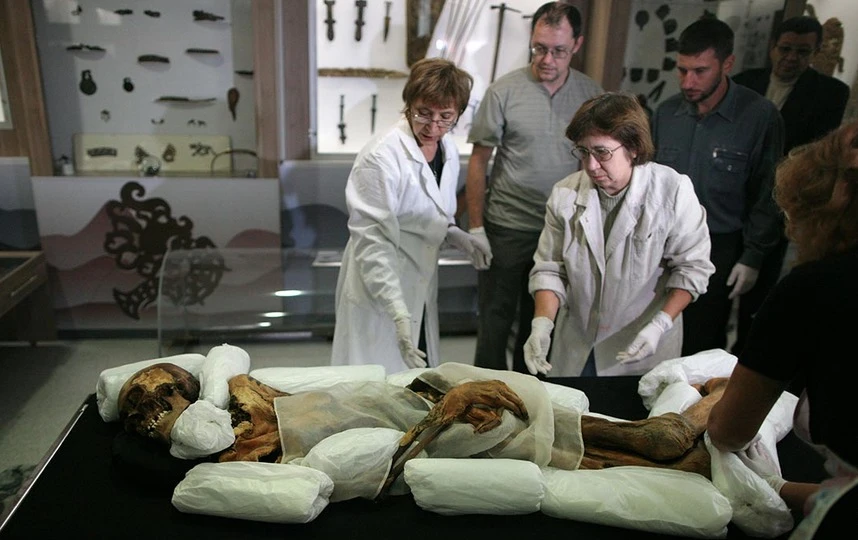
Museum specialists beside the sarcophagus of the Ukok Ice Maiden: once a month, her body is treated with the same formulas used to preserve Lenin
What do you think: should the remains of ancient rulers and priestesses be kept on public display for the sake of science, or should they be reburied out of respect for indigenous beliefs? And do you believe there is any truth to the ancient curses that seem to follow in the wake of such discoveries?