The Mystery Surrounding the Death of King Richard the Lionheart—Felled by a Frying Pan—Remains Unsolved (8 photos)
King Richard I of England, better known as Richard the Lionheart, earned his iconic epithet through his extraordinary bravery and tactical prowess on the battlefield. His reign lasted a mere decade, from 1189 to 1199, during which he spent barely six months in England itself—the rest dedicated to fighting in the Crusades. Yet, it was his death from a stray crossbow bolt during a minor siege in France that continues to intrigue historians to this day. 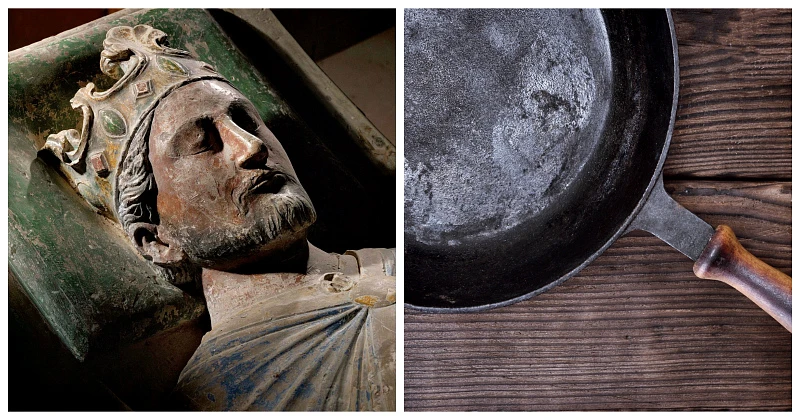
A Lifelong Feud with the King of France
Throughout his reign, Richard was locked in a perpetual conflict with King Philip II of France (Philip Augustus). Fueling the feud was a complex web of feudal allegiances: as Duke of Aquitaine, Richard was technically a vassal to the French Crown despite holding the English throne. This uneasy balance kept tensions running high between the two monarchs.
Their relationship deteriorated completely during the Third Crusade (1189–1192). The campaign was plagued by rivalries, mutual distrust, and broken promises between the two sovereigns and their followers. 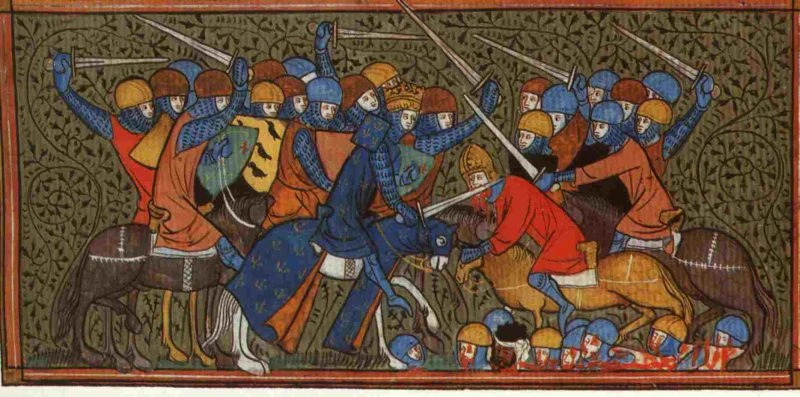
Richard earned the name "Lionheart" for his daring bravery in combat
Their bitter animosity soon sparked dangerous political intrigue. Philip began conspiring with Richard's younger brother, John, scheming to help him usurp the English throne. Upon learning of the betrayal after returning from the Holy Land, Richard launched a military campaign in France, dealing a decisive blow to his restless rival.
The Viscount of Limoges' Gold Hoard
Following his victory, Richard prepared to return to England with his loyal knights after years abroad. However, his journey took a fateful turn while passing through the lands of his vassals. Aimar V, Viscount of Limoges, had unearthed a lavish hoard of gold on his estate and attempted to keep it hidden from the king, who by feudal law was entitled to a cut of any treasure trove found in the realm.
Historians speculate the loot may have been an ancient Roman gold altar or a collection of solid gold imperial statues. While its true value remains unknown, it was certainly vast enough for the viscount to risk defying the fearsome king. 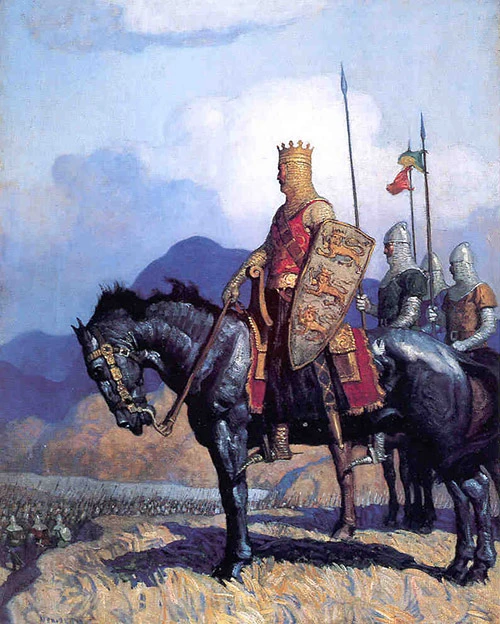
Richard I spent most of his life on military campaigns rather than in his own kingdom
Outraged, Richard marched on the Castle of Châlus-Chabrol in Limousin, where the defiant viscount was taking refuge, and laid siege to the fortress. The king anticipated an easy victory; the castle was poorly fortified and defended by a garrison of barely twenty men.
A Fatal Crossbow Bolt
On March 26, 1199, before the final assault had even begun, Richard suffered a fatal wound. While surveying the perimeter alongside his entourage to plan the attack, a sharp-eyed crossbowman on the battlements fired a shot that struck the king in his unprotected shoulder and neck.
The wounded king was rushed to his camp, where surgeons removed the bolt and dressed the injury following the best medical practices of the era. Initial assessments suggested the wound was not life-threatening, and plans were made to transport Richard back to England to recover. He never made it home. On April 6, 1199, Richard the Lionheart died at the age of 41. 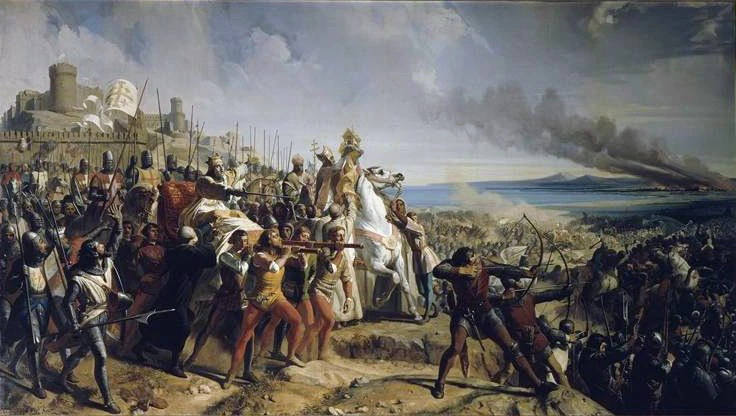
Richard became legendary for his military exploits during the Crusades in the Holy Land
Contemporary accounts indicate that the wound itself should not have been lethal, even by 12th-century standards, giving Richard a strong chance of recovery. This gave rise to rumors that the crossbow bolt had been poisoned. While neither the English nor the French routinely used poison—considering it dishonorable—contact with Saracen tactics during the Crusades had introduced new practices into Western warfare.
Modern Forensics Debunk the Poison Theory
In 2012, researchers finally laid the poison theory to rest. A team of scientists conducted advanced chemical analysis on a fragment of Richard's heart, preserved at Rouen Cathedral. In accordance with his final wishes, the king's remains had been divided upon his death: his heart went to Rouen, his entrails were buried at Châlus-Chabrol, and his body was laid to rest at Fontevraud Abbey. 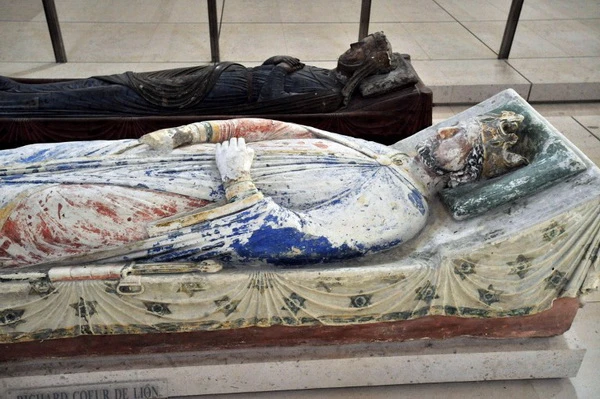
Preserved at Rouen Cathedral, Richard I's heart became the subject of modern scientific study
Remarkably well-preserved, a tiny 1% sample of the heart tissue was sufficient to determine the true cause of death. Testing revealed no traces of poison; instead, scientists confirmed that Richard succumbed to gangrene and sepsis. In an era predating antibiotics and basic hygiene, blood poisoning from an infected wound was a common death sentence. 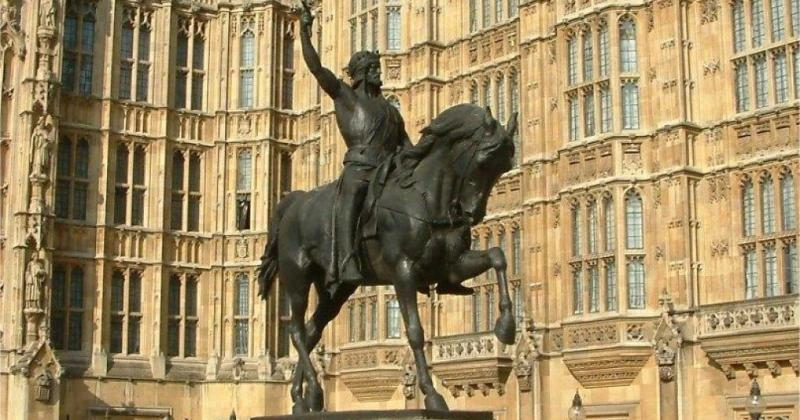
A statue of Richard the Lionheart honors the legendary crusader king
The study also raised intriguing questions about the accepted timeline. For centuries, records held that Richard died on April 6, 1199. However, pollen analysis of the embalming materials indicated that the body was preserved no earlier than mid-summer, revealing plant pollen from species that bloom only in late June. This discrepancy remains an unsolved mystery.
The Tale of the Knight and the Frying Pan
The exact circumstances surrounding the fatal shot remain shrouded in folklore. Inside Châlus-Chabrol, only two seasoned knights were present—men familiar to the besieging English forces. These two command personnel directed the castle's meager defense, stationing servants and local men along the ramparts. 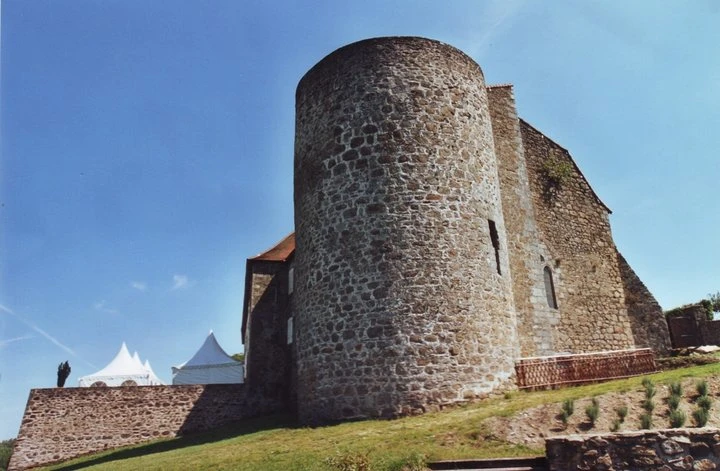
The ruins of Châlus-Chabrol Castle stand today as a monument to the king's fatal siege
Neither knight had brought full armor with them, forcing them to improvise their defenses. According to popular legend, Richard spotted a defender on the walls holding a crossbow in one hand and using a heavy iron frying pan as a makeshift shield. Amused by the absurd sight, the king reportedly lowered his guard, mocking the makeshift garrison. In that moment of hubris, a bolt struck him in the neck.
A King's Pardon and the Mysterious Archer
The castle fell shortly thereafter. As the injured king lay in his tent, the archer responsible was brought before him. Upon hearing that the young defender was seeking vengeance for family members slain by English forces, Richard famously pardoned him, ordering that he be granted his freedom and a sum of money for his marksmanship. 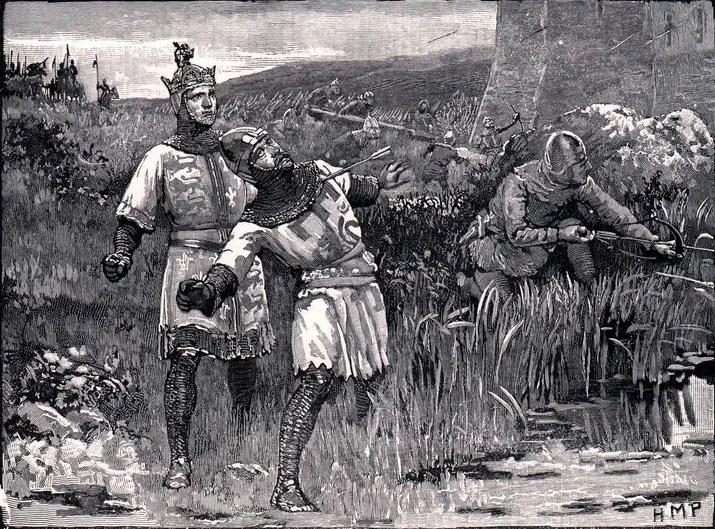
Medieval battles could turn on a single well-aimed crossbow bolt
However, once Richard succumbed to his infection, his merciful order was promptly ignored. The archer was flayed alive and hanged in retribution. The true identity of the man who struck down the Lionheart remains lost to history; medieval chronicles offer conflicting names, including Pierre Basile, Bertrand de Gourdon, and John Sabroz.
Subsequent historical research revealed that men bearing these names appeared in legal records years after Richard's death, rendering their guilt uncertain. The true identity of the shooter who altered medieval history may forever remain a mystery.
Could the course of English history have unfolded differently had Richard the Lionheart survived that fateful siege? Did hubris and contempt for a seemingly weak opponent ultimately seal his fate?