Thousands of years ago, great pharaohs and kings were embalmed after their death, turning them into mummies. However, the rulers of the time wanted their pets to be embalmed along with them. To this day, archaeologists find mummies and remains of animals and birds that were once the pharaohs' pets. 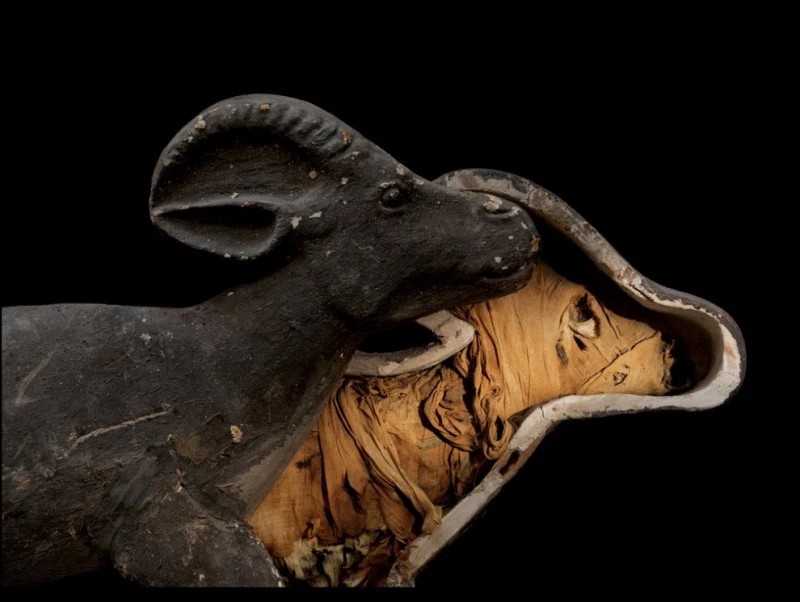
In 1888, an Egyptian farmer, while digging a plot of land near the village of Istable Antar, discovered a mass grave. The deceased were not human—the farmer had discovered an incredible number of mummified ancient cats.
"These weren't just one or two chance finds," wrote the English Illustrated Magazine, "but tens, hundreds, hundreds of thousands—a whole seam thicker than many coal mines, ten to twenty rows deep of cat mummies."
The village children sold the best specimens to tourists, while the rest were sold in bulk as fertilizer. In one famous case, European sailors used cat mummies as ballast on their ships, and upon arrival at port, these relics were ground up and sold to farmers as fertilizer (approximately 180,000 mummies, weighing about 17,000 kilograms, were sent to fertilize fields in Liverpool). 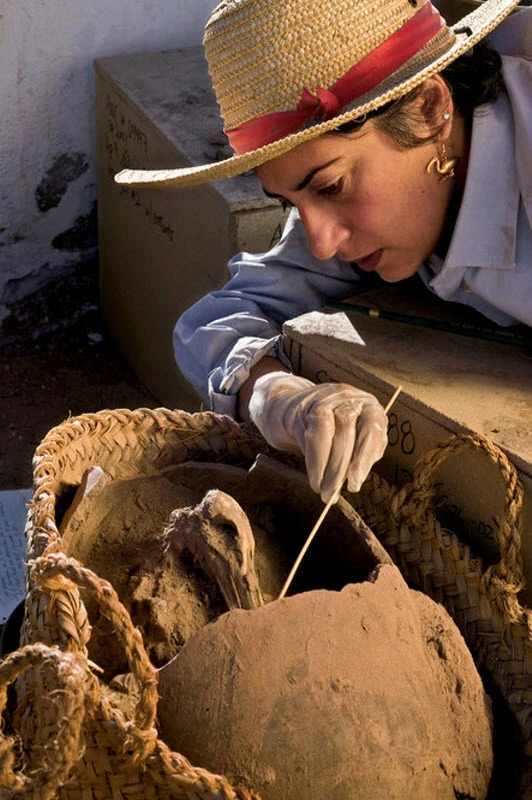
Archaeologist Salima Ikram cleans the remains of an ibis—a symbol of the god Thoth—from a clay vessel where it was buried 2,700 years ago. (Richard Barnes/National Geographic)
Sacred animals—crocodiles and wading ibis—were mummified, as were animal parts, so that their meat would serve as food for humans in the afterlife. But, as Ikram reported at a recent environmental symposium in Dallas, scientists have not paid sufficient attention to animal mummies, and they remain virtually unstudied.
"And only now," asserts Salima Ikram, "are scientists, by studying animal mummies, beginning to realize that they can 'tell' a great deal."
By studying mummies, we can draw conclusions about the climatic and natural conditions in the Nile River region several thousand years ago. More than a million ibises are known to have been buried in cemeteries in Hermopolis. Due to the arid desert climate in modern Egypt, such bird species no longer exist. Many species of mummified fish, housed in the Cairo Museum collections, do not currently inhabit the Nile. By studying the texture and preserved natural fragments of mummies, scientists can learn about the prevalent plants in ancient Egypt. 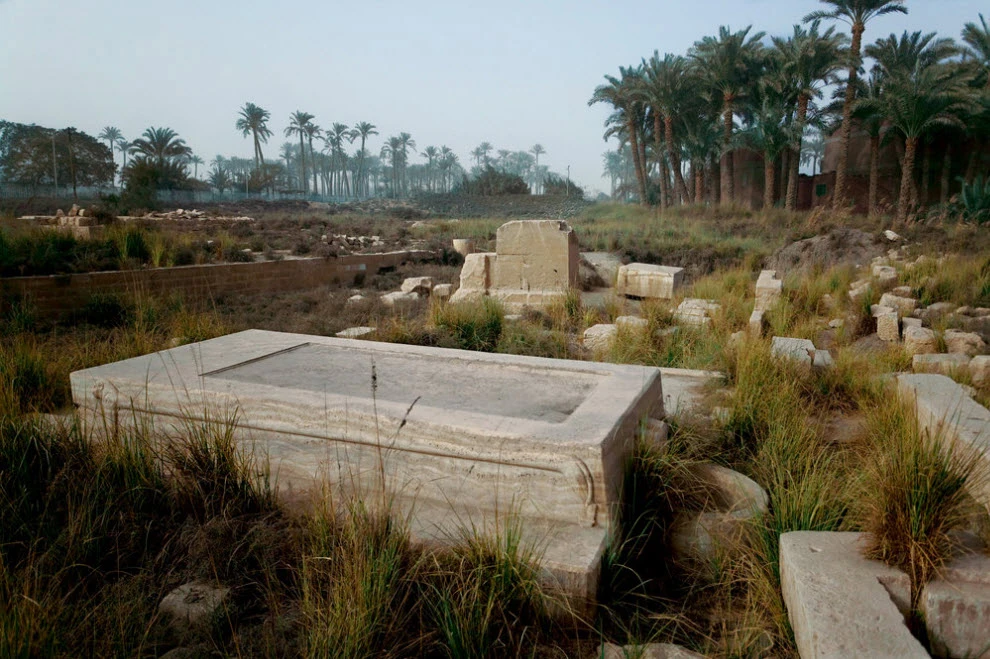
An embalming table used to mummify the body of a bull – a sacred animal – in ancient Memphis, near the village of Mit Rahina. For 40 days, the bull's body was required to "sit" on a stone throne to allow the sun to dry it. (Richard Barnes/National Geographic)
Funeral services that created human mummies also offered to mummify animals. This process was quite painstaking and lengthy. First, the mummifier removed the internal organs, then rubbed the body with a specially prepared solution that promoted its dehydration. After several weeks, it was thoroughly dried, coated with oil, and ready for "eternal" life. Scientists now understand the technology of mummification, but some techniques remain unexplained.
At the Cairo Museum, a team of specialists led by Ikram studied the process of making rabbit mummies. Most of the experiments were successful. However, one rabbit exploded three weeks after being treated with a sodium solution.
Among the Cairo collection is a highly artistic stone sarcophagus with a cat engraved on the side. Too long even to hold a human mummy, this sarcophagus became the final resting place of a princess's beloved cat. According to Frank Yurko, an Egyptologist, an inscription on a sarcophagus in a Chicago museum links the cat to the god Osiris. The beloved pets of a wealthy Egyptian often accompanied their owner in the afterlife. 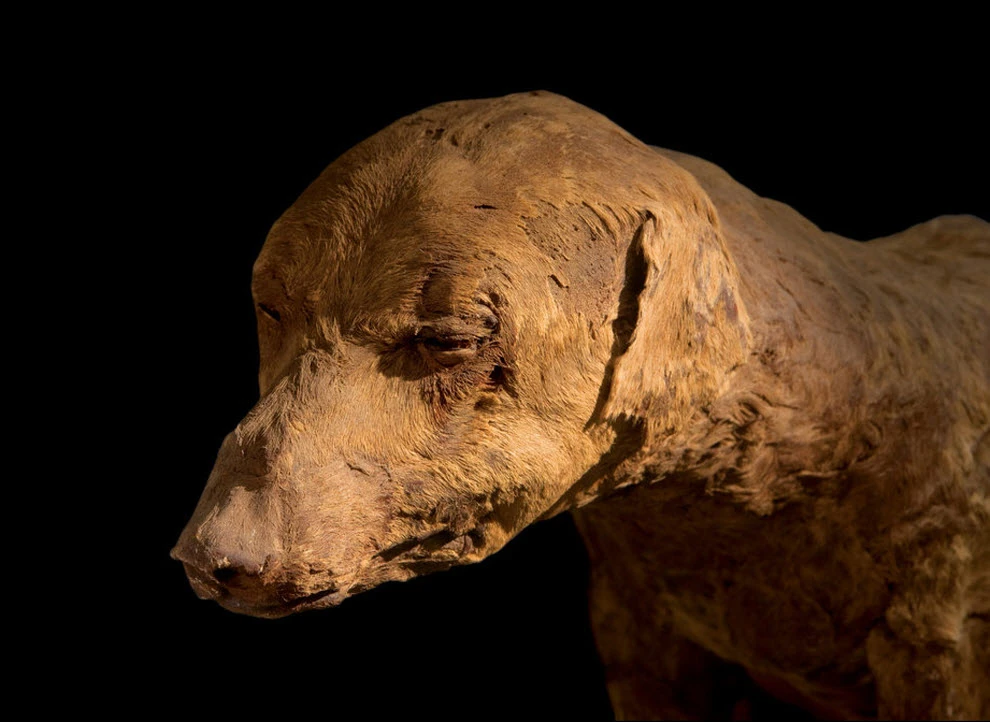
The hunting dog, whose bandages fell off long ago, was most likely the pharaoh's pet. (Richard Barnes/National Geographic)
The tombs of mummified pets contained everything necessary for their comfortable existence. Paintings inside the coffins often depicted dogs chasing prey, monkeys eating the finest fruits, cats playing with a ball, and even table legs for sharpening their claws. Perhaps the pets died a natural death. After all, according to Ikram, X-rays of the animal mummies revealed no injuries.
"I've never seen mummies of beloved animals killed intentionally," she says. 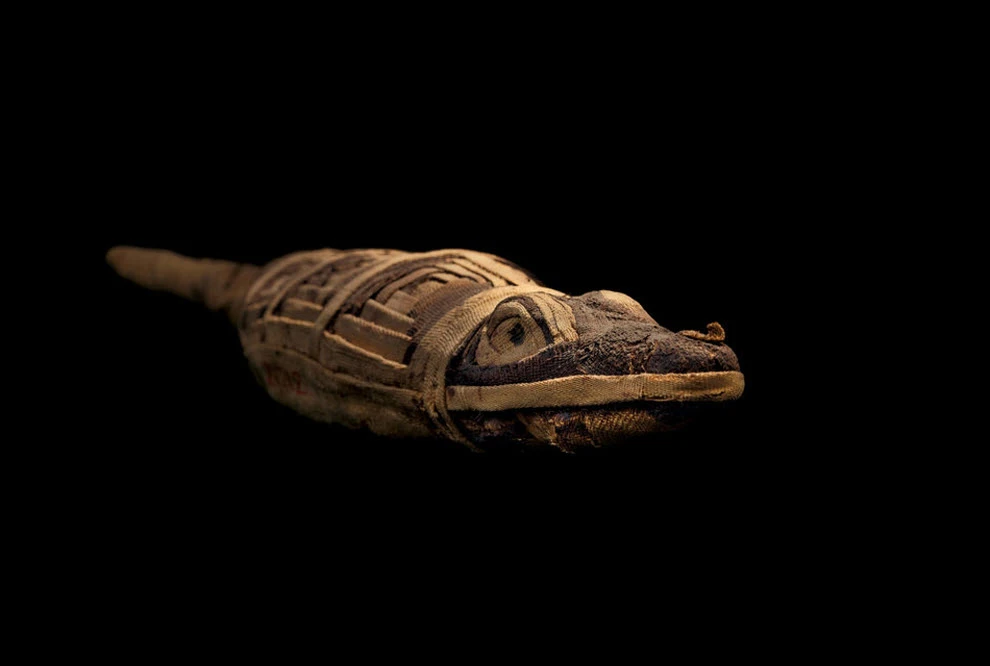
Votive mummies, like this crocodile, were buried with prayers. (Richard Barnes/National Geographic)
However, other animals are known to have been treated far worse.
"Most mummified animals were killed in rituals serving the gods," Yurko asserts.
The ibises at Hermopolis were offered to the god Thoth, as were thousands of mummified baboons. In Saqqara, the ancient "city of the dead," approximately 10,000 cats were sacrificed to the goddess Bastet. The kittens' necks were simply wrung. Vast animal cemeteries were located throughout Egypt around 700 BC. During this period, almost no animal escaped these brutal massacres. Geese, lizards, scorpions, monkeys, and, according to Yurko, "almost every animal you can imagine" were sacrificed. 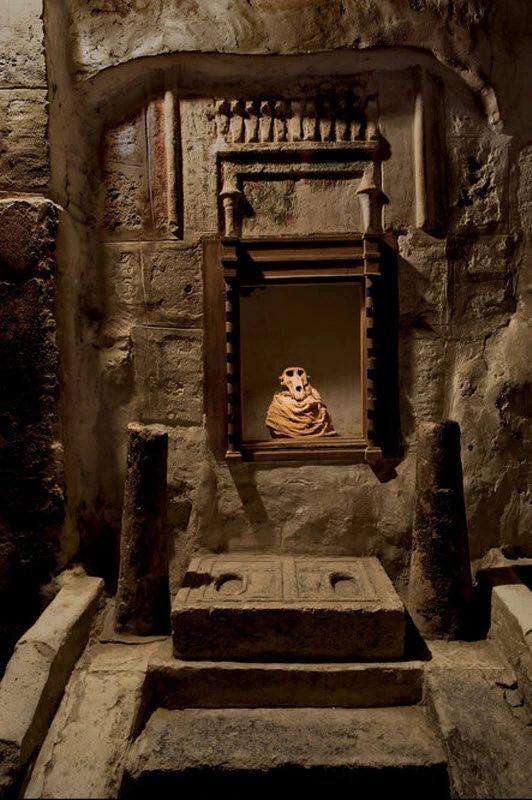
A sacred baboon was placed in a naos after its death in the catacombs of Tuna el-Gebel. (Richard Barnes/National Geographic)
Along with domestic and wild animals, sacred animals were also sacrificed to the gods. The ancient Egyptians firmly believed that the god resided in the animal's body during its life and passed on to another body after death. Therefore, the owner of a pet paid great attention to its mummification. Sacred bulls of the Apis cult were especially revered in ancient Egypt. People believed that these animals were the physical embodiment of the god Osiris on earth. Ikram believes that during mummification, the internal organs were not removed, but merely separated, processed, and then returned to their proper places. The tendons of the bulls' front legs were often cut, so that the animals could be placed in the sarcophagi in a sphinx-like pose. 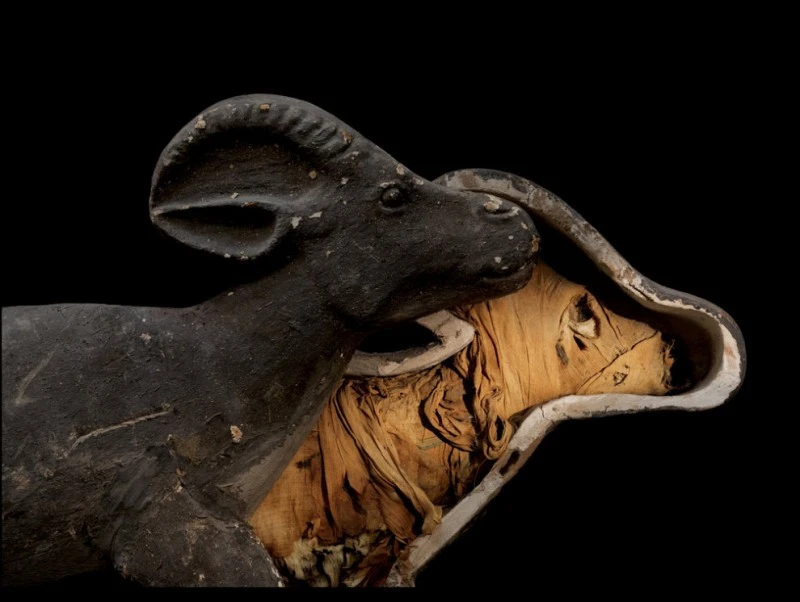
The pet gazelle of the 21st Dynasty royal daughter, Isetemahbit, was prepared for eternity with the same care as the princess herself. (Richard Barnes/National Geographic)
Crocodile cultists also mummified their idols. A museum in Cairo holds a skillfully crafted mummy of the reptile, approximately six meters long. Ancient authors such as Herodotus mentioned that the crocodile, as a sacred animal, was often adorned with earrings and bracelets.
Animal parts were also mummified—they served as food for the deceased. These "edible" mummies were buried not in special sacred animal cemeteries, but alongside humans. X-rays of some of the shapeless bundles reveal perfectly preserved ducks, ox tails, and spare ribs. All the game was butchered in a way that made it easy to prepare. Based on this, scientists have concluded that the inhabitants of Ancient Egypt enjoyed meat dishes.
Sometimes, instead of animal mummies, only a few bones are found inside the bandages. An X-ray of one crocodile mummified body revealed that its head was wrapped in bandages intended for the tail. Scientists believe that some mummifiers "cut corners," neglecting the stages of the expensive and labor-intensive process of preserving the body.
Add your comment
You might be interested in:










Portraits of mummy and ancient idol found in Egypt (4
How crocodiles became hiding places and helped study
The real-life curse of the pharaohs that can kill you: what
Archaeologists have found a mummy whose silence is golden

An American has invented a phone for cats to monitor them

Pet TV Channel in China

Protective film Removing it with a power screwdriver

When a child plays hide-and-seek at a professional level

Super dads who swoop in to save the day
Precision carpentry

Looks like it's time to buy WinRAR

How to hang wallpaper neatly

Man sets up bedroom camera and discovers the reason for his

Athlete in Bavarian dress flies over a lake on a hydrofoil

First meeting with Mom's twin sister
