San José Mine Collapse (2 Photos)
In August 2010, deep in Chile’s Atacama Desert, the old San José copper-gold mine collapsed with a deafening roar. A massive 700,000-ton granite slab sheared off from the rock mass, sealing the main spiral access tunnel shut. Above ground, the earth shuddered as plumes of cement dust billowed from ventilation shafts. Seven hundred meters below the scorching rock surface, 33 miners were trapped inside. 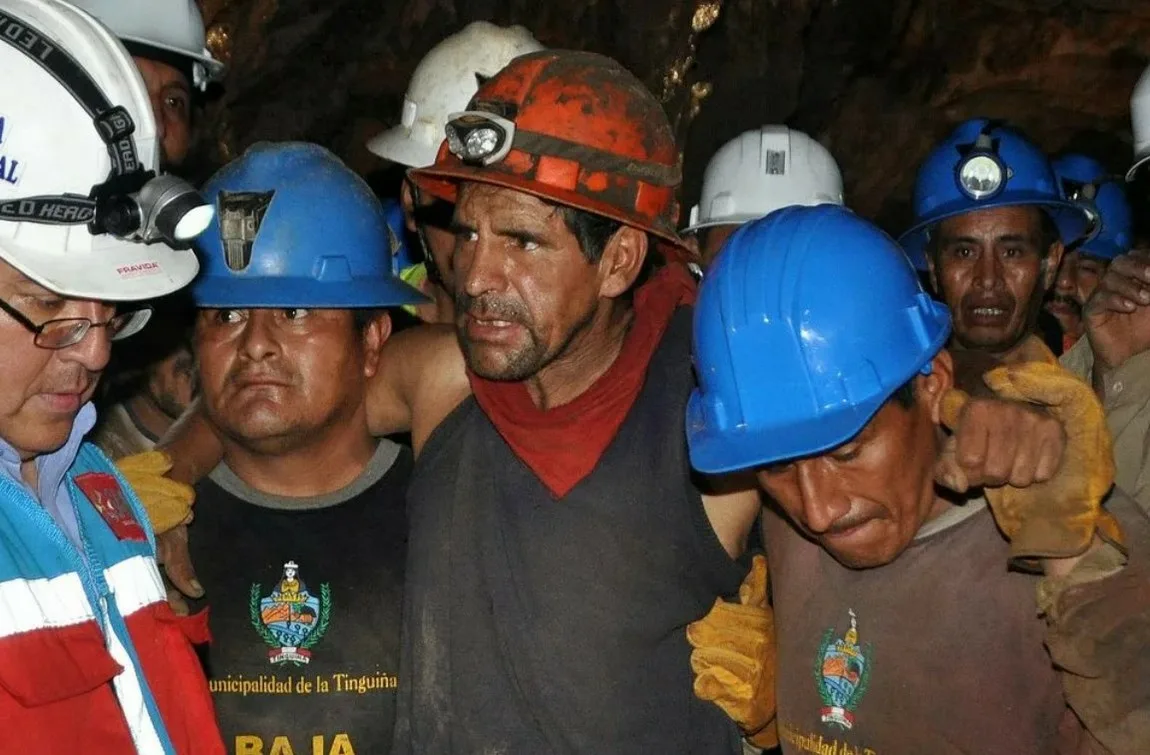
To put the scale of the disaster into perspective, 700 meters of solid rock is equivalent to two Eiffel Towers stacked end to end. Below, the men were plunged into pitch blackness, enduring temperatures of 35°C (95°F) and humidity exceeding 90 percent. The air quickly filled with thick, suffocating dust. Retreating to an emergency shelter built for just 25 people for two days, they searched the metal locker. All the food they found was two cans of tuna, a pack of crackers, and a jug with a bit of condensed milk.
Panic in claustrophobic confinement can kill within days. Shift leader Luis Urzúa immediately took charge, establishing a strict survival regimen. The miners locked away their meager rations and put themselves on severe rationing. Every 48 hours, each man was allocated just two teaspoons of tuna, a sip of diluted milk, and half a cracker. For water, they drained industrial fluid from heavy machinery radiators, filtering it through makeshift charcoal traps. Urzúa assigned clear duties, designated a sanitation area in a distant gallery, and enforced a structured daily schedule to maintain discipline and clarity of mind.
Above ground, many had already written off the mine as a mass grave. Families set up a tent camp outside the gates while engineers drilled exploratory boreholes blind into the treacherous rock. Drill bits repeatedly snapped or veered off course. Then, on the 17th day, one drill broke through the ceiling of a tunnel at a depth of 688 meters. Surface crews heard a rhythmic metal tapping from below. When the steel pipe was hauled up, a note taped to the bit in bright red marker read: “We are well in the shelter, all 33 of us.”
The note galvanized top experts worldwide, including a team from NASA. A rescue operation of unprecedented complexity was launched. Through a narrow borehole just 12 centimeters wide, technicians lowered plastic capsules via steel cables, delivering electrolytes, liquid nutrients, clean clothes, and flashlights. Rescuers set up LED lighting to simulate day and night, helping reset the men's circadian rhythms. Underground, the miners lost an average of 10 kilograms each, but their unity never wavered.
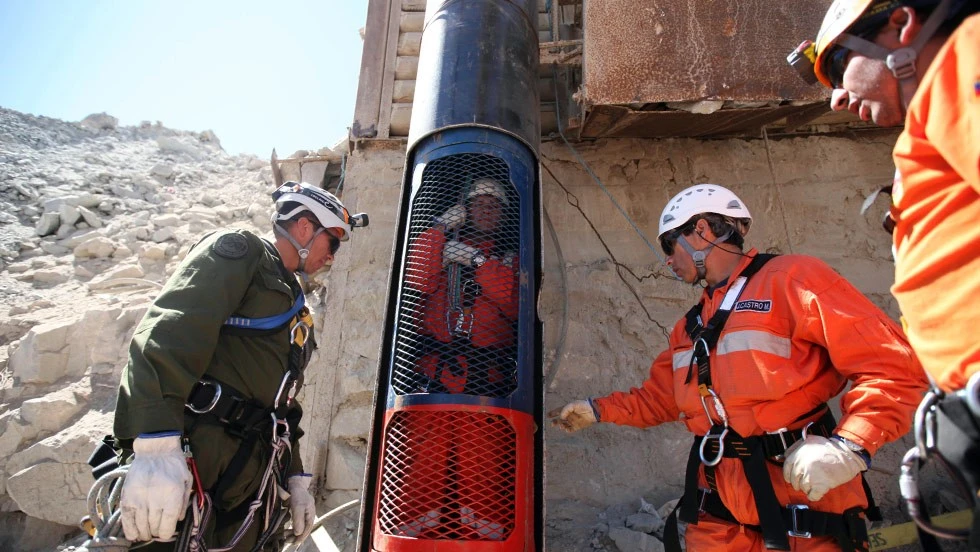
Engineers drilled a wider rescue shaft, 66 centimeters in diameter. The Chilean military custom-built a narrow steel capsule named *Fénix*, equipped with an oxygen supply and biometric sensors. On the 69th day of captivity, the first rescuer descended into the dark shaft. The miners were hauled to the surface one by one, each ascent through the solid rock taking roughly 15 minutes.
Shift leader Luis Urzúa let his crew go first, stepping into the rescue capsule last. After 69 days underground, all 33 miners returned to daylight alive.