The sky has fascinated humanity since time immemorial. Clouds are a universal sight, yet they never cease to amaze. Coming in an endless array of shapes, sizes, and colors, these atmospheric wonders have been studied by meteorologists for centuries. Here is a captivating look at 15 of the most incredible cloud formations on Earth. Enjoy! 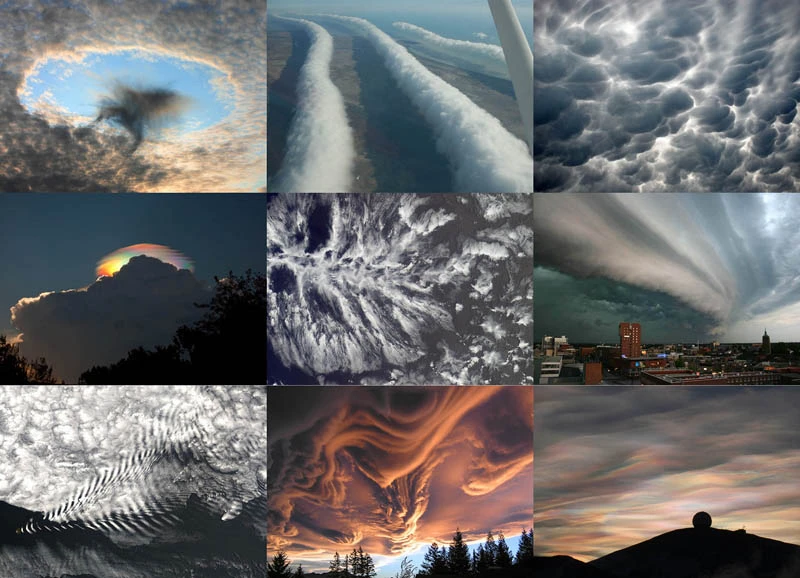
1. Lenticular Clouds
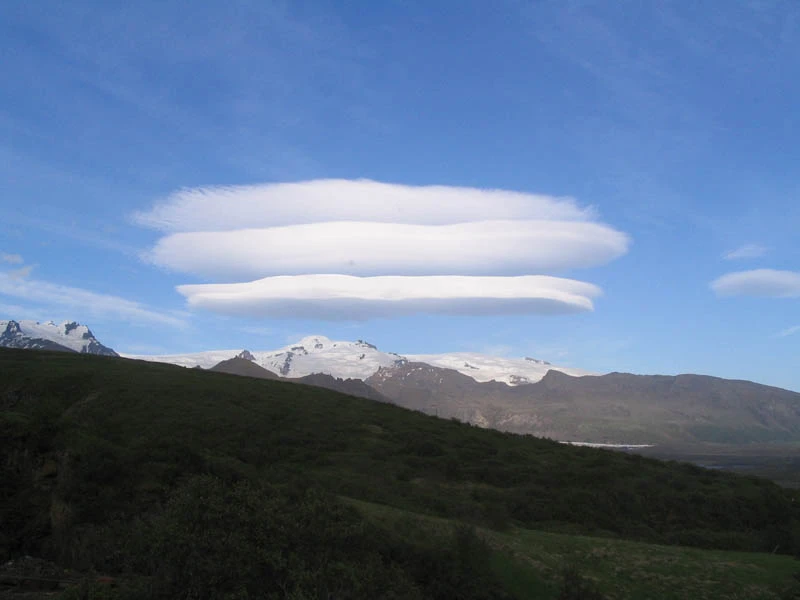
Lenticular clouds are a relatively rare atmospheric phenomenon. They form on the crests of atmospheric waves or between two distinct air layers. Their most defining characteristic is that they remain stationary regardless of how strong the wind blows. As air currents stream across the Earth's surface and encounter terrain obstacles, they create standing air waves. These lens-shaped clouds typically hover on the leeward side of mountain ranges or isolated peaks at altitudes ranging from two to fifteen kilometers. 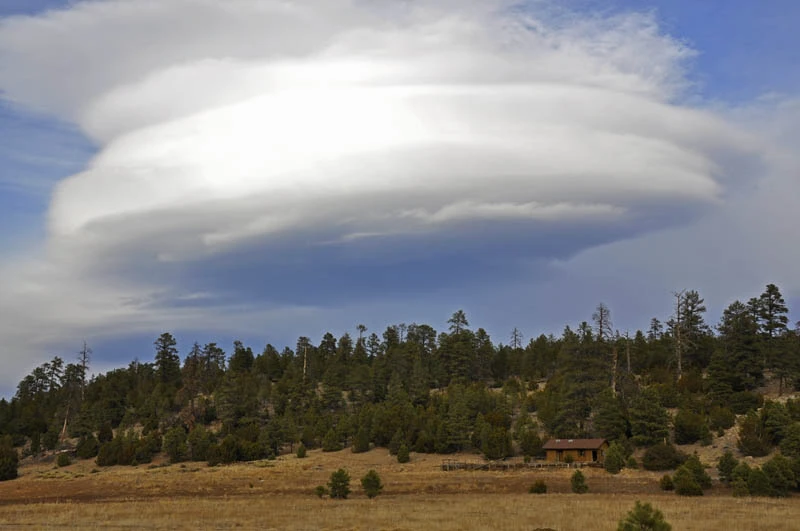
Within these wave crests, water vapor continuously condenses as it rises to the dew point altitude and evaporates as the air descends. As a result, these smooth, saucer-like clouds maintain their position in the sky, looking almost as if they are pinned in place.
The appearance of lenticular clouds indicates powerful horizontal air currents generating waves over mountainous terrain, alongside high moisture levels in the atmosphere. This is often a sign of an approaching weather front or rapid air displacement from distant regions. 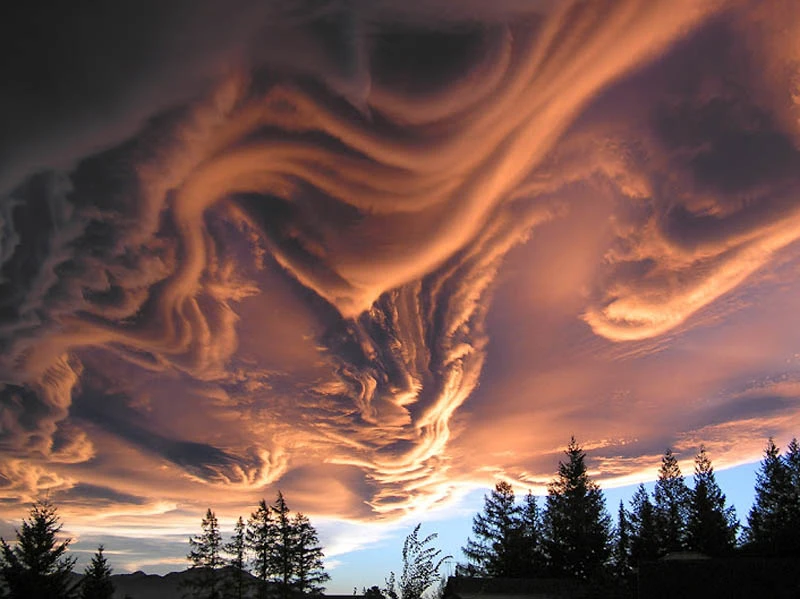
2. Asperatus Clouds (Undulatus Asperatus)
Since 1953, meteorologists have taken note of a striking cloud formation later named Asperatus. Resembling a churning ocean viewed from below or a dramatically rolling landscape, these clouds are dark, heavy, and intricately sculpted with swirling, ominous structures. Their menacing appearance has caught global attention as stunning photos surface from around the world. 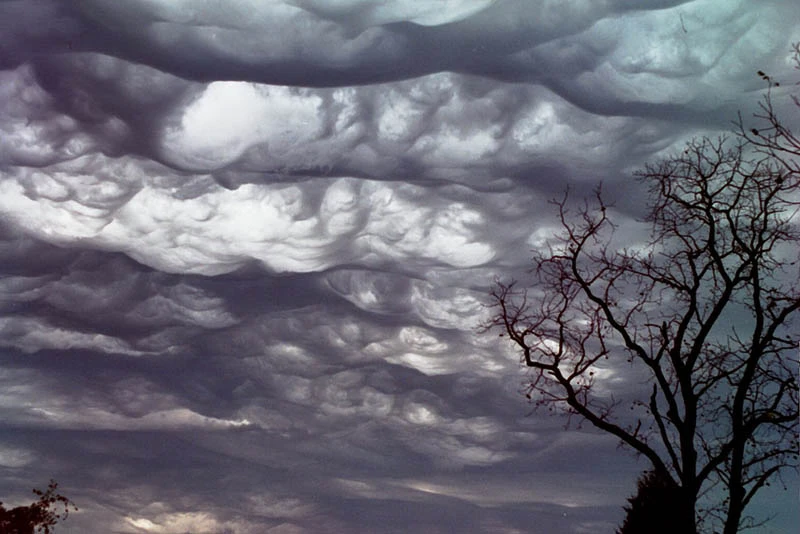
"Judging by their dark color, these structures contain a tremendous amount of moisture," explains Professor Paul Hardaker, former Chief Executive of the Royal Meteorological Society. "It takes an extraordinary amount of heat and atmospheric energy to produce clouds this complex." In fact, the eerie appearance of Asperatus clouds once led some to associate them with apocalyptic predictions surrounding 2012. 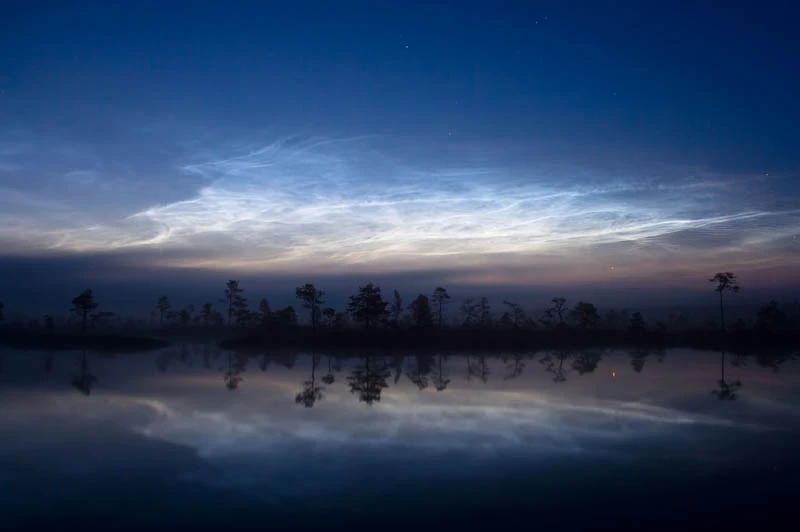
3. Noctilucent (Night-Shining) Clouds
Noctilucent, or night-shining, clouds are a rare mesospheric phenomenon visible only during deep twilight. Floating at an altitude of around 85 kilometers, they are the highest clouds in Earth's atmosphere. They can only be seen when illuminated by sunlight coming from below the horizon while the lower atmosphere rests in Earth's shadow, rendering them invisible by day. Because they are so optically faint, distant stars easily shine right through them. 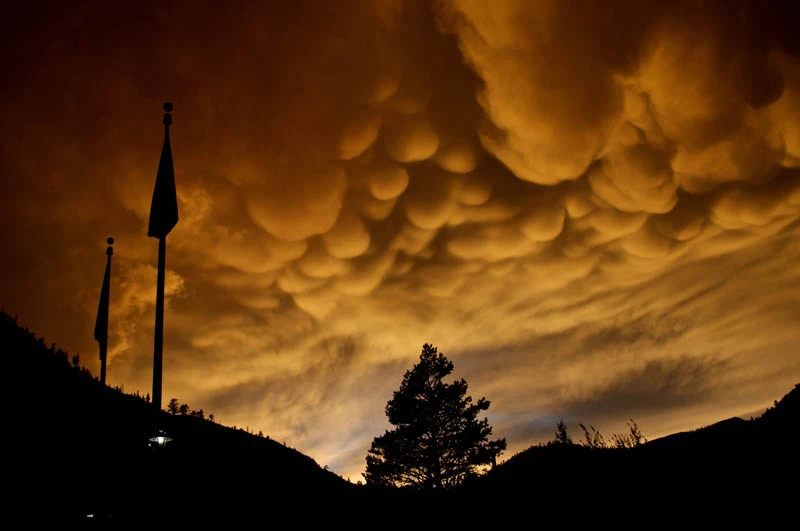
4. Mammatus Clouds
Mammatus clouds are relatively rare and typically associated with severe weather systems and tropical cyclones. Their pouch-like structures usually span about half a kilometer in diameter, ranging from sharply defined to soft-edged. While generally displaying the slate-gray color of their parent cloud, direct low-angle sunlight can illuminate them in striking hues of gold, pink, or deep red. Formally classified as Mammatus (or Mammatocumulus), these cellular structures hang beneath the base of massive cumulus or cumulonimbus storm clouds. 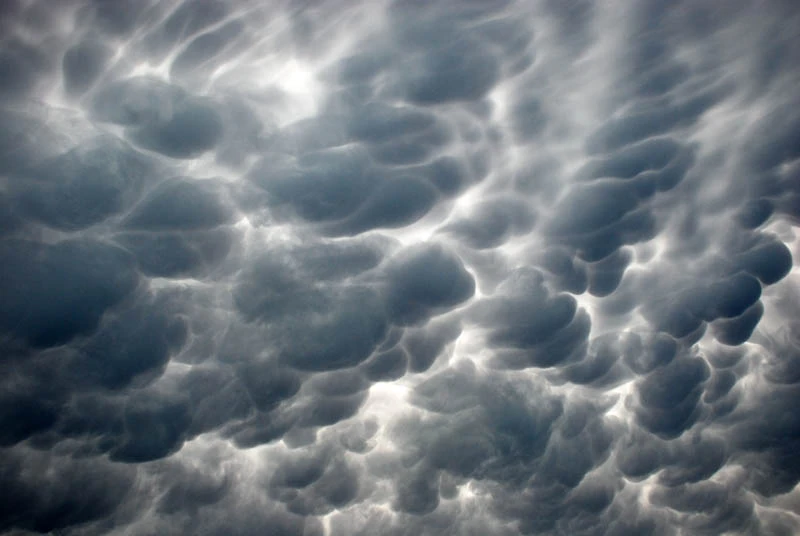
Ground observers usually see Mammatus as dark, bulbous pouches extending downward. However, when the sun is low on the horizon—such as at sunset—they catch the light to produce magnificent shades of gray-blue, dusty pink, gold, and crimson. Mammatus clouds are almost always linked to powerful convective storms.
Interestingly, these clouds can extend tens of kilometers away from the core of a thunderstorm. Mammatus formations persist anywhere from a few minutes to several hours, gradually dissolving as the parent storm dies down. Their lifespan depends largely on the size of the ice crystals and droplets within the cloud; larger particles require more thermal energy to evaporate. Formations made of finer particles dissipate within minutes. 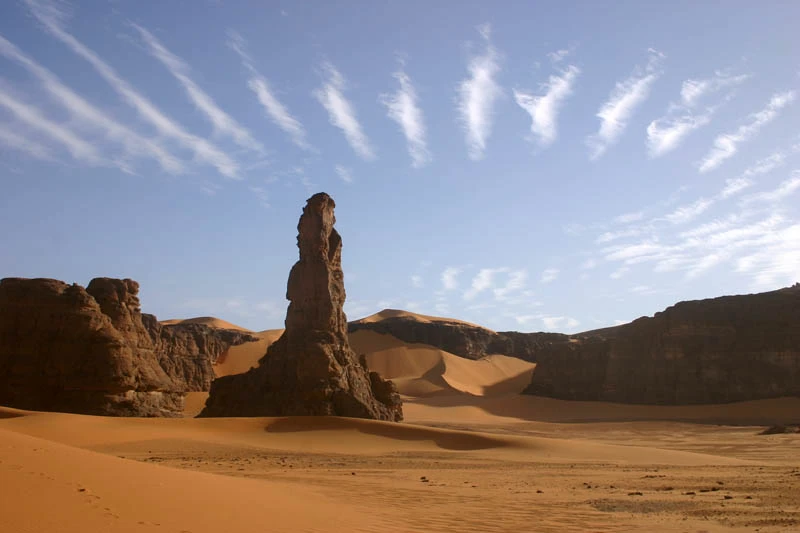
5. Wave Clouds 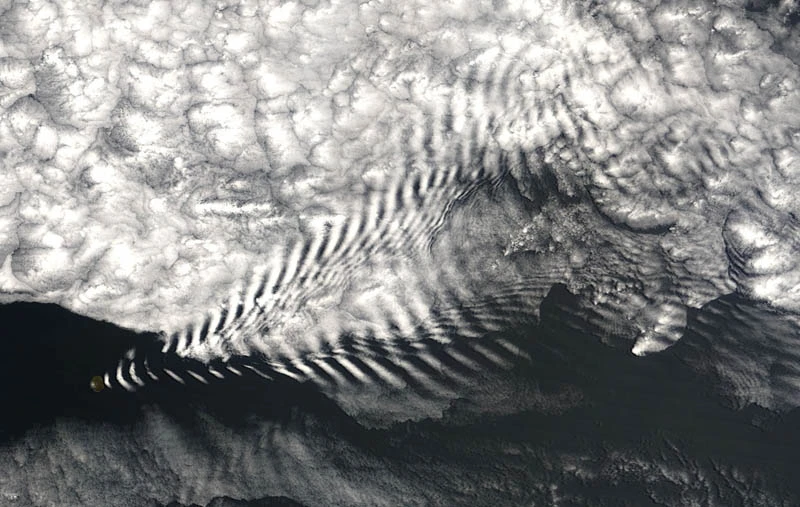
Unlike stratus clouds formed by broad up-sloping air motion or cumulus clouds driven by vertical convection, wave clouds are created by atmospheric wave dynamics as stable air flows over terrain obstacles. 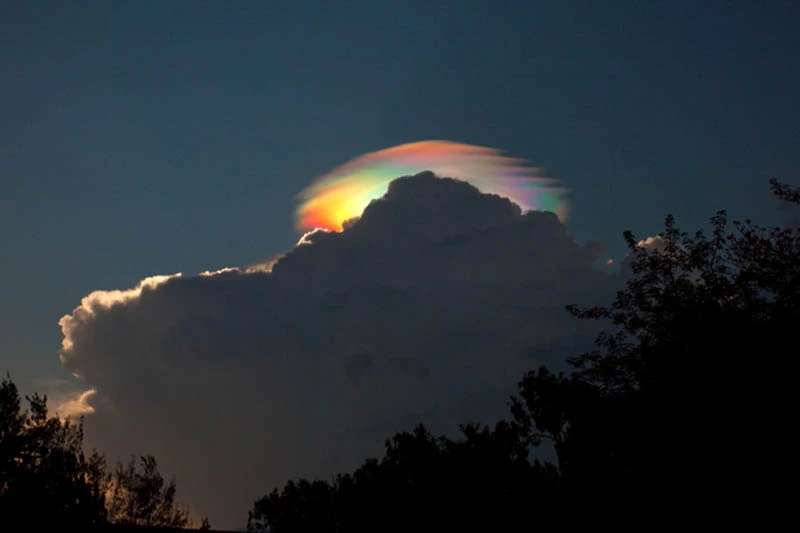
6. Iridescent Clouds
Cloud iridescence is a striking and relatively rare phenomenon where clouds display vibrant, spectrum-like colors. Made of uniformly small water droplets, these clouds appear when the sun is at a specific angle and mostly concealed behind thicker cloud cover. As sunlight passes through the thin cloud edges, diffraction splits the light into different wavelengths. These wavelengths bend at different angles, scattering a rainbow of colors toward the observer. Iridescent clouds are often fleeting, shifting quickly as the cloud deck thickens or moves away from the sun. 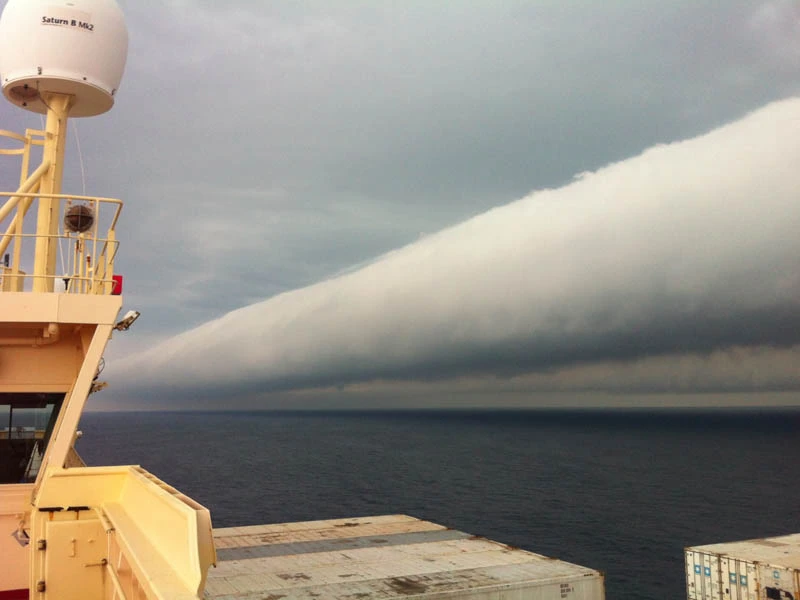
7. Shelf Clouds
Shelf clouds form in high-humidity conditions where contrasting air currents of different temperatures collide.
https://youtu.be/bpVyWiMufLQ 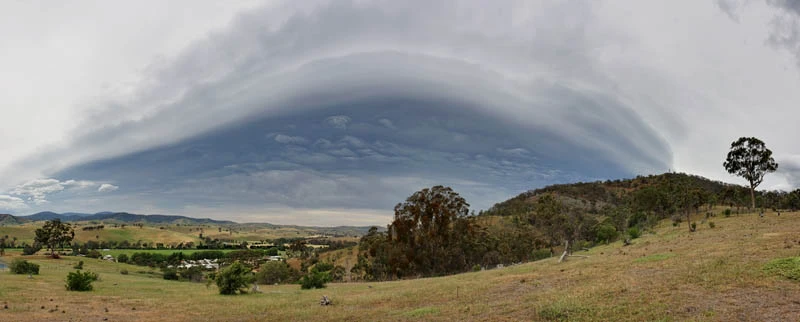
8. Roll Clouds
Typically forming ahead of advancing cold fronts or severe thunderstorms, roll clouds appear as low, dark, horizontal tubes detached from the main storm cloud. Their bases often look ragged and turbulent, as if boiling. Their passage is almost always accompanied by sudden, gusty winds followed immediately by a wall of rain. They are a clear warning of turbulent weather, often triggering severe dust storms when passing over desert regions. 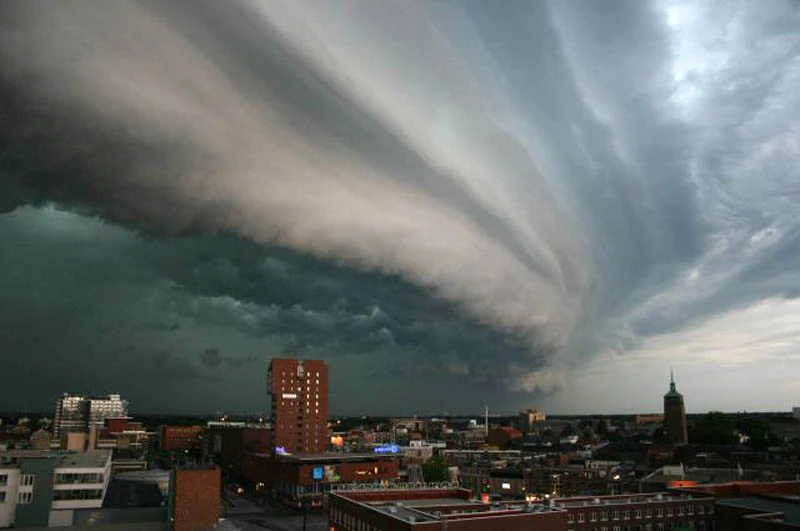
9. Pyrocumulus (Fire Clouds)
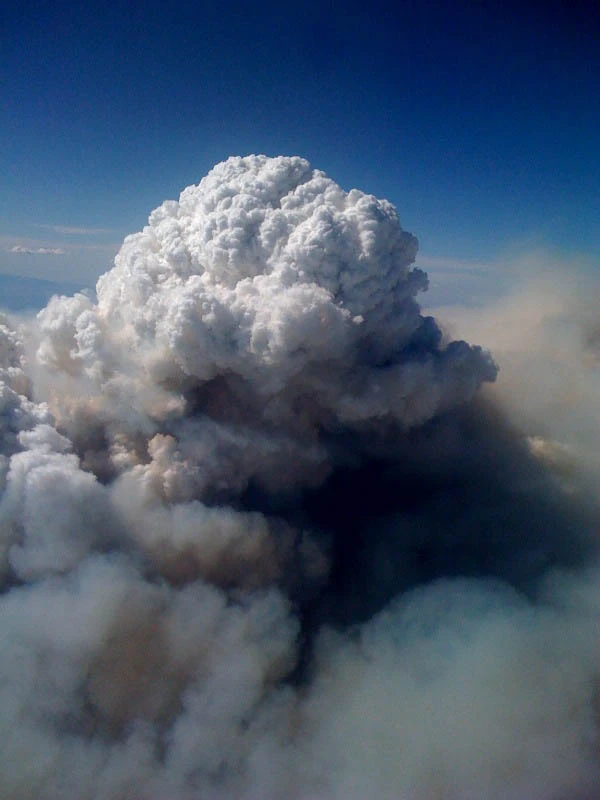
Literally "fire clouds," pyrocumulus formations are convective clouds triggered by intense heat from forest fires or volcanic eruptions. As heat creates strong upward thermals, moisture condenses at high altitudes to form cumulus clouds—which, under favorable conditions, can escalate into full pyrocumulonimbus storms. These fire-generated clouds can produce lightning that sparks additional blazes, though the rain showers they generate can sometimes help douse the flames below.
Pyrocumulus clouds are frequently spotted during major, prolonged wildfires in places like California, the French Riviera, and southeastern Australia. Unlike standard cumulus clouds, pyrocumulus formations produce a remarkably high proportion of positive cloud-to-ground lightning strikes. 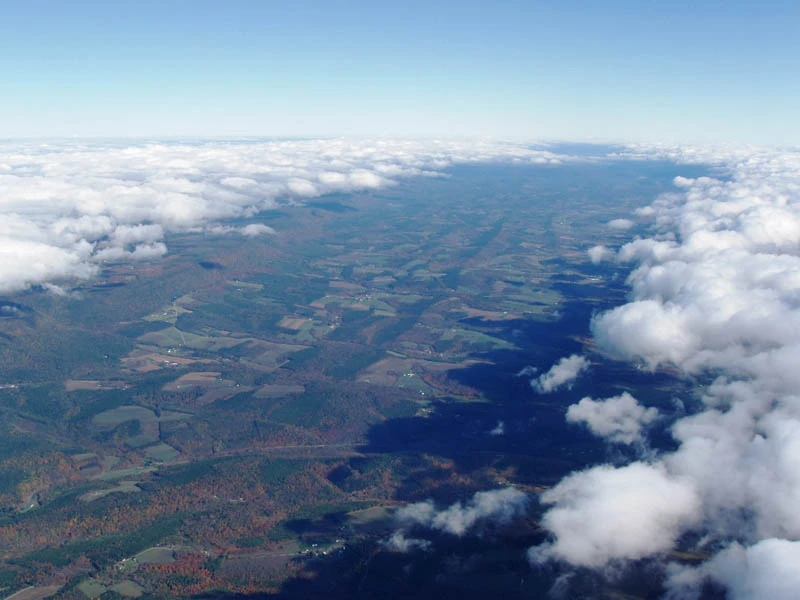
10. Cloud Window
Photo: Dhaluza 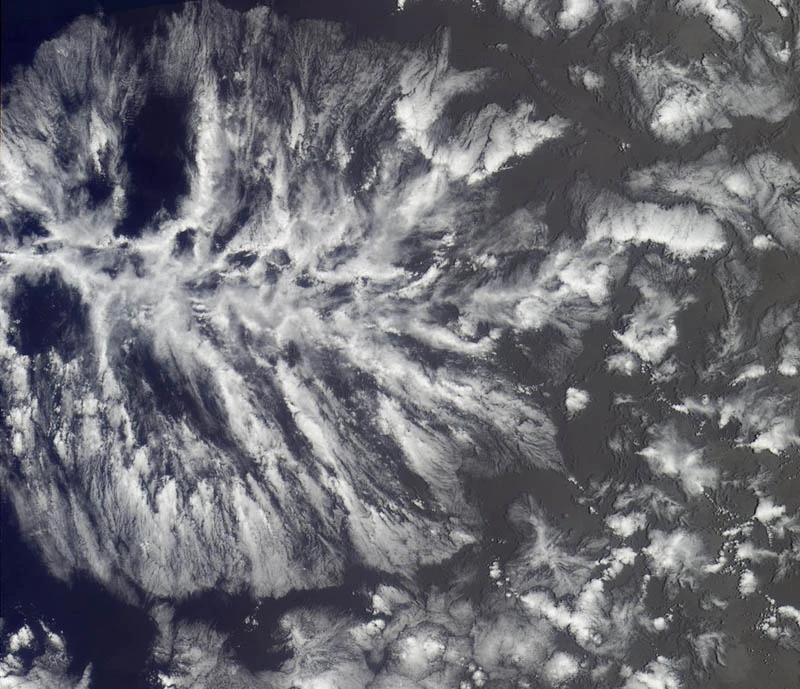
11. Actinoform Clouds
Photo: NASA 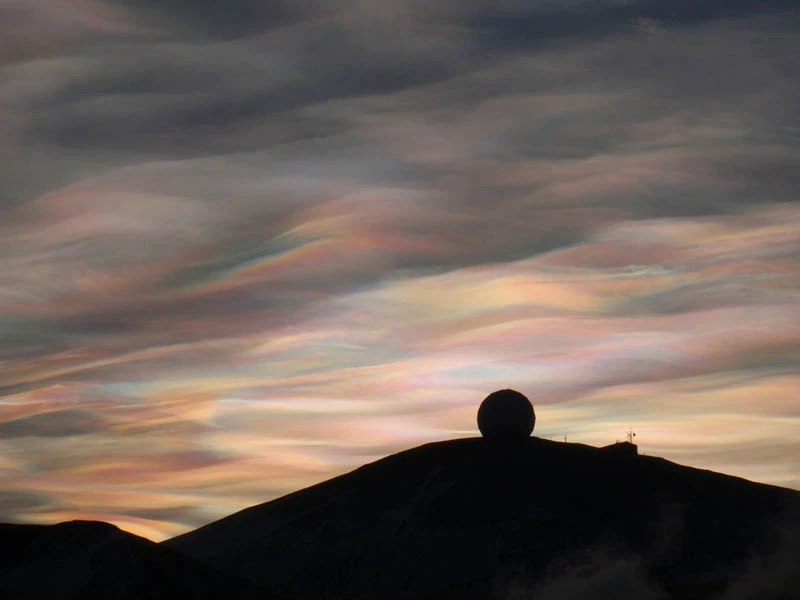
12. Nacreous (Mother-of-Pearl) Clouds
These thin, translucent clouds form high in the stratosphere at altitudes of 20 to 30 kilometers and are composed of ice crystals or supercooled water droplets. They are relatively rare, observed primarily in high-latitude regions (55–60°) just after sunset or before sunrise. In full daylight, they fade from view against the bright background sky. 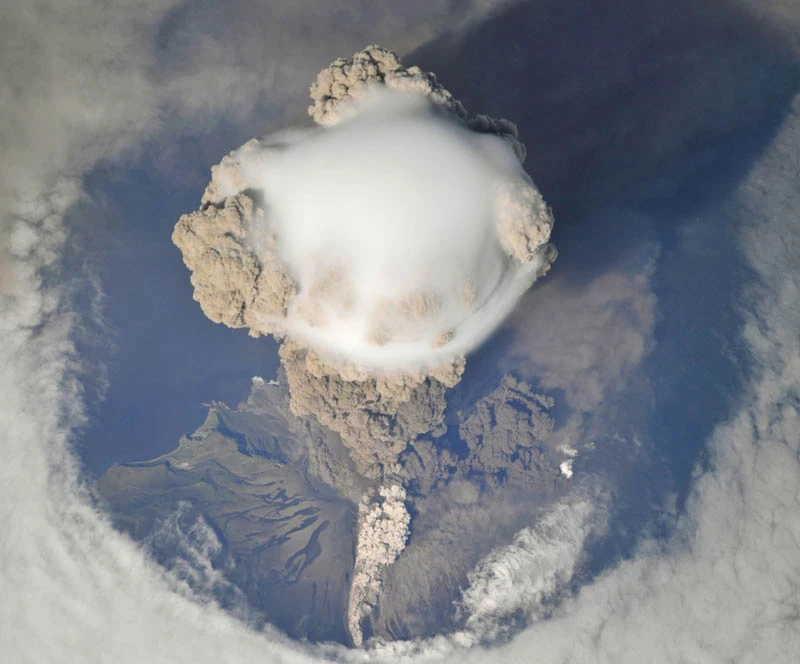
13. Cap Cloud (Pileus)
Photo: NASA 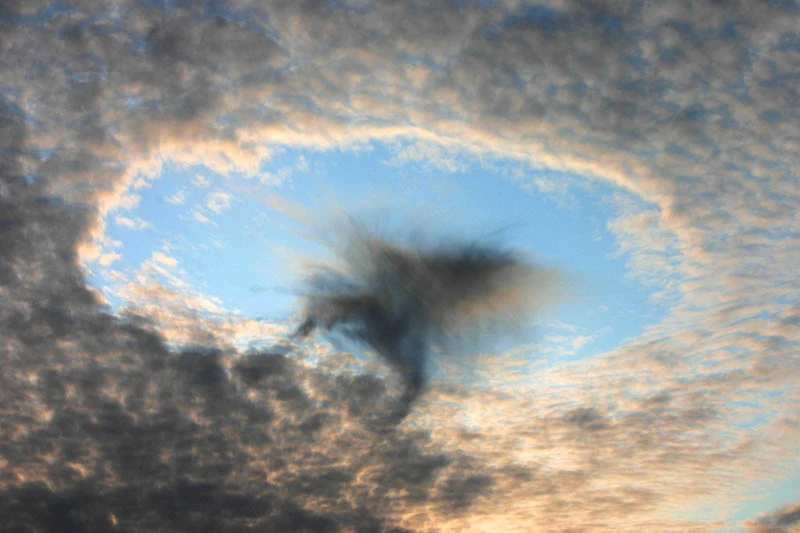
14. Fallstreak Hole (Hole-Punch Cloud)
Resembling a doorway to the heavens, these dramatic formations leave a striking gap in an otherwise uniform cloud layer. The most accepted theory is that these holes are created by falling ice crystals. The crystals can originate in higher cloud layers or be introduced by passing aircraft exhaust. Given the right temperature and moisture conditions, these ice crystals absorb water from the supercooled cloud droplets around them and grow rapidly. As the droplets evaporate to feed the growing crystals, a distinct hole opens up. The heavier ice crystals continue to fall, creating wispy trails of precipitation (virga) visible inside and below the hole, which evaporate before ever hitting the ground. 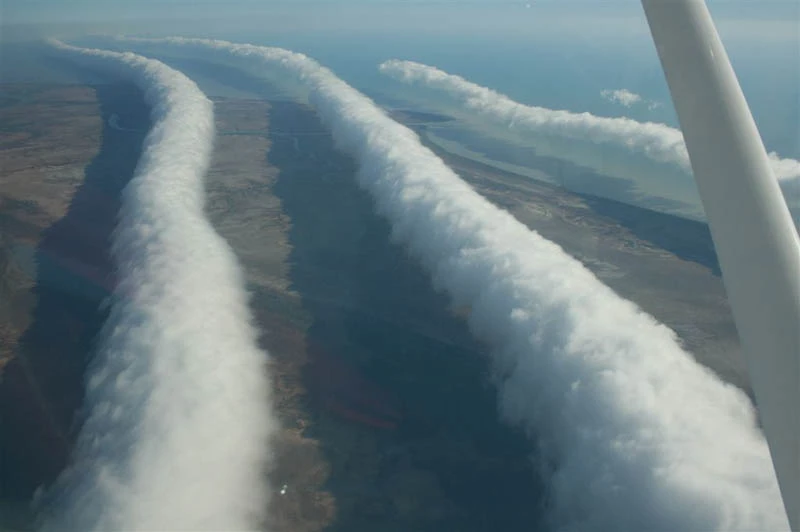
15. Morning Glory Cloud
Add your comment
You might be interested in:












How Rowan Atkinson transforms into Mr. Bean

A single gesture that made someone’s day: a man gives a

A display of skill: masterful nunchaku handling

A clear demonstration of the difference between a $1, $5,

An orchestra plays a prank on their conductor during his

A dad made a realistic WALL-E costume for his daughter

An American man reveals a bunker he spent 3 years preparing

Pete the donkey calls out Taking Luna, who is blind, for a

Witches on roller skates—brooms included
