The natural disaster that struck Iran in 1972 remains the deadliest blizzard in recorded human history. 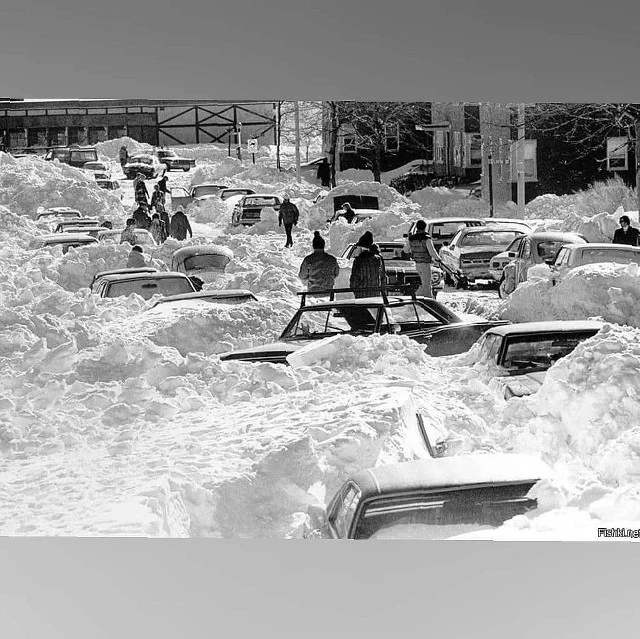
An Arctic Blast
In the early 1970s, Iran was gripped by a prolonged drought. For four straight years, from 1968 to 1971, rainfall had been exceptionally scarce. Given that most of the country endured scorching summer heat, the chronic water shortages led to widespread crop failures. So when meteorologists began forecasting potential snowfall, locals saw it not as a threat, but almost as a blessing. Winter snow promised melted water in the spring to fill irrigation canals and secure a bountiful harvest.
By early February 1972, Iran became the collision zone for two massive weather systems: a Caucasian anticyclone hovering over the Black Sea and a Mediterranean low-pressure system moving east from the Levant. This set up atmospheric conditions rarely seen in the region. High pressure from the anticyclone blocked warm, moist air masses from entering, triggering a sharp plunge in temperatures.
Then came the polar vortex. This stratospheric phenomenon forms over the North Pole, consisting of powerful winds swirling 15 to 30 kilometers above the Earth. Under certain conditions, interaction with tropospheric jet streams can cause the vortex to shift far southward or even split. This allows frigid Arctic air to penetrate deep into southern latitudes, driving extreme—if temporary—temperature drops.
That is precisely what happened over Iran. On February 3, temperatures plummeted, followed by relentless snowfall across the nation. Even residents in the southern provinces marveled in disbelief at a phenomenon they had never witnessed before. Unaware of the complex meteorology behind it, local farmers simply rejoiced at the long-awaited snow, hoping it signaled the end of the multi-year drought.
In fact, snowfall was heaviest in the south—a natural outcome from a meteorological standpoint. Moist, relatively warm air pushing up from the Persian Gulf collided with freezing Arctic winds, triggering intense snow squalls. While northern provinces saw less total precipitation, howling gale-force winds piled the snow into massive drifts.
Almost overnight, the welcome snow transformed into a lethal catastrophe. Worse still, severe blizzards pounded the country for nearly a week, from February 3 through February 7. Thus began what would go down in history as the Great Blizzard of 1972.
Freezing Cold, Wolves, and Walls of Snow
The first news report appeared in the Tehran newspaper Ettela'at on February 3. Naturally, it was not front-page news: that space was reserved for coverage of Shah Mohammad Reza Pahlavi and his family, who were vacationing in the Swiss resort of St. Moritz.
It was an annual tradition for the monarch, for whom two entire luxury hotels were booked at one of the world's most exclusive ski resorts. Foreign media quipped that, for a month each year, the Iranian capital simply relocated to Switzerland. 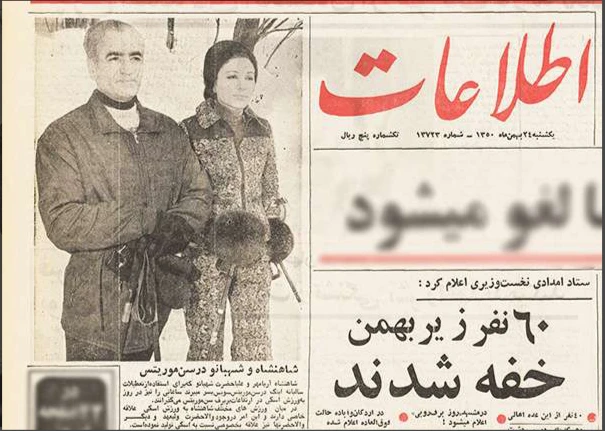
Unlike the snow-hardened locals of the Swiss Alps, Iranians found themselves in immediate peril. Snow levels surged rapidly, rendering urban roads impassable within hours and completely halting intercity traffic. In effect, Iran ceased to function as a unified state, fracturing into isolated pockets where citizens fought a desperate battle for survival.
The threats varied by region. In the south, entire villages were buried under massive layers of snow that reached depths of up to 26 feet (8 meters). Older, flat-roofed mud-brick houses collapsed under the immense weight, crushing occupants beneath the debris.
More sturdy brick and stone structures held up, but their inhabitants were trapped inside with no way out without external help.
In the central provinces, snowdrifts were somewhat smaller—"only" around 13 feet (4 meters)—but temperatures plummeted to -27°C (-16°F), while in the eastern province of Khorasan, they plunged to a bone-chilling -37°C (-35°F). Neither the infrastructure nor the population were prepared for such near-Arctic cold, leading to widespread frostbite and hypothermia deaths.
Among the hardest-hit places was the city of Ardakan and its surrounding areas in central Iran. Accustomed to a hot, arid climate, the region had lightweight housing, and residents lacked winter clothing entirely. Communication with the outside world collapsed as roads were severed by snowdrifts and telegraph lines downed.
Left to fend for themselves, residents of Ardakan burned anything flammable they could find to build bonfires just to stay warm.
Travelers caught on the road faced dire circumstances. Sweeping snow blocked highways, and local authorities lacked adequate clearing equipment—what little they had quickly broke down under the freezing conditions, with grader blades snapping off in the intense cold. On the Heyran Pass in West Azerbaijan province alone, 20 passenger buses became stranded, leaving occupants facing death from starvation and exposure. Another bus plunged off the mountain road, killing 30 people. Heavy snowfall in mountainous terrain triggered massive avalanches, cutting off intercity travel completely.
In northern Iran, mountain villagers faced yet another peril: wild animals. The sudden deep freeze and heavy snow decimated local wildlife populations that wolves preyed upon. Deprived of their normal food sources, wolf packs descended from the mountains, attacking livestock and humans alike.
Dates on the Snow
The government’s response was slow and severely inadequate. Relief efforts did not begin until February 9, when military helicopters finally flew reconnaissance over remote regions to gauge the extent of the disaster. The sight was horrifying: over 200 villages were completely buried in snow, many showing no signs of life whatsoever. Worse, they were accessible only by air.
A special emergency task force headed by the Prime Minister was formed to handle the crisis. Helicopters began airlifting rescue teams to snowbound villages. However, manpower was woefully insufficient, leaving dig operations primarily to survivors armed with nothing more than shovels. Unsurprisingly, the rescue mission proved largely ineffective. 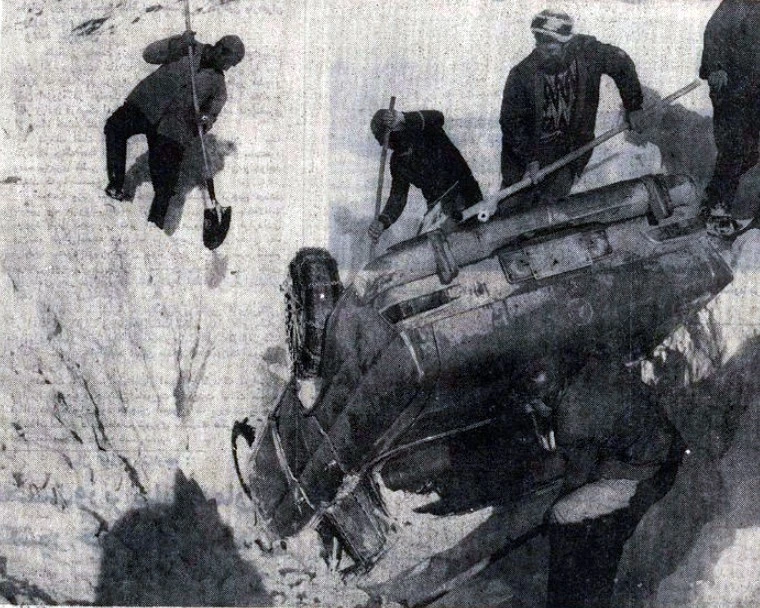
In the village of Sheklab near the Iran-Turkey border, rescuers labored for two days to dig an 8-foot (2.4-meter) tunnel through hard-packed snow. They uncovered 18 bodies, but not a single survivor. When another storm rolled in, search operations were aborted, and the village was declared lost. None of its more than 100 residents survived.
The delayed and meager relief effort meant that a vast number of victims—officially over 4,000, though unofficial estimates are far higher—died not during the blizzard itself, but in its aftermath. Trapped beneath feet of snow, people starved or froze to death while the government's aid was largely limited to dropping crates of crackers and dates into snowdrifts from helicopters. When rescuers eventually reached the buried villages, they often found the supply crates untouched: victims simply could not dig their way out to reach them.
The government’s incompetence severely damaged the Shah's authority. He did not even bother to interrupt his Swiss vacation. This glaring indifference to his subjects' plight helped lay the groundwork for the revolution seven years later, which ultimately overthrew the monarchy and forced him into exile.
The catastrophe was later recorded in the Guinness World Records as the deadliest blizzard in human history.
Based on materials from Spasatel newspaper. Photos from open sources.
Add your comment
You might be interested in:













Persistence in achieving a goal

Not everyone is having fun on the amusement ride

A biker prevented a hit-and-run driver from escaping

Absolute perfection

The cutest lunch delivery ever

17 Photos That Will Stop You in Your Tracks (18 Photos)

Young women, Dancing and George Michael: nothing superfluous

A steam locomotive for "big boys"

What Would Happen to a Human on Every Planet in the Solar
