The Cuttlefish: A Genius Creature Handed Nature's Most Unfair Fate (9 Photos)
The cuttlefish's intelligence is off the charts. Packed inside this humble mollusk is a complex, sophisticated nervous system that allows it to rival some of the smartest birds and mammals. In one specific area, it even outperforms humans. Yet nature gives the cuttlefish just a single year to put its brilliant mind to use. 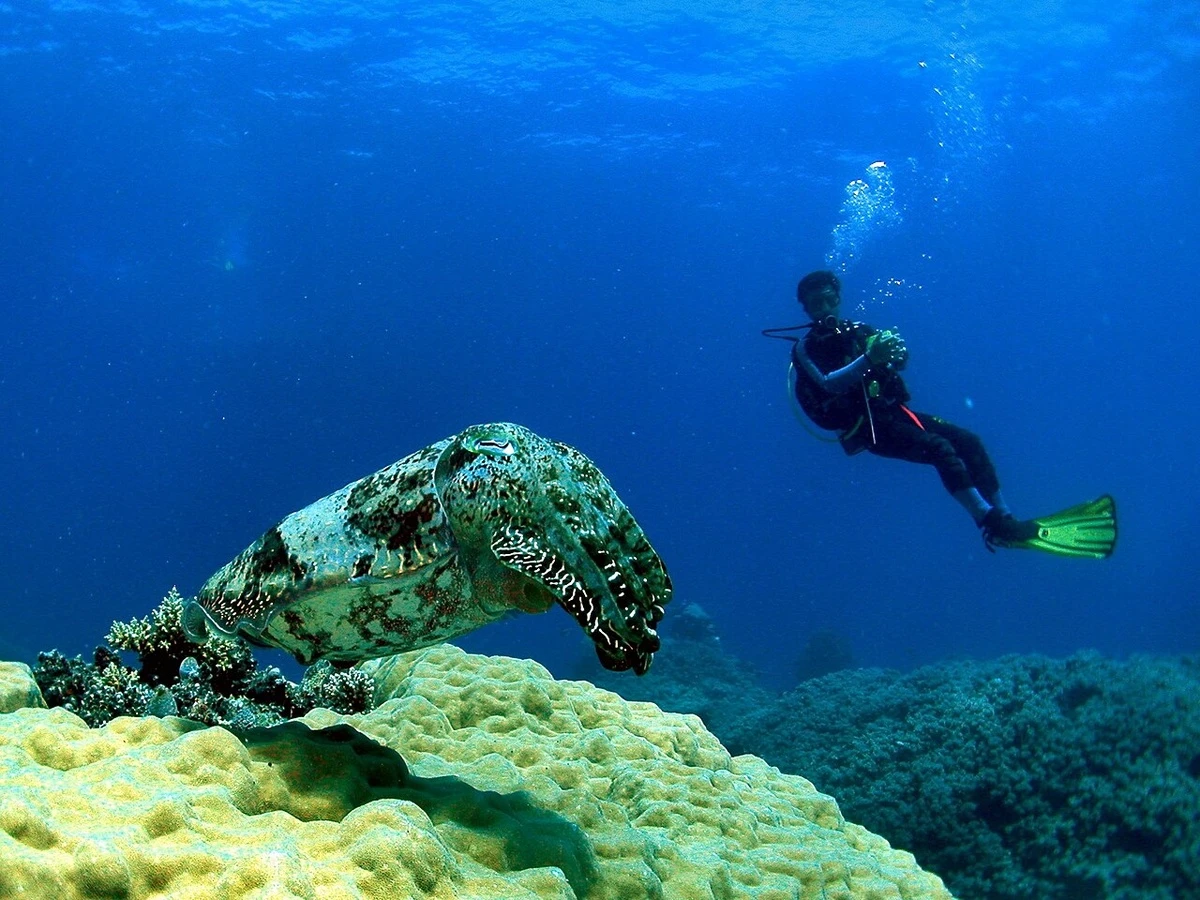
A meeting of minds.
From just a few months old, young cuttlefish display episodic memory. Much like humans, chimpanzees, or crows, they remember key moments from their lives. And these memories don't just sit there—cuttlefish draw on past experiences to evade predators, locate shelters, and pinpoint where prey might be hiding. They spend their entire lives learning, gradually evolving into sharper hunters of small prey like shrimp and little fish. 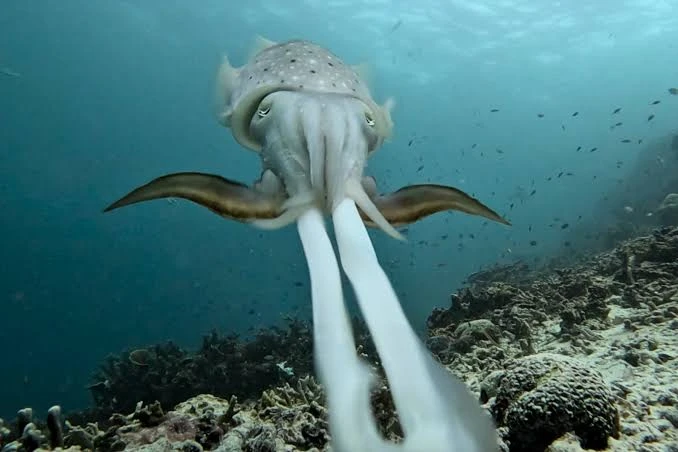
It looks like the cuttlefish is taking a selfie, but it actually mistook the camera for prey and struck with its pair of feeding tentacles.
Their smarts don't stop at memory, either. Cuttlefish can actually pass the famous marshmallow test: they can resist eating a piece of dull meat if they know a tasty live shrimp is on the way. What's more, their self-control lasts for around 130 seconds—outperforming parrots and rats. Even for humans, it's no walk in the park: two-year-old toddlers in similar tests almost always cave faster than these marine mollusks. 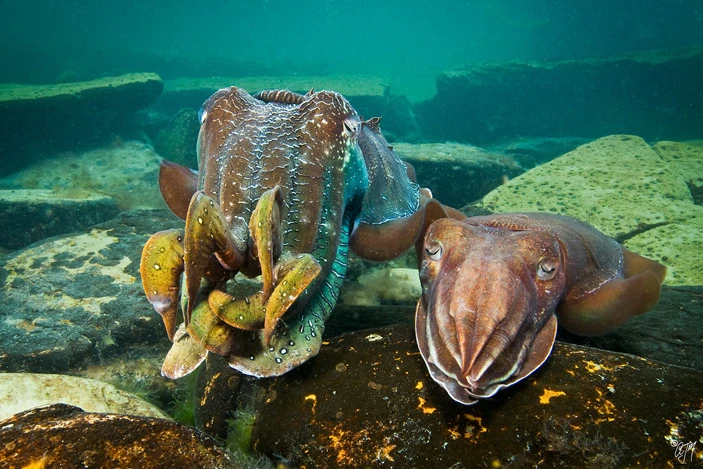
"We're younger than you, but we still passed the test!"
On top of that, these invertebrates actively communicate using a highly complex signalling system. This includes at least four types of tentacle waves, body postures, and—most impressively—dynamic color shifts on their skin. Through these cues, cuttlefish broadcast their intentions to one another: initiating courtship, defending territory, or forming temporary groups. 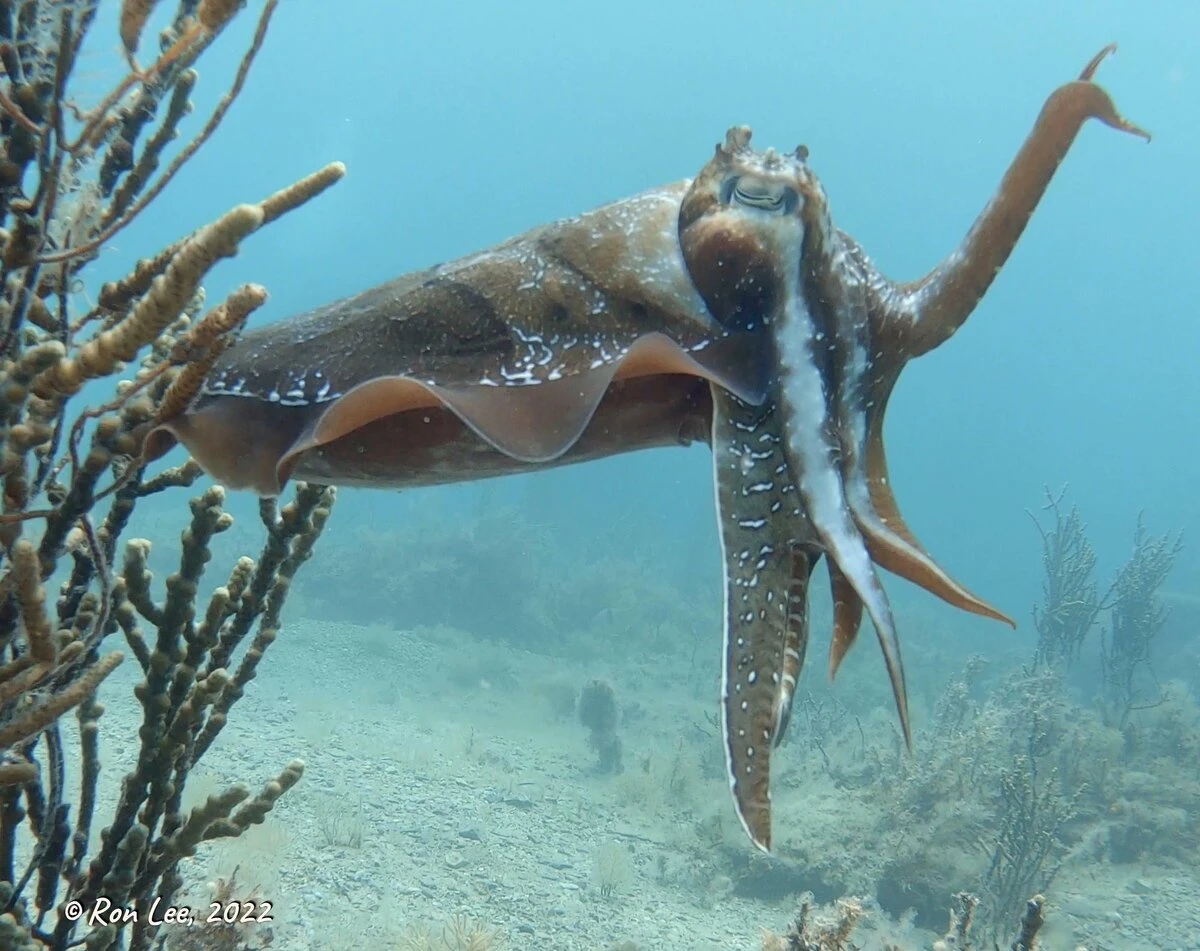
This cuttlefish seems to be a huge heavy metal fan. 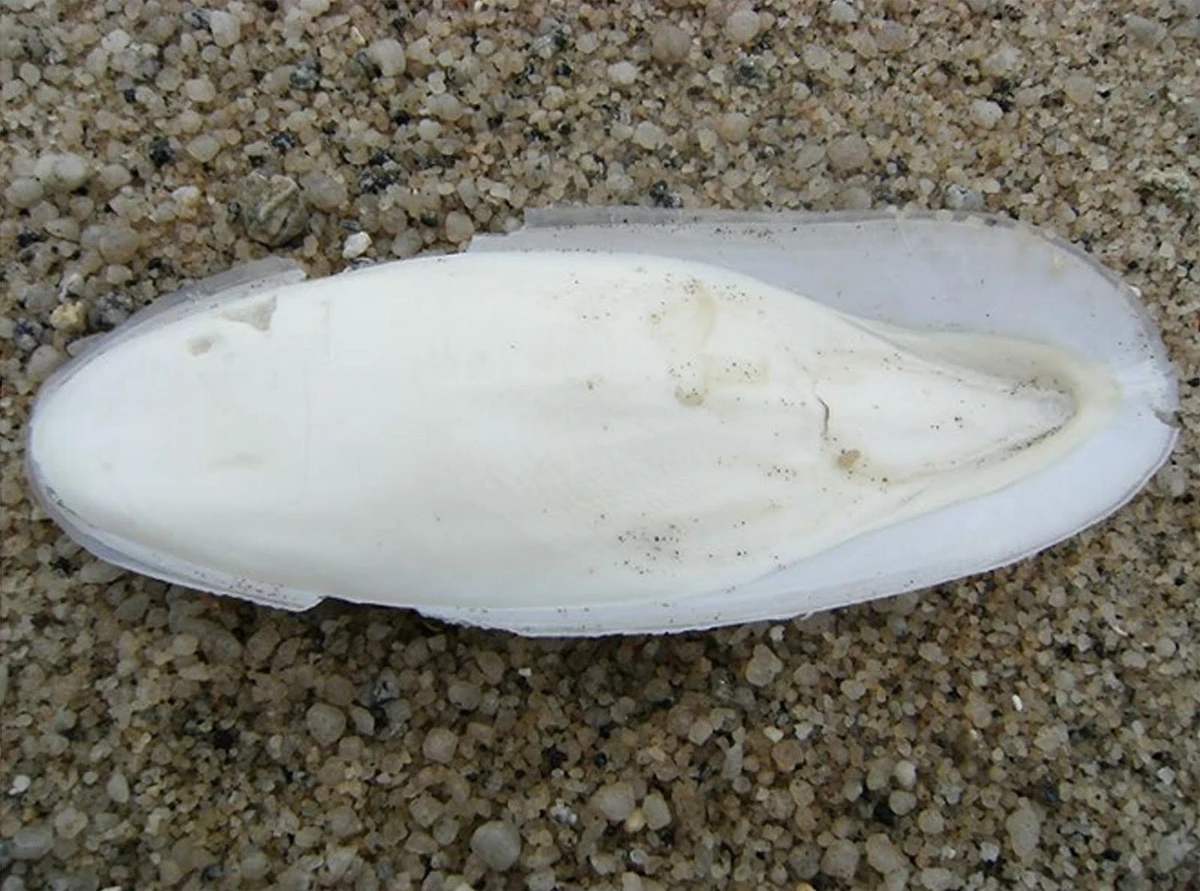
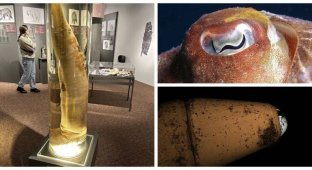
And this is the cuttlebone—the cuttlefish's only "bone." But how does an invertebrate end up with a bone? It's actually the remnant of an internal shell, inherited from snail-like ancestors.
But what's most fascinating is their ability to change color. Unlike chameleons, which take minutes to shift shades, cuttlefish can completely transform their color in a mere 0.2 seconds. Their chromatophores—the skin-pigment cells—are controlled directly by the nervous system with pinpoint precision down to individual cells. 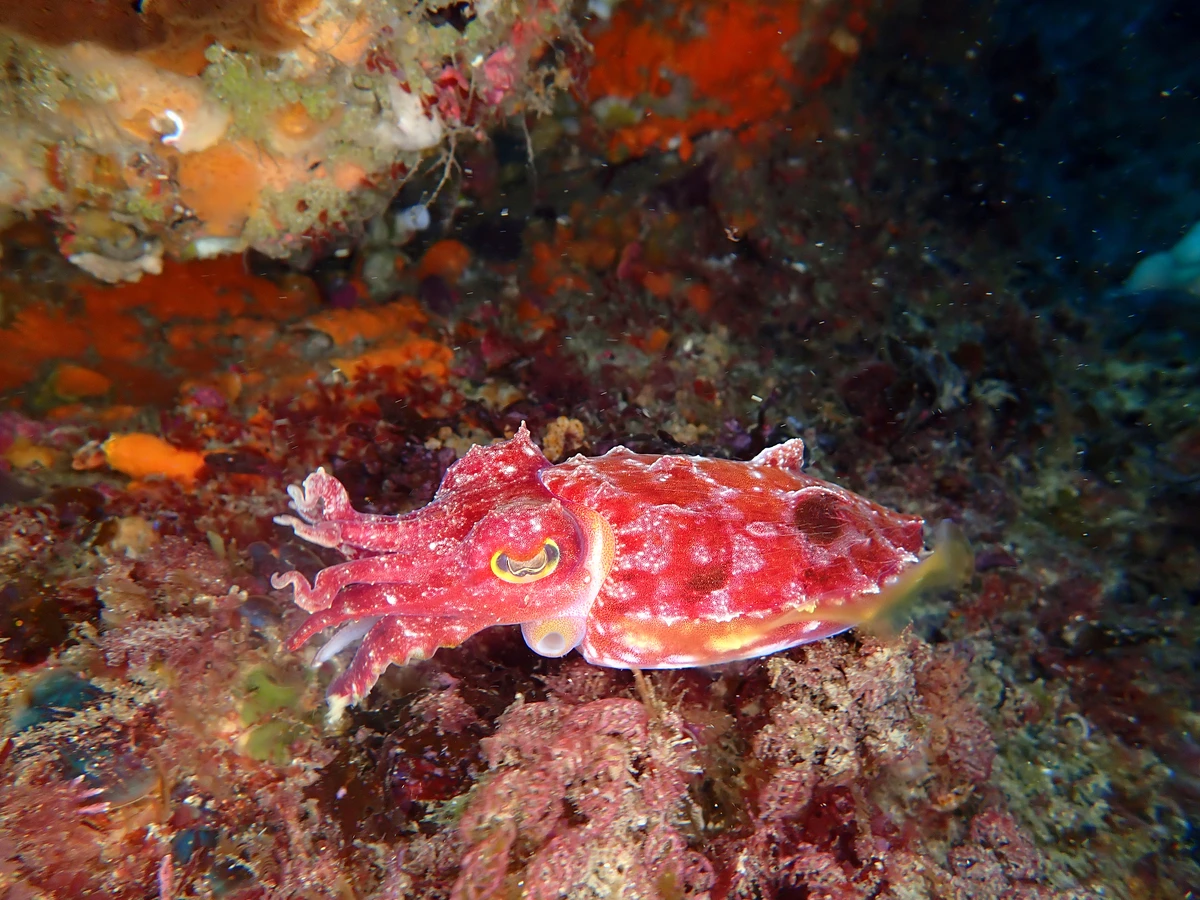
A cuttlefish can camouflage like this...
A cuttlefish can seamlessly match its pattern to the texture of sand, rock, or coral, making itself virtually invisible. This level of camouflage requires a degree of neural precision humans can only dream of. For us, coordinating fifty muscles at once is a triumph; a cuttlefish manually controls millions of individual cells from the moment it's born. 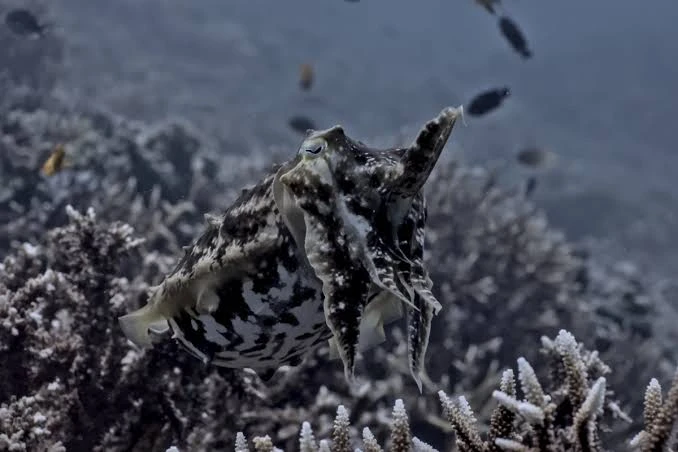
...or like this.
And color changing isn't just for camouflage. Skin is the window to a cuttlefish's soul. The shade and intensity reveal its emotional state, while constantly shifting patterns signal its intentions. Even in its sleep, a resting cuttlefish will slowly cycle through subtle colors—compelling evidence that cuttlefish might actually dream. 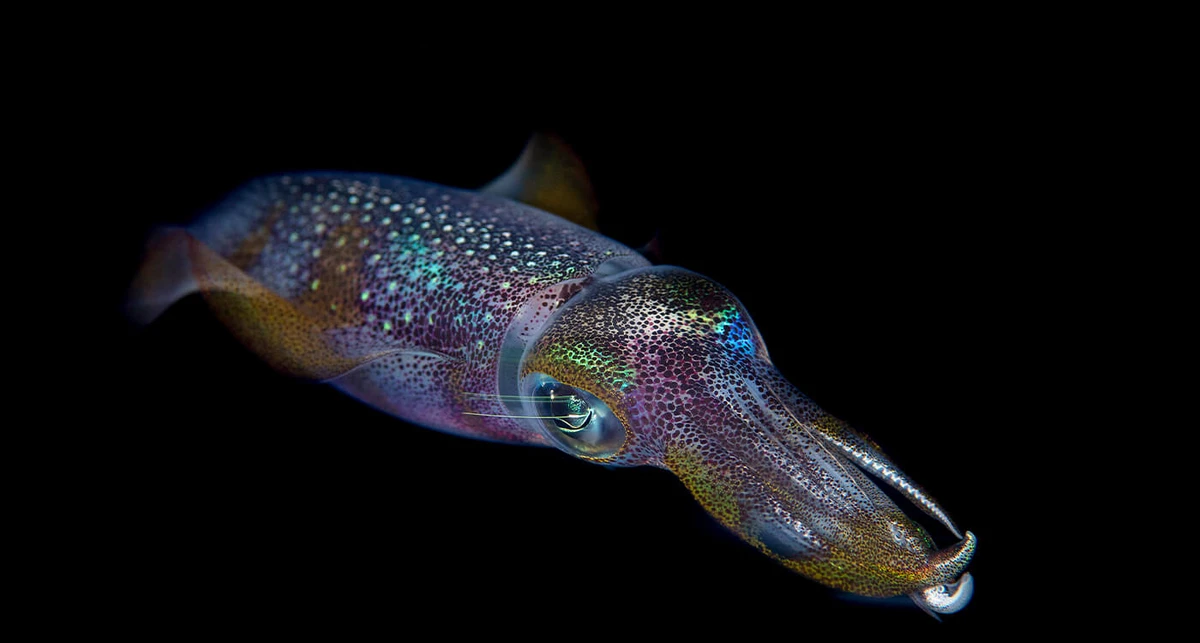
Your skin when you're having the sweetest dream!
All this brainpower and remarkable communication capability make it all the more heartbreaking that cuttlefish have such tragically short lives. Despite their immense intellectual potential, their lifespan rarely exceeds one to two years. Instead of enjoying a long life, accumulating wisdom, and passing it down to their young, cuttlefish mature rapidly, reproduce just once, and then die as their bodies quickly deteriorate. 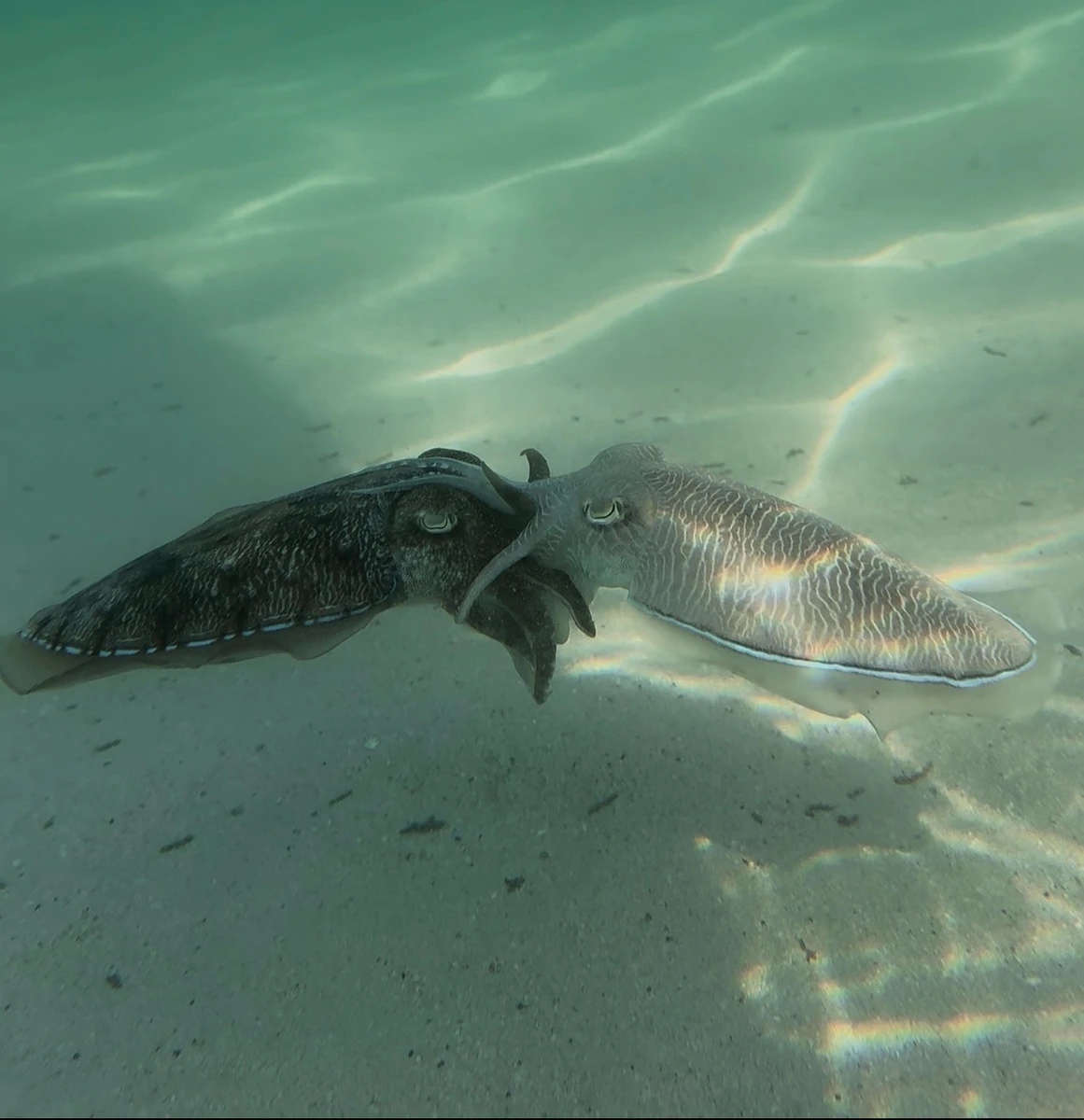
Ready to mate. In just a few months, both will be dead.
What makes it even sadder is that a cuttlefish's brain stays young until the very end. It doesn't age alongside its body, maintaining its astonishing learning abilities throughout almost its entire life. Only four or five days before death does the brain begin to decline and break down. A tragic end for such a brilliant creature.