Could Pluto Regain Its Planet Status? (4 Photos)
On August 24, 2006, at a conference of the International Astronomical Union in Prague, an event took place that unexpectedly captivated millions of people worldwide who had never previously shown an interest in astronomy. Scientists stripped Pluto of its status as a full-fledged planet of the Solar System, reclassifying the distant world as a dwarf planet. 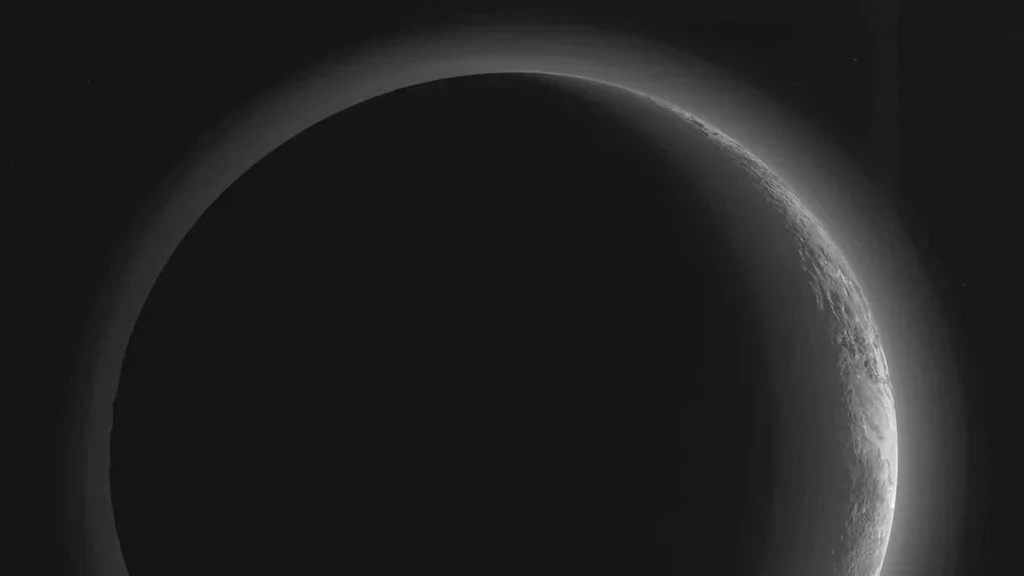
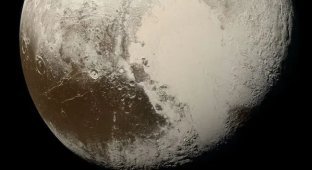
Pluto captured by the New Horizons spacecraft during its close flyby on July 14, 2015
Nearly two decades have passed since then, yet the debate refuses to die down. Every few years, the topic resurfaces online, sparking a wave of nostalgic social media posts from people claiming Pluto will always be the ninth planet in their hearts. Some attempt clumsy jokes, asking, "Does Pluto even know?" Others, however, make serious calls to revisit the decision and reinstate the distant world's former status.
Yet behind all this emotion lies a far more intriguing question: does reinstating Pluto's planetary status actually make any scientific sense?
Three Rules for Club Membership
The 2006 decision didn't happen out of nowhere. The International Astronomical Union outlined three criteria that an object must meet to be classified as a planet.
First, it must orbit the Sun. Second, it must have sufficient mass for its own gravity to pull it into a nearly round shape. Pluto easily checks both of these boxes.
The problem lies in the third criterion: the object must "clear the neighborhood" around its orbit of other bodies of comparable size. And this is where Pluto fails completely. It resides in the Kuiper Belt—a region beyond Neptune's orbit littered with icy bodies. Furthermore, Pluto accounts for just 0.07% of the total mass of all objects sharing its orbital path. By comparison, Earth is 1.7 million times more massive than all the asteroids, comets, and meteoroids in its path combined. It exercises absolute dominance over its orbit. 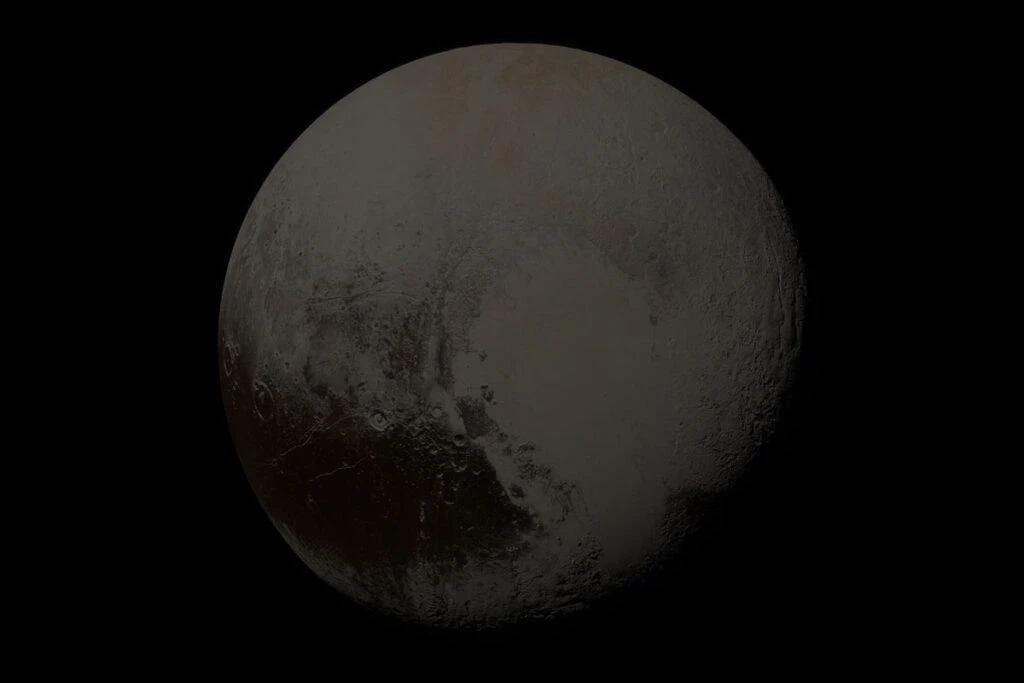
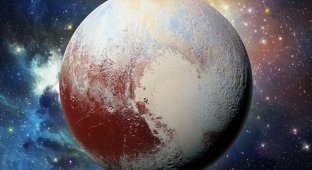
This is how Pluto would appear to the human eye, accounting for actual light levels
That is why Pluto was moved to a new category: dwarf planet. Ceres, Eris, Haumea, and Makemake were reclassified right along with it.
Why Classifications Matter
Why did humanity need to categorize cosmic objects in the first place? What harm would it do if Pluto had simply remained a planet?
The answer is simple: classification exists for information management, not because we discovered some sacred hierarchy of celestial bodies in the universe. Similarly, biologists organize living organisms into species and genera not because nature politely labeled every creature on Earth, but because it helps structure knowledge and identify patterns.
Taking the logic of the 2006 decision's opponents to its absurd extreme, one might recall that humanity once considered Earth to be the center of the universe, with all celestial bodies revolving around it. That model was intuitively appealing and comforting—people have always liked believing the universe has special plans for them and that their existence isn't just coincidental. Scientific geocentrism endured for nearly two millennia! Yet when a critical mass of observational data contradicted the accepted framework, scientists didn't cling to a cozy, familiar worldview. They revised the model because the new heliocentric framework better explained reality.
The same thing happened with Pluto, just on a much smaller scale.
The history of science is an ongoing process of refining models as new knowledge accumulates. Take, for example, Jupiter-like bodies orbiting a brown dwarf (the middle ground between stars and planets) that itself orbits a star—should those be called moons? And would objects orbiting other moons qualify as moons, too? These questions will inevitably need to be debated and agreed upon.
What New Horizons Revealed
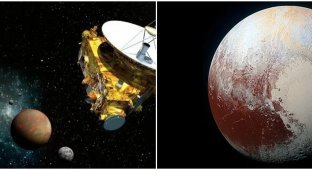
Data gathered by NASA's New Horizons probe during its historic flyby on July 14, 2015, deserves special attention. Analysis of the images, released almost in real time, held plenty of surprises.
It turned out Pluto is far from the dead lump of ice on the outskirts of the Solar System many had assumed. Scientists discovered a massive, heart-shaped ice plain named Sputnik Planitia, water-ice mountain ranges towering up to 3.5 kilometers high, evidence of cryovolcanism, and even hints of a subsurface liquid ocean. 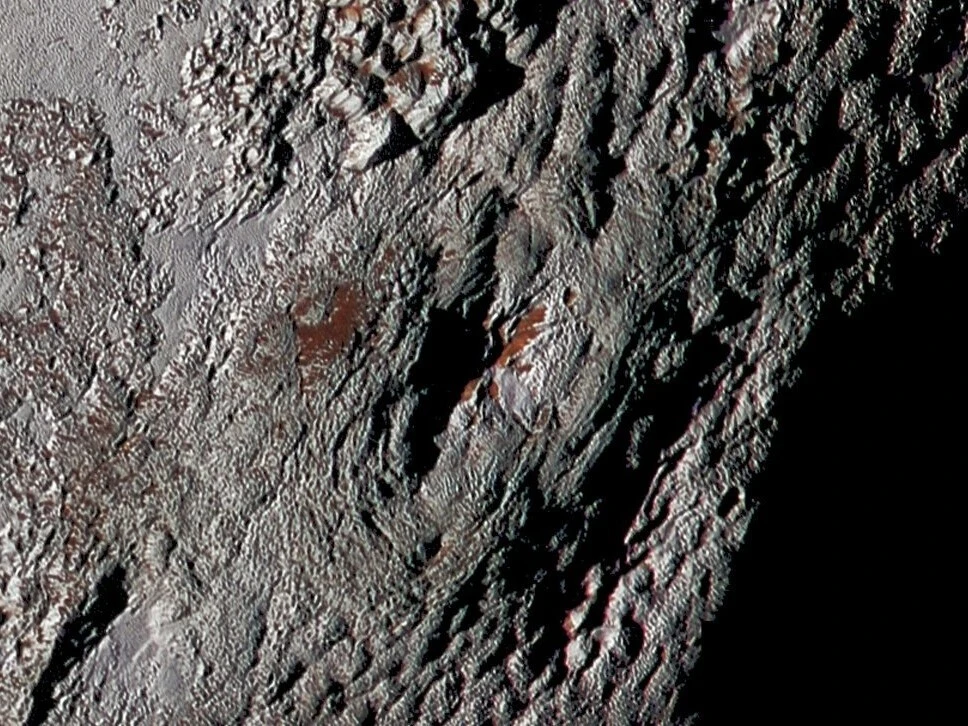
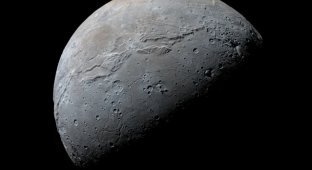
Wright Mons (a massive cryovolcano) as seen by the New Horizons spacecraft
This data formed the core argument for those advocating Pluto's reinstatement. Alan Stern, principal investigator of the New Horizons mission, has actively championed an alternative, geophysical definition of a planet rather than an orbital one. Under his logic, if an object is massive enough to be rounded by its own gravity and exhibits signs of geological activity, that alone should qualify it as a planet—regardless of whether it has cleared its orbital path.
The issue is that under this approach, the list of Solar System planets would swell to at least several dozen, creating mass confusion. Following Stern's logic, we would immediately have to include Ceres from the asteroid belt, Jupiter's moon Europa, and Saturn's moons Titan and Enceladus. A planet orbiting a planet... the lengths people will go to indulge nostalgia.
NASA Administrators Weigh In
In 2019, during Donald Trump's first presidential term, then-NASA Administrator Jim Bridenstine told a group of students, "In my view, Pluto is a planet." The quote instantly hit news headlines worldwide.
The absurdity is that such statements have nothing to do with the agency's actual scientific stance. The head of NASA is a political appointee selected by the president—and history shows the post often goes to someone who knows as much about science as I do about playing the accordion. The administrator is a political loyalist, a public figure, a politician, a former military pilot, or a businessman. Their job is to represent the agency before Congress and the public, deal with the press, and squeeze out any possible increase to the annual budget.
History is repeating itself now, albeit in an even more bizarre fashion. The current NASA administrator, Jared Isaacman, is a billionaire with close ties to SpaceX and Elon Musk. His appointment wasn't driven by scientific expertise; he secured the post thanks to Musk, who needed an insider close to the federal space purse strings. Isaacman openly lobbies for SpaceX, routinely making bold claims backed by little in the way of tangible results.
Therefore, any chatter from Isaacman—including his calls to restore Pluto's full planetary status—should be viewed strictly as populist rhetoric meant to appeal to public sentiment, not as a shift in scientific consensus. The International Astronomical Union remains the sole authority empowered to name and classify celestial bodies. And it has not changed its stance on Pluto.
Emotional Attachment to Pluto
For nearly 76 years, from 1930 to 2006, generations of schoolchildren worldwide memorized the nine planets of the Solar System. That knowledge became part of a foundational worldview formed in childhood—and early lessons are often hardwired into our brains as immutable truths. 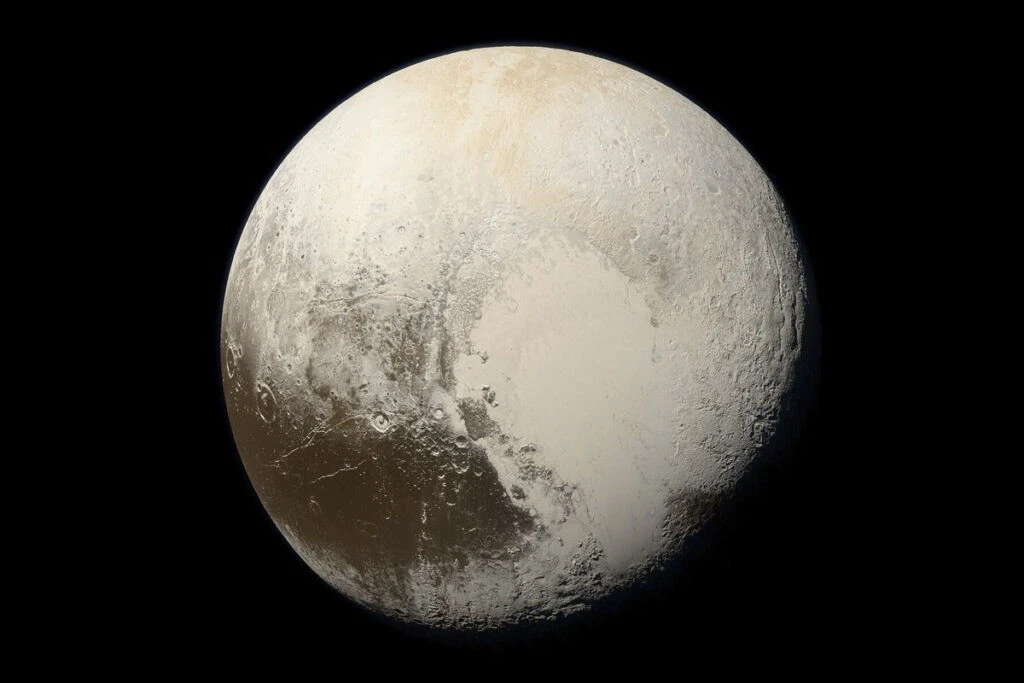
Pluto in natural color, captured by the New Horizons probe on July 14, 2015, from a distance of 35,445 kilometers
Combine that with the human tendency to resist any information that threatens our established worldview—a defense mechanism to avoid cognitive dissonance. As a physical body, Pluto lost nothing when it was reclassified. It continues to travel along its eccentric orbit beyond Neptune just as it always has. Yet for some, the mere reduction in the official count of planets provokes outrage, if not outright anger.
A Step Backward for the Sake of Nostalgia
Taking an objective view, restoring Pluto's planetary status would be a scientific step backward. The 2006 classification was no whim; it addressed a genuine dilemma. As discoveries in the Kuiper Belt mounted, it became clear that the old, intuitive understanding of a planet was defunct—risking either an endless list of planets or arbitrary inclusions and exclusions lacking clear criteria.
Isaacman pontificating about his "fight for Pluto" might as well champion Atlas holding up the heavens or the giant turtle supporting Earth on its shell.
To be sure, debates continue within the scientific community over a more universal definition that would apply equally well to our Solar System and to thousands of discovered exoplanets. But those discussions are about refining a scientific tool—not rehabilitating a specific celestial body to satisfy collective nostalgia.