The Banker Who Photographed the World in Color: Albert Kahn’s "Archives of the Planet" (21 photos)
French banker Albert Kahn made a fortune in stock speculation and loans to the Japanese government, then decided to spend it on the impossible: capturing the entire world in color before modern history erased it beyond recognition. Over 22 years, his team of hired photographers and filmmakers traveled across 50 countries, from Mongolia to Brazil, leaving behind 72,000 autochrome plates and 183,000 meters of film. Then came the Wall Street crash of 1929, which wiped out Kahn’s fortune entirely. Here is the story of how the son of an illiterate Alsatian peasant created humanity's largest color archive—and what remains of it today. 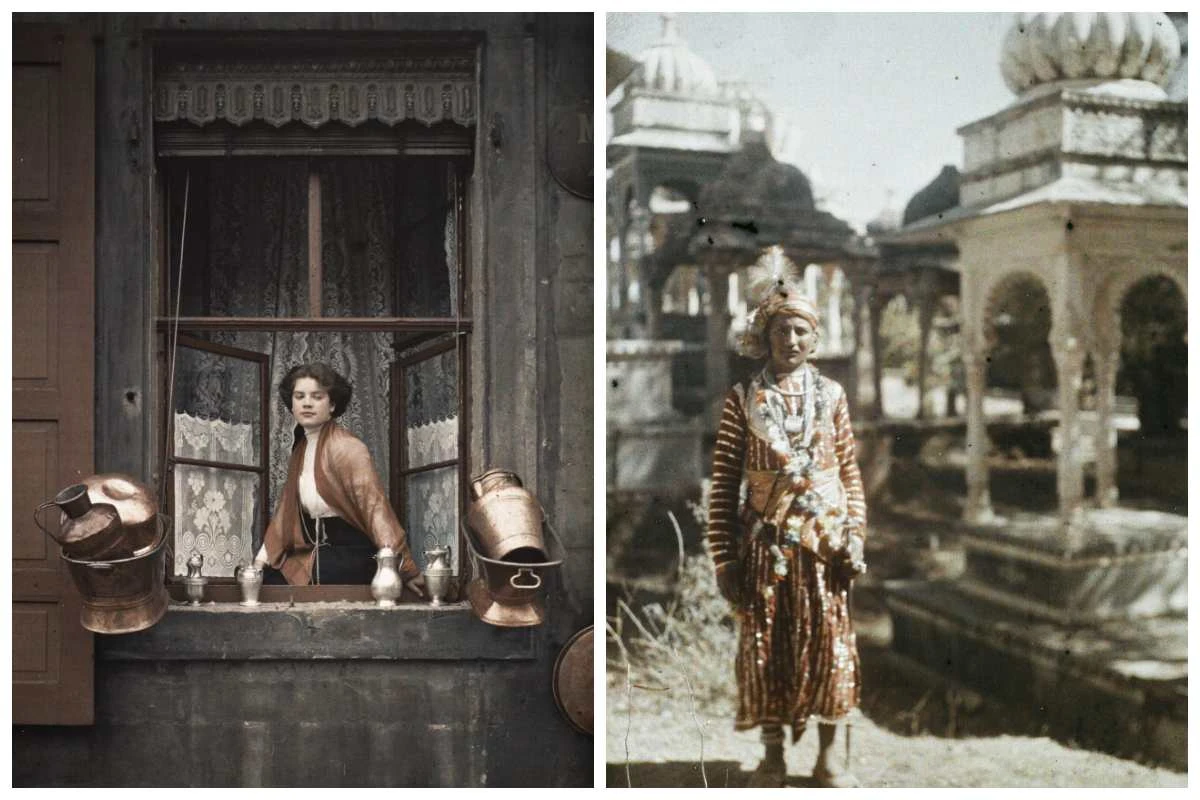
The Journey to the Top
Albert Kahn was born Abraham Kahn on March 3, 1860, in the Alsatian commune of Marmoutier, adopting the French name Albert later in his youth. His father, Louis Kahn, was a cattle merchant, while his mother, Babette, was a homemaker who remained illiterate her entire life. She passed away in 1870, when Kahn was just ten years old. 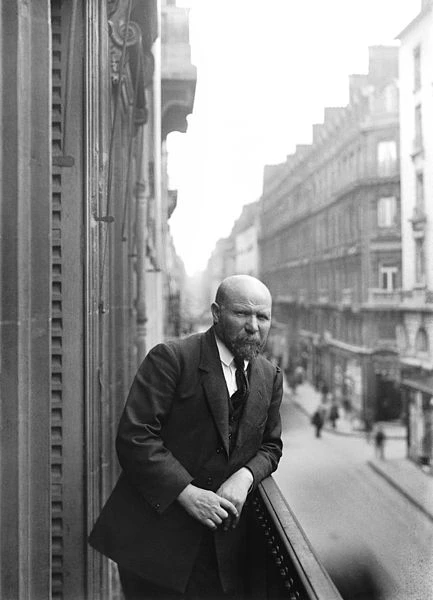
Albert Kahn on the balcony of his Paris office, 1914
Following the Franco-Prussian War of 1871, Alsace was annexed by Germany, forcing the Kahn family to relocate to Lorraine and later Paris. At 16, he changed his name to Albert to better assimilate in a society marked by anti-Semitism. His first job was at a Montmartre tailoring workshop, before hiring on as a clerk in 1878 at the Goudchaux Bank, owned by distant relatives. 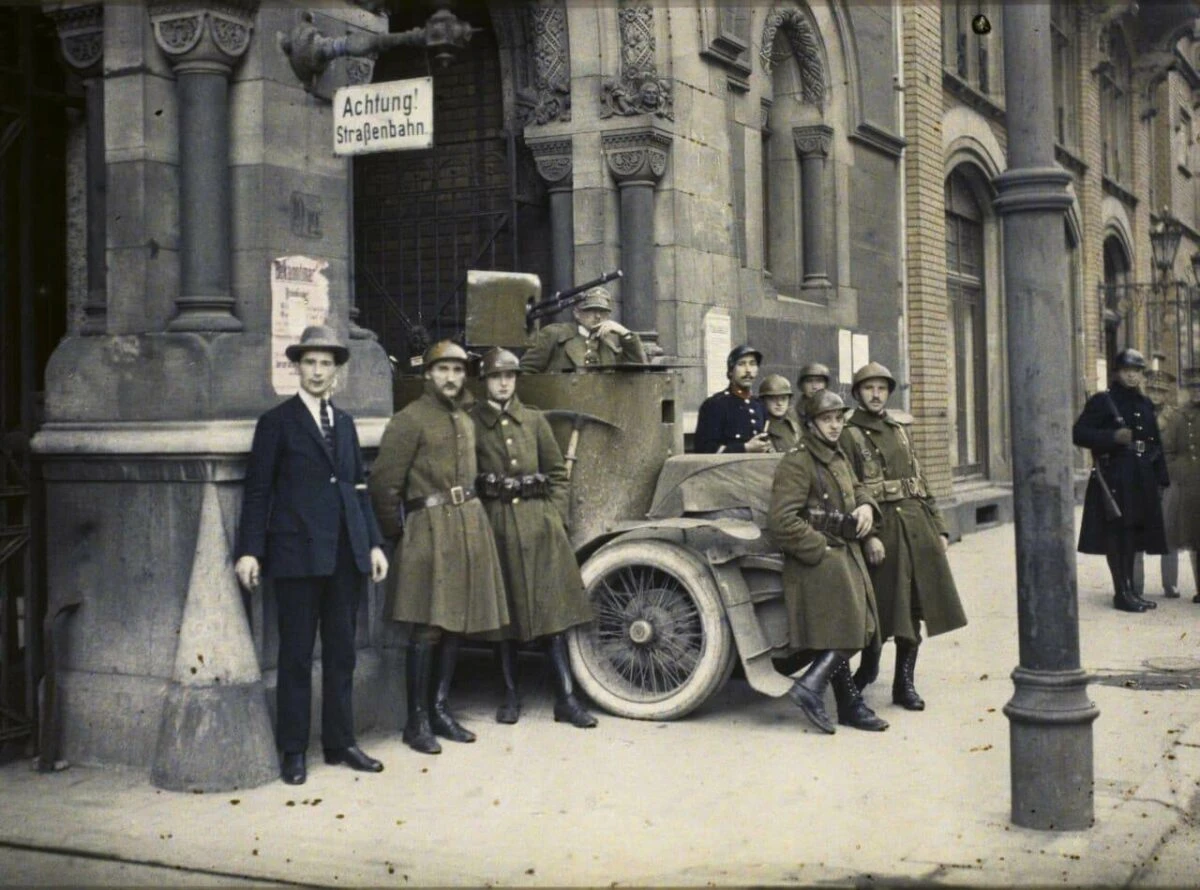
Aachen, Germany, 1923, by Frédéric Gadmer
While working as a clerk, Kahn attended evening classes, mentored by the young philosopher Henri Bergson, who would become his lifelong friend. Kahn earned a bachelor's degree in arts in 1881 and a law degree in 1884. Throughout this time, he immersed himself in Paris’s bohemian social circles, forging a friendship with sculptor Auguste Rodin. 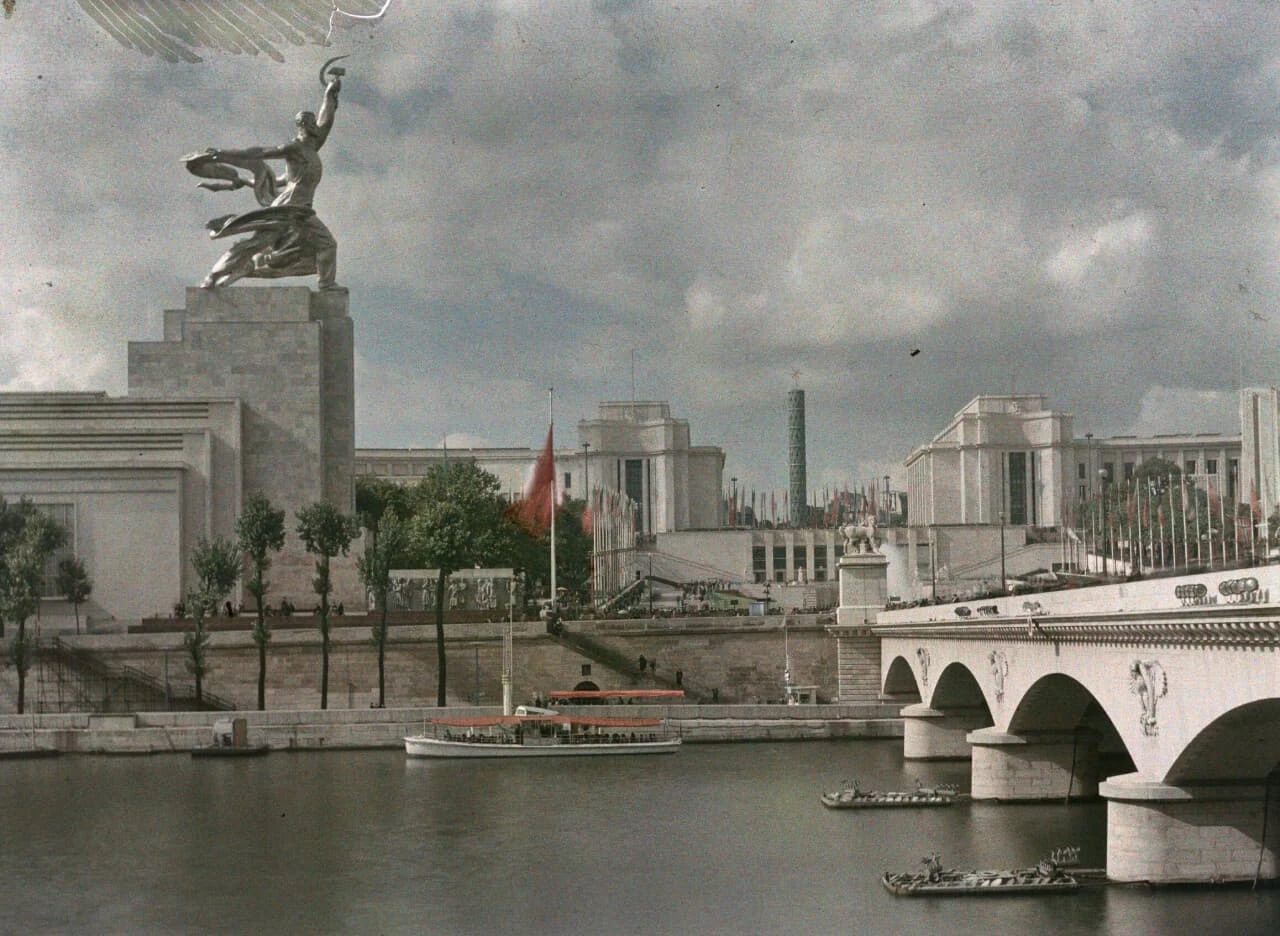
The stainless steel statue Worker and Kolkhoz Woman towers over the Seine in Paris, Soviet Pavilion at the International Exposition, 1937, by Georges Chevalier
The Banker Who Chose Humanism
In 1892, at age 32, Kahn became a partner at Bank Goudchaux—one of Europe's premier financial houses. He built his core fortune through high-risk speculation in South African gold and diamond mines between 1889 and 1893, while also participating in syndicates funding the governments of Japan and other nations. By 1898, at 38, he launched his own bank and ranked among the wealthiest men in France. 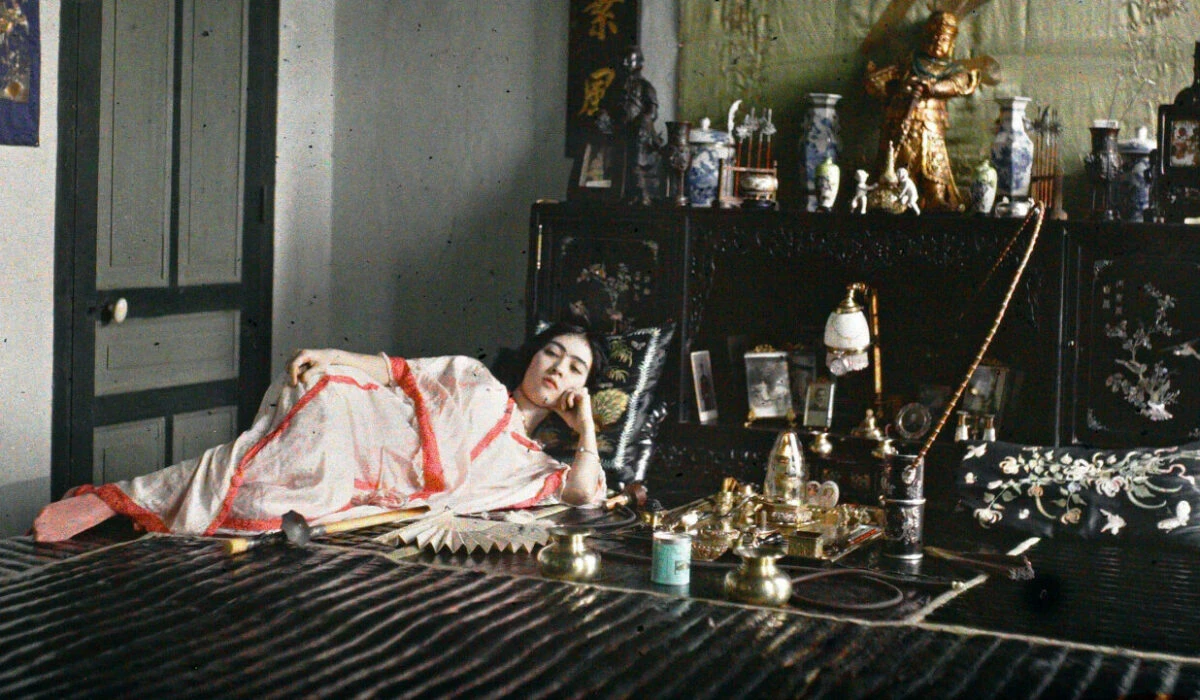
Hanoi, Tonkin, Indochina. Wealthy opium smoker, 1915, by Léon Busy
Yet money was never Kahn's ultimate goal. Devoted to humanism and pacifism, he believed that understanding foreign cultures was the only way to prevent global conflict. Back in 1898, he established the "Around the World" travelling fellowships for young scholars. In 1909, a business trip to Japan inspired an idea that would define the rest of his life. 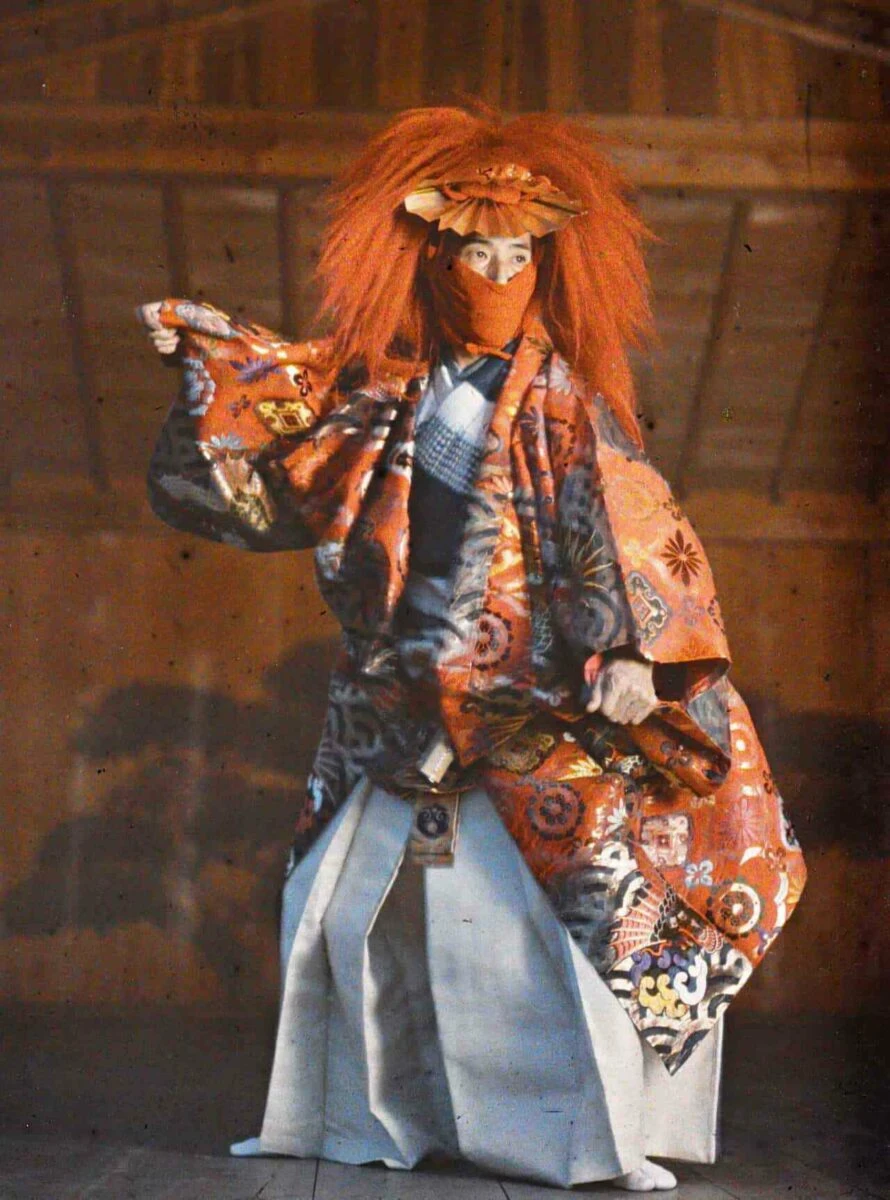
Kyoto, Japan. A Noh theater lead actor playing Ozawa no Tomofusa in the play Mochizuki, 1912, by Stéphane Passet
The banker concluded that photography was the ultimate tool for preserving human heritage before industrialization and war swept it away. The perfect medium arrived almost immediately: a groundbreaking color photography technology known as Autochrome. 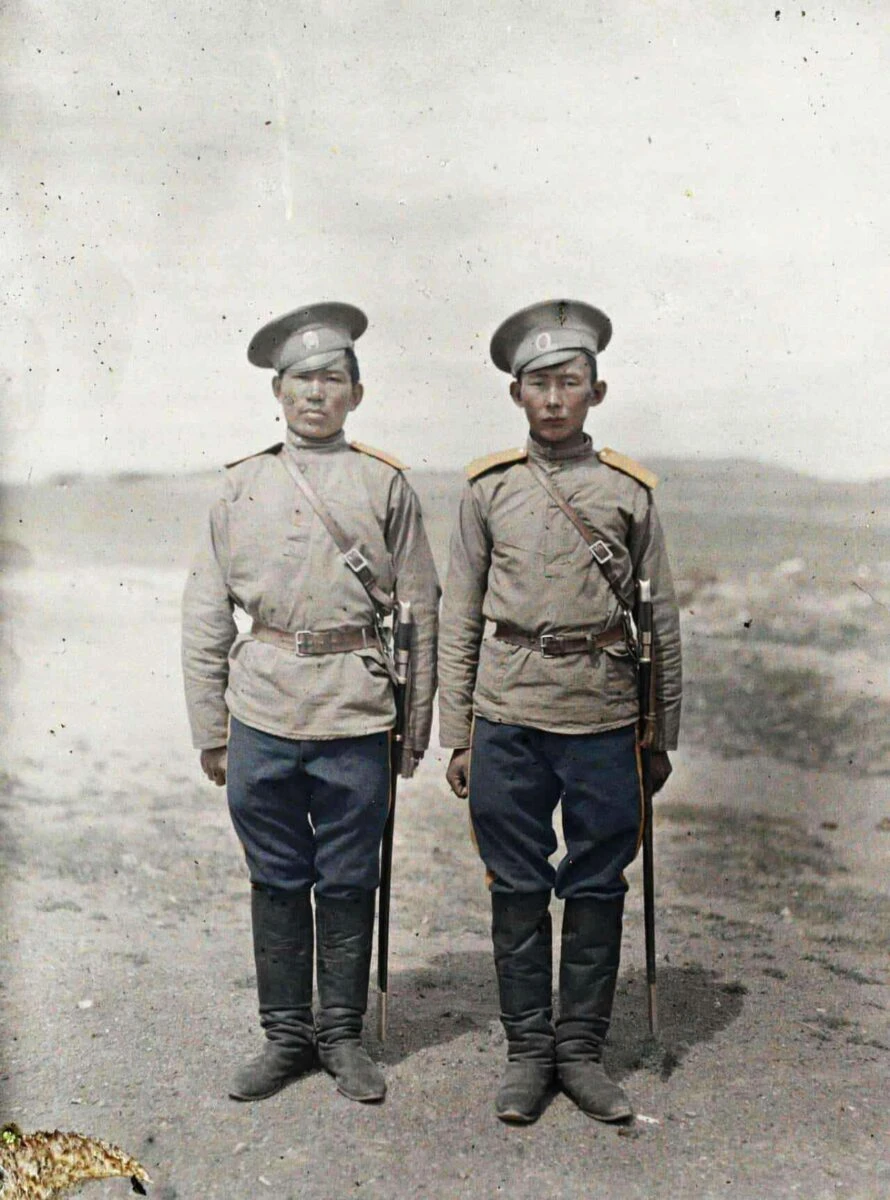
Urga, Mongolia. Two Cossacks, 1913, by Stéphane Passet
All that remained was assembling a team. Officially launched in 1912, "The Archives of the Planet" project was led by geographer Jean Brunhes, whom Kahn endowed with a chair in Human Geography at the Collège de France in exchange for directing the initiative. Kahn himself rarely left Paris, choosing instead to finance the expeditions and approve the itineraries. 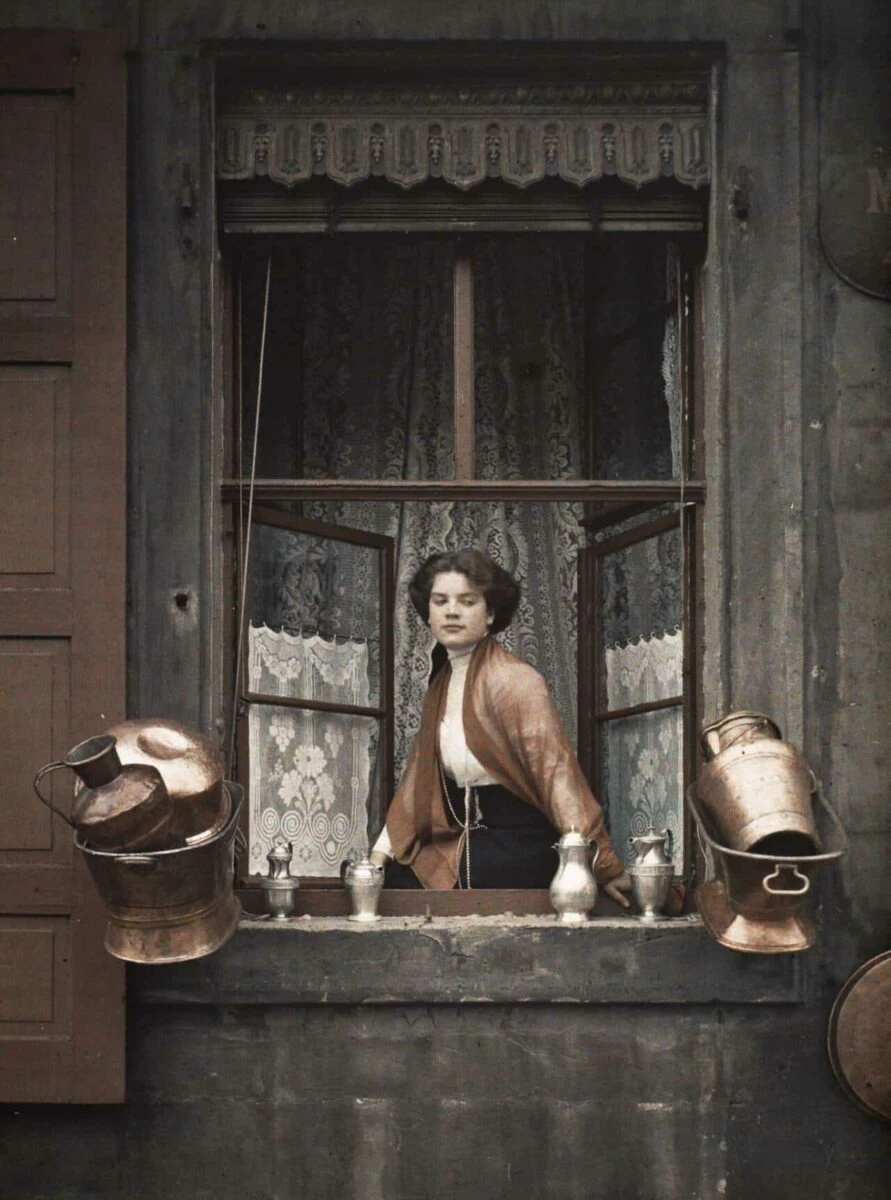
Bayreuth, Bavaria, Germany, 1912, by Auguste Léon
The Magic of Potato Starch
The process Kahn relied on was Autochrome Lumière. Patented by the Lumière brothers on December 17, 1903, and commercially launched in 1907, it became history's first commercially viable color photography process. Its secret was simple yet ingenious: a glass plate coated with microscopic grains of dyed potato starch—red-orange, green, and blue-violet—acting as tiny color filters. 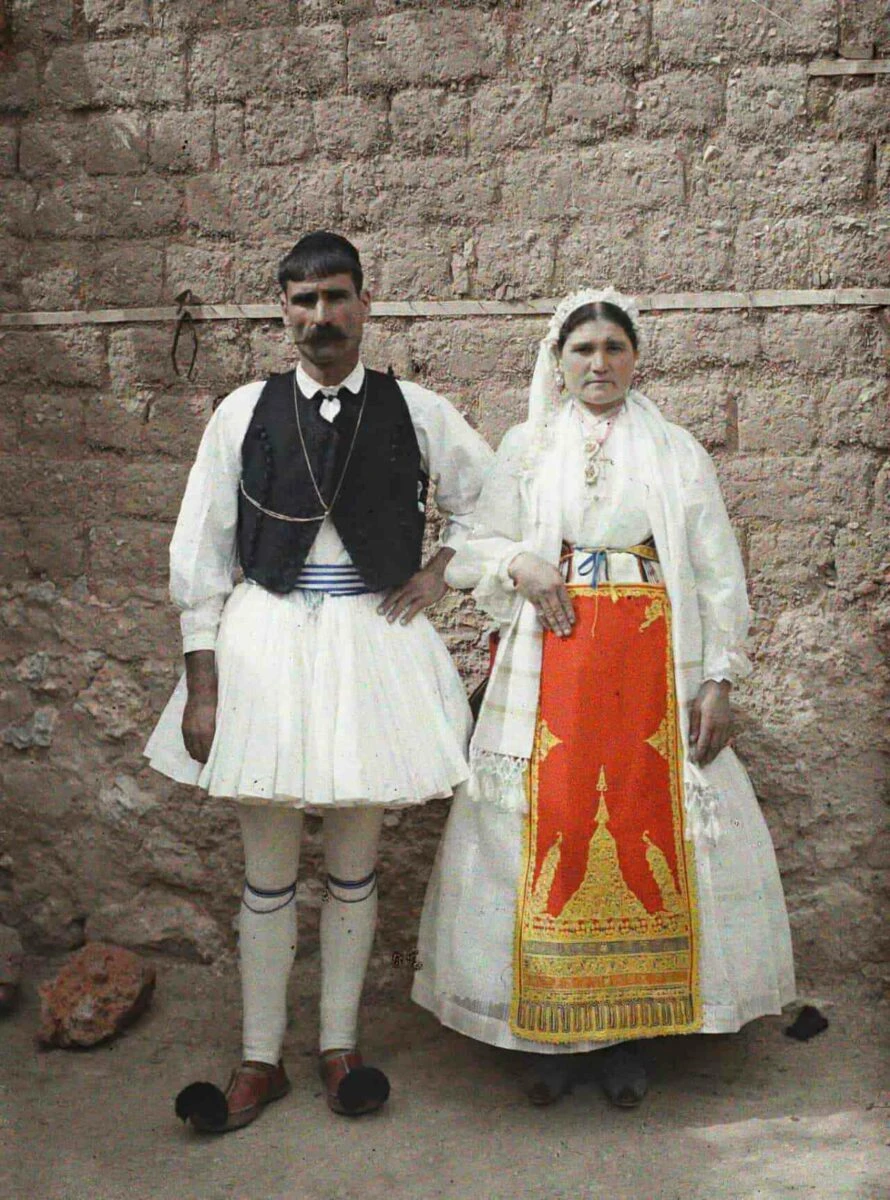
Kastri, Greece. A pair of villagers in ceremonial attire, 1913, by Auguste Léon
Once developed, the glass plate yielded a positive image that, when backlit, displayed breathtaking softness and color depth—contemporary critics frequently likened the results to Impressionist paintings. 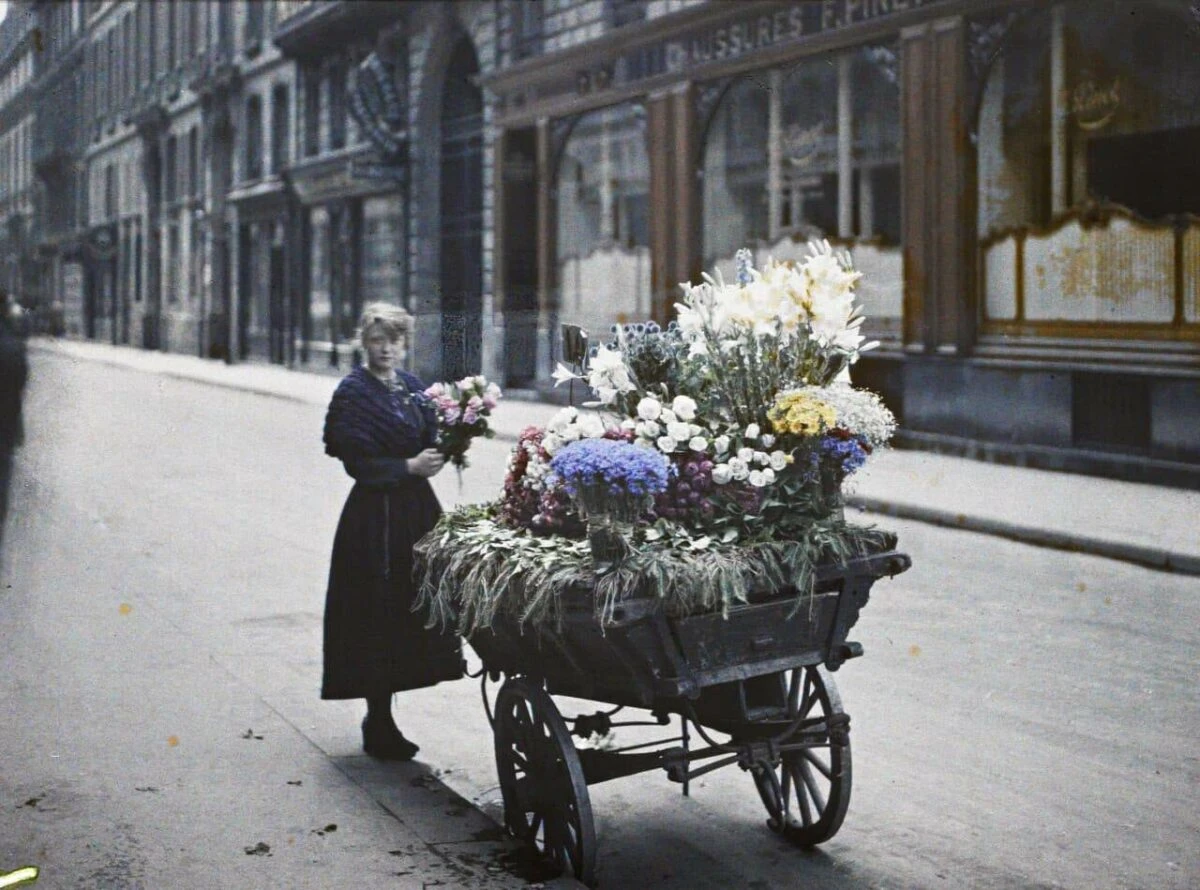
Paris, France. A flower vendor, 1918, by Auguste Léon
For many remote corners of the world, Kahn’s camera crews brought color photography for the very first time. People across Vietnam, Norway, and Mongolia saw themselves captured not in muted black-and-white, but in vivid natural hues. Over 22 years, the team journeyed through 50 countries—from isolated regions of Brazil to the deserts of West Africa and the encampments of Mongolia. 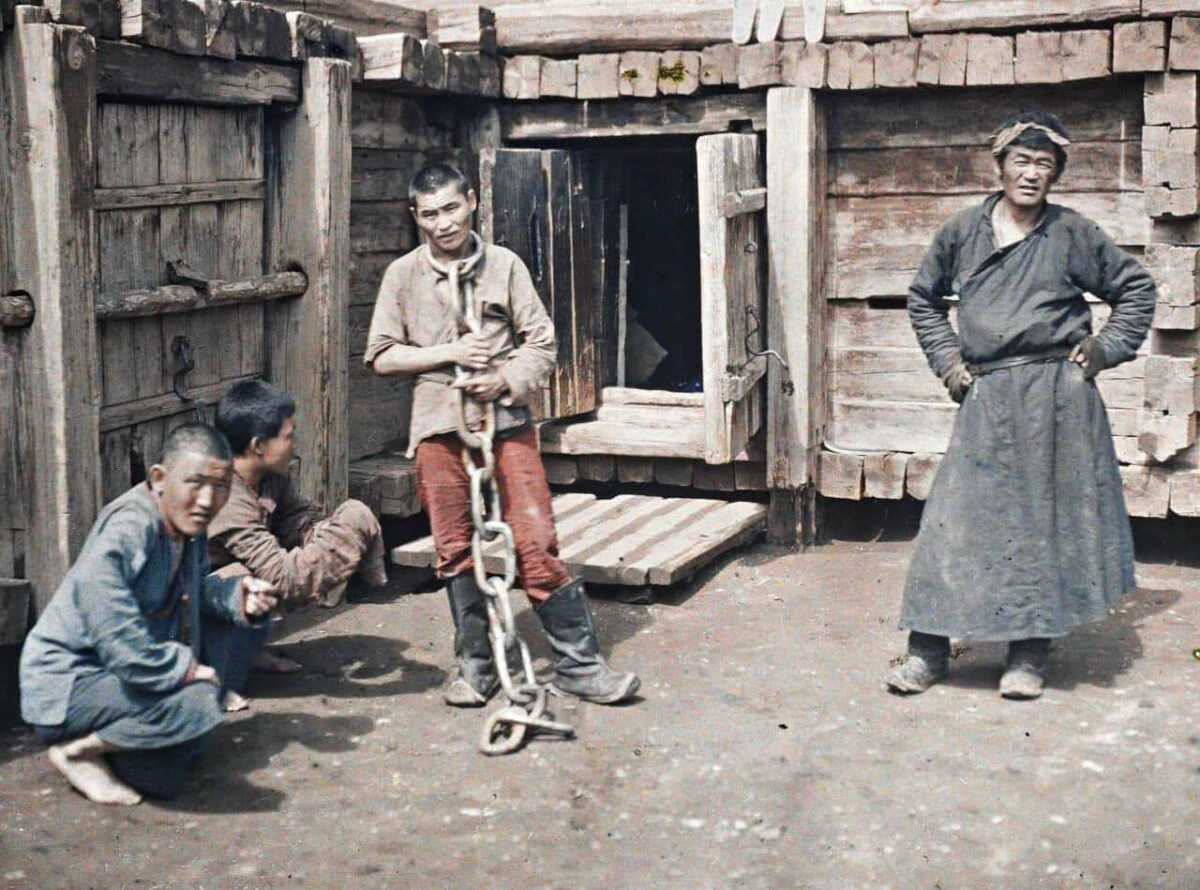
Urga, Mongolia. A guard and prisoners at a jail, 1913, by Stéphane Passet
From Mongolia to the Trenches of World War I
The culmination of decades of work was staggering: 72,000 autochrome plates, 183,000 meters of motion picture film, and 4,000 stereograms. Far more than a simple photo collection, it was an ambitious effort to build a visual memory of all humanity for future generations to study. 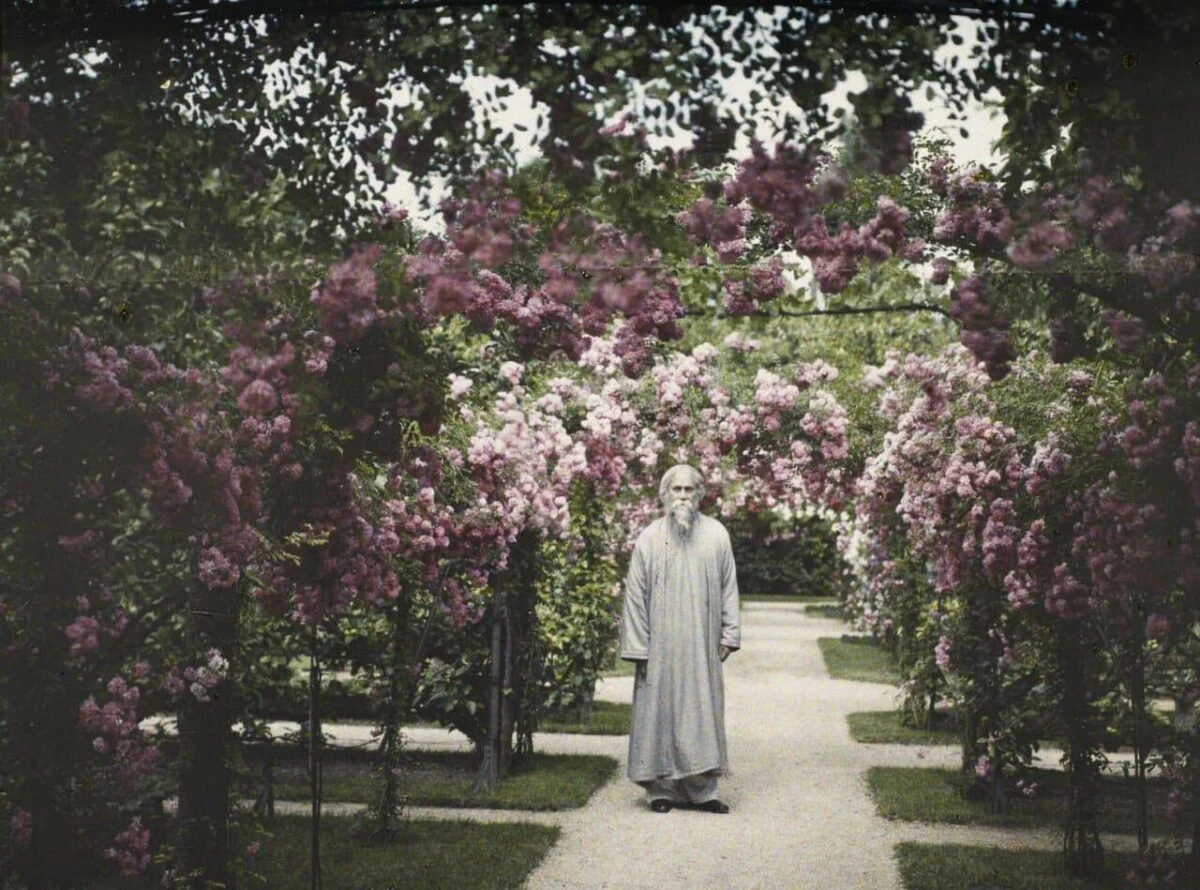
Boulogne, France. Rabindranath Tagore, 1921, by Auguste Léon
At Kahn’s estate in Boulogne-Billancourt near Paris, the era’s most celebrated figures sat for portraits—Albert Einstein, Marie Curie, Rabindranath Tagore, Rudyard Kipling, and Thomas Mann. Rather than imposing icons, these photographs reveal living, breathing people, complete with natural skin tones and candid expressions. 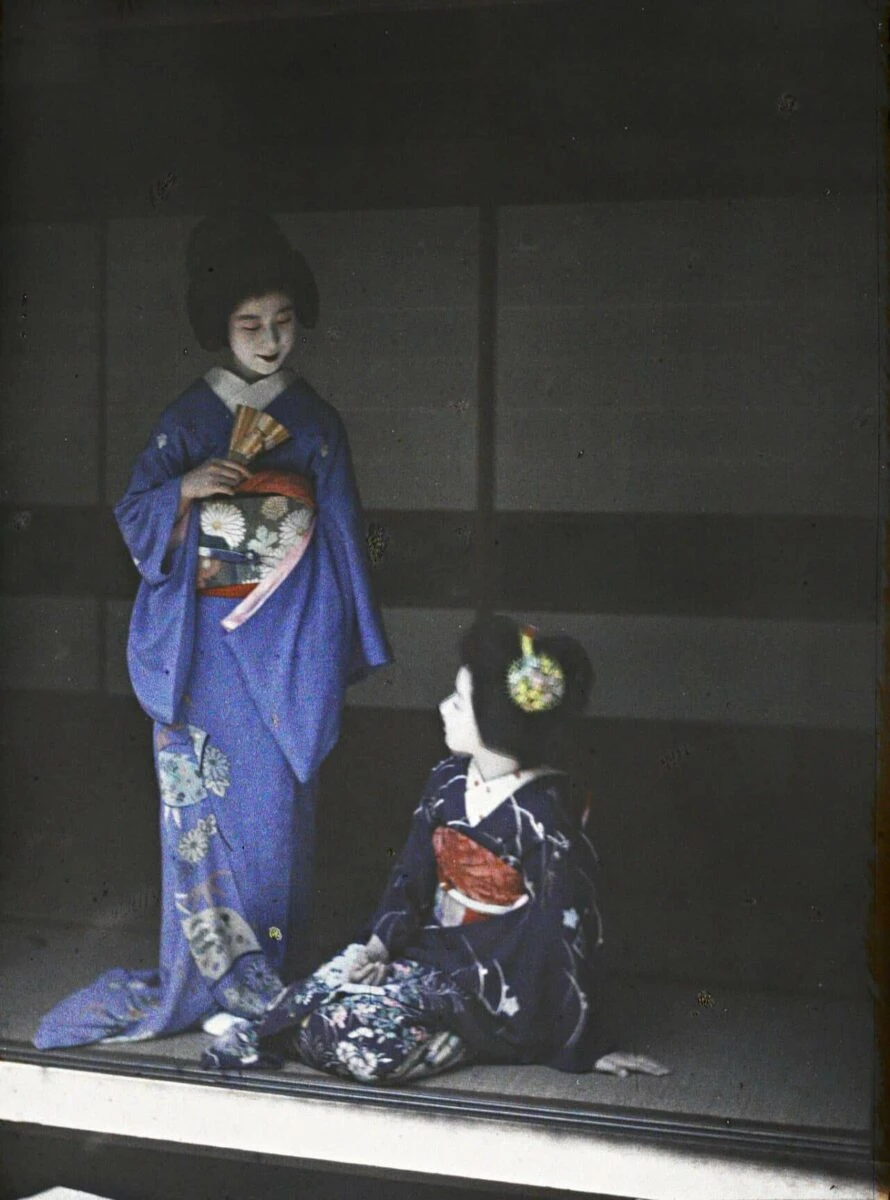
A Japanese geisha and maiko (apprentice geisha), 1926, by Roger Dumas
Color on the Battlefield
Kahn did not limit his mission to capturing elites. His team documented the grimmer reality of the era as well: the archive contains footage of the aftermath of the Balkan Wars and, most remarkably, rare color photographs capturing daily life during World War I. 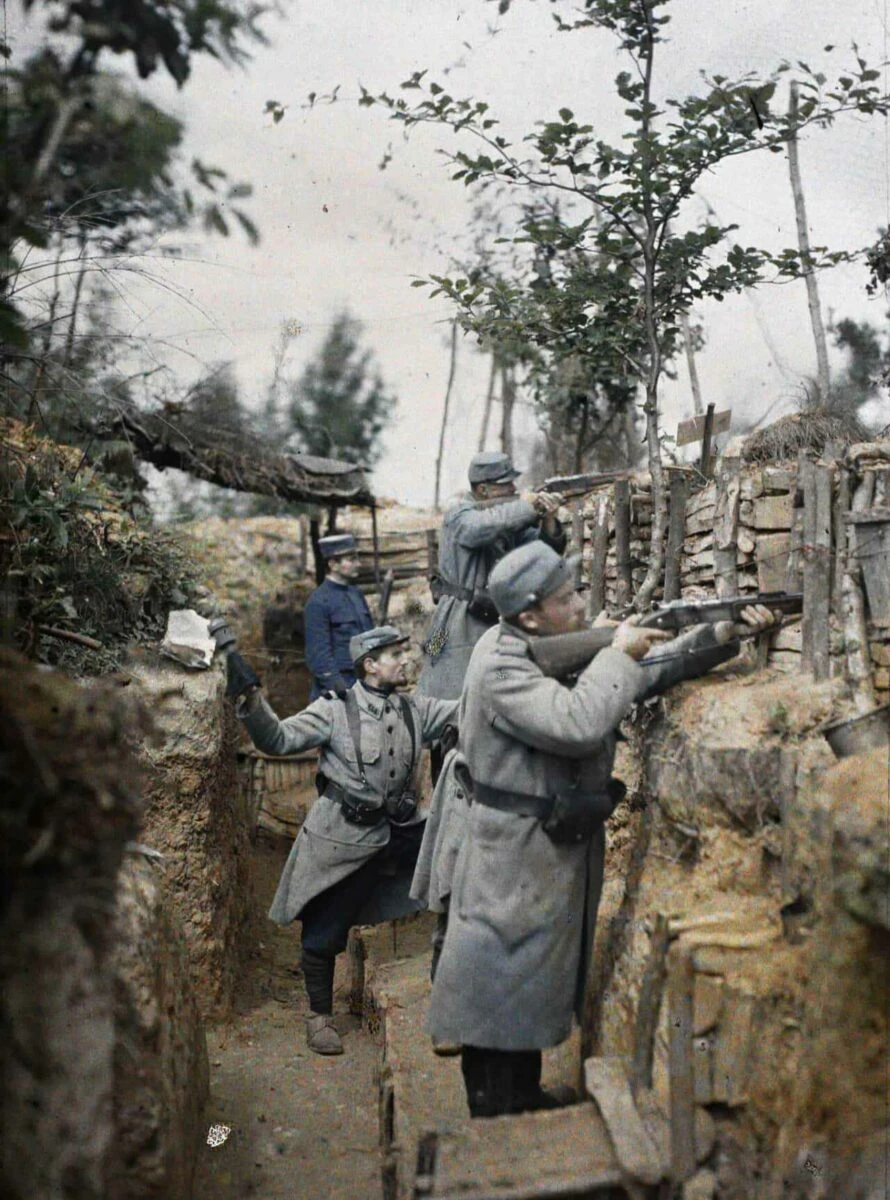
Le Hamel, Somme, Picardy, France. Frontline trenches, 1915, by Stéphane Passet
Color on the battlefield is both chilling and mesmerizing: Autochrome stripped war of its romantic mythos, making the mud and carnage starkly tangible. Filming in France began just days before war was declared in 1914, continuing throughout the conflict under special clearance from military command. 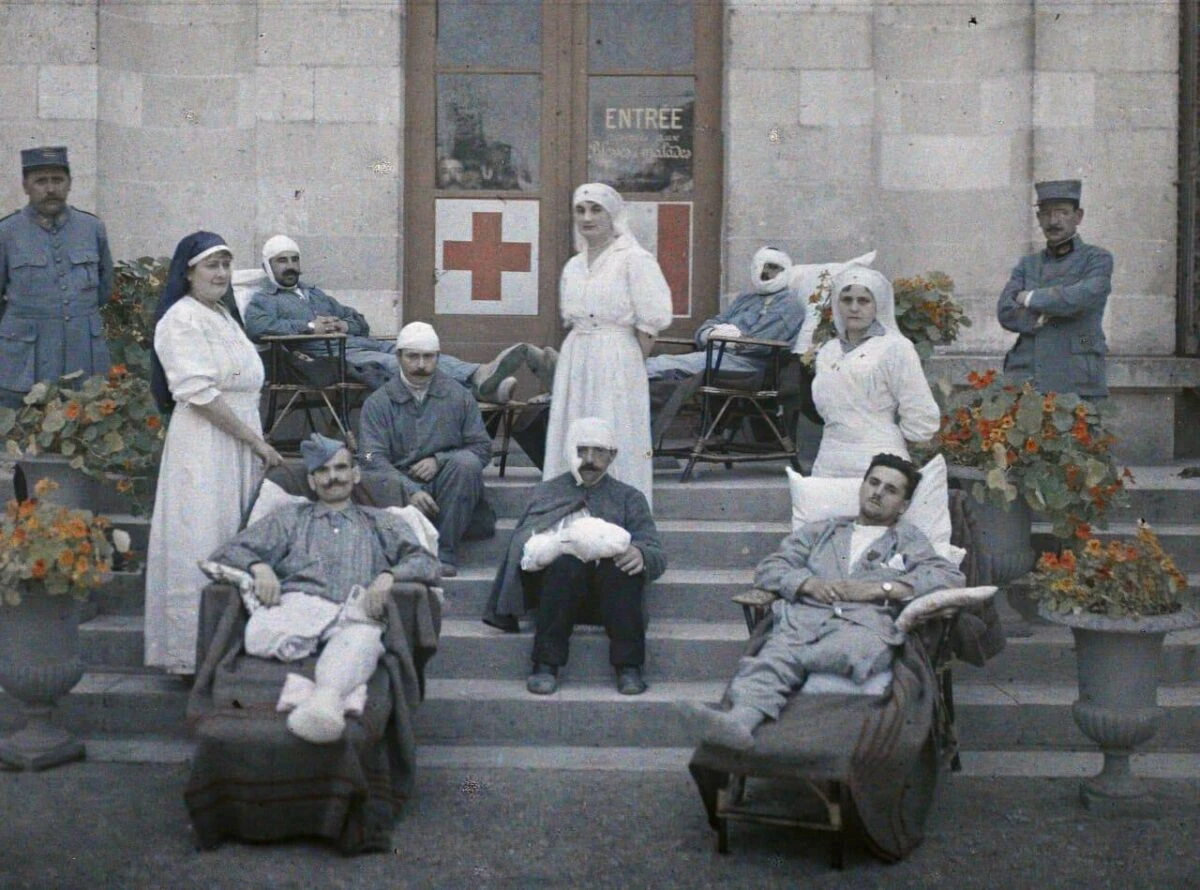
Picardy, France. Moreuil Hospital, wounded soldiers with doctor and nurses, 1916, by Stéphane Passet 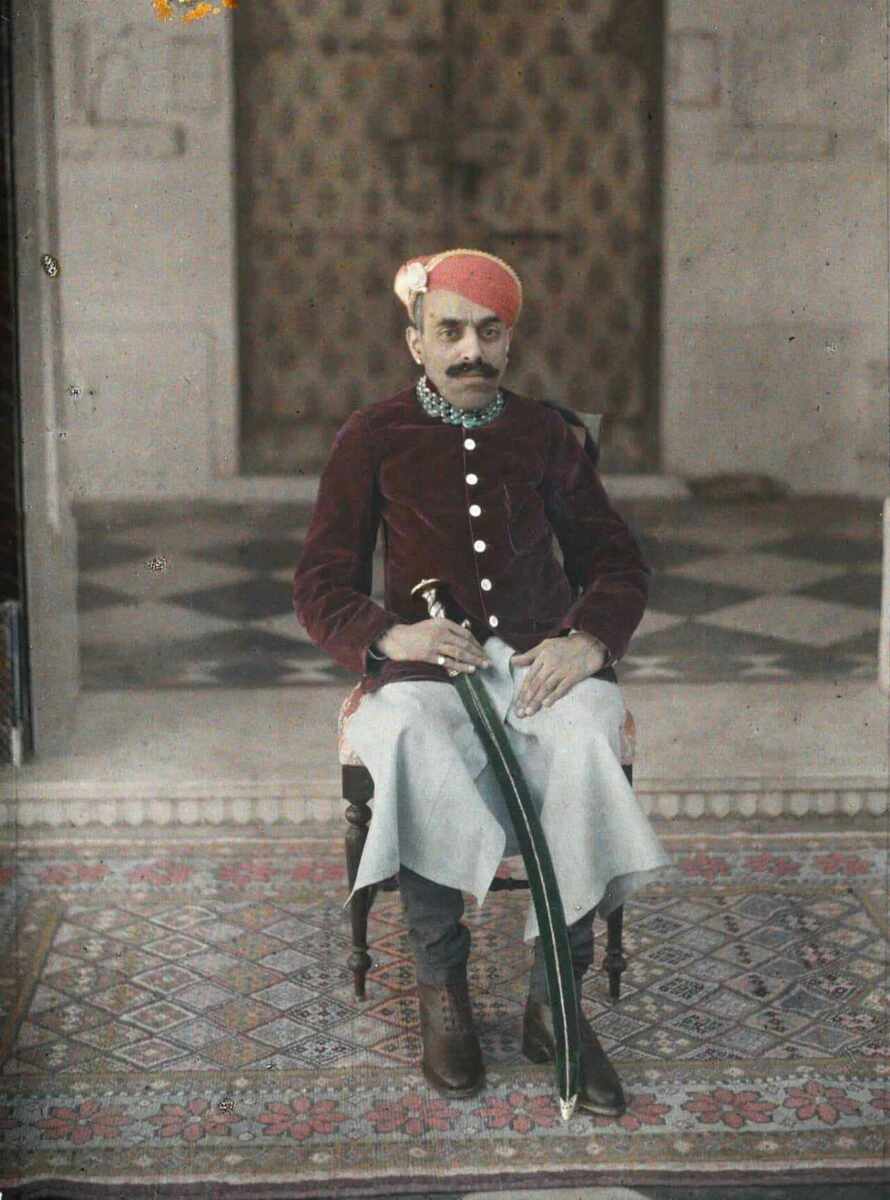
Udaipur, India. Rajput crown prince of Mewar, Maharana Bhupal Singh, 1927, by Roger Dumas
The Fall of Kahn’s Empire and the Triumph of Memory
The Wall Street crash of 1929 did not spare even a seasoned financier like Kahn. By 1931, he was completely bankrupt, and funding for "The Archives of the Planet" came to a halt. In 1936, the Seine Department purchased his property and entire photographic collection—leaving Kahn to live out his remaining years impoverished on his former estate. 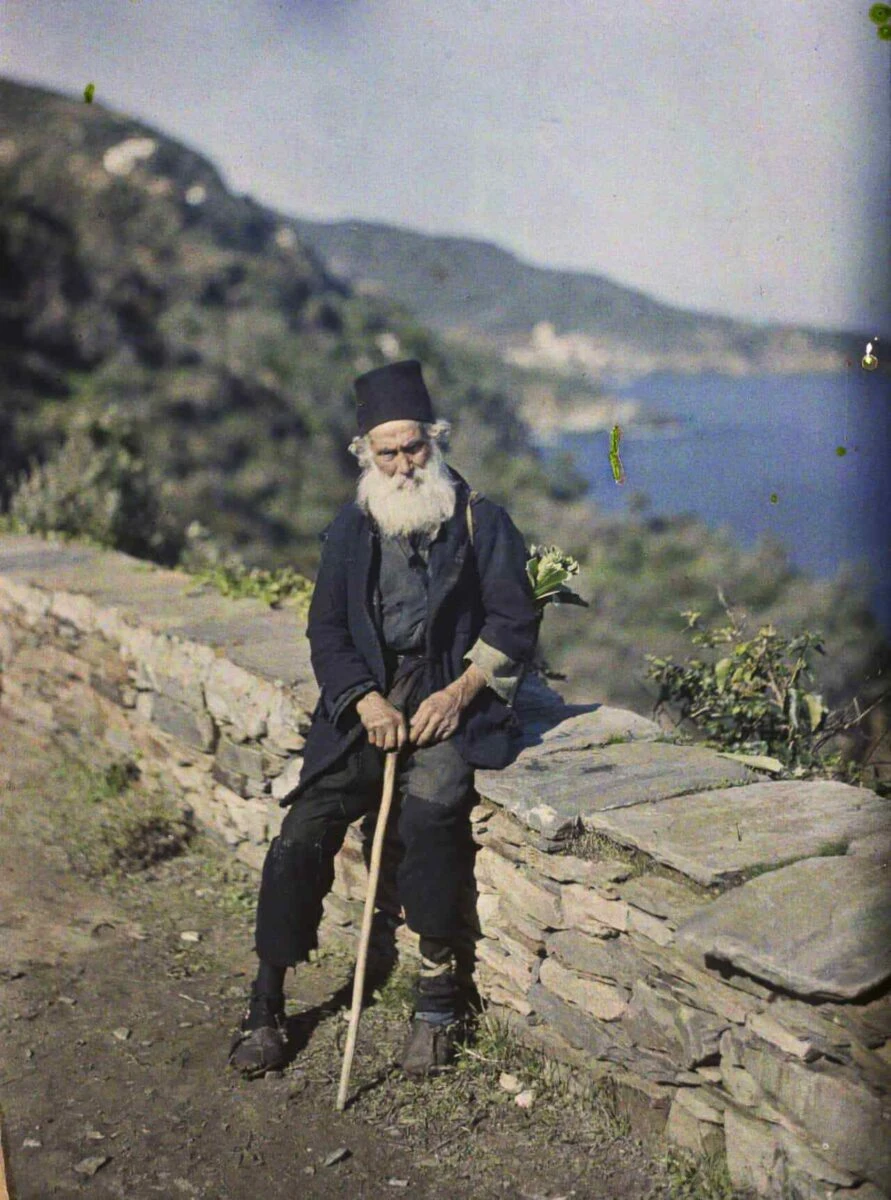
Mount Athos, Greece, 1918, by Fernand Cuville
Kahn passed away on the night of November 14, 1940, in Boulogne-Billancourt, just months into the German occupation of France. Ironical as it was, he lived to witness the very tragedy he had feared: the old world shattered and chaos taking root among its ruins. 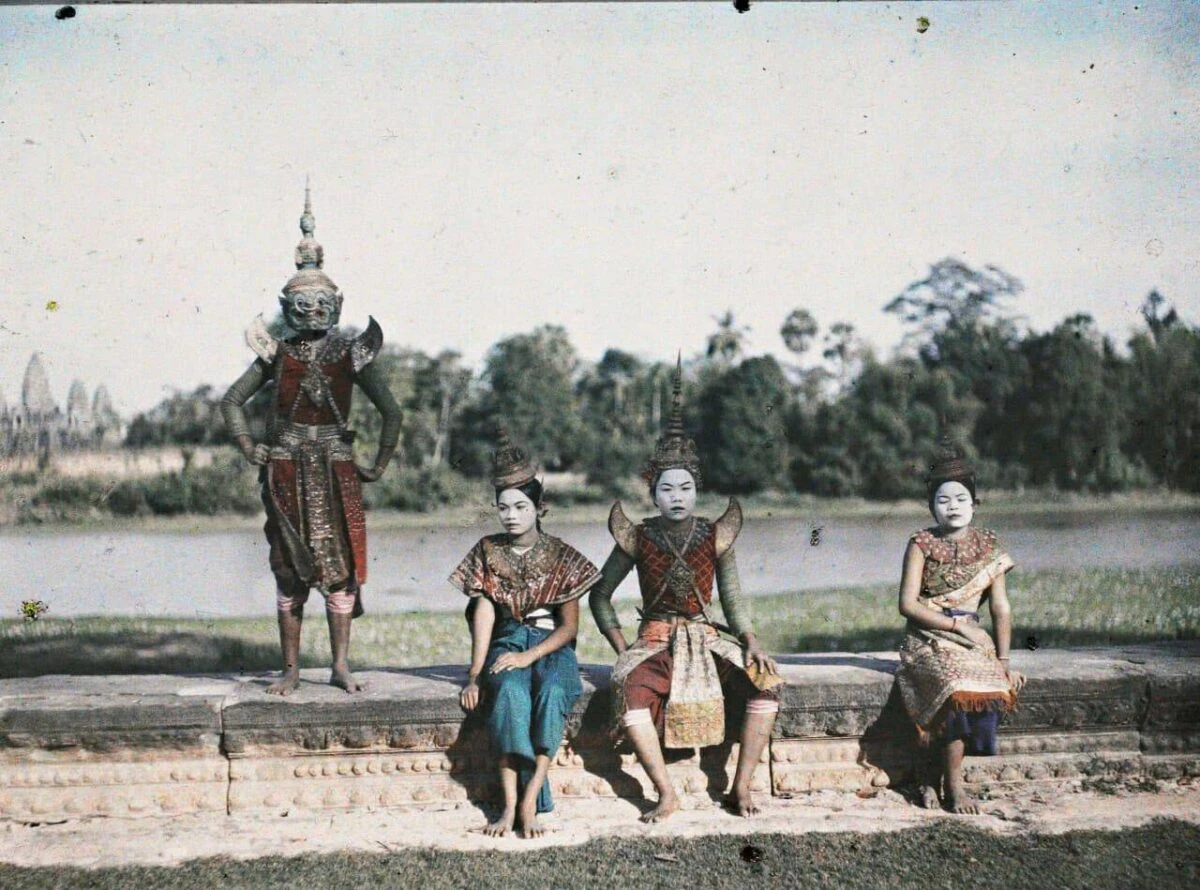
Angkor, Cambodia, Indochina. Group of dancers, 1921, by Léon Busy 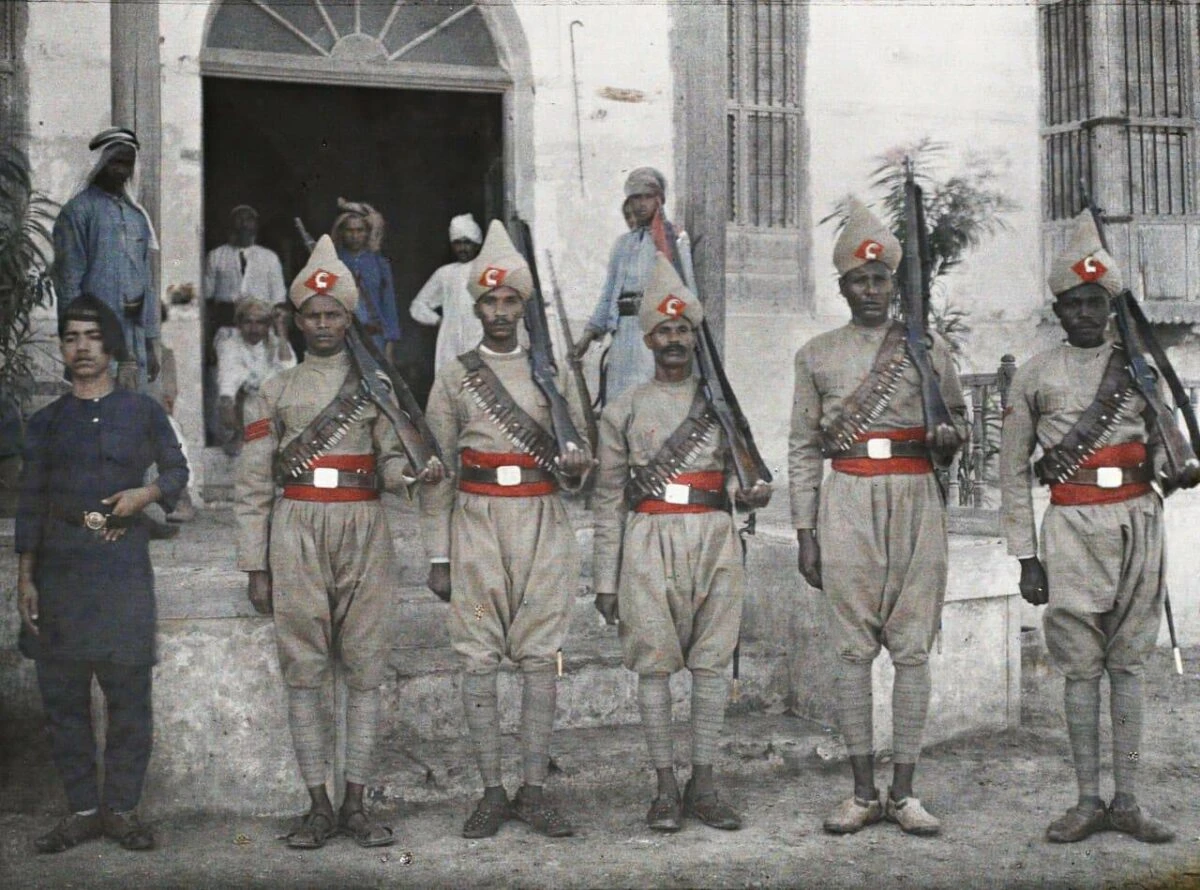
Jeddah, Arabia. Sudanese soldiers of the British mission with a young Indian sailor, 1918, by Paul Castelnau
Yet his life’s work survived. In 1986, the collection officially became a museum, and in 1990, the first permanent exhibition opened at the Musée Albert-Kahn in Boulogne-Billancourt. Today, most of the autochromes have been digitized and made accessible online. 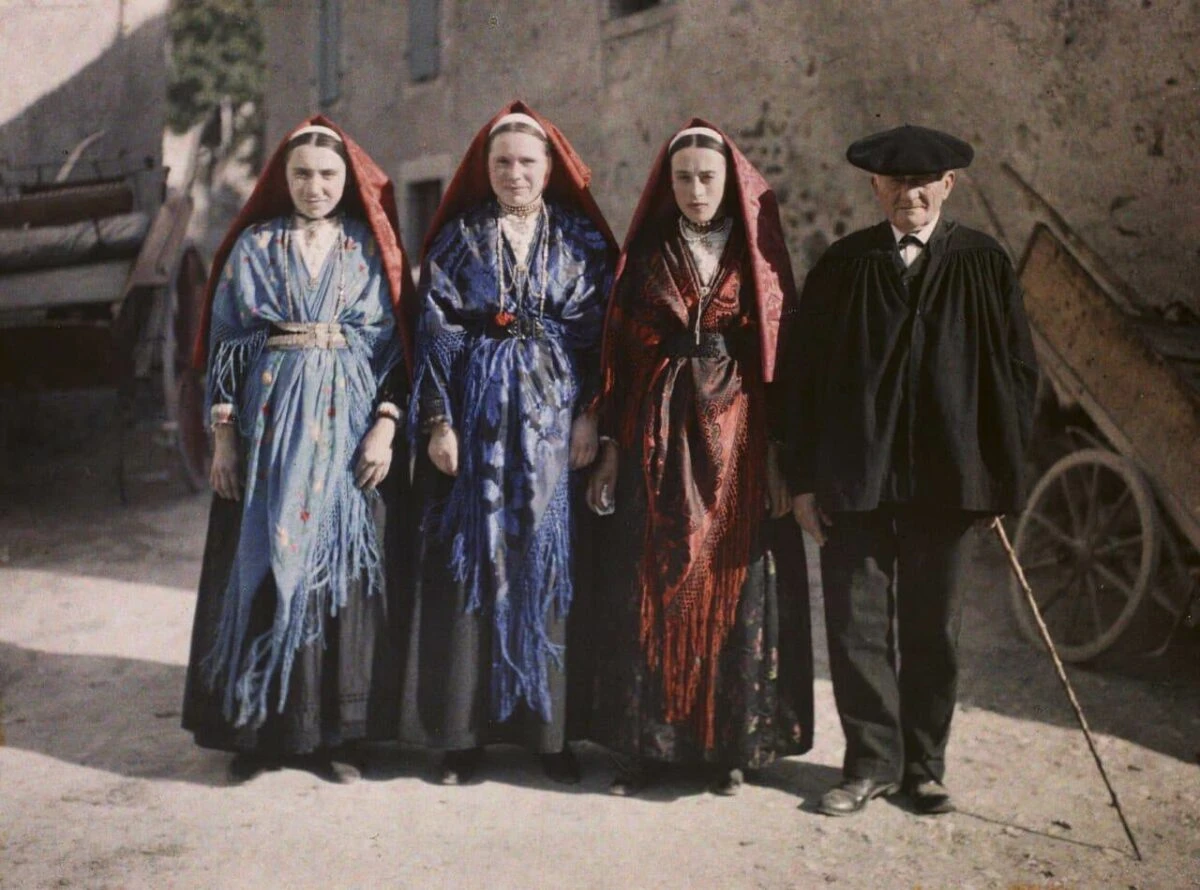
Ossau Valley, Basses-Pyrénées, France, 1920, by Fernand Cuville
Today, anyone can step back in time, gazing into the faces of people whose homes have long since disappeared and whose nations underwent dramatic transformations. Thanks to the ambition of a single banker, their world lives on in full color. 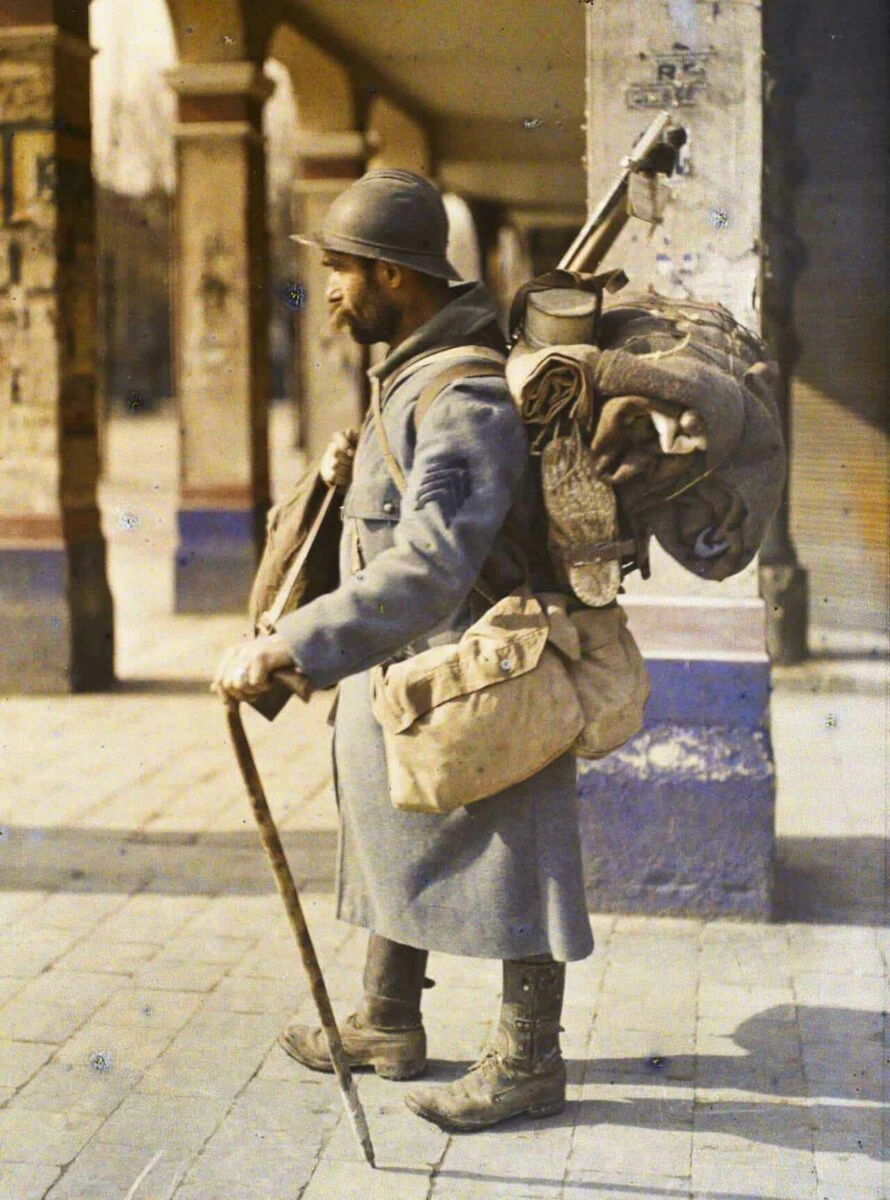
Reims, Marne, Champagne, France. Portrait of a territorial army soldier at Place Drouet d'Erlon, 1917, by Paul Castelnau
Looking at these photographs, one cannot help but reflect on the value of every passing moment. If you could preserve just one tradition or aspect of modern life in the "Archives of the Planet" before it disappears a century from now, what would you capture for future generations?