Victorian Life: 46 Rare Photos That Will Surprise You (47 photos)
The Victorian era is often painted in somber tones: tight corsets, seances, and an obsession with death. But look a little closer at the photographs of the time, and a far richer picture emerges. Laughing children, women in trousers, dinosaurs lurking in London parks, and streetlamps dispensing hot coffee—people back then were eccentric, spirited, and wildly inventive. Here are 46 snapshots ranging from the deeply touching to the delightfully surreal. 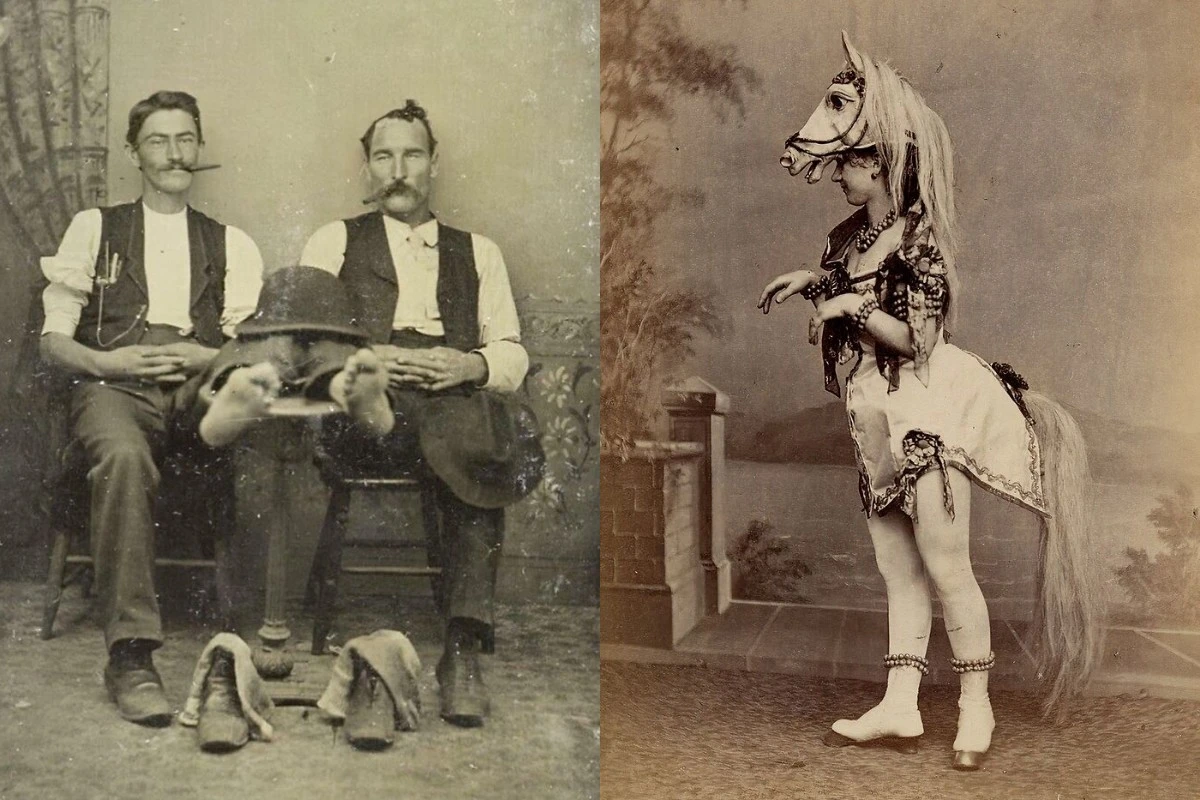
Family, Children, and Pets
Photography in the Victorian era was a solemn affair. With exposure times lasting several seconds, subjects had to sit perfectly still. That makes it all the more special when someone broke character. 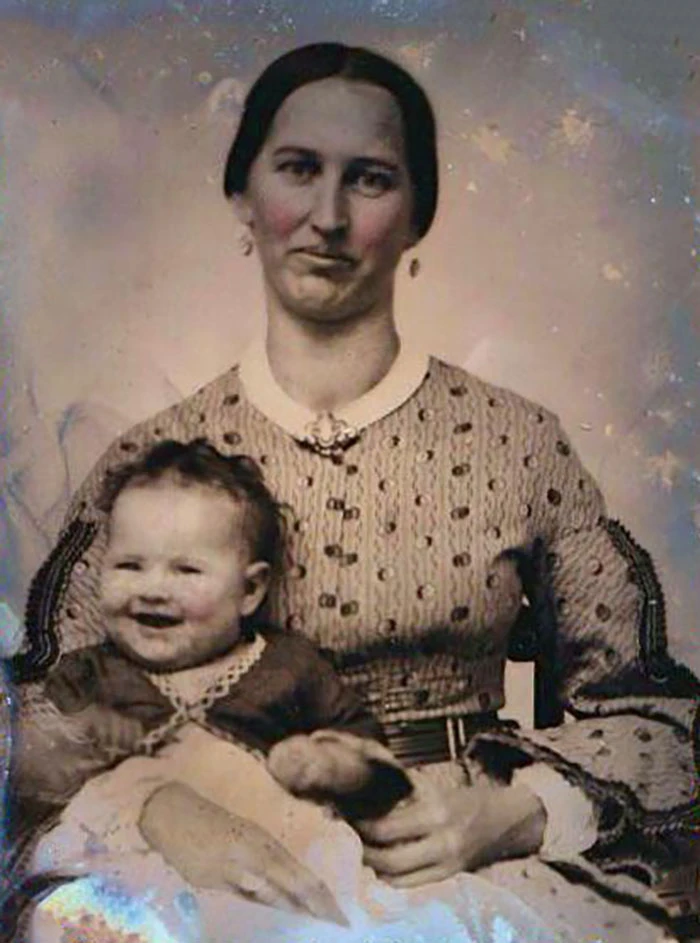
A giggling baby and a mother trying desperately to keep a straight face.
In the first photo, a baby bursts out laughing while his mother tries with all her might not to crack a smile. The photographer captured the split second—and more than a century later, the joy is still infectious. 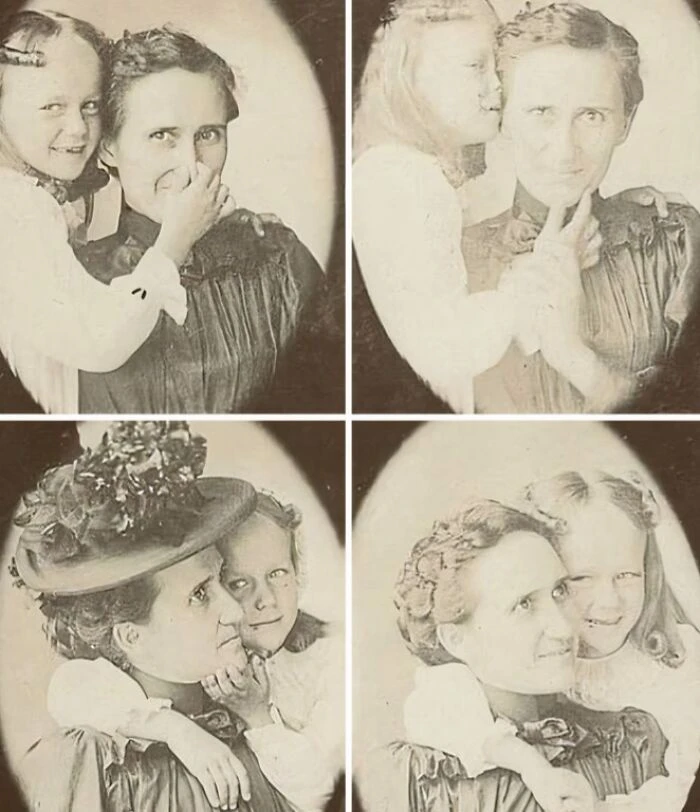
Four snapshots of family life from 1900—pure chaotic energy.
Four portraits of a mother and daughter from 1900. The same faces, but totally different moods—much like a modern Instagram story. Not a single attempt turned out serious. 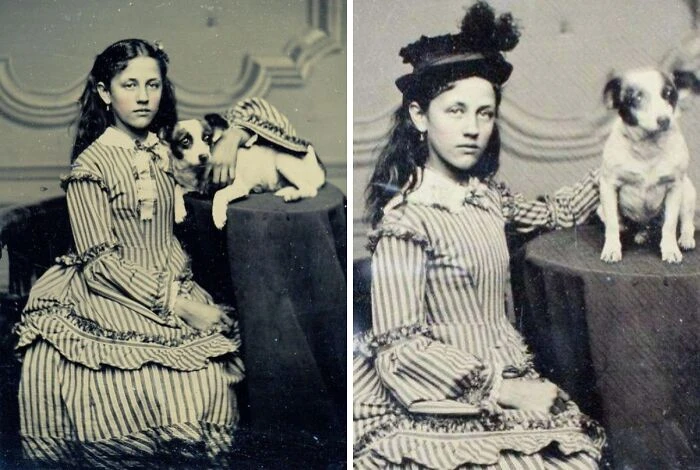
In the second frame, the dog is a blur—clearly not a fan of portrait day.
A girl and her dog: a picture-perfect pose in the first photo, followed by a blurry hound in the second. The pup waited for the precise moment to ruin the shot. Mid-19th century, yet a struggle every pet owner knows today.
Fashion, Costumes, and Looks
Victorians loved dressing up, often with such dramatic flair that some outfits still leave us doing a double take. 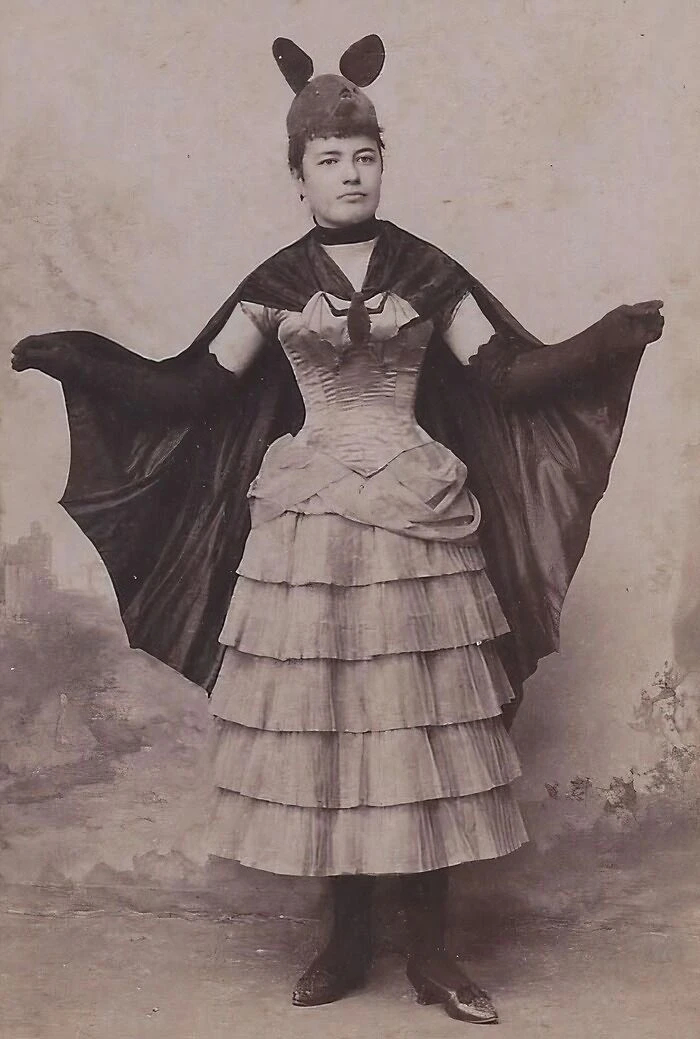
A woman dressed as a bat in 1876—63 years before Batman debuted.
A woman in a bat costume poses with absolute dignity. Dated to 1876, this was taken 63 years before Batman made his comic book debut. Who inspired whom remains up for debate. 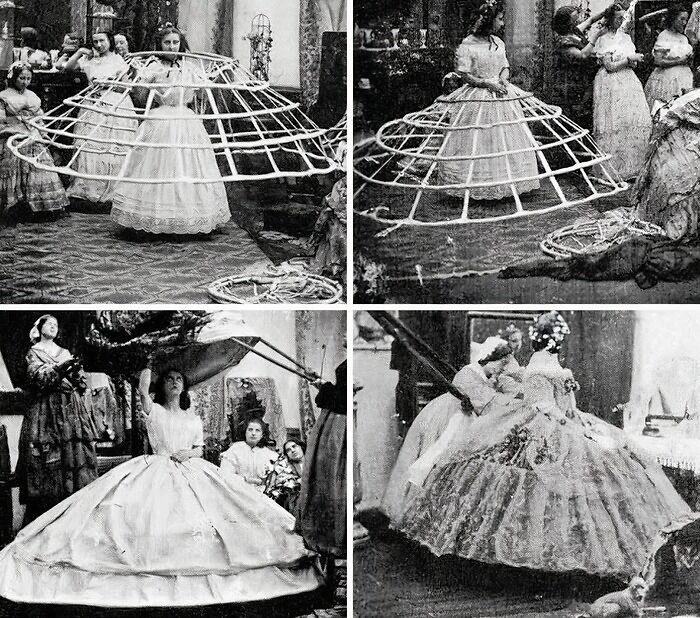
Putting on a crinoline: four steps from cage to full silhouette, circa 1850.
The crinoline—a rigid cage made of steel or whalebone designed to support a skirt—was a true feat of engineering. Getting dressed required time and extra hands. These four images show the entire process, from bare frame to grand entrance. 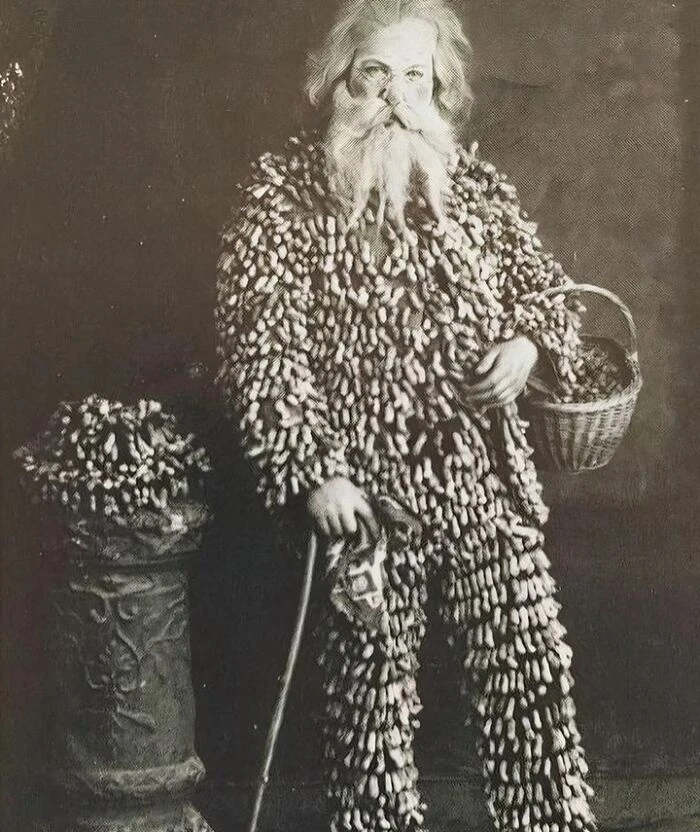
A peanut vendor in a suit made entirely of peanuts, circa 1890. A literal walking billboard.
Around 1890, a peanut vendor came up with a genius marketing technique: he tailored an entire suit out of peanuts. A walking billboard long before ad agencies were even a thing. 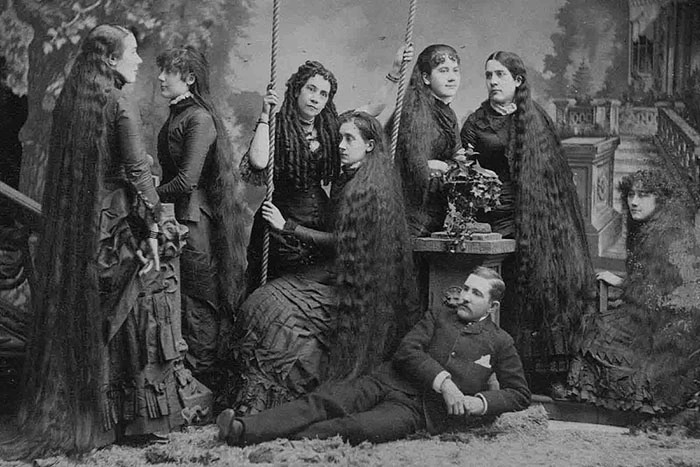
Floor-length hair as a point of pride, late 19th century.
A group of women showing off their long, thick hair. A man crouches in the foreground, apparently to get a better view. Floor-length tresses were considered the ultimate pride.
Women, Work, and Changing Times
The Victorian era was an age of contradictions. Women wore tight corsets while wielding scalpels, shovels, and whip handles. 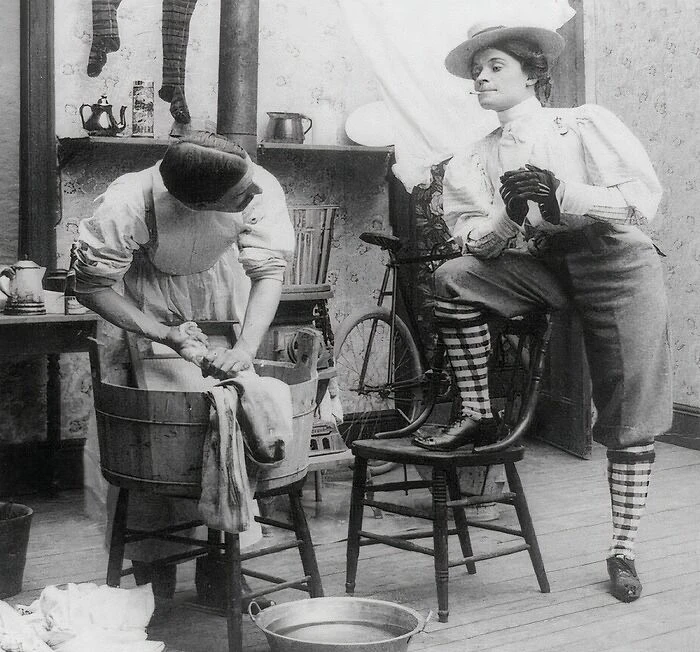
She smokes in knickerbockers while he does the laundry. A Victorian role reversal.
In this photograph, a woman in knickerbockers smokes a cigarette while a man works at the washbasin. For its time, this was almost revolutionary—though it was most likely staged for laughs. 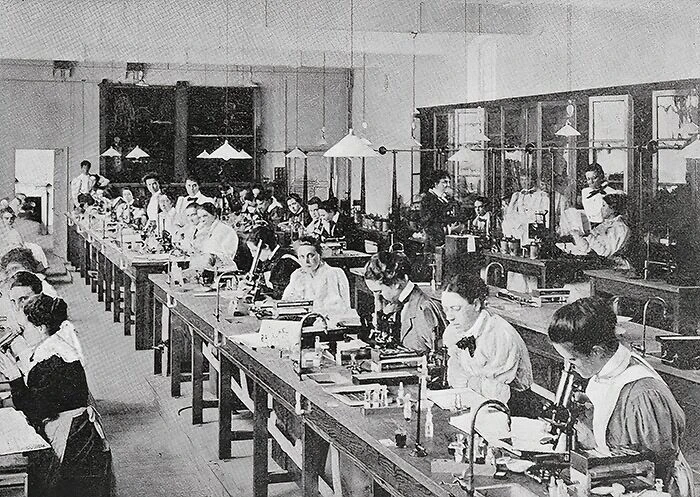
The Physiology Lab at the London School of Medicine for Women, 1899.
The London School of Medicine for Women in 1899: female students huddled over microscopes. Medicine was notoriously reluctant to welcome women, but these pioneers fought their way in. 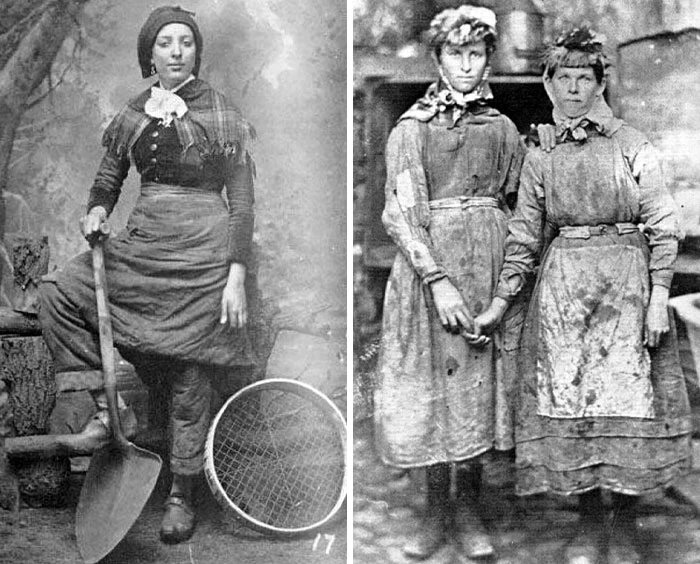
Working-class women, some already wearing trousers, late 1880s.
Women in workwear in the late 1880s: some have adopted trousers, while others remain in dresses. Likely pit brow lasses—coal mine workers whose harsh profession few associate with Victorian women. 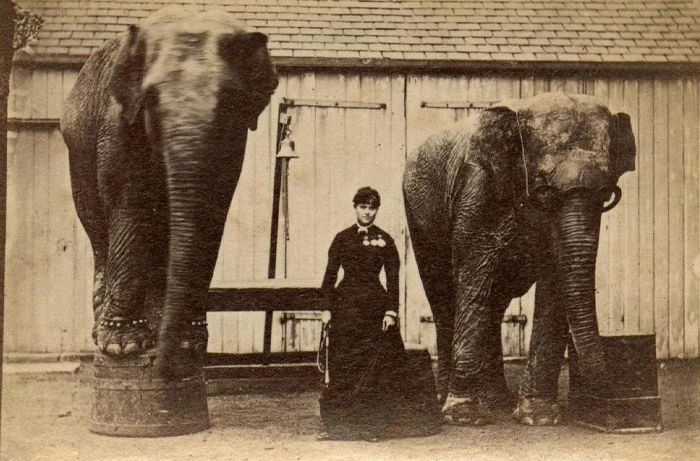
The world's only female elephant trainer. She certainly knew how to work the camera.
The world's only female elephant trainer knew how to strike a pose. Flanked by two gentle giants, she stands cool, calm, and completely unfazed.
Inventions and City Life
Victorians lived in an era when the Industrial Revolution was transforming daily life at a dizzying speed. Some innovations were brilliant; others were just plain weird. 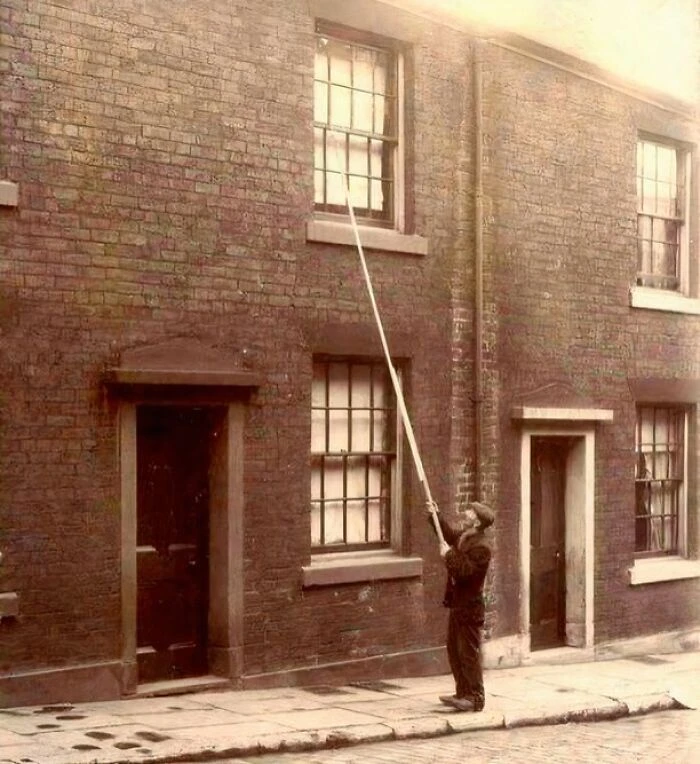
A "knocker-up" using a bamboo pole to wake workers, UK, circa 1900.
Before alarm clocks became affordable for the working class, Britain relied on the "knocker-up." These professional morning risers walked the streets using long bamboo poles to tap on bedroom windows. Some even used pea-shooters to avoid waking the neighbors. The trade survived into the 1940s—and in a few towns, even into the early 1970s. 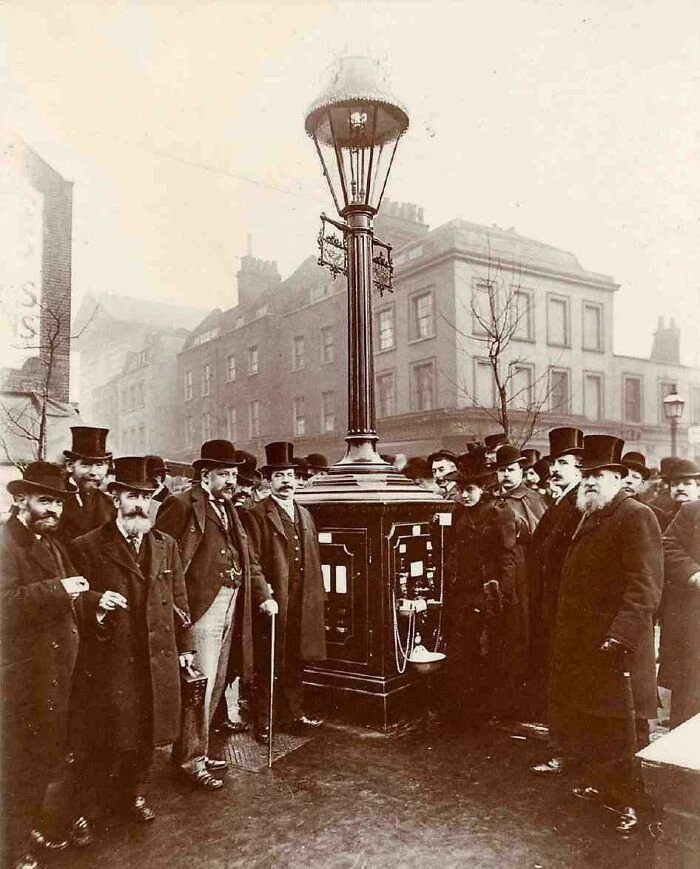
The grand opening of a Pluto lamp on Exmouth Market, London, 1899.
In 1899, London's Exmouth Market debuted the first "Pluto" lamp—a gas streetlight combined with a vending machine. For a halfpenny, passersby could buy a mug of hot tea, coffee, or cocoa. Later, cigarettes and postcards were added. However, locals quickly realized they could trick the machine with tin slugs, forcing the project to close. 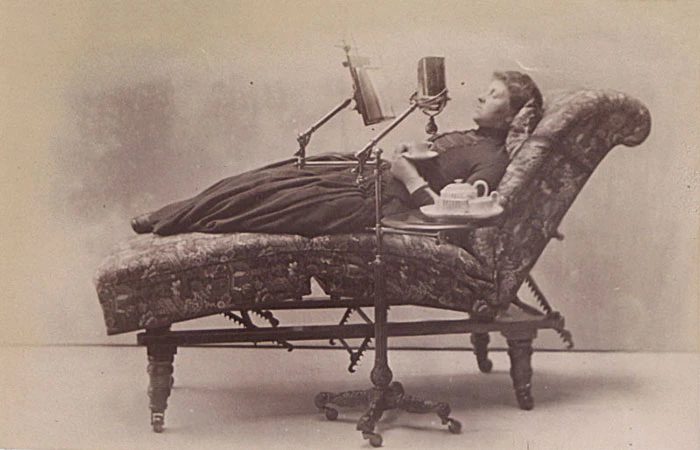
John Carter’s "Literary Machine": a lamp, table, and adjustable couch all in one.
John Carter’s "Literary Machine" was designed for comfortable reading in bed: an adjustable daybed with a built-in table and lamp. Think of it as the Victorian predecessor to today's recliner with built-in device holders. 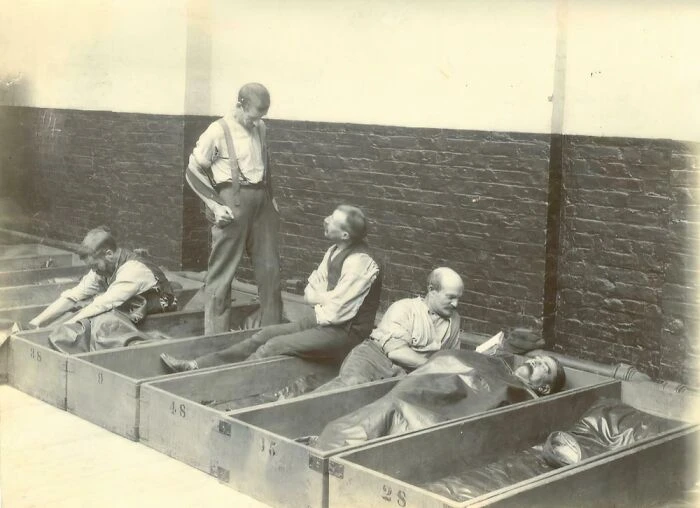
The "Four Penny Coffin"—a homeless shelter where sleep came cheap.
The "Four Penny Coffin" was one of Victorian London's cheapest shelters. For four pence, a homeless person received a wooden box just long enough to lie down in and just narrow enough to stretch the definition of a bed.
Leisure, Beaches, and Entertainment
Victorians knew how to unwind—in their own distinct way, carefully balancing propriety with fun. 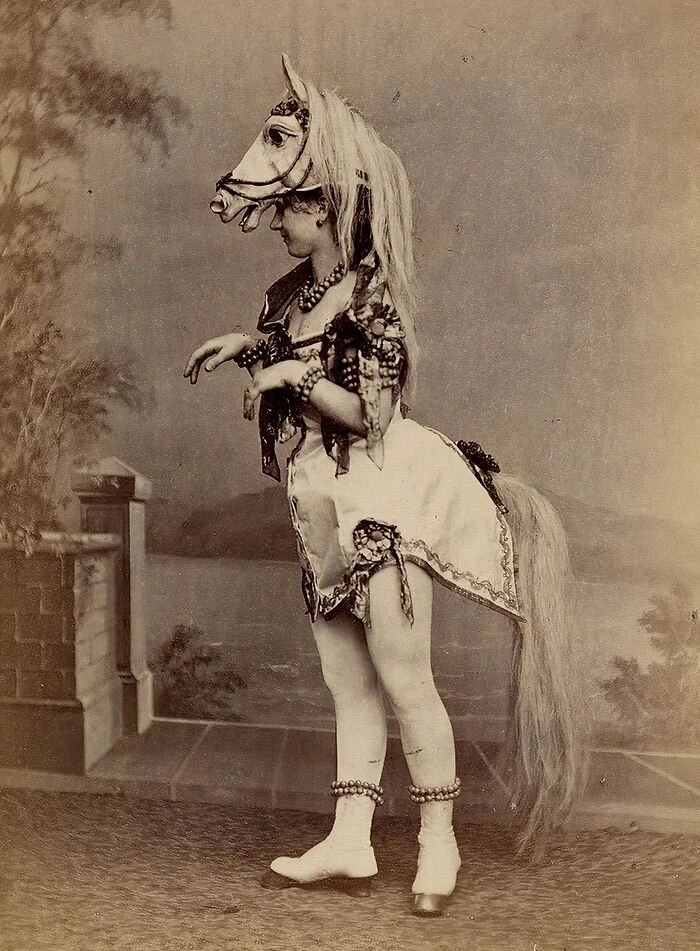
A burlesque performer in a horse costume, completely unabashed.
A burlesque performer in a full horse costume, complete with head, tail, and beaded necklaces, posing without a hint of embarrassment. Burlesque was wildly popular in Victorian Britain, even if polite society pretended not to notice. 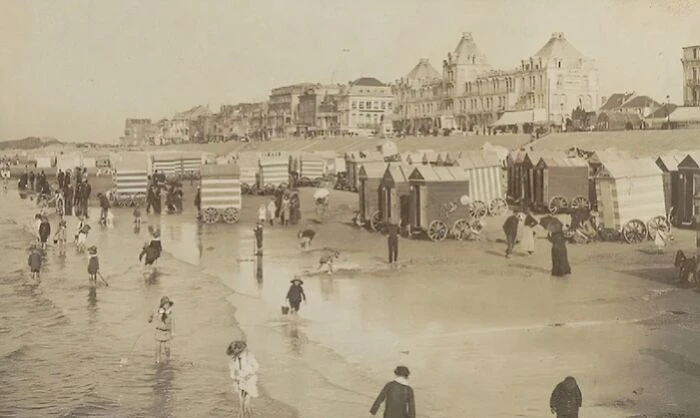
Bathing machines on the beach at Blankenberge—privacy on wheels.
Bathing machines—wooden cabins on wheels—were rolled directly into the surf. Swimmers changed inside and stepped straight into the water away from prying eyes. This scene from Blankenberge, Belgium, captures the quintessential Victorian seaside experience. 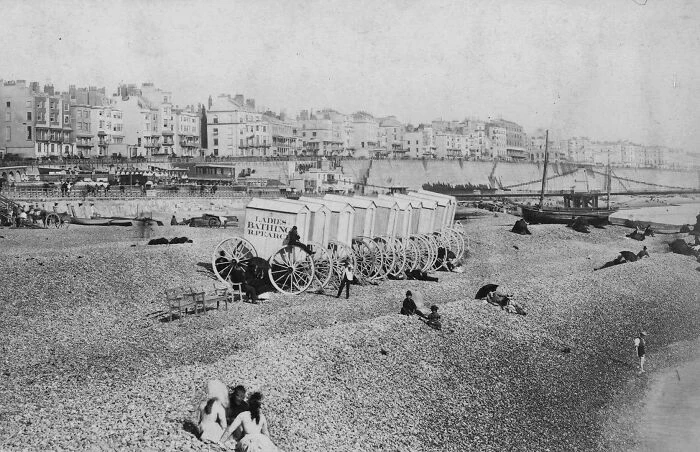
Brighton Beach lined with bathing machines, 1864.
The same contraption on Brighton’s pebbled shore in 1864. A long line of cabins stretches along the water's edge. Public swimwear displays were out of the question—only strict, controlled dips were permitted. 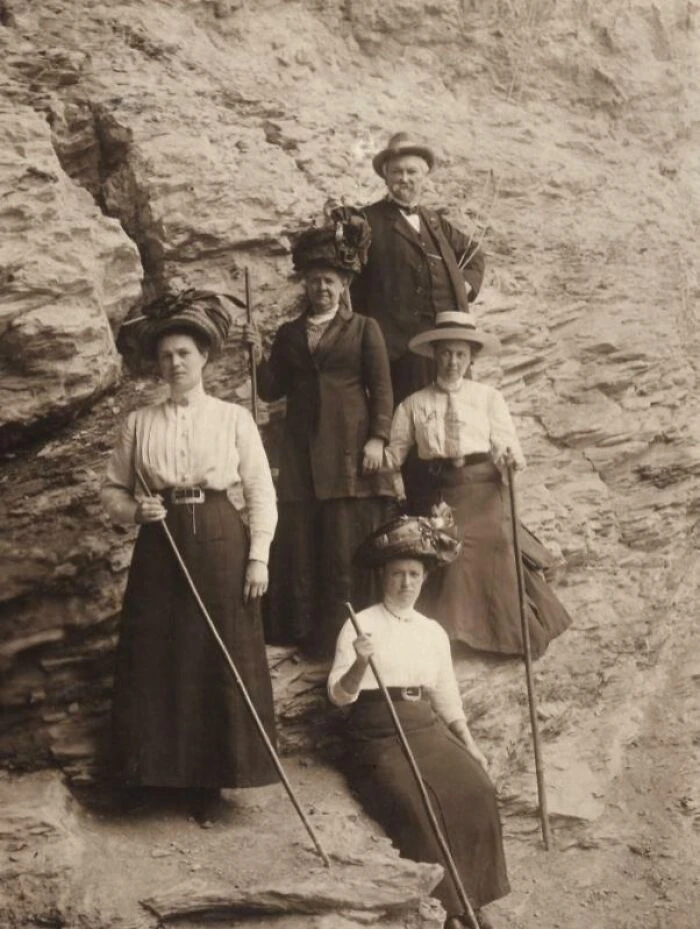
Mountain hiking in 1910: long skirts, oversized hats, and zero technical gear.
Mountain hiking in 1910: women tackling a rocky incline in floor-length skirts and wide-brimmed hats. No specialized gear, no hiking boots—and yet clearly not their first time on the trail. 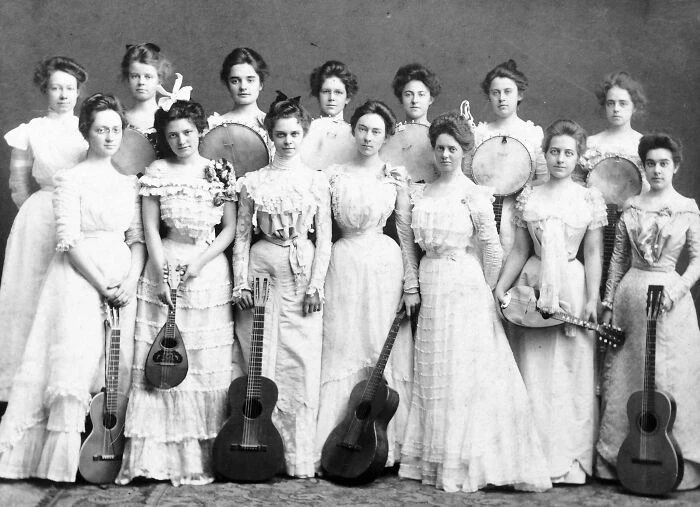
An all-female band, circa 1890. Full lineup, zero amplifiers.
An all-girl musical ensemble around 1890: crisp white dresses, guitars, and mandolins. Looking deadly serious. No microphones, no stage setup—just instruments and pure talent. 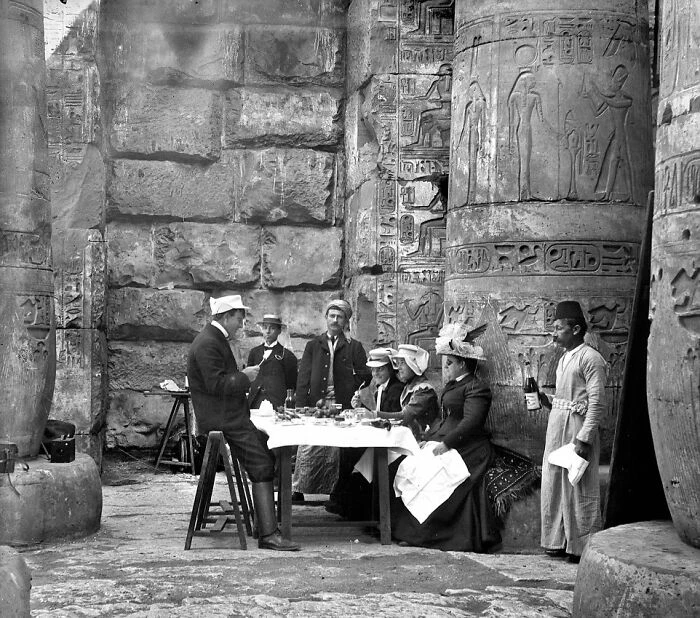
A picnic among Egyptian columns—ancient hieroglyphs for wallpaper.
European tourists enjoying a full picnic inside an ancient Egyptian temple. Set table, chairs, fine chinaware—all surrounded by millennia-old hieroglyphic columns. Victorian tourism possessed an enviable level of nonchalance.
Work, Mortality, and Everyday Life
Not everything about the Victorian era was eccentric. Most people worked grueling hours and lived modestly—yet still managed to leave behind photos bursting with character. 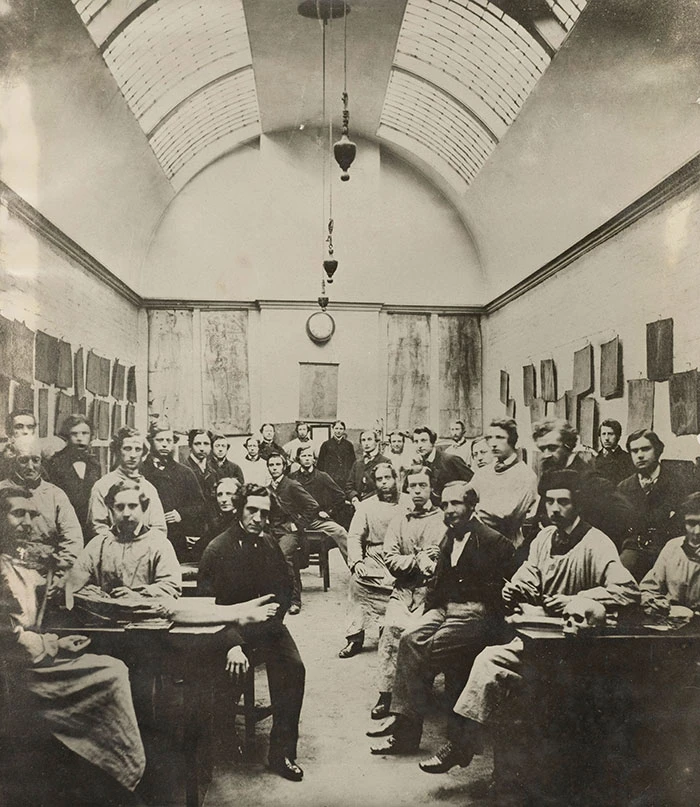
The dissecting room at St George's Hospital, London. Third from left in the dark coat is Henry Gray.
The dissecting room at St George’s Hospital in London, photographed in 1860. Third from the left in a dark jacket is Henry Gray, author of
Gray’s Anatomy
, first published in 1858. Gray died of smallpox in 1861 at just 34—three years after publishing the textbook medical students still use today. 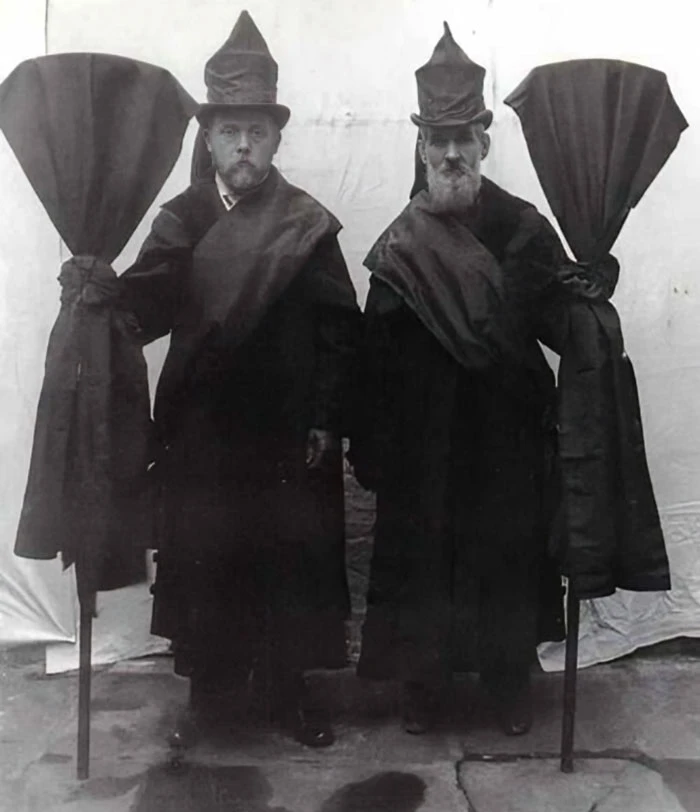
Professional mutes in 1896, paid to look solemn at funerals.
Professional mourners, or "mutes," in 1896. Wealthy families hired them to stand solemnly at funerals. Wearing black cloaks, top hats, and holding dark umbrellas, they turned grief into a billable profession. 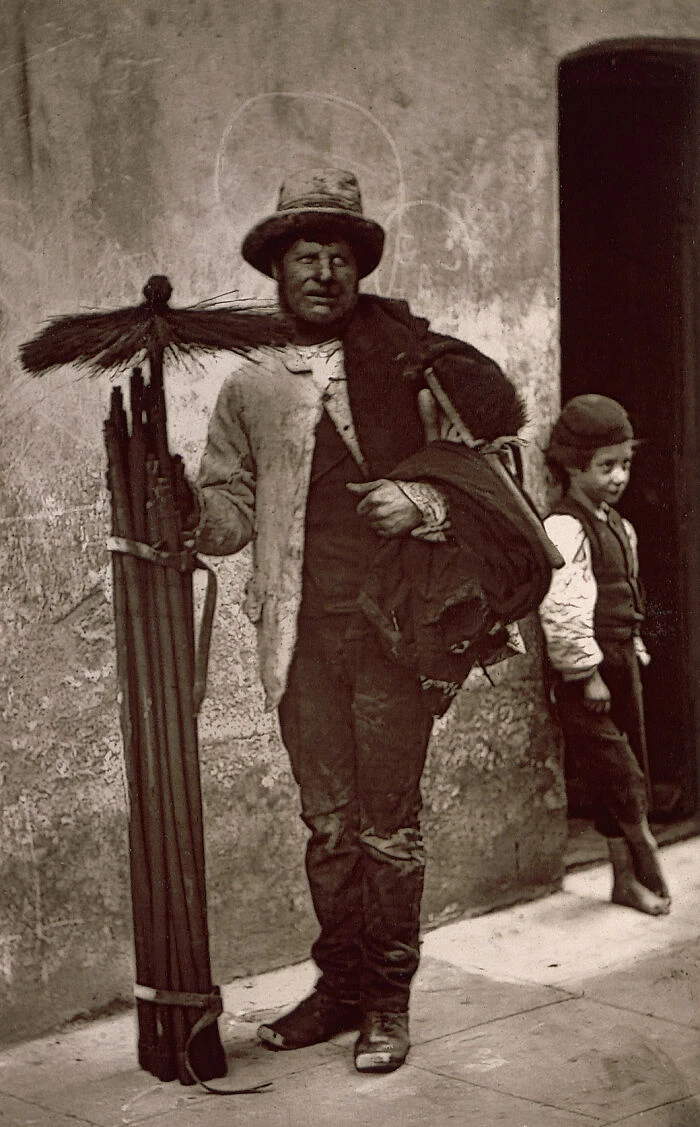
A chimney sweep with his young apprentice—children were sent up chimneys because of their small frame.
A chimney sweep and his young helper. In Victorian Britain, children were frequently forced into chimney sweeping because they could squeeze into tight flues adults couldn't reach. A law banning child sweeps was passed in 1875, though enforcement was notoriously slow. 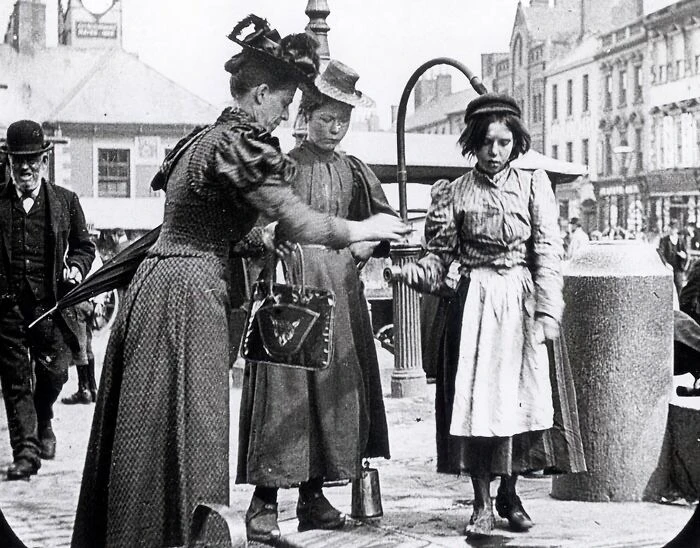
A young girl being hired as a domestic servant at a Carlisle hiring fair, circa 1895.
A hiring fair in Carlisle, circa 1895: a middle-class woman interviews a young girl for domestic service. Child labor in households was standard, with children often sent off to work as young as 8 or 10. 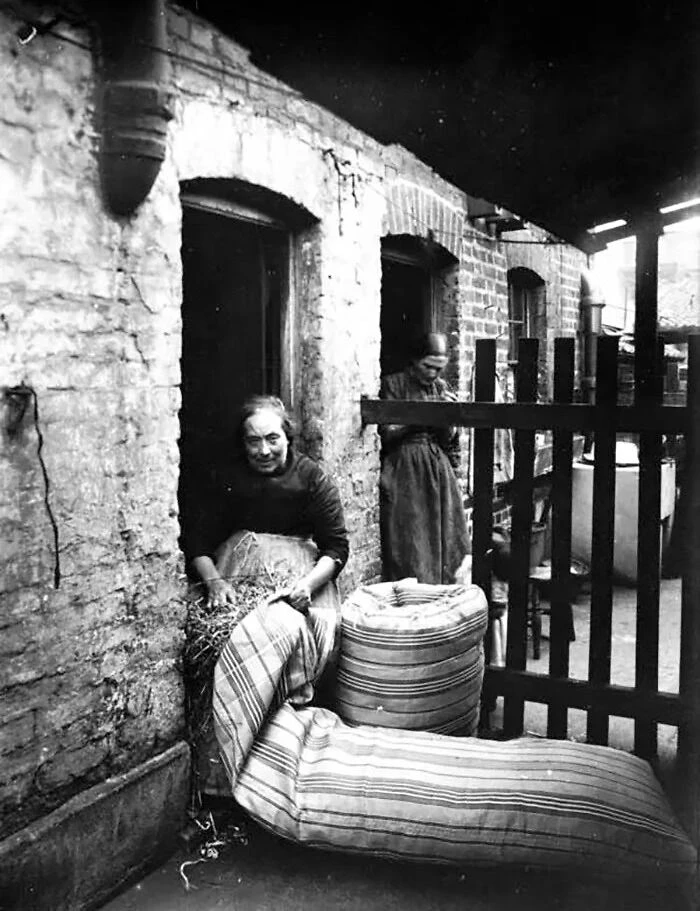
Mrs. Rawlinson from Bethnal Green stuffing mattresses.
Mrs. Rawlinson from London's Bethnal Green neighborhood stuffing mattresses. Bales of straw or horsehair, heavy rolls of fabric—all done single-handedly. 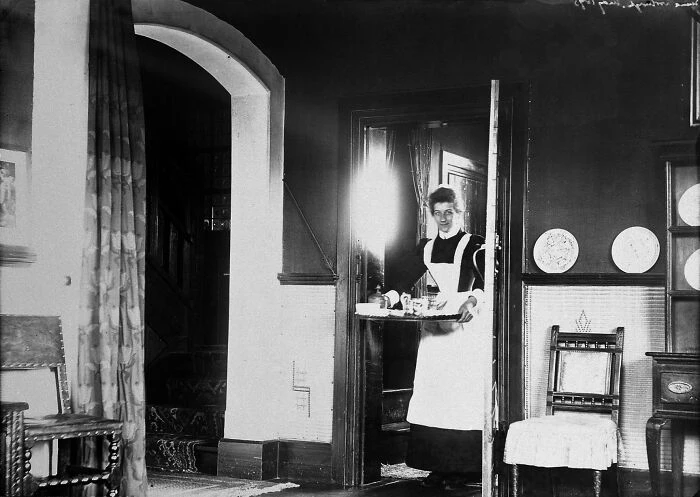
A maid at Little Gillions estate, Croxley Green, 1880s–1890s.
A housemaid at the Little Gillions estate in Croxley Green, 1880s–1890s: tray in hand, posture immaculate. Entering domestic service in a respectable household was considered a prime position for a working-class girl. 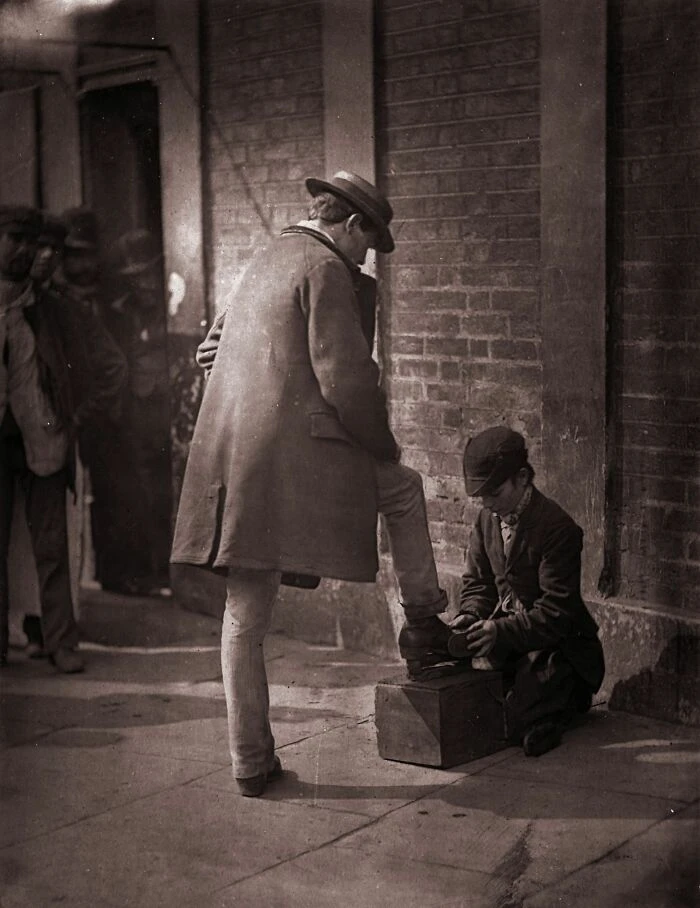
A street shoe-shine boy at work—business waits for no one.
A street shoe-shine boy polishing a gentleman’s shoe. London was full of young shoe-shiners—many working independently, earning a few pence a day to survive. 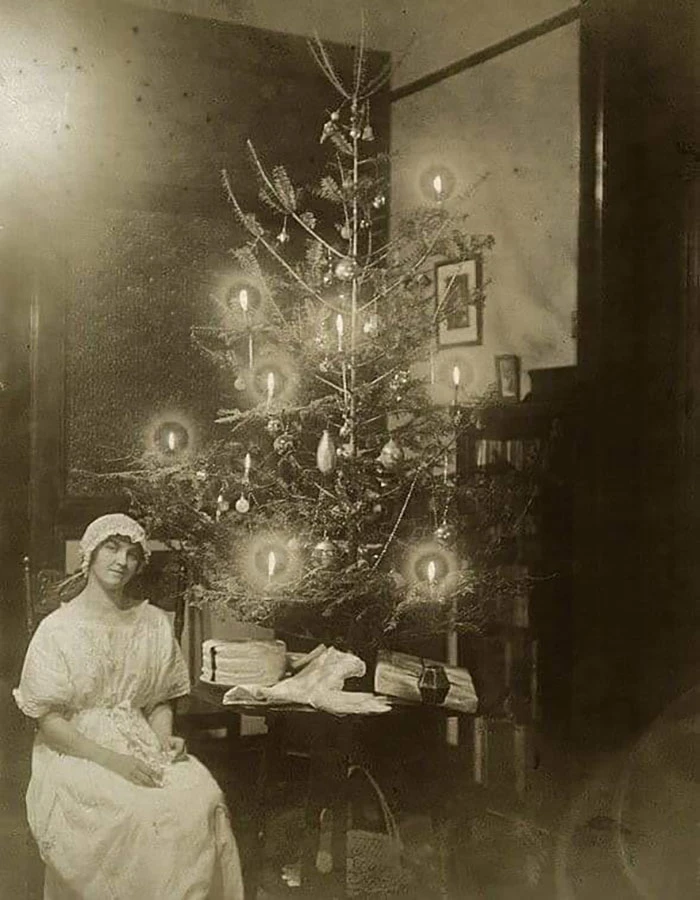
A candle-lit Christmas tree, late 1800s—festive, yet wildly hazardous.
A Christmas tree illuminated with real candles, late 1800s. The German tradition of decorating trees with wax candles caught on quickly in British homes. Despite causing house fires every single year, the tradition held strong for decades. 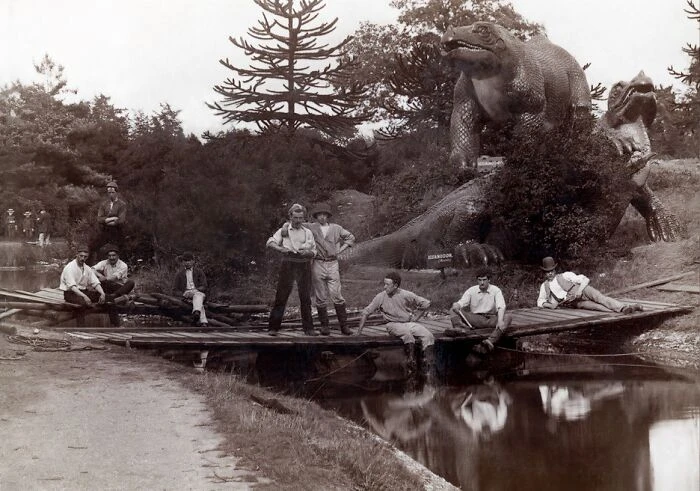
The Crystal Palace Dinosaurs, London, 1880s—the world's first dinosaur sculptures, created in 1854.
The world's first life-sized dinosaur sculptures unveiled at London's Crystal Palace Park in 1854—five years before Charles Darwin published
On the Origin of Species
. Sculptor Benjamin Waterhouse Hawkins built them under the guidance of anatomist Richard Owen. Though inaccurate by modern standards, they were cutting-edge science at the time. They still stand in the park today. 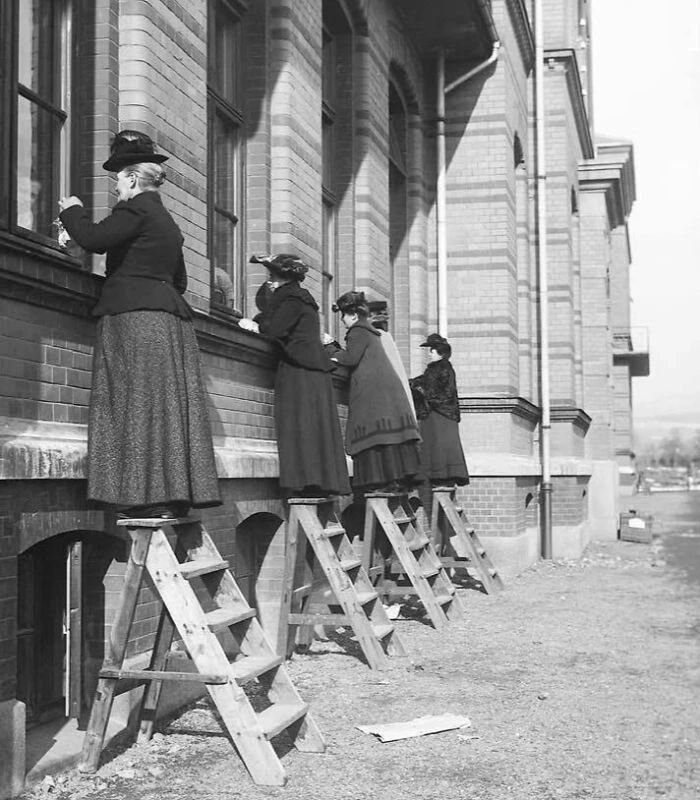
Visiting quarantined relatives at Ullevål Hospital, Oslo, 1905—ladders were the only way.
Ullevål Hospital in Oslo, 1905: women scale wooden ladders to peek into upper-floor windows to see loved ones in quarantine. No video calls, no visiting rooms—just a ladder and the drive to check on family. 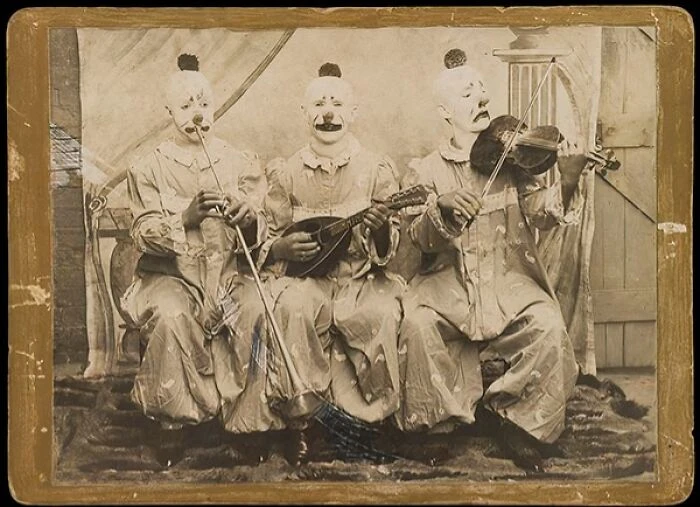
Victorian clowns—making coulrophobia completely understandable.
Three Victorian clowns posing solemnly with musical instruments. Not a single smile. Coulrophobia—the fear of clowns—clearly has deep historical roots. 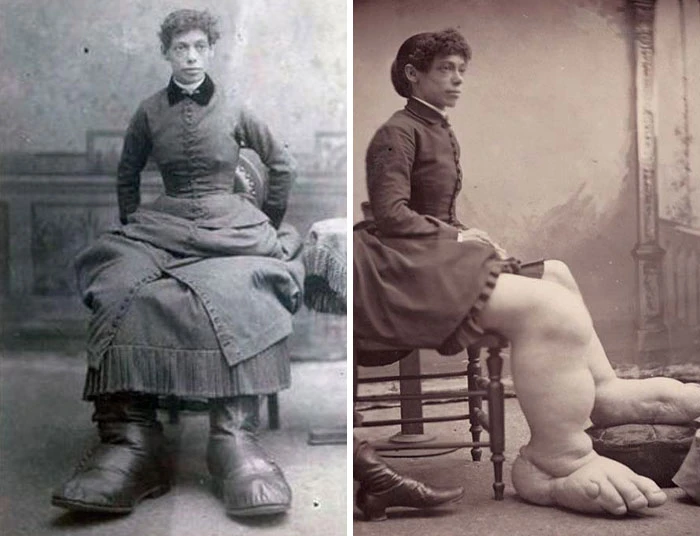
Fanny Mills, "The Ohio Big-Foot Girl"—turning a medical condition into a sideshow act.
Fanny Mills of Ohio suffered from severe lymphedema, causing her feet to grow to 19 inches long. Barnum's circus promoted her as "The Ohio Big-Foot Girl." Victorian "freak shows" were mainstream entertainment, drawing massive crowds. 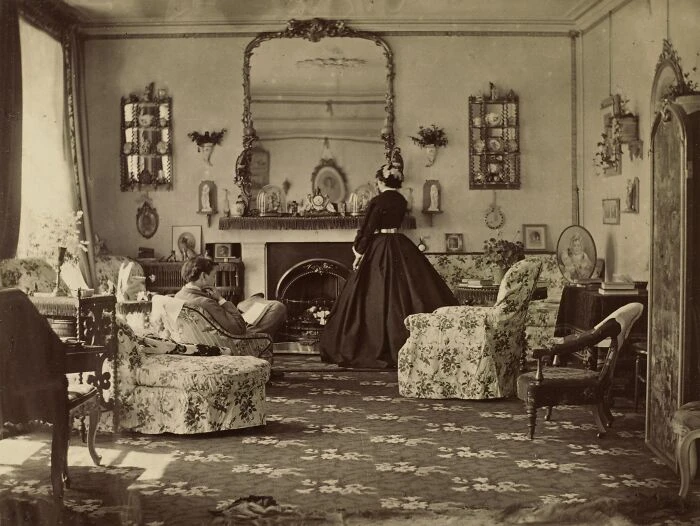
A typical late-1800s living room—maximalism elevated to art.
A typical late-19th-century Victorian parlor: rugs on rugs, framed prints covering every inch, trinkets crammed onto every surface. Victorian interior design embraced the "more is more" philosophy, guaranteed to give any modern minimalist a headache. 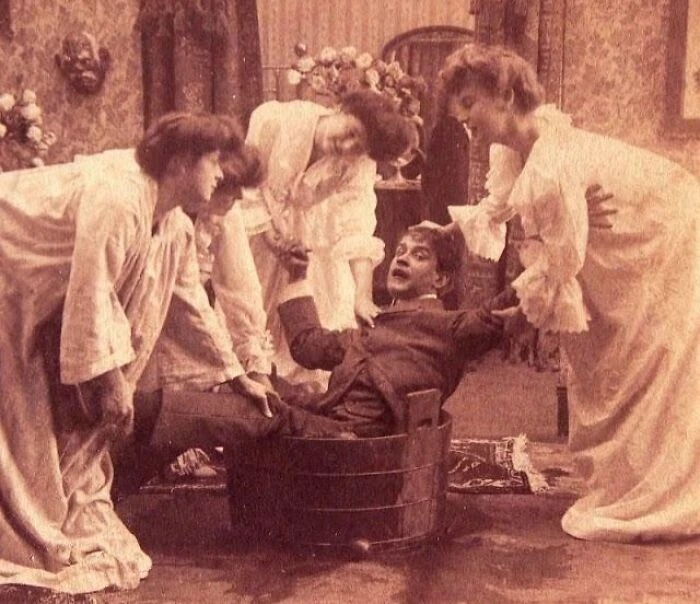
Victorian life in the 1890s: a man in a barrel, with three women deciding his fate.
A man sits inside a wooden barrel while three women stand around him. The context is entirely lost to history, but everyone looks dead serious. Some photos really don't need an explanation. 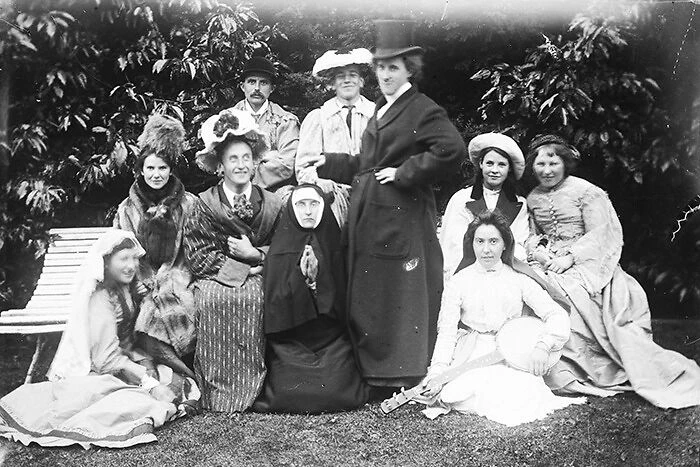
Men and women swapping outfits for laughs, 1880–1900.
A garden gathering where men put on dresses and women don suits. Cross-dressing was a popular form of parlor humor—doing it at private parties was harmless fun that shocked no one. 
Two gentlemen proudly showing off their bare feet, 1870s.
Two gentlemen pose for a tintype portrait around the 1870s, proudly thrusting their bare feet toward the camera. Why? Nobody knows. Simply because they could. 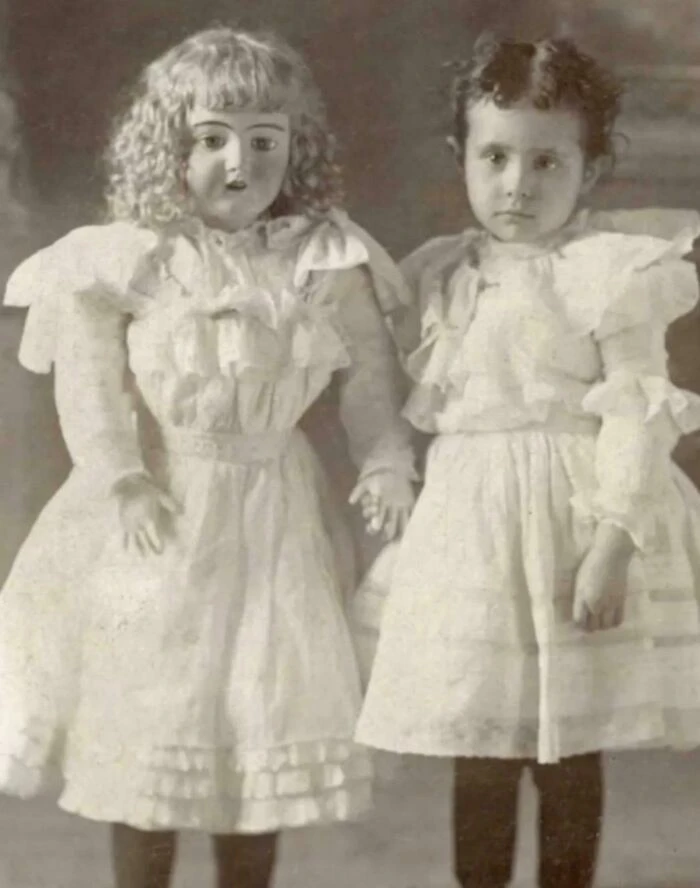
A young girl and her near life-size doll in matching dresses, circa 1900.
A young girl and a nearly child-sized doll dressed in matching frocks, circa 1900. Both stare into the lens with the exact same blank expression—easily one of the creepiest photos in the collection. 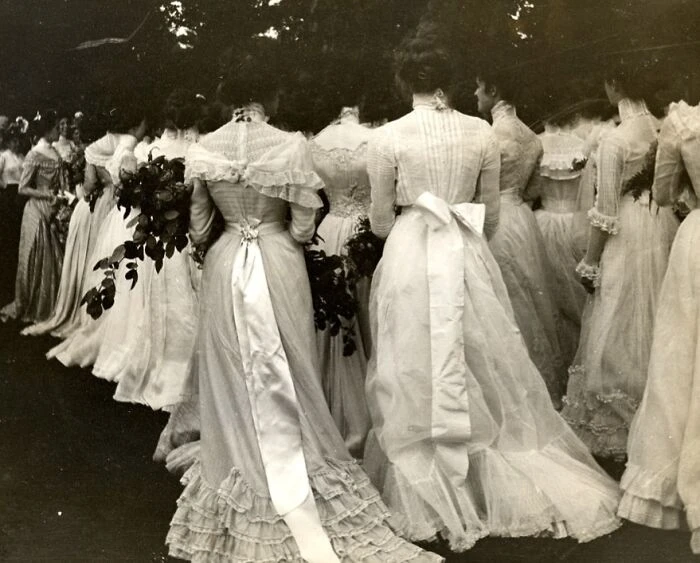
Graduation Day at Vassar College, 1895—white dresses as far as the eye can see.
Graduation Day at Vassar College in 1895. Founded in 1861, Vassar was one of the first higher education institutions for women in the United States. Here, graduates line the lawn in matching white gowns. 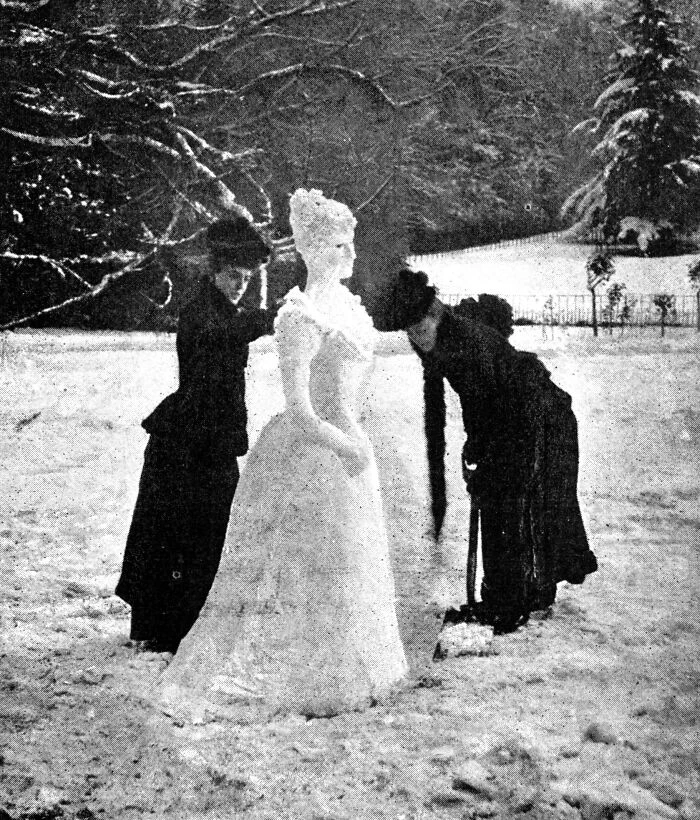
Two Victorian ladies building a snow-woman, 1892.
Two British women in heavy winter coats building a snowman—or rather, a snow-woman with distinct feminine curves. Taken in 1892, and they are clearly delighted with their creation. 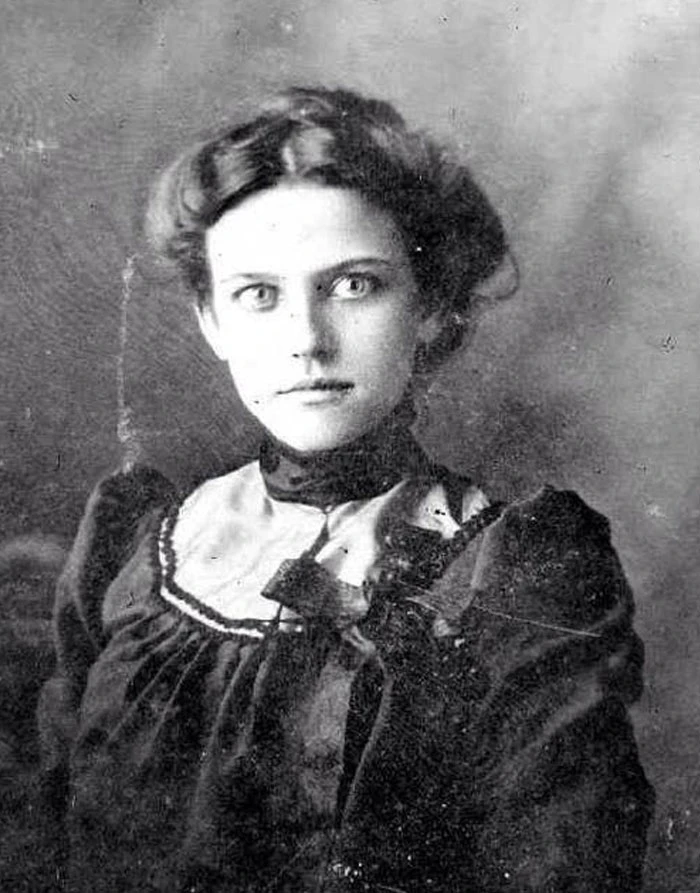
Her first time in front of a camera—a stare that sees right through you.
A young woman posing for her very first photograph. Wide eyes stare intently into the lens. What she thought of the strange wooden box in front of her is anyone's guess. 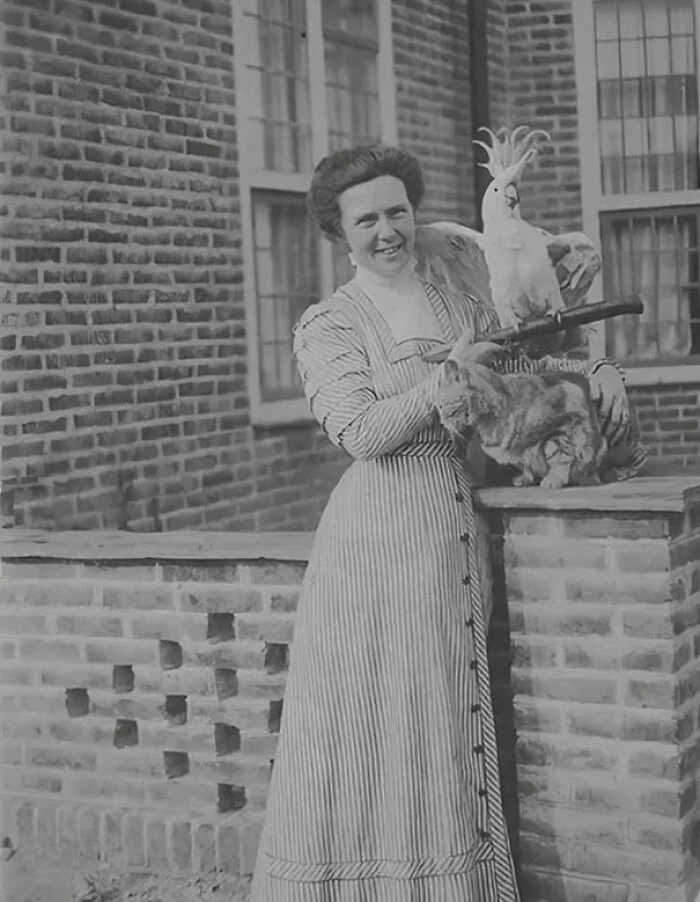
One woman, one cockatoo, two cats—a bold statement.
A woman in a striped dress poses with a cockatoo on her hand and two cats lounging at her feet. The bird and cats are looking in entirely different directions, but the photographer somehow pulled it off. 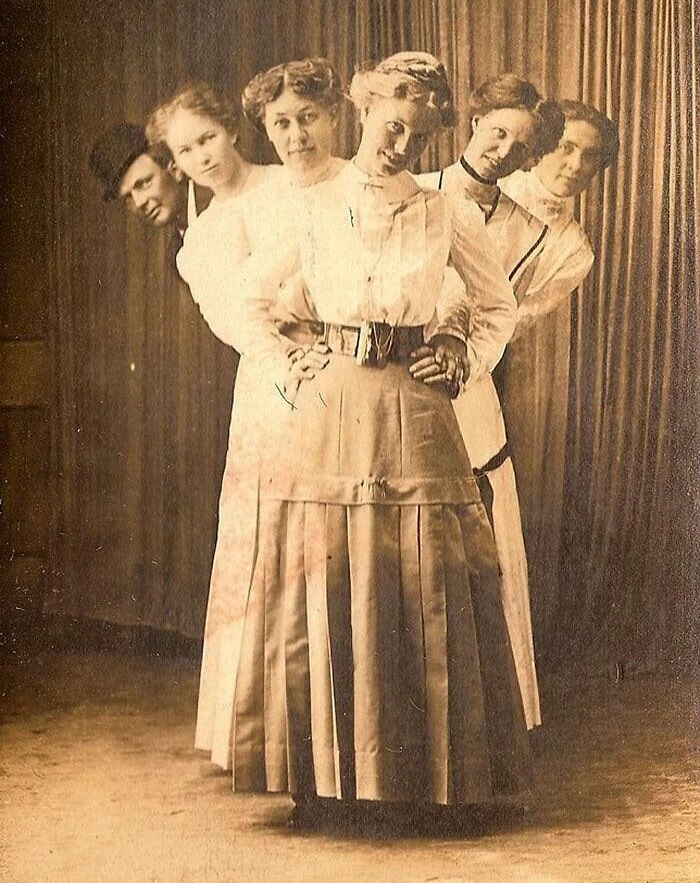
All eyes on you, 1892—literally.
In this trick photograph from 1892, a woman is surrounded by multiple heads peering at her from every angle. Staged novelty photography was a booming trend as photographers experimented with double exposures. 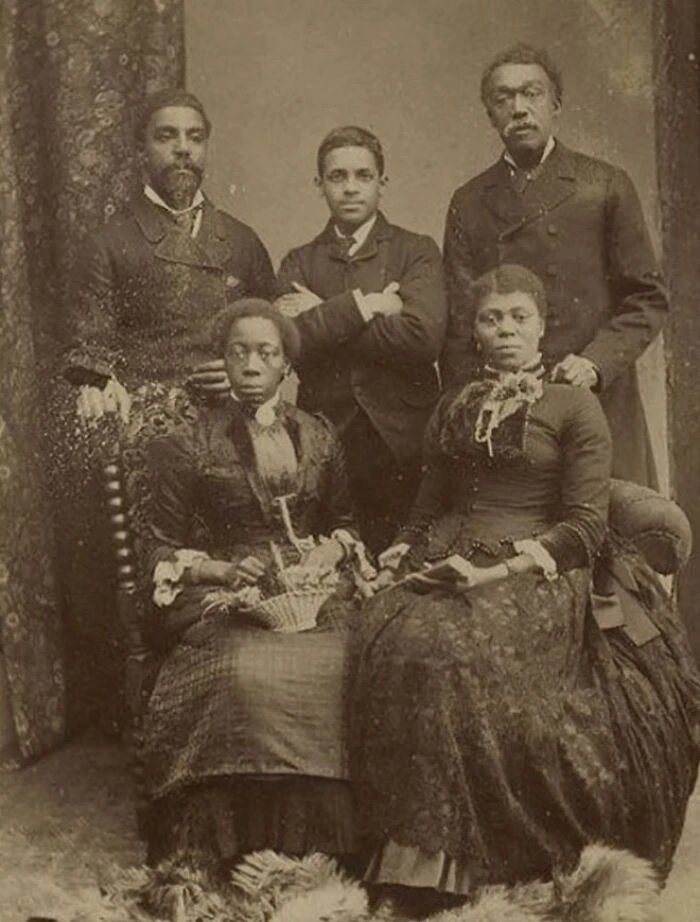
A studio portrait from J. Hart’s studio on City Road, East London, late 1870s.
A studio portrait from J. Hart’s studio on City Road in East London, late 1870s. Five subjects pose with quiet dignity—typical of studio photography clients of the day. 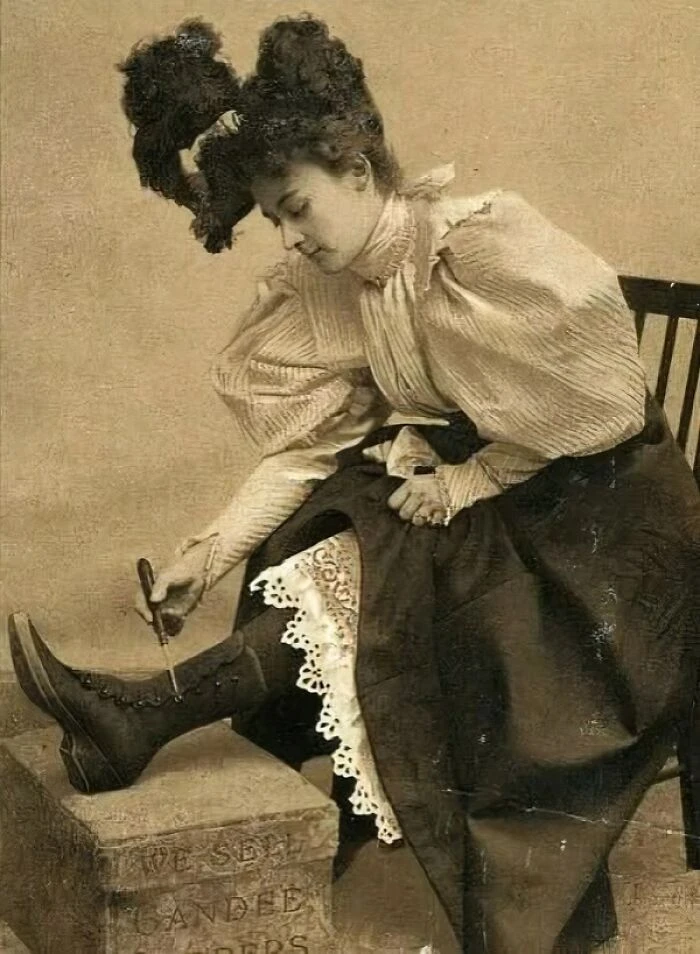
A woman lacing up her boots, 1895—no small task.
Victorian boots often had up to twenty lace hooks—requiring a specialized button hook to fasten. Getting dressed in the morning was significantly more time-consuming than it is today. 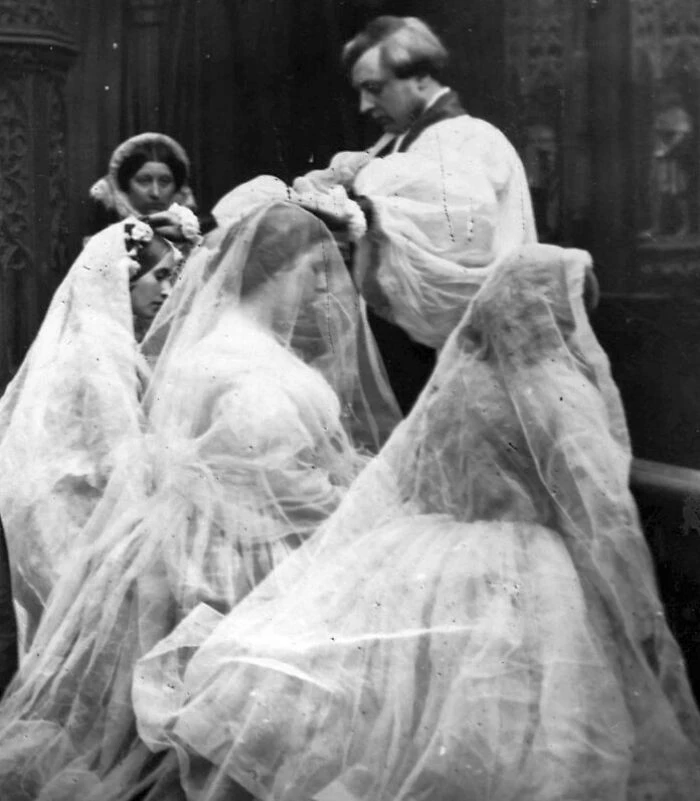
A confirmation ceremony at a London church, circa 1860.
Young women in white veils lined up before a priest. Religious rites held a central place in Victorian social life across all social classes.
More than a century has passed, yet looking at these photos, everything feels remarkably familiar: a laughing child, an exhausted worker, a group of friends pulling a silly prank. The era may have changed, but human nature hasn't.