How to Drive a Plumber to Tears and Total Despair in Under 5 Minutes (7 Photos)
Humanity has learned to launch probes to distant planets, construct orbital space stations, and design autonomous rovers that can navigate the surface of Mars all on their own. 
You'd think the peak of everyday home engineering would cap out somewhere around smart refrigerators. But there is one specific area where Japanese engineers decided to push things infinitely further.
The bathroom.
If a traditional plumber were to come face-to-face with modern Japanese toilet technology, they'd probably view it as an absolute insult to the trade. 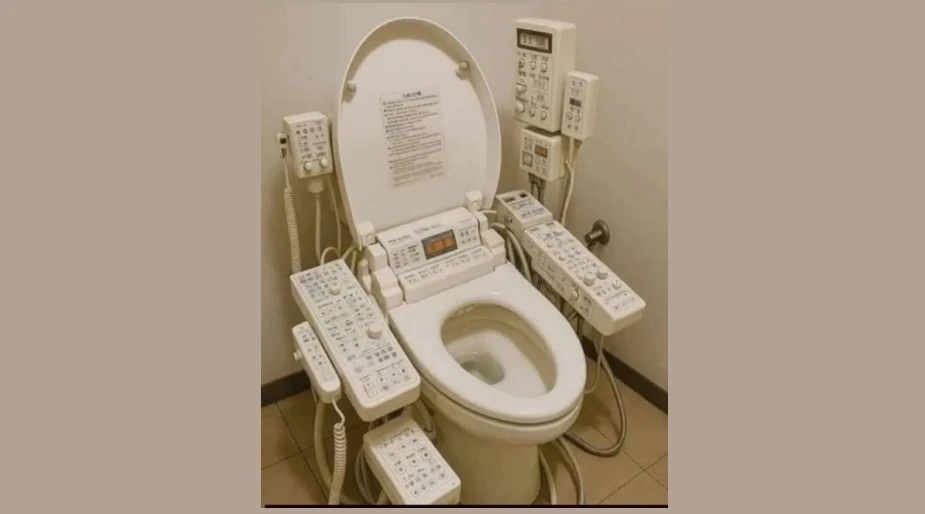
"So, basically... I pressed something, and now it's chasing me."
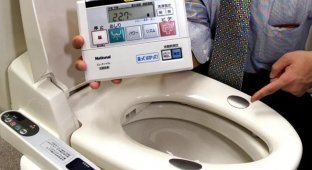
And that is barely an exaggeration—even *The Simpsons* famously poked fun at it. In Japan, a standard toilet ceased being just a ceramic bowl a long time ago. Modern models can automatically open the lid, warm the seat, spray water at your preferred temperature, adjust pressure and nozzle angles, blow-dry with warm air, absorb odors, and automatically flush once you're done.
Some models even let multiple family members save custom profiles. Others sense your approach, turn on nightlights, and close the lid when you leave. And, of course, there's internet connectivity! Toilets in different locations can sync, meaning your hotel room toilet can instantly fetch your custom home presets.
Which brings up a completely fair question: why did a country that gave the world so many groundbreaking electronics decide to pour so much engineering genius into the bathroom? How did high tech end up so obsessed with toilets?
It Didn't Start with a Craving for Luxury
At first glance, Japan's high-tech toilet phenomenon looks like a quirky byproduct of the nation's obsession with gadgets. But the story behind it is far more profound.
Japanese culture places an incredible emphasis on cleanliness—and not just keeping a room looking spotless. Historically, personal physical hygiene and feeling truly clean after using the restroom carry immense cultural weight.
That is why switching from toilet paper to water for a far superior clean felt completely natural.
The first modern electronic bidets began appearing in Japan back in the second half of the 20th century. Over time, manufacturers kept adding features—and each upgrade was much more than just a marketing gimmick. 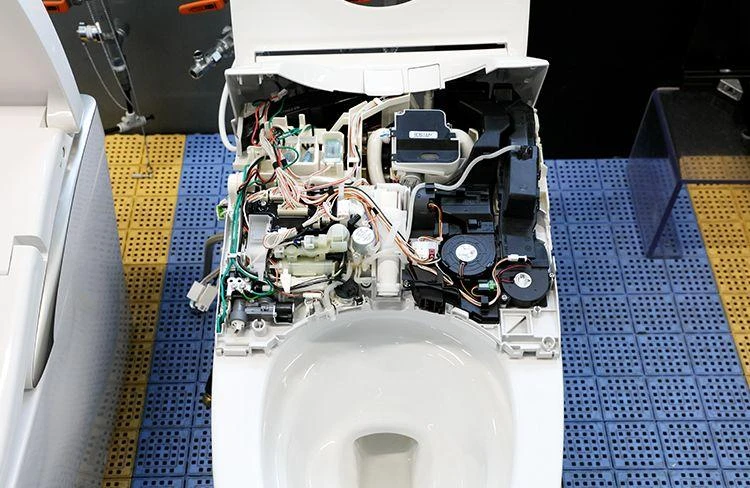
Somewhere right now, a plumber is crying
Once you start using water, temperature becomes an issue—which means you need a heater. If you want that temperature to stay comfortable, you need precise thermal controls. To aim the spray accurately, you need an adjustable nozzle. To vary the water pressure, you need pump controls. From there, engineering logic snowballs fast.
One sensor demands another, one feature triggers the next, and before you know it, a simple toilet has morphed into a complex automated system.
What Can a Japanese Toilet Actually Do?
Modern Japanese smart toilets give off the impression that engineers set out with a single mission: "Let's automate literally every single thing that happens once a person steps into the bathroom."
Walk up, and a proximity sensor spots you. The lid glides open automatically. Have a seat, and it's already pre-warmed—with user-adjustable temperatures on many models. 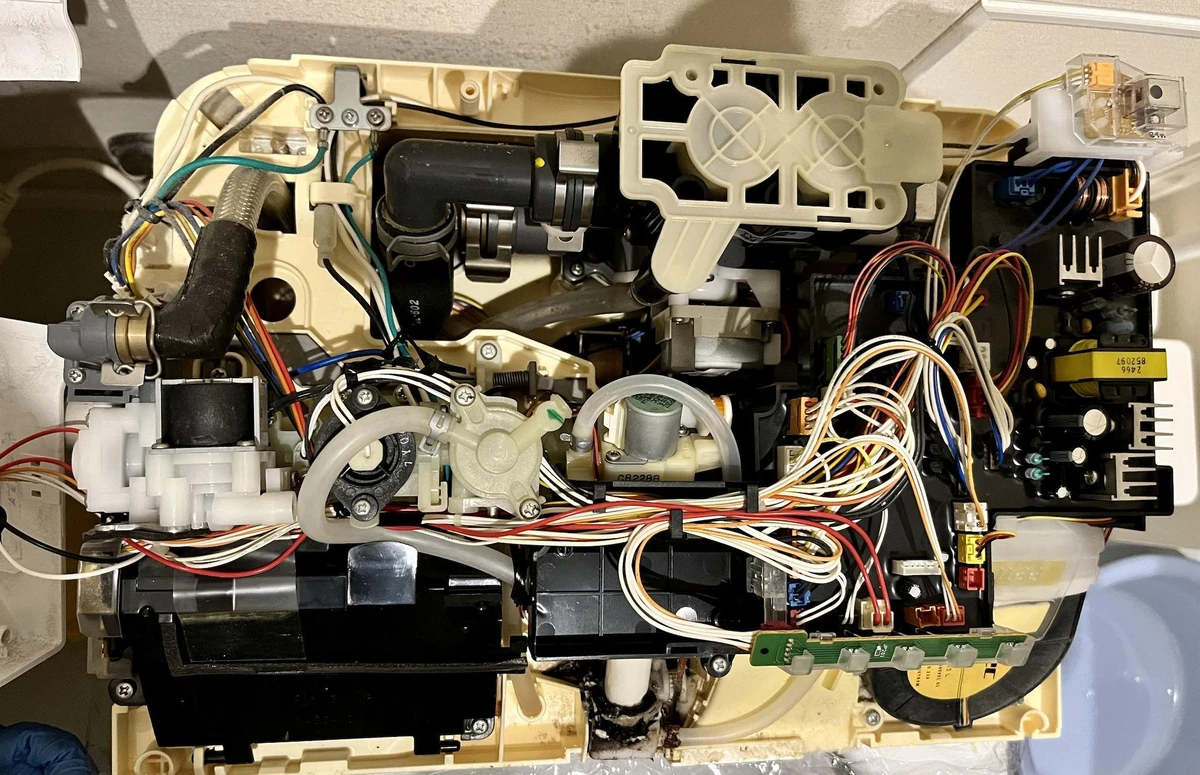
Most smartphones are simpler than this
When you're finished, the bidet function kicks in. A specialized nozzle extends to deliver a stream of water with adjustable heat, pressure, and positioning. Depending on the model, you get dedicated wash modes, including tailored settings for women.
And it doesn't stop there. After the wash, a warm-air dryer takes over, practically eliminating the need for toilet paper. Once you stand up, the system handles the flush on its own.
Higher-end models feature auto-opening lids, energy- and water-saving algorithms, instant or tank heating, nightlights, built-in air deodorizers, nozzle self-sterilization, and automatic bowl-cleaning cycles.
Now imagine packing all of that into a single fixture. 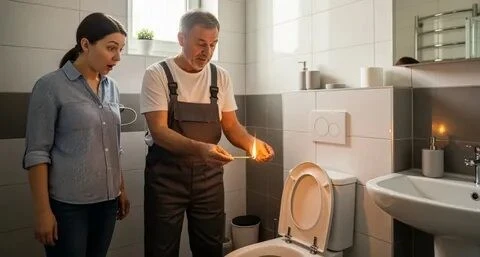
"See? No explosion means no smell!"
It Really Does Feel Like a Spacecraft
Granted, comparing a home toilet to a space station isn't a direct 1-to-1 match. An orbital station packs life-support, communications, navigation, power grids, and lab equipment that would leave any toilet green with envy.
Yet if you purely count the sheer volume of automated features, the Japanese toilet is surprisingly impressive.
At its core, this isn't just plumbing anymore—it's a computerized climate-control and hygiene management hub built for one tiny space.
All designed to make a brief two-minute visit as comfortable as humanly possible.
Why Didn't They Stop at a Standard Bidet?
When a technology goes mainstream, manufacturers naturally seek ways to refine every step of the routine and boost user convenience. At least, that's how sound product engineering works.
The bathroom underwent that exact evolution. First, the goal was simple: wash away waste. Then came the drive for better hygiene—so they added water. Next came heating. Then automation. Then sensors. Then custom user profiles.
Until one day, an engineer took a look at the finished product and likely realized: "I think we may have taken this a bit too far."
By then, though, there was no turning back. 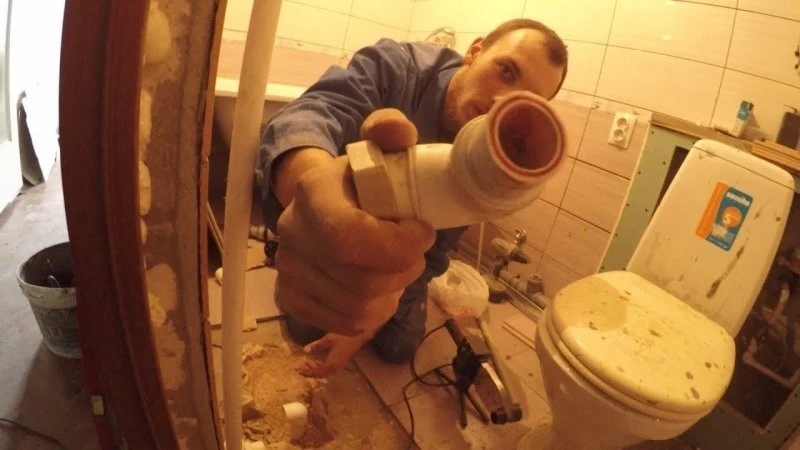
"Look at that fascinating little wand."
The Real Magic Is Under the Hood
From the outside, these units might look fairly ordinary. Step inside the casing, however, and it's a completely different story.
Packed into that housing are water lines, heating elements, micro-pumps, solenoid valves, sensors, control boards, nozzle motors, air dryers, and filtration systems.
Worse yet, all these components have to operate where standard electronics fear to tread: with water and electrical currents sitting inches apart.
That demands airtight waterproofing, failsafe electrical protection, and meticulous control architecture.
Even the wand can't just stick out exposed—it has to sanitize itself after every use and retract into a shielded housing.
In short, the engineers behind Japanese toilets have to solve a staggering number of complex problems.
Why Warm Up the Seat in the First Place?
In most parts of the world, sitting down on a cold toilet seat is accepted as an unpleasant but totally normal part of life. In Japan, someone asked: why should that be normal at all? 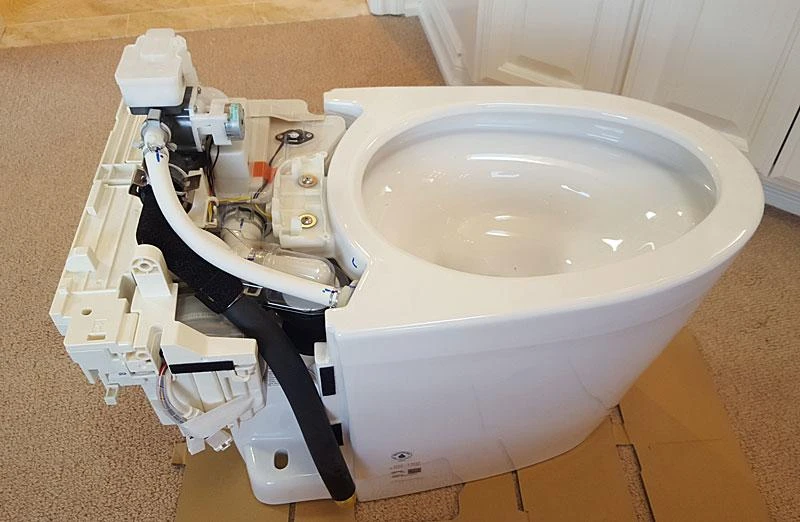
A more basic model
Enter electrically heated seats. Users dial in their preferred warmth, and the unit maintains it automatically.
Modern versions even feature smart energy saving, dialing back heat during hours when the bathroom is rarely used.
It's essentially a miniature climate-control system dedicated solely to a single seat.
Why Does a Toilet Need Sensors?
Presence sensors detect when you approach, prompting the lid to lift, the nightlight to soft-glow, and your presets to prime. Once you walk away, the system automatically closes the lid and flushes.
Some high-tech units even track user positioning to micro-adjust functional angles.
It mirrors smart-home philosophy: you don't touch anything, and the system anticipates your needs. That's precisely why stepping up to a Japanese toilet can feel like stepping into the future.
Why Did This Become a Uniquely Japanese Phenomenon?
A perfect storm of factors made it happen.
First, a deep-seated cultural reverence for personal cleanliness.
Second, high population density and tight living quarters, making home comfort and space efficiency paramount.
Third, Japan's powerhouse electronics industry, which excels at turning simple household concepts into sophisticated tech systems.
And finally, there's a compelling economic driver.
If a consumer is purchasing a fixture built to last decades, manufacturers stand to gain far more by offering a feature-packed experience rather than a plain porcelain bowl.
And that's how plumbing evolved into consumer electronics. After all, humanity has already mastered driving rovers on Mars. The logical next step was teaching our bathrooms to flush properly and on cue.