25 Photos That Explain Why the 1970s Keep Coming Back in Style (26 photos)
Her face graced the pages of Vogue in almost every issue of the early 1970s—yet the general public never knew her name. Charlee Stember (born Ingmari Gustavsson) was born in Sweden and built her career in New York, posing for legends like Irving Penn, Richard Avedon, and Francesco Scavullo. She wasn't an extravagant diva; instead, she was the embodiment of the smart, independent woman of a new era. She was precisely the kind of woman Revlon was looking for to launch its new Charlie fragrance, becoming one of the original "Charlie Girls"—the face of a perfume that generated $10 million in sales in its very first year. Here is a look back at her iconic shoots for Vogue from 1970 to 1974. 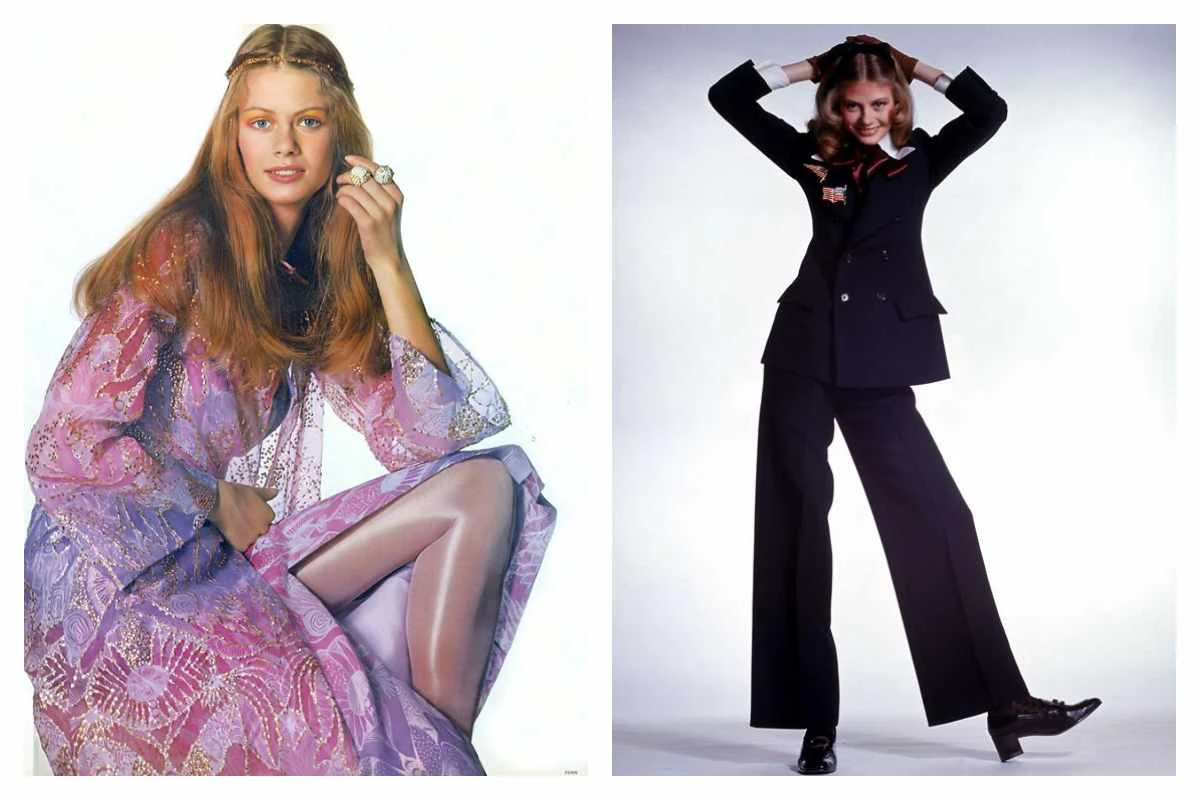
The early 1970s were a golden age for Vogue. Under the legendary Diana Vreeland, the magazine became a platform for a new vision of womanhood—free-spirited, educated, and self-reliant. Charlee Stember fit this narrative perfectly: effortlessly elegant, with no need for over-the-top theatrics, and possessing the rare ability to wear any outfit as if it had been custom-tailored just for her. 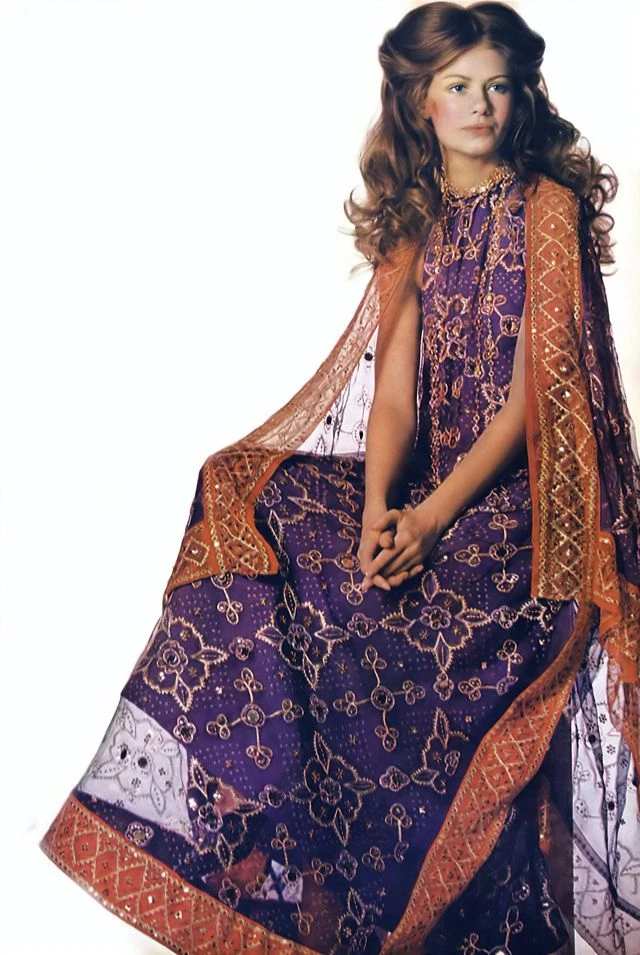
Vogue, March 1970. Indian mosaic print dress and gold-threaded shawl by Arnold Scaasi, photographed by Irving Penn.
Throughout 1970, her appearances in Vogue were captured almost exclusively by Irving Penn and Richard Avedon, the two defining photographers of the era. Penn was known for his minimalist, sculptural approach: a clean white or neutral background, no distracting details—just the clothes and the subject. Avedon took a dynamic approach, injecting high energy, movement, and personality into every frame. 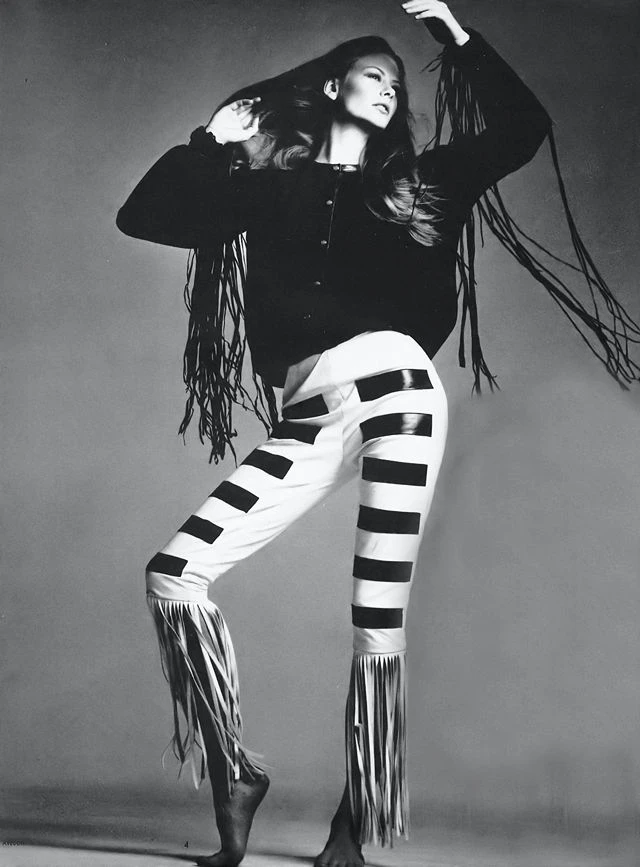
Vogue, January 1970. Leather trousers with knee-to-ankle fringe by Bonnie Cashin for Philip Sills, photographed by Richard Avedon.
Bonnie Cashin, whose designs Charlee wears in this shot, was one of the first American designers to bring leather and suede into everyday fashion. Her collections for Philip Sills came to define New York's functional chic: sleek silhouettes elevated by clever tailoring and unexpected materials. 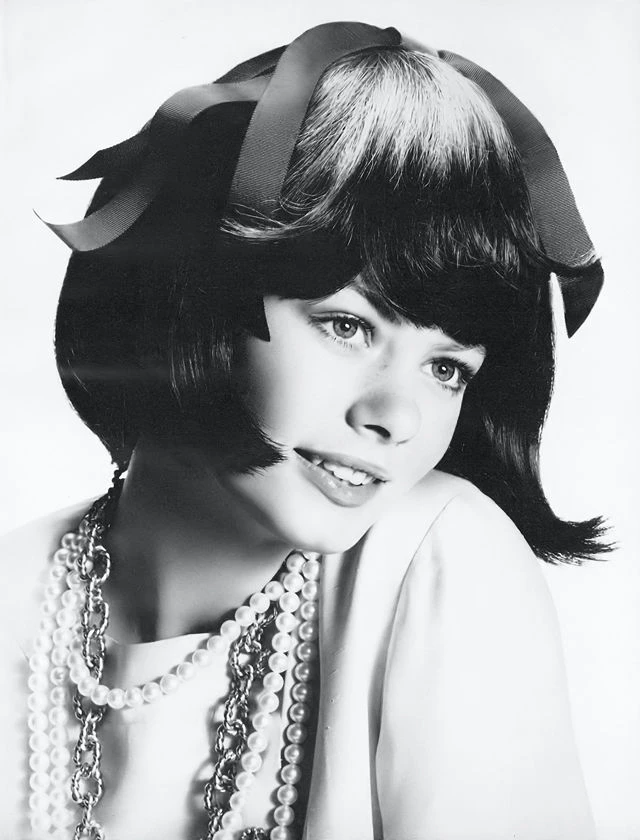
Vogue, February 1970. Modacrylic bob wig with bangs from Chanel, designed to be wash-free. Photographed by Gianni Penati.
Wigs were a serious fashion statement in the early 1970s. Chanel produced synthetic wigs made of modacrylic—a fiber that mimicked natural hair—marketing them as the ultimate low-maintenance accessory: toss it in your bag, slip it on, and head out to a party. Italian-born photographer Gianni Penati was a frequent contributor to American Vogue during this era. 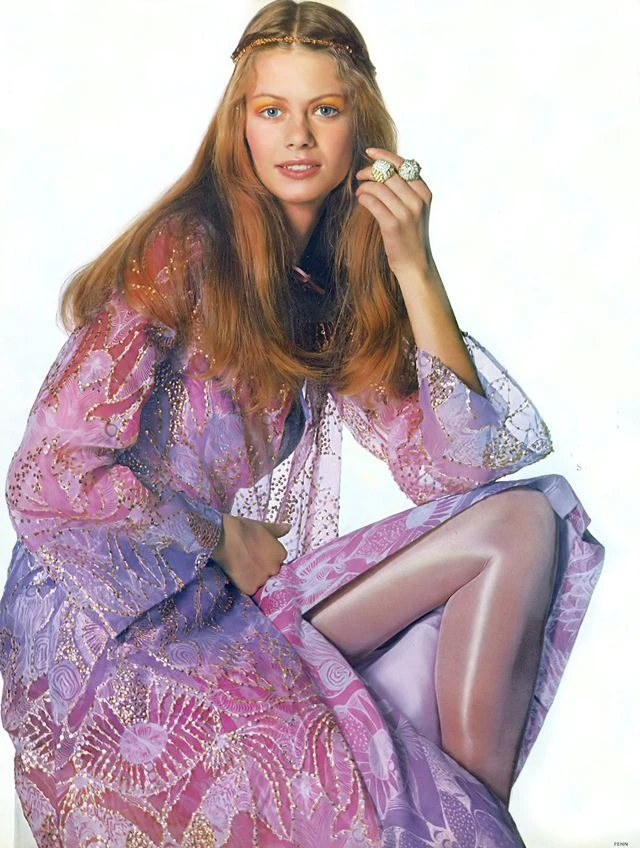
Vogue, February 1970. Gold organza coat layered over a purple chiffon dress by Christian Dior New York. Photographed by Irving Penn.
In 1970, Christian Dior New York operated as the French house’s American branch, tailoring European couture trends to suit local American tastes. Shimmering shades of lilac, purple, and plum were the hallmark of luxury that season, dominating eveningwear and formal collections. 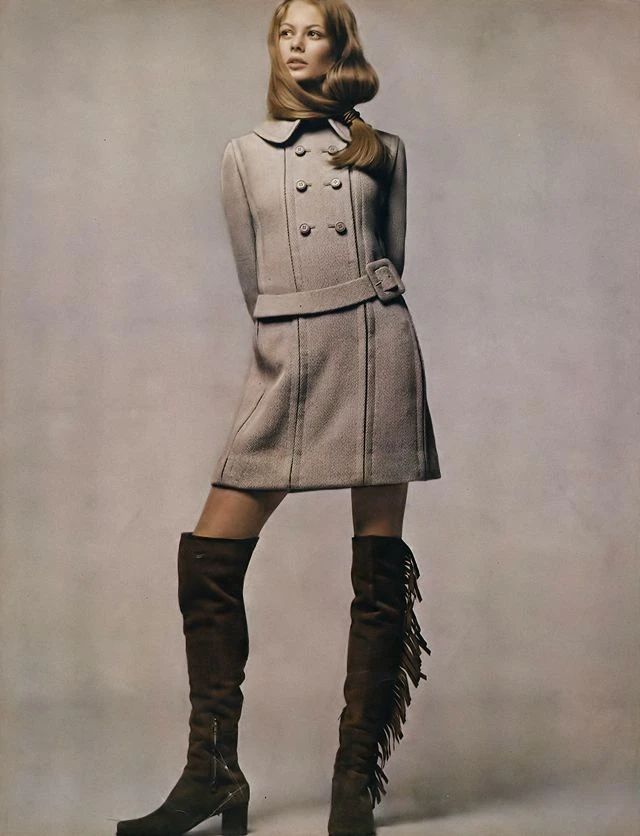
Vogue, January 1970. Cavalry twill dress by Donald Brooks paired with over-the-knee suede boots by Christel of Copenhagen. Photographed by Richard Avedon.
Donald Brooks was a prominent New York designer who earned three Academy Award nominations for costume design during the 1960s and ’70s. In fashion, he was celebrated for impeccable tailoring and meticulous fabric selection—such as cavalry twill, a heavy diagonal-weave wool originally created for military uniforms. 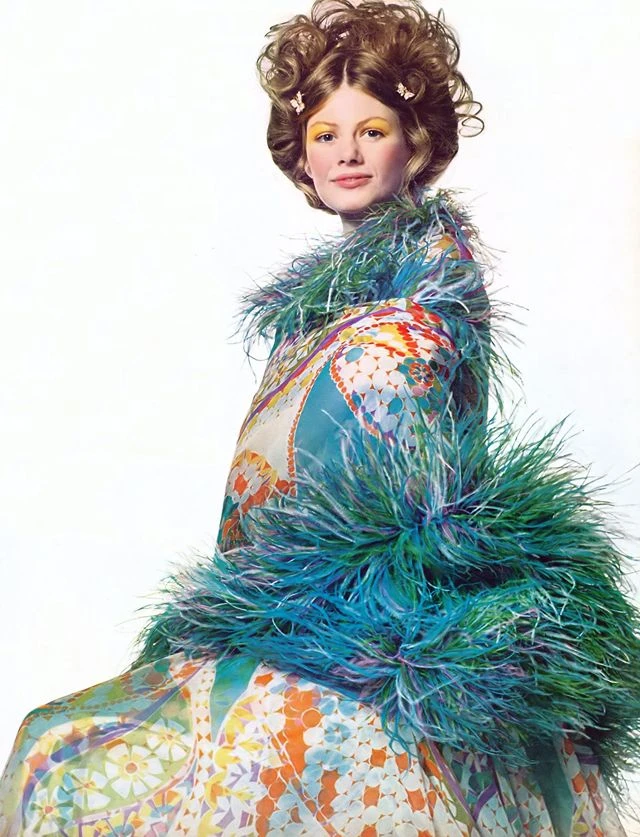
Vogue, February 1970. Silk dress featuring a feather-trimmed chiffon shawl by Elinor Simmons for Malcolm Starr. Photographed by Irving Penn.
Feathers enjoyed a major resurgence in early 1970s eveningwear. Malcolm Starr was a high-end New York fashion house specializing in evening and cocktail attire, favored by movie stars and political figures alike. Drapes and shawls edged with delicate feathers paid homage to 1940s Hollywood glamour, refreshed with a modern twist. 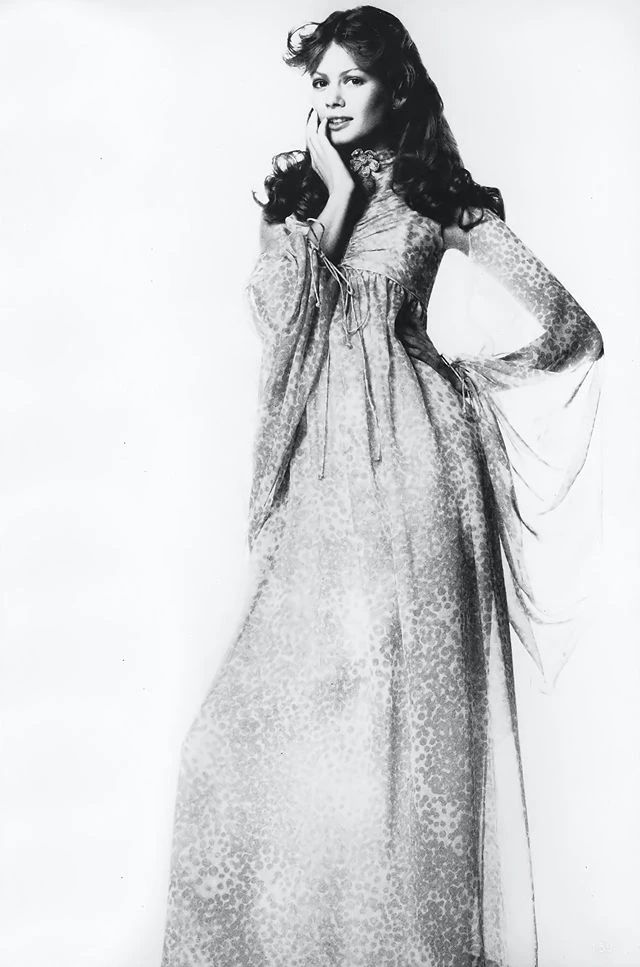
Vogue, February 1970. Apple-green chiffon dress featuring wrist-tied shawl accents by Anne Fogarty. Photographed by Irving Penn.
Anne Fogarty originally rose to fame in the 1950s with her tight-waisted, full-skirted "New Look" dresses. By the 1970s, she had embraced looser silhouettes without sacrificing her signature feminine touch. The detail of the shawl tied at the wrists with small bows was classic Fogarty—turning a functional detail into a playful accent. 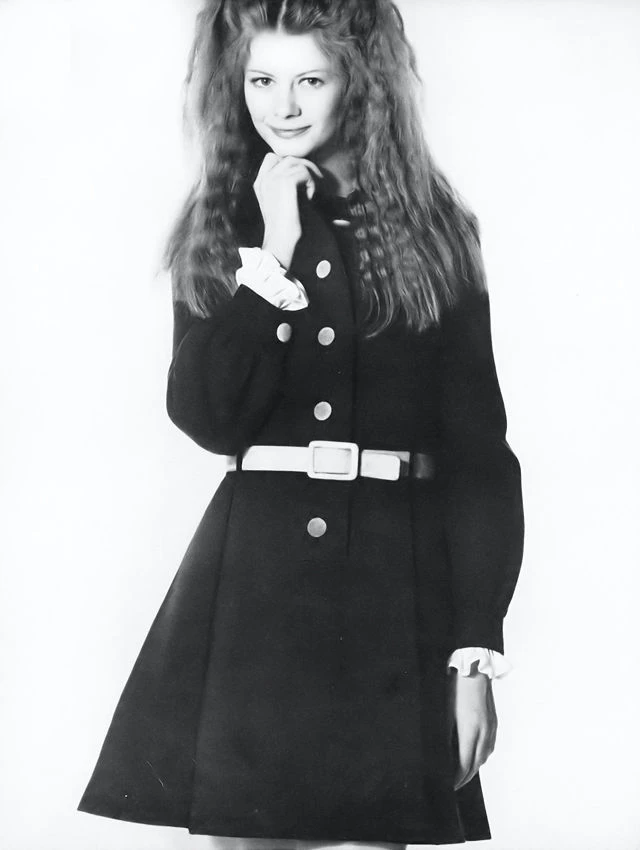
Vogue, February 1970. Navy wool crepe dress with beige buttons and matching belt by Geoffrey Beene. Photographed by Irving Penn.
Geoffrey Beene was one of the most revered American designers of the era, known for combining crisp architectural tailoring with playful, unexpected touches like contrasting hardware or unusual fabric pairings. The crisp navy-and-beige ensemble seen here is quintessential Beene—sharp, almost uniform-like precision rendered with effortless sophistication. 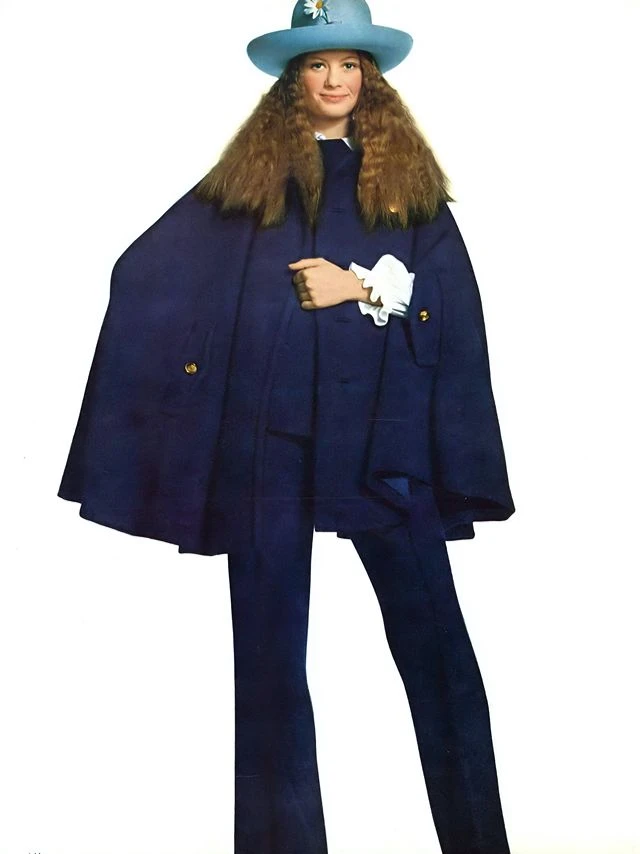
Vogue, February 1970. Navy wool jersey cape and trousers by Originala, ruffled blouse by Gregory, and hat by Mr. John. Photographed by Irving Penn.
Milliner Mr. John (born John Pico John) was Hollywood’s go-to hatmaker through the 1940s, ’50s, and ’60s, continuing his craft into the early ’70s. His bespoke creations adorned icons like Marlene Dietrich, Grace Kelly, and Jacqueline Kennedy. In this shot, his wide-brimmed hat adds the perfect finishing touch to an ensemble defining tailored, androgynous chic. 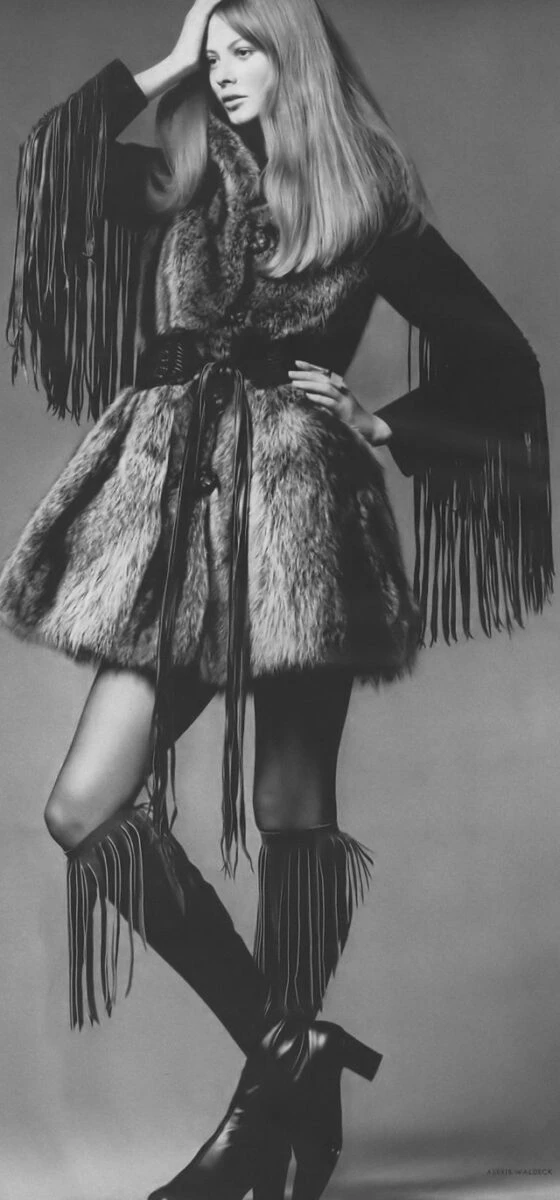
Vogue, January 1970. Raccoon fur coat accented with suede fringe by Fernando Sanchez for Revillon, boots by Ginza. Photographed by Alexis Waldeck.
Fernando Sanchez was an Argentine designer who built a glittering career in New York, celebrated for high-end furs and boudoir-inspired couture. His designs for Revillon—the venerable French fur house established in 1723—blended classic fur luxury with relaxed 1970s proportions. The suede sleeve fringe drew inspiration from Native American garments, a trend making waves in high fashion at the time. 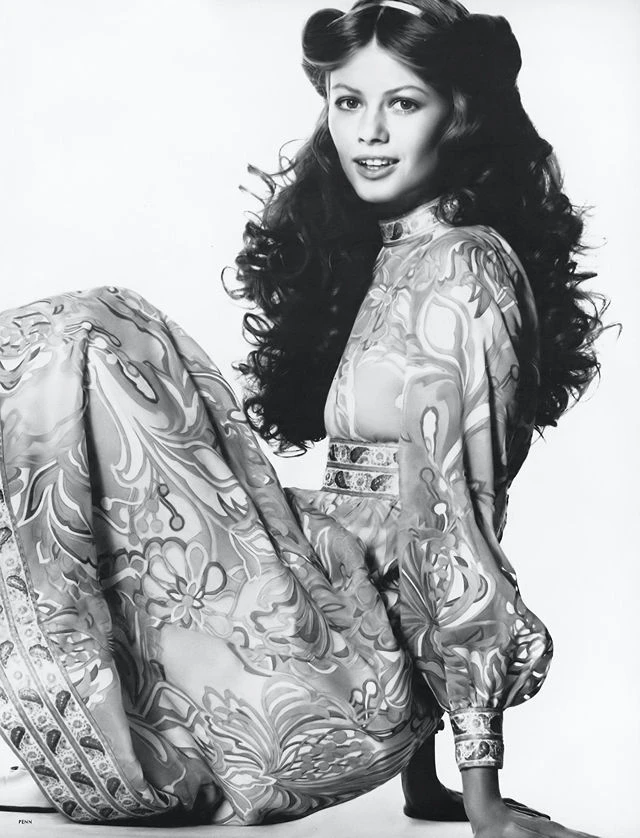
Vogue, February 1970. High-waisted silk dress featuring a yellow and apricot floral print with satin trim by Miss Branell. Photographed by Irving Penn.
The empire silhouette—defined by a high waistline just below the bust—enjoyed a major comeback in the late 1960s and remained a mainstay for the next decade. Visually elongating the figure while offering a fluid fit, it suited an era when womenswear was shedding rigid corsetry in favor of freedom and comfort. 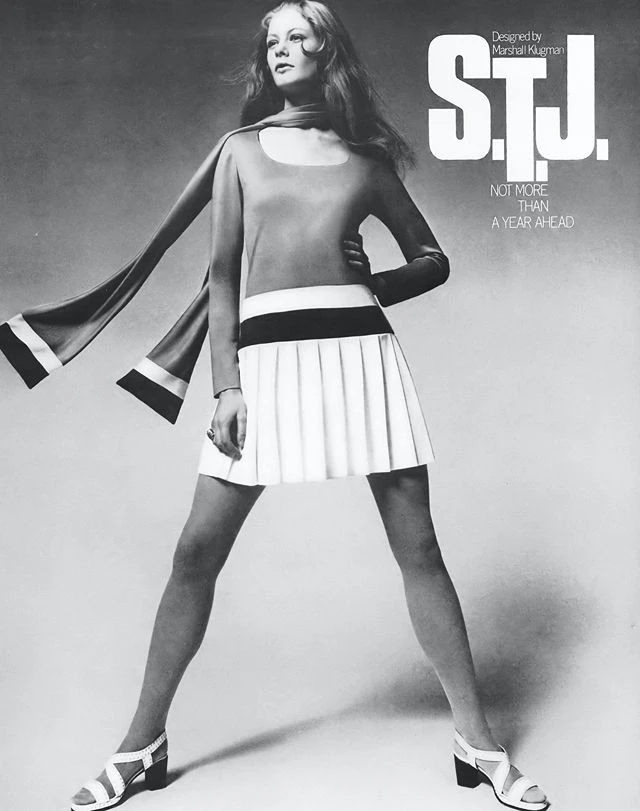
Vogue, February 1970. A-line dress in Blue Ridge-Winkler crepe by Marshall Klugman for St. J.
The A-line silhouette—fitted at the shoulders and flaring out towards the hem—was originally introduced by Yves Saint Laurent for Dior in 1958. By the 1970s, it had become a staple of American everyday fashion, offering effortless movement and easy sophistication that matched the spirit of the times. 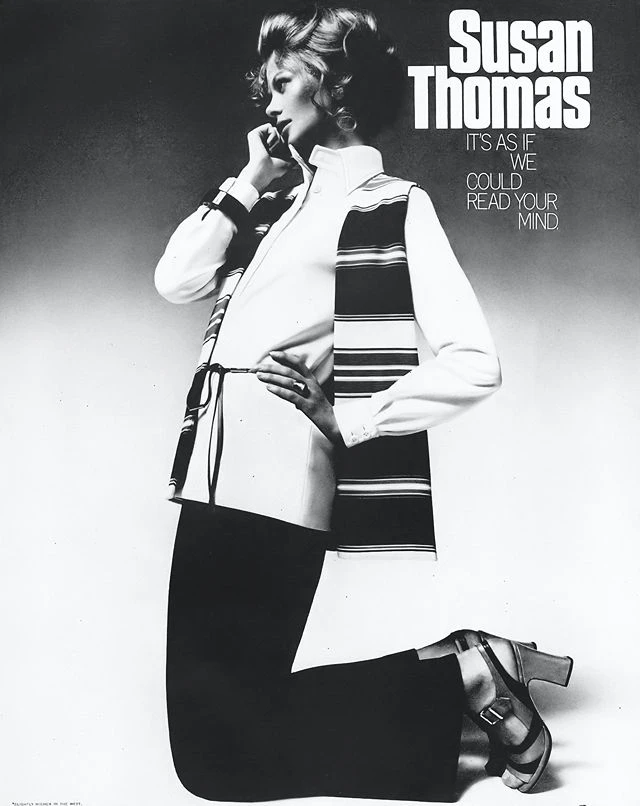
Vogue, February 1970. Three-piece pantsuit in Trevira polyester by Ilse Smith for Susan Thomas.
Trevira was a German polyester fiber marketed during the 1970s as the "fabric of the future"—wrinkle-resistant, washable, and structural. A three-piece pantsuit in Trevira was the epitome of functional city style, gaining immense popularity alongside the expanding women's rights movement. 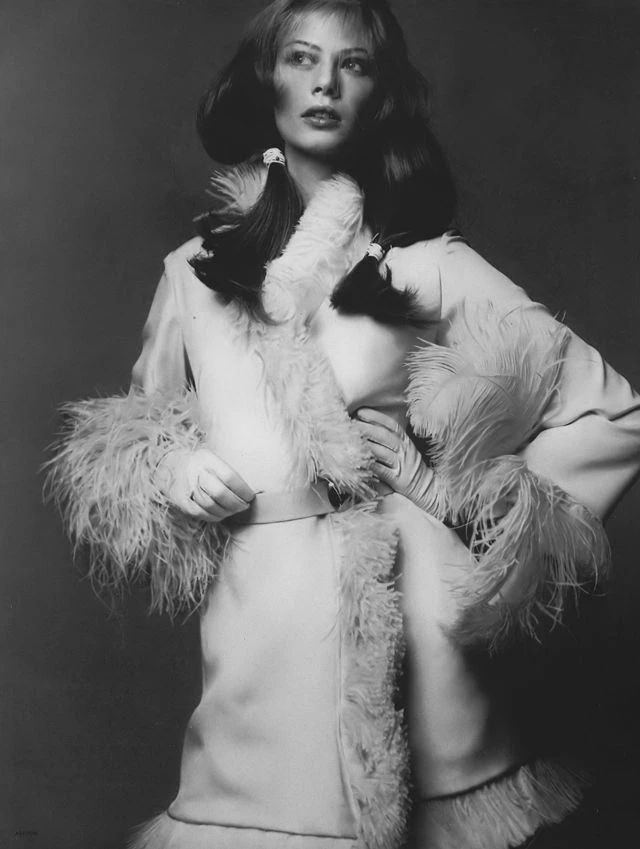
Vogue, January 1970. White silk crepe coatdress trimmed with ostrich feathers by Bill Blass. Photographed by Richard Avedon.
Bill Blass was a pillar of 20th-century American couture, dressing style icons from Nancy Reagan and Barbara Bush to Carol Burnett. This white coatdress with ostrich feather trim showcases his signature touch: clean American lines elevated by a single lavish detail that transforms the entire look. 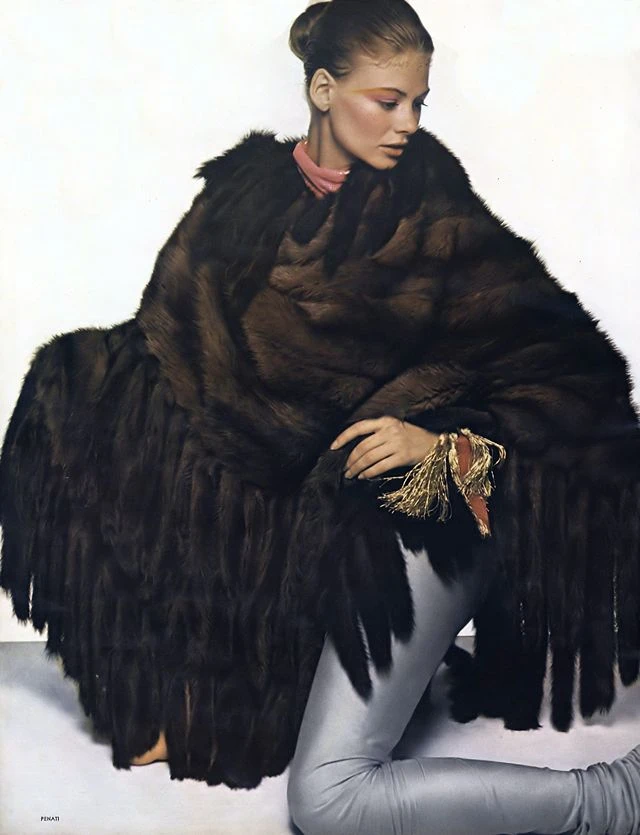
Vogue, January 1970. EMBA mink fur scarf with tail accents by Reiss & Fabrizio, churidar trousers by Adolfo. Photographed by Gianni Penati.
Churidar trousers are traditional Indian fitted pants gathered at the ankle. Their appearance in American Vogue in 1970 reflected Western fashion's obsession with Eastern influences following The Beatles' famous journey to India in the late 1960s. Designer Adolfo (Adolfo Sardina), primarily renowned for hats and knitwear, frequently experimented with global ethnic motifs during this period. 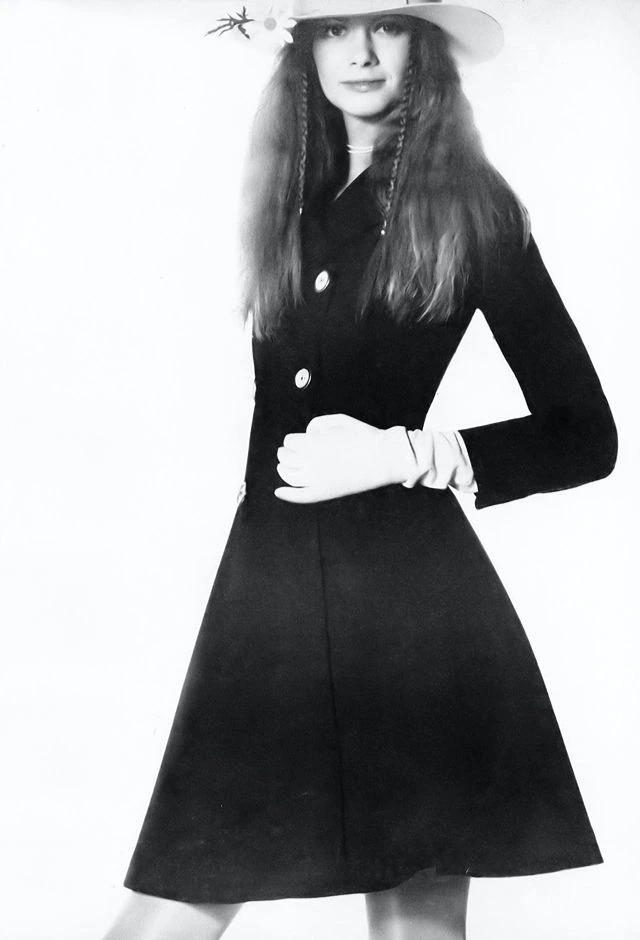
Vogue, February 1970. The "perfect" navy wool crepe coat by Seymour Fox, hat by Mr. John. Photographed by Irving Penn.
The editors at Vogue dubbed this the "perfect navy coat" with zero irony—it was heralded as an absolute wardrobe essential for the modern urban woman. Tailored through the shoulders and torso before flaring at the hip, it perfectly captures the early 1970s aesthetic: understated, self-assured sophistication. 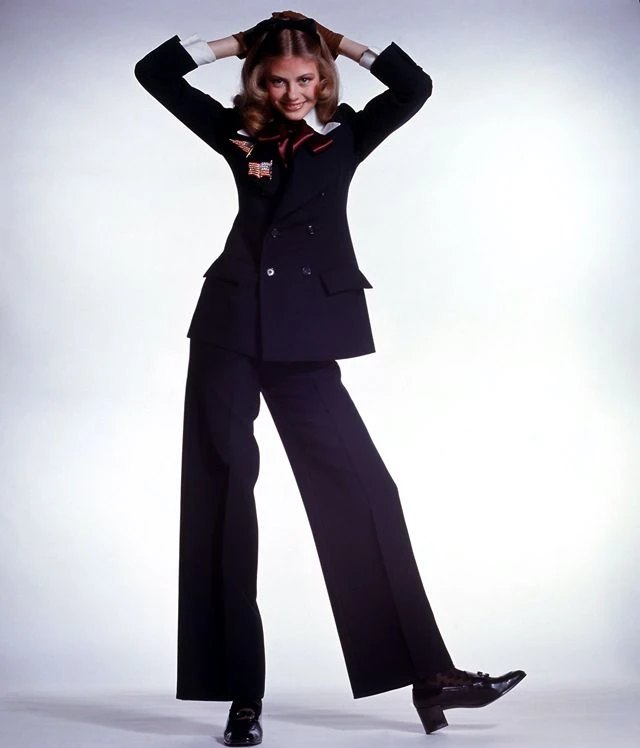
Vogue, September 1971. Portrait of Charlee Stember by Irving Penn.
By 1971, Stember was a regular muse for Penn. Stripped-back portraiture was his signature hallmark: Penn believed the camera should capture only the essentials—the face, the gaze, and the character. 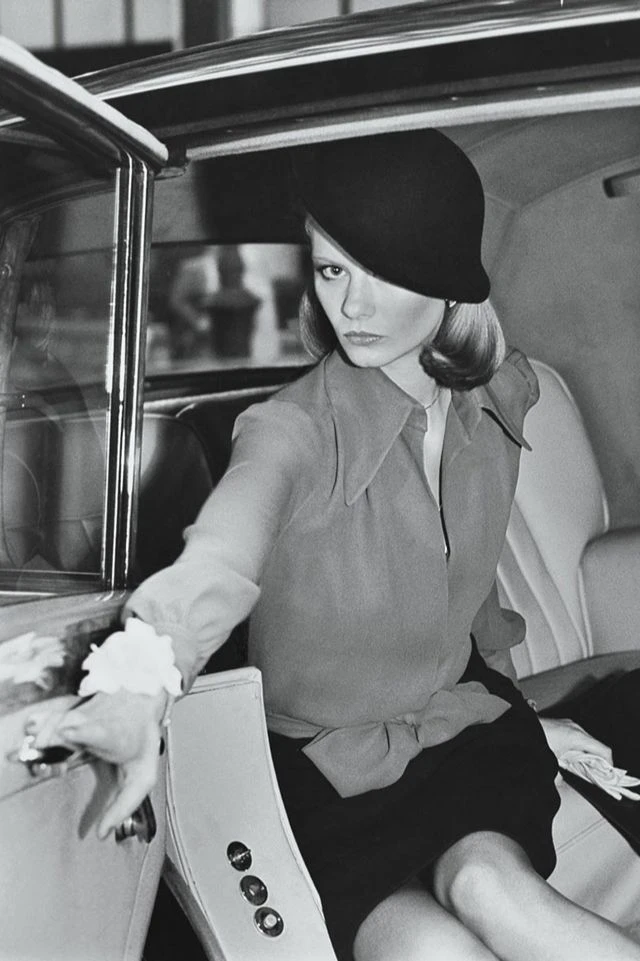
Vogue, January 1973. Chiffon blouse and dark skirt by John Anthony, hat by Don Anderson, stepping out of a Rolls-Royce. Photographed by Kourken Pakchanian.
Photographer Kourken Pakchanian was one of American Vogue's most sought-after fashion photographers in the early 1970s. His work had a distinct cinematic flair: his models didn't just pose—they inhabited the scene. Featuring a Rolls-Royce as a backdrop was classic Pakchanian, seamlessly placing his subjects within a world of high-flying luxury. 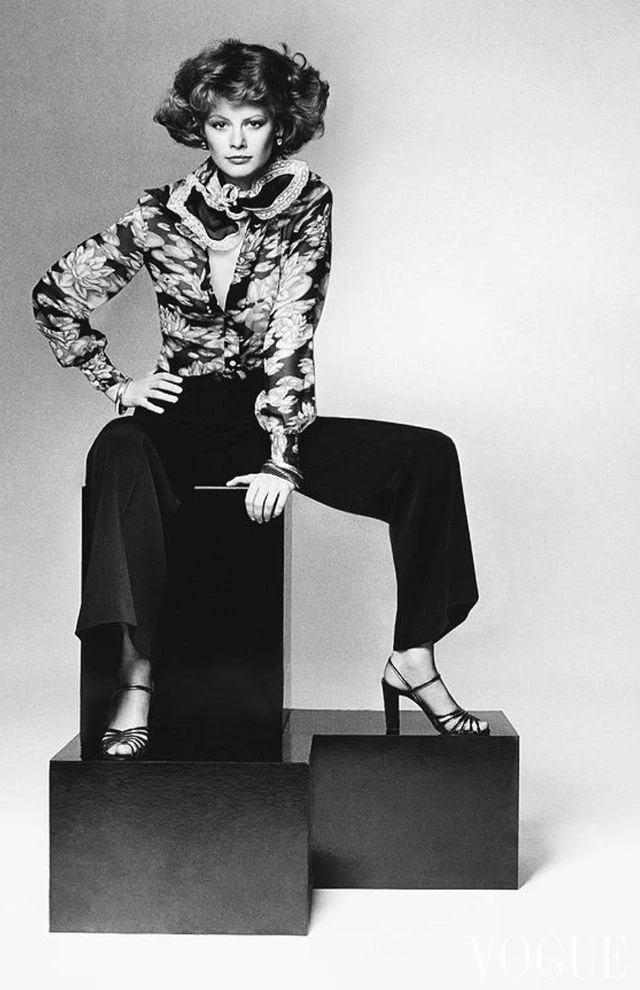
Vogue, August 1974. Floral-print blouse and black pleated trousers by Sequel. Photographed by Francesco Scavullo.
By 1974, Charlee Stember had found a new creative collaborator in photographer Francesco Scavullo. Renowned for shooting Cosmopolitan covers during Helen Gurley Brown's legendary tenure, Scavullo defined the image of the modern 1970s woman—sensual yet intelligent. This six-part series in the August 1974 issue of Vogue remains one of his finest collaborations with Stember. 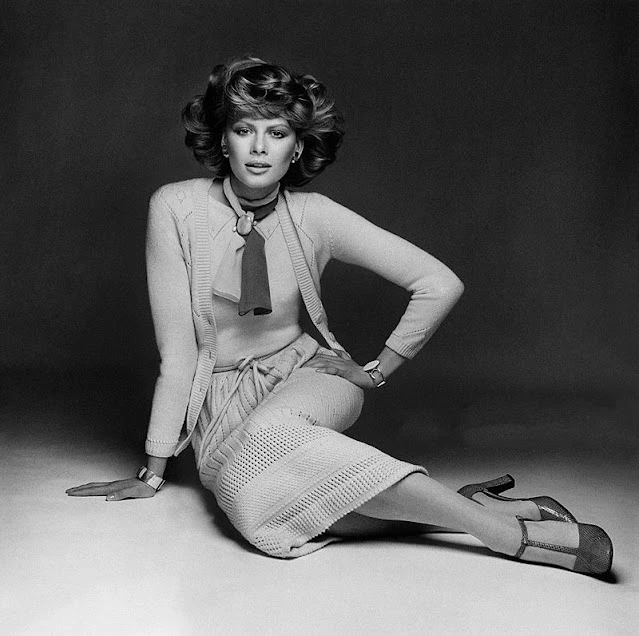
Vogue, August 1974. Cardigan and knit skirt by Emmanuelle Khanh, neck scarf by Doro, shoes by David Luis. Photographed by Francesco Scavullo.
Emmanuelle Khanh was a pioneer of 1970s Parisian prêts-à-porter. Rejecting rigid corsetry and heavy tailoring, she designed clothes that moved and breathed with the body—focusing on soft knits, flowing lines, and natural fibers. 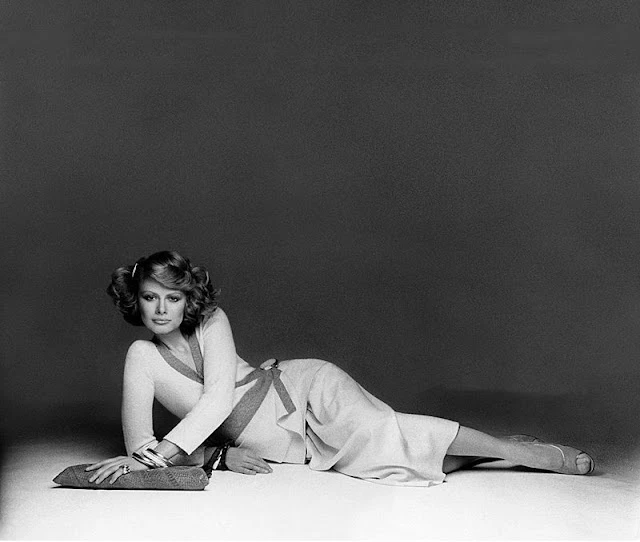
Vogue, August 1974. Long wool-and-angora cardigan and pleated knit skirt by Sonia Rykiel. Photographed by Francesco Scavullo.
By 1974, Sonia Rykiel had earned her title as the "Queen of Knitwear." Her signature soft knits—featuring stripes, exposed seams, and playful lettering—became the unofficial uniform of the intellectual Parisian woman. This shot captures classic Rykiel: a knee-length cardigan over a fluid skirt, free from any restrictive structure. 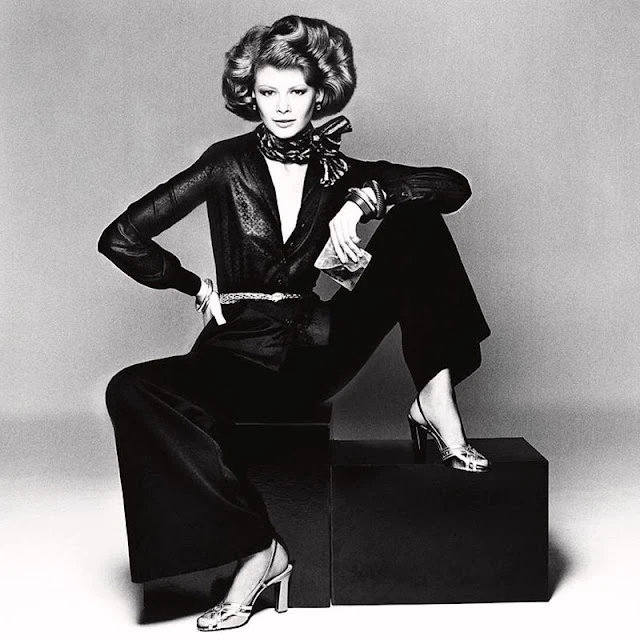
Vogue, August 1974. Shirt and trousers by Rodrigues, scarf by Echo Scarfs, sandals by Givenchy. Photographed by Francesco Scavullo. 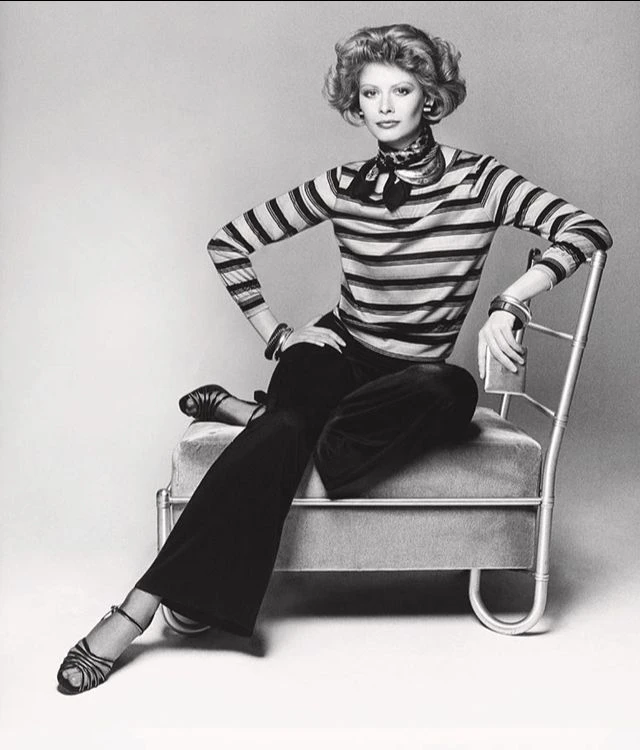
Vogue, August 1974. Striped boatneck blouse and black knit trousers by Evelyn de Jonge, scarf by Yves Saint Laurent. Photographed by Francesco Scavullo.
The inclusion of an Yves Saint Laurent scarf is telling: by the early 1970s, Saint Laurent was far more than a designer—he was a cultural phenomenon. His accessories allowed women to buy into the high-fashion dream without buying a full gown. Styling an iconic YSL scarf over a blouse from a contemporary brand captured the exact high-low mix Vogue championed. 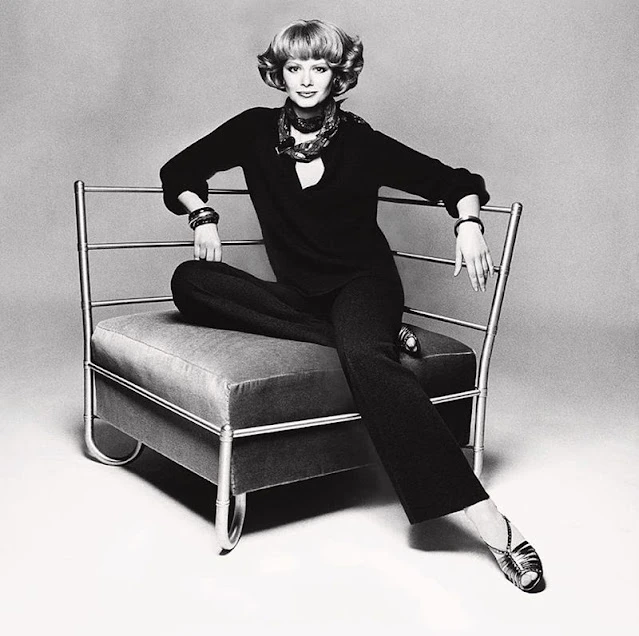
Vogue, August 1974. Oversized cowl-neck sweater and wide-leg trousers by Robert-David-Morton, scarf by Doro, shoes by Givenchy. Photographed by Francesco Scavullo. 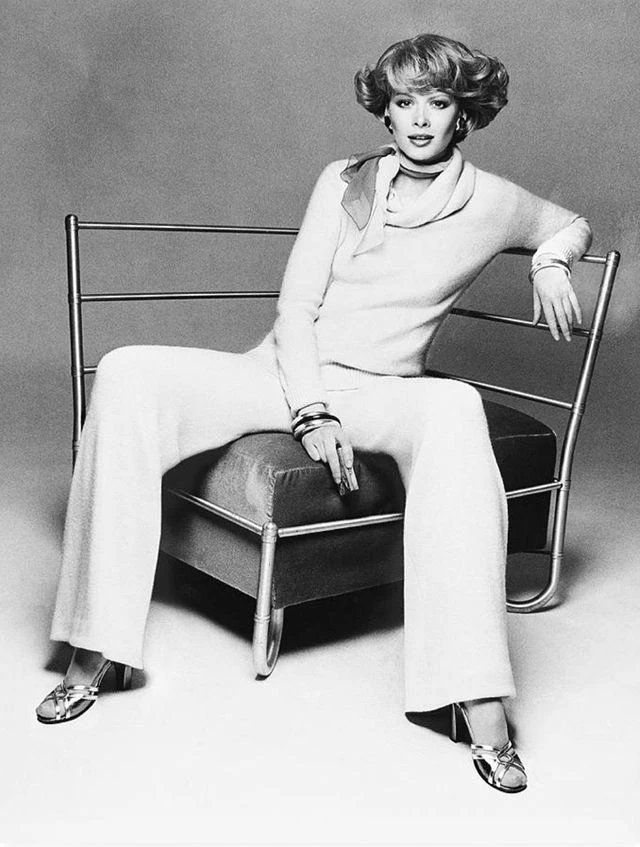
Vogue, August 1974. Oversized sweater and wide-leg trousers by Bonnie Cashin, scarf by Bottega Veneta, sandals by Givenchy. Photographed by Francesco Scavullo.
The final image in this series brings us back to Bonnie Cashin, where our journey began. The Bottega Veneta scarf is also worth noting: founded in 1966, the Italian house had already become synonymous with quiet, understated luxury—a refined antidote to loud, monogrammed logos. Their famed slogan summed it up best: "When your own initials are enough."
Charlee Stember may not have become a "supermodel" in today's sense—she rarely gave interviews or dominated headlines. Yet her face defined the modern American aesthetic of the early 1970s: confident, contemporary, and effortlessly stylish.
Which style from this roundup feels most relevant to you today—the structured elegance of Penn in 1970, or the relaxed, soft silhouettes of Scavullo in 1974?