Why Biosphere 2 Failed: The Ambitious US Experiment That Could Have Changed the World (15 photos)
Today, Mars simulation missions are more popular than ever. Around the globe, volunteers spend months sealed inside experimental habitats or walking across desolate sands in mock spacesuits, trying to imagine life beyond Earth. But all of this pales in comparison to the harrowing ordeal a group of Americans endured during the ambitious Biosphere 2 experiment in the early 1990s. 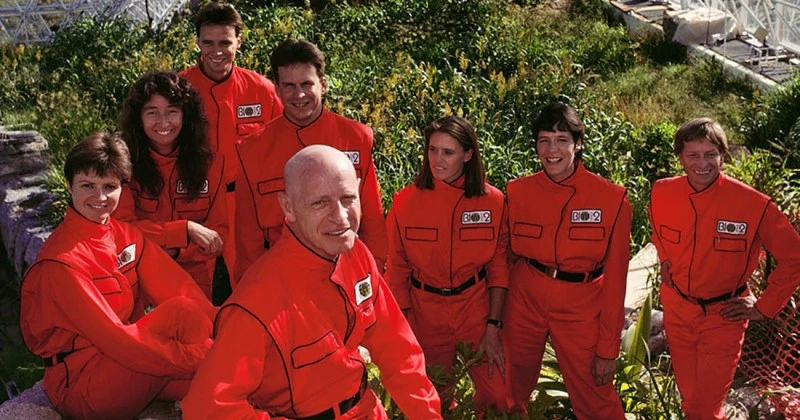
In the late 1980s, billionaire philanthropist Edward Bass poured $30 million into an idea that had captivated him for years. He wanted to answer a fundamental question: could human beings survive inside an artificial, closed ecological system completely cut off from the outside world? 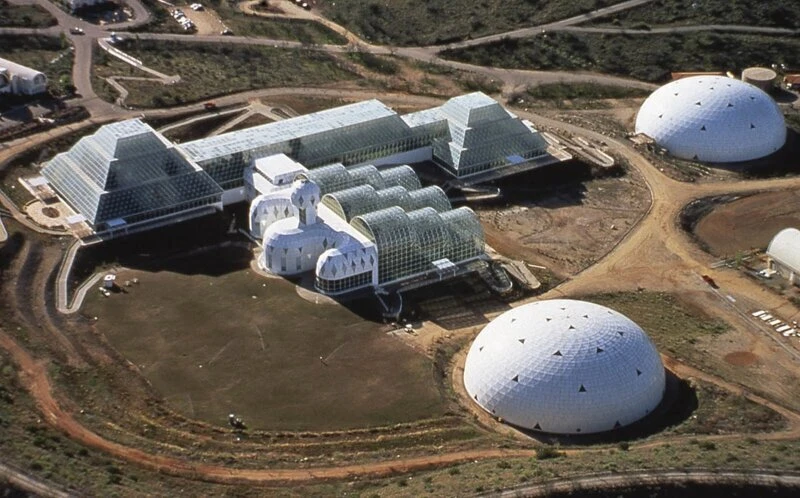
Whether facing nuclear winter, global environmental collapse, or the challenge of colonizing distant planets, humanity would need a self-sustaining haven. Driven by this vision, Bass spared no expense on an unprecedentedly massive and daring project dubbed "Biosphere 2."
Constructed in the Arizona desert, the facility was a sprawling research complex housed under airtight glass domes. Beneath them lay a miniature replica of Earth's natural environment, featuring five distinct biomes: an ocean with a living coral reef, a savanna, a rainforest, a desert, and a mangrove wetland.
The compound also included a state-of-the-art agricultural module for farming and livestock, as well as comfortable living quarters for the participants. Along with the human crew, nearly 3,000 species of plants and animals were introduced into the sealed world, ranging from ants to goats and cows. 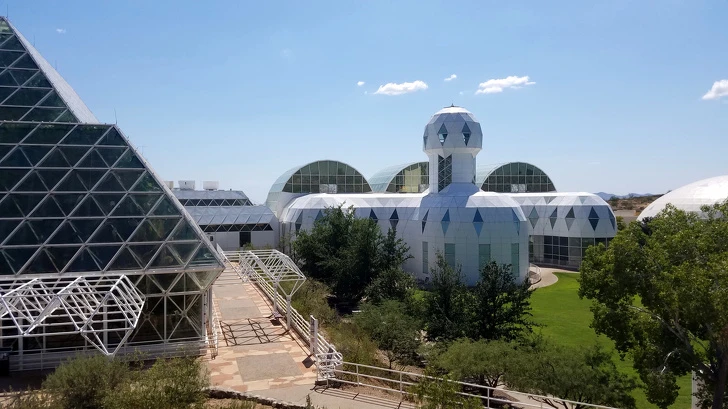
Located 30 miles from the nearest town, the secure facility was completely off-limits to uninvited guests. Construction was taken very seriously: the first phase of airtight sealed glass domes was completed in 1987.
Sealed inside was 180 tons of air, isolated from the outside world by high-performance rubber seals. Total isolation was crucial, as researchers intended to track every shift in atmospheric quality and oxygen levels inside the sealed environment over a two-year period.
To prevent the extreme heat of the Arizona desert from causing dangerous pressure swings—expanding the air during the day and contracting it at night—engineers built two massive flexible expansion chambers, which the team nicknamed the "lungs." 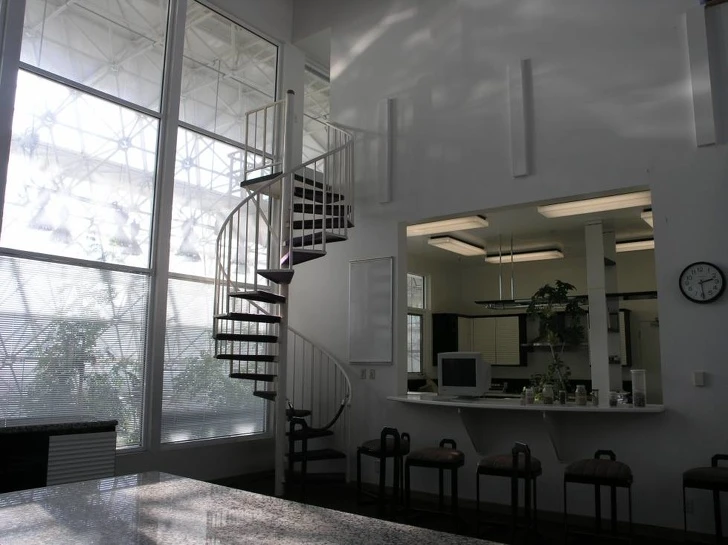
The facility's living quarters
To maximize space inside the biomes, all mechanical systems and utilities were placed underground. For scientific rigor, the entire facility was also isolated from the soil beneath: 500 tons of welded steel plates formed a impermeable subfloor upon which the biomes were built.
Space was allocated based on practical survival needs. The miniature ocean with its artificial reef covered around 4,800 square feet, whereas the agricultural plots were six times larger. While the ocean offered little for daily nutrition, the farmland was crucial for keeping the crew alive. A freshwater pond stocked with edible fish provided another vital food source.
The goal was complete self-sufficiency: eight "Biospherians" were to live on crops grown under the domes, breathe oxygen produced by the greenery, and drink water continuously recycled through natural processes. It was designed to be a miniature Earth sustained by—and for—its human crew. 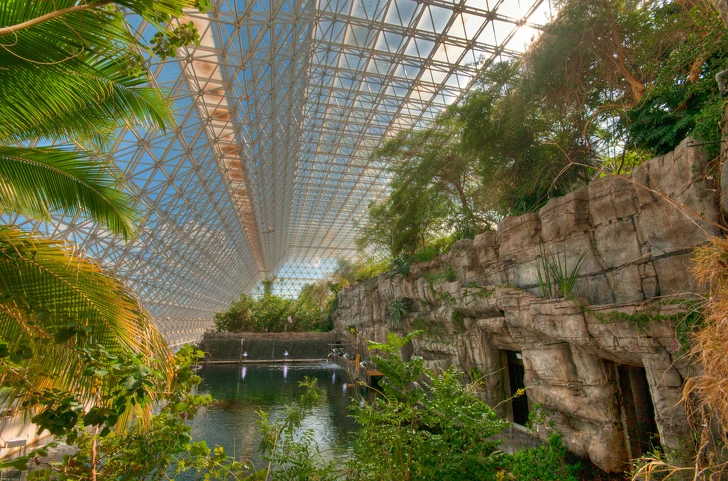
The Ocean biome today
On September 26, 1991, eight smiling volunteers dressed in matching jumpsuit uniforms stepped inside Biosphere 2. Images of the team made headlines worldwide, introducing millions to an extraordinary experiment that promised to unlock new horizons for human survival. 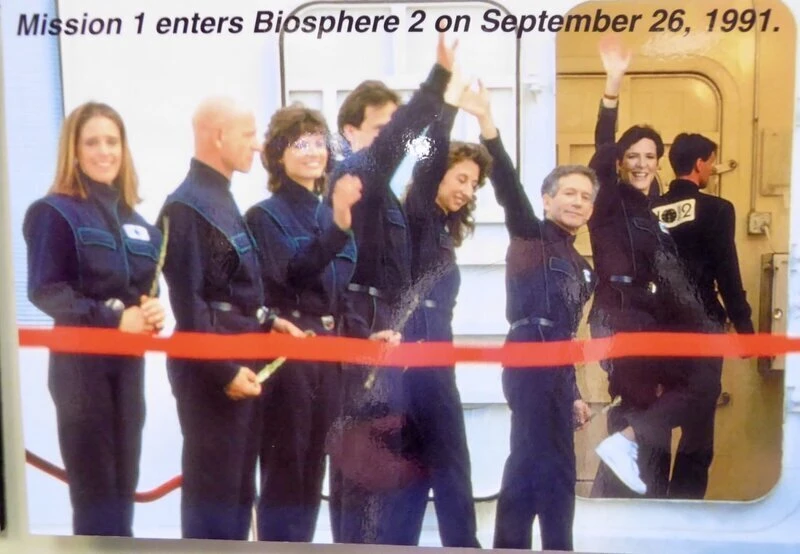
At first, everything went smoothly. The crew farmed, tended livestock, swam in their artificial ocean, and carefully logged environmental data. In the evenings, they bonded over board games, played instruments brought from home, and discussed philosophy.
However, trouble soon began to brew. Van Thillo, the crew member responsible for the complex's mechanical systems, noticed an alarming trend: daily atmospheric readings showed oxygen levels steadily dropping, while carbon dioxide was climbing toward dangerous levels. 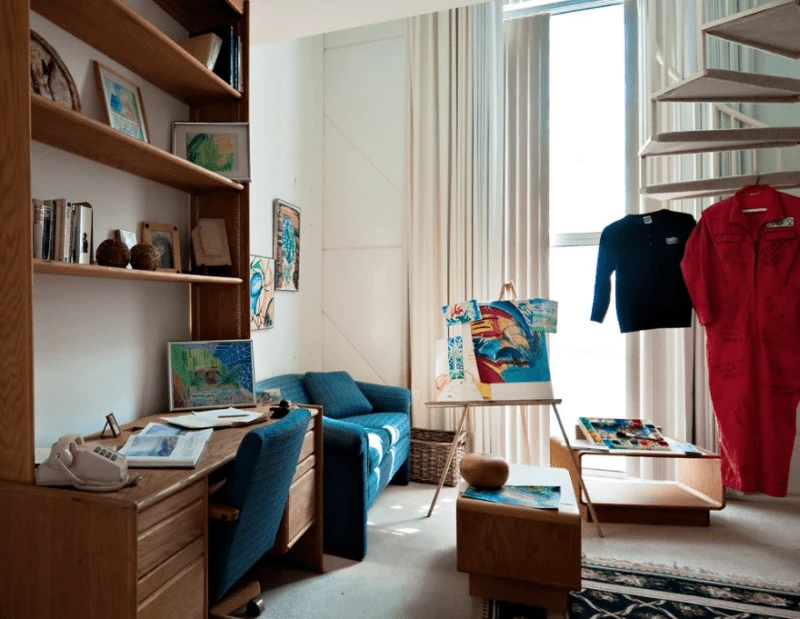
One of the Biospherians' rooms
Van Thillo's recalculated projections delivered a grim forecast: within a year, the atmosphere inside would become unlivable. The imbalance quickly triggered unforeseen ecological side effects, as soil microbes multiplied rapidly and destroyed a large portion of their crops.
Desperate to reverse the trend, the crew planted extra vegetation to boost oxygen output and ran carbon dioxide scrubbers at full capacity. Despite their efforts, oxygen levels continued to plunge, making every breath harder with each passing day.
Then, a core rule of the experiment—absolute isolation—was broken. Crew member Jane Poynter accidentally severed the tip of her finger in a rice thresher and had to be evacuated to an outside hospital for surgery. She returned to the dome shortly after receiving treatment. 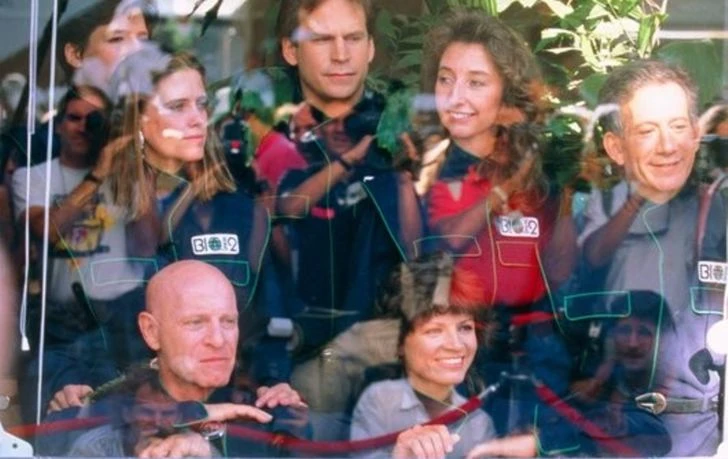
That incident was only the beginning. It soon became clear that project planners had made another major miscalculation: the half-acre farm plot simply could not produce enough food to sustain eight hardworking adults.
Daily caloric intake dropped to just 1,700 calories per person. While that might suffice for a sedentary lifestyle, the Biospherians were performing intense physical labor—farming, caring for animals, and maintaining complex machinery to keep their world running. 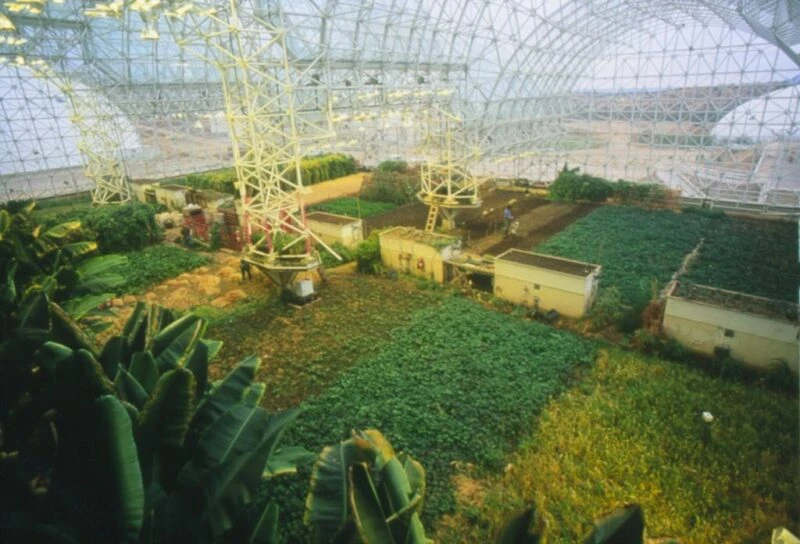
The crop fields intended to feed the crew
Evening music and friendly chats vanished, replaced by an obsession with food that frequently devolved into bitter arguments. The crew moved from shared meals to strict rationing, eventually weighing out tiny food portions on scales. 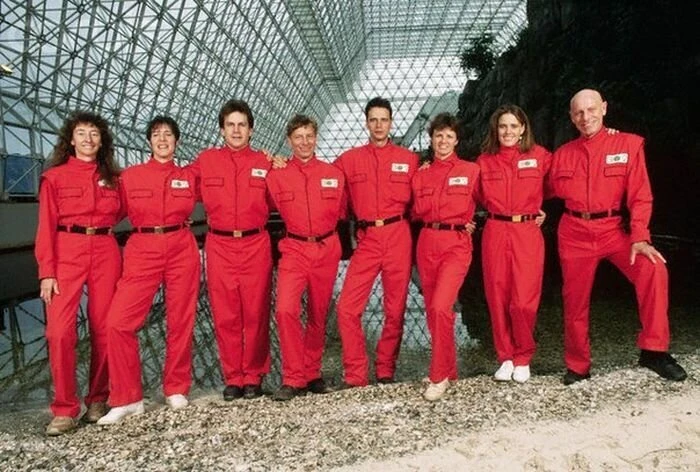
Before long, the once-tight team fractured into two hostile factions. Tensions ran so high that members scheduled their farm chores and meals to avoid seeing one another. Although medical tests showed they remained physically healthy, psychological stress and chronic hunger took a severe toll.
A year into the mission, conditions inside became nearly unbearable. Pests wiped out most of the rice crop, forcing the crew to subsist mainly on beans, carrots, and sweet potatoes. The carrot-heavy diet proved so intense that excess beta-carotene turned their skin noticeably orange. Meat, eggs, and dairy became rare treats served only once a week in meager portions.
To their credit, the Biospherians tried to keep up appearances. The few tourists allowed near the exterior windows saw gaunt but smiling crew members putting on brave faces for the outside world. 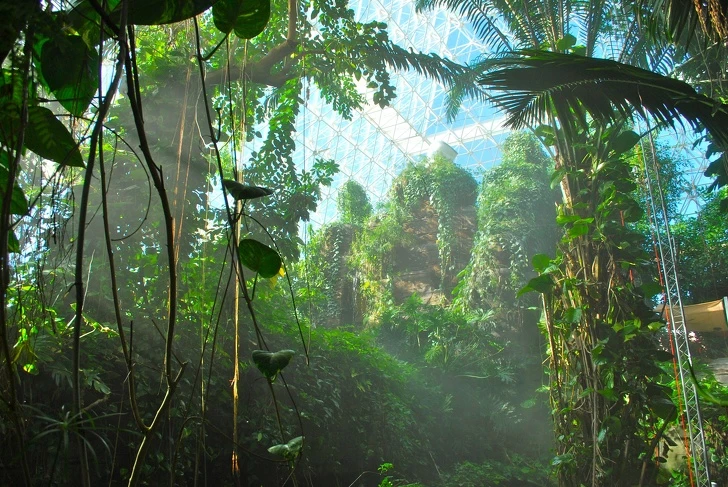
The Rainforest biome today
Behind the glass, however, the artificial ecosystem was falling apart. The desert biome failed first: high carbon dioxide levels disrupted humidity control, causing heavy condensation that rained down incessantly onto the dry soil and killed the desert flora.
Within 16 months, oxygen levels plummeted to 14 percent—equivalent to living at high altitude. While most biomes struggled, the tropical rainforest grew wildly out of control, fostering a massive bloom of soil bacteria that consumed even more oxygen, starving both humans and animals.
The physical effects of hypoxia set in. The crew grew lethargic, suffered memory loss, and struggled to finish sentences without pausing for breath. Fearing for their health, mission managers finally broke protocol and began pumping fresh air into the dome. 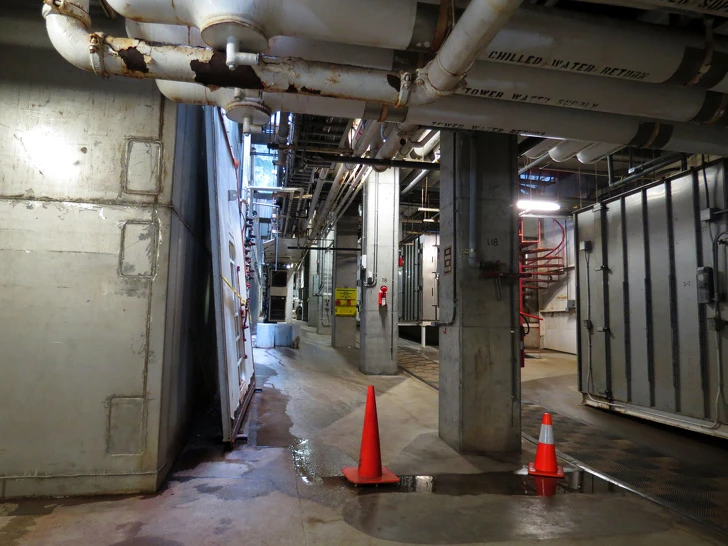
The facility's subterranean level
This secret intervention was kept hidden from the press, maintaining the public illusion of a triumphant closed-loop experiment. Finally, in September 1993—exactly two years after stepping inside—the exhausted Biospherians emerged from their stifling world.
Jane Poynter later shared her raw impressions of stepping back into the outside world:
"I'd say we all came out a bit crazy. I was so excited to see my family and friends—for two years I'd only seen people through glass. But when everyone ran toward me, I recoiled. They stank! People stink! We stink of hairspray, deodorant, and all that kind of stuff." 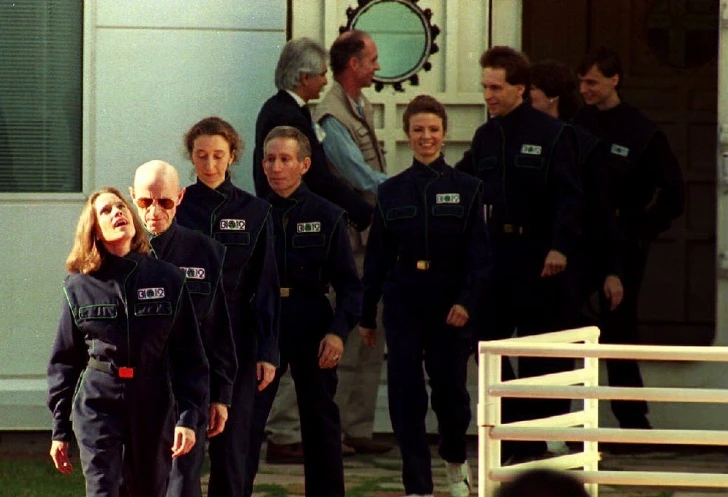
The crew exiting Biosphere 2
Despite obvious setbacks, the mission was officially labeled a success, and a second trial was launched a year later. However, the new 10-month expedition was plagued from the start. Shortly after it began, two former crew members breached the compound, opening emergency doors and shattering glass panels, unsealing the dome for 15 minutes.
Disillusioned by the sabotage and internal power struggles, several crew members withdrew. Realizing the experiment was compromised beyond repair, financial backers pulled funding, bringing Biosphere 2 to an end. 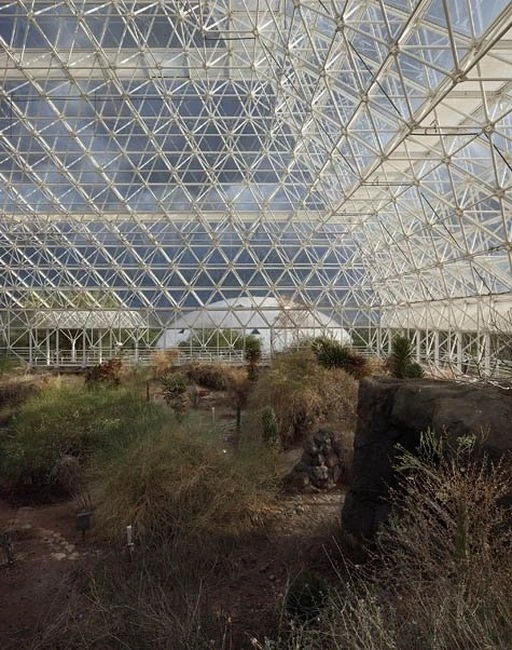
The grand takeaway of Biosphere 2 was clear: despite careful planning and advanced technology, humans could not survive in an isolated closed ecosystem without outside intervention. Human psychology proved equally fragile—even in a large enclosure, interpersonal conflicts broke down communication. Decades later, many crew members still refuse to speak to one another.
The futuristic Biosphere 2 facility still stands in the Arizona desert today. Now operated by the University of Arizona, it serves as a botanical laboratory and research facility for smaller-scale ecological studies. 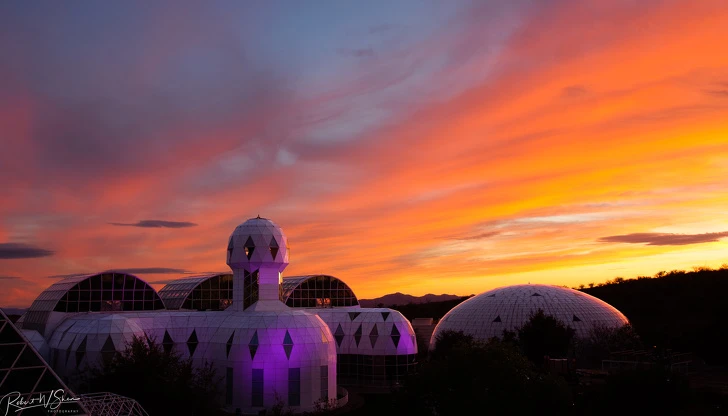
Tourists still visit the site, where tour guides tell the dramatic story of a "miniature paradise" turned living nightmare. Visitors are often shown a message scratched onto one of the dome's structural frames by a member of the original team:
"It was only here that we realized how dependent we are on the natural world. If there are no trees, we have nothing to breathe; if the water becomes polluted, we have nothing to drink."
Reading that simple message serves as a stark reminder of how fragile our planet is—and how vital it is to preserve it before we are forced to seek shelter under a glass dome.