The 7 Lives of Leni Riefenstahl: Ballerina, Mountaineer, Actress, Hitler's Director, Outcast, Nuba Photographer, Scuba Diver at 70+ (10 photos)
1919: secret dance lessons in Berlin. 1926: her first ascents in the Alps. 1932: a Gold Medal in Venice for her directorial debut. 1934: "Triumph of the Will", commissioned by Hitler. 1945: arrest, denazification, and the end of her career. 1962: her first photographic expedition to Sudan. 1973: a book on the Nuba tribes and global acclaim. 2002: a documentary celebrating her own centenary. Today, August 22, marks 124 years since the birth of Leni Riefenstahl. Seven lives, one biography. 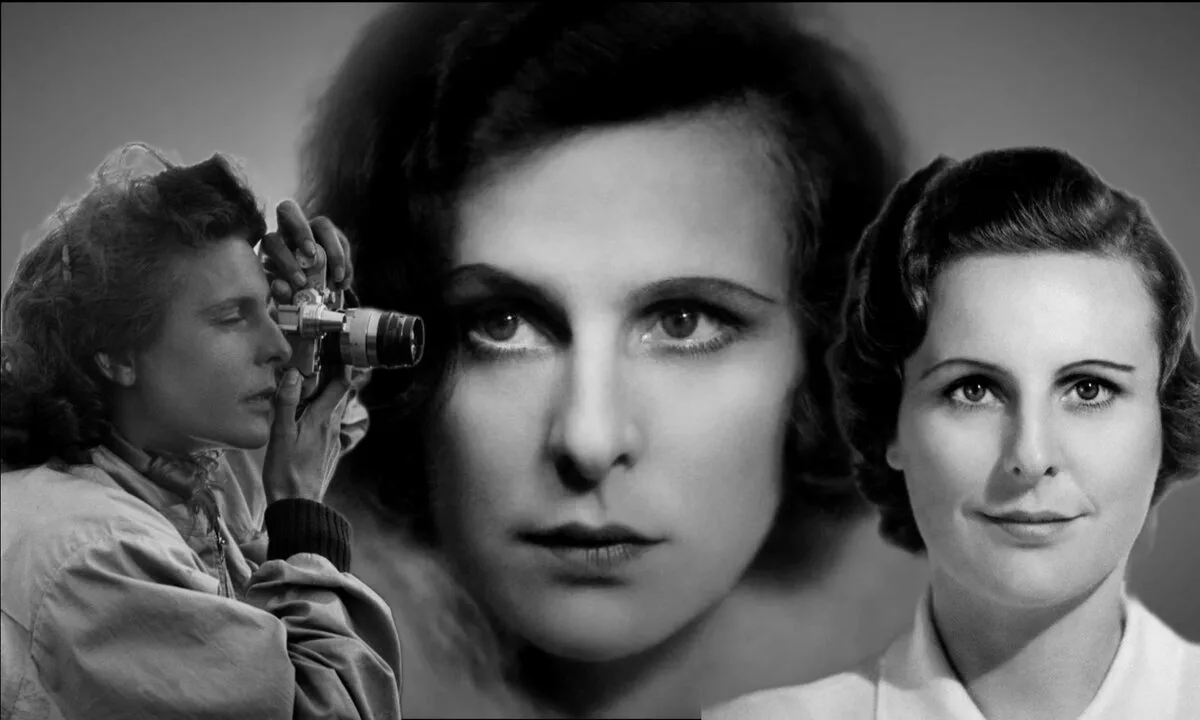
First Life: The Ballerina
Her father wanted her to go into business, but Leni secretly took dance lessons. By the time he found out, it was too late: she was already studying under Eugenia Eduardova, a former soloist with the Imperial Mariinsky Theatre—and studying in earnest.
By 1923, she was performing across Germany and Czechoslovakia—in Munich, Dresden, and Prague. Max Reinhardt, the leading German theatre director of the era, invited her to join the Deutsches Theater. Critics praised her technique, but one, Fred Hildebrandt, was blunt: she lacked the ability to convey emotion, offering only pure form and precise movement. She knew it herself. 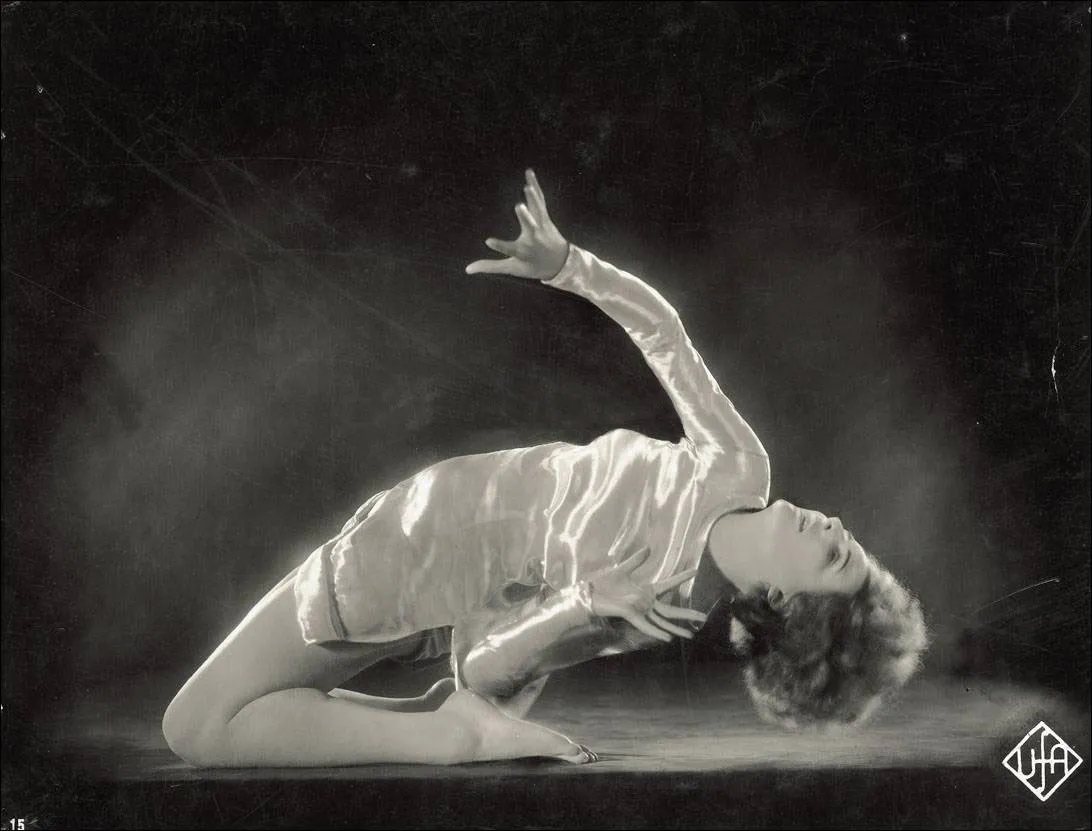
Riefenstahl during her ballet career in the early 1920s. Audiences were receptive, but critics proved far more reserved.
While on tour in Prague, a knee injury set her back. According to Riefenstahl, it brought her dancing career to an end. Historians, however, remain skeptical; records of her performing surfaced several times after this alleged career-ending injury. This discrepancy between her words and the historical record would become a recurring theme throughout her life.
Second Life: The Mountaineer
On the Berlin Underground, she spotted a poster for the film "Mountain of Destiny", directed by Arnold Fanck. She got off before her stop and headed straight to the cinema. The mountains on screen mesmerized her. She immediately began learning rock climbing and alpine skiing—not for a film role, but simply because she felt compelled to. 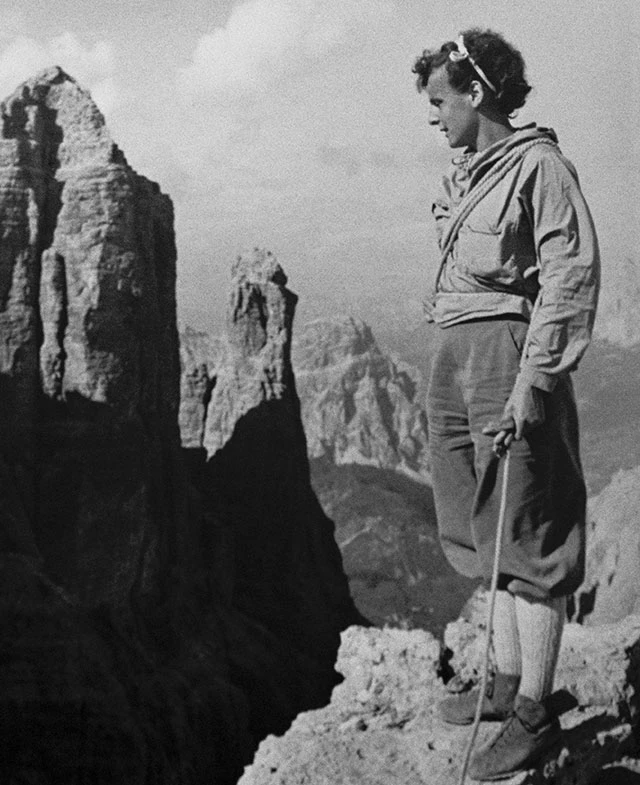
Leni Riefenstahl in the Dolomites, Italy, in 1934
Fanck shot his pictures in unforgiving conditions: real glaciers, blizzards, and iced-over cliffs. Stunts were never simulated; they were performed for real. Riefenstahl spent weeks and months in the mountains. She scaled sheer rock faces, skied through whiteouts, and shot scenes deep inside glacial crevasses. It was genuinely dangerous, and she knew it. It was here that her visual language crystallized: the beauty of physical exertion, the aesthetics of human limits, and the body as a symbol of triumph over nature.
Mountaineering was never just a stepping stone into cinema for her. The mountains became part of who she was. That physical fearlessness and ability to operate under extreme conditions would carry through into every subsequent chapter of her life. In Sudan at 60. Deep underwater at 70.
Third Life: The Actress
Fanck saw a photograph of her and wrote a role specifically with her in mind. Between 1926 and 1933, she starred in seven of his films, including "The Holy Mountain", "The Big Jump", "The White Hell of Piz Palü", "Storm over Mont Blanc", and "The White Ecstasy". Mountain cinema was a uniquely German genre at the time, complete with its own dedicated fanbase, star system, and conventions. 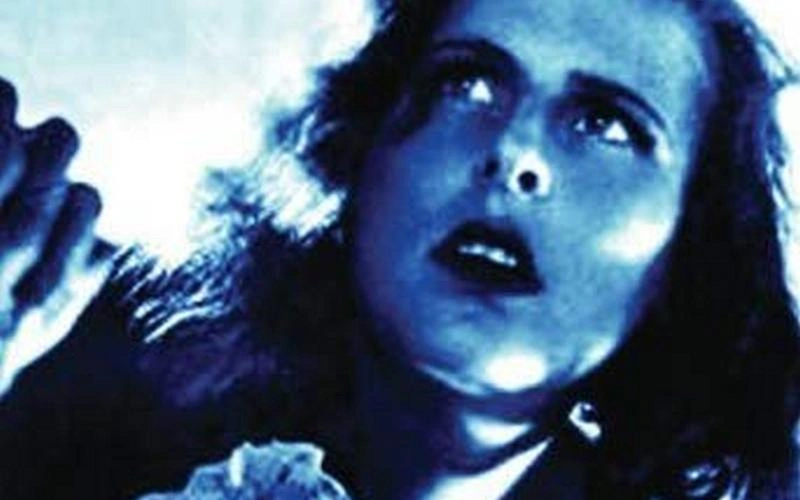
Riefenstahl in "The Blue Light" (1932). Her directorial debut won a Venice Gold Medal and marked the end of her acting career.
In 1932, she made "The Blue Light"—writing the screenplay, directing, and playing the lead role herself. The film won a Gold Medal at the Venice Film Festival. By then, she had outgrown the genre as an actress, realizing she wanted to command the camera rather than stand in front of it.
She walked away from acting on her own terms. From then on, her focus was entirely on what lay on the other side of the lens.
Fourth Life: Hitler’s Director
In May 1932, deeply impressed by his campaign speeches, she wrote a letter to Hitler. A meeting followed. "Triumph of the Will" (1934) was filmed at the NSDAP party congress in Nuremberg—a direct commission from the Führer. Riefenstahl deployed 30 camera crews, tracking dollies, aerial shots, and radical new editing techniques. The film won a Gold Medal in Venice and the Grand Prix at the Paris World's Fair. It was simultaneously a technical revolution in documentary filmmaking and one of the most powerful propaganda films in history. 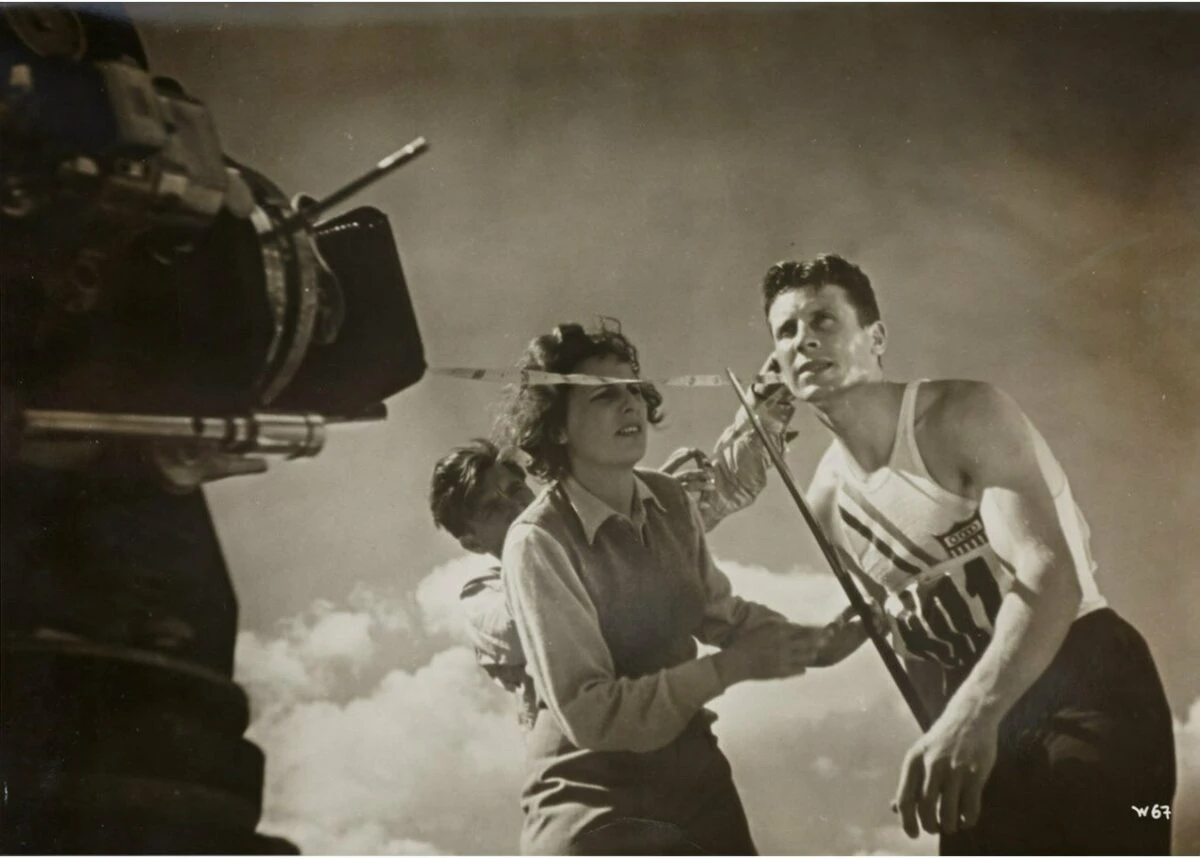
Riefenstahl behind the camera during the filming of "Olympia" in 1936. The technical innovations used in this film set the standard for sports broadcasting for decades to come.
"Olympia" (1938) documented the 1936 Berlin Olympics. To capture the high dives, she ordered pits dug beside the pool to lower the camera angles. She used slow motion to highlight the athleticism of the athletes' bodies and designed waterproof housings for underwater filming. In the final cut, Jesse Owens' victories are showcased in full glory. Hitler appears on screen only briefly—for about 15 seconds. 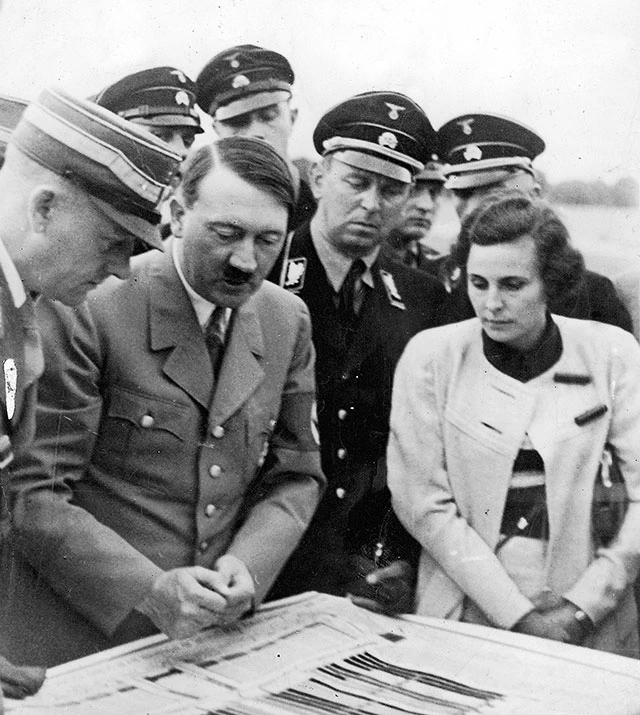
Leni Riefenstahl with Adolf Hitler in 1934
It was propaganda. She knew it. And she would spend the rest of her life denying it.
Fifth Life: The Outcast
In 1945, she was arrested by Allied forces. Four denazification proceedings followed between 1948 and 1952. Ultimately, the court classified her as a "fellow traveler" (Mitläufer)—a sympathizer of the regime, but not an active participant in its crimes. Even so, her career in mainstream cinema was effectively over.
For years, she lived in a single room in Munich with her mother, trying to finish "Tiefland" ("Lowlands"), a film project started during the war. Romani prisoners from the Maxglan concentration camp near Salzburg had been used as extras for the production. Many of them later perished in the Holocaust. To the end of her life, Riefenstahl maintained that every one of them had survived. It was untrue. 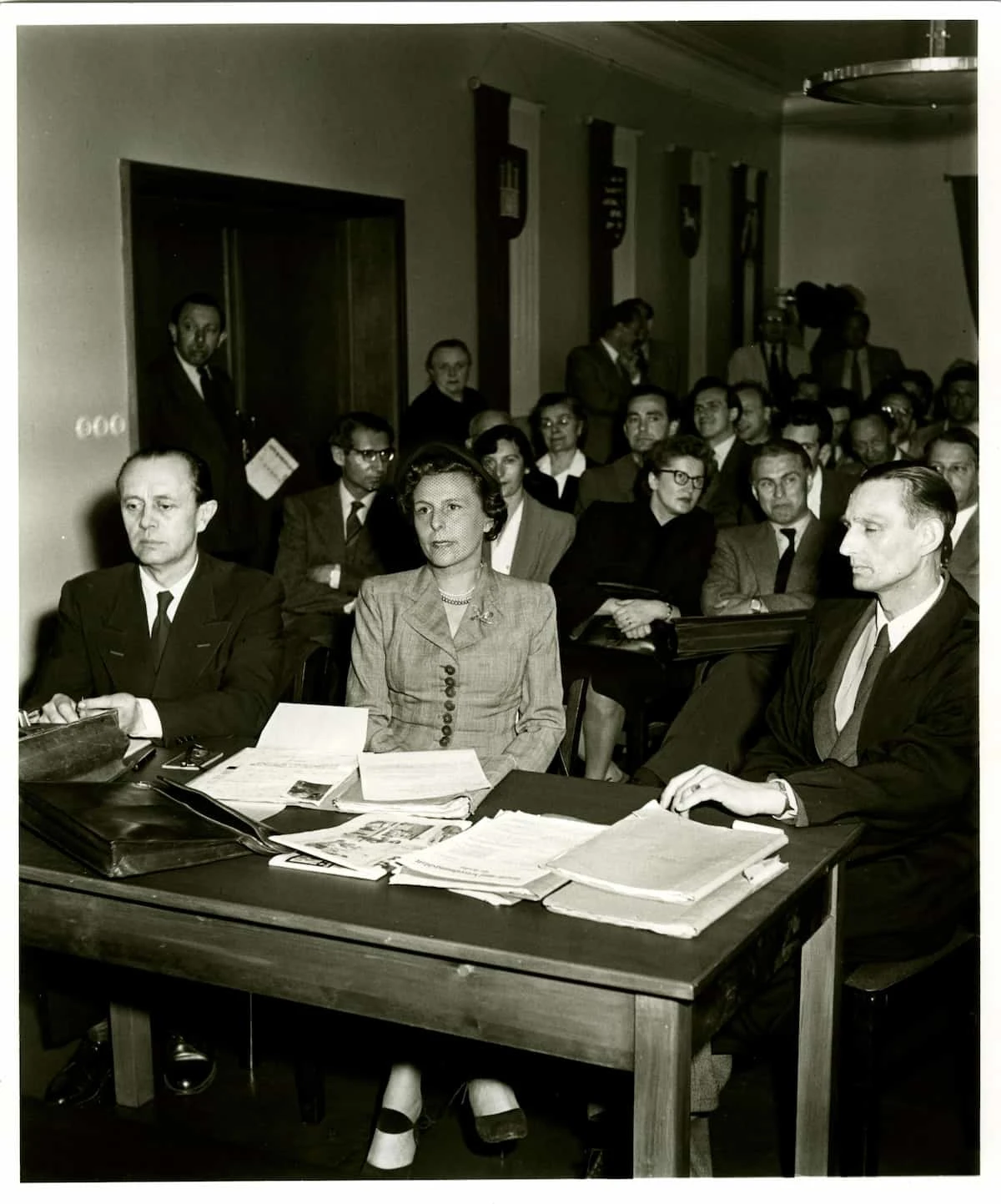
Riefenstahl in court, West Berlin, April 1952. Four trials in four years—none resulting in a criminal conviction.
In a 1948 letter, she admitted that she had realized the demonic nature of Hitler far too late, and that the fault was hers. It was her only documented admission of guilt. Decades of denial followed: lawsuits against journalists, aggressive rewriting of her own history, and endless self-justification. She filed nearly 50 lawsuits against her critics—and won many of them.
Sixth Life: Photographer of the Nuba
In her early sixties, she came across a photograph by British photographer George Rodger: a Nuba wrestler carrying a fellow tribesman on his shoulders. The image haunted her. Driven to find them, she spent years trying to reach the tribe. The Kordofan province of Sudan was absent from tourist maps, and officials in Khartoum knew very little about it.
Once there, Riefenstahl lived alongside the Nuba for months at a time, learning their language and photographing their bodies, rituals, wrestling matches, and daily life. Her work resulted in the 1973 photobook "The Last of the Nuba", followed by "The Nuba of Kau" in 1976. Her photo essays were featured prominently in Stern, The Sunday Times, and Paris Match. In recognition of her work, the Sudanese government granted her honorary citizenship. 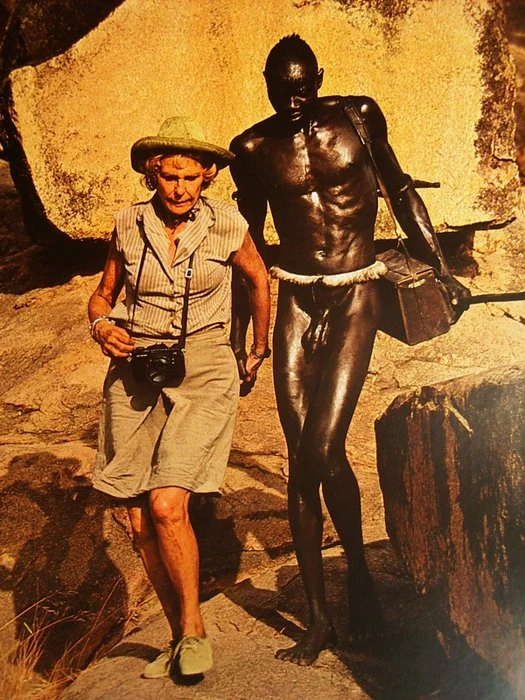
Riefenstahl in Kordofan Province, Sudan. She lived alongside the tribe for months and learned their language.
Her critics were far from silent. In 1975, Susan Sontag published a landmark essay drawing a direct line from the mountain films to "Triumph of the Will" and on to the Nuba photographs. Sontag argued that a singular aesthetic ran through all of them: a cult of physical perfection, power, victory, and a contempt for weakness. She called it "fascist aesthetics"—and the label stuck.
Seventh Life: The Scuba Diver
At age 70, she tried snorkeling for the first time in the Indian Ocean. At 71, wanting to get certified as a scuba diver, she lied about her age to the instructor, claiming she was 51. She looked the part, passed the test, and got her license.
Over the next three decades, she logged well over a thousand dives across the Maldives, Indonesia, the Red Sea, and the Caribbean. She released two major photobooks: "Coral Gardens" (1978) and "Wonders Under Water". At 97, she survived a helicopter crash in Sudan when the aircraft plummeted 50 feet to the ground. After a few months of recovery, she was back behind the camera. 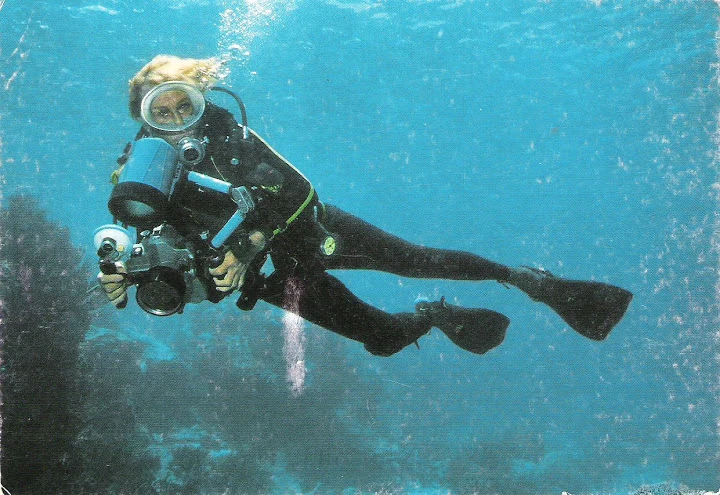
Riefenstahl underwater. Her first dive was at age 71; her last came just months before her 100th birthday.
On August 22, 2002, her 100th birthday, she released the documentary "Underwater Impressions"—editing three decades of deep-sea footage into a 45-minute film. It was her first film release in nearly half a century. On September 8, 2003, Leni Riefenstahl passed away at her home in Pöcking.
An Open Question
How do we reckon with someone who was both a cinematic pioneer and the chief propagandist of the Third Reich? In 2024, director Andres Veiel released the documentary "Riefenstahl", gaining unprecedented access to her personal archive—including recorded phone calls, personal letters, and unpublished materials. Winning acclaim at the Venice Film Festival, the documentary makes a compelling case: Riefenstahl knew far more about the regime's atrocities than she ever admitted. Her own life story was as carefully directed as any film she ever made. 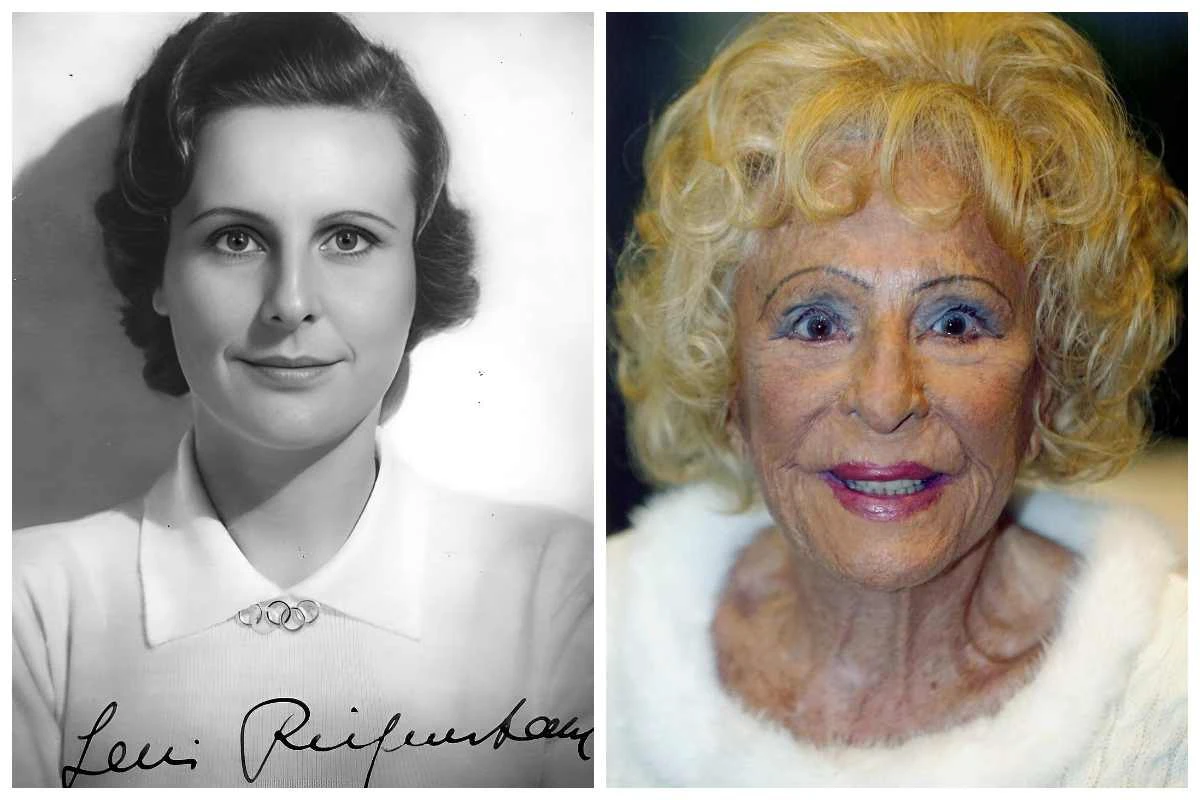
Leni Riefenstahl in 1936, at the height of her career, and in 2003, shortly before her death at age 101. One woman, two portraits, and nearly seven decades of debate over who she truly was.
The technical breakthroughs of "Olympia"—tracking dollies, slow-motion sequences, underwater housing, and low-angle camera pits—became the foundation of modern sports broadcasting. Her editing techniques are still studied in film schools today. Yet her name remains irrevocably tied to a regime responsible for unimaginable atrocities.
She would have preferred people to stop asking the question altogether. But it lingers still.
How do we view a person who was simultaneously an artistic genius and an accomplice to evil? More than twenty years after her death, there is still no simple answer.
The story of Sophie Scholl, the brave young woman executed by guillotine by the Nazis
The 20 most influential female photographers of the past century
Adolf Hitler the painter: an undiscovered genius or a mediocrity?