What’s Inside a Rubber Duck, Zippo Lighter, and Termite Mound: 30 Cross-Section Photos (23 Photos)
We use hundreds of everyday items without ever giving a thought to what lies beneath the surface—the classic yellow rubber duck in your bathtub, the Zippo lighter in your pocket, or the cactus on your windowsill. Cutting them open reveals a completely different reality: sometimes beautiful, sometimes alarming, and sometimes just plain surprising. Here are 30 objects that turned out to be completely different on the inside than they appeared on the outside. 
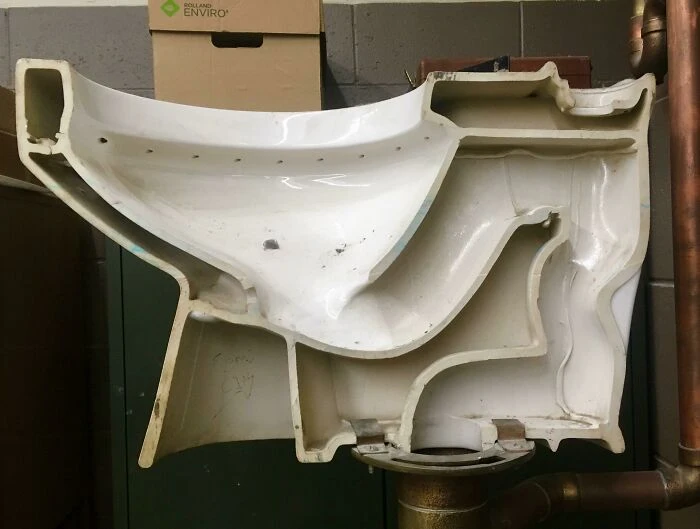
A cross-section of a porcelain toilet from a training lab, showing the internal S-trap that seals out sewer gases. 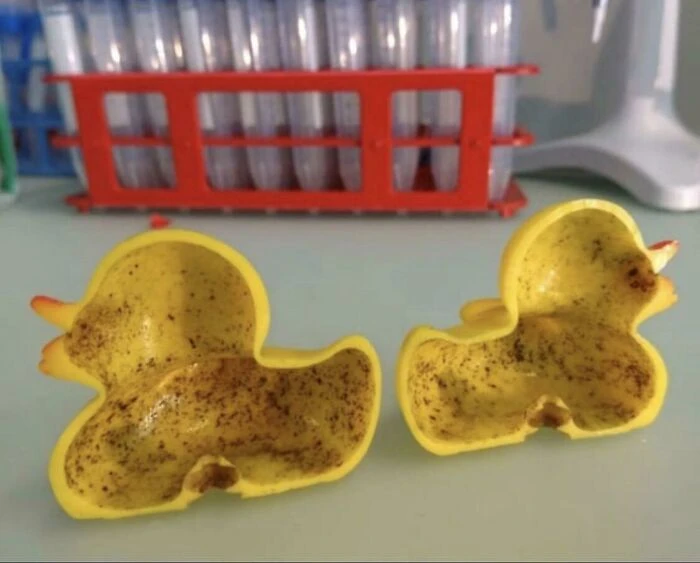
A rubber duck cut open: research shows that stagnant bathwater turns these bath toys into breeding grounds for fungi and bacteria. When was the last time you cleaned yours? 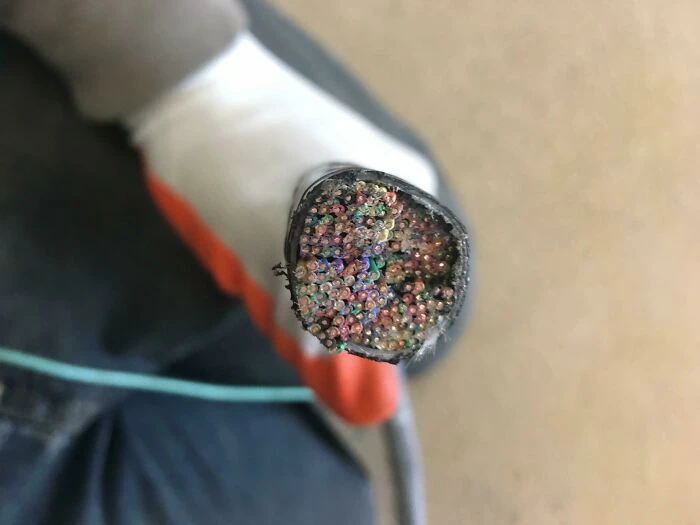
A 100-pair telephone cable: inside are 200 color-coded wires, each serving a dedicated line. 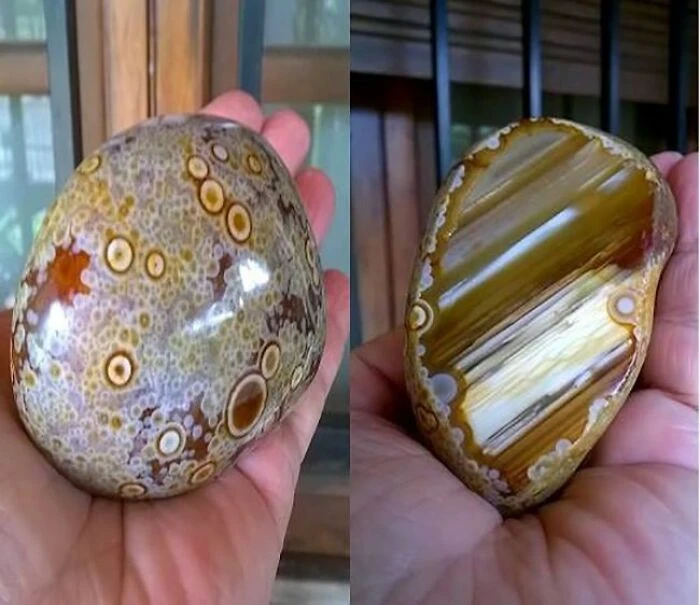
A geode cut open: a plain gray rock on the outside, a dazzling mineral spectacle on the inside. 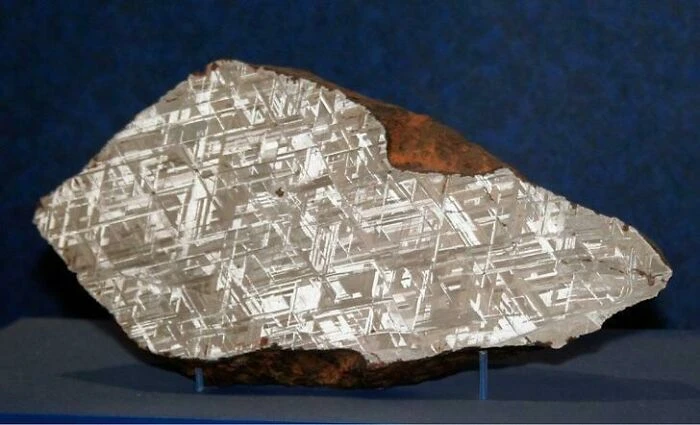
The Alvord meteorite, discovered on an Iowa farm in 1976. Classified as an iron octahedrite, it weighs 17.5 kg and measures roughly 46 cm across. 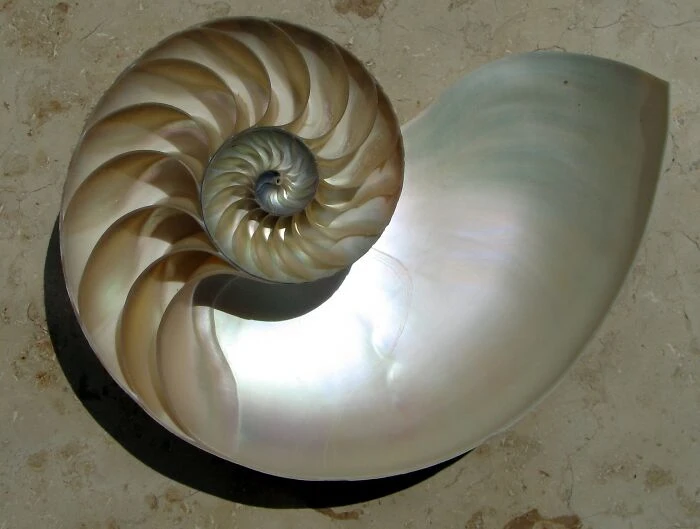
A nautilus shell sliced in half: its internal chambers follow a logarithmic spiral—one of nature's most perfect geometric designs. 
A Range Rover cut in half, offering a single, striking look at its body structure, interior layout, and mechanical engineering. 
A rock formation in New Zealand split straight down the middle by natural geological forces. Seabirds now nest on both halves. 
A diagram of a medieval castle privy: a long chute led straight down to the moat or a pit outside the castle wall—no plumbing required, just gravity. 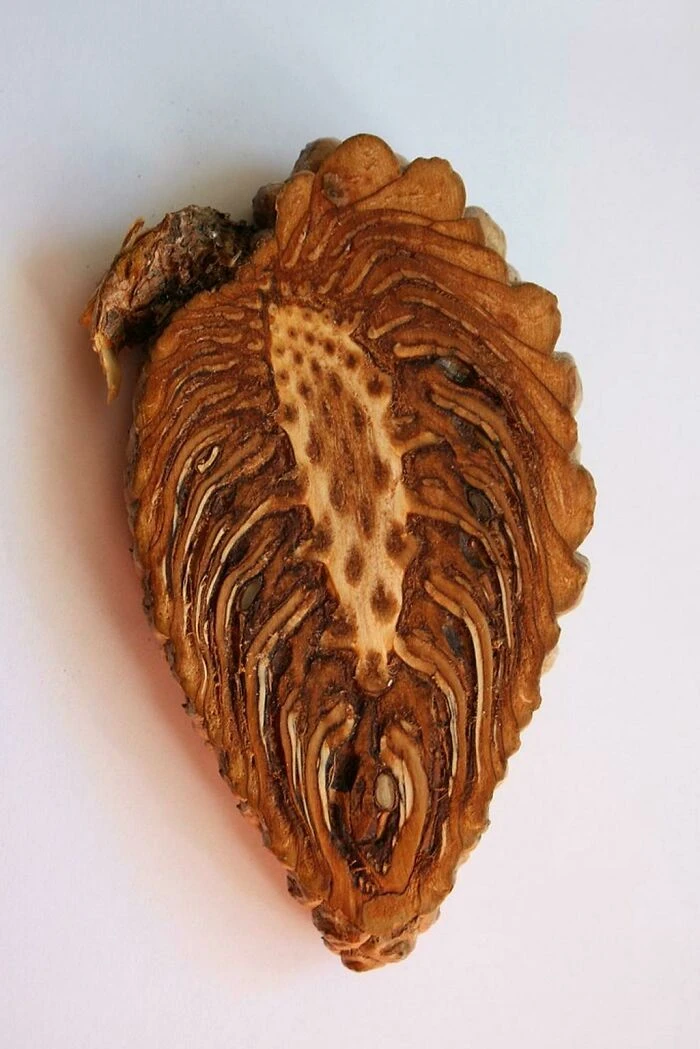
A cross-section of a pinecone: its scales follow the exact same Fibonacci spiral seen in sunflower seeds. 
A sunflower head cut open: its seeds are arranged in a intricate double spiral, with larger varieties packing up to 2,000 seeds into a single flower. 
A Zippo lighter cross-section: flint, wheel, wick, and fuel-soaked cotton—unaltered simplicity since 1932. 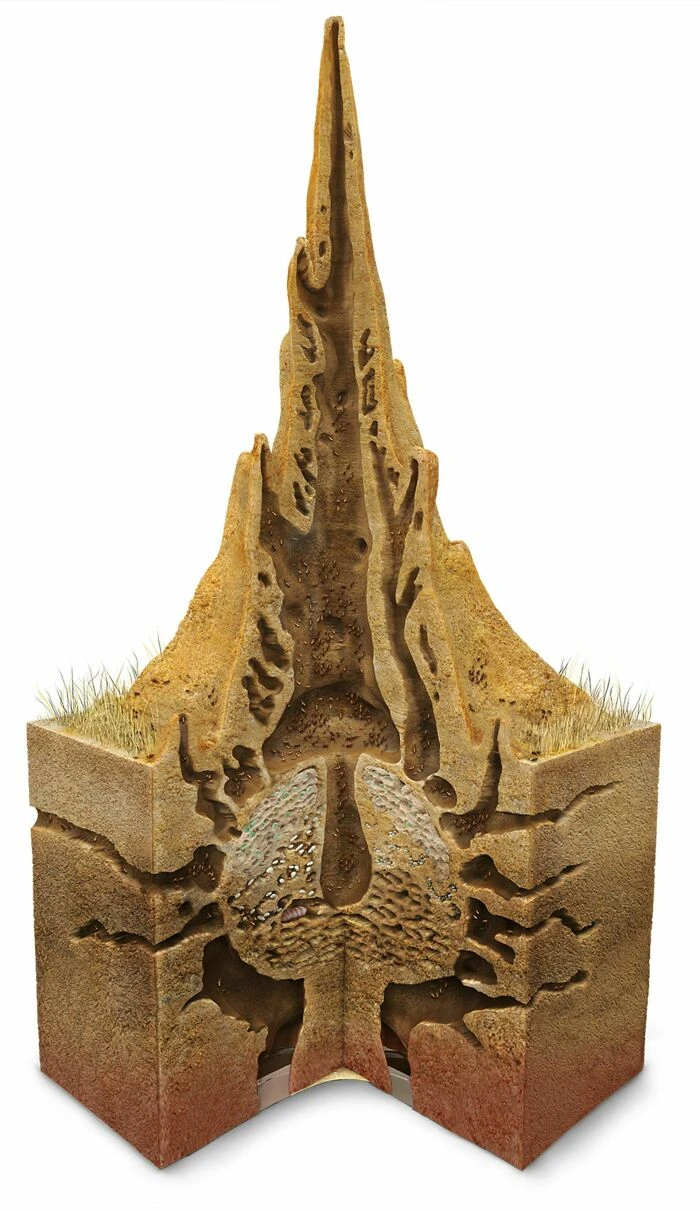
A cross-section of a termite mound: a complex network of internal shafts provides ventilation, keeping temperatures inside at a steady 30 °C (86 °F). 
A pin tumbler lock sliced open with a key inserted: the pins lift precisely to the shear line, allowing the cylinder to turn freely. 
A Silversea cruise ship cut in half to insert a new 15-meter (49-foot) midsection. The ambitious retrofitting project cost $100 million and required over 450,000 man-hours. 
Sedimentary rock layers: every colored band represents thousands of years of Earth's history compressed into mere inches. 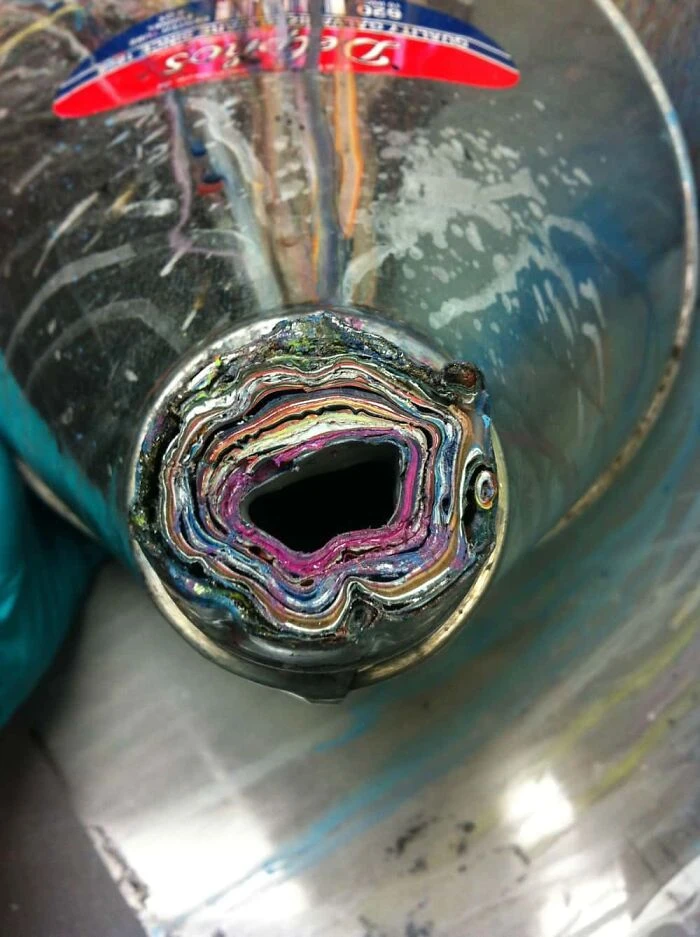
A workshop paint drain: decades of colorful liquid runoff built up inside the pipe, creating accidental abstract art. 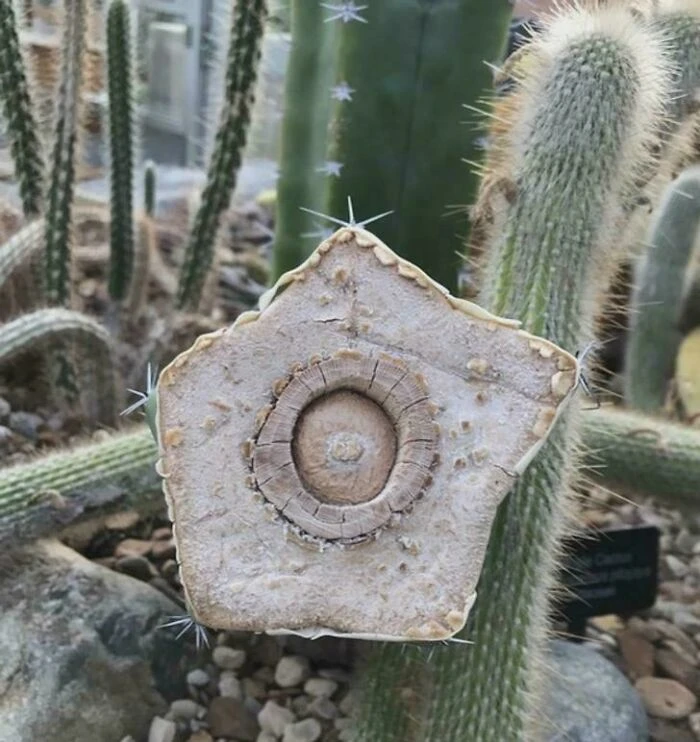
A cactus cut open: it's not liquid water inside, but a porous, fibrous plant tissue that holds moisture like a sponge. 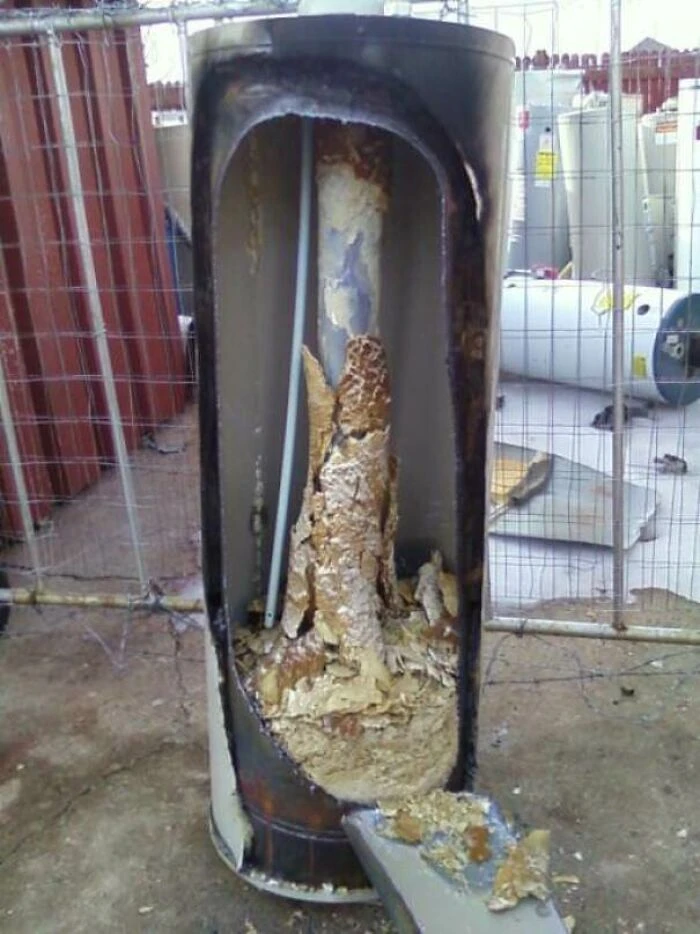
A water heater tank from a home with hard water: heavy limescale buildup on the walls leads to soaring energy bills and frequent equipment failure. 
A 3.5 mm headphone jack sliced open: three or four internal contacts route the left channel, right channel, and ground wire. 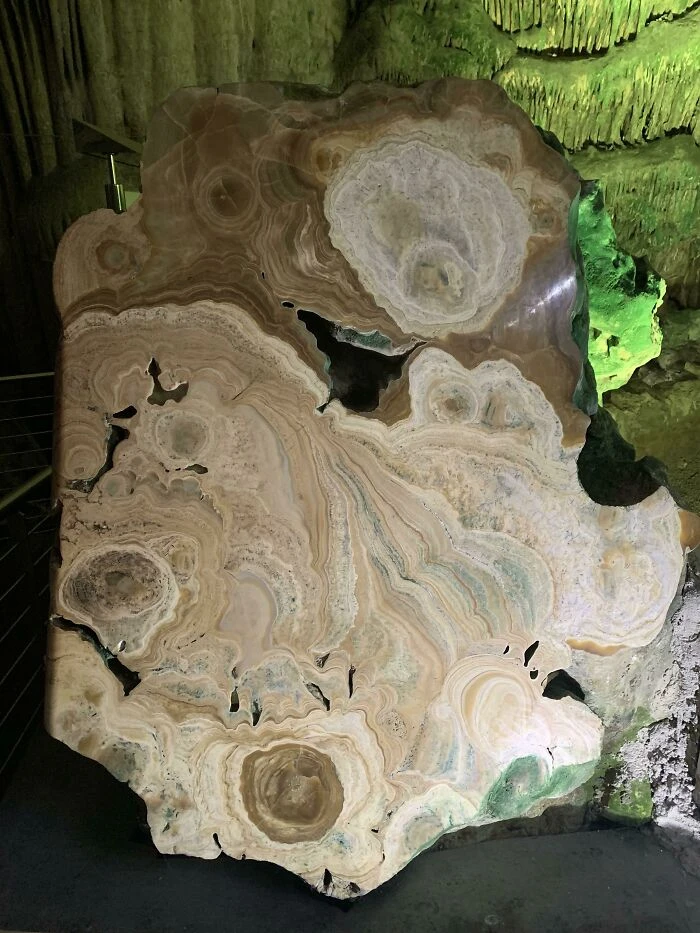
A stalactite cut in half: concentric growth rings reveal its age, where a single millimeter of growth can take anywhere from a few years to several centuries. 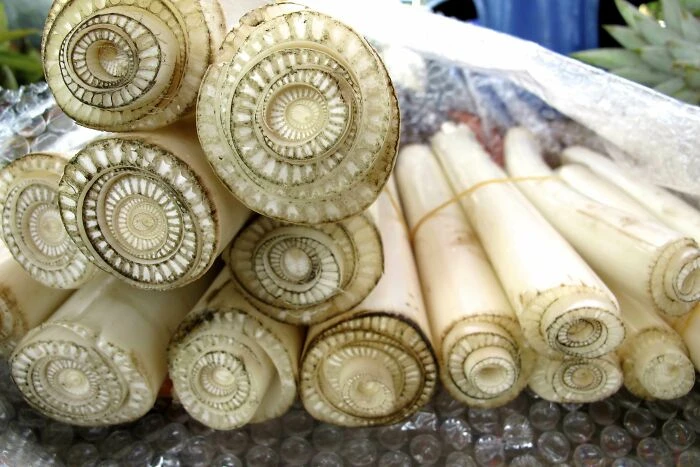
A cross-section of banana trunks: what looks like a tree trunk is actually a tightly wrapped stem of overlapping leaf sheaths—there is no true wood.