The Cagots: Western Europe's Mysterious Caste of Untouchables (8 photos)
Caste systems have existed in Asia for thousands of years. From India and Afghanistan to Pakistan, China, and Japan, societies had their own untouchables—some of which persist to this day. Completely disenfranchised, shunned, and unable to escape their social standing, these pariahs seemed unique to the East. Yet medieval Europe had its own caste of outcasts: the Cagots. 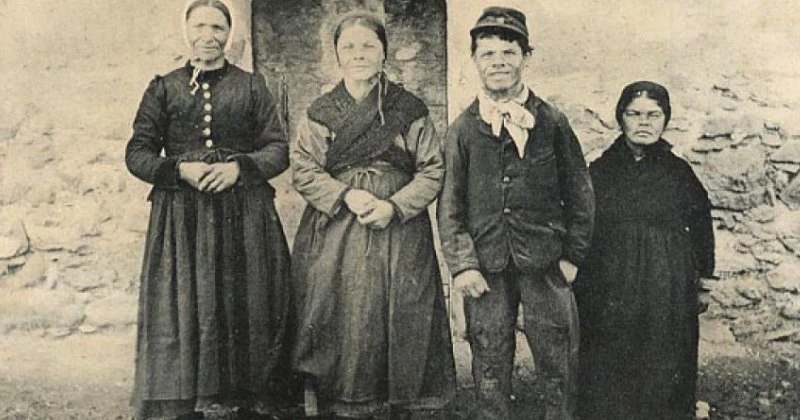
No one knows how the Cagots first appeared in western France and the Pyrenees, nor is there a definitive explanation for the origin of their name. They first appear in written records in the 11th century, already living as untouchables in isolated communities. 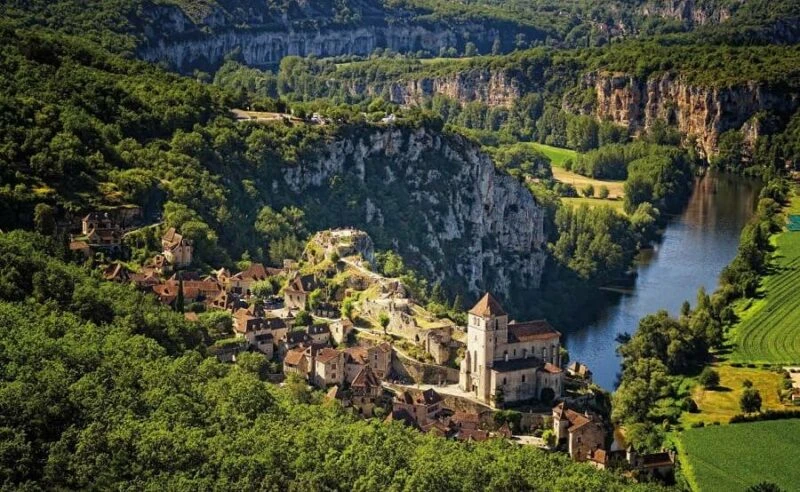
A village in the Pyrenees
Some historical records describe the Cagots as short and stocky, with dark, curly hair. Others claim the opposite—that they were tall, blue-eyed, and fair-haired. Yet almost all sources agree on one distinct physical trait: they had rounded ears without earlobes.
What Was Forbidden to the Cagots
The Cagots lived in complete isolation, forced to settle outside towns and villages. Their communities were relegated to swamps, steep hillsides, and ravines—land unfit for farming or ordinary living. Stripped of basic rights, they were denied everyday freedoms that standard French citizens took for granted.
Intermarriage outside their community was strictly forbidden. They could not share meals, bathe alongside, or even befriend ordinary townspeople. Untouchables were banned from touching stair handrails or bridge parapets. Even in death they were segregated, buried in separate cemeteries far from churches and chapels. 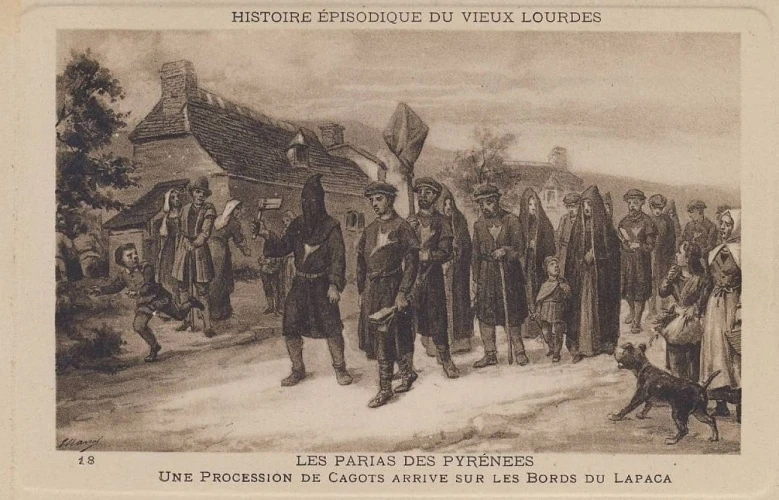
A Cagot procession passing through a village. Vintage engraving
How They Were Set Apart
When walking through town streets, the Cagots were required to carry wooden rattles to warn others of their approach—much like the lepers of medieval Europe, with whom they were frequently conflated. Touching a Cagot was believed to transmit leprosy or even the plague.
The Cagots were also scapegoated for every conceivable crime and sin, from kidnapping children and practicing witchcraft to treason and cannibalism. Modern archaeologists have examined remains from Cagot graves to determine if any physical anomalies existed, but found nothing unusual. Instances of leprosy or plague were no higher among them than in the general population, and they possessed no distinct bodily deformities. 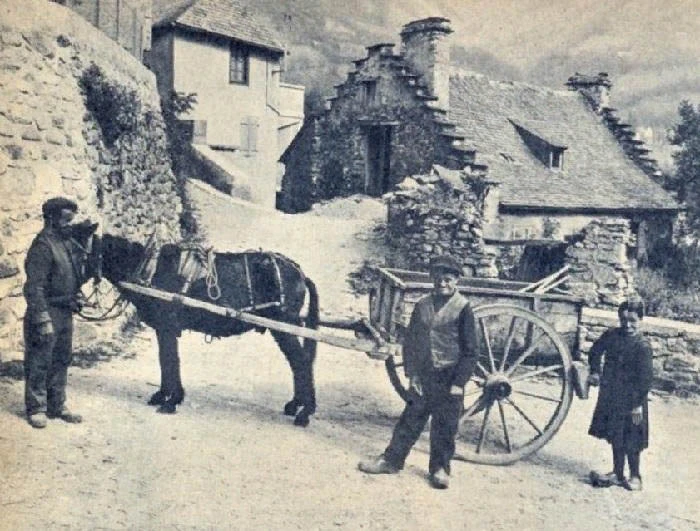
In reality, the Cagots looked no different from any other townspeople or villagers. This is evidenced by the fact that authorities forced them to sew a red bird’s foot onto their clothing to make them identifiable. Footwear was another mandated marker: even the poorest outcasts were legally required to wear shoes at all times and were never seen barefoot. This requirement fueled popular myths that they possessed webbed, clawed feet instead of human toes.
How They Made a Living
The choice of professions open to these European pariahs was severely restricted. Cagots were permitted to work only in trades associated with wood or death. They served as woodcutters, builders, coffin makers, gravediggers, and executioners. Carpentry was so common among them that seeing "carpenter" listed next to a name in historical registries almost guaranteed the individual was a Cagot.
Despite widespread prejudice, Cagots were entrusted with constructing wooden churches, eventually becoming master craftsmen. Yet their access to worship was heavily restricted. Churches featured a separate, exceptionally low entrance at the rear, often carved with the label "Cagot." 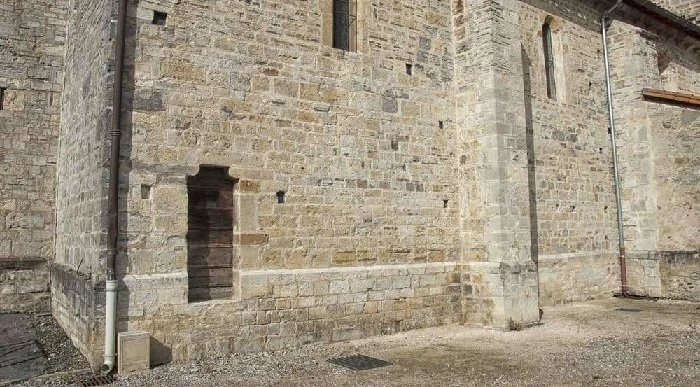
A doorway on the rear facade of a church in the Pyrenees
During services, outcasts were seated behind a wooden partition, segregated from other parishioners. Priests administered Holy Communion to them using a spoon attached to a long wooden pole. They even had dedicated holy water fonts; if an outcast dared to dip a hand into the main font, they risked having their hand chopped off as punishment.
The Cagots in Literature and Architecture
By the 15th century, the Cagots had become renowned master woodworkers, essentially forming their own carpentry guild. In addition to building churches, they crafted furniture, carts, agricultural tools, wine barrels, and water tubs.
The Cagots also left their mark in medieval literature. In *Gargantua and Pantagruel*, François Rabelais notes that an inscription on the wall of the Abbey of Thélème barred entry to "hypocrites, bigots, and Cagots." Though all legal restrictions against them were officially abolished during the French Revolution, societal prejudice and persecution persisted long after. 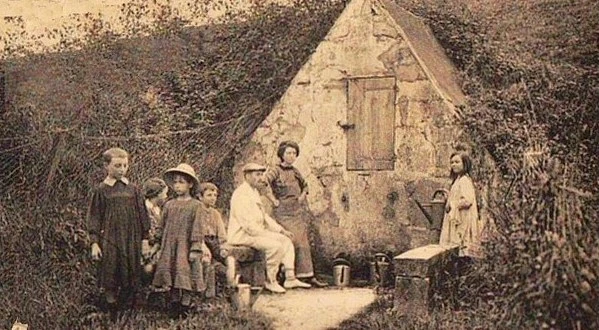
During the chaos of the Revolution, many Cagots took advantage of the unrest to storm local archives and destroy baptismal and genealogy records that proved their origins. This enabled numerous families to break free from their outcast status, assimilate into French society, and live normal lives.
Yet the story of Europe’s pariahs did not end there. In 1847, French historian and writer Francisque Michel made a surprising discovery while researching his book *History of Accursed Races*. He found that over 10,000 Cagots were still living as shunned outcasts in the villages of Gascony and Navarre. 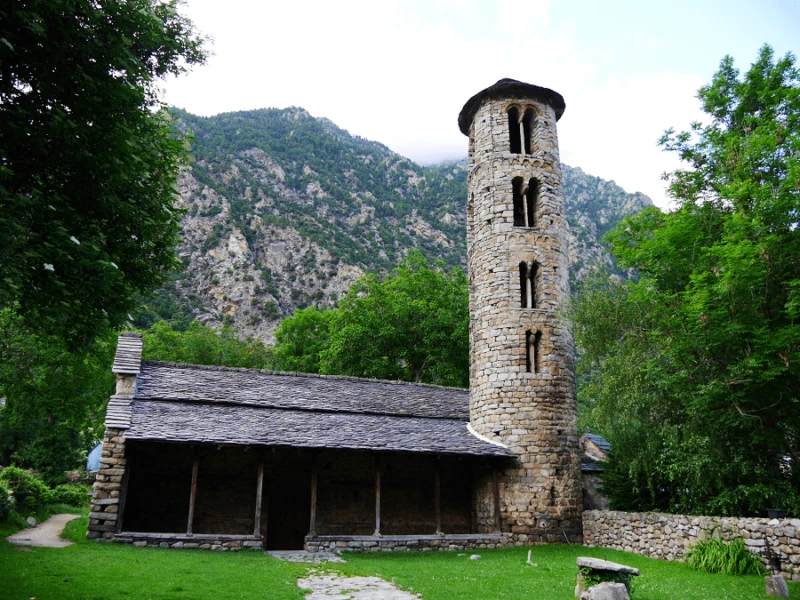
A church in the Pyrenees
Echoes of this discrimination persist today. In modern French, the word *cagot* remains a derogatory insult meaning "bigot" or "hypocrite." Meanwhile, more than 60 churches across the Pyrenees still feature separate entrances bearing the historic "Cagot" label. While no one is forced to use them today, local authorities have been slow to remove these shameful historical markers.
Etymology of the Name "Cagot"
As noted earlier, the origins of these people and their name remain shrouded in mystery, with several unproven theories. Some scholars suggest *cagot* derives from *canis gothus* ("Gothic dog"), implying they were descendants of the Visigoths.
Others argue the name stems from the Occitan slur *cago* ("shit") or the Spanish word *cafo* ("leper"). Another theory proposes that the Cagots were descendants of Moorish soldiers who remained in France and Spain following the 8th-century Muslim invasions. Plenty of outlandish, unfounded theories exist as well.
Proud of Their Heritage
A more recent theory was proposed by British author Graham Robb in his book *The Discovery of France*. Robb suggests the Cagots were originally a guild of medieval woodworkers who achieved extraordinary craftsmanship. The prejudice against them, he argues, gradually developed out of pure professional jealousy and slander from less successful competitors. 
Marie-Pierre Manet-Bozac
Remarkably, at least one person today embraces her Cagot identity with pride. Frenchwoman Marie-Pierre Manet-Bozac, who believes her lineage traces back to an 8th-century Moorish soldier, refers to herself as "the world's last Cagot." Everything surrounding the Cagots remains shrouded in mystery and superstition. Today, only one institution in the world is dedicated to their history: the Museum of the Cagots, housed in the 9th-century Château des Nestes in the Hautes-Pyrénées.