Why You Can’t Print a Banknote’s Watermark: It Exists Before the Note Itself (7 Photos)
Hold a banknote up to the light. In an almost blank section of the paper, a portrait or a building will emerge—complete with delicate shadows and smooth gradients. 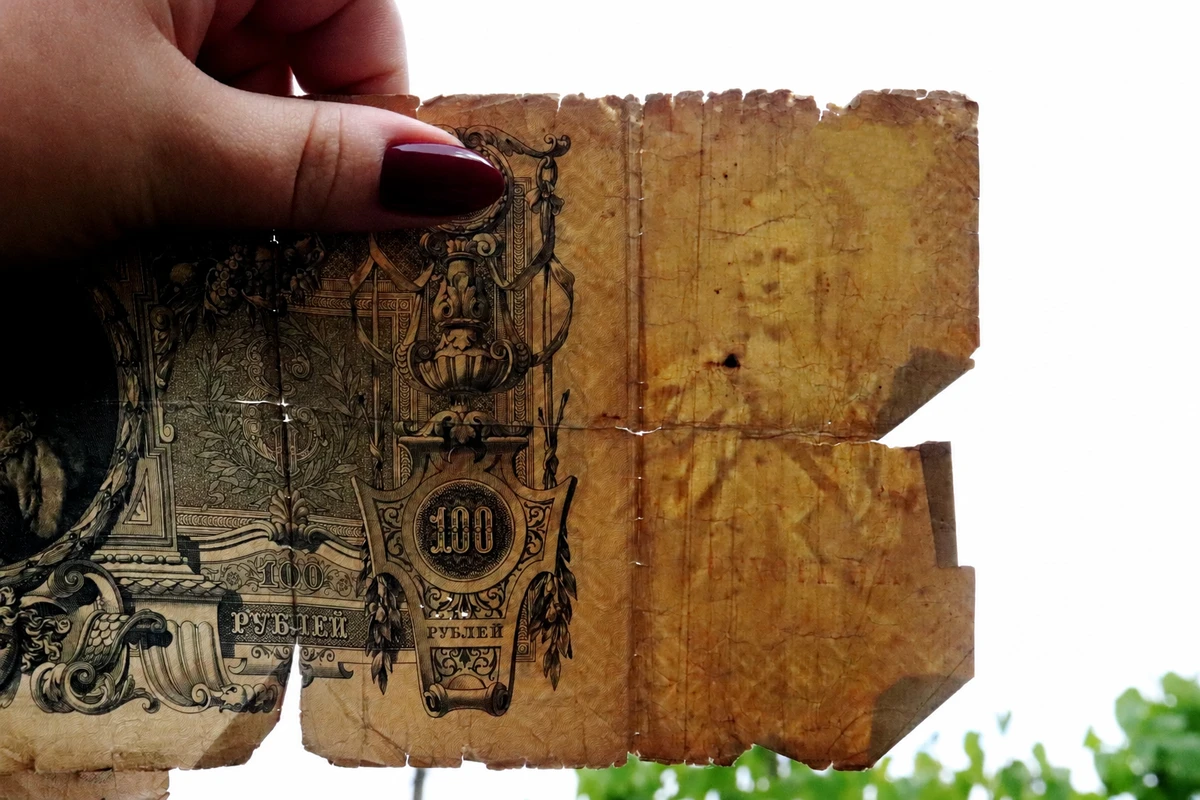
That portrait isn't printed with ink.
It was born before a single drop of color ever touched the paper—back when the cotton fibers were still floating in water, just beginning to form a sheet.
A standard printer can easily duplicate the surface artwork of a bill. What it can't replicate is the story of how that paper came to be.
How a Portrait Is Hidden Inside Paper 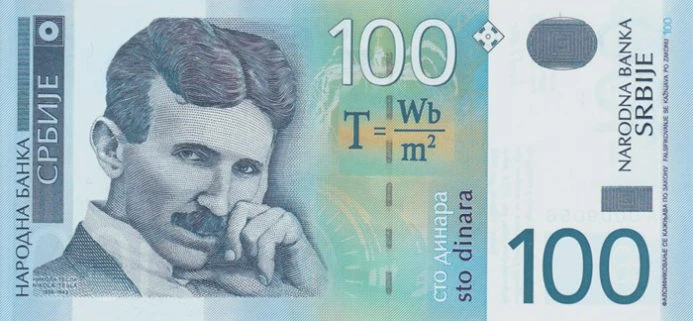
Serbian currency featuring Nikola Tesla
Watermarks aren't printed with ink. Instead, they are created by varying the density of the paper itself: where the fibers are sparse, light passes through easily and the area looks bright; where they are dense, it appears dark. Imagine holding several layers of cheesecloth up to a lamp: the more layers you add, the darker it gets. On a banknote, however, these transitions are seamlessly smooth, producing a realistic, three-dimensional image.
The watermark is formed while the paper is still a watery pulp of cotton fibers. A cylinder embossed with a metal relief of the design rolls over the liquid mixture, shifting the fibers around—thinning them out in some spots and pressing them closer together in others. That is how the portrait becomes embedded directly inside the sheet. 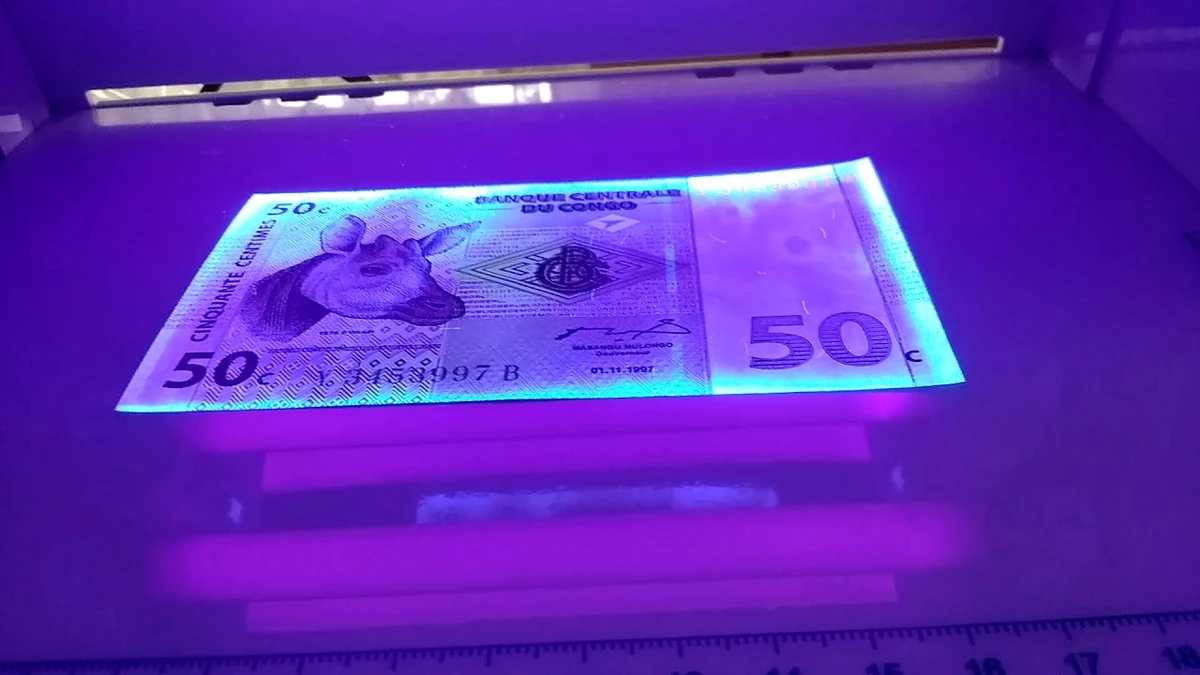
The paper is then pressed and dried. Once that happens, the watermark can never be erased or removed; destroying the mark would mean destroying the paper itself. 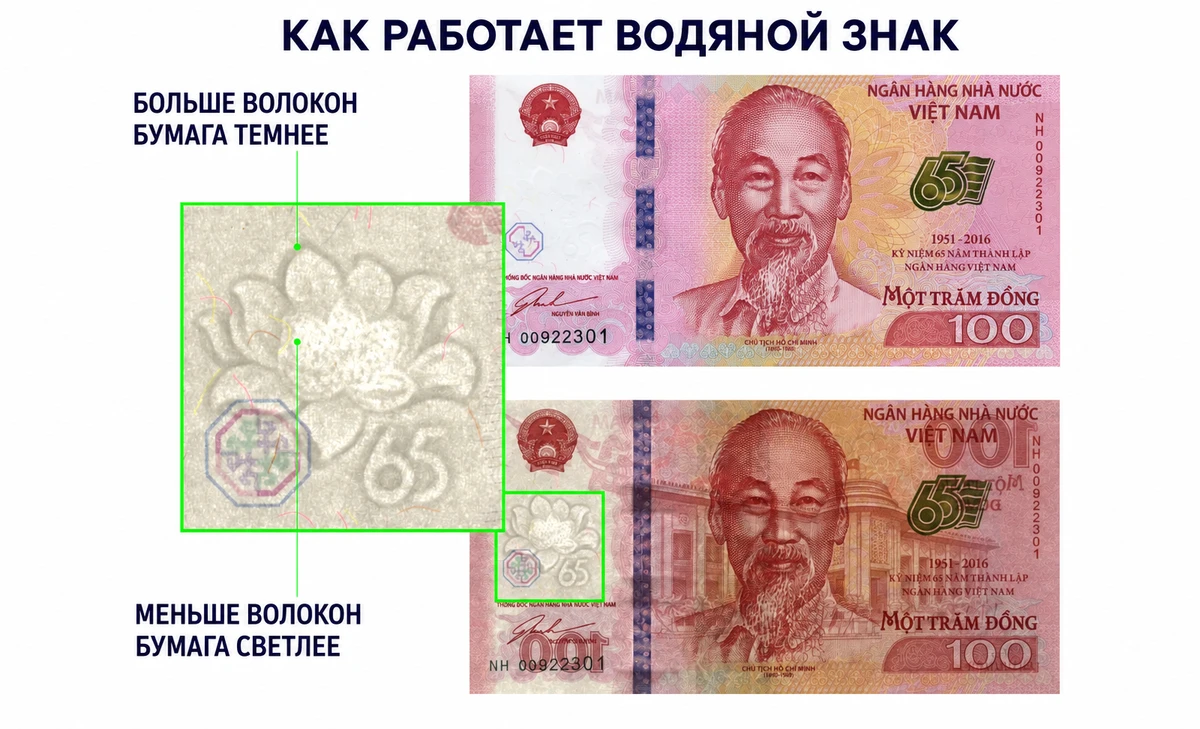
Which begs the question: who first thought of hiding images inside paper?
The earliest European watermarks appeared in the 13th century, created by Italian papermakers in Fabriano. Originally, they were simply maker's marks—much like a modern brand logo. Today, historians use these vintage watermarks to determine where historical paper was made and trace the origins of ancient manuscripts, drawings, and engravings.
It wasn't until the 19th century that watermarks were adopted as a security feature against counterfeiters. 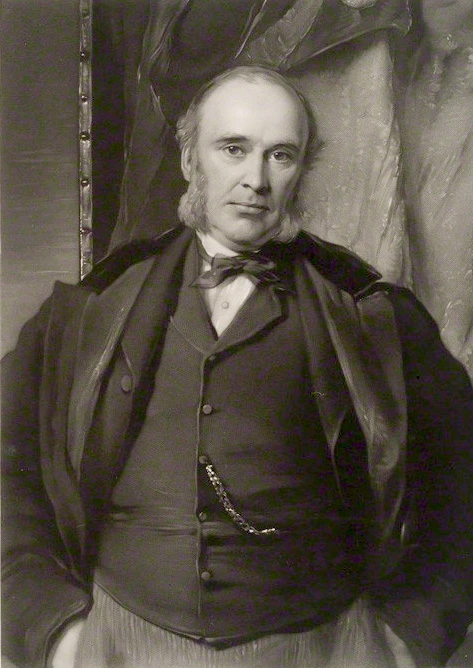
William Henry Smith
In 1848, an Englishman named William Henry Smith devised a technique for creating intricate 3D reliefs on papermaking molds. This allowed for complex portraits with delicate shading transitions embedded straight into the paper—making them far harder to forge than a simple outline.
Why You Can’t Just Print a Watermark 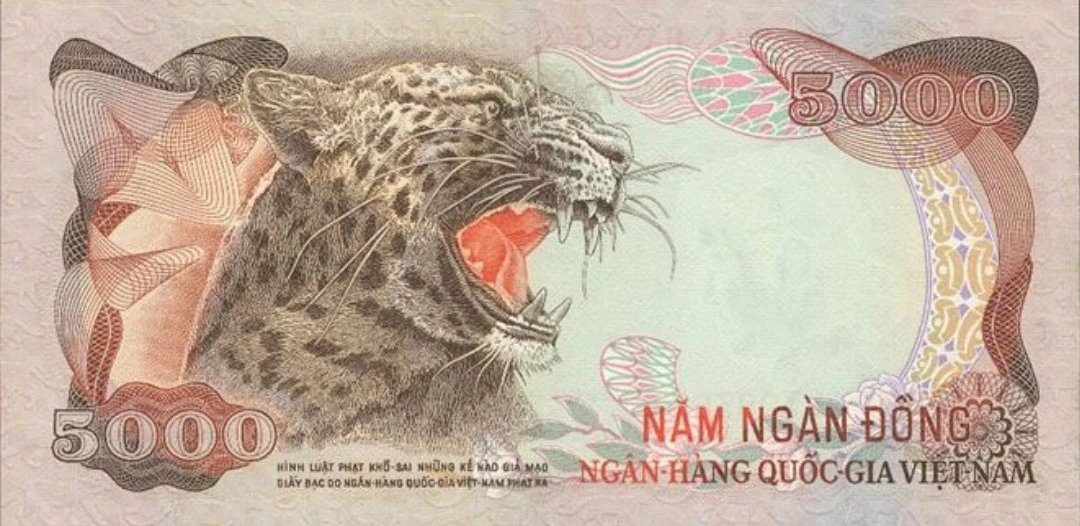
Vietnamese banknote
Copying the visual appearance of a watermark is easy enough—you can simply backlight a bill and snap a photograph. But the secret to its security lies in the structure of the paper, not the image itself. A printer merely lays ink on the surface, whereas a real watermark lives deep inside the sheet.
A printed gray image might look convincing in a photo. But hold the forgery up to the light, and the illusion instantly falls apart because the underlying paper thickness is completely uniform. It's like the difference between a photograph of a relief sculpture and the sculpture itself: they may look similar, but they are built entirely differently. 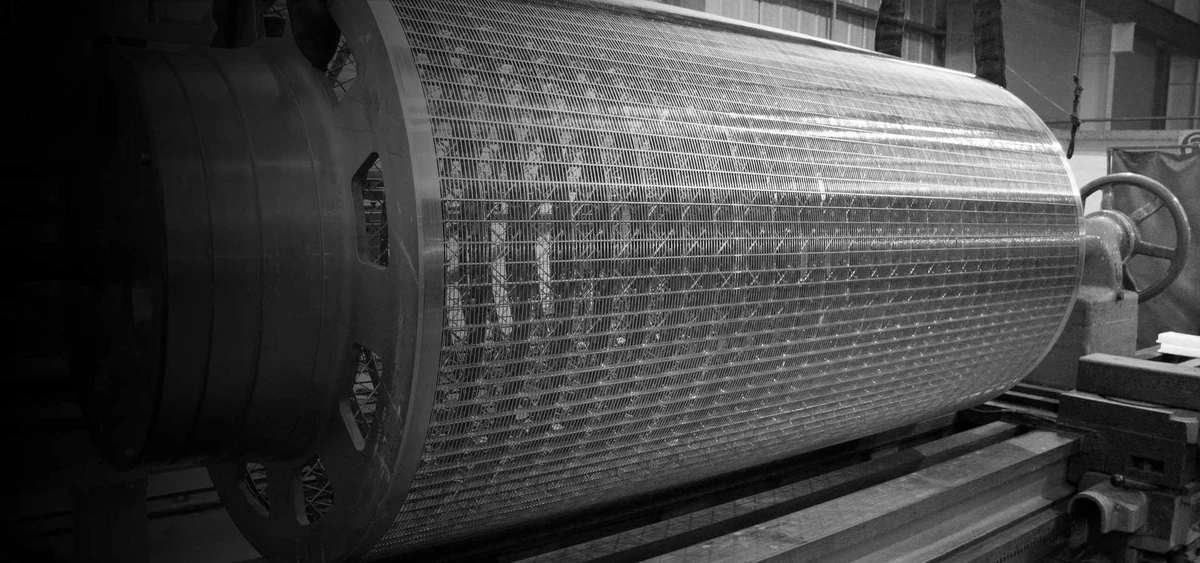
To recreate a genuine watermark, buying a high-end printer won't cut it. You would need to craft your own custom mold, prepare a cotton-fiber pulp, and form the image while the sheet is still wet—all while ensuring the image doesn't blur or shift during pressing and drying.
Polish engineer Czesław Bojarski came remarkably close. In the 1950s and 60s, he built a miniature paper mill in the basement of a house outside Paris and produced remarkably high-quality counterfeit 100-franc notes. For years, his bills passed as genuine, though his watermarks were ultimately slightly larger and blurrier than the originals. In 1964, Bojarski was arrested and sentenced to twenty years in prison.
On modern banknotes, the watermark often consists of two parts: an intricate portrait or architectural structure alongside a translucent, high-contrast denomination figure.