15 Rare Photos of the Shah of Iran and His Harem of Nearly 100 Women (15 photos)
To the Western mind, a harem is often imagined as a mythical sanctuary filled with young, alluring beauties straight out of "One Thousand and One Nights." However, intriguing historical photographs of the harem of Naser al-Din Shah Qajar, who ruled Iran in the late 19th century, shatter those long-held stereotypes. Take a look inside the royal quarters and see the women of the Iranian ruler's harem for yourself.
Naser al-Din Shah Qajar was the fourth Shah of Qajar Iran, ascending the throne in 1848 and ruling for 47 years. His reign became the longest in Iran's 3,000-year history. 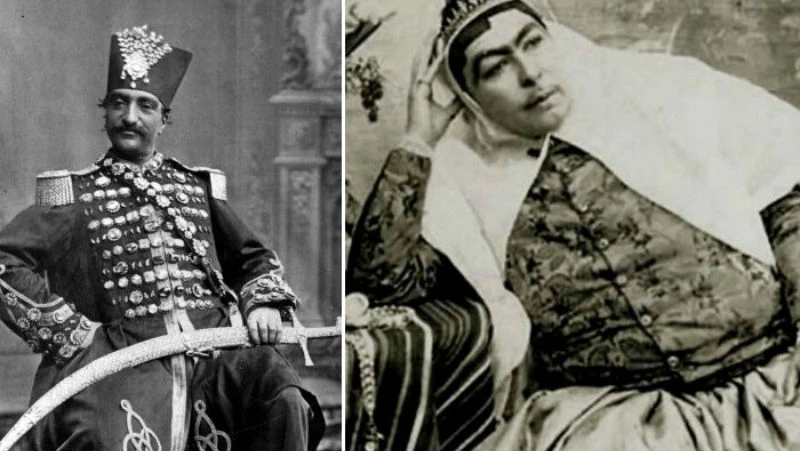
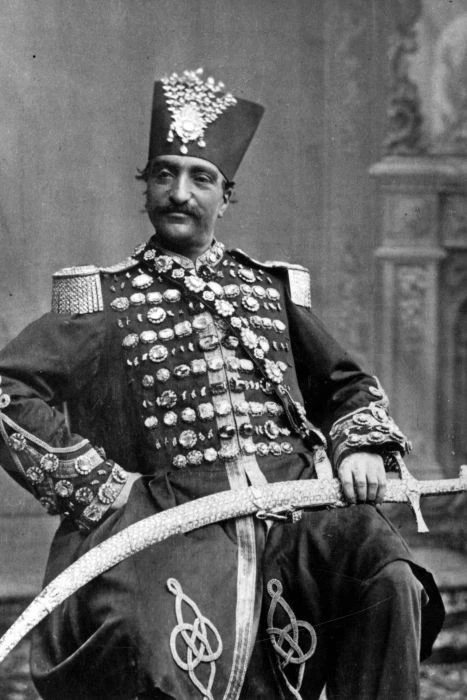
Naser al-Din Shah Qajar, the proud master of the harem.
Historians note that for his time, Naser al-Din Shah Qajar was remarkably well-educated and known as a devoted sybarite—so much so that his grand lifestyle eventually sparked discontent among his inner circle. 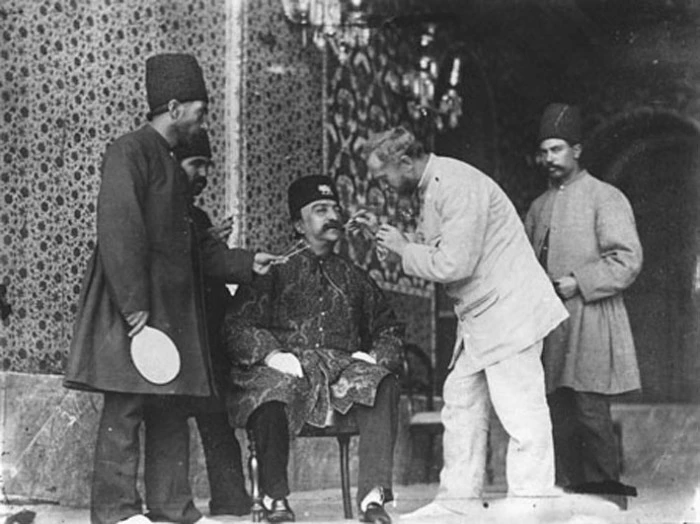
Al-Din Shah Qajar and photographer Sevruguin before a photo shoot.
Among Shah Qajar's many passions was photography. His fascination with the medium began in childhood, and upon taking power, he established the country's first official photography studio inside his palace. In the 1870s, photographer Antoin Sevruguin opened a studio in Tehran and soon became the court photographer for the Iranian monarch. Sevruguin created a vast photographic chronicle of Iran, earning a prestigious title for his achievements. 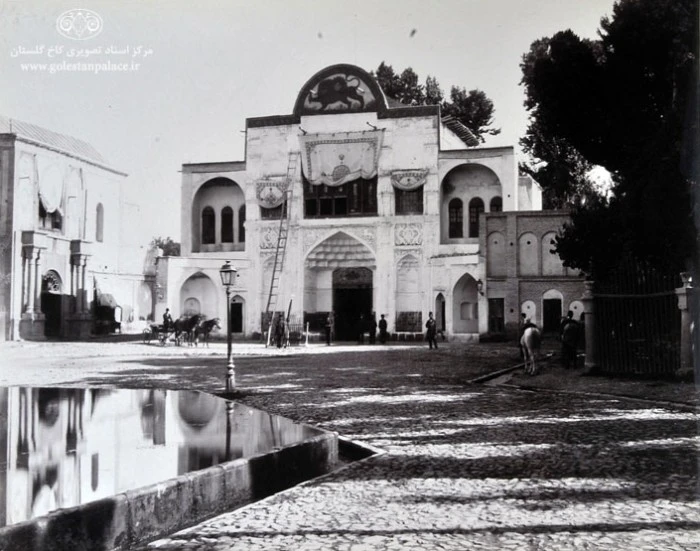
The main entrance to Golestan Palace.
While Sevruguin was permitted to photograph the Shah himself, male relatives, courtiers, and servants, the photo-obsessed monarch reserved the exclusive right to photograph his own harem, which historians estimate contained nearly 100 concubines. 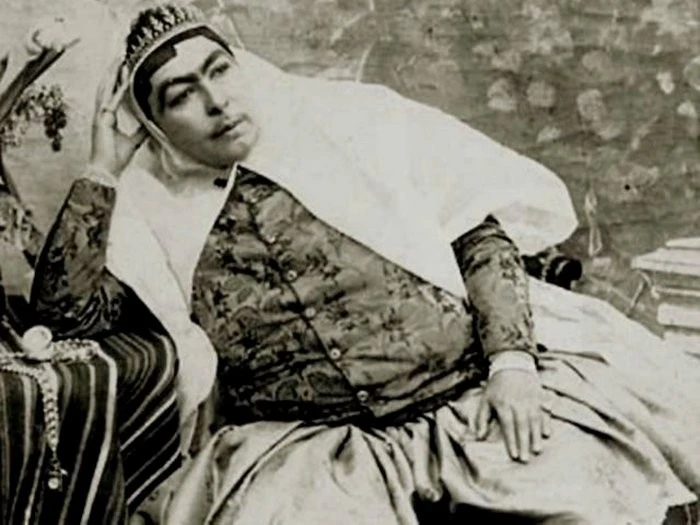
Fullness as the ultimate standard of beauty.
Naser al-Din Shah personally developed these photographs in a palace darkroom, keeping them in satin-bound albums inside Golestan Palace, which today operates as a museum. 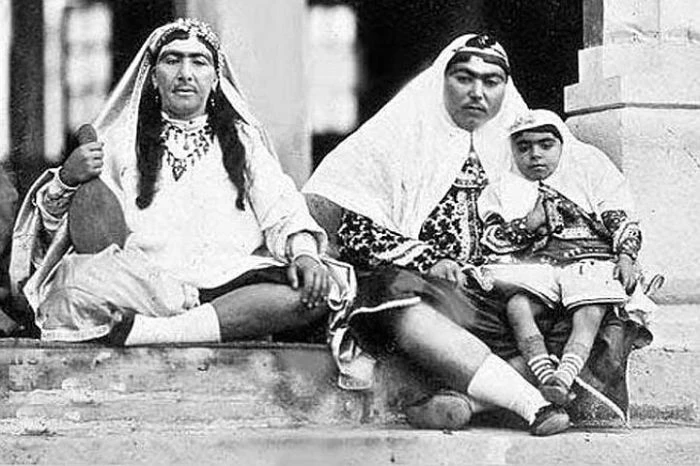
The peerless Anis al-Doleh, the Shah's favorite wife (right).
What makes these images of his concubines so remarkable is that under Shia law of the era, photographing human faces—especially those of women—was strictly forbidden. Only the most powerful man in the nation could afford to break the law. 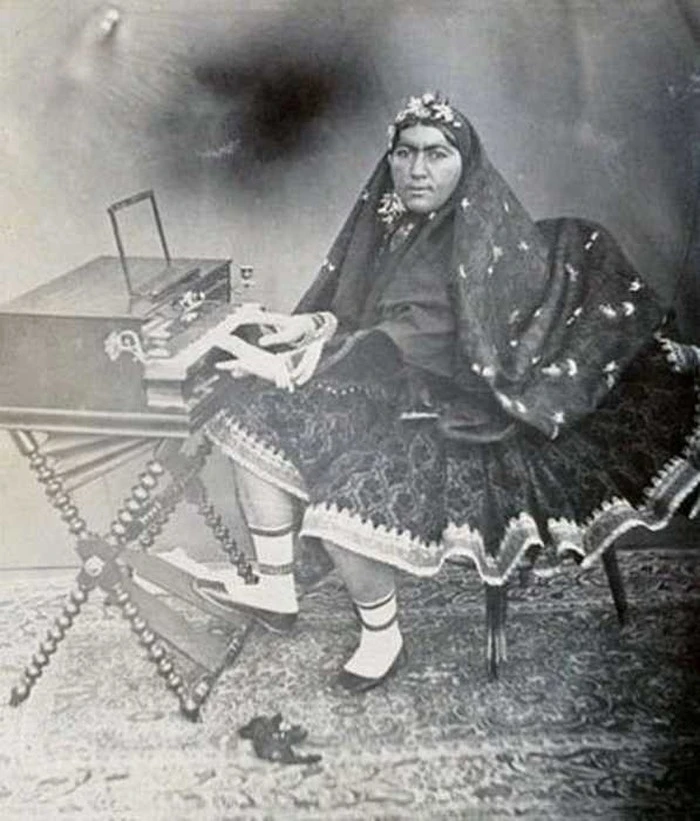
Anis al-Doleh, known as the "Soulmate of the Sovereign." 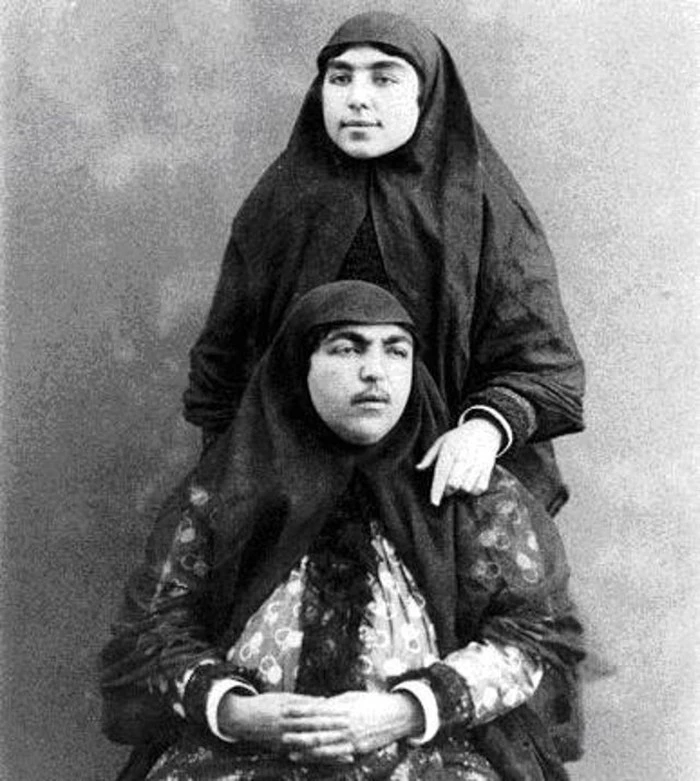
The peerless Anis al-Doleh (seated).
These photographs challenge conventional notions about harem life. The Shah's wives appear remarkably modern for their time and thoroughly self-assured, gazing directly into the camera lens with calm confidence, completely free of shyness or affectation. 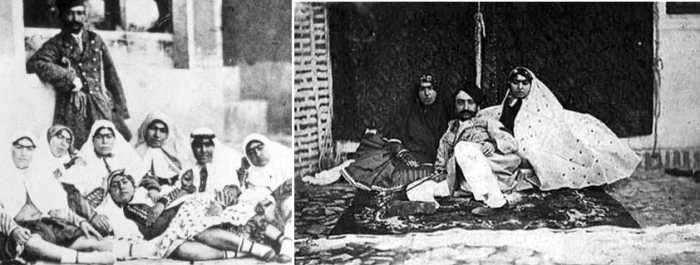
Naser al-Din Shah Qajar with several women from his harem.
The photos even suggest a warm, friendly bond among the wives, with several candid shots capturing group outings and picnics. 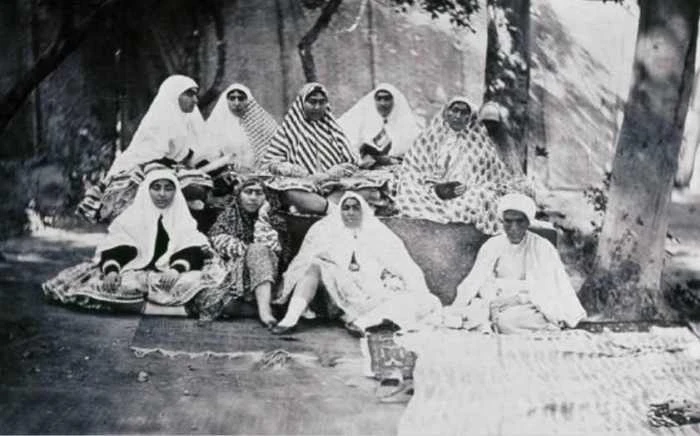
The harem on a picnic. 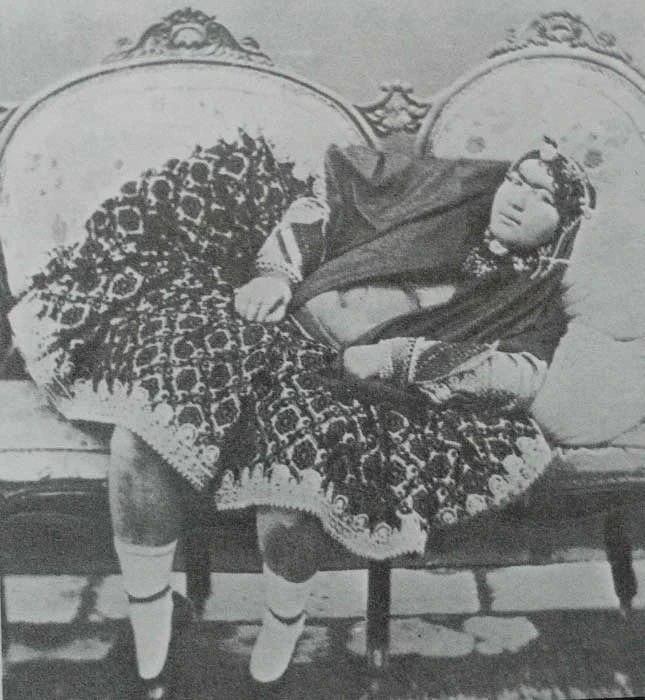
Slenderness was certainly not a trait among the harem's residents.
The photographs offer clear insight into the Iranian monarch's personal taste: voluptuous women with thick, unibrows and prominent upper-lip hair. It is evident that these women lived lives of leisure, well-fed and unburdened by physical labor. Experts whisper that the Golestan collection even includes erotic nude portraits, though they remain securely hidden from public view. 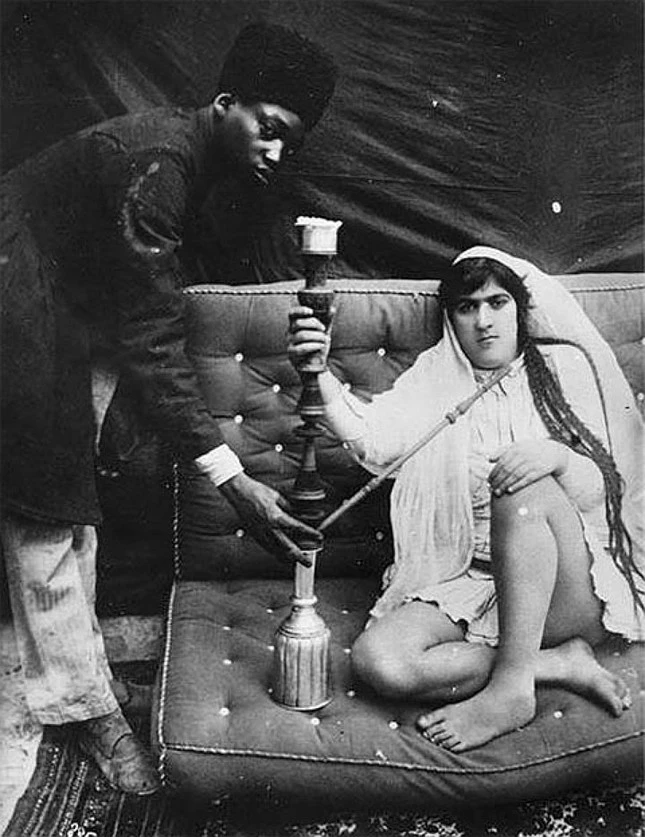
A young concubine with a hookah. 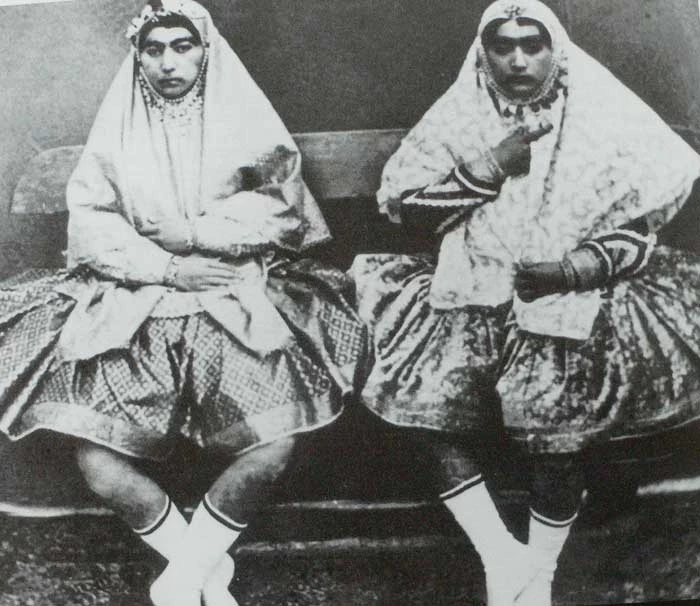
In many photos, the concubines are pictured wearing short, puffy skirts resembling ballet tutus (shaliteh). This was no coincidence. 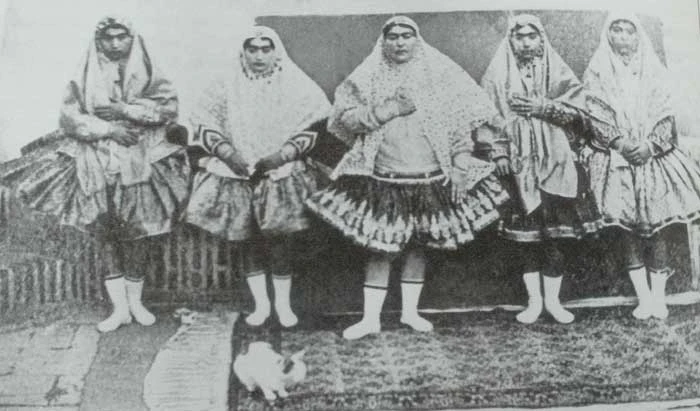
In 1873, Naser al-Din Shah visited Saint Petersburg at the invitation of Tsar Alexander II and attended the ballet. According to legend, he was so captivated by the dancers that he introduced the shaliteh for the women of his harem. In truth, the concubines were allowed to remove their traditional Islamic headscarves only in front of the camera. However, it remains entirely possible that this is merely a colorful myth. 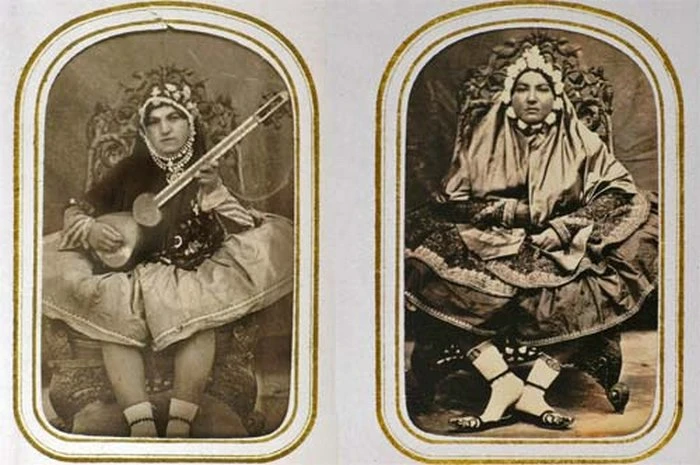
Harem ladies posing in ballet tutus.
Expert Commentary
Boris Dolgov, Senior Research Fellow at the Center for Arab and Islamic Studies at the Institute of Oriental Studies of the Russian Academy of Sciences, offered commentary on the collection:
"The people in these photographs are indeed women. They are not intersex individuals or men in disguise, as many might assume today. While such individuals did exist in royal courts, they were kept secret because religious tradition frowned upon it. As for beauty standards—taste is entirely subjective. Facial hair was quite common among Eastern women of that era, though it is also possible the Shah simply favored women with moustaches. Joined eyebrows were highly fashionable back then, and fullness was synonymous with beauty. The women in the harem were intentionally fed rich diets and kept from active physical exertion."
There is another theory regarding who actually appears in these photos: male actors from the first state theater, established in 1890 at the Dar ul-Funun Polytechnic Institute by order of Naser al-Din Shah (a passionate enthusiast of European culture). The troupe staged satirical plays exclusively for the royal court. Organized by Mirza Ali Akbar Khan Naghashbashi, considered one of the founders of modern Iranian theater, the troupe used men for female roles because women were forbidden from performing on stage. The first female performers in Iran did not appear on stage until 1917.
In 1861, Mirza Malkam Khan published three satirical plays in Istanbul: "The Adventure of Ashraf Khan, Governor of Arabistan," "The Governance Methods of Zaman Khan from Borujerd," and "Shah Qoli Mirza Travels on a Pilgrimage to Karbala." Mirza Malkam Khan became a pioneer of Iranian playwriting, although his works were intended primarily for reading rather than live performance. In the second half of the 19th century, an anonymous play titled "Scandal in His Majesty's Presence" appeared, closely echoing the satirical style of Malkam Khan.