Gödel Solved Einstein’s Equations and Discovered... a Time Machine. A Very Real One (7 Photos)
Imagine stepping onto a spaceship and flying in a straight line... only to end up right back where you started a few hours later.
Except there is one deeply unsettling twist: you returned before you even left.
It’s a fully functioning, theoretical time machine. Sounds like complete nonsense, right? The eerie part is that science fiction writers didn't make this up. Kurt Gödel stumbled upon it while solving Albert Einstein’s field equations. 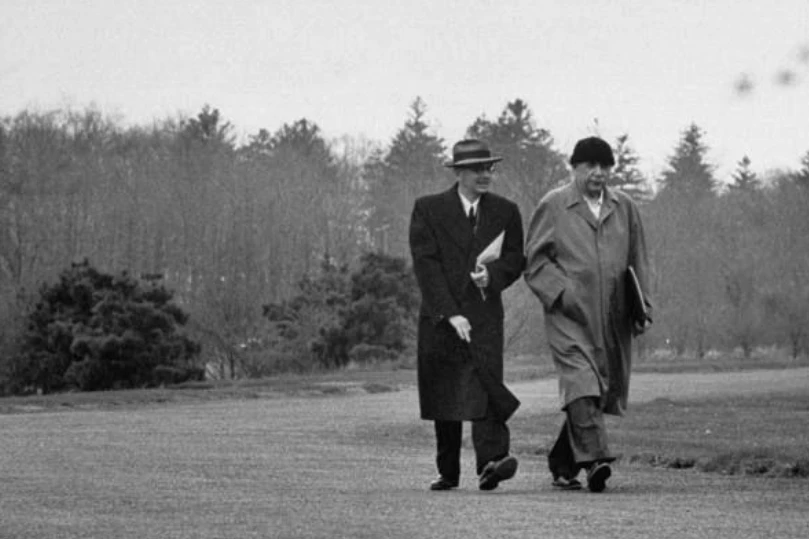
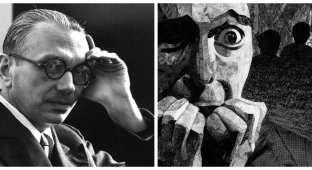
Gödel and Einstein were close friends
We’re talking about Einstein's field equations from general relativity—the core equations describing how matter and energy warp the fabric of spacetime. Yes, the very ones I talk about all the time on this channel.
It turns out that if you tweak the initial conditions just a bit, general relativity allows for a universe where the future can cause the past, turning time into a closed loop.
And this isn't just wordplay. The logic directly challenges the foundation of our scientific worldview: the principle of causality.
The Collapse of Causality?
Causality is straightforward: a cause can never come after its effect on the timeline. A rock falls because someone pushed it. A starship arrives at its destination after launching from a spaceport. There are countless everyday examples.
In standard physics, the universe only operates one way: Cause → Effect 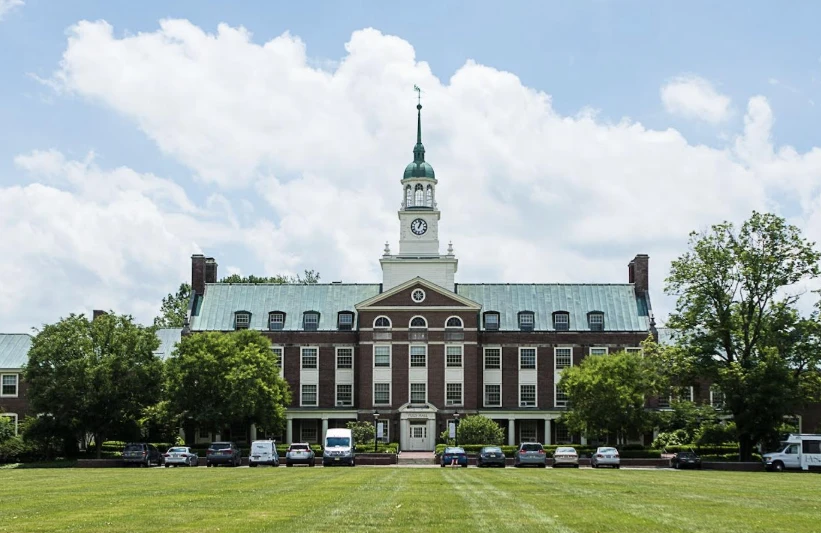
The Institute for Advanced Study in Princeton
Don't assume this is self-evident. It seems obvious when you think of trivial examples—like how a frog has to step onto the road before it can cross it. But when you start dealing with quantum entanglement and complex real-world variables, things get far contentiously complicated.
Physics seemed to have this covered. Einstein’s general relativity describes not just gravity, but the underlying geometry of spacetime. For a long time, scientists believed the theory guaranteed a strict chronological order of events across the universe.
What Did Gödel Do?
Yet Gödel proved that, mathematically speaking, Einstein's equations allow for a universe where past and future can curl up into a loop.
Gödel was already famous for his incompleteness theorems, which rocked the foundation of mathematics. 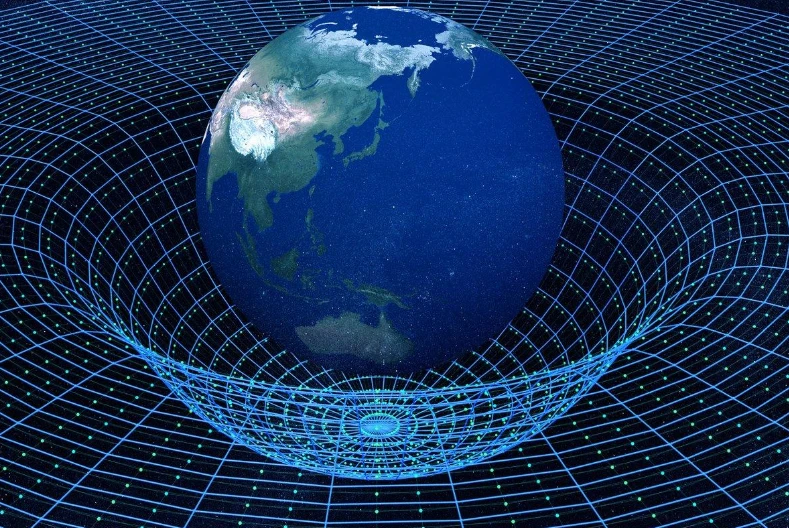
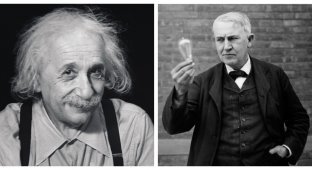
Where would I be without this image?
He proved that:
In any sufficiently complex mathematical system, there are true statements that cannot be proven within the system itself.
Then he turned his mind to physics. It helped that his close friend was Einstein himself. Working together at Princeton, they often took long walks, debating physics and philosophy.
For Einstein’s 70th birthday, Gödel set out to write a paper on relativity and the philosophy of time. Instead of a standard philosophical essay, however, he stumbled upon something far more astonishing: a brand-new solution to Einstein’s field equations.
How Is That Supposed to Work?
Einstein’s equations are notoriously difficult to grasp. You might look at them and think, "That looks concise enough!" But once you try to break down every tensor and coefficient mathematically, you quickly realize you need an advanced degree in differential geometry just to keep up.
In simple terms, the logic boils down to: Matter and energy → warp spacetime. 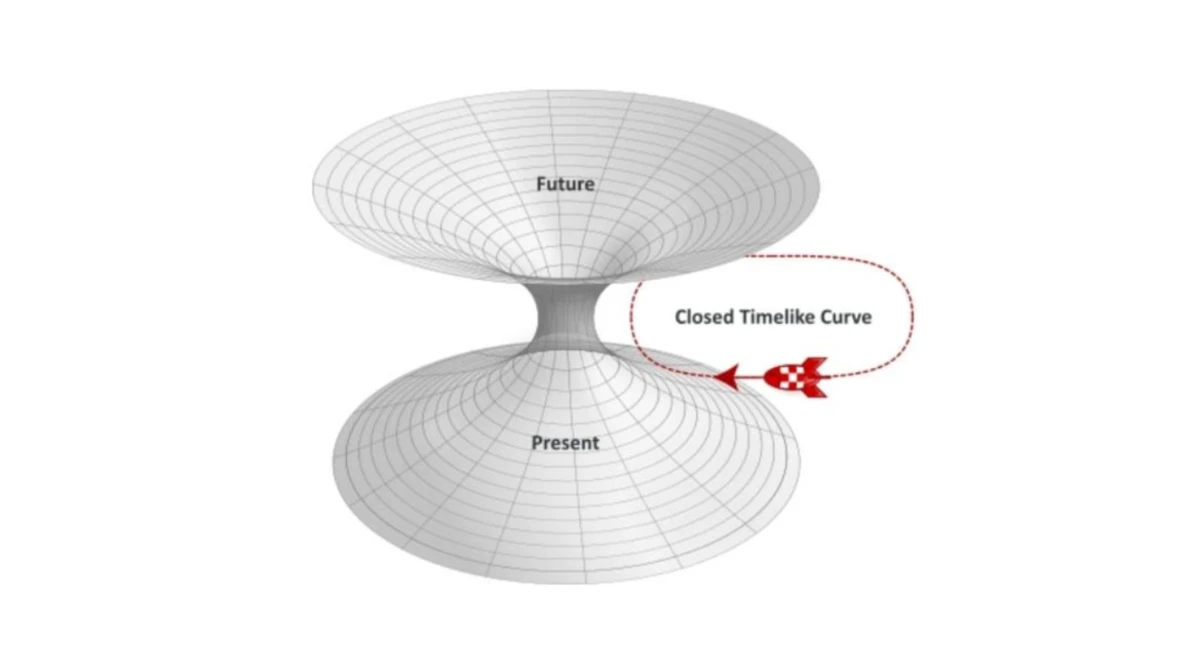
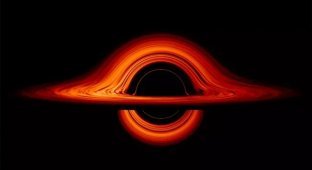
Spacetime loops back on itself
However, these equations don't dictate what the universe *must* look like beforehand. Change the starting parameters, and you get entirely different solutions—all mathematically valid.
For example, you can model a completely empty universe, or an expanding one. You can model black holes or gravitational waves. Gödel, on the other hand, devised a truly bizarre model: a rotating cosmos.
Picture more than just celestial bodies spinning on their axes—this isn't about Earth rotating.
Instead, the fabric of spacetime itself swirls like a colossal whirlpool. In physics, this is known as global vorticity.
Why Did Gödel Do This?
After his work on mathematical logic, Gödel became fascinated by the philosophy of time and general relativity. He was obsessed with a core question:
Does time objectively "flow," or are past, present, and future merely illusions of human perception?
Einstein himself leaned toward the "block universe" concept, where all of spacetime exists as a static four-dimensional block, and the passage of time is an illusion rather than a fundamental feature of reality. Gödel decided to test how far this concept could be pushed. 
That very equation
He took a radical step and asked:
What if the entire universe is rotating?
Einstein's field equations don't forbid such a scenario. Gödel plugged in the mathematics for a spinning universe, and something remarkable happened.
He discovered that such a universe contains closed timelike curves (CTCs)—paths through spacetime where an object, traveling constantly below the speed of light, eventually loops back into its own past.
In effect, he discovered a time machine—not because he tried to build one, but because Einstein’s own math allowed it.
Gödel was driving at a profound conclusion:
If relativity permits a universe where past, present, and future cannot be objectively separated, then the passage of time is not a fundamental property of physical reality.
What Would This Universe Actually Look Like?
In our universe, every object has a "light cone" that defines its future and past horizons.
It marks where you can go and what signals can reach you without exceeding the speed of light. 
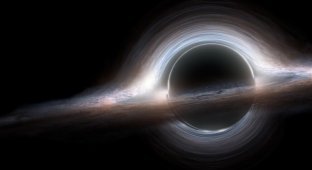
Topology determines everything
In Gödel's universe, however, the light cones tip over as you move farther from the center. Imagine walking along a circular path. Normally, traveling 10 miles just puts you farther along in distance. But due to extreme spacetime curvature in Gödel's metric, walking 10 miles brings you back to your starting point *before* you began your journey.
This creates a closed timelike curve—a path where moving through space inherently means traveling back in time. It makes sense within the framework of relativity, where space and time are bound into a single continuum. 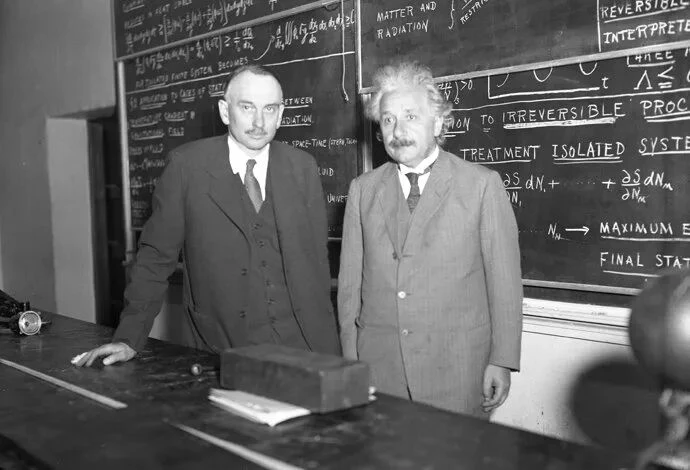
The Strangest Part
The real issue isn't whether we could build a time machine; it runs much deeper. General relativity itself does not forbid causality breaking. Mathematically, Event A can cause Event B, but by traversing a time loop, Event B can react back on Event A.
You get A → B → A. Cause and effect lose their distinct linear sequence. But here's the crucial point: Gödel didn't prove that we live in a universe like this.
What he proved was something else entirely:
Einstein’s equations yield solutions that allow for seemingly impossible paradoxes.
Physicists later introduced additional constraints to address this.
For example:
Global hyperbolicity: A physically realistic universe must have a well-behaved temporal structure, meaning the past uniquely determines the future.
Hawking’s chronology protection conjecture: Nature itself might prevent time travel. If a time loop tries to form, quantum energy fluctuations would build up and destroy that region of spacetime.
Yet the most fascinating aspect of Gödel's work remains: the theoretical possibility of putting a cause *after* its effect on the cosmic timeline.
For science enthusiasts, the takeaway is mind-bending enough: strictly according to the math, time travel isn't entirely impossible.