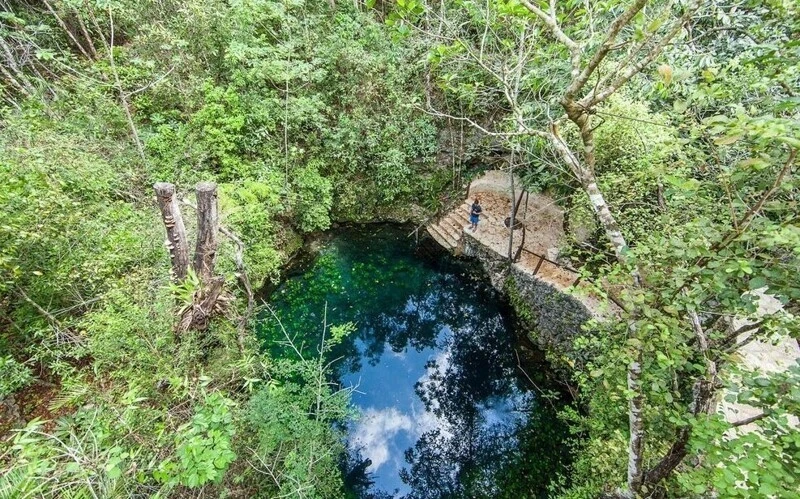
The "Hells Bells" of Cenote Zapote: A Silent Underwater Instrument Where Science Meets the Supernatural (10 Photos + 1 Video)
Deep below the Earth's surface, in the flooded caves of Cenote Zapote on Mexico's Yucatán Peninsula, stalactites take on mesmerizing, otherworldly shapes. 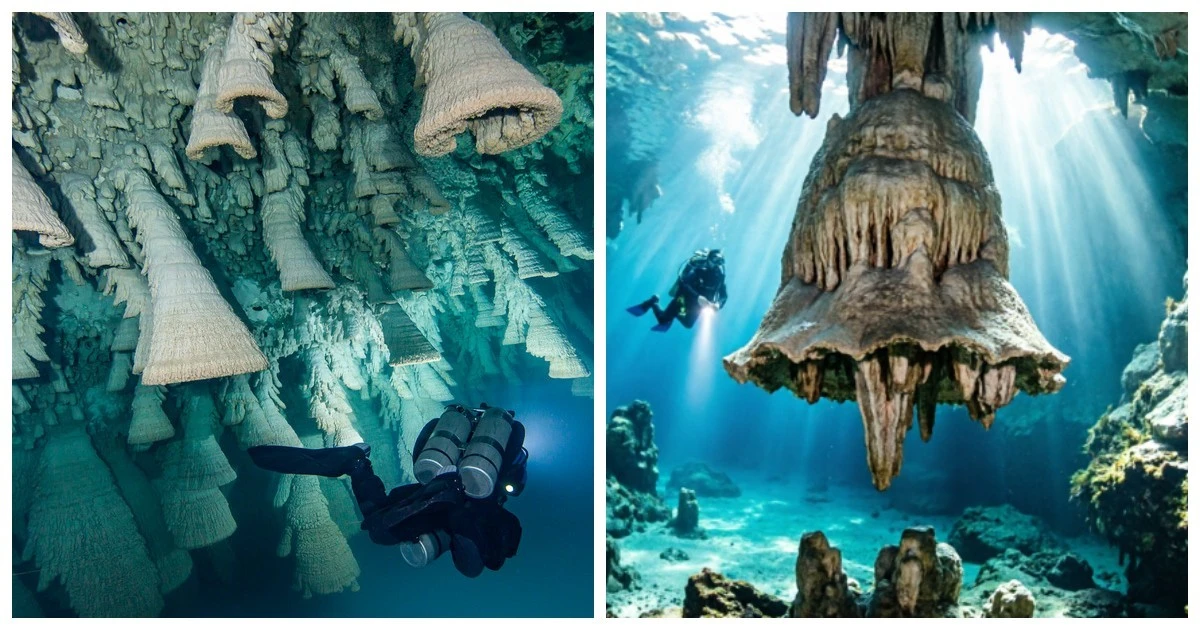
Instead of the usual pointed tips, the formations hanging from the cave ceiling flare outward, resembling bells. 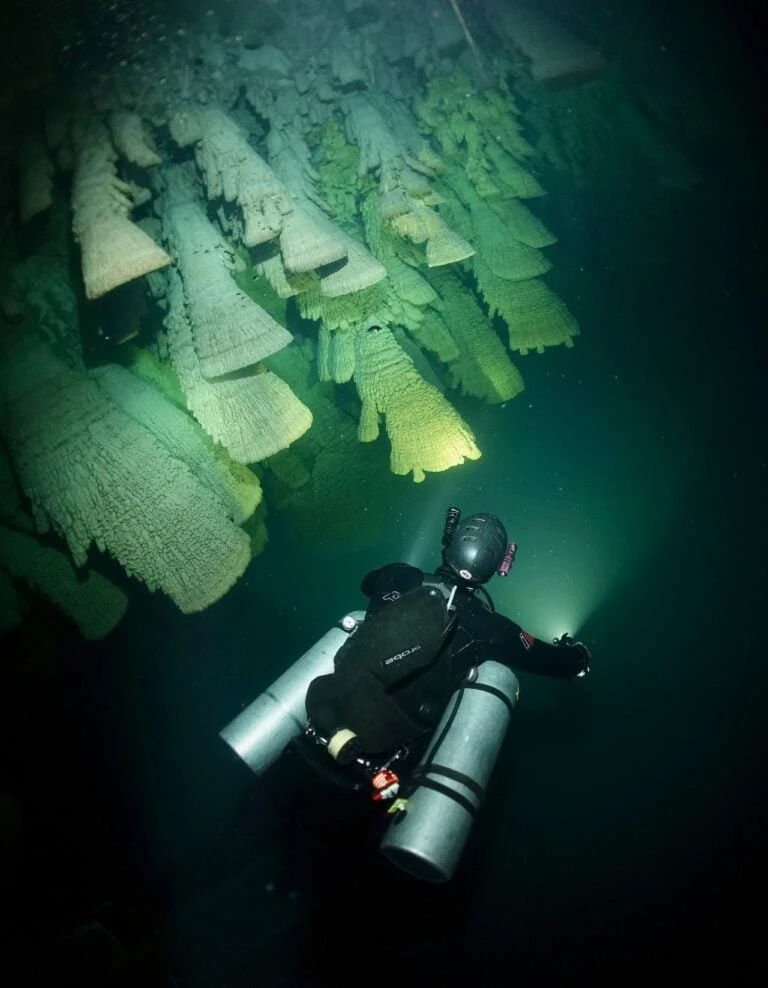
Divers have dubbed them by various names: "hells bells," "elephant feet," "showerheads," or "trumpets." 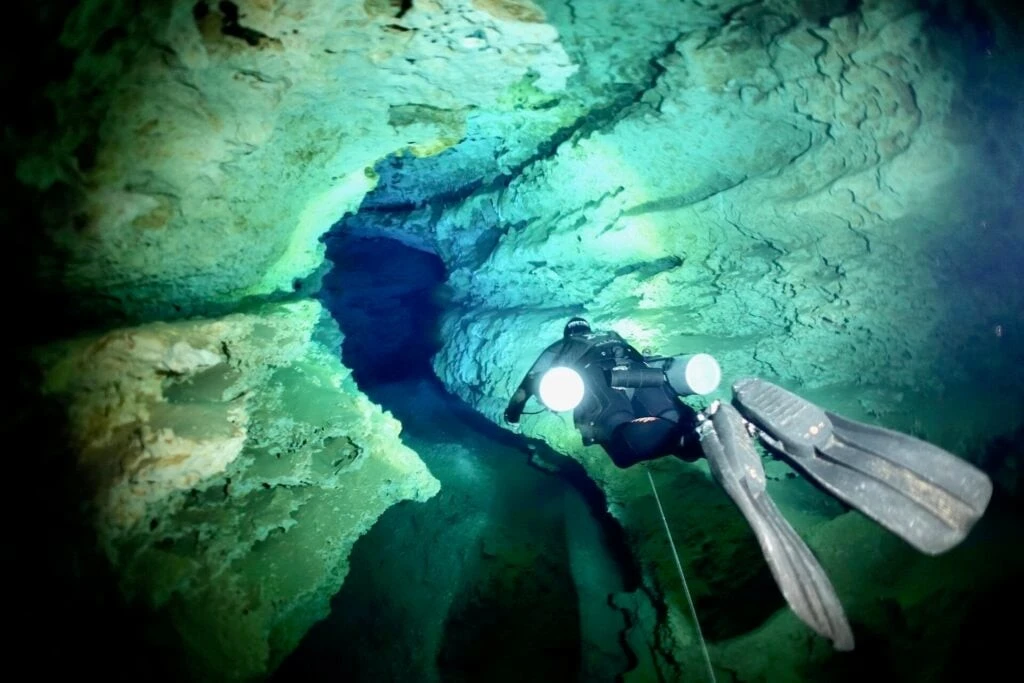
The phenomenon of the "hells bells" remains a puzzle to this day. How were they formed? And why are they so rarely found anywhere else on Earth? 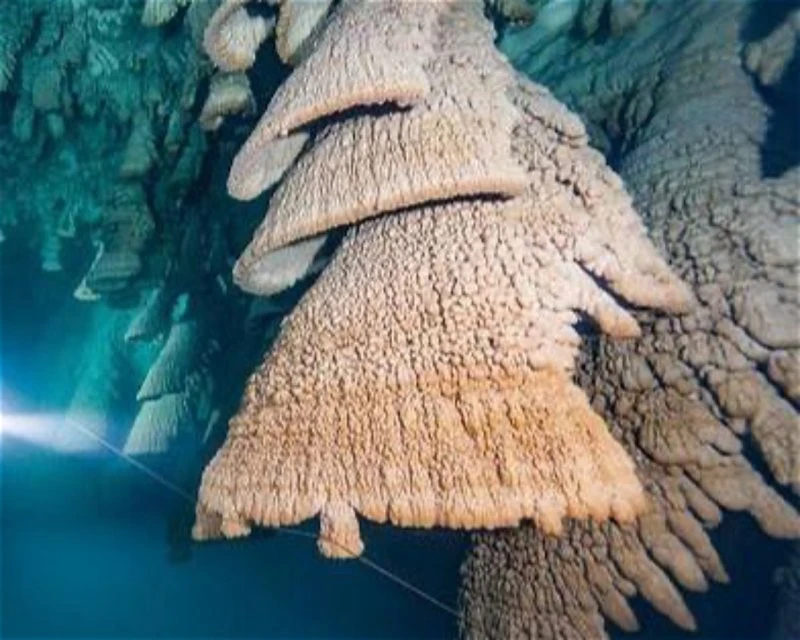
"Hells bells" are believed to be a rare type of speleothem that typically forms just beneath the water line. 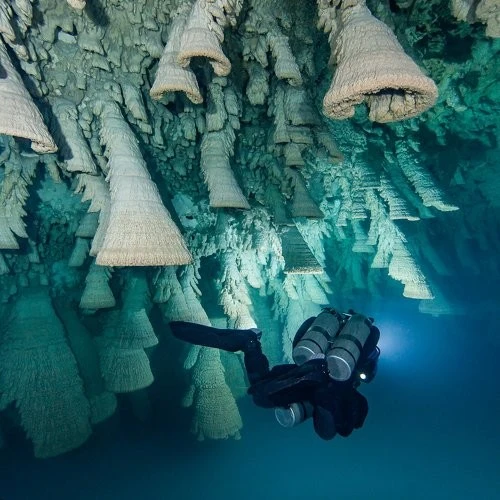
Scientists suggest they may have grown from existing speleothems—secondary mineral deposits—as groundwater levels shifted following the last Ice Age. 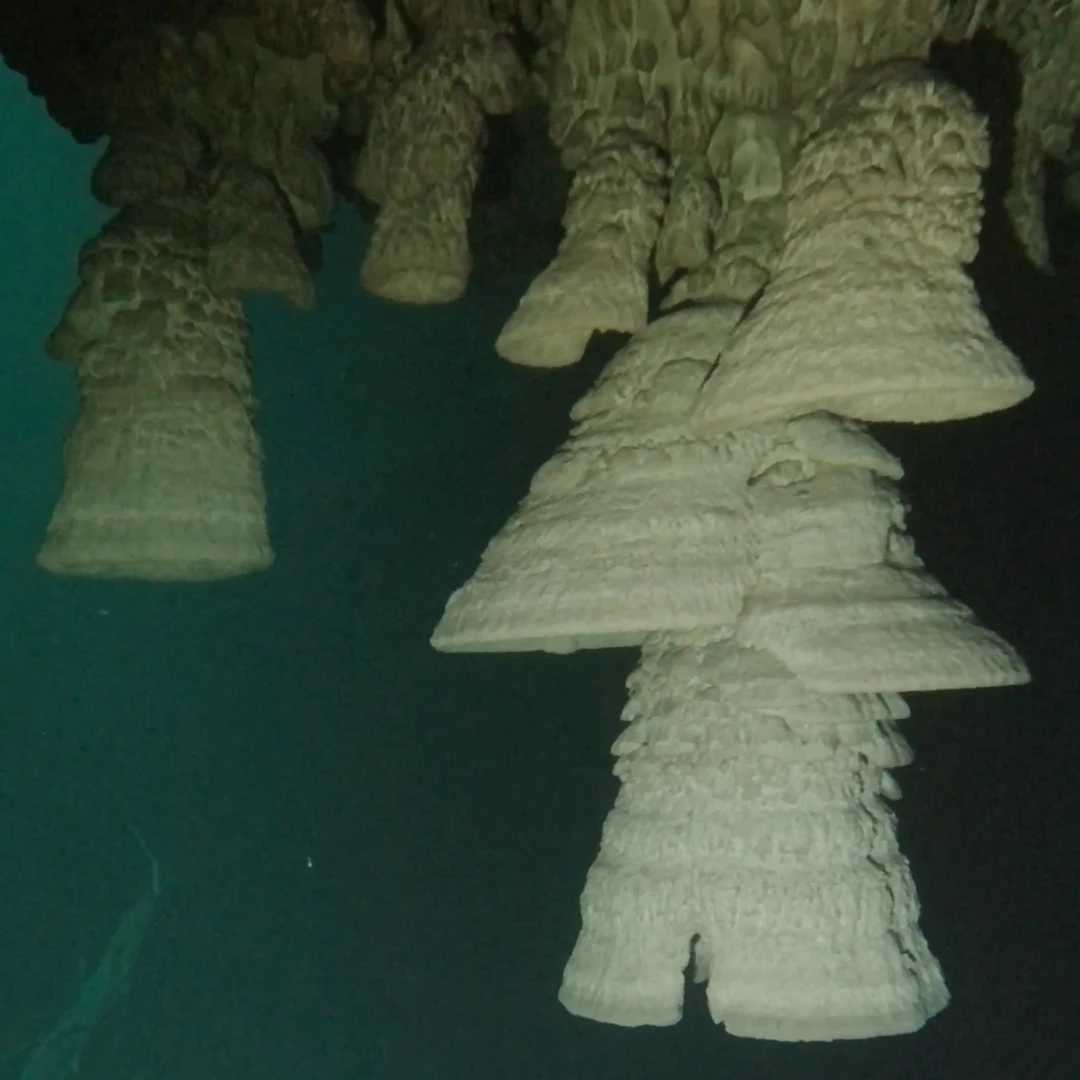
Yet the exact mechanism behind their formation is still not fully understood and remains a subject of ongoing debate. 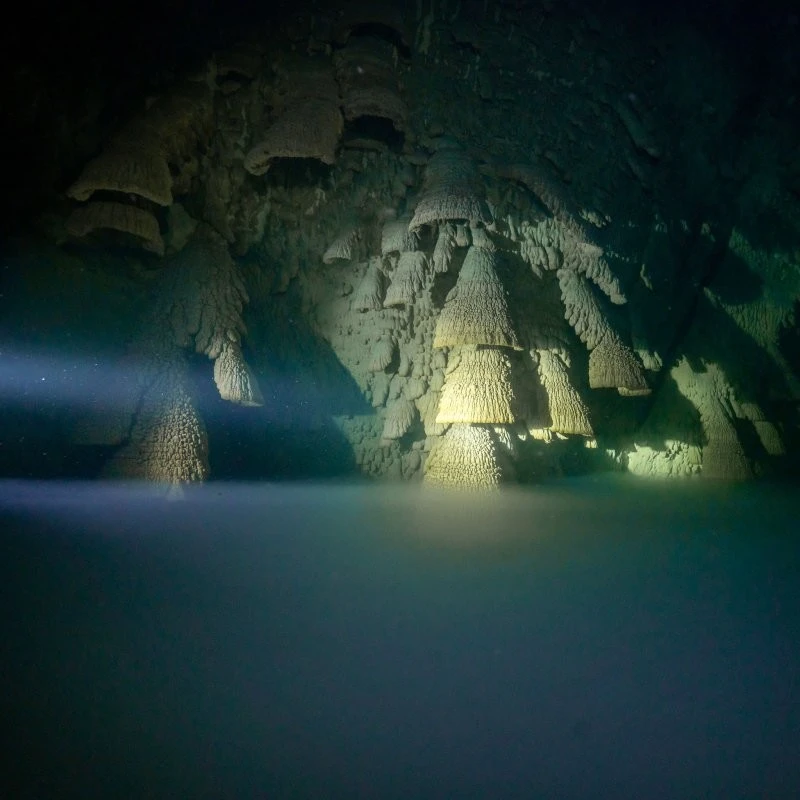
A groundbreaking 2019 study published in the journal Biogeosciences linked the growth of these "bells" to a complex interplay of geochemical and microbiological processes. Researchers continue to collect samples to pinpoint the precise mechanics of their growth. 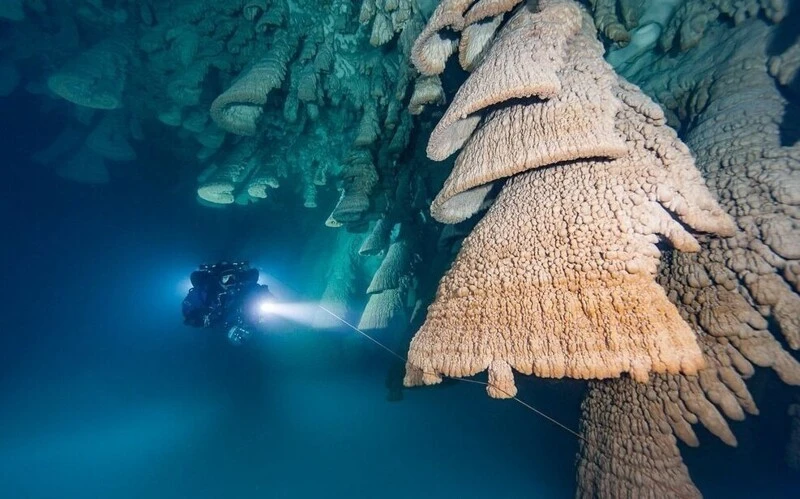
The cenote is open to divers, but only to those with advanced certifications. The extreme depth, total lack of natural light, and a dense layer of hydrogen sulfide make diving here technically demanding. 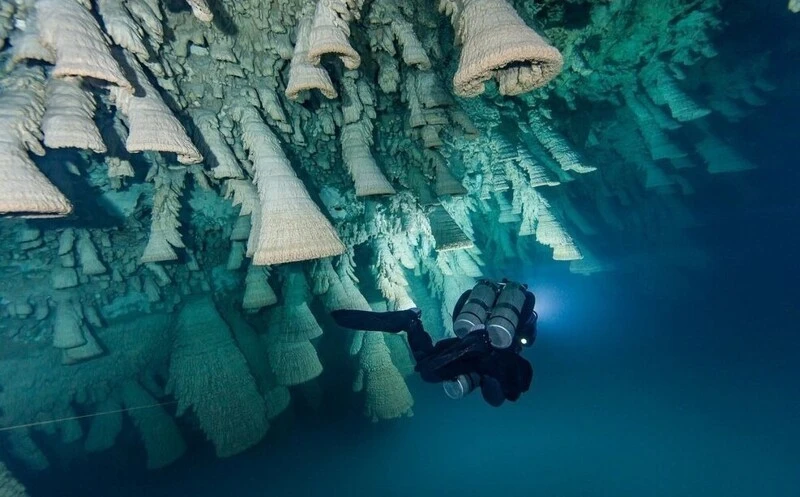
In 2022, new reports and photographs emerged confirming that the "hells bells" grow with the help of bacteria that "breathe" and precipitate calcite.