Bee hummingbird: why did the bird weigh 2 grams? (8 photos)
To be fair, the bee hummingbird is much heavier than a bee—it can weigh as much as 2 grams! But it's still the smallest bird on the planet, lighter than a child's little finger. How can a bird even be that small? 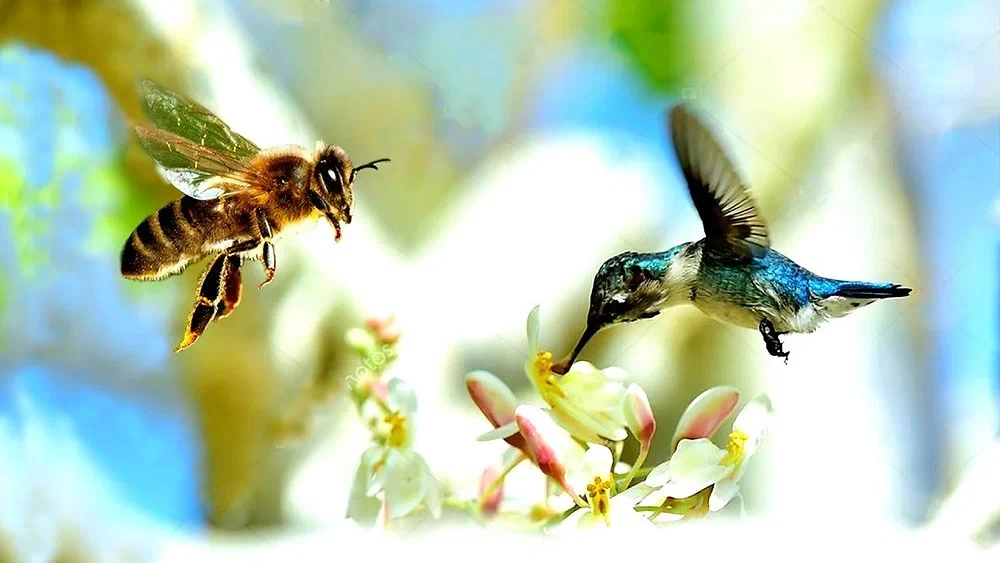
This spot is taken, insectoid. Scat!
The short answer is—hardly. Hummingbirds are already considered birds with obscenely high metabolisms, but the bee stands out even among its kind: its metabolic rate is 77 times higher than that of humans. To survive, the bee must feed almost exclusively on flower nectar, which is approximately 20% carbohydrates. However, to consume its daily nectar requirement, a bee would need to suck on approximately 1,500 flowers—one flower every 1 minute and 12 seconds. 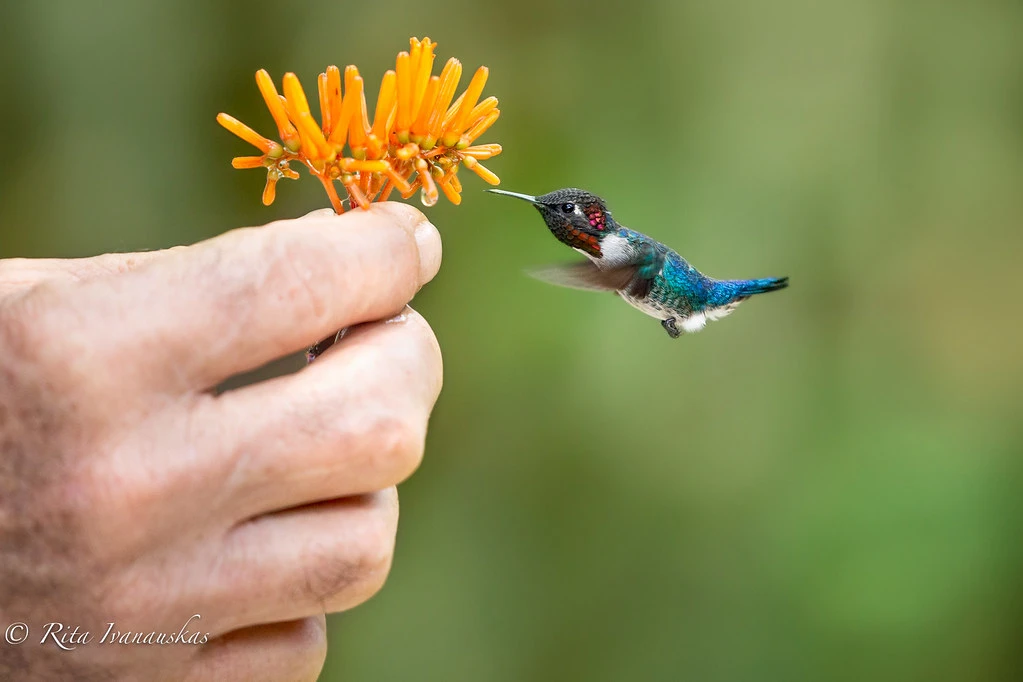
Holy shit, hold still, my timer is ticking!
Is it possible? Of course not. Even in sunny Cuba, where the hummingbird lives, it's physically impossible to find such a dense flowerbed. And hummingbirds aren't made of iron; they need rest, sleep, and time to digest their food. Although nectar is digested almost instantly, the bird also eats insects, which provide protein, as well as macro- and micronutrients. These nutrients can take much longer to digest, taking up space in its limited intestines. 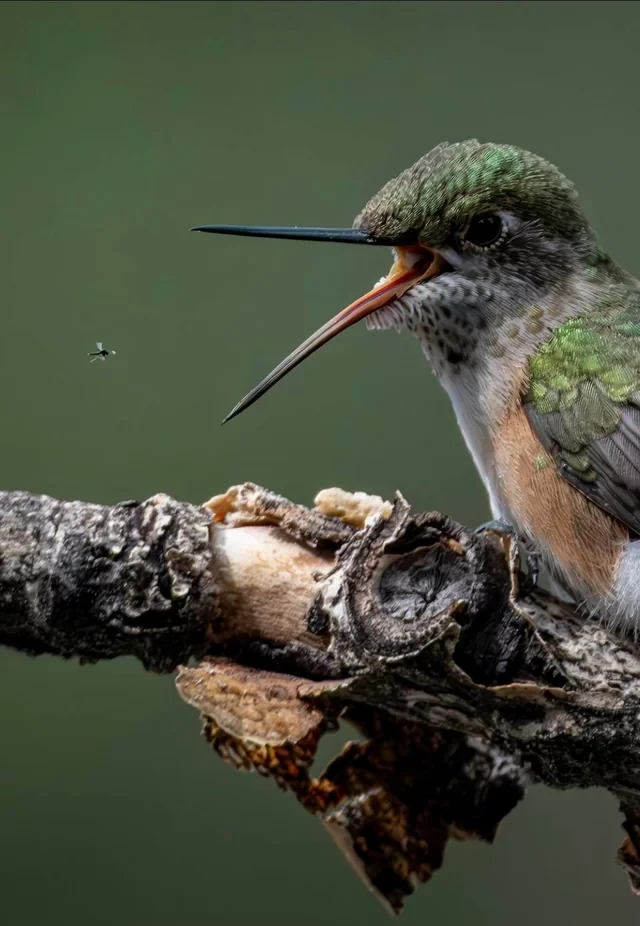
Every speck of dust is a vitamin in the mouth.
However, the hummingbird has found a solution: at night, it hibernates, slowing its metabolism by 90-95%. But this isn't just hibernation; it's torpidity, a state close to death. Its body temperature drops by half, to 20°C, and its heart beats at a mere 50 beats per minute—a mere pittance compared to the peak load its small but monstrously powerful heart muscle can generate—1,200 beats per minute! This tactic saves a ton of energy, which it could otherwise expend on daytime flights. However, in this state, the bird doesn't react to anything at all. It won't even notice if someone starts eating it. 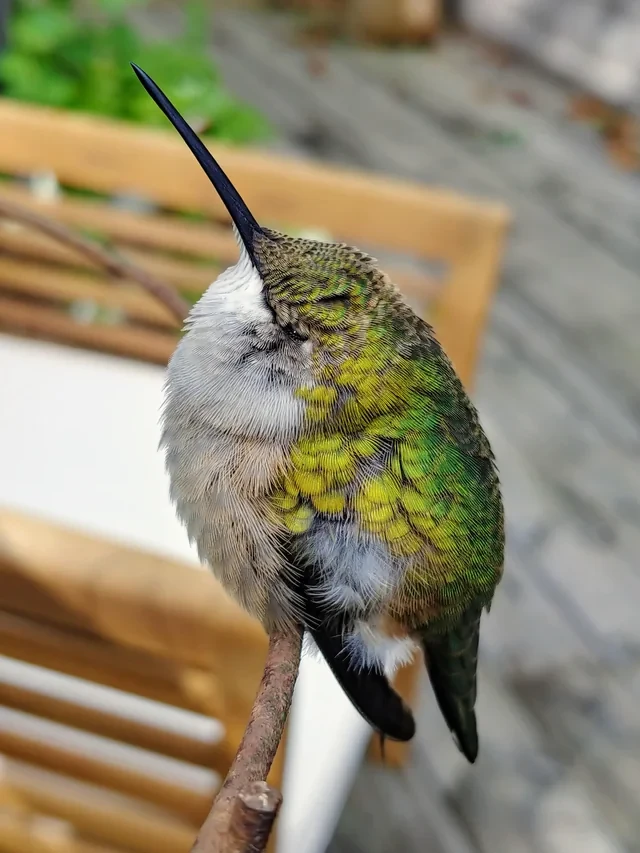
Quiet time, don't wake.
And the bee flies simply superbly. This tiny bird can reach speeds of up to 48 kilometers per hour in a straight line, a speed not every normal bird can reach. Furthermore, like other hummingbirds, the bee possesses a classic characteristic of its family: the ability to hover in one place. Although this skill requires a tremendous amount of energy, it allows the bird to suck nectar in mid-flight, without wasting precious time landing and remaining relatively safe. If a predator appears, it doesn't need to waste time taking off and accelerating. It darts off and disappears. 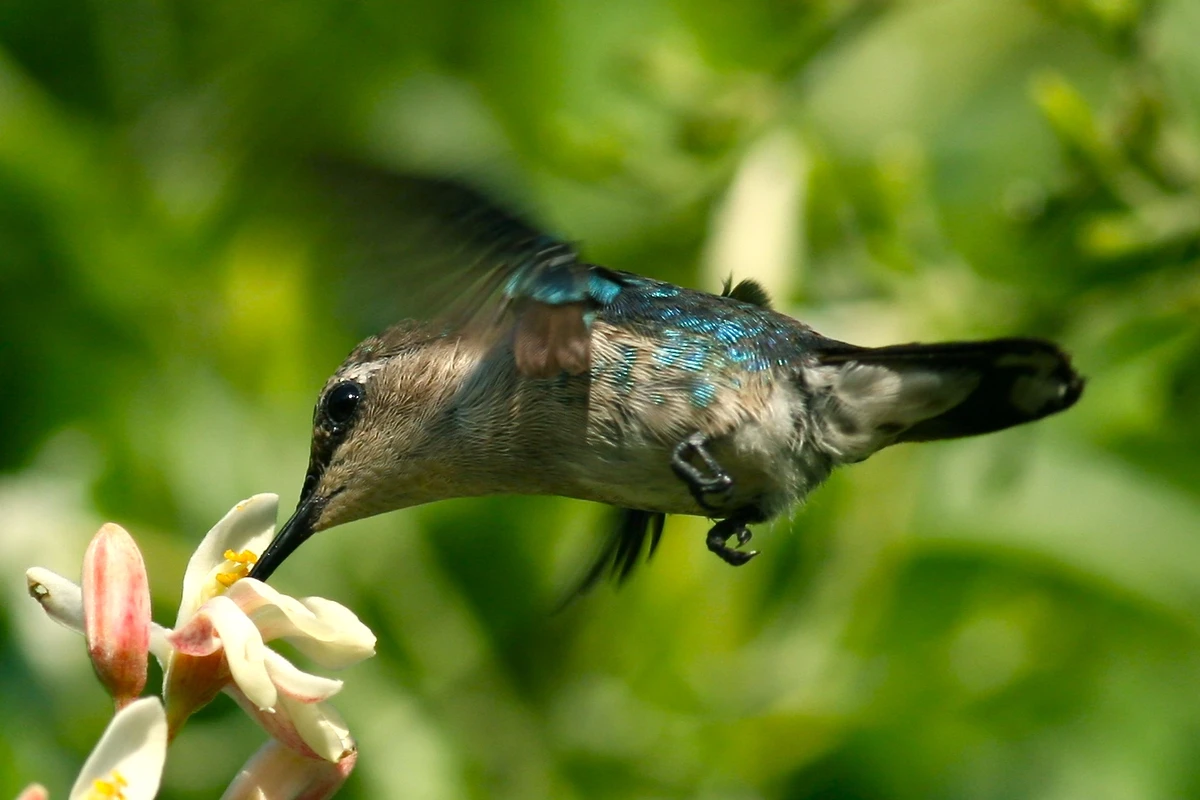
Eating and ready to flee at the same time.
However, all these numerous peculiarities don't explain our hero's small size. After all, there are hummingbirds in the world weighing 10, 15, and even 20 grams, compared to which the two-gram bee birds are true dwarfs! Therefore, ornithologists from all over the world have begun to search for the reasons behind the hummingbird's extreme size. 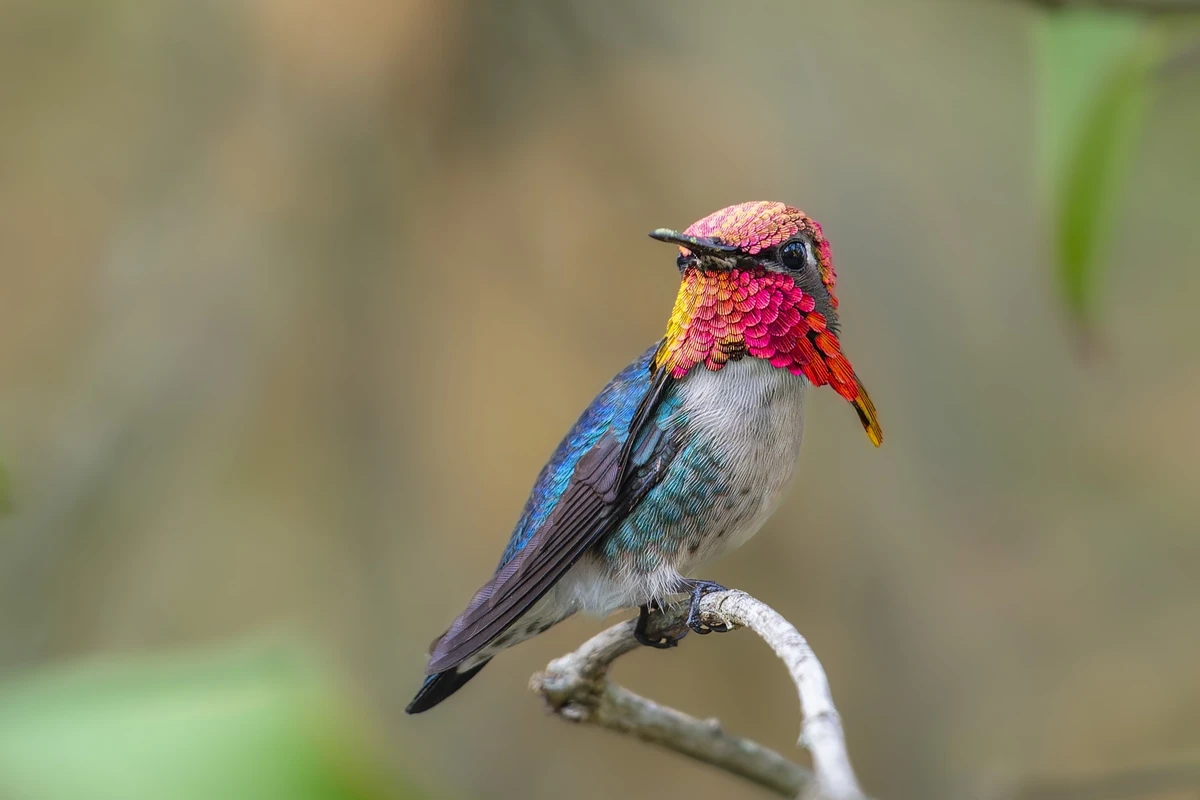
— Brother, what's wrong with your neck? — Am I dressed up for mating season, like it?
The first to come under suspicion was the phenomenon of island dwarfism. The gist of it is that, once on an island, many species face severe resource shortages, causing the largest and most voracious individuals to die out, leaving only the smaller, more voracious to successfully reproduce. But it turns out that this isn't the case here. After all, Cuba is a fairly large tropical island, where small hummingbirds have plenty of food; they don't need to shrink even further. 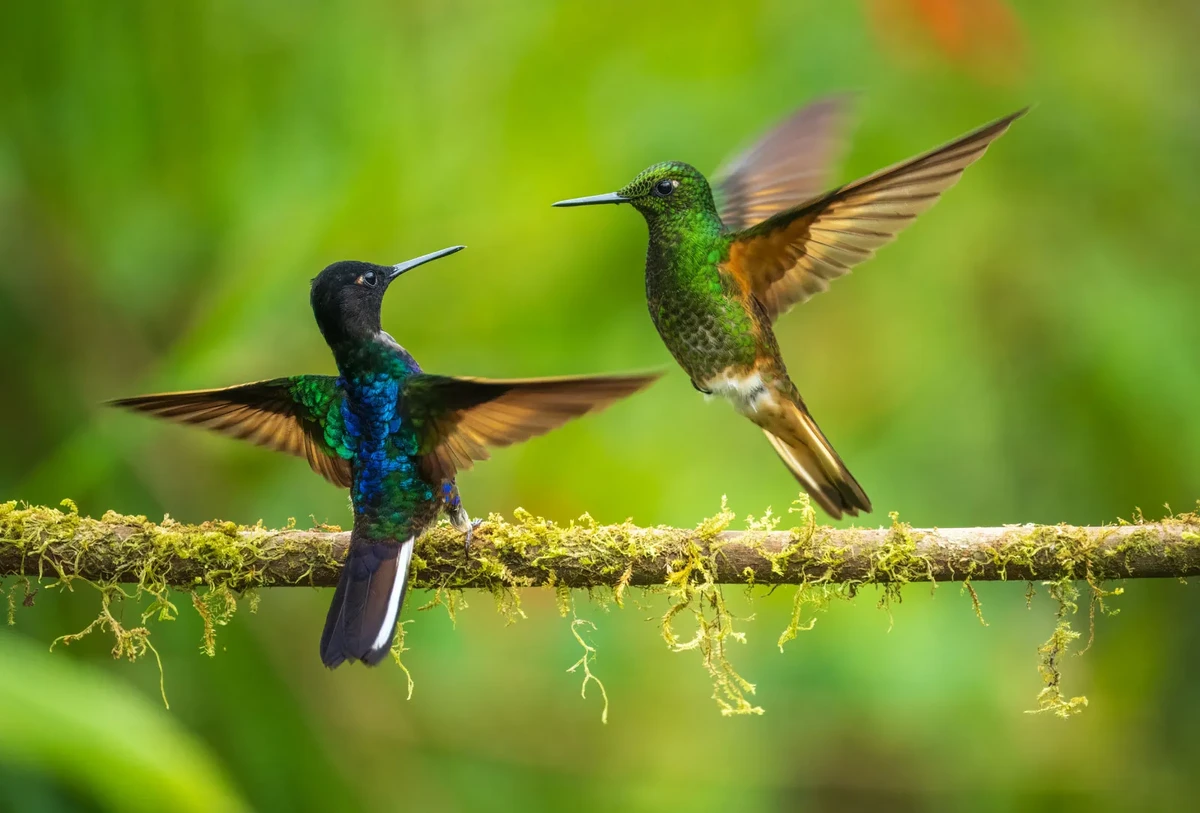
Dance like you only need wings once in your life.
The paradoxical decline in bird populations is due to... dancing! And not just any dancing, but mating dancing. Male hummingbirds attract females with complex and graceful dances, designed to demonstrate their partner's prowess and strength. The nuances of the dances vary from species to species, but in the bee hummingbird genus, males emphasize maximum maneuverability, which is enhanced by the faster the bird flaps its wings. And the smaller the bird, the more quickly it flaps its wings. See what I mean? 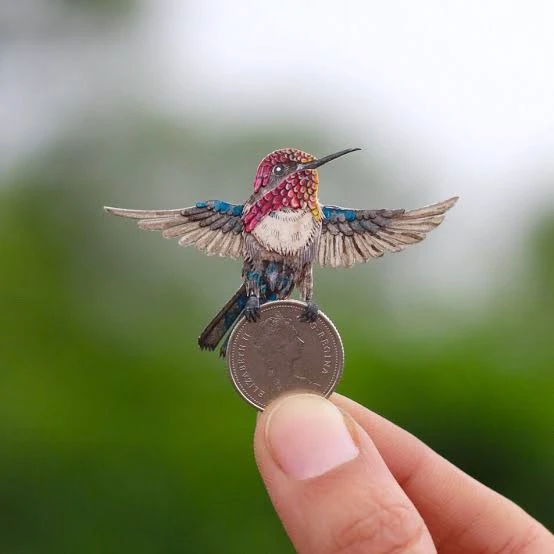
Give me the coin! I still have to pay rent!!! Yes, rent per square centimeter!
Generation after generation, female bee hummingbirds chose small but dashing males and gradually grew to become bees—just like in that crude joke someone's sure to post in the comments. A side effect of this reproductive policy is that male bee hummingbirds became smaller than females, a rare occurrence for terrestrial vertebrates.