House spider: Everything you need to know about the permanent resident of our apartment corners (7 photos)
Right now, there's someone in the corner of your room. They're carefully observing their surroundings with their many eyes, sensing thousands of vibrations, and waiting. But their target isn't you, but your enemies: flies, mosquitoes, and cockroaches. The house spider is here—and it's your kitchen's best guardian. While they're here, no one is safe. Except you. 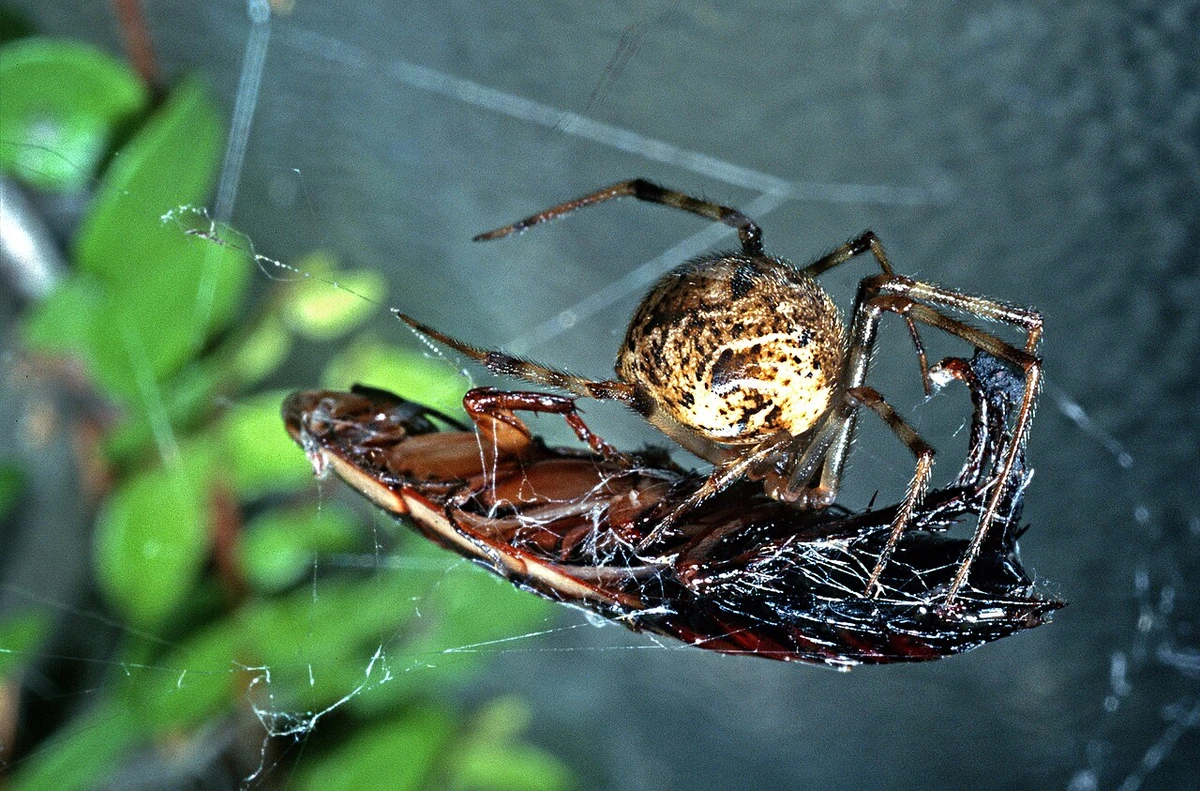
Madam! That cockroach won't bother you anymore!
Once upon a time, before humans ever encountered them, spiders of the genus Parasteatoda inhabited the tropics of Central and South America. There, they were common small predators, along with dozens of species of ticks, millipedes, and other spiders. However, upon the arrival of humans, they saw a new, promising niche and settled in the homes of natives. Then, along with European ships, they spread throughout the world. Now, these tiny spiders, less than a centimeter long, can be found in African cities and in Khrushchev-era apartment buildings above the Arctic Circle. 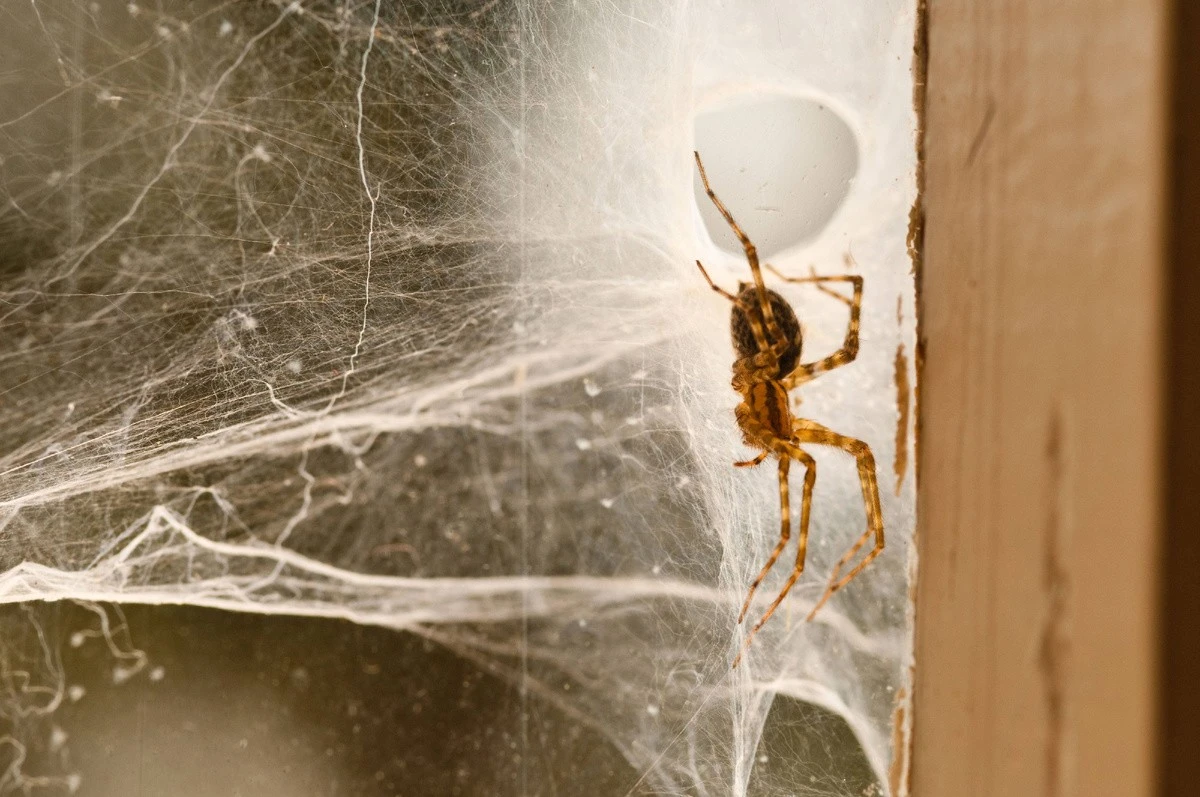
It's important to note: the nickname "house spider" isn't just used by our hero, but also by several other spider species. The largest of these is the Tegenaria.
Within their native range, these not-yet-domestic spiders were forced to compete with numerous predators, but once they entered human homes, they discovered entire herds of delicious cockroaches, flies, and bedbugs. And they were hunted by barely a dozen predator species, spread thinly across homes across the planet. But most of all, the spiders liked our architecture. 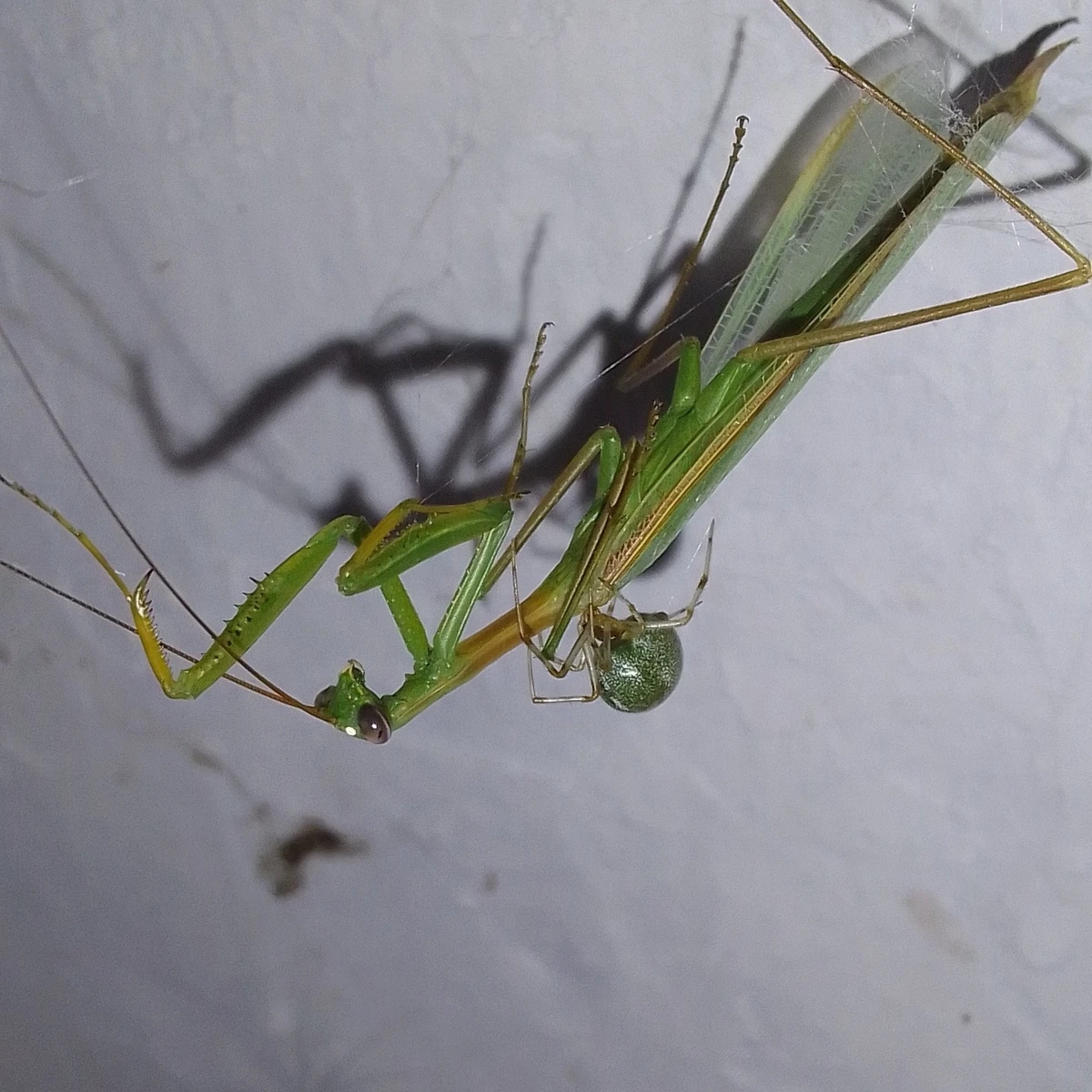
Somewhere in Uruguay, there lived a praying mantis. But it was foolish enough to fly into a human's apartment. A fatal mistake.
Unlike most spiders, parasteatodes create three-dimensional, strong, and durable webs with complex architecture that are very demanding in terms of construction site. In the wild, they had to make do with a few narrow crevices between rocks or cracks in tree bark. Then humans arrived in South America with their love of angular architecture. It was then that spiders discovered that every corner and every crevice between stones, bricks, or concrete slabs was the perfect framework for their webs. 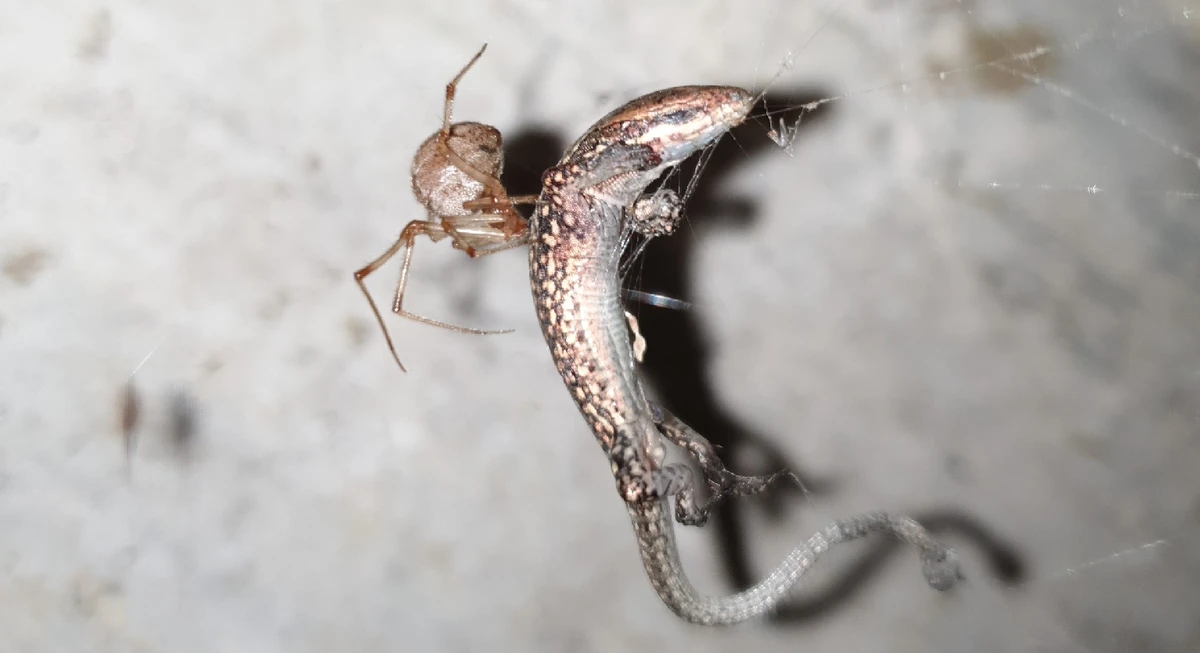
Parasteatoda spiders have extremely strong webs, capable of supporting prey several times heavier than the spider.
For parasteatoda spiders, this was the deciding factor in their inhabiting human homes. For them, a web isn't a hunting tool, but a real home, which they meticulously maintain: they repair, renew, clean it of dust, and discard the remains of insects caught in it. If possible, female spiders spend their entire lives in the same web—which can last up to 1.5 years. A respectable age for a tiny creature weighing less than a gram! 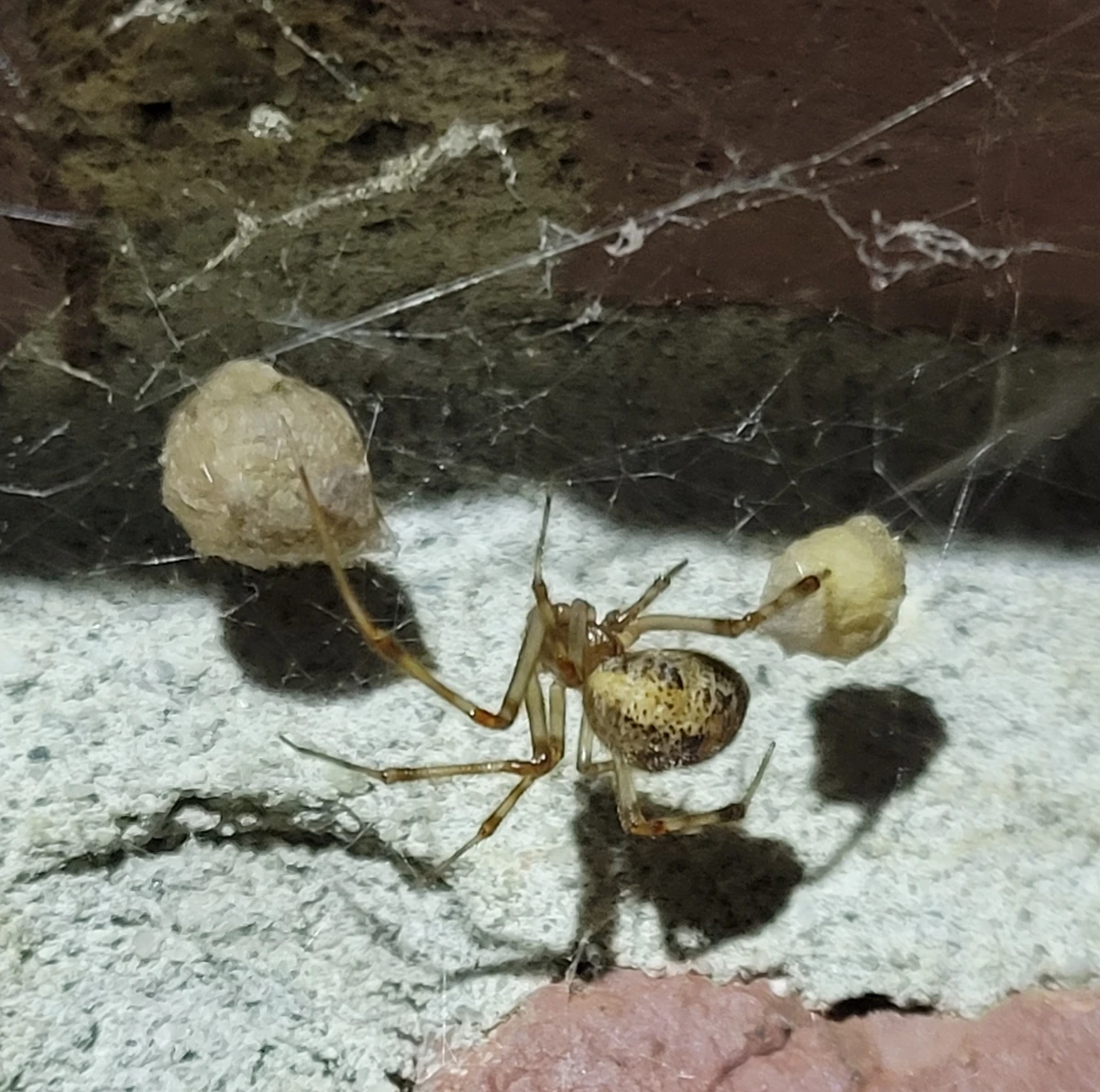
A parasteatoda, a secluded corner in the basement, and two cocoons with hundreds of eggs inside
Smaller males, however, don't have this luxury. Adult spiders are forced to wander the countryside in search of females. And considering that a male can be 10 times smaller than a female, finding their way to their beloved requires a tremendous amount of their already limited energy. They live much shorter than females—no more than a couple of months. But the reward will be worthy: he'll likely not be eaten. 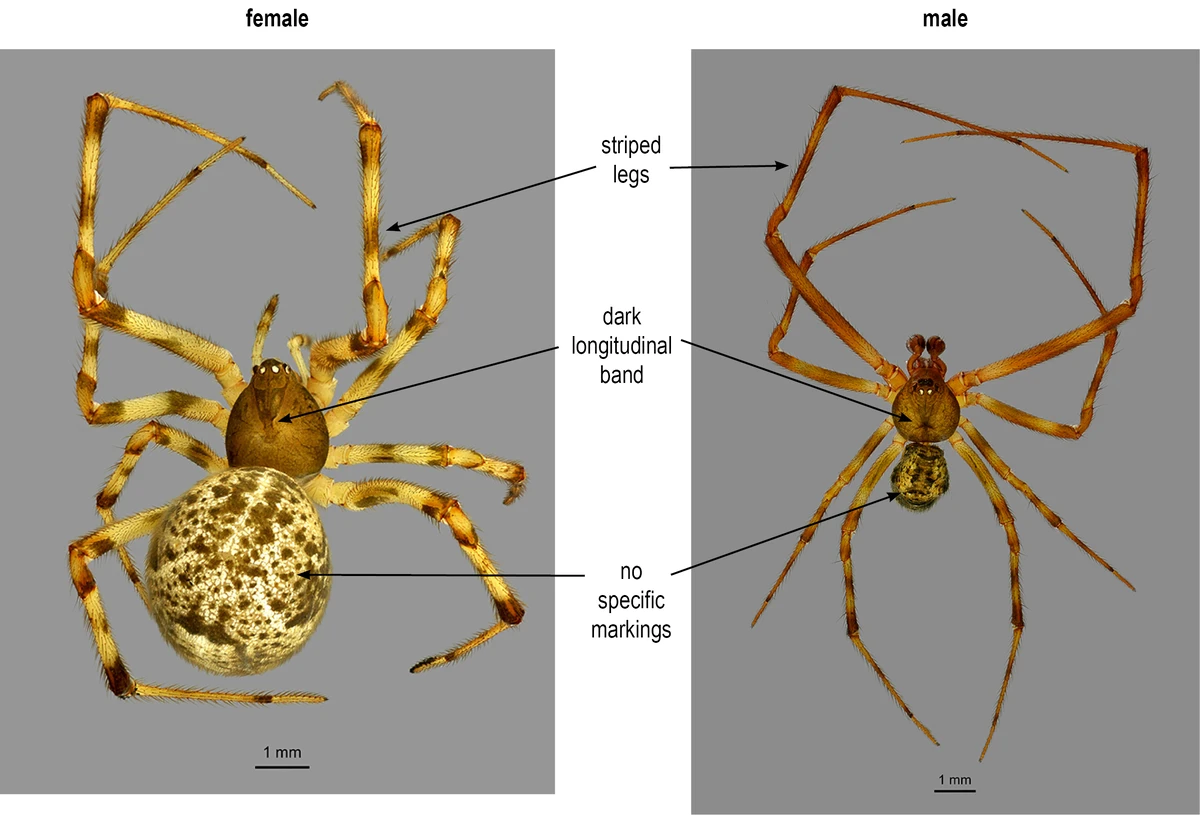
Distinguishing a male from a female is easy. The male has a rickety appearance: his legs are thin, his abdomen is small, but his pedipalps are thick and swollen. This is not surprising—the pedipalps are involved in reproduction.
Female house spiders are surprisingly loyal to their males. The chances of a female eating a male are slim before mating and zero afterward. She may also allow him to remain in her web and feed from her table. The male also enjoys this life: not only does he receive shelter and relative safety, but he can also keep out any adventurers looking to breed. However, not all males choose comfort. Some go in search of their next mate. The chances of this are slim, but not zero. Such respectful relationships between the sexes are extremely rare among spiders. Males are usually merely producers and disposable sperm carriers. 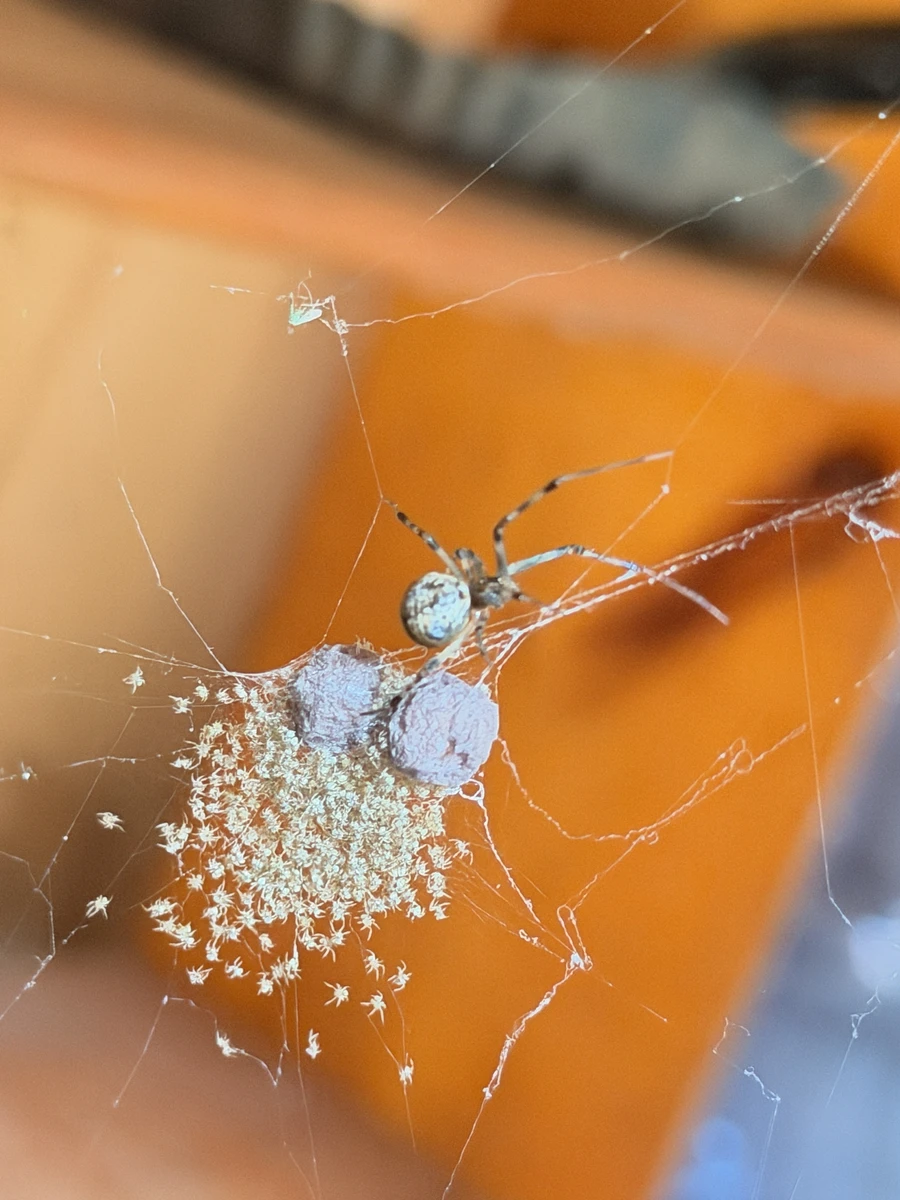
Forward, my children! Let's prove to humans that insecticides are unnecessary!
I hope the next time you see a spider in the corner of a room or a hidden corner of a kitchen cabinet, you won't kill it. All this spider wants is to feed on annoying insects and live out its little life in a cozy web. It doesn't spread diseases and can't harm you. Although spiders possess effective venom, they can't penetrate human skin. If it's bothering you or disrupting the feng shui of the room, simply destroy the web; the spider will get the message and move on. If not, then leave it alone and let it continue to destroy gnats and flies.