Nicknamed "Kukri": Why a businessman in Pakistan was sentenced to be dismembered into 100 pieces (10 photos)
Serial killers are found among people of all ethnicities, regardless of skin color, traditions, or religion. They also operate in Islamic countries, including those under strict Sharia law. A Sharia court sentenced Pakistani Javed Iqbal Mughal to strangulation and dismemberment into 100 pieces. Some considered the sentence excessively harsh, but the serial killer is responsible for at least a hundred human lives. Most of his victims were children and teenagers. 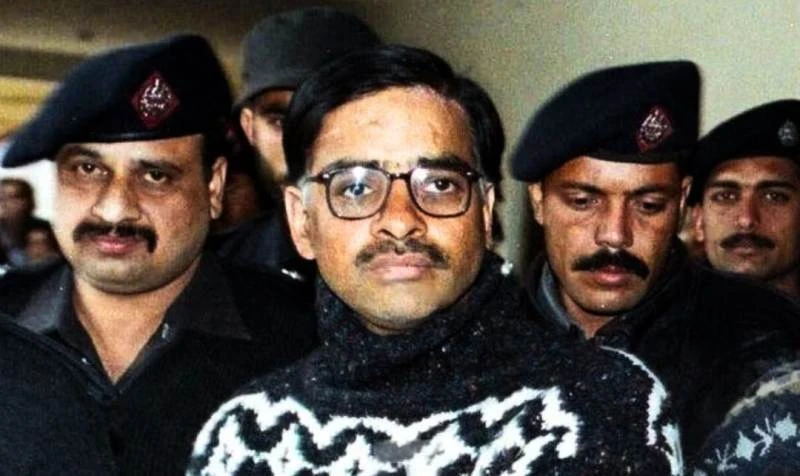
Javed's Childhood: Where Do Monsters Come From?
Most often, serial killers and rapists come from dysfunctional families and endured abuse and humiliation as children. But Javed Iqbal Mughal doesn't fit this stereotype. He was born in 1961 in Lahore to a wealthy and respected family. His father owned a pipe factory and a chain of stores, and his mother raised nine children, including one adopted child. 
Lahore in the 1960s
The children in the Mughal family wanted for nothing. The parents strove to provide their children with a good education and raised them according to Islamic values. But, as the saying goes, there's always a black sheep in every family. Javed Mughal was such an outcast. From early childhood, he was a troubled child: he fought with other children, bullied his siblings, and was prone to lying and manipulation.
The Outcast
When Javed didn't get what he wanted from his parents, he resorted to threatening suicide to get his way. According to his brothers, he was interested in violent films and weapons, especially bladed weapons. Despite this, Javed was quite intelligent and excelled in his studies. However, he was not a good student at school due to his arrogant and aggressive behavior. Once, he even persuaded other teenagers to set a fire in a classroom to get revenge on a strict teacher. However, guilt for this incident was never proven, and Javed escaped punishment. 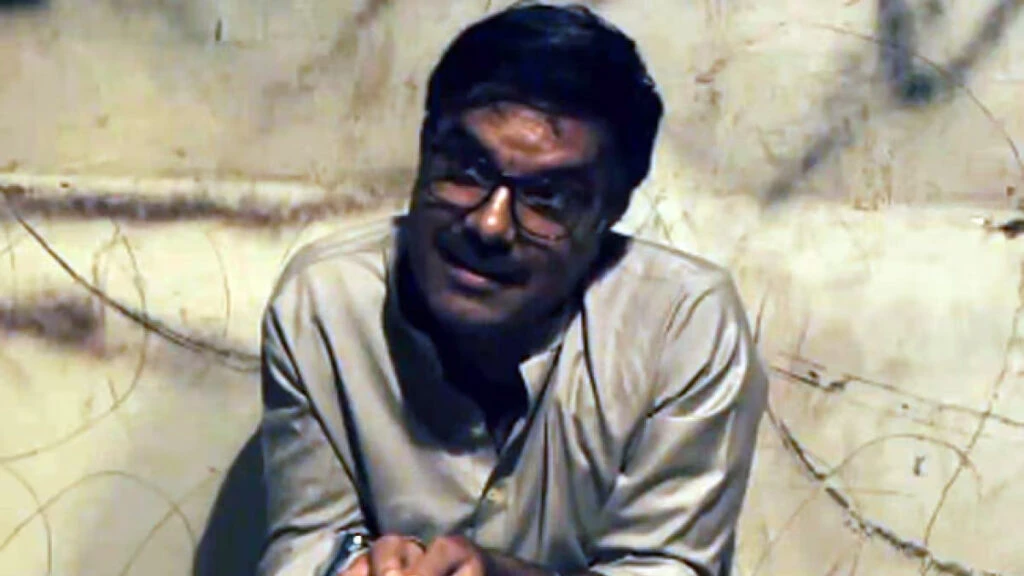
Despite his disgusting behavior, Javed was his father's favorite, and he was constantly pampered. After high school, he entered a good college, and his father gave him a metalworking workshop. But Javed failed to complete his education. In the late 1970s, he was seriously injured during a student rally and spent a long time in the hospital. After recovering, Javed decided not to return to school and focused entirely on his business.
But Mughal's interests weren't limited to metalworking and trade. He experienced an unhealthy sexual attraction to children and adolescents of his own sex. For a long time, he managed to suppress this passion, but ultimately it proved stronger than him. Javed understood perfectly well how strict his country's laws were against rapists and pedophiles. Especially considering that in Pakistan, executions are carried out publicly.
A Pervert from a Gaming Club
So he decided to take maximum precautions and spared no expense. The young pervert didn't ambush his victims in back alleys. In 1978, while still in college, he opened his own business – an arcade. Gradually, he built a whole chain of similar establishments where you could not only play games but also buy sweets, chips, and nuts. The prices at Mughal's establishments were ridiculous, and they were always filled with children.
Young video game lovers fell into the clutches of a pedophile through a simple but well-established scheme. A crumpled banknote would be deliberately thrown on the floor of the club, and some young patron would pick it up. At that moment, security would appear out of nowhere. The child would be accused of theft and immediately taken to the director's office. Javed was already waiting there. Under the pretext of searching, he would force the boys to strip naked and perform lewd acts on them. Eventually, the tearful and frightened boy would leave the office with the very same banknote, which the director would generously allow him to keep. 
Computer Club in Pakistan
Besides corrupting children in his clubs, Mughal also "hunted" on the streets. He befriended children and teenagers from poor families, gifting them with toys, clothes, and sweets. Having gained a child's trust, Mughal conducted a "reconnaissance mission" by inviting the boy to a movie. During the movie, Javed carefully assessed the child's suitability for his nefarious plans. He often managed to entice his new acquaintance with money or gifts and voluntarily persuade him to have sexual intercourse.
Deadly Impunity
Javed felt he had impunity: he was repeatedly detained, but his father's influential connections always helped him escape punishment. His parents were well aware of his inclinations and hoped he would change by starting a family. He married twice, but both wives left him after learning of his vile secret.
Mughal was so consumed by perversion that he even turned his marriages into instruments for satisfying his desires. His first wife was a girl whose underage brother was his lover. He also forced his sister to marry another young lover. In this way, he sought to bind his victims to himself as closely as possible. Javed had two children—a son and a daughter—but their mothers guarded them closely, keeping him away from them. 
Lahore Street
Over time, Javed grew tired of his "pranks" and craved thrills. He began attacking and raping children at knifepoint. In 1990, he raped a 9-year-old boy and was caught. But thanks to his father's intervention, he only served six months behind bars. He was soon charged again with attempted rape, but the case never even went to trial. The matter was decided by the local council of elders, who ruled that Mughal should apologize to the child and his parents.
Javed was forced to move to another area of Lahore. But even there, misfortune dogged him. In 1998, he lured two boys, aged nine and eleven, into his car and raped them. Mughal then released them, ordering them to report to one of the city's temples in three days. But the children were unafraid and told their parents what had happened. When they arrived at the meeting place with their father, he apprehended the rapist and handed him over to the police. However, the maniac once again got away with it—the court released him on bail.
Slum Killer
In the fall of that same year, 1998, Mughal lured two teenagers to his home and attacked them. But they proved to be no slouches, brutally beating the pedophile. The injuries were so severe that Javed spent 22 days in a coma and remained paralyzed for several months. His mother, unable to bear the trauma, died of a heart attack. Mughal refused to admit that he himself had caused the death of a loved one. He blamed his children for everything and decided to take revenge on everyone. In his diary, he wrote:
"My suffering killed my mother. They wanted to kill me, but they took my mother's life. I will take revenge by making 100 other mothers suffer." 
Nepali Kukri
From this moment, the bloody story of Javed Iqbal Mughal began. He had nothing to lose. His family had turned their backs on him, his father had cursed him, and his business had completely failed. The pedophile sold the rest of his property and bought a house in one of Lahore's poor neighborhoods. It was there that he planned to indulge his vices, no longer restraining himself in any way.
After the injury, the maniac's hands became stiff, and his legs became much less agile. Javed then decided to recruit assistants. They were 17-year-old Sajid, 13-year-old Sabir, and 9-year-old Nadeem. These were boys he had once molested and brought under his control. The teenagers didn't study or even think about work—they agreed to carry out any orders from their "boss" for a small fee.
Confession Letter
On New Year's Eve 1999, Mughal sent a letter to the police confessing to the murders of hundreds of children between the ages of 6 and 16. He claimed to have preyed on orphans, homeless people, and teenagers who came to Lahore from villages in search of work. He lured his victims to his home with the promise of well-paying jobs. There, he fed them juice laced with sleeping pills and then raped the unconscious children.
Afterwards, he killed the children in various ways. Some he strangled with a chain, others he slit their throats. Sometimes he used an oxygen mask through which he injected toxic cyanide fumes. Mughal dismembered the victims' bodies with a traditional Nepalese khukri, which later led journalists to nickname him Javed "Kukri." Among the boys killed, there was only one female victim. Mughal had killed a girl who was pregnant by his henchman, at the request of the henchman himself. 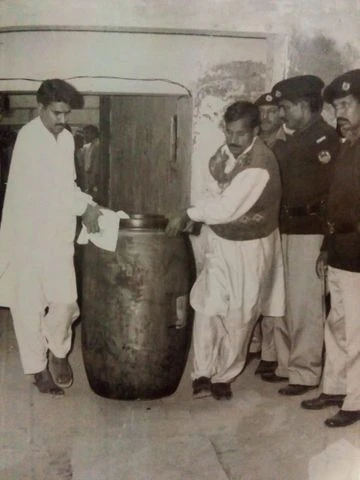
Barrel of body parts soaked in acid
The maniac soaked the dismembered corpses in acid, dissolved them, and flushed them down the drain. A strong cadaverous smell emanated from the toilets in his house. Of the hundreds of victims the maniac described in his diary, police found only parts of three children's bodies. Mughal prided himself on his ingenuity and even boasted that "disposal" of one corpse cost him no more than $2.40.
Voluntary Surrender
Surprisingly, after receiving the maniac's detailed letter, the police showed no interest in it. Law enforcement officers visited Mughal's home and, after a brief conversation, concluded he was simply insane. During the conversation, the maniac became enraged and even threatened the officers with a gun. But they took no action and only hurriedly left the strange psycho's home.
After this, Javed sent a copy of his confession letter to a local newspaper and disappeared. Journalists insisted on searching Mughal's home. This time, no one doubted the reality of the crimes. In the home of the serial killer and pedophile, they found a chain with traces of blood, two barrels containing partially dissolved remains, the victims' personal belongings, and the very same kukri cleaver he used to butcher the bodies. 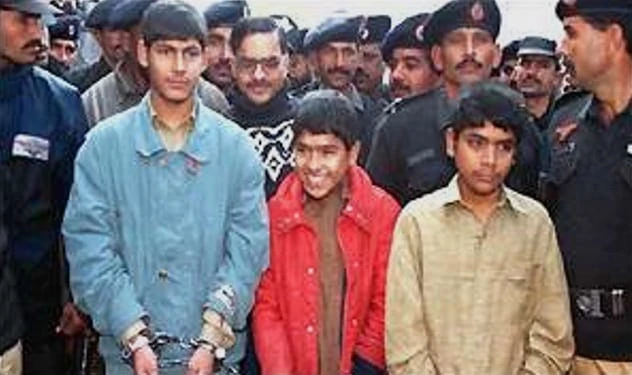
The Maniac's Child Assistance
The key clue was discovered in the killer's diaries, which contained numerous photographs of the victims. After this, a massive manhunt for Mughal began. Trying to cover his tracks, he sent a letter to the Lahore police stating that he had decided to commit suicide by drowning. Law enforcement and rescue workers combed the Ravi River, but no body was found. The search for Pakistan's bloodiest criminal reached unprecedented proportions, involving thousands of police and military personnel.
But the maniac remained elusive until he decided to surrender. On December 30, 1999, Javed Mughal appeared at the Daily Jang newspaper office and surrendered to reporters. He explained his actions by saying that the police would certainly have killed him if they had apprehended him. The criminal was handed over to the police. His underage assistants were soon arrested as well.
Trial and Sentence: Revenge or Justice?
The trial of Javed Iqbal became a sensation. More than 100 witnesses testified against him. The maniac himself unexpectedly changed his testimony, claiming he had incriminated himself under police pressure. He claimed he had staged the murders to draw attention to the problems of homeless children, and that the remains found belonged to animals. But no one took these claims seriously—the evidence was too compelling.
The sentence was handed down according to the Sharia legal concept of qisas, or "an eye for an eye." The killer was to be killed as he killed his victims: strangled with a chain, dismembered into 100 pieces, corresponding to the number of victims, then dissolved in acid and flushed down the drain. Mughal was additionally sentenced to 700 years in prison for the desecration of corpses. His senior henchman, Sajid Ahmad, was also sentenced to death. The investigation proved his complicity in 98 out of 100 murders. 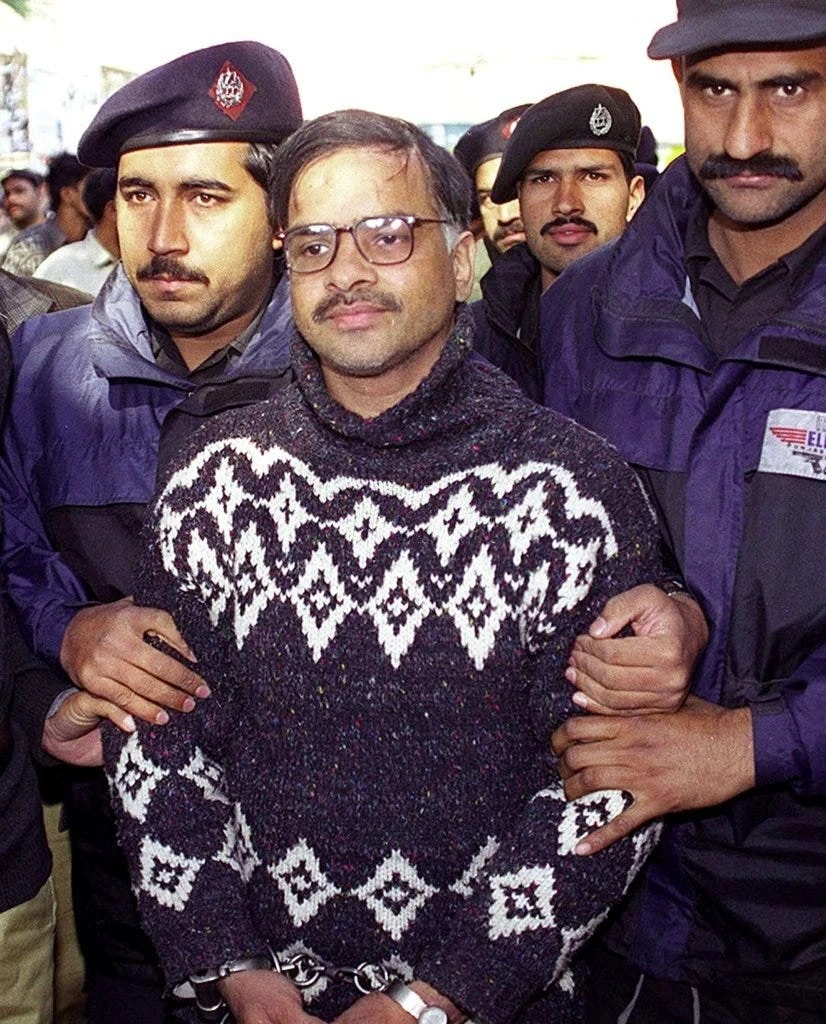
Two other underage assistants received 273 and 63 years in prison, essentially life sentences. The maniac's sentence, specifically the part about dismemberment, was deemed too harsh by religious organizations. The case was returned to the Sharia court for retrial.
But an appeal was unnecessary – Javed Mughal and his right-hand man, Sajid Ahmad, were found dead on October 9, 2001, in their cells, separated by a wall. The official version is suicide by poisoning. But many believe they were murdered to avoid further investigation. Mughal's family was offered the chance to claim the body for burial, but no one came.
A Legacy of Horror: Why Does Iqbal's Story Still Live?
The story of Javed Iqbal Mughal is not only shocking in its brutality, but also raises questions about how society could allow such a thing to happen. Why did no one notice the disappearance of hundreds of children? How could a serial killer operate with impunity for so long? These questions have formed the basis of documentaries such as "The Man Who Killed 100 Boys" (UK) and "Untold Stories of Pakistani Serial Killers" (Pakistan). In 2022, a film, "Javed Iqbal: The Untold Story of A Serial Killer," was even produced in Pakistan, but its release was restricted due to censorship. 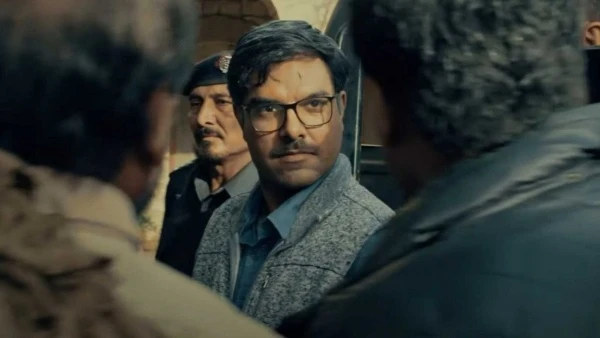
Still from the 2022 Pakistani film "Javed Iqbal: The Untold Story of A Serial Killer"
Iqbal left behind not only pain and fear, but also a manuscript titled "The Future Is Death: Confessions of Dead Children." It contains 100 pre-death interviews with his victims, which he never published. After his death, the manuscript was declared lost, but fragments of it still haunt those who study his case.
What do you think of this story? How do you think such tragedies can be prevented in the future? Share your thoughts in the comments!