Why Does the Subway Smell So Peculiar and What's the Danger of Its Source? Smell (6 photos)
There are certain smells that we strongly associate with a particular phenomenon or place. One of the most recognizable "aromas" is the one that wafts through subway stations. It's unmistakable, and some people even like it. So what's the smell of our subway stations? 
In the modern world, several technologies exist for laying railway tracks. Despite many innovations, in our country, sleepers are still used. These track elements can be concrete or even polymer, but wooden sleepers are the most common. 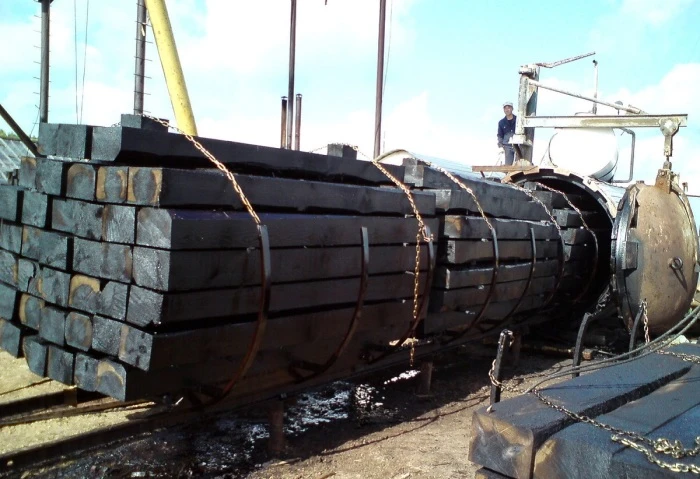
Ties after impregnation with creosote
Wood is known to have two main enemies: moisture and biological factors, more specifically, fungi, bacteria, and insects. Underground tunnels are quite damp, so the lifespan of wooden products is short. To protect wooden sleepers from moisture, microorganisms, and pests, they are impregnated with a special chemical compound—creosote. 
Karl von Reichenbach
It is a colorless or yellowish oily liquid, flammable and toxic. Creosote is almost insoluble in water and has that characteristic pungent odor. It is made from coal or wood tar using a distillation process. The substance was first isolated in 1830 by the German chemist and industrialist Karl von Reichenbach. Incidentally, he also first isolated paraffin, which is used today in a wide variety of fields. 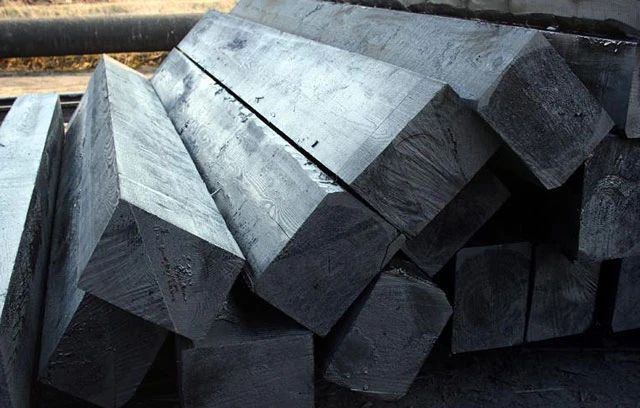
Creosote has been used to impregnate wooden sleepers for over a hundred years. The parts are treated with this liquid at the factory during manufacturing. The substance retains a strong odor for a long time, which can be detected tens of meters away from steel lines, both underground and on railways. 
Skin burns from liquid creosote spills
The periodic replacement of worn-out sleepers with new, freshly impregnated ones makes the creosote smell ineradicable. This "stench" poses no danger to passengers and subway maintenance personnel. However, sleeper impregnation shop workers are required to use effective personal protective equipment. 
Contact with liquid creosote, which contains toxic phenols, on the skin, especially mucous membranes, can cause severe burns and even cancer. Creosote fumes in confined spaces are also dangerous. For this reason, impregnated railroad ties are strictly prohibited from being used as a building material, although this point is often overlooked.