An Angel-Faced Killer: The Story of Christa Pike, the Youngest Female Suicide Bomber in the US (9 photos)
In the United States, women are rarely sentenced to death, and juveniles are almost never given such harsh punishments. For example, Leslie van Houten, who became Charles Manson's accomplice at age 19, was released after 52 years in prison. But Krista Pike was an exception. She became the youngest criminal in the last half-century to receive the death penalty. What did high school student Krista do? And why did journalists dub her "an angel with the heart of the devil"? 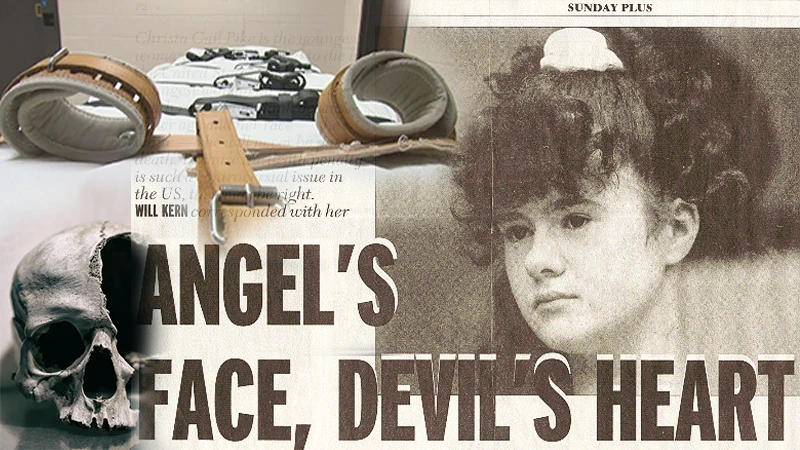
A Troubled Teen
Christa Gail Pike was born on March 10, 1976, in West Virginia. When she was very young, her parents divorced. She grew up in an atmosphere of neglect and cruelty. Her mother was often absent from home, and her stepfather, according to rumors, was not above physical abuse. The only person who treated her well was her grandmother. This difficult childhood left its mark on Christa. Already in elementary school, she became a problem child: she fought with her peers, was rude to teachers, and showed no interest in school. Krista attempted suicide in third grade, after which she underwent psychiatric treatment. 
Krista Pike as a child
At age 12, after the death of her grandmother in 1988, Krista attempted suicide again. Running away from home, petty crimes, and conflicts with others became part of Krista's life. She was repeatedly cited by the police for disorderly conduct and alcohol abuse. In tenth grade, she was sent to a juvenile detention center for a year. It was there that she learned about the Job Corps program—vocational training for teenagers from disadvantaged backgrounds. 
In late 1994, while attending the program's school on the agricultural campus of the University of Tennessee in Knoxville, she met Tadarius Shipp, a boy a year younger than her. The two quickly developed a relationship, and their shared interest in the occult and Satanism only strengthened their bond. It was this dark passion that would later play a tragic role in their lives and the lives of another girl.
University Park Massacre
In January 1995, when Krista was only 18, she committed the horrific murder of her 19-year-old classmate, Colleen Slemmer. The motive for the crime was simple jealousy—Pike was convinced Colleen was trying to steal her boyfriend. The tragic irony was that the victim wasn't even interested in the young man who sparked the conflict. 
The Deceased Colleen Slemmer
That night, Krista Pike, along with two accomplices—her boyfriend, Tadarius Shipp, and her friend, Shadolla Peterson—lured Colleen Slemmer into the woods. They made up a pretext: they were supposedly going to smoke marijuana "to make peace." What happened next shocked even seasoned investigators. The murder was incredibly brutal—the torture lasted over half an hour. Krista and Tadarius beat and kicked Colleen, burned her body with a lighter, and inflicted deep cuts with a knife. Shadolla, meanwhile, watched from the sidelines.
Then Krista grabbed a concrete block and struck Colleen on the head as she lay on the ground. The blow was so powerful that it cracked her skull. The killer later boasted that she had seen "her soul leave Colleen's body" with her own eyes. After confirming the victim was dead, the trio calmly returned to the dorm as if nothing had happened.
Arrest and Trial
The most shocking thing was that Pike not only made no attempt to conceal the crime, but even bragged about it. Instead of covering her tracks, she took a piece of the victim's skull from the scene—as a trophy, she said, "as a souvenir." The body was discovered a few hours later, and police immediately began searching for the killer. Krista Pike and her friends were arrested a couple of days after the murder. The girl immediately confessed, detailing the motives and details of the crime. 
Among Christa's belongings, detectives discovered a diary in which she detailed the course of the massacre and her feelings. The entries frequently contained references to dark cults, which had greatly influenced her imagination. Some fragments hinted that the murder was not simply revenge out of jealousy, but had ritualistic overtones. This theory was supported by a fragment of the victim's skull, which the girl kept as a trophy.
The investigation lasted almost a year. In early 1996, the trial began, attracting enormous public attention. A young woman with an innocent appearance stood trial as a cold-blooded killer. The jury was shocked not only by the details of the brutal crime but also by the defendant's complete lack of remorse. 
Krista Pike in court with her lawyer
The court noted numerous aggravating circumstances, including the ritualistic nature of the murder. A "souvenir" from the crime scene—a fragment of the victim's skull, which became important evidence—made a particularly strong impression. Considering the killer's complete lack of remorse, she was sentenced to death by electric chair—a rare punishment for such a young woman. Tadarius Shipp received a life sentence with the possibility of parole in 2026. Shadolla Peterson, a prosecution witness, was given a suspended sentence for admitting her role as an accomplice.
No Signs of Remorse
Pike's trial and harsh sentence were widely discussed. The reaction was expected: Krista became the youngest woman in the United States to receive the death sentence since 1976, when the death penalty was reinstated. While awaiting execution, she was sent to a maximum-security prison in Tennessee. There, Krista Pike repeatedly violated prison rules. 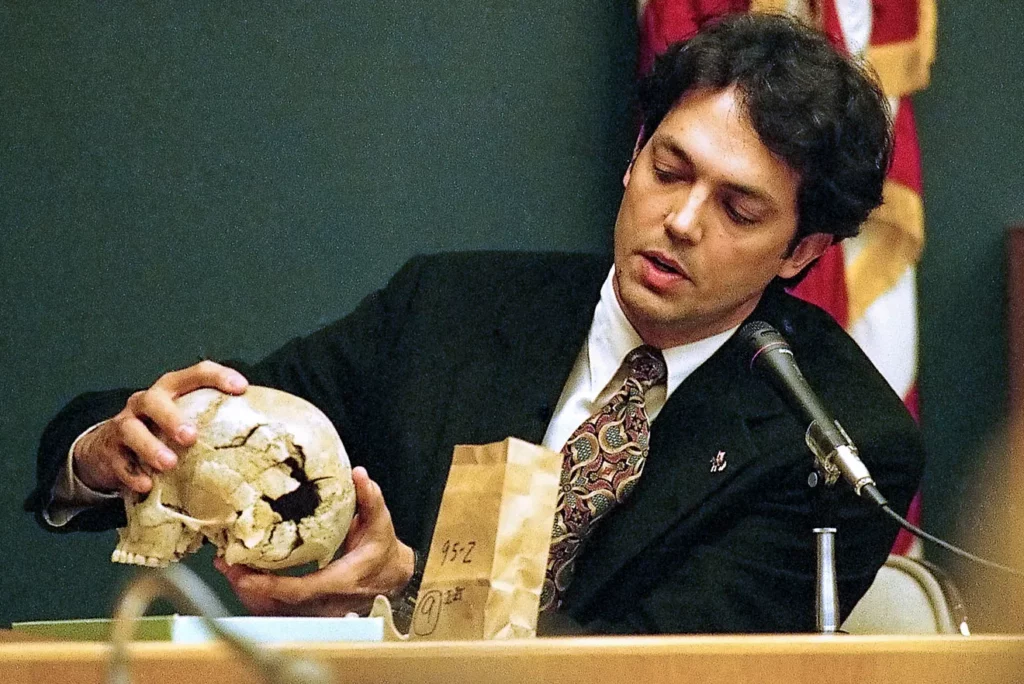
An expert in court demonstrates a model of a skull from which the killer removed part of the bone.
The wait for her execution dragged on, and Christa's behavior became increasingly aggressive. In 2001, she was retried – this time for the attempted murder of her cellmate, Patricia Jones. Christa and her accomplice attempted to strangle the victim with a shoelace. Fortunately, guards intervened in time, and Jones survived. 
Christa Pike in 2007
This case once again convinced American society that Pike deserved no leniency. In 2012, Christa "distinguished herself" again. She met a man through correspondence, and he attempted to arrange her escape from prison. The plan failed, and the man himself ended up behind bars. Christa received an additional sentence, which, however, did not change her situation.
30 Years Awaiting Execution
Krista Pike's lawyers filed numerous appeals, attempting to overturn her death sentence. First, they cited her young age, then her mental health. But they failed to sway the court, and its decision stood. Nevertheless, Tennessee authorities are still in no hurry to carry out the sentence. As of 2025, Krista remains on death row, and an execution date has not been set. 
Krista Gail Pike during an interview
Krista is in strict isolation and rarely speaks to journalists. Despite the fact that 30 years have passed since the crime, she continues to attract great interest from the media, psychologists, and criminologists.
Krista Pike is more than just a figure in the crime news. Her story is a tragic and horrific mixture of youthful aggression, mental disorders, and a lack of proper social support. It raises many questions about the nature of evil, the influence of environment, and the limits of punishment. Do you believe that juvenile or very young offenders should be held fully responsible for their actions?