The Fremont bomber: how a lover of astrology and explosives plunged an entire city into chaos (14 photos)
He knew forensics from the inside: he worked in the police lab, testified as an expert witness in court, and was better at reading fingerprints than most detectives. When bombs began exploding in Fremont in March 1998, Rodney Blach was the first to offer his assistance. He also became the number one suspect. This is the story of a man who played hide-and-seek with investigators for 18 months—and lost because of a soldering iron. 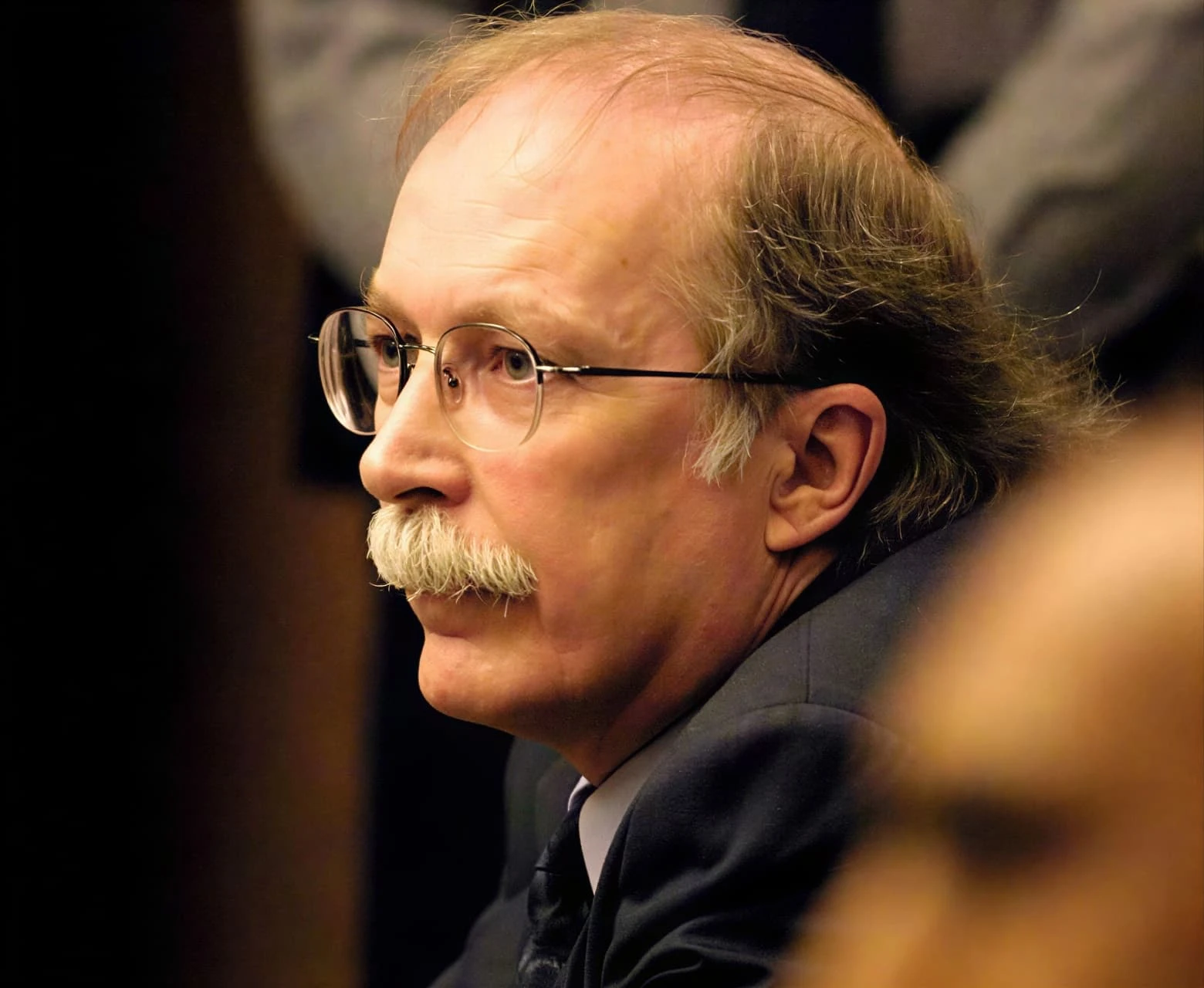
72 hours for five addresses
On the evening of March 29, 1998, a pipe bomb exploded on the porch of Fremont Police Chief Craig Steckler's home. The blast tore a hole about three meters in diameter in the roof and set the veranda on fire. Steckler was not injured—he was not home. 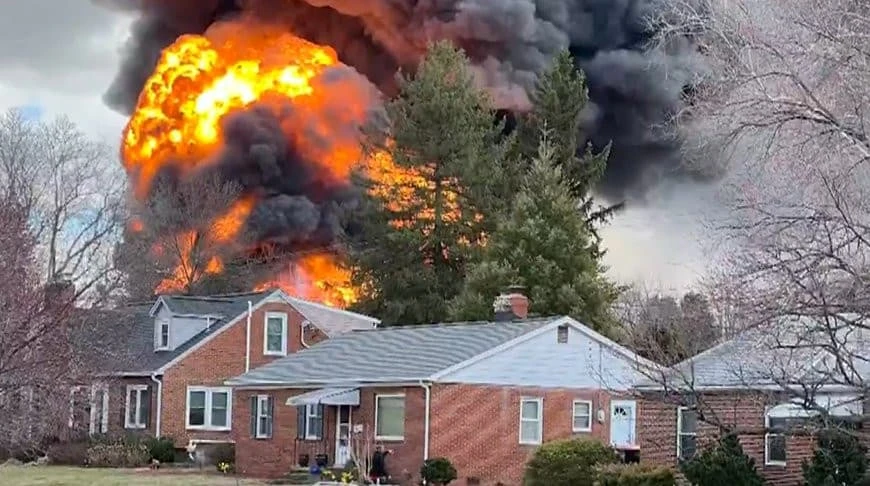
The explosion outside Steckler's home blew a hole about three meters in the roof—and it was only the first of six bombs.
That same day, Bob Wasserman, Steckler's predecessor and by then a city council member, found a brown paper bag on his doorstep. Upon hearing of the first explosion, his wife immediately called the bomb squad. And rightly so: there was a bomb inside, too. It exploded when the bomb squad attempted to defuse it. Fortunately, no one was injured.
That same night, two more explosions, much more powerful than the first, rocked the Mission Hills neighborhood. On Corte del Sol Street, the shock wave destroyed part of the first floor and the kitchen of the Chin-Chan Chi family's home. The family survived only by sheer luck: they had left late that evening to pick up pizza because the delivery man couldn't find their address. Only their 17-year-old daughter was asleep at home. A neighbor managed to pull her out immediately after the explosion. 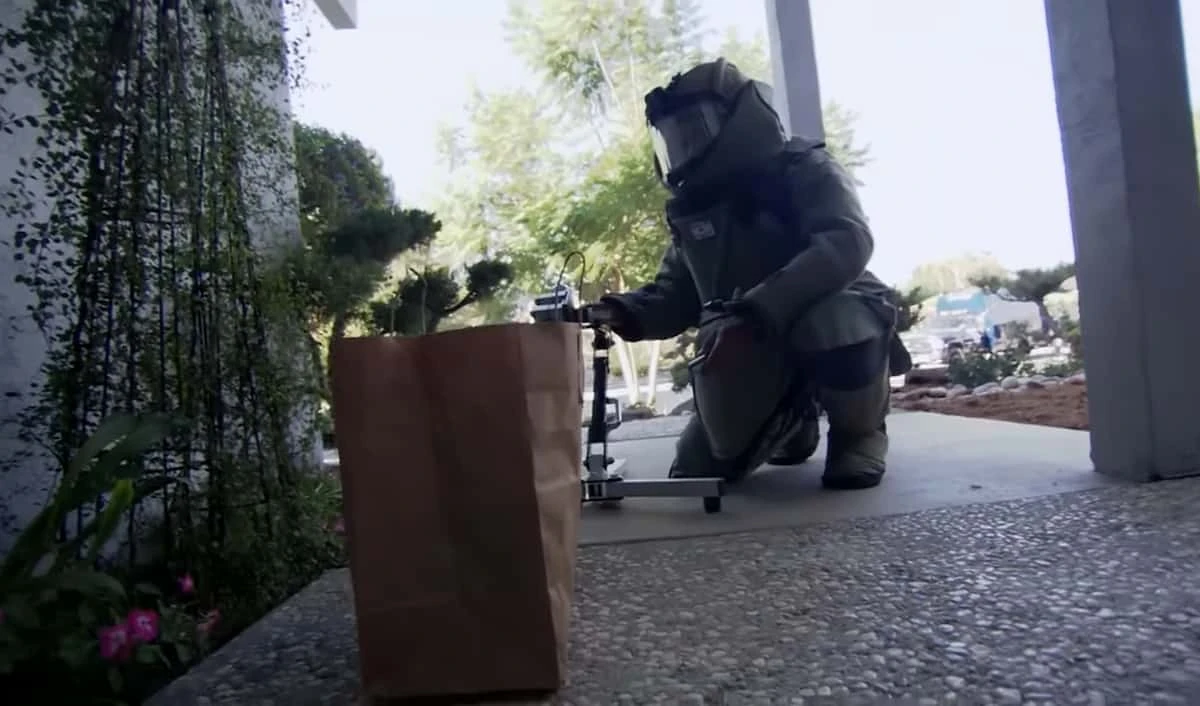
This is what the package looked like outside the Wasserman house—the bomb inside exploded when the bomb squad tried to defuse it.
Soon, a man called the Fremont Police Department. Changing his voice, he announced that another device had been planted in an unfinished building on the neighboring street of Vista del Sol. Police and the bomb squad immediately rushed to the scene—and narrowly avoided walking into a trap. A powerful bomb was lying right by the entrance, set to explode as soon as someone opened the door. Fortunately, the bomb squad noticed the threat in time and remotely defused the device with a water cannon.
A Bomb with an 8-Month Timer
A few days later, a sixth explosion occurred near the water tower. And again, luck struck: water company workers arrived a little later than usual. The result of three days: four explosions, two defused devices, and no fatalities. The survivors were saved solely by a stroke of luck. 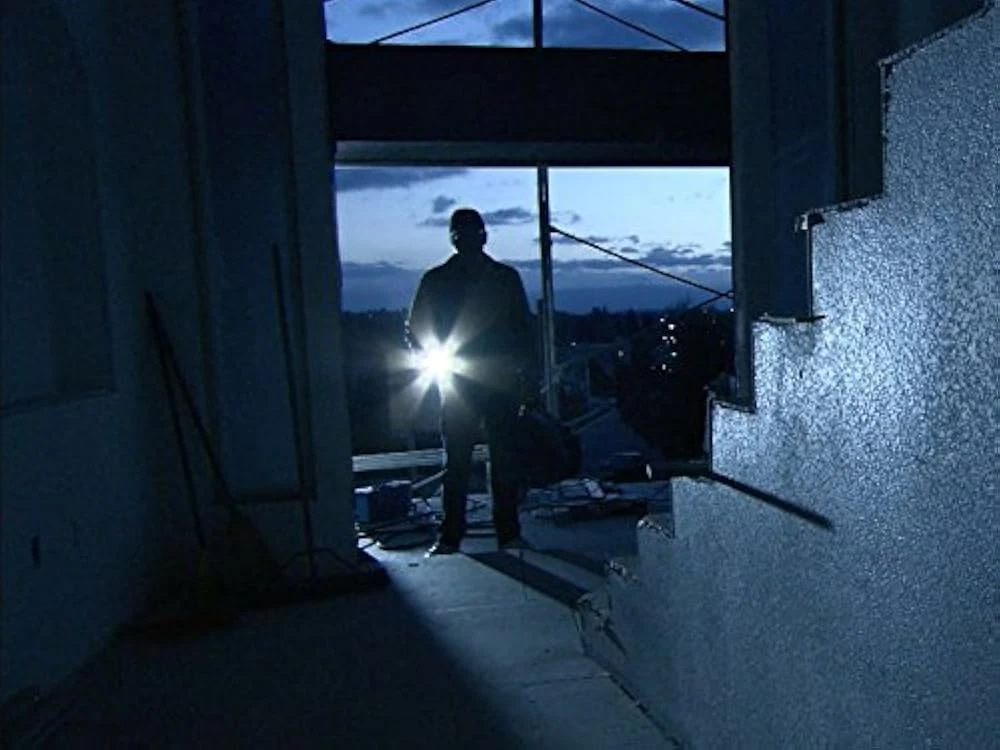
A bomb lay in wait for residents in a house on Corte del Sol for eight months.
Local police were unprepared for a case of such magnitude. The FBI and the Bureau of Alcohol, Tobacco, and Firearms (ATF) were brought in to investigate. The explosive devices were sent for analysis, and that's where the investigation hit a dead end. Alameda County prosecutors concluded that the bombs' electronic components were beyond the ATF's purview. These were the largest and most sophisticated pipe bombs the agency had ever examined.
Then District Attorney Thomas Rogers contacted the Lawrence Livermore National Laboratory, located in a neighboring city. Brian Andresen, head of the laboratory's Forensic Science Center, literally pieced together bombs from fragments to understand their design. What he discovered surprised even him. The timer consisted of a digital clock and a small relay circuit—a design that allowed the detonation to be programmed months in advance. The bomb under the Chi family's house had been planted eight months before the explosion, during the construction phase. Furthermore, repurposed car spark plugs were used instead of standard detonators. 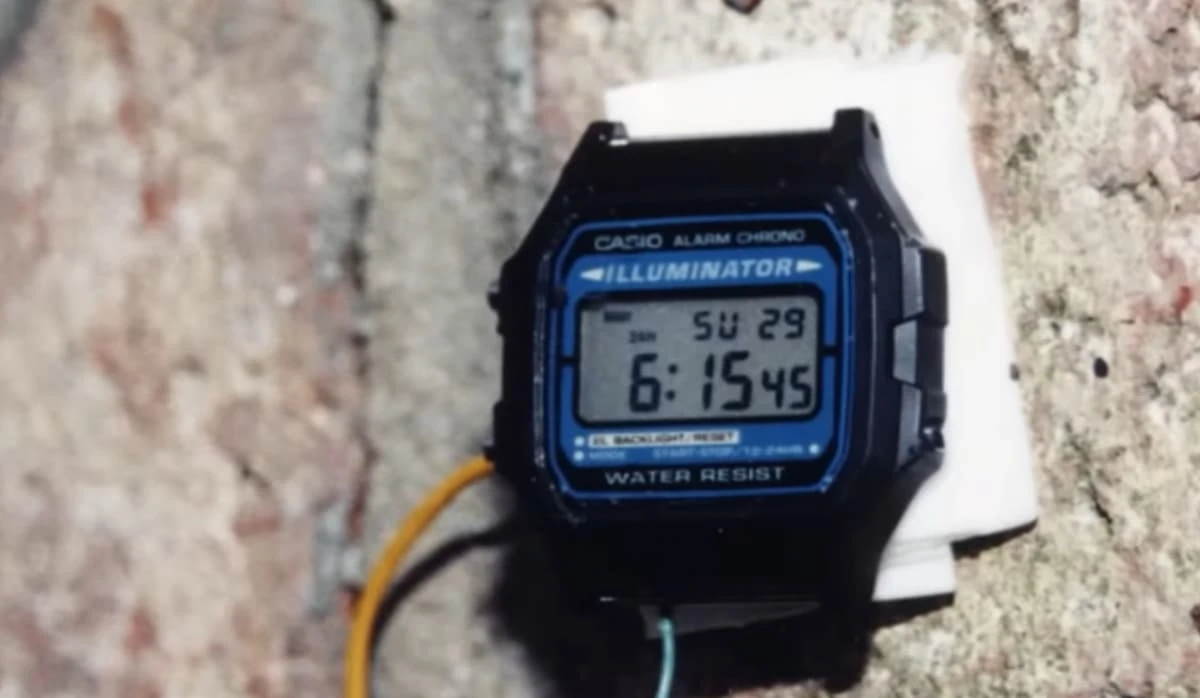
A digital clock-based timer allowed the detonation to be scheduled months in advance.
It was the clock that solved one of the main mysteries: when detectives examined the damaged house on Corte del Sol, they found fragments of a detonator linked to a Casio watch. The explosion was timed approximately a year in advance. The residents moved into the building three months before the incident, meaning the bomb was planted while the building was still under construction.
Experienced Volunteer
While investigators were figuring out the bomb's structure, panic gripped the city. Residents searched their yards and called the police with every possible excuse. Fremont was a quiet town 30 miles south of San Francisco—local detectives had never worked on cases of this kind.
That's where Rodney Blach came in. After seeing the news, he called the police and offered to help as an explosives expert. The officers readily agreed. Blach examined the explosion sites and declared: "It was a true professional, and the case was very serious." 
Bob Wasserman is a former police chief and, at the time of the explosions, a member of the Fremont City Council.
Blach had reason to believe this. From 1974 to 1979, he worked as a microanalyst in the Chicago police crime lab, examining trace evidence, fingerprints, soil, and blood samples, and serving as an expert witness in forensic trials. He knew how investigators collect evidence, what mistakes forensic experts look for, and what exactly could be used as evidence in court. 
Fremont is a quiet suburb of San Francisco, where nothing like this had ever happened.
Blach lived in the very same Fremont neighborhood where the explosions occurred. A few weeks after the explosions, he moved to San Diego. Investigators noticed him two weeks after the explosions: during a door-to-door search, they noticed a man who reacted nervously to standard questions, insisting he was being harassed by the police.
Playing Hide and Seek with Investigators
During the investigation, Blach behaved strangely, even by the standards of a suspect. He hid keys in his San Diego home, taped notes with clues under his desk, and slipped them into a jar of shaving cream. All to test whether agents could find them. He was literally testing police methods on himself.
Police searched his homes three times over 18 months. Direct evidence was lacking. A breakthrough came when one of the detainees—arrested in a different case—reported that an acquaintance had paid him $20 to rent a storage locker in his name. Blach became the suspect. 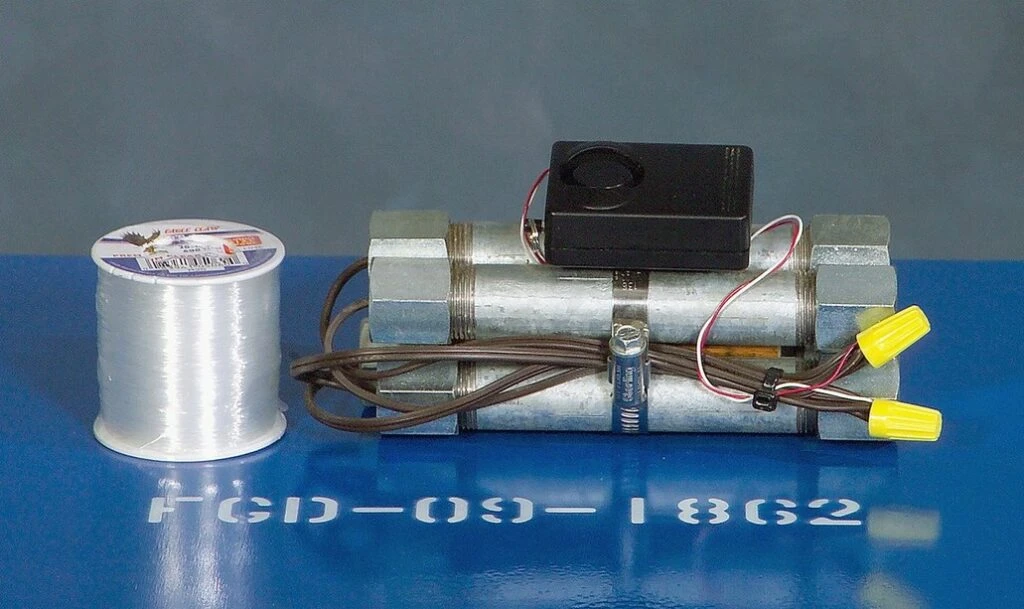
Homemade devices from Blaha's locker, where electronic circuit boards, gunpowder, and hundreds of pages of documents were found
When investigators opened the locker under a warrant signed by Judge Donald Squires, they found everything they needed: electronic circuit boards, gunpowder, bomb-making books, chemicals, and thousands of pages of handwritten documents. Among them were hundreds of pages of astrological calculations.
Brian Andresen of the Livermore Laboratory compared the circuit boards from the locker with those found at the explosion sites. The resemblance was obvious, but one detail proved even more important: the circuit board had been soldered on the wrong side. An amateur, albeit a very skilled one. This single flaw became the forensic link between the locker and the explosions.
Astrology as a Timetable for Terrorist Attacks
The investigation established the most important thing: Blakh had not chosen the times and locations of the explosions randomly. Behind it all lay a deeply personal grudge, which had developed into severe paranoia.
A year earlier, he had met Mina Siddique, the sister of a woman from an Afghan family he considered "mafia" dealing drugs and real estate. They had gone on a date. Mina refused to continue the relationship. Blakh perceived this refusal as a betrayal. He began stalking her, threatening her, and declaring that if she didn't stay with him, he would lose his entire family. 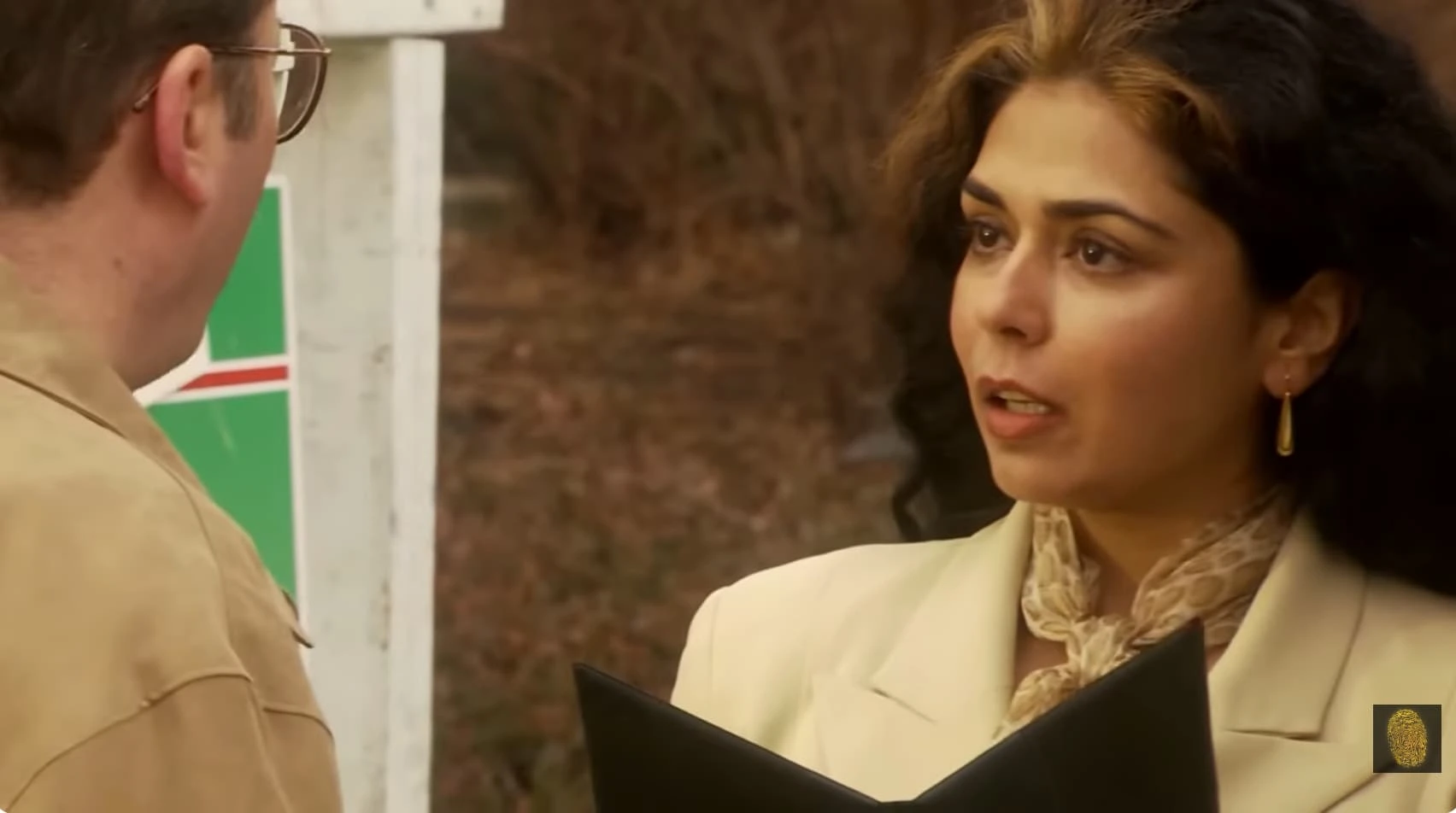
Actress portraying Mina Siddiq in documentary: Mina unknowingly became the first link in Blach's chain of motives
When Fremont police didn't believe his "revelations" about the "Afghan mafia" and "black helicopters," Blach decided the authorities were in league with his enemies. Police Chief Craig Steckler and former Chief Bob Wasserman became symbols of betrayal for him.
Astrology became a tool of revenge: he cast horoscopes for his "enemies," calculating the "worst days" based on Mercury retrograde, lunar phases, and fixed stars. The explosions were timed to coincide with a Muslim holiday—Blach called it his "Festival of Sacrifice." A nearly completed bomb was found in a locker; he planned to plant it at the police station when "the stars were right." 
Blach didn't set the date of the explosion—he calculated it: based on lunar phases, Mercury retrograde, and "dangerous days."
His targets weren't random. The bomb under the Chi family's house was intended specifically for the Siddiq family—they were supposed to buy the house, but were outbid at the last minute. Blach was taking revenge on everyone at once: the woman who rejected him, her family, and the police, who were "covering up for the criminals."
Arrested at the car
On October 5, 1999, at 9:10 a.m., about a dozen agents—some in plainclothes, others wearing jackets emblazoned with the word "Police"—converged on Blach's San Diego home. They were waiting for his wife, Penny Coppernall-Blach, to leave for work. As soon as she left, Blach left the house and headed for his car. He was arrested without resistance. He was not carrying a weapon.
Immediately after the arrest, a third search was conducted of the house. There, investigators discovered another piece of the puzzle: keys hidden in pre-arranged locations and notes under a table and in a can of shaving cream—the very same "tests" Blach had administered to the agents. 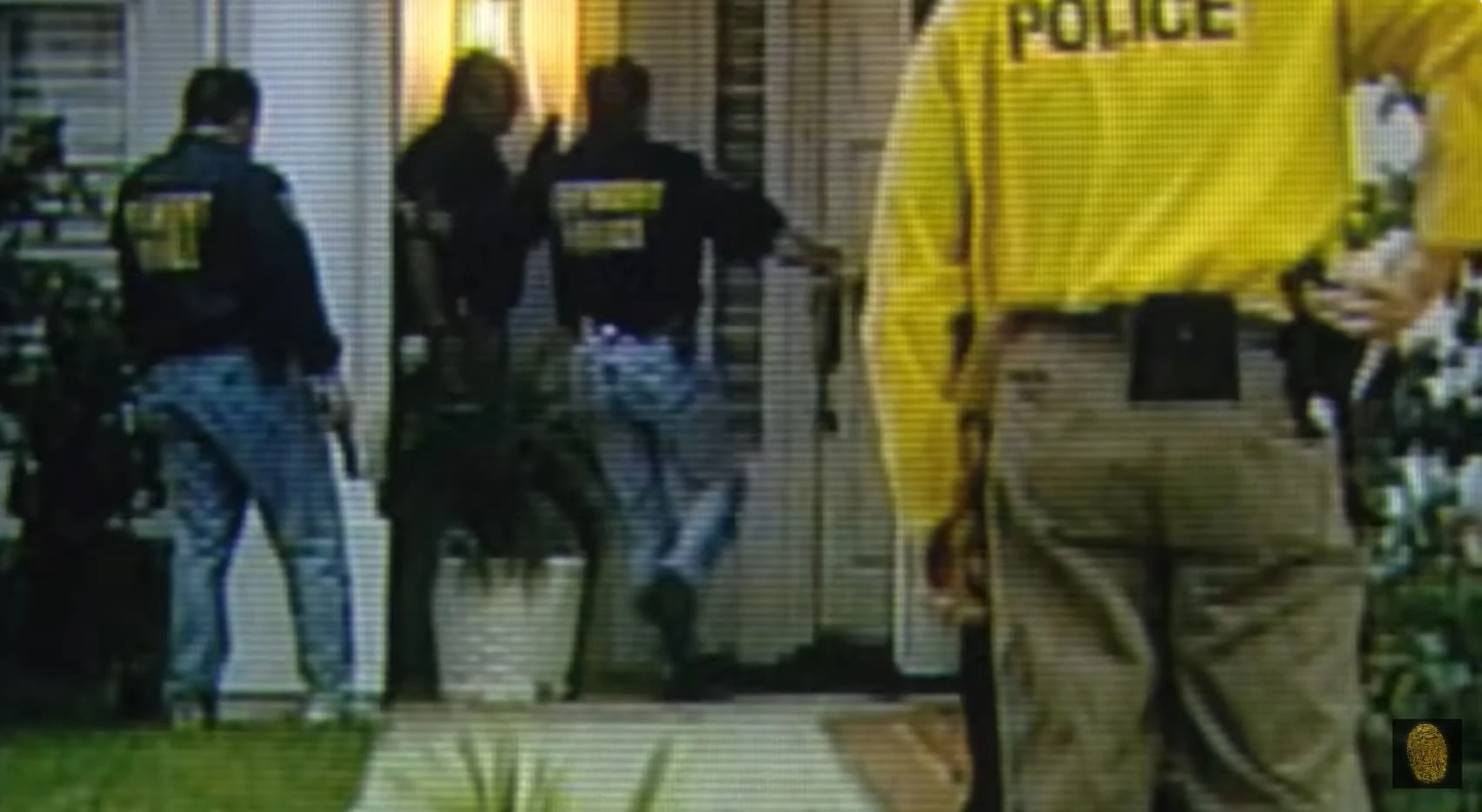
Blach was arrested in a residential area of San Diego, where he had moved shortly after the bombings.
Blach was transferred to the Santa Rita County Jail in Dublin, California. He faced 11 criminal charges, including attempted murder and bombing with intent to kill.
A trial he lost to himself
The trial began in early 2001 and lasted 11 weeks. Blach never took the stand. However, he actively consulted his own lawyers on technical matters—suggesting how to construct a line of questioning and what arguments to use against the prosecution's experts. His knowledge of forensics and judicial procedures worked against the investigation until the very end. 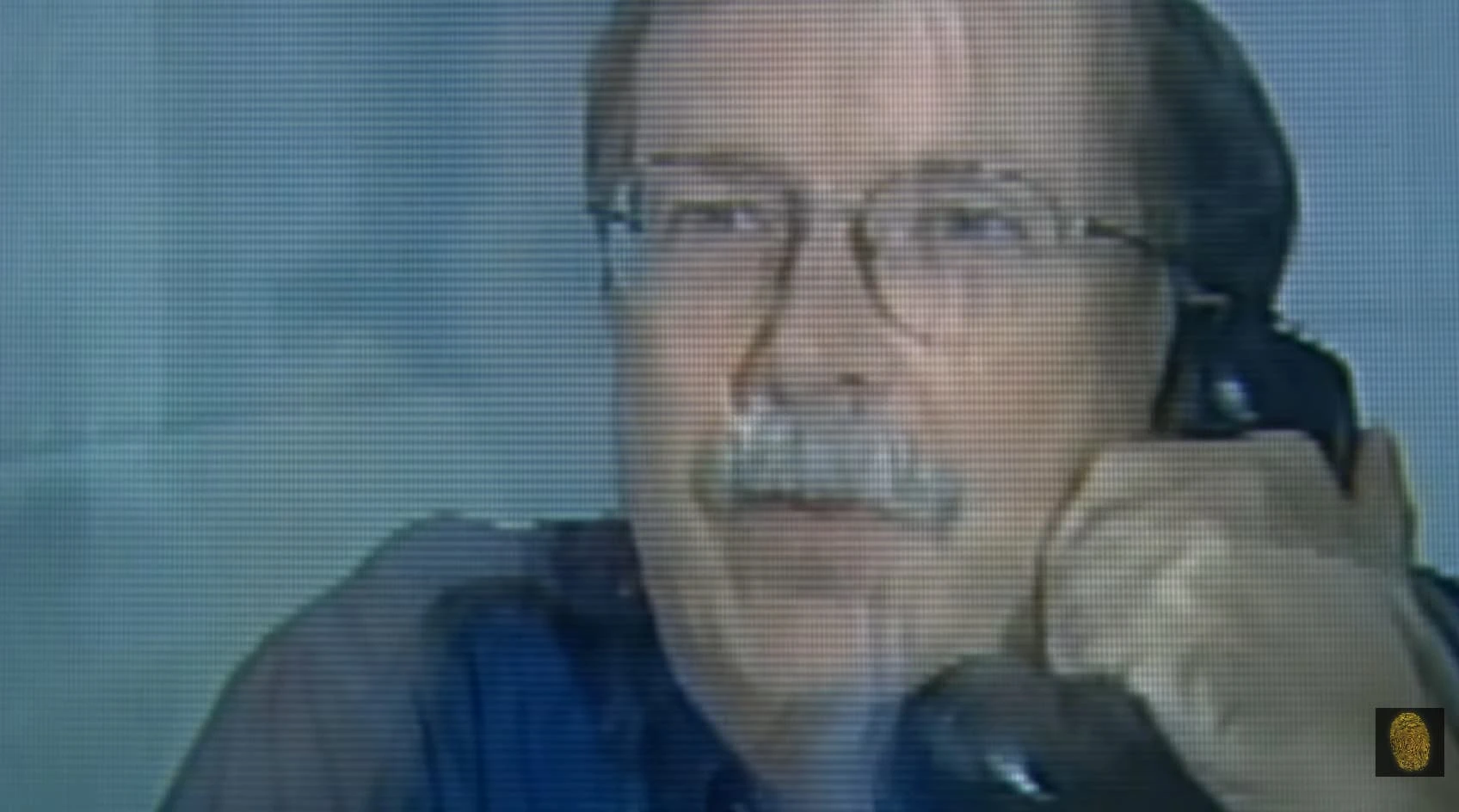
Still from a documentary about the Fremont bomber case: Blach appeared calm in prison, like a man confident in his innocence.
Brian Andresen from the Livermore laboratory became one of the prosecution's key witnesses. He created working models of all the timer boards and spark plug components for demonstration in the courtroom. According to Prosecutor Rogers, without his expertise, the case would have been a huge hole: neither the ATF nor the FBI had the necessary expertise in electronic circuits.
On June 1, 2001, a jury unanimously found Blach guilty on all 11 counts, including attempted murder. In September 2001, the Alameda County Court sentenced him to 37 years with parole eligibility, but not for at least 32 years. Prosecutor Rogers told reporters he was confident Blach would die in prison. 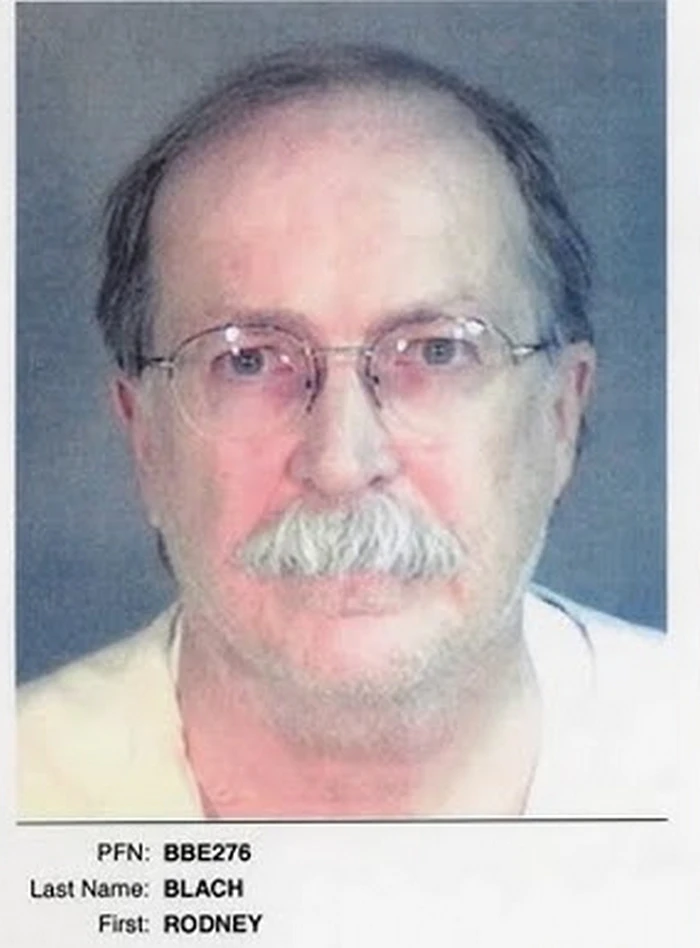
Rodney Blach's prison photo. He was not expected to receive his first chance at release until 2033.
At his sentencing hearing, Blach fired his attorney, William Linehan, right there in the courtroom, calling him "unreliable." The verdict was read without a defense attorney. Blach announced he would appeal. It was denied.
In 2005, the case became the basis for an episode of the Canadian documentary series F2: Forensic Factor, which aired on July 11 of that year. It was one of the most high-profile criminal trials in the history of Alameda County.
The Man Who Knew Too Much
Rodney Blach's story is a rare case where his professional knowledge of the investigative system backfired. He understood how forensic science works, knew what constituted evidence, and was able to create the appearance of assistance. All of this prolonged the investigation for a year and a half.
Ultimately, he was given away by a detail he likely considered insignificant: an incorrectly soldered side of a circuit board. Not astrology, not a plan, not a behavioral error—just one sloppy seam in the diagram. 
Mercury Retrograde as a Justification for a Terrorist Attack—the Logic of a Man for Whose Astrology Has Replaced Both Conscience and Common Sense
A former criminologist, rejected in love, convinced himself the entire world was a conspiracy. Personal resentment, paranoia, and belief in a "cosmic timetable" transformed him into a man who tried to blow up not just buildings, but his own illusion of justice.
Do you think knowledge of the system gives a criminal a real advantage—or does it ultimately only increase the number of mistakes they make?