Fake runes, ravens, and eye sacrifice: the truth about Odin, the main god of the Vikings (19 photos)
Odin is a famous Scandinavian god. An old man with one eye, two ravens on his shoulders, magical runes on his wrist—this image has long been standard. However, most of it wasn't invented by the Vikings. Much of the fashionable Viking symbolism is a subsequent creation. 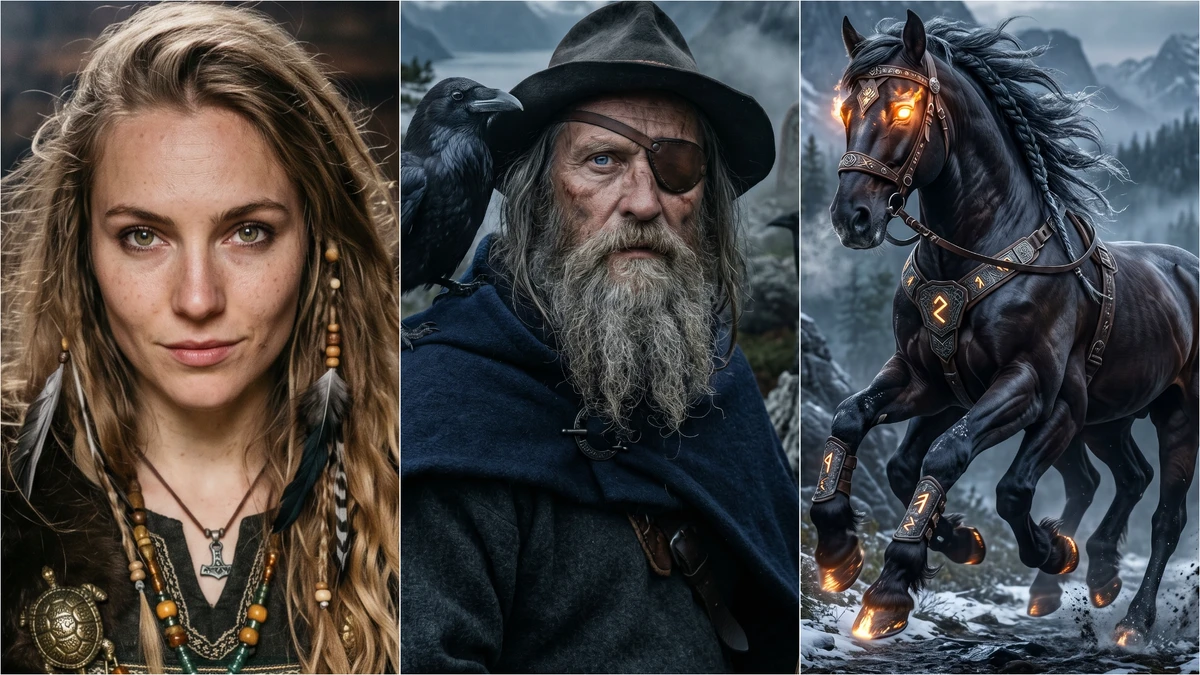
I've always been very interested in studying the mythology and culture of not only the Slavs (who are, of course, my favorites!), but also the Scandinavians. We have a lot in common.
Through the prism of a god—history, character, symbolism—we can much better understand the people who believed in him.
The Scandinavians are an interesting people for our history. The Northern Slavs actively collaborated with them. Our state arose in the north under the auspices of the Varangians—a military alliance of Slavs, Scandinavians, and Finno-Ugrics. The Scandinavians were the best warriors in Europe, and, of course, the Slavs valued them for this and adopted their technology. And the Scandinavians readily collaborated with the Slavs—after all, without the local infrastructure controlled by the Slavs, it would have been impossible to trade with the economic leader of the Middle Ages—Byzantium.
Who was Odin really? And why is his story so much more interesting than Greek myths.
The Feared Supreme God 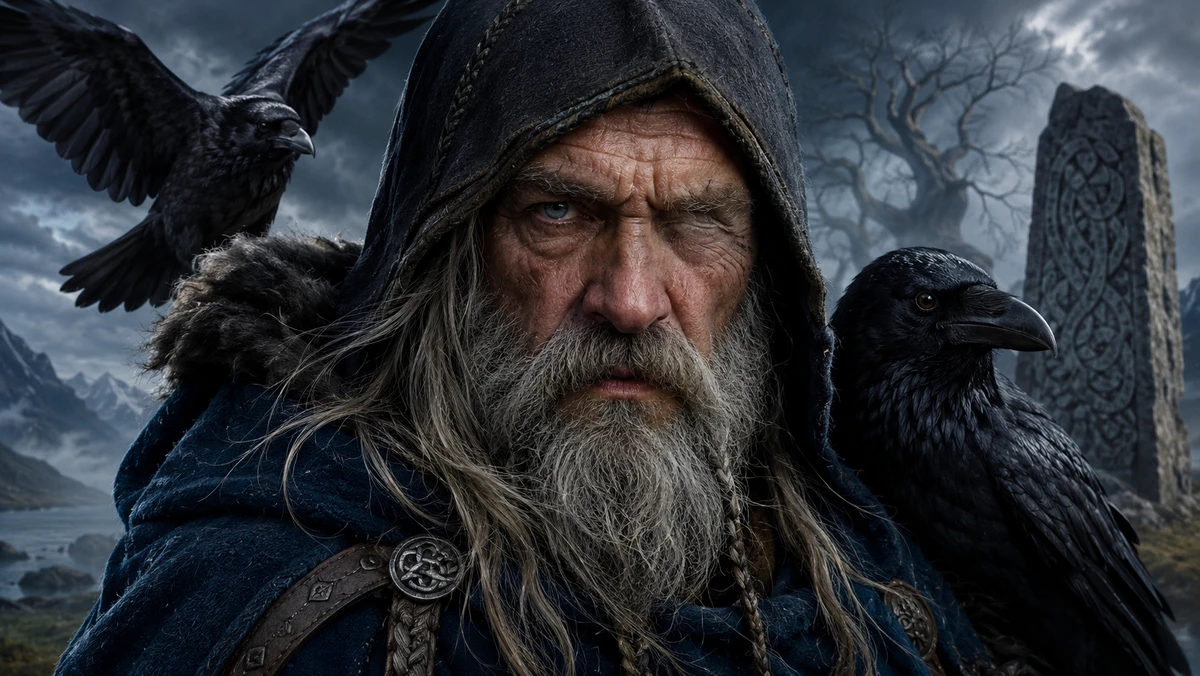
The name itself sets the tone. Old Norse Óðinn comes from the Proto-Germanic root wōd — "fury," "battle frenzy," "ecstatic frenzy." Add the suffix "ruler" and you get the full translation: "lord of ecstasy." Not the wise grandfather of the gods. Not the protector of the weak. Ruler of frenzy.
In the Norse pantheon, Odin stood at the pinnacle—the supreme god, the master of Valhalla. But his status is fundamentally different from that of other supreme gods in world mythologies. Zeus, Ra, Yahweh—all are, to varying degrees, eternal or omnipotent. Odin is not. On the day of Ragnarok, the final battle, the supreme god will fall under the fangs of Fenrir, the monstrous wolf.
Death awaits him. Final and true.
This in itself reverses conventional logic. The supreme god knows of his own demise and continues to act. Every day in Valhalla, fallen warriors—the einherjar—donned armor, fought until noon, rose for a feast, ate the flesh of the boar Saehrimnir (who also rose every morning), and drank wine. Day after day, year after year.
This is not paradise, but a full-fledged training camp before the end of the world.
Odin knew: Ragnarok was inevitable. And he prepared. 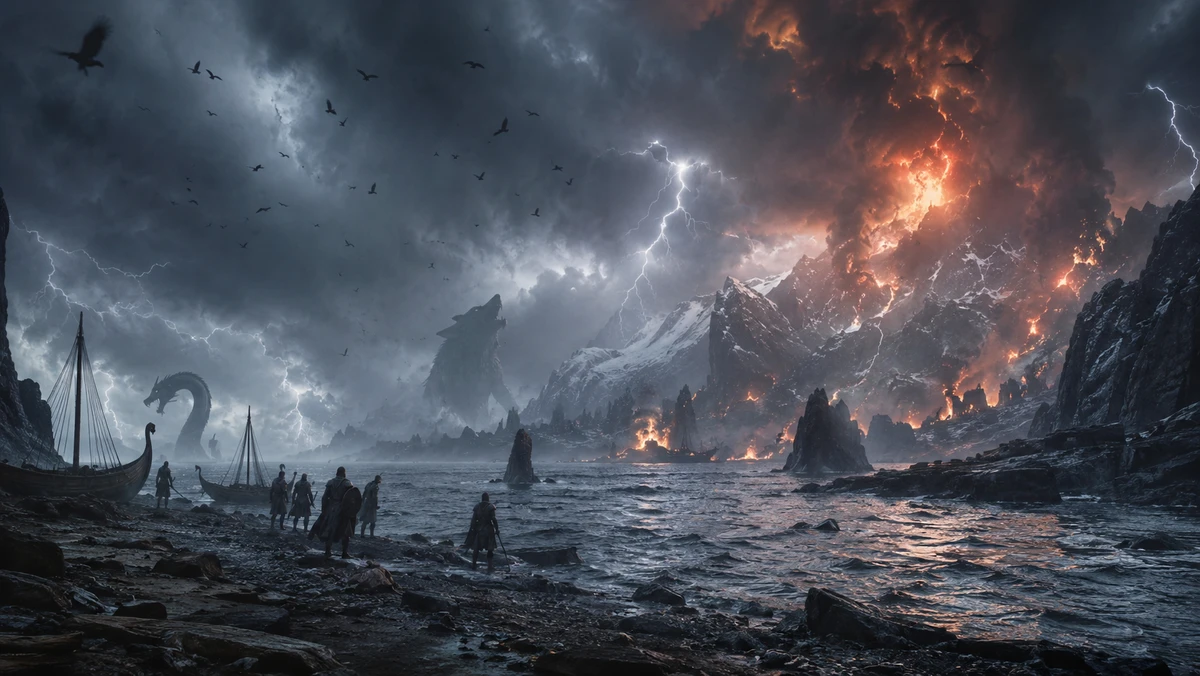
And this is an interesting point, again distinguishing Odin from the supreme gods of other pantheons. Odin seeks to control fate: he captured Loki's children to prevent the prophecy, and he forms the Einherjar as a special force for Ragnarok. And if he dies, as predicted, he counts on his sons to avenge him.
In short, he's a very active character, not accustomed to having fortune come his way.
The Most Expensive Sacrifice in History
Wisdom was never a gift to Odin. It always came at a price.
The first sacrifice was an eye. Beneath one of the roots of the world tree Yggdrasil lies the well of the giant Mimir, the keeper of wisdom. Odin came to it and asked for a drink. 
Mimir agreed—for one eye. Odin paid. Now his gouged-out eye lies in the cold water of an underground spring—an eternal pledge for knowledge.
The second sacrifice—nine nights of pain. In the "High Speech" from the Elder Edda, Odin himself describes what happened to him. He hanged himself from Yggdrasil, piercing himself with his own spear, Gungnir, and hung there without food or water for nine days and nights.
Researchers compare this story to shamanic rituals of voluntary martyrdom—a practice common among northern peoples. After nine nights, Odin received a revelation: runes and magical formulas.
The third sacrifice is dignity. The Scandinavians had a legend about the mead of poetry—a magical drink that bestows wisdom and poetic gift. 
Odin obtained the mead of poetry by seducing the giant's daughter, Gunnlöf, by climbing a mountain and drinking the entire supply. Flying away in the form of an eagle, he spilled some of the drink—those drops fell to the ground and were given to humans. Hence the poetic inspiration. The supreme god lied, seduced, and stole for knowledge.
Every time, the pattern is the same: if you want knowledge, you have to pay. The more important the knowledge, the higher the price.
Berserkers and "Feminine Magic"
Odin was not a god for everyone. 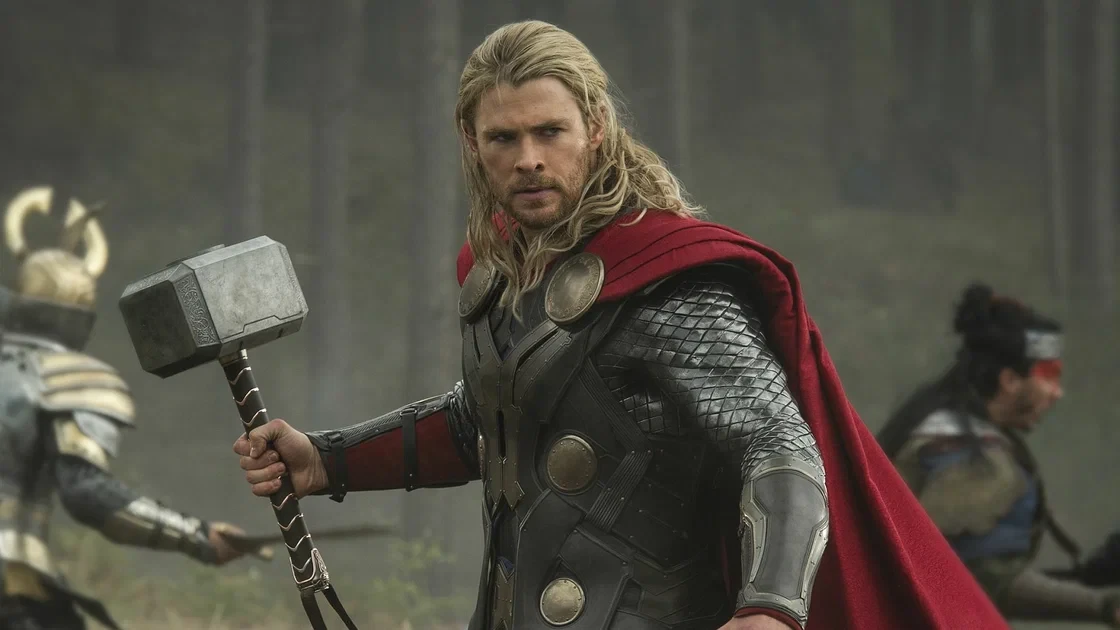
By the way, I quite like Chris Hemsworth's portrayal of Thor in the movies; he's a charismatic character.
Thor, who is now considered the god of warriors in popular culture, was actually a folk god.
Of course, Thor is the god of thunder and lightning, the protector of gods and men, who primarily fights giants and monsters, thus embodying martial might.
At the same time, he is described as a "friend of humanity," the patron of everyday life and the common people, not just the warrior elite.
The fertility god Freyr provided harvests to farmers. 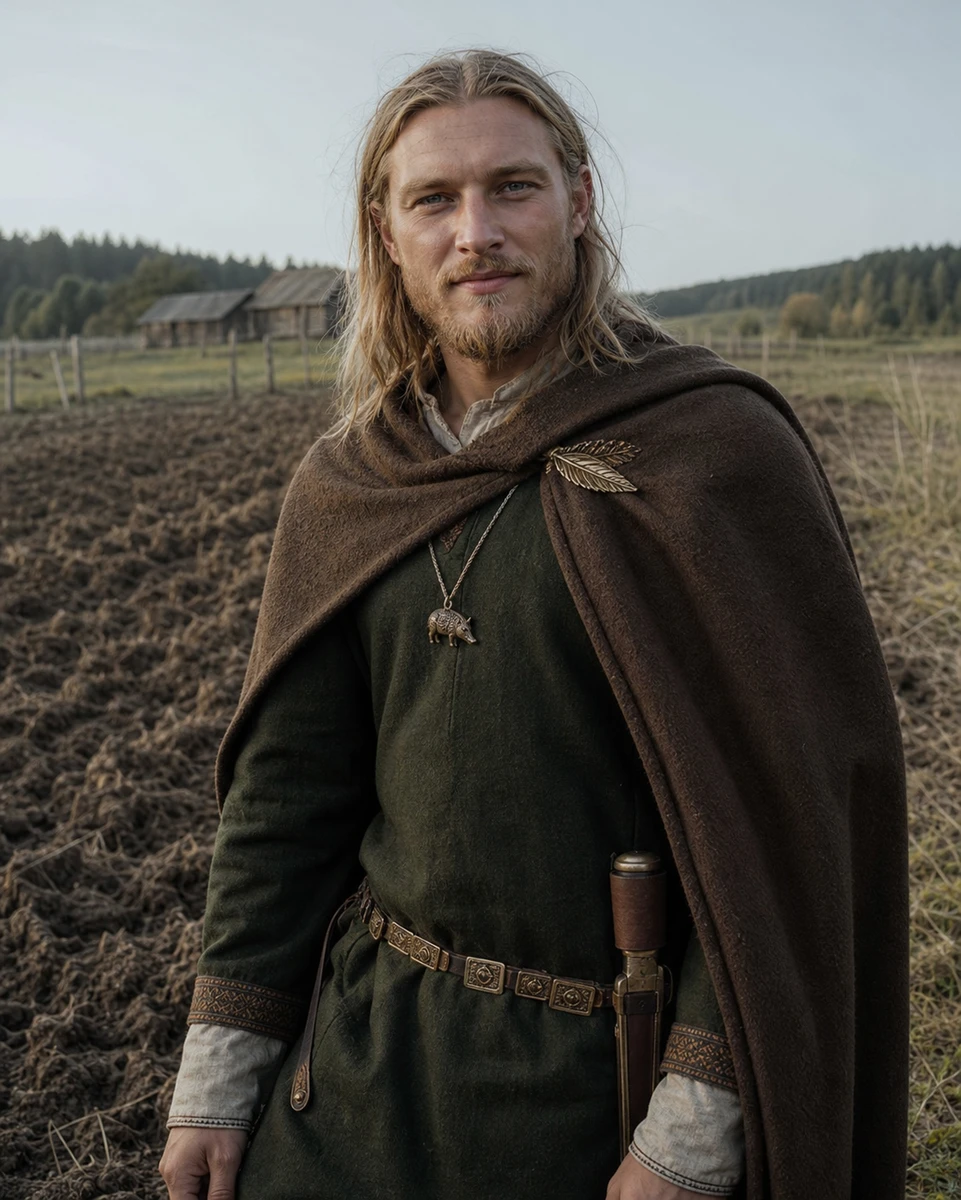
Odin was the god of the elite: kings, military aristocracy, poets, and magicians. His cult was aristocratic, not popular.
The most direct expression of this cult were the berserkers—warriors who entered an altered state of consciousness during battle. The word berserkr itself literally translates as "wearing a bearskin."
The Ynglinga Saga describes it this way:
"Odin made it so that his men fought without armor and were as mad as dogs or wolves."
What was this condition really like, and what caused it? Not fly agaric mushrooms, as is commonly believed online. 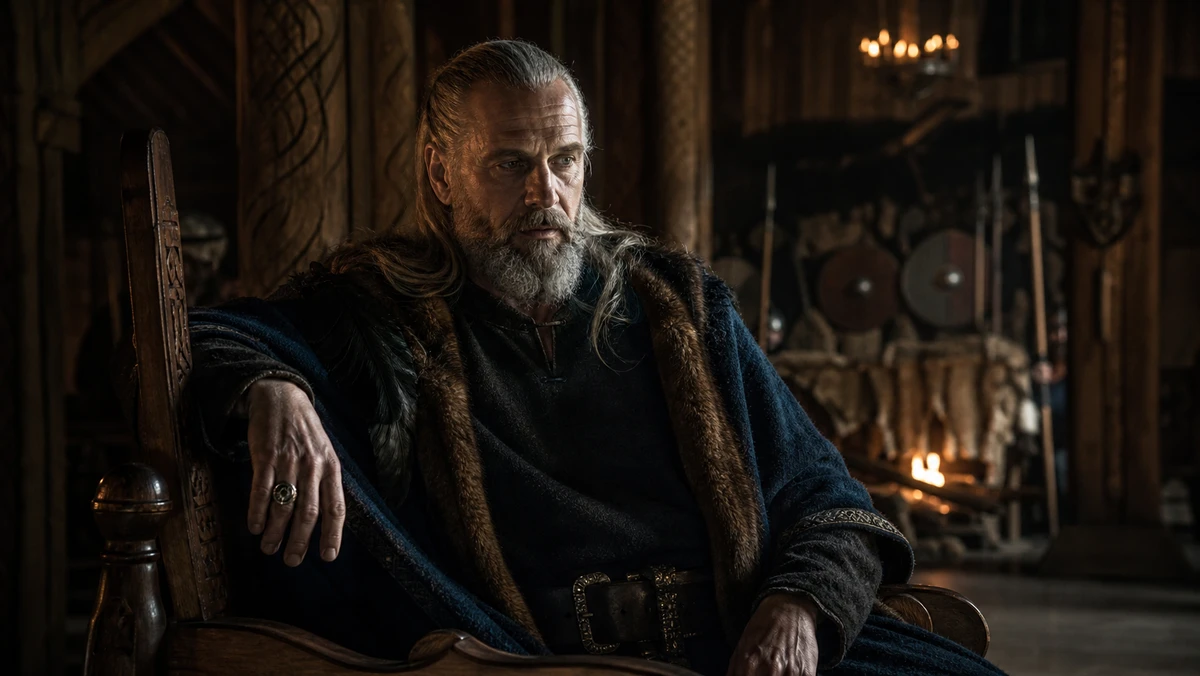
Researcher Harold Feibing demonstrated that the effects of fly agaric mushrooms—diarrhea, dizziness, complete disorientation—are completely at odds with the martial prowess described in the sagas. Modern neurobiologists explain the berserker state differently: a combination of adrenaline, collective ritual, rhythmic cries and battle songs, self-hypnosis, and identifying with a predator. So it's not chemistry, but psychophysiology.
But Odin's most unexpected paradox is seidr. Seiðr (seiðr) is a type of shamanic magic practiced primarily by women, völuvas. 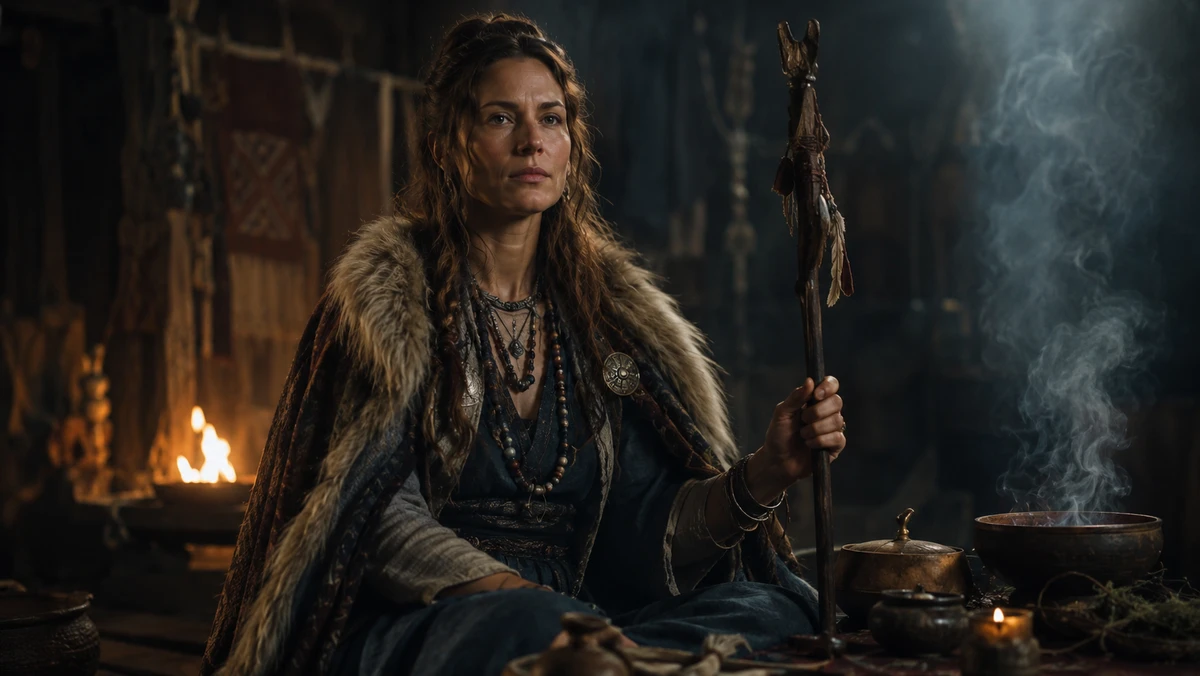
Völva
Its primary use was divination: to foretell the future of a person, a campaign, a harvest, the outcome of a battle, and the fate of an entire community. Seiðr was also used to break people's wills, cast and remove curses, inflict illnesses, influence the course of battle, and work with love magic and fertility.
By the standards of Scandinavian culture, this was an "unmanly" practice, humiliating for any warrior. There was even a specific word for it: ergi, "shameful femininity." In the pagan-era song "Loki's Quarrel," Loki directly mocks Odin for his possession of seidr, calling him effeminate. Odin doesn't deny it. And he's not ashamed.
The supreme god, the embodiment of the masculine ideal—warrior, king, conqueror—practiced magic considered shameful for any man in his culture. Because knowledge was more important than reputation. This paradox explains Odin's true identity better than any academic article.
Symbols: Fact and Fiction
The gap between reality and what's sold online is vast.
Odin's real symbols are well documented. The ravens Huginn and Muninn—"Thought" and "Memory"—are mentioned in the "Grimnir's Speech" from the Elder Edda: every morning they fly around all nine worlds, bringing news to the god. Odin admitted to worrying about them, as he is not all-seeing and depends on the birds. They are depicted on Gothic bracteates from the 5th-6th centuries and Swedish runestones from the 9th-11th centuries. This has been confirmed archaeologically. 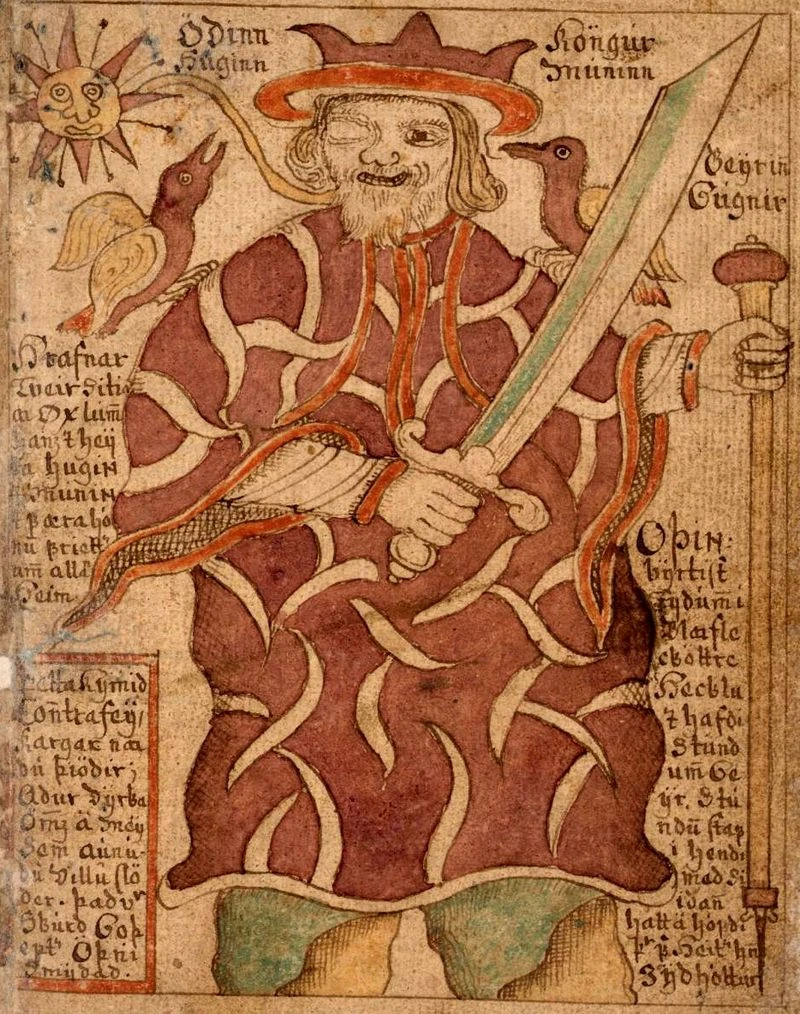
Interesting fact: ravens were indeed used by the Vikings for navigation. The "Book of Settlements" tells of the sailor Floki Vilgerdarson—he took three ravens with him on his voyages. The first returned, the second returned to the ship, the third flew forward. Floki headed there and found land.
The wolves Geri and Freki—"the Greedy" and "the Gluttonous"—are confirmed by the "Grimnir's Speeches": Odin feeds them food from his own table, while he himself drinks only wine. 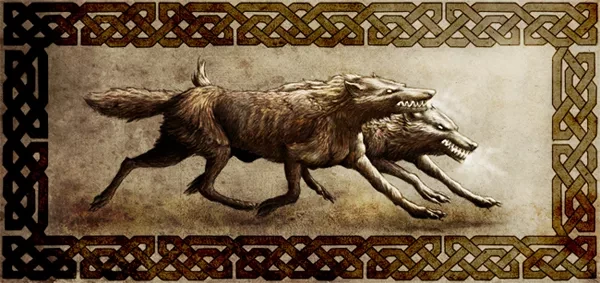
The spear Gungnir, which never misses, is mentioned in several poems; the tip of a spear from Damsdorf, Germany, bears the inscription ranja—"he who puts the enemy to flight." 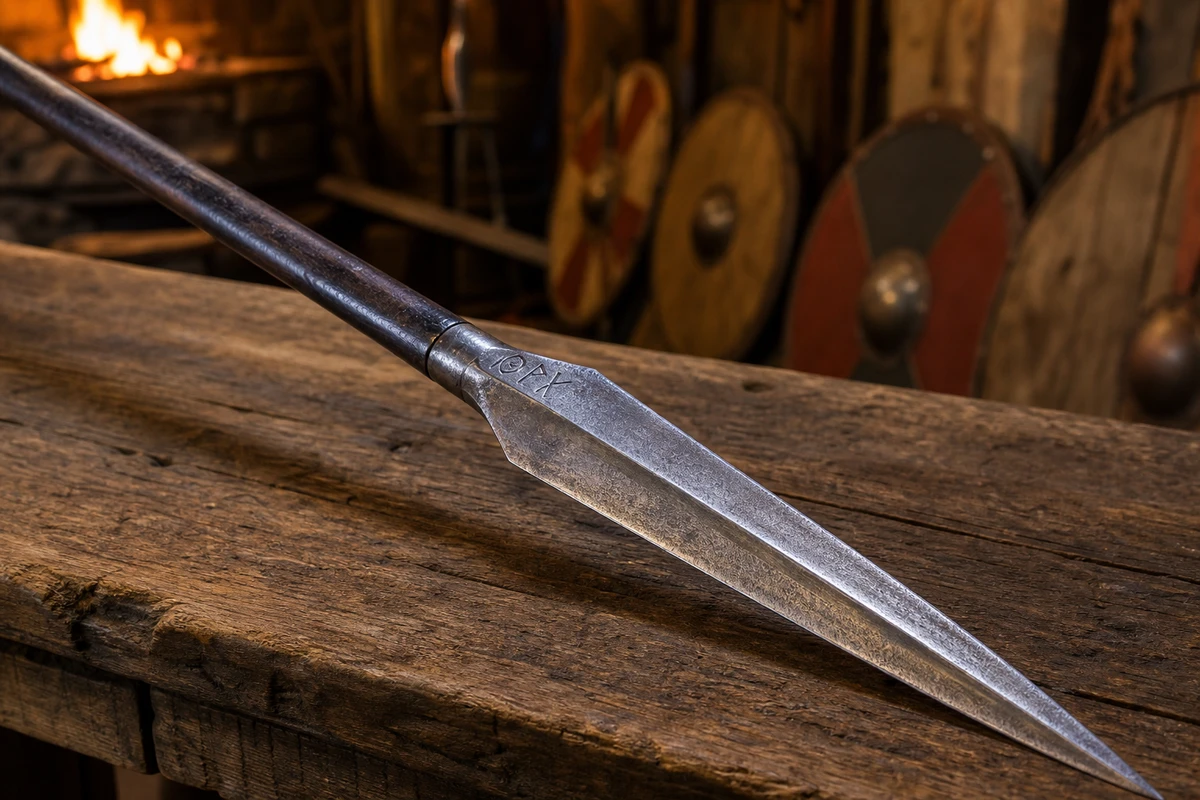
Sleipnir, the eight-legged horse, was depicted on Gotlandic stones long before Snorri wrote down the myths. One-eyedness, as a symbol of sacrifice, is an integral part of the image in all sources. 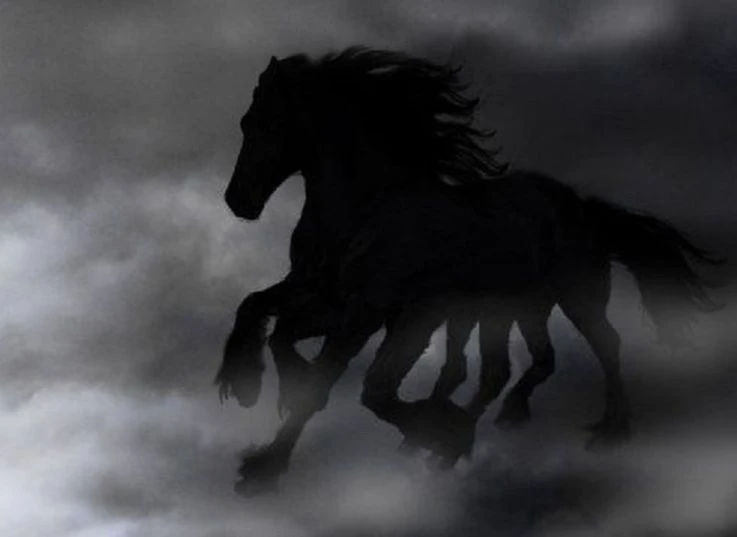
Now about fakes and real symbols.
The triskelion—three intertwined horns, a popular "symbol of Odin"—first appeared in 1997 in a book on modern paganism. It is not mentioned once in the Elder Edda, the Younger Edda, or any other ancient texts. It is a modern invention, twenty years old, that has been dubbed "a thousand years old" online. 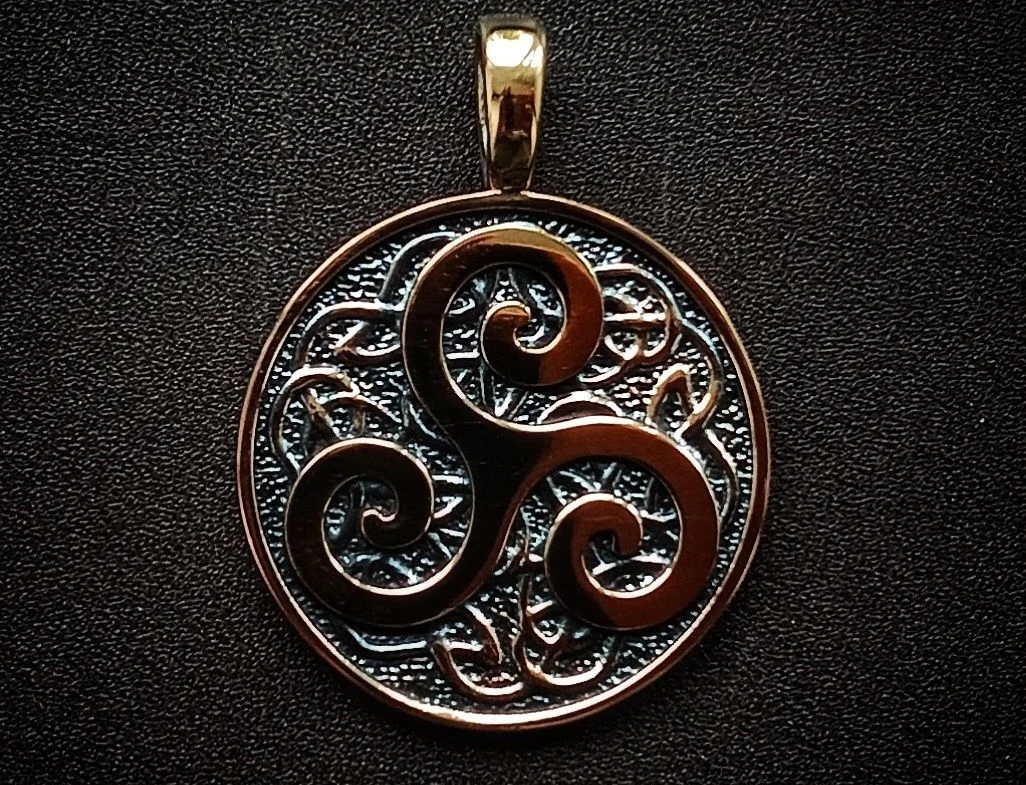
The triskelion is a typical modern invention with a Scandinavian theme.
The Valknut is a real symbol. It consists of three intertwined triangles and is found on only one 11th-century artifact, the Tengelgård stone in Sweden.
But attributing it to Odin, as marketplaces do, seems strange. 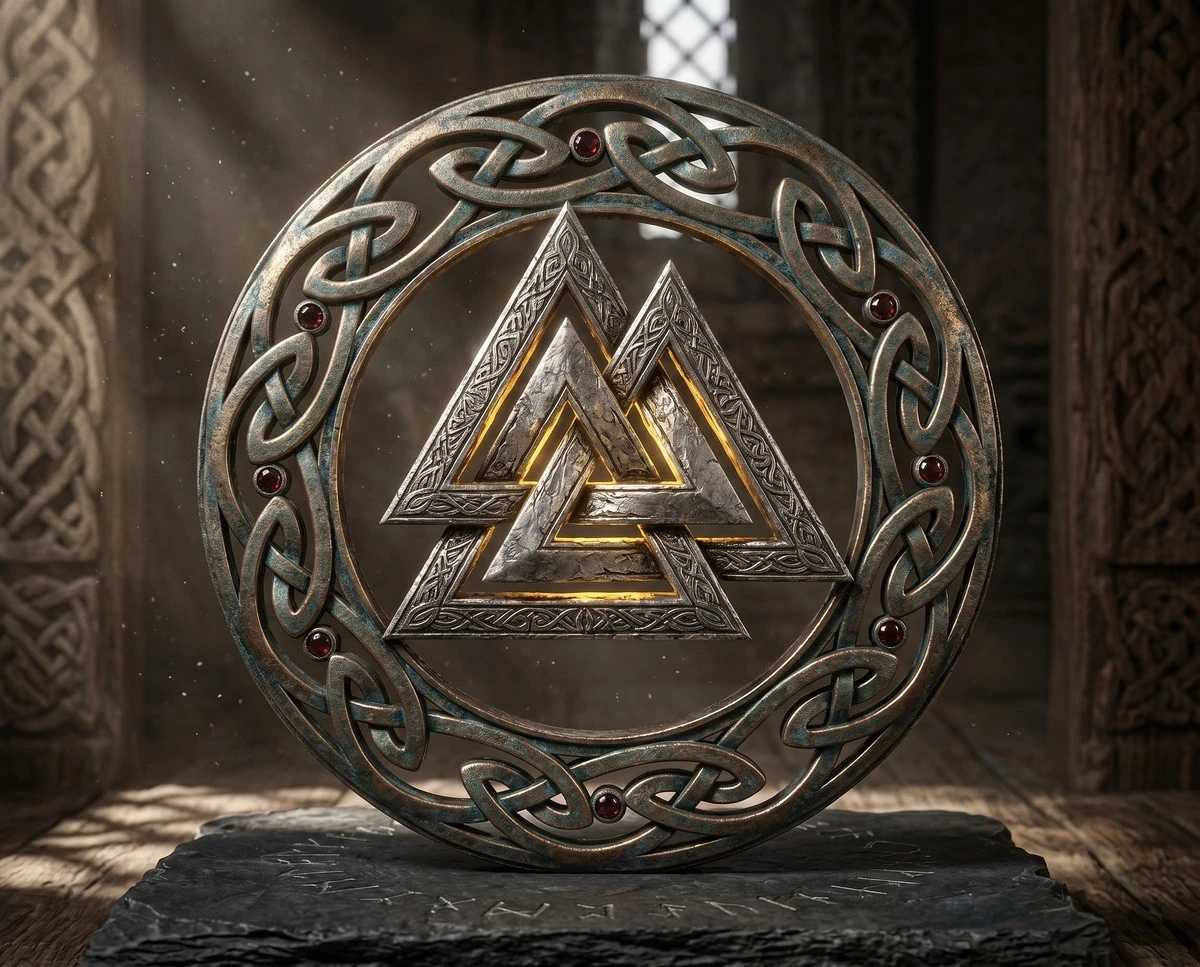
The exact meaning of the valknut is unknown. Its connection to Odin is not confirmed by any text. The video game God of War (2018) made the valknut the god's main symbol—and the internet turned the hypothesis into "established fact." 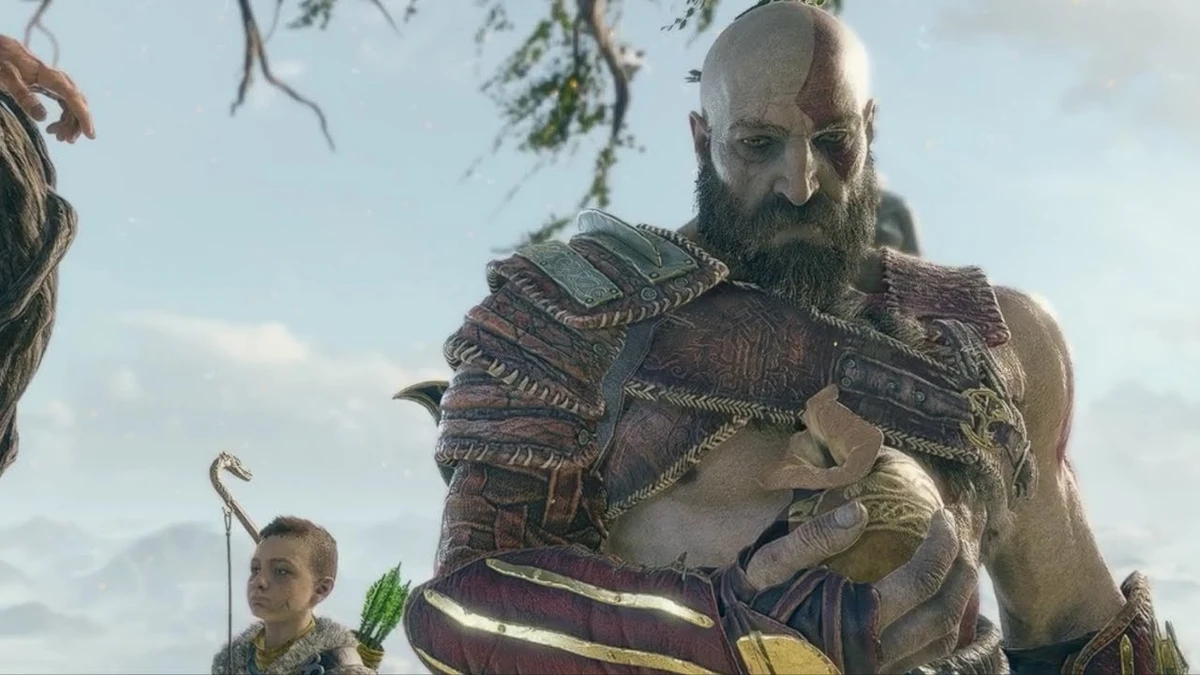
Screenshot from God of War (2018)
"Magic runes" are a different story. Runes were a form of writing, not magic. The Elder Futhark, 24 signs, is an alphabet used to write on stone, wood, and metal. 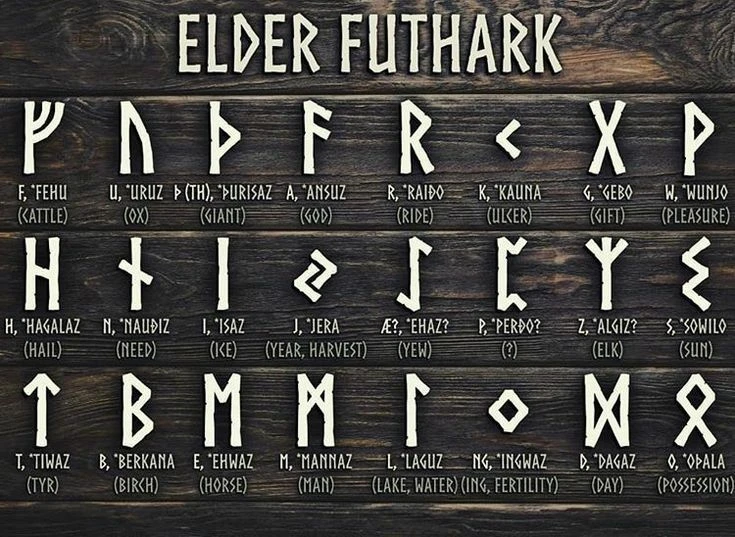
They were transformed into mystical symbols by the German mystic Guido von List in the 19th century, who created the "Armanic Futhark" specifically for divination. In the 1930s, the Nazis adopted the runes into their symbolism, finally cementing their mystical aura. The New Age movements of the 1970s and 1980s completed the process.
Bottom line: "Odin's runes" for divination are a product of the 19th and 20th centuries, sold as "ancient wisdom."
The Wandering God and the Law of Hospitality
The real Odin looked different from the movie version. According to sources, he was a handsome, middle-aged man with a long gray beard, a blue cloak, and a felt hat. He most often appeared among people in the guise of a beggar wanderer or an ugly dwarf. He could even deceive people with his eyes, appearing with both eyes—the god, after all, knows how to change his appearance.
And woe to anyone who refused such a guest their welcome. 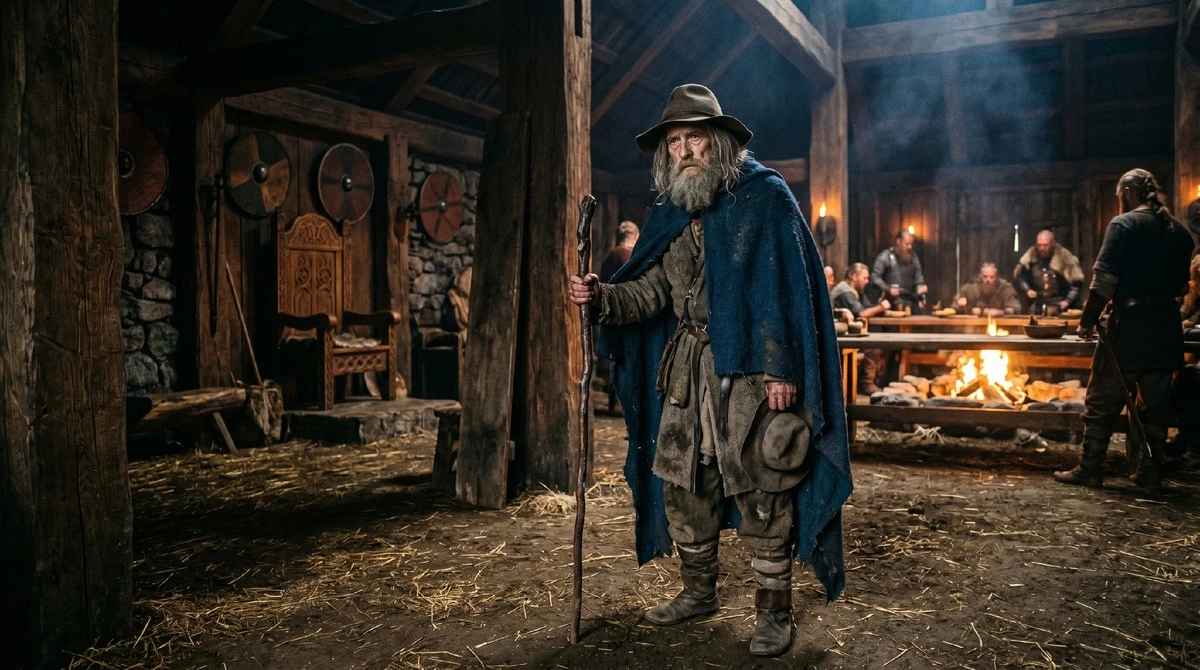
A story from Grimnir's Speech illustrates this clearly. Odin came to King Geirröd's castle under the name Grimnir—a hidden wanderer. The host, long since forgotten about the duty of hospitality, ordered the stranger tortured: he was placed between two fires and left without food for eight days. Odin remained silent—as he had been silent for nine nights on Yggdrasil. The only one who offered the stranger water was young Agnar, the king's son. Odin spoke, revealed his name—and Geirröd fell in terror on his own sword. Agnar became king.
A moral every Viking knew from childhood: you never know who's at your door. Therefore, hospitality to strangers was not just politeness, but a religious duty.
Knowledge is always precious
Odin is not just a mythological figure. It's a beautiful Scandinavian idea that knowledge always comes at a price: an eye, nine nights of pain, stolen mead, a thousand years of distortion. 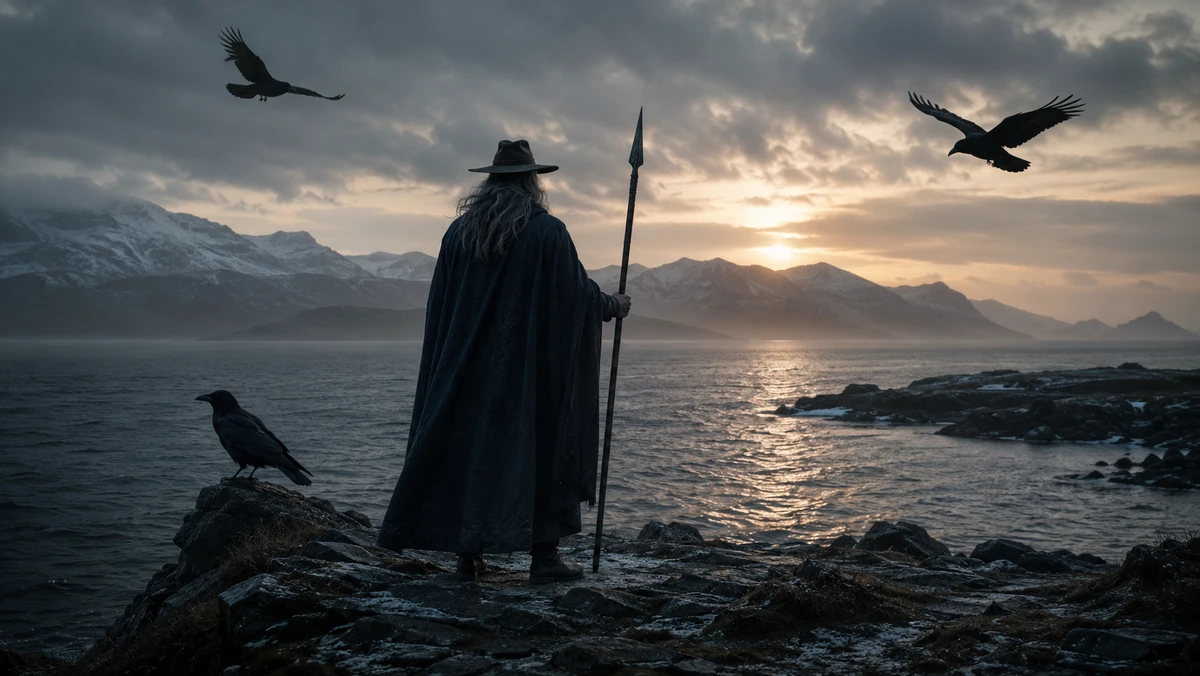
Each generation subsequently rewrote him for themselves. Romantics made him a majestic sage, Nazis a dangerous symbol, gamers a stern hero, and internet esotericists a purveyor of pendants and "ancient" runes.
The real Odin stood somewhere off to the side all this time: one-eyed, silent, wandering, with ravens on his shoulders and knowledge that brought him no peace.
Perhaps this is the most mature message of the myth. Wisdom doesn't save you from the end of the world. It only allows you to face it with an open eye.