What is really made from a barrel of oil: gasoline - less than half. Where does the rest go (6 photos)
It seems like oil is extracted for gasoline: a barrel goes in, a gas station comes out. In reality, gasoline makes up less than half of a barrel—about the same as pure meat in store-bought dumplings. 
The rest is dispersed throughout the economy: into airplanes, roads, sneakers, and aluminum cans.
Now we'll break down the barrel liter by liter and, at the same time, figure out why 159 liters of oil yields 170 liters of product. No, the oilmen aren't cheating. Well, almost.
The Herring Barrel That Became World Currency
A barrel is the only container no one has ever seen, but everyone knows its price.
Let's start with the container. A barrel is 42 gallons, about 159 liters. The standard was born in Pennsylvania: early oil workers poured their production into whatever barrels were available—whiskey, fish, or turpentine. 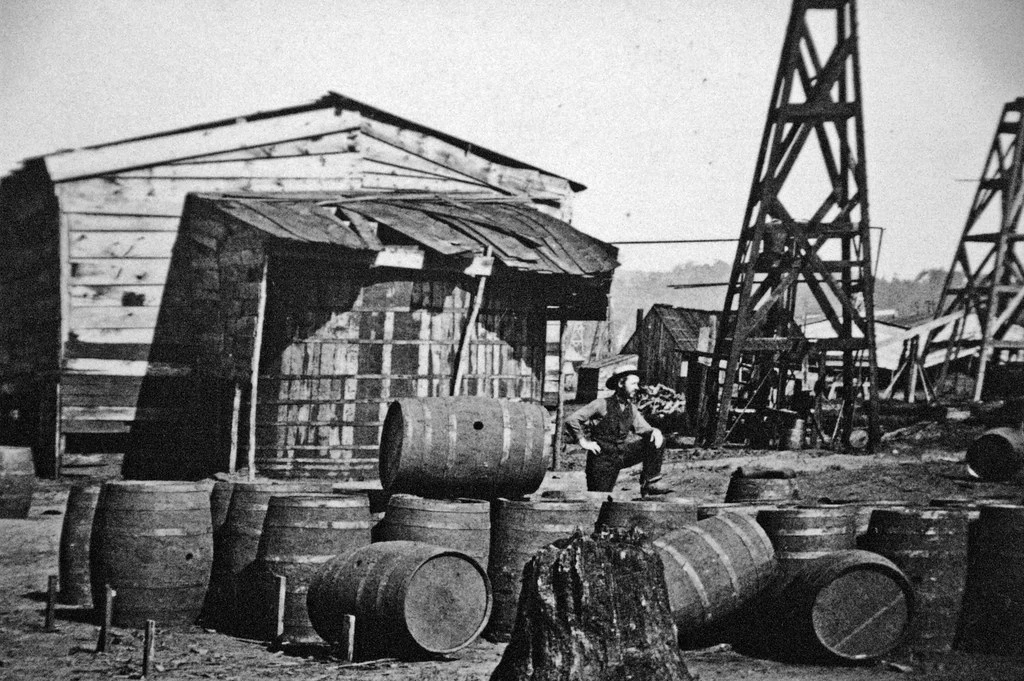
This is how the oil era began.
In 1866, producers established 42 gallons as a convenient standard, and since then, the global market has measured oil in the same 19th-century containers.
Although, of course, no one uses barrels anymore—oil travels through pipes and tankers, and the barrel remains a unit of measurement, like "horsepower" for transport, where horses haven't been seen for a hundred years.
So, from these 159 liters, an average of 72-76 liters of gasoline is produced (according to the US Energy Information Administration - EIA). The figure varies from refinery to refinery: the grade of oil and the refining method play a significant role, while in Europe or Asia, the proportions are different. 
But the average is more or less the same everywhere: 45-48% of the original volume. Less than half a barrel.
Where does the other half go?
Diesel and other distillates consume the most—42–49 liters. This is the fuel for trucks, tractors, locomotives, and ships: without it, anything heavier than a passenger car would grind to a halt.
Jet fuel accounts for another 11–19 liters, and the purity requirements for it make gasoline look like moonshine next to it. Then there are several liters of liquefied gases: propane and butane, of course, heat cottages, but most importantly, they feed chemical plants.
Some of the heavy residues become marine and boiler fuel, although modern refineries prefer to refine them into light products, and marine fuel oil, after tightening sulfur standards, is no longer what it used to be. 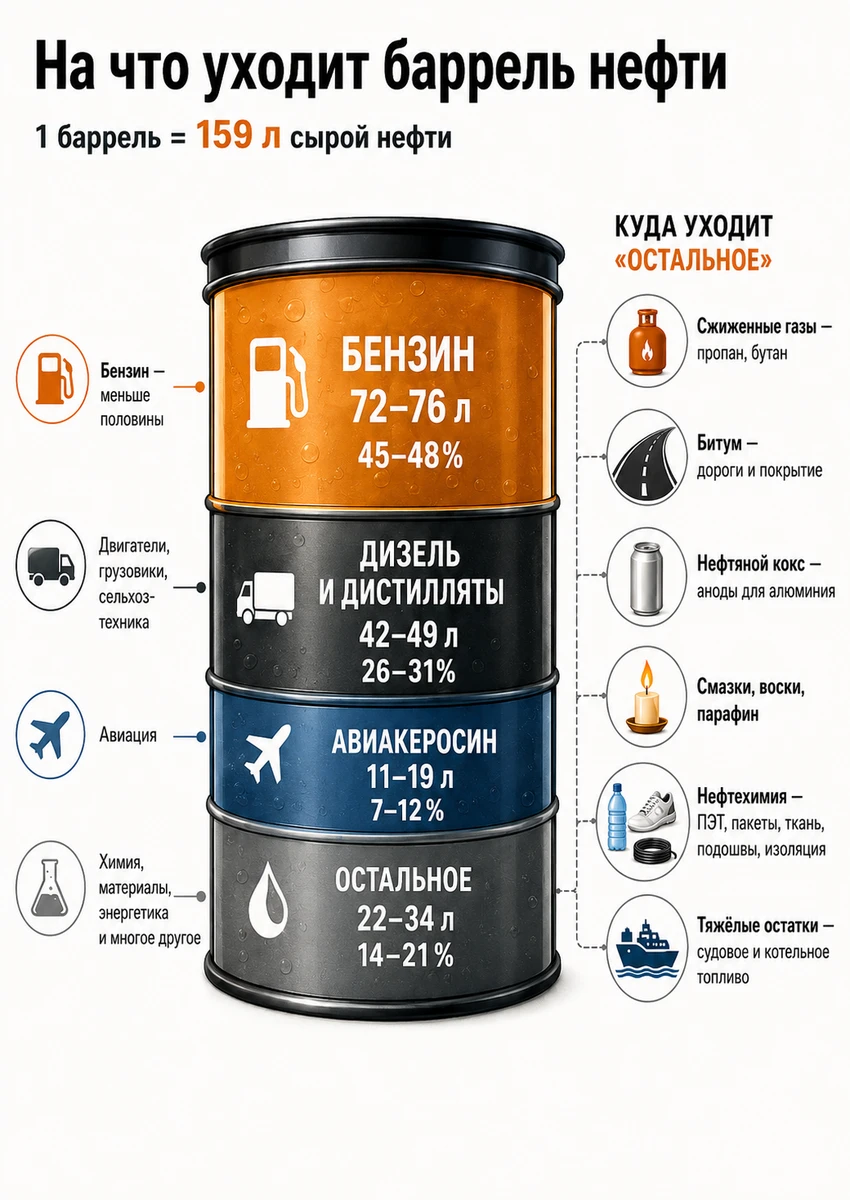
Petroleum coke goes into anodes for aluminum smelting—so there's a piece of a barrel in a can of soda or beer. A few liters are converted into bitumen: the road you drive on to the gas station is made from the same barrel as the gasoline in your tank. And just a tiny drop goes into lubricants, waxes, and paraffin: dozens of spark plugs come out of a single barrel.
Petrochemicals are a separate article. Naphtha and liquefied gases are used to make ethylene and propylene, which are then used to make bags, PET bottles, synthetic fabrics, sneaker soles, wire insulation, and solvents.
To be fair, oil isn't the only fuel for chemistry: natural gas provides a significant portion of the raw material. But the fact remains: oil has long been present not only in tanks, but in things we don't even consider "oil."
Why do 159 liters yield 170? 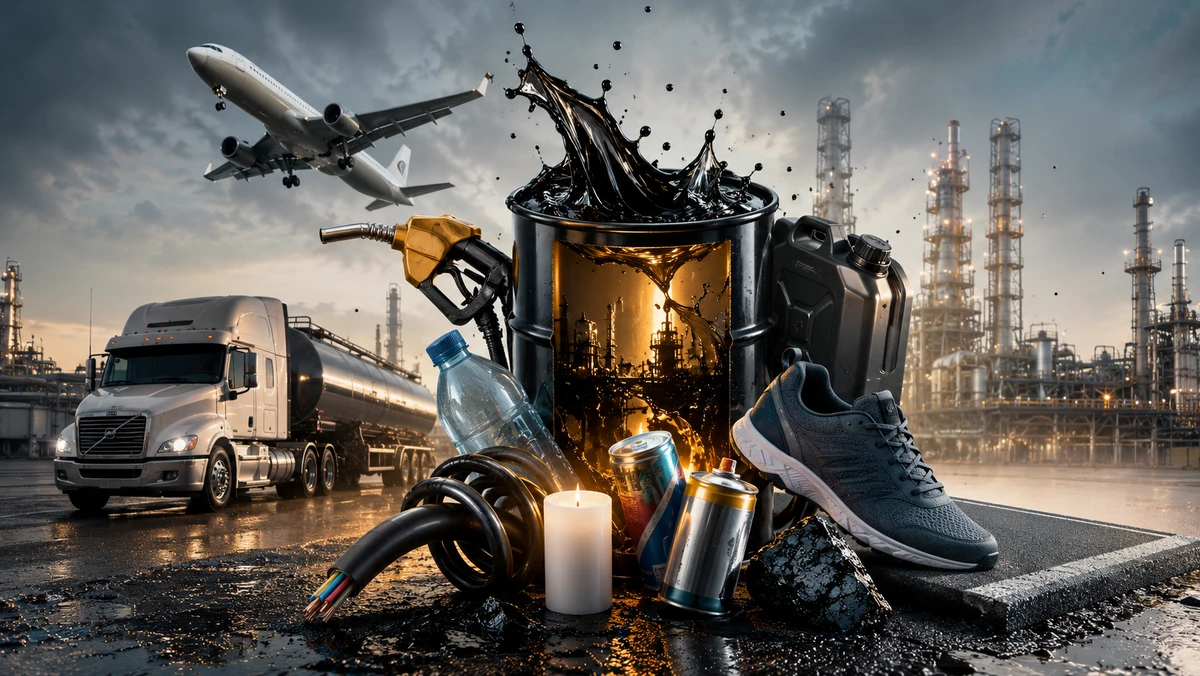
Now for the promised trick. After processing, the total volume of products is greater than the original barrel: in the US, on average, about 45 gallons out of 42, an increase of 6%.
If refrigerators worked like this, we would have long ago conquered inflation and poverty.
Where do those extra liters come from from the same raw material?
No violation of the laws of physics—refining gains volume, not mass. Crude oil is denser than most products made from it: when heavy, long molecules are broken down into short, light ones, more liters are produced for the same mass.
Furthermore, in hydroprocessing, hydrogen is attached to the molecules—a little mass is honestly added from the outside. It's like popcorn: a handful of corn, a bucket of popcorn. And yet, it seems like it's the same old corn.
Why don't refineries distill pure gasoline?
A logical question: if everyone needs gasoline, why not distill the whole barrel into it?
There are at least three compelling reasons.
First, chemistry. A refinery is no longer a moonshine still, where oil is simply boiled and the drips collected. Distillation merely sorts the oil like a sieve: the light fractions—future gasoline and kerosene—evaporate first, while the heavy fractions settle at the bottom. And this "sieve" produces little gasoline.
Then, more serious processes come into play. Cracking: long, heavy molecules are chopped into short, light ones suitable for fuel—like sawing a bulky cabinet into neat firewood.
Hydrocracking: the same chopping, but with the addition of hydrogen—the fuel is cleaner and of higher quality. 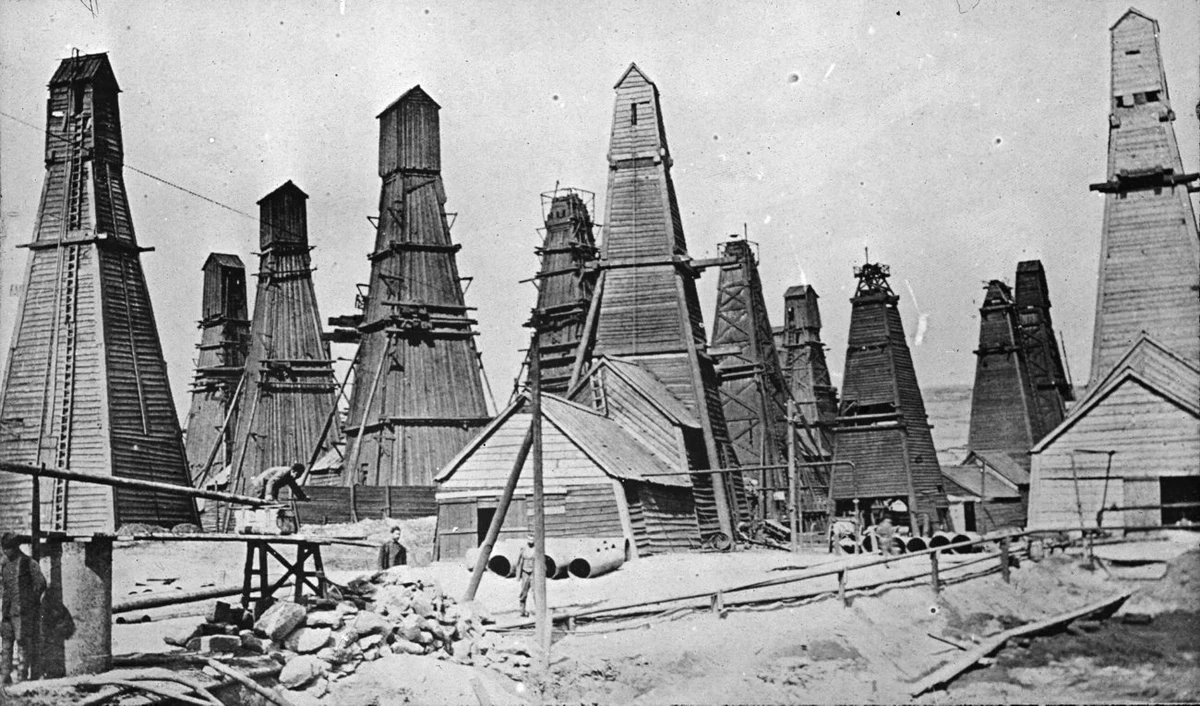
Nobel's Oil Rigs
But heavy residues like resins and asphaltenes are difficult and expensive to process: modern refineries achieve refining depths of 90–95%, and each subsequent percentage point is more expensive than the previous one.
Market The economy needs diesel and kerosene no less than gasoline, and bitumen is still difficult to replace as cheaply and conveniently in mass road construction.
Money. A refinery makes money not just on gasoline, but on a whole basket of products, and assembles it for its market: Europe, with its trucks, is geared toward diesel, America, with its cars, toward gasoline. No one can completely focus on one product.
In the kerosene era, oil was extracted for lamps, and light gasoline fractions were considered a dangerous, low-value extra. Incidentally, kerosene itself displaced whale oil from lamps—though it's too early to call this a salvation for whales: whalers in the 20th century found other markets. And then came the automobile, and yesterday's extra gasoline became the currency of the century.
So a barrel isn't a tank of gas, but a construction kit for an entire civilization. And you and I are made up of more than we'd like to think: a jacket, sneakers, the asphalt beneath our wheels, a can of soda in our hand.
Humanity took a black, viscous liquid millions of years old and learned to disassemble it into molecules sufficient for a flight across the ocean and a candle on a cake. Not a bad skill for an intelligent species that once started out with herring barrels.