The most significant finds of Moscow archaeologists over the past 15 years (17 photos)
The territory of modern Moscow was inhabited approximately 6,000 years ago—during the Neolithic era, the final period of the Stone Age. This is confirmed by artifacts found in the Gogolevsky Boulevard area, dating back to the 4th millennium BC: a flint tool (a knife or arrowhead) and small shards of pit-and-comb pottery. 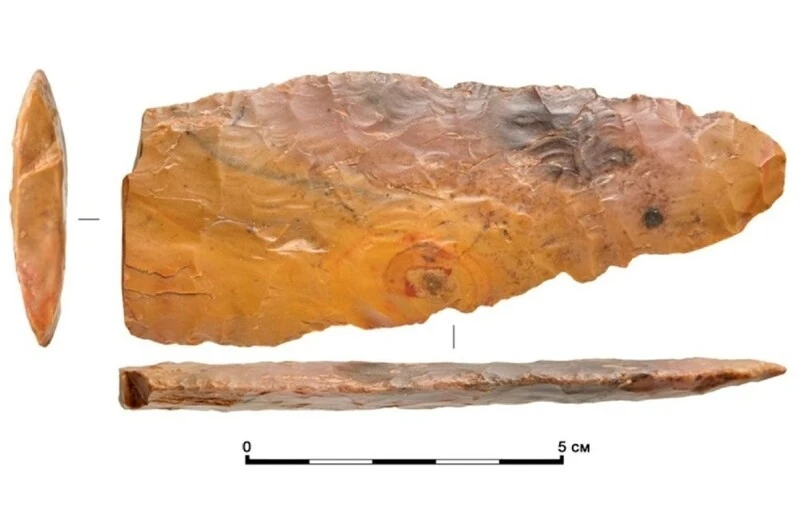
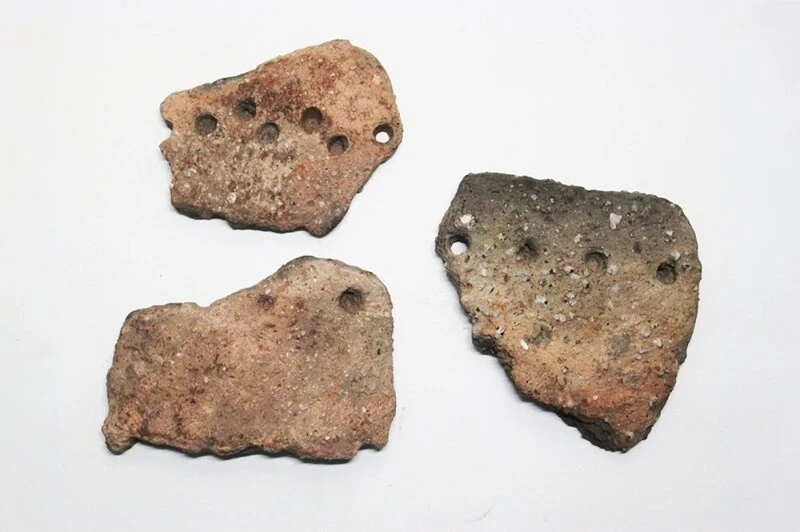
Historians attribute these items to the Lyalovo culture, which existed in the Volga-Oka interfluve.
Other finds—parts of ceramic vessels with pitted ornamentation—were found in Kitaygorodsky Passage. They may indicate an ancient fishing camp on the banks of the Moskva River. 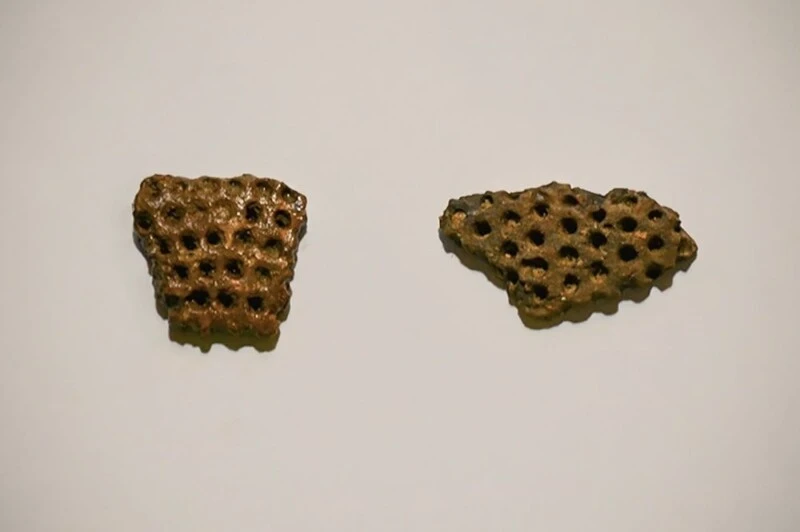
During excavations in Zaryadye, archaeologists discovered Bronze Age axes, typical of the turn of the 3rd-2nd millennia BC. The weapons could have been used for both combat and ritual purposes. 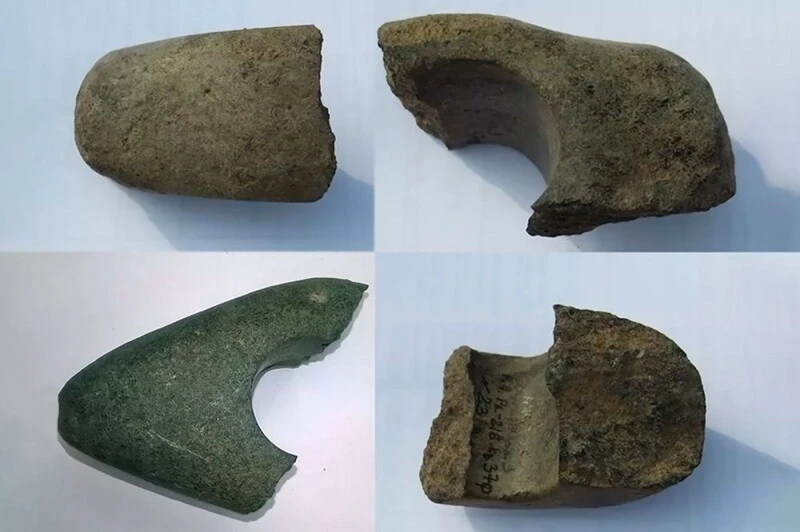
Also, hidden in the depths of Zaryadye was a birch bark letter dating back to the 14th century. It was the fourth to be discovered in the capital's excavations and the first to fully comply with the Novgorod standard. It is a private letter, written in a distinct, bookish hand on a prepared strip of birch bark. 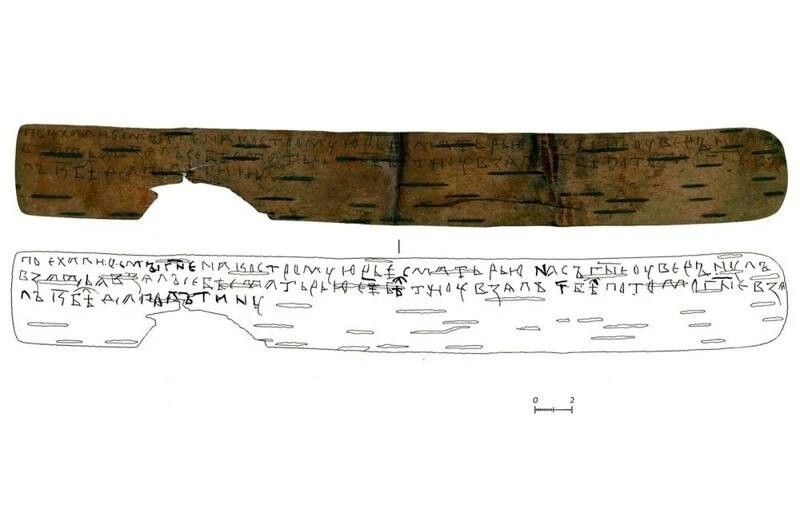
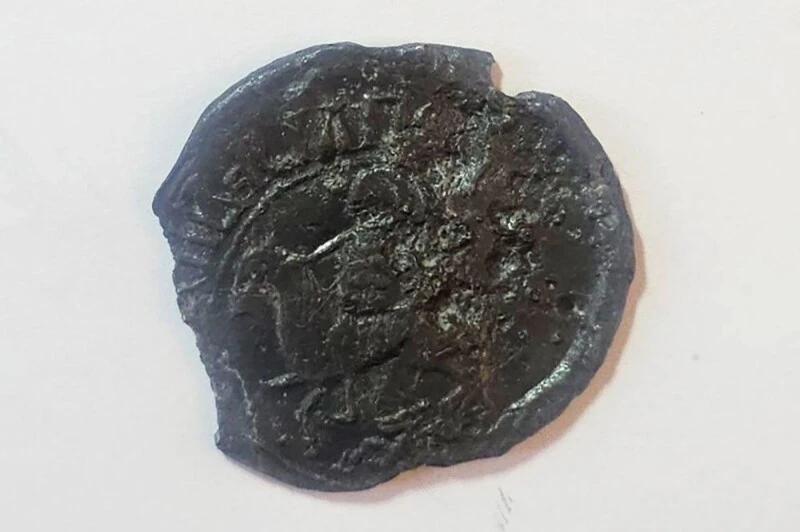
Last year, archaeologists discovered a seal from the reign of Ivan III (1462-1505) in Romanov Lane. This is the first grand ducal seal found in Moscow and the last from the lead period (wax seals were later produced). Such seals were used to seal important foreign and domestic political documents. 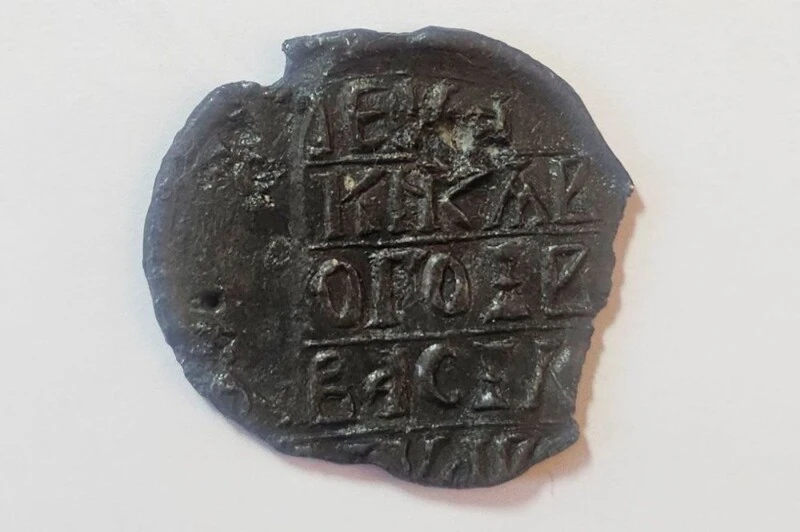
And in 2017, an ancient "corporate" seal was discovered for the first time on Bersenevskaya Embankment. It belonged to the Vytegorsky Tavern. The artifact was cast from a copper-tin alloy between the 15th and 18th centuries. 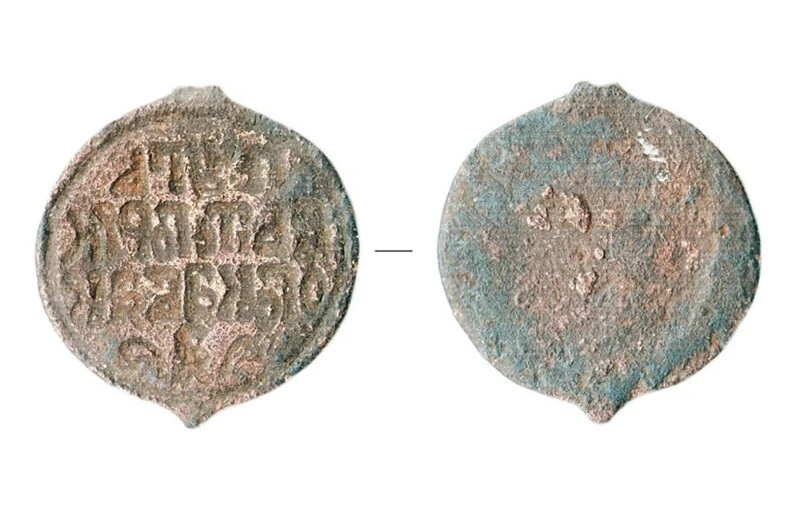
In Zaryadye, while exploring the remains of a log basement of a manor house dating from the late 16th to the first half of the 17th century, archaeologists found a jug, a flask, and a moneybox filled with silver. In total, approximately 43,000 coins weighing over 20 kg were hidden.
The total denomination represented a significant sum, comparable to the salary of a Streltsy colonel for 7-10 years of service. 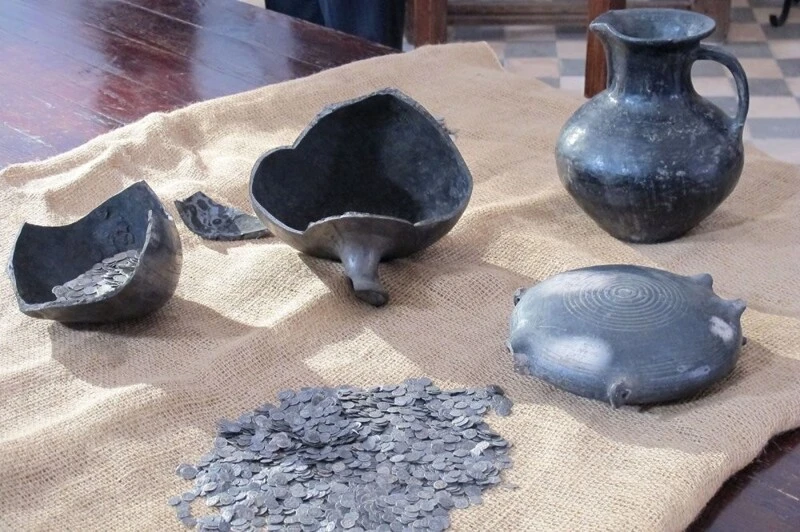
The cache discovered on Prechistenka Street isn't particularly large, but its owner was resourceful. Ten silver coins, worth a total of five kopecks, were hidden inside a bone bishop chess piece. They were minted in the 1530s and 1540s, meaning these coins were in circulation during the reign of Ivan the Terrible. 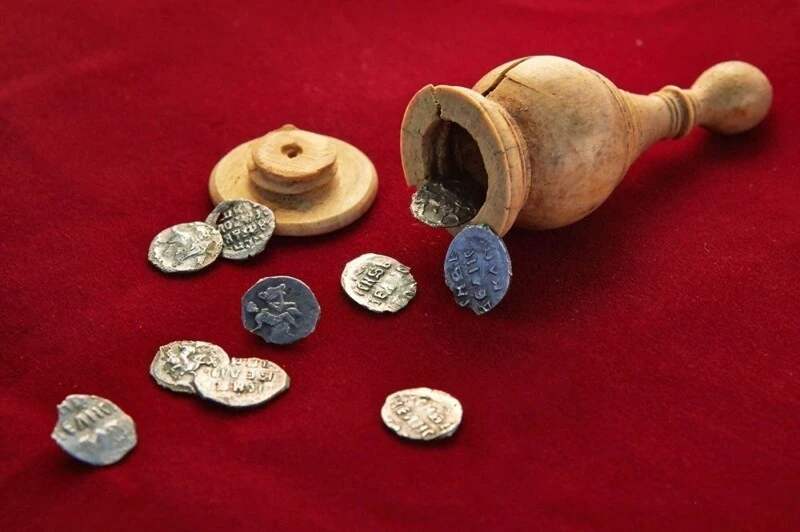
During utility repairs on Nizhnyaya Radishchevskaya Street, specialists discovered a hoard of 41 coins from the first half of the 17th century. These are the so-called Moscow kopecks, which were in circulation during the reigns of Vasily Shuisky and Mikhail Romanov. They were made of silver or billon (an alloy of silver and copper).
And in Kostyansky Lane, a ceramic vessel containing 98 kopecks from the era of Peter the Great was unearthed. They were minted in white metal between 1682 and 1712. 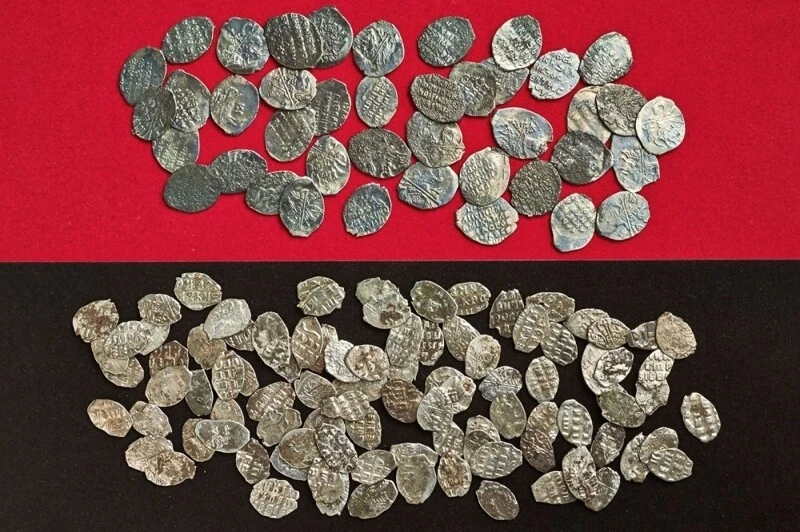
One of the largest hoards was discovered earlier this year during the restoration of the chambers of Duma clerk and merchant Averky Kirillov on Bersenevskaya Embankment. A clay jug contained over 85,000 silver coins from the 16th and 17th centuries. This sum would have been enough to purchase a palace.
According to historians, Averky made the cache during the Streltsy rebellion in Moscow (May 1682). He managed to save his fortune, but not his life: during the uprising, the merchant was executed. 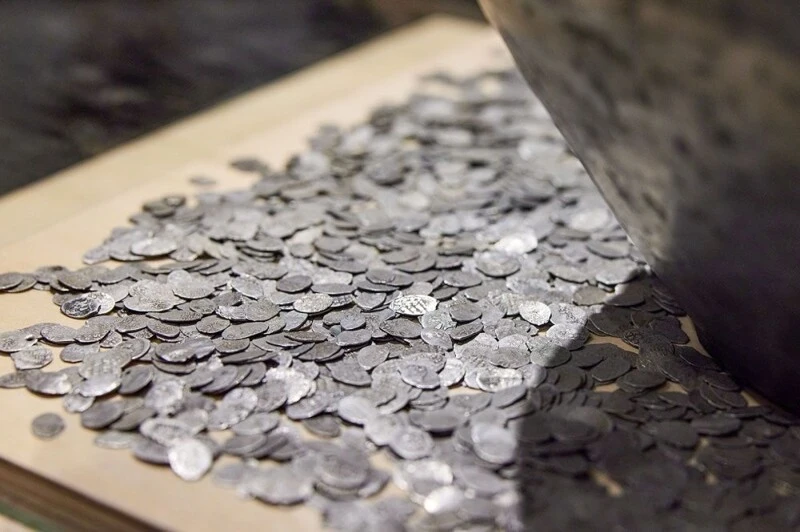
Archaeologists are also unearthing individual, but no less valuable, coins. On Dubininskaya Street, they first discovered a gold Dutch ducat, minted in 1759. The coin was likely intended for use as raw material for jewelry: it was folded several times to fit more easily into the melting crucible.
Next to the ducat were two brass coins minted in Bukhara in the 1910s and 1920s under the last ruling emir, Alim. 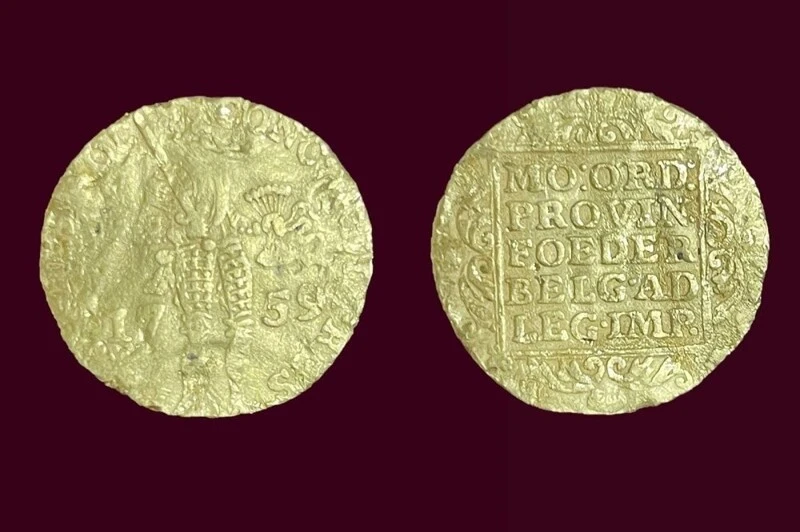
An amulet depicting a snake-legged woman was discovered on Druzhinnikovskaya Street. Similar medallions were worn in Ancient Rus' in the 12th and first half of the 13th centuries. Their origins are linked to Byzantium. The creature depicted on the amulet is believed to have been inspired by the statue of Scylla, which stood at the Hippodrome in Constantinople. 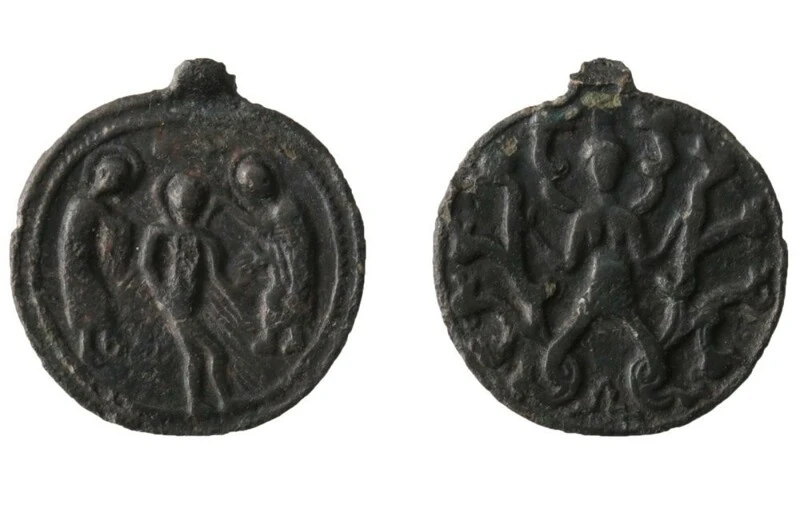
Another rare medallion was found in Zaryadye Park. It was made of a lead-tin alloy in the 16th century and is adorned with the Tudor rose, the heraldic symbol of the English royal family. The inscription "Dieu et mon droit" is engraved on the medallion, which translates from French as "God and my right." 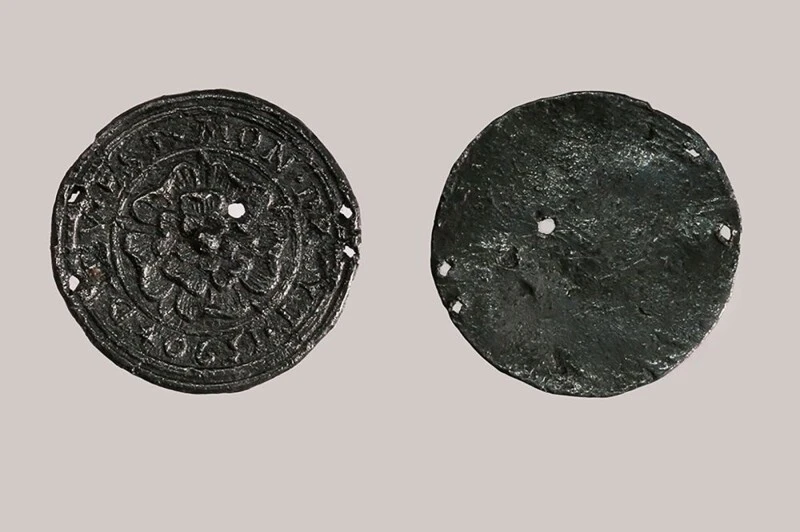
During excavations on 4th Krutitsky Lane, archaeologists discovered a faience goblet dating back to 1896. It was part of a set of awards for those who maintained order during the coronation of Nicholas II.
The azure-colored goblet bears the Moscow coat of arms, surmounted by the imperial crown. The relief composition is complemented by the inscription: "In memory of the holy coronation." 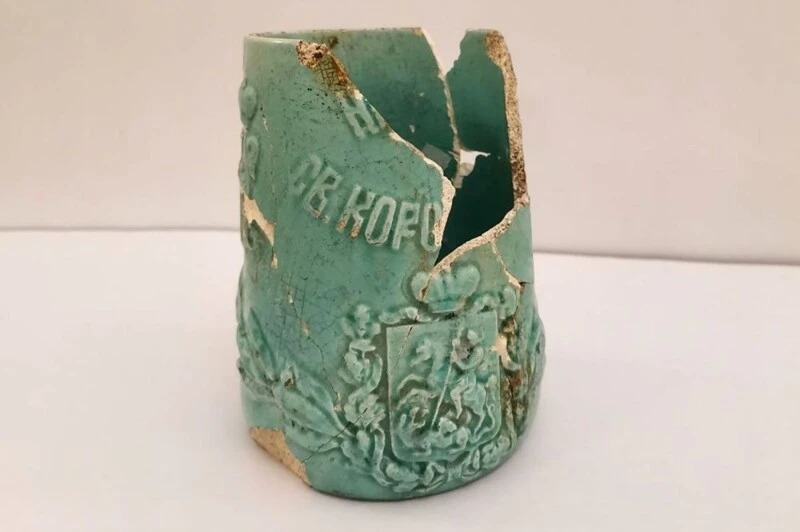
During the clearing of the pavement under an 18th-century building on Tverskaya Street, a counterfeit coin making tool was discovered. The iron cube contains raised mirror images replicating the obverse and reverse of Tsar Alexei Mikhailovich kopecks. 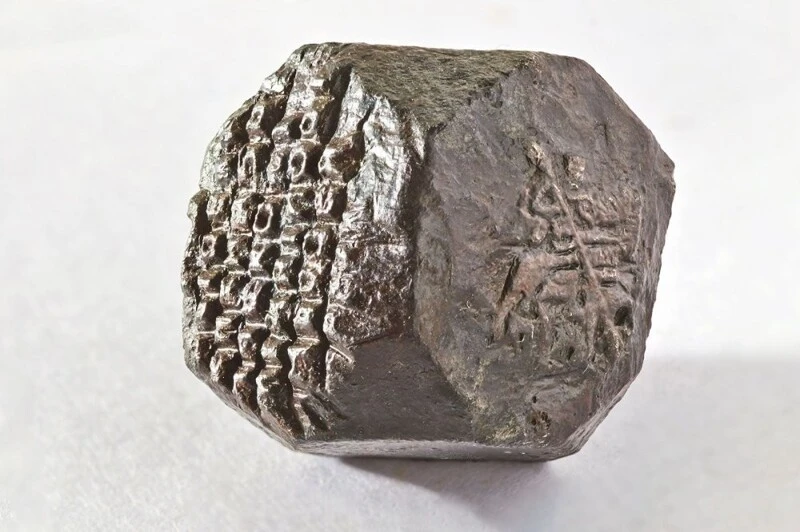
Over the past 15 years, more than 140,000 artifacts have been discovered in the capital. The restored finds are being sent to the collection of the Museum of Moscow.
The summer archaeological season began in the capital in June. Research is currently underway at 30 sites, including Kitaygorodsky Proyezd, Baumanskaya, Derbenevskaya, and Sadovnicheskaya Streets, Akademika Tupoleva Street, Kutuzovsky Prospekt, the Kolomenskoye Museum-Reserve, and other locations. In total, excavations will be conducted at more than 100 locations throughout the year.