Salmon, trout, tilapia, pangasius—most of the fish on our store shelves have never seen the open sea. Aquaculture today feeds more than half of humanity, and in 2022, for the first time in history, it overtook wild fisheries in production volume. On July 12, fishermen celebrate their professional holiday—an opportunity to understand the true differences between fish from a fish farm and fish from the sea. We'll explain everything: from fatty acids and pink dye to the meaning of the symbols on the label. 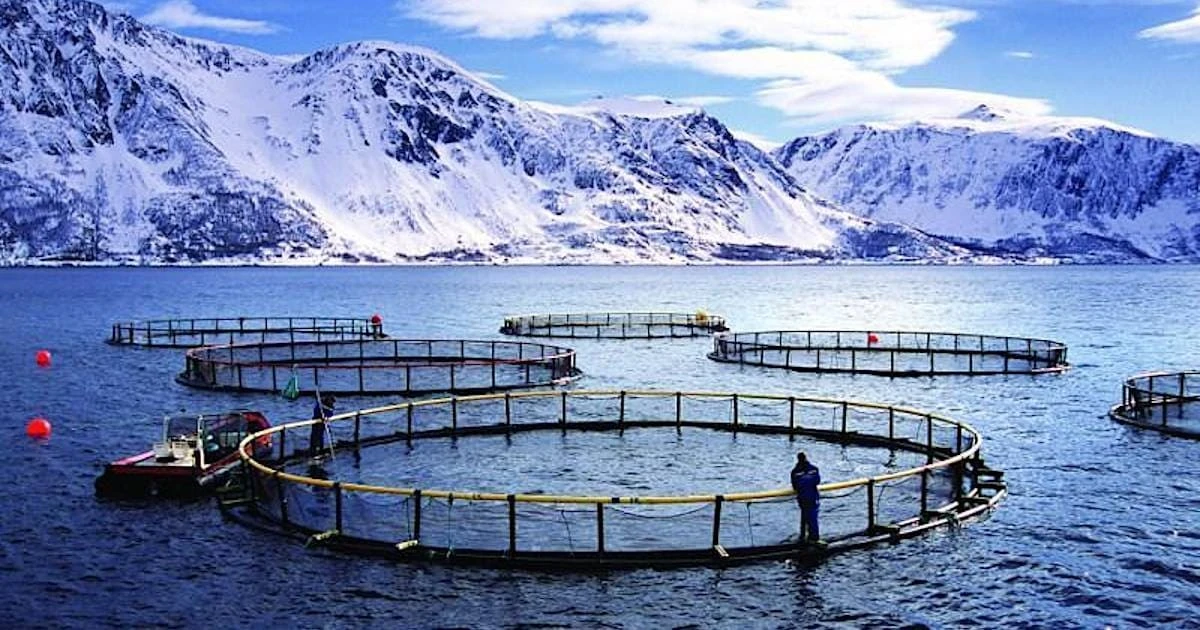
How fish got to the farm
The first fish farms appeared in China around 2000 BC. Farmers bred carp in ponds next to rice fields and fed them agricultural waste. In the 5th century BC, the statesman Fan Li wrote the first ever treatise on carp farming. He described the pond design, stocking density, and feeding regimen. 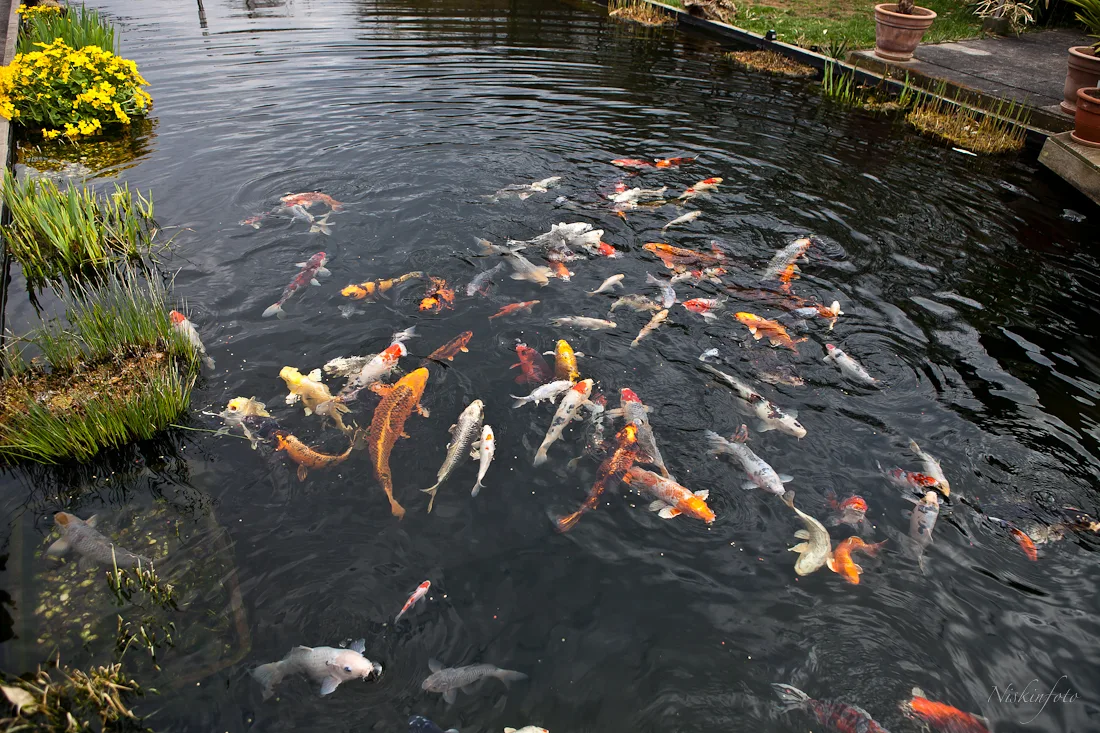
Chinese farmers bred carp in ponds as early as 2,000 BC.
A similar practice developed in Ancient Rome. The Romans built vivariums—artificial tanks for live catch. Mullet and oysters caught in the lagoons were placed there, and the fish remained alive until served. In the first century BC, Pliny the Elder described oyster farms as a sign of wealth.
From ponds to industrial cages
Wild fisheries provided humanity with fish for centuries without much effort. The situation changed in the second half of the 20th century. The global population grew, demand for protein increased, and coastal catches stagnated. In the 1970s, Norway began farming Atlantic salmon in sea cages. Over time, this modest experiment evolved into a global industry. 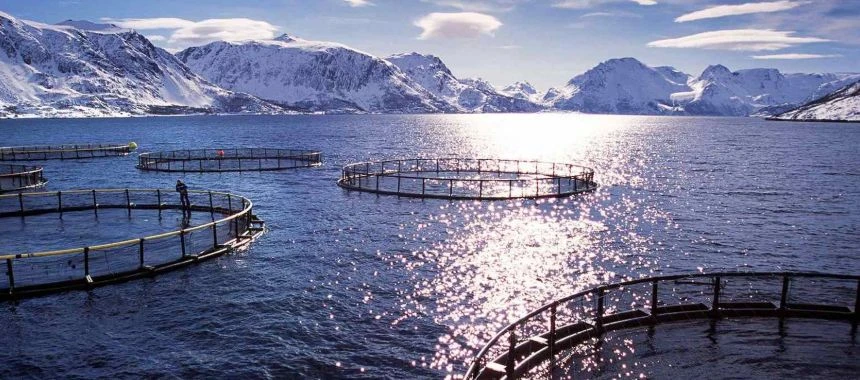
Norwegian cage farms account for more than half of the world's Atlantic salmon production.
The Food and Agriculture Organization of the United Nations (FAO) reached a historic milestone in 2022. Aquaculture overtook wild capture in production volume for the first time. Farmed fish, crustaceans, and mollusks accounted for 94.4 million tonnes—51 percent of all global aquatic animal production. The organization's final report, released in 2024, confirmed these figures.
What's Inside—Fatty Acids
The main difference between wild and farmed fish is their diet. Wild salmon feed on small fish, krill, and plankton, which are rich in the long-chain omega-3 fatty acids EPA and DHA. Farmed salmon are fed pellets made from fishmeal, fish oil, and vegetable oils. The proportion of vegetable oils in their feed has increased significantly over the past 20 years. 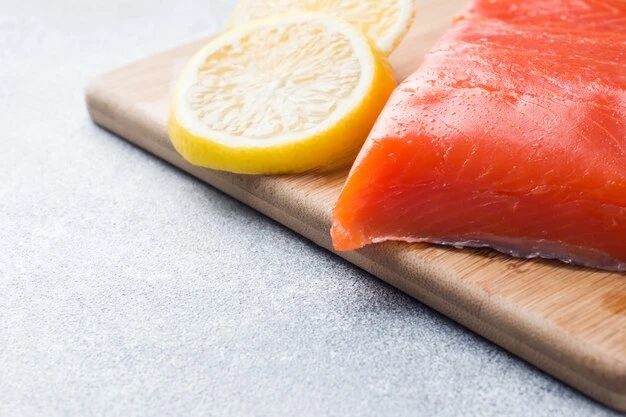
Wild and farmed salmon differ significantly in fatty acid content.
Norwegian scientists compared the fatty acids in wild and farmed Atlantic salmon. The results were unambiguous: the concentration of EPA and DHA in wild fish was 2.5 to 3 times higher. The omega-6 to omega-3 ratio in farmed salmon was 14 times lower than in wild salmon. Vegetable oils in the feed are to blame. However, the total amount of omega-3 per serving is often comparable: farmed fish has a higher overall fat content, which sometimes evens out the picture.
Test Tube Color
In the wild, salmon gets its pink flesh color from astaxanthin. This pigment is found in abundance in the krill and small crustaceans in their diet. Farmed salmon lack this source. Therefore, astaxanthin is added separately to their feed—either synthetic or derived from algae and yeast. Without the supplement, farmed salmon meat would be grayish-white. 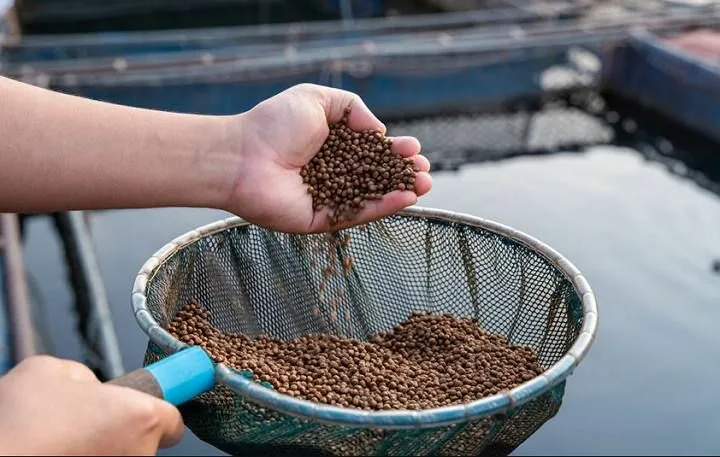
Astaxanthin in feed is not a regular dye, but the same pigment that the fish would naturally obtain.
Farmers use a special color palette to select the right shade of pink to suit customer expectations. The US Food and Drug Administration approved synthetic astaxanthin for use in feed back in 1995. Its chemical structure is identical to the natural substance, although it is slightly less readily absorbed by fish.
What else gets into fish?
Contaminants are a separate issue, and they are more complex than popular belief. The European Food Safety Authority compared fish from different regions. Baltic herring and wild Baltic salmon contain 3.5 and 5 times more dioxins than non-Baltic herring and farmed salmon. The cause is long-term industrial pollution of the Baltic Sea. 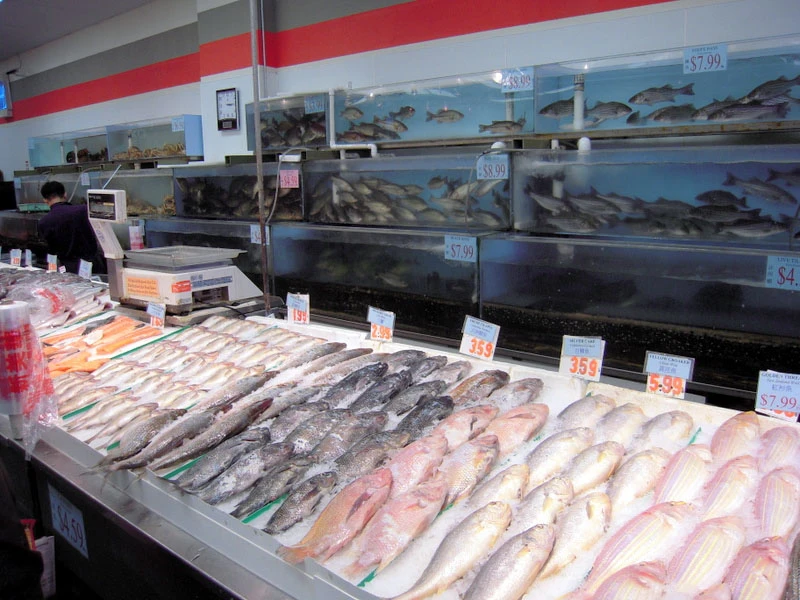
The level of contaminants in fish depends more on the catch location than on the farming method.
Earlier studies in the 2000s found a different picture. Elevated levels of dioxins and polychlorinated biphenyls were found specifically in farmed salmon. The culprit was the fish oil in the feed. Since then, producers have reduced its proportion by almost a third. The gap between wild and farmed fish has narrowed significantly. There is no single rule that says "wild fish is cleaner"—it all depends on the species, region, and specific farm.
Why farmed fish taste "soapy"
Wild salmon travel thousands of kilometers upstream to reach their spawning grounds. Their muscles are denser, and their flavor is more concentrated and noticeably less fatty. Farmed fish live in the confined space of a cage and expend almost no energy on movement. 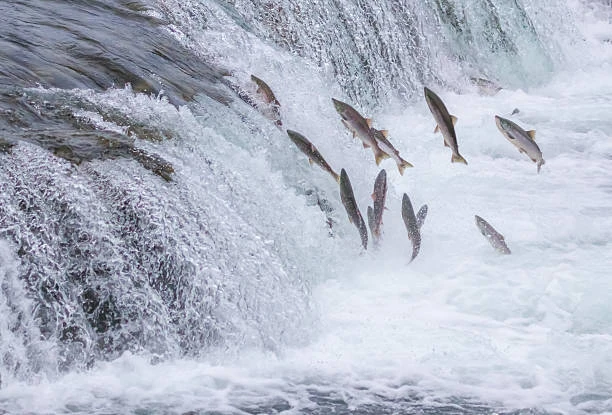
Multi-kilometer migrations develop a dense muscle structure in wild salmon.
Hence the reputation for a "soapy" taste in some farmed fish, especially pangasius and tilapia. Their meat is soft, fatty, and neutral in flavor—it performs well in baking and frying. However, it's not well-suited for dishes where texture and flavor concentration are important.
Wild fish for sashimi, farmed for the oven
Chefs have long noticed this difference. Wild fish is often chosen for carpaccio and sashimi. The dense texture holds up well to a thin cut, and the concentrated flavor doesn't require a complex sauce. Farmed salmon, on the other hand, handles cooking well. Its high fat content prevents the meat from drying out in the oven or on the grill. 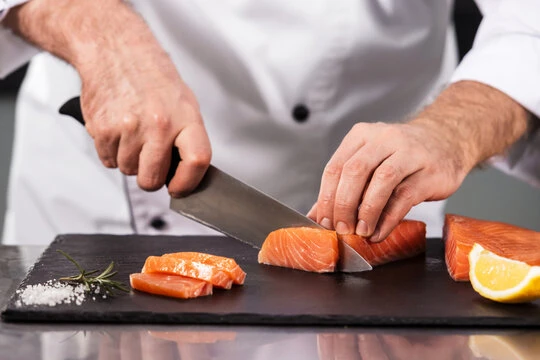
The choice between wild and farmed fish in a restaurant kitchen is often determined by the recipe, not fashion.
The difference is also noticeable in price. Wild fish is usually more expensive due to the seasonality of the catch and limited quotas. Farmed fish is available year-round at a stable price. This is one of the reasons why aquaculture has grown so rapidly over the past half-century.
Ecology – Both Sides Are to Blame
Wild fishing causes its own damage to the ocean. Bottom trawling destroys the seabed. Bycatch – accidentally caught sea turtles, dolphins, and non-target fish species – remains one of the industry's most pressing problems. The share of marine fish stocks within biologically sustainable limits fell to 62.3 percent in 2021. In the 1970s, this figure was 90 percent. 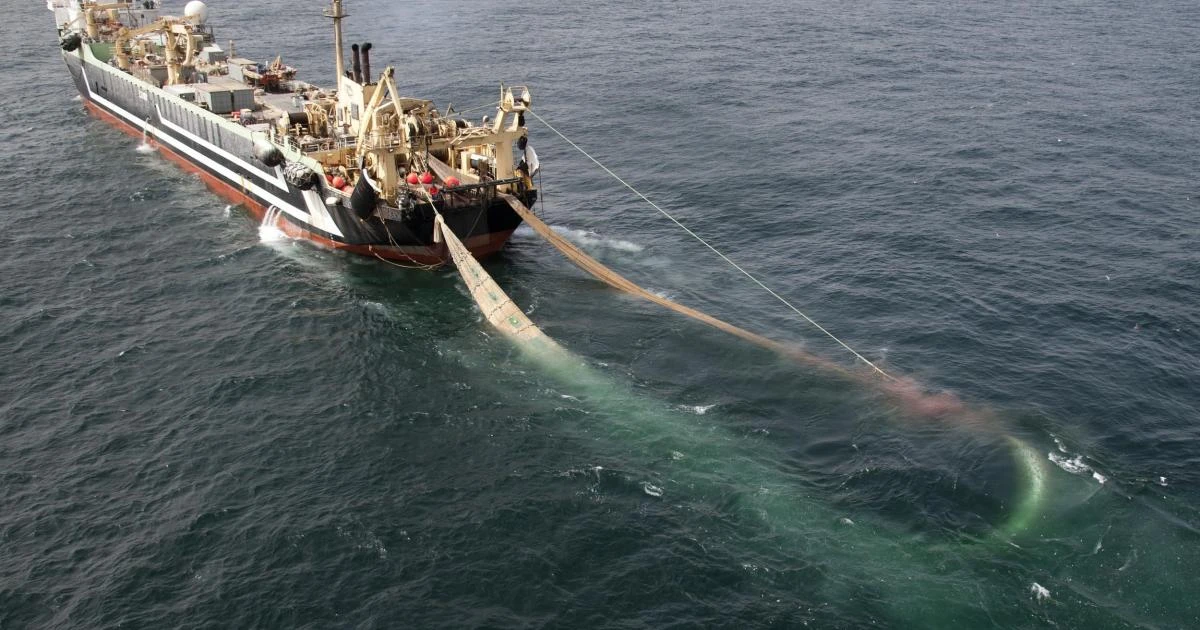
Bottom trawling remains one of the most destructive methods of industrial fishing.
Aquaculture has its own problems. Waste and feed residues pollute coastal waters. Fish can escape from cages and spread diseases to wild populations. For a long time, critics pointed to the wastefulness of feed. It was believed that up to five kilograms of wild fish were used for every kilogram of salmon. But this figure is outdated.
Today, according to industry organizations, less than a kilogram of wild salmon is consumed per kilogram of farmed salmon, thanks to the replacement of some fish oil with vegetable oils in the feed.
Next-Generation Aquaculture
Part of the industry is moving toward more environmentally friendly technologies. Recirculating aquaculture systems (RCAS) raise fish on land: the water in the reservoirs is constantly purified and reused. This eliminates fish escapes and dramatically reduces ocean pollution. A Florida company is already building such salmon farms. Several startups are developing similar projects in Norway and Denmark. 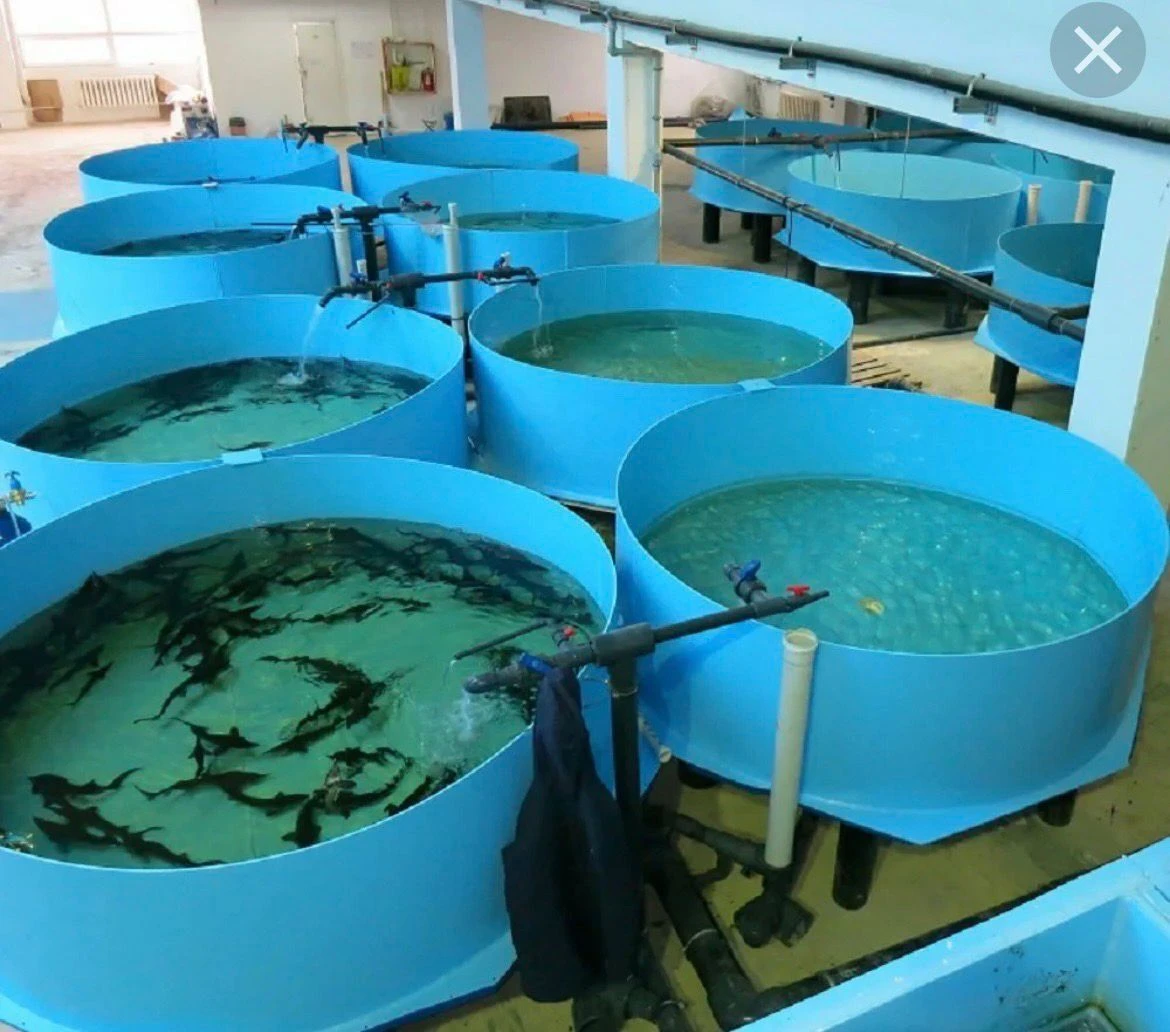
Closed-loop systems allow salmon farming far from the sea—even in industrial areas.
There are simpler solutions. Mussel and oyster farms require no feeding at all. The shellfish filter the water and feed on what's already in it, purifying it at the same time. The ecological footprint of aquaculture varies greatly depending on the species and method. Cage-raised salmon and pond-raised carp are completely different stories in terms of their environmental impact.
What to read on the label
Two certificates with similar names but different purposes help clarify the origin of fish. The Marine Stewardship Council, or MSC, certifies only wild fish caught in a sustainable manner. The Aquaculture Stewardship Council, or ASC, is responsible for farmed fish, monitoring farm conditions, antibiotic use, and the farm's environmental impact. Both certificates are held by producers, such as pollock and cod fishers, as well as salmon farms. However, it's difficult to see the MSC and ASC labels on the shelves of a typical supermarket—these certifications are primarily aimed at export sales, not domestic retail. 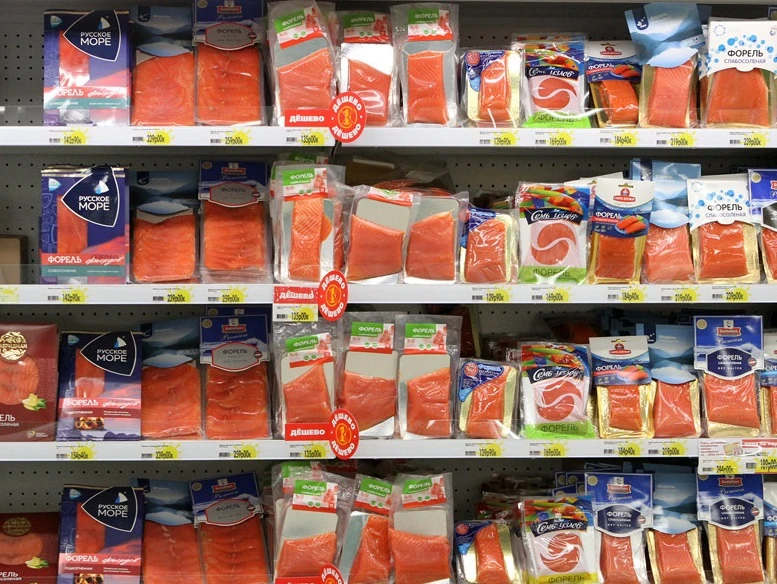
The blue and green symbols on the packaging represent different things—wild and farmed.
The country of origin is also a clue. Atlantic salmon from the supermarket is almost always farmed. The wild population of this species has not been caught commercially for several decades and accounts for less than half of a percent of sales. Pacific species—sockeye, coho, and chinook salmon—are more often sold as wild-caught from Alaska.
Aquaculture is not a scam or a threat, but a solution to a simple problem. The planet is becoming more populous, while the oceans are becoming less abundant in fish. Farmed and wild fish have different compositions, different tastes, and different ecological footprints. But neither is inherently worse than the other. It's more important to understand what's on your plate and choose wisely—based on certification, country of origin, and the cooking method best suited for the fish.
Do you pay attention to the "aquaculture" or "wild-caught" labels when choosing fish at the store?
Add your comment
You might be interested in:












Persistence in achieving a goal

A biker prevented a hit-and-run driver from escaping

17 Photos That Will Stop You in Your Tracks (18 Photos)

Not everyone is having fun on the amusement ride

The cutest lunch delivery ever
Stunning Views of the Martian Horizon from 400 Kilometers

A book titled "A Guide to Rebuilding

Young women, Dancing and George Michael: nothing superfluous

An apology delivered with a running start
