Stalin's personal armored car: life after death (10 photos)
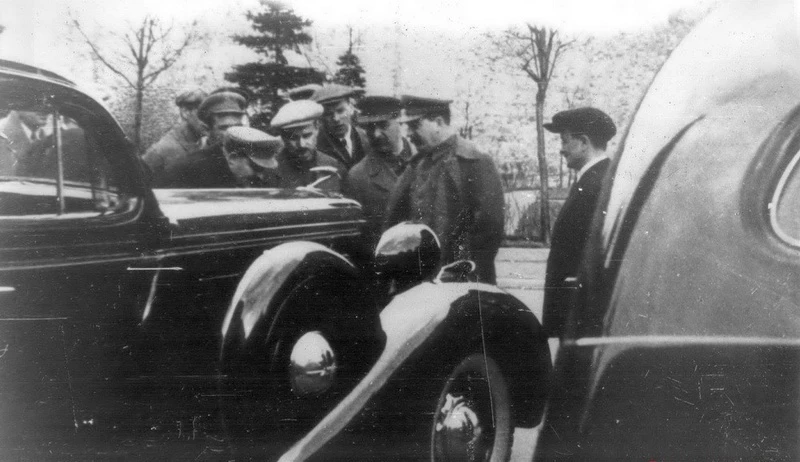
He was feared, respected, and always given way. This isn't about Comrade Stalin himself, but about his ZIS-115 automobile, the first armored sedan produced in the USSR. Its history is as interesting as its design.
By a strange coincidence, after the death of the Leader of the Peoples, this unique automobile ended up in the backyard of Bauman University, and then disappeared from the radar entirely. Until it resurfaced in 2002 at a dacha near Moscow. 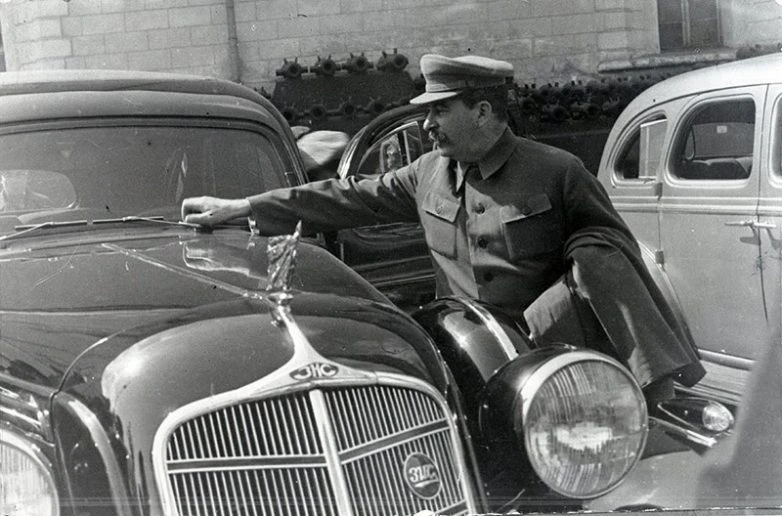
It happened like this: A professor at Moscow State Technical University approached collector Vadim Zadorozhny with a request to view an interesting exhibit. He claimed to have a museum-quality car preserved at his dacha. When the vintage car enthusiast arrived, he found a black sedan, sunken and half-rotted. Zadorozhny paused, but after digging through the Likhachev plant's archives, he immediately agreed to purchase the rarity.
The car, which looked exactly like an ordinary ZIS-110 (a civilian car developed during the Great Patriotic War), turned out to be a wolf in sheep's clothing. The ZIS-115, created in 1949 for the party elite, differed from the ZIS-110 in its characteristics as much as a tank differs from a motorcycle. 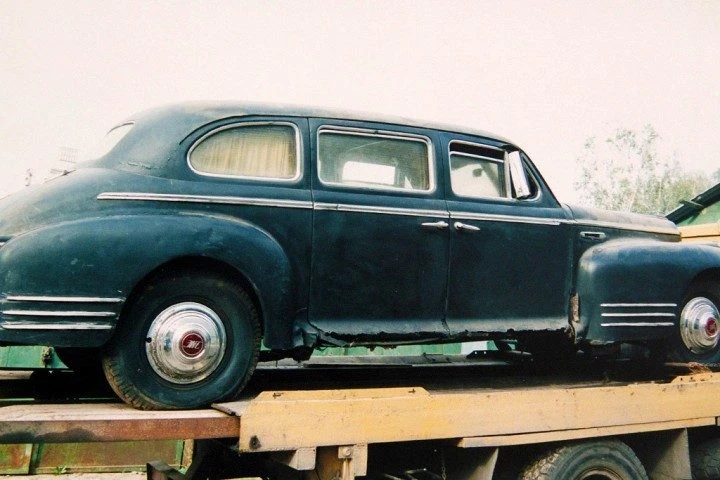
The body wasn't made up of individual armored panels, like its European and American counterparts, but was a riveted and welded structure. In other words, the vehicle was essentially an armored capsule. Moreover, each welded part bore a serial number and the manufacturer's name. This meant that, should anything happen, the full weight of responsibility fell on a specific individual. Furthermore, bullet holes could be seen on the body, where various areas were tested for strength. 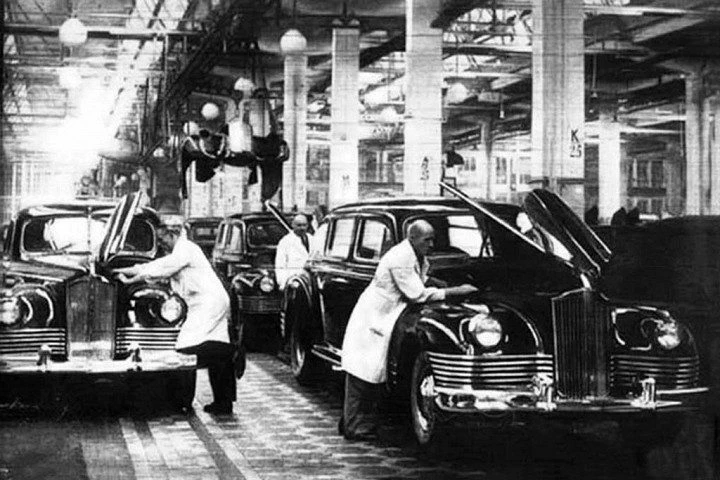
The windows are a complex engineering structure composed of 35-millimeter glass, an air gap, viscous plexiglass (designed to absorb the kinetic energy of fragments from a punctured outer layer, if necessary), another layer, and a special tempered glass called Stalinite. To prevent the windows from fogging, Soviet engineers installed tubes containing a special powder that absorbed moisture. Hydraulic jacks acted as window lifters. 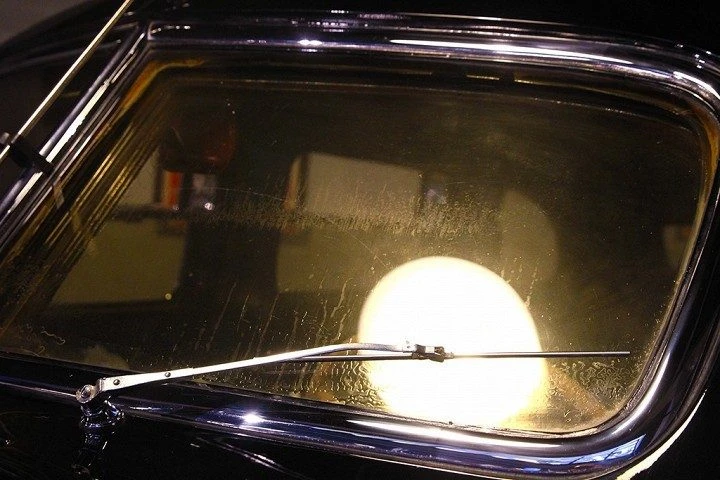
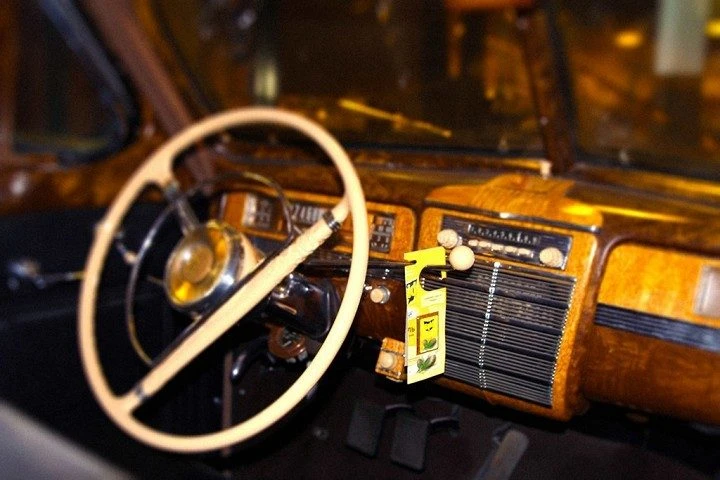
Stalin is known to have been an ascetic in his private life. But looking at the ZIS-115's interior, you wouldn't think so. The spacious cabin, designed for 6-7 people, is trimmed with genuine leather, velor, and natural wool. The dashboard inlays are made of Karelian birch. The instrument panel's backlighting changed depending on the speed. Up to 40 km/h (25 mph), the panel glowed green, between 40 and 80 km/h (25 to 50 mph), and red above 80 km/h (50 mph). The car, as a reminder, was assembled in 1949. 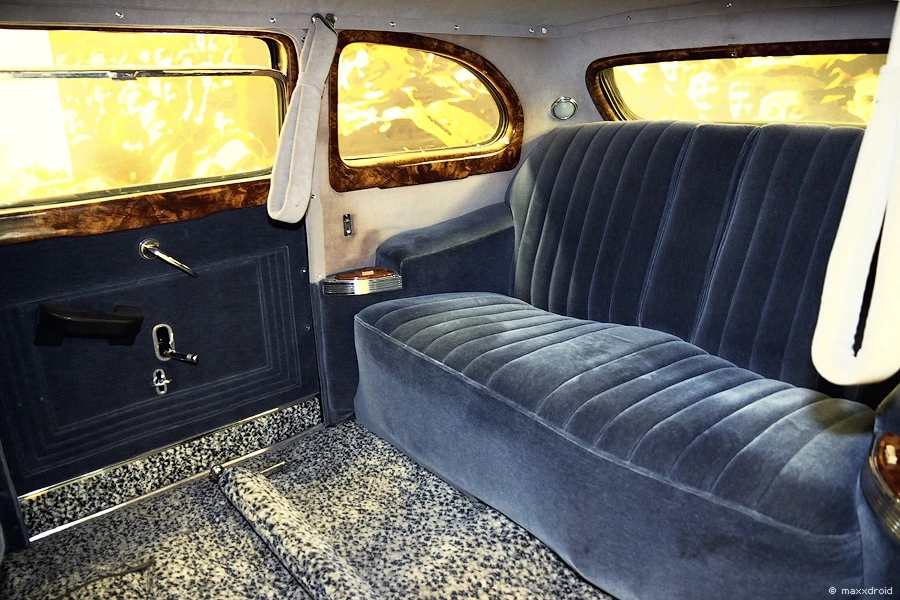
In short, the creators did a great job. Luckily for them. After all, the "facility" handover procedure went like this: the NKVD officers forced the chief engineer and leading designers inside, closed the windows and doors, and fired several bursts of machine gun fire at the vehicle. No one was injured, which they celebrated with a lavish banquet. 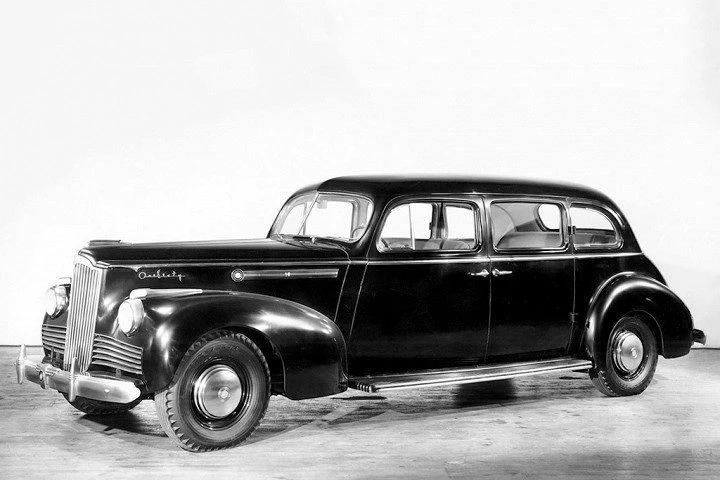
So how did this technological marvel end up at the Baumanka professor's dacha? It turns out that after Stalin's death (it was his personal car that was purchased by the collector Zadorozhny, as evidenced by the stamped chassis number—18), his ZIS-115 was sent to the Likhachev Automobile Plant for... disposal. However, for unknown reasons, the "armored car" was transferred to Bauman Moscow State Technical University for various tests. Because the car was classified, it was registered as a chassis with a set of spare parts. Over time, the ZIS-115 began to be used as an armored car, transporting the university's cash register. But later they abandoned this practice, too—the leader's car was simply sent to the backyard, where it sat for many years until one of the teachers bought it. 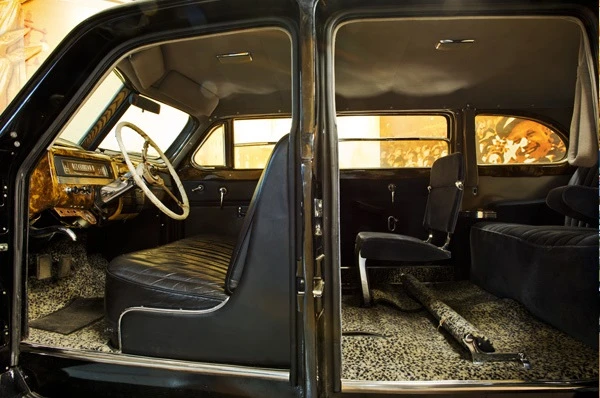
Zadorozhny paid a tidy sum for Stalin's car and handed it over for restoration. The work took several years. The craftsmen who created this unique model are long gone, but archival documentation came to the rescue. The work was significantly complicated by the specialists' inability to completely disassemble the car, as is usually the case in such cases. Remember how we said the car was essentially an armored capsule wrapped in a ZIS-110? This was the reason for the different approach—if the car had been disassembled down to the last screw, it would have been impossible to reassemble.
Using old documents, the restorers managed to recreate the ZIS-115's exterior step by step. They also restored the interior to its almost original appearance. The floor carpet, for example, was ordered from Germany. And the upholstery itself was performed by a craftsman who had worked at ZIL his entire life and was familiar with local technologies. 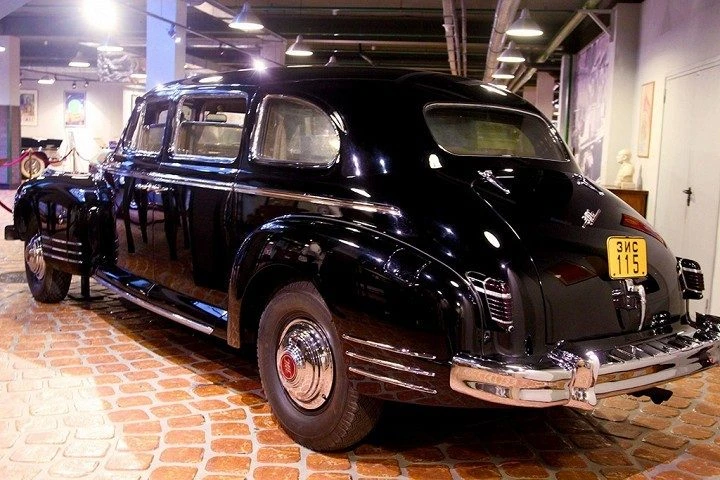
The restoration took five years and cost around $200,000. Afterward, the "armored car" even drove 300 km. All restored vehicles undergo this test. According to the person who drove the ZIS-115 and accelerated it to 100 km/h, the car retained excellent handling and braked relatively well. During testing, one tire burst, but a serious accident was avoided.
This unique car is currently on display at the Vadim Zadorozhny Museum of Technology in Arkhangelskoye, Moscow Region. It is valued at at least $3-4 million, but is not for sale. The owner says he won't agree to sell it at any price.