The "Fruit Machine" for gays and other conspiracy theories that turned out to be true (12 photos)
Conspiracy theories and anything related to conspiracies have become popular lately. People are talking about laboratories producing coronavirus, and online discussions are focused on Zuckerberg's attitude toward reptilians—and this is perfectly normal, as it's entirely consistent with human nature. Let's recall the most unusual, but ultimately proven true, conspiracy theories of the last century. 
CIA Mind Control Experiments
Rumors that the US's main intelligence agency is obsessed with mind control surfaced periodically throughout the Cold War. But as it turned out, these rumors were well-founded, as from 1953 to 1964, the CIA actually conducted human experiments with the ambitious goal of controlling human thoughts. 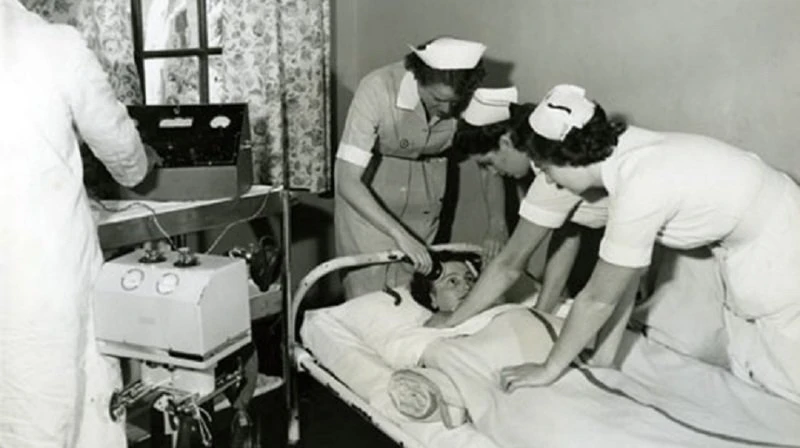
Now it sounds like the plot of a crude Hollywood thriller, but the American citizens caught in the crossfire were in no mood for jokes. During these inhumane experiments, people were given psychotropic substances and psychedelics, like the hippie drug LSD, without their knowledge.
But that's not all—the subjects were subjected to sensory deprivation, electroshock therapy, and hypnosis in attempts to gain control over their minds. It got to the point where they began experimenting with neurolinguistic programming of the personality.
The most disturbing thing is that all these experiments were conducted not only without the knowledge of the subjects, but under the guise of treating them for various ailments. The CIA's MK-Ultra program encompassed 86 major university centers in the United States, 12 hospitals, and even three prisons. Facilities were located across the country, from sunny California to snowy Alaska. 
Some of the experiments were conducted on terminally ill cancer patients, with the understanding that this was the latest way to combat their illness. Only two deaths among the unwitting participants in the experiments have been officially confirmed, but it's easy to see that the US government went to great lengths to cover up their crimes against its own citizens.
The Tuskegee Experiment
Conspiracy theories surrounding the deliberate infection of people for drug research have always been popular. They are not without foundation, and this is a historical fact. The Tuskegee Experiment is the most brutal experiment on a human population, not only in the US but in the entire world. It lasted from 1932 to 1972 and claimed the lives of at least 500 African Americans. The goal of the study was simple: scientists wanted to determine how much better black people were at surviving syphilis than white people. 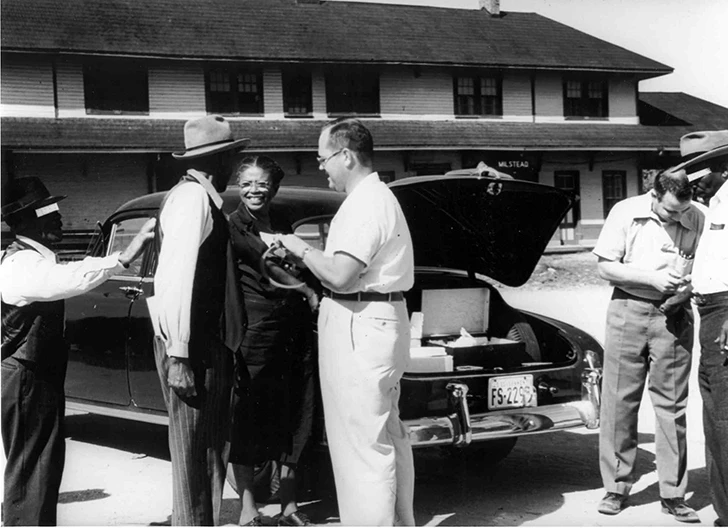
To do this, doctors deliberately infected 400 patients with syphilis, patients deemed of no social value by the authorities of the small town of Tuskegee, Alabama. These included the poorest residents of the black ghettos, those with criminal records, and the unemployed.
Typically, the town's most destitute and homeless residents were left alone—the scientists needed the purity of the experiment. This category of citizens was difficult to monitor, so they preferred those who were tied to a place, meaning they had a roof over their heads and a family.
Those infected with the deadly infection were unaware that they were sick, as doctors diagnosed them with other conditions and prescribed medications completely unrelated to their illness. Simply put, the unfortunates were treated with vitamins, aspirin, or even placebos. The African Americans of Tuskegee were delighted to receive free medical care they couldn't afford, unaware that they were being slowly and cynically killed. 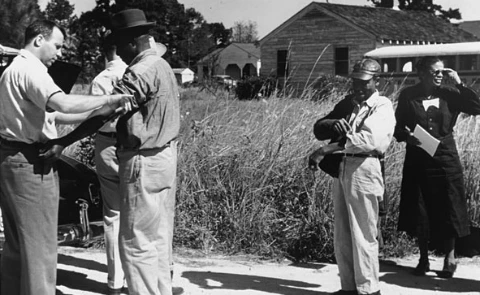
In 1947, medicine conquered syphilis, which they learned to treat with penicillin, but the Tuskegee experiment continued. In early 1972, details of this dirty project became public knowledge, and a huge scandal erupted. US authorities attempted to hush it up and conceal some of the most shocking facts, but these attempts were noticed and caused even greater outcry.
By 1972, only 74 of the 400 citizens tested were still alive. Furthermore, it was discovered that the men infected by the scientists had infected 40 wives and mistresses, resulting in the birth of 19 children with congenital physical and mental disabilities. In 1997, US President Bill Clinton apologized to his nation for the first time and apologized for this terrible and shameful episode in the country's history.
Poisoned Alcohol
It's well known that when drinking too much, many people blame it on the fact that the alcohol was laced with substances that shouldn't have been there. Usually, it's not the substances themselves, but rather a lack of moderation or poor quality, but not always. In the 1920s, during Prohibition in the United States, authorities used the most unsavory methods to combat drunkenness, including poisoning citizens. 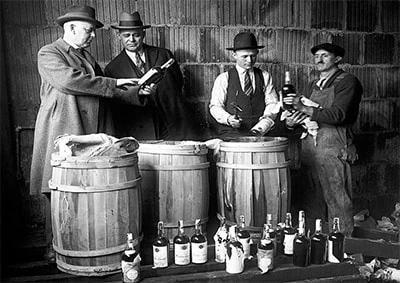
The Prohibition Act, which lasted from 1920 to 1933, gave rise to bootlegging. This was an era of flourishing dens, the mafia, and smuggling, against which a merciless war was waged to the death. Underground distilleries poisoned their thirsty customers with low-grade swill, but the country's authorities bore some of the blame for the illnesses and deaths of drinkers.
The primary raw material for the production of illegal alcohol was industrial-grade alcohol. To prevent the theft of this product, manufacturers added various components to the liquid, rendering it vile-tasting and unfit for consumption. But bootleggers, enlisting the help of chemists laid off by the crisis, quickly learned to purify the alcohol from these additives.
Then the US government's best bet was to add toxic components to ethyl alcohol. They mixed it with dangerous methyl alcohol, added kerosene, formaldehyde, and even acetone. Initially, this was done to discourage bootleggers from stealing the alcohol. Containers containing the coveted liquid were marked with warnings that the contents contained poison and that drinking such alcohol was dangerous to life. 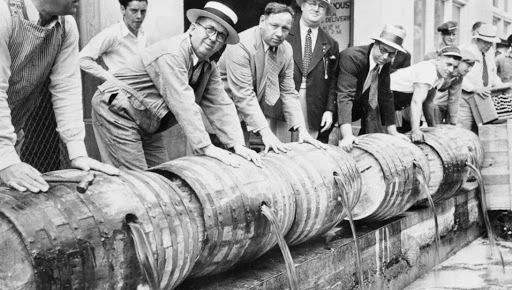
But, seeing that this was ineffective, the authorities resorted to direct poisoning of citizens to sow fear of alcohol among the people. As a result, Americans began to die by the thousands—over 10,000 deaths from deliberately poisoned alcohol alone have been officially confirmed. Despite the panic that erupted among the masses, no one gave up cheap bootleg alcohol, and drinkers continued to drink as they had.
Old Man Ham and the FBI
Many are convinced that the intelligence agencies are watching them. Most often, this is simply an attempt to gain importance in the eyes of oneself and others, or a mental disorder. But it also happens that agents are actually pursuing a law-abiding citizen, even though they have neither access to military secrets nor any desire to overthrow the current government. 
A good example of what was once considered paranoia turning out to be actual surveillance is the case of writer Ernest Hemingway. Everyone knows that in his later years, this writer sank into alcoholism, fell into depression, was treated in psychiatric clinics, and ultimately took his own life. The main cause of Hemingway's life tragedy was his obsession with being watched by the FBI.
The writer was convinced he was being followed on the streets of every country in the world, his phone and hotel room were bugged, and all his bank accounts were monitored. The classic of world literature tormented his friends and casual acquaintances with his suspicions, leading everyone to believe the poor man had lost his mind due to alcoholism. 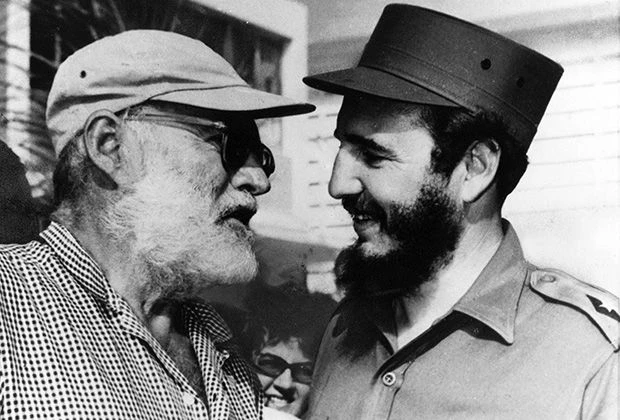
In 1961, after being released from yet another psychiatric hospital, the Nobel laureate shot himself in the head with a shotgun, settling the problem with the FBI once and for all. More than 20 years later, in 1983, the FBI declassified a 127-page report that fully confirmed Hemingway's fears were well-founded. The writer was under constant surveillance at the personal direction of FBI Director J. Edgar Hoover. The reason for this interest in the writer was his warm friendship with Cuban leader Fidel Castro.
The Secret of the "Fruit Machine"
Stories about identifying and treating homosexuals using modern science and technology have remained popular for over half a century. In the Western Hemisphere, the most popular tale has always been about the so-called "Fruit Machine," which unmistakably identifies gays and bisexuals, even if they are unaware of their sexual orientation. As it later turned out, this machine is not a figment of wild imagination, but a real, albeit useless, device. 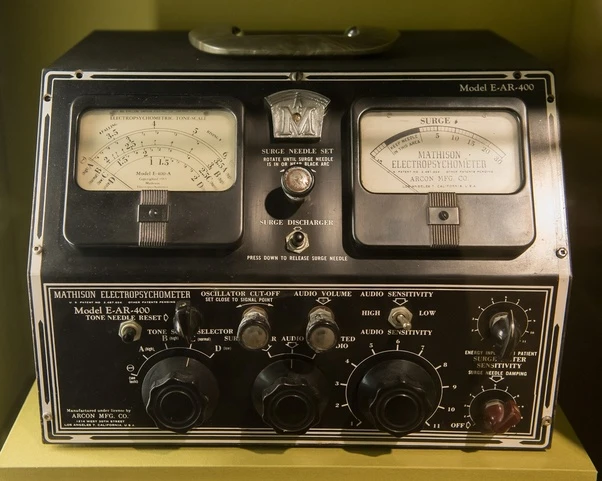
This is what the Fruit Machine for identifying gays looks like
It all began in the 1960s, when the so-called "Cambridge Five" scandal rocked the world. Back then, Soviet intelligence recruited several key British MI6 agents, who shared the United Kingdom's deepest secrets with their new masters. One of the agents was gay, and the "Evil Empire" managed to obtain him through blackmail.
In response, a number of Western countries began mass purges of gays and lesbians from various government institutions and services, classifying them as unreliable and dangerous. Homosexuals were dismissed from the police, the army, and even government agencies. The unexpected leader of this anti-gay campaign was provincial Canada, which just a couple of decades later would become the "promised land" for many dissidents and unconventional lovers from around the world.
The Canadian anti-gay campaign began with combing gay clubs, where undercover agents seriously hoped to obtain information about the sexual orientation of citizens in positions of responsibility. But the "gay" crowd proved a tough nut to crack and did not give up its secrets so easily. 
The Canadian government's homophobia had consequences.
This led to absurd and ridiculous situations, with some affected agents identifying others who had been sent by another agency. Consequently, such a manhunt quickly began to resemble more of a comedy than a special operation of national importance. After assessing the zero results of this work, the Canadian government abandoned the use of force reconnaissance and called upon official science for assistance.
This is how the so-called "Fruit Machine" was born, the very existence of which seems a mockery of common sense. Commissioned by the Canadian government, scientists created a device that functions like a polygraph. The subject was seated in a chair, entangled in sensor wires, and then shown erotic images.
As with the "lie detector," changes in blood pressure, heart rate, sweating, and pupillary response were recorded. The "fruit machine" proved incredibly effective, and with its help, at least 500 intelligence and police officers were released within the first month.
But disappointment soon set in, as the device had a huge margin of error. The problem was that it measured a person's stress level rather than their response to erotic stimuli. Everyone who sat in the chair next to the machine was nervous, fearing loss of their job and reputation, and therefore sweated profusely and shook. Ultimately, it wasn't homosexuals who lost their jobs, but the most impressionable government employees. 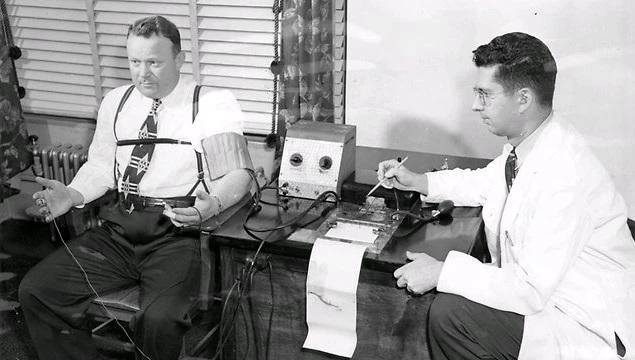
Seeing the obvious failure, the authorities stubbornly continued in the same direction, and thus came another amusing electronic device called a plethysmograph. It was actually connected to the subject's genitals to record the beginnings of an erection when shown risqué images or videos. After this, the country lost several hundred more intelligence agents, law enforcement officers, and clerks with the most daring erotic fantasies, but nothing more.
The outcome of the gay hunt was disappointing: after spending millions of dollars, several years, and many valuable specialists, Canada shut down the project. In other countries, it continued for some time, causing confusion and giving rise to daring jokes.
Interestingly, the most absurd conspiracy theories are often confirmed in the West. Perhaps this is due to the mentality of people who are more trusting of their governments? This is probably a topic for further research.