Hitler's Secret Bunkers: The History and Secrets of the Third Reich's Underground Vaults (17 photos)
The Third Reich prepared for war thoroughly. They built not only military factories and fortifications, but also secret bunkers for Adolf Hitler and his inner circle. Many of these underground structures have not survived to this day, but they still captivate historians, researchers, and conspiracy theorists. What did Hitler's bunkers conceal? And why do they continue to attract attention even decades later? 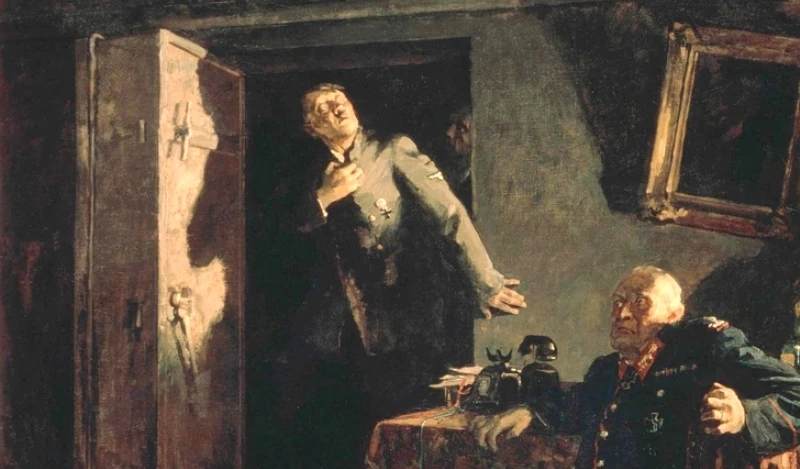
The Führerbunker in Berlin
Adolf Hitler's most famous bunker, where he spent the last four months of his life and committed suicide. The underground complex, located beneath the Reich Chancellery garden in central Berlin, was built in two stages – in 1935 and 1944. Initially, it was a simple bomb shelter, comprising 12 rooms, each measuring 3 by 5 meters. 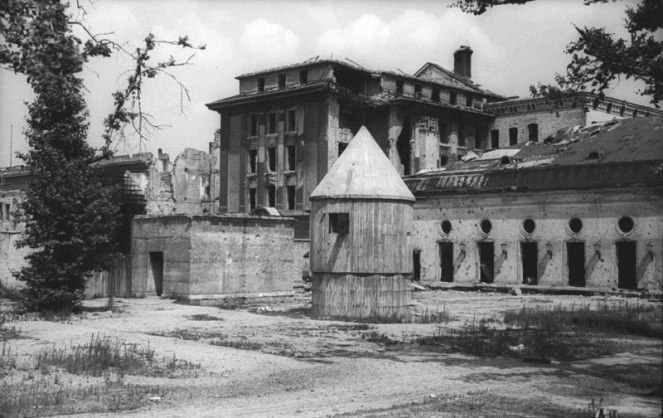
Air intake of the "Führerbunker" in the Reich Chancellery garden
In 1935, as part of the reconstruction of the Reich Chancellery, the "Small Bunker" was built. It was not specifically designed for Hitler and had rather modest protective features. The floors were no more than two meters thick, the ceilings were 3.05 meters high, and the walls were 1.6 to 2 meters thick. 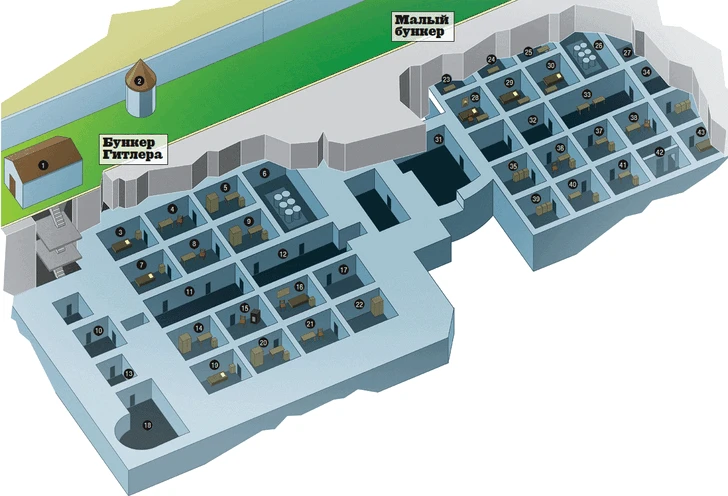
Diagram of the bunkers beneath the Reich Chancellery
In 1944, the second phase of construction was completed – this time with the intention of creating a shelter for the country's top leadership, known as the "Führerbunker." Thirty new rooms were located 2.5 meters below the previous level. They were protected by a 4-meter-thick slab, and exits led both to the main building and to the garden via a back entrance. The Führerbunker housed living quarters, office quarters, guard rooms, a medical facility, a conference room, a dining room, and the Führer's office. These rooms now house a museum.
Kehlsteinhaus ("Eagle's Nest")
The Kehlsteinhaus, sometimes called "Hitler's Tea House," is located high in the Bavarian mountains. The Führer's summer residence, built at an altitude of 1,834 meters, was designed and erected by order of Martin Bormann in 1938. Architect Roderick Fick personally oversaw the construction, which took just one year. This mountain lodge was a gift from the NSDAP for Hitler's 50th birthday. 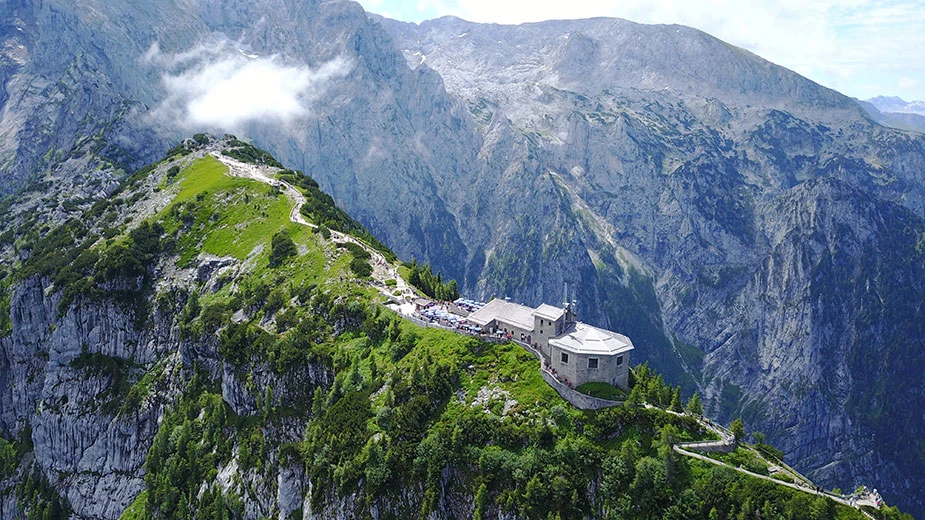
Behind this seemingly modest building, perched on the crest of a high mountain range, lies a colossal amount of work. A 124-meter shaft descends into the rock beneath the Kehlsteinhaus, carrying a bronze elevator designed for 20 people. The mechanism lifts a fully loaded cabin to the summit in just 41 seconds. But to reach the elevator, one must navigate a carefully guarded 126-meter pedestrian tunnel. A narrow, serpentine road with a 700-meter vertical drop leads to it, passing through five tunnels dug into the mountain. 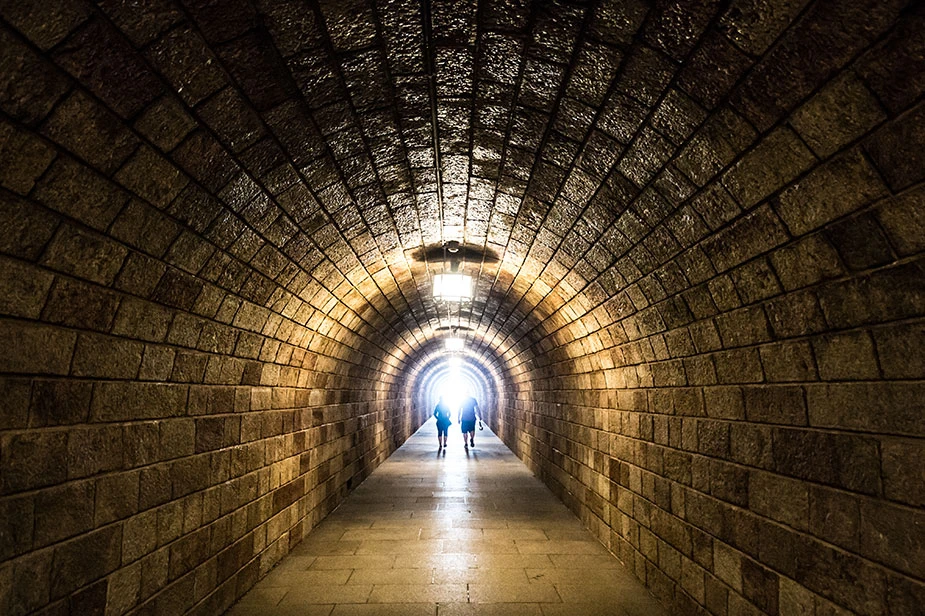
Pedestrian tunnel to the Kehlsteinhaus elevator
Hitler wasn't particularly fond of the Eagle's Nest, as he didn't tolerate the thin mountain air well. After the war, the building was used as a headquarters for the American military, and in 1951, the Kehlsteinhaus was handed over to the Bavarian state. The landmark was nearly demolished, but was ultimately preserved. Today, the Eagle's Nest is considered one of the most popular tourist destinations in the Bavarian Alps. Several restaurants are located inside.
Maybach – a city of bunkers
The Maybach complex was the largest such structure in the history of the Third Reich. It included 156 above-ground one- and two-story buildings, as well as a seven-story underground section. It was not just a massive bunker, but also the site of key military meetings. It was here, for example, that Operation Barbarossa was developed. 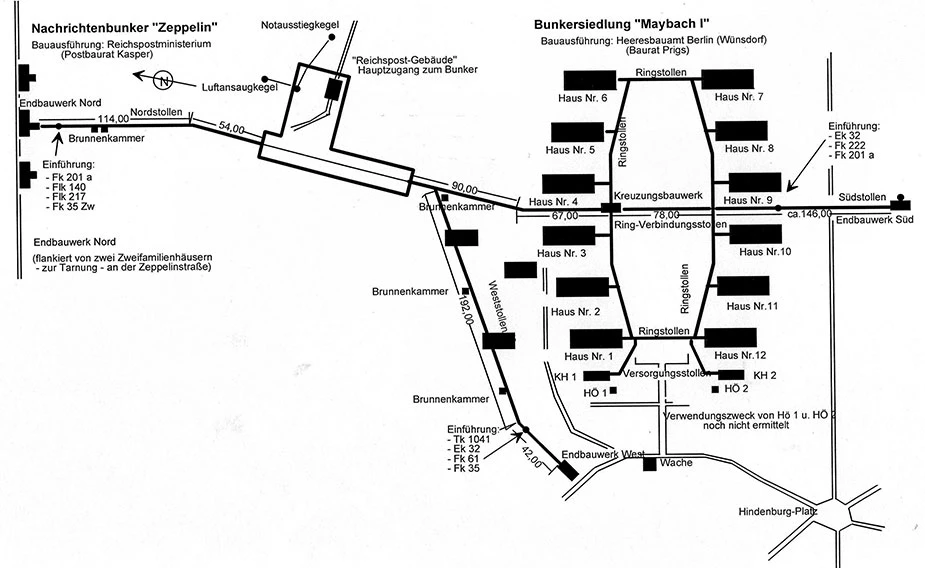
Construction of the complex began in 1936 near the small town of Zossen in Brandenburg. Work was carried out at an accelerated pace, in several shifts, with many engineers unaware of what they were building. According to the official version of the project, Maybach was a large military training center. 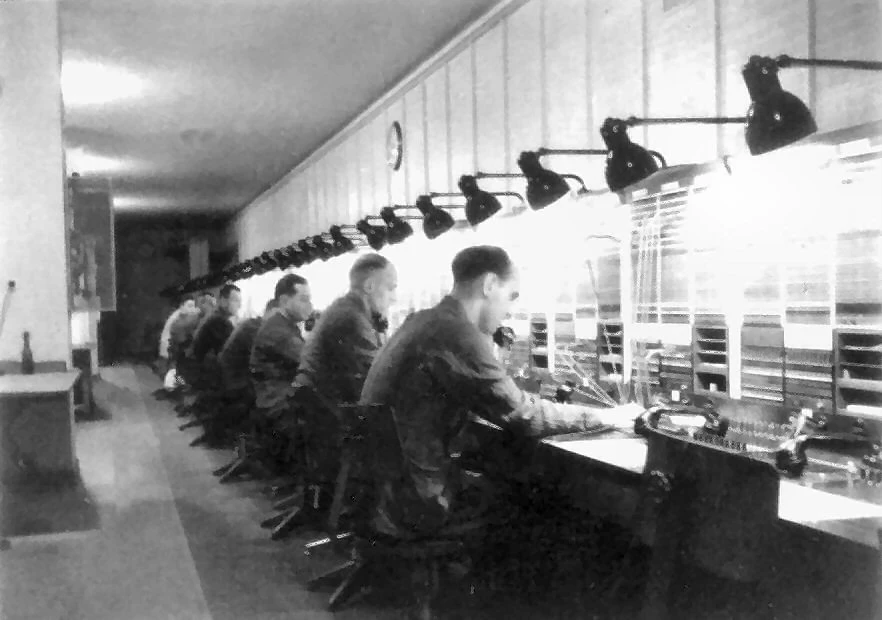
Bunker City Telephone Exchange
Hidden beneath a nondescript village with monotonous above-ground buildings housing officers and support personnel was a vast bunker. It housed a command post, a communications center, and a diesel generator power plant. Additionally, 12 cone-shaped bomb and gas shelters up to 18 meters deep, designed to accommodate 360 people, were located underground. 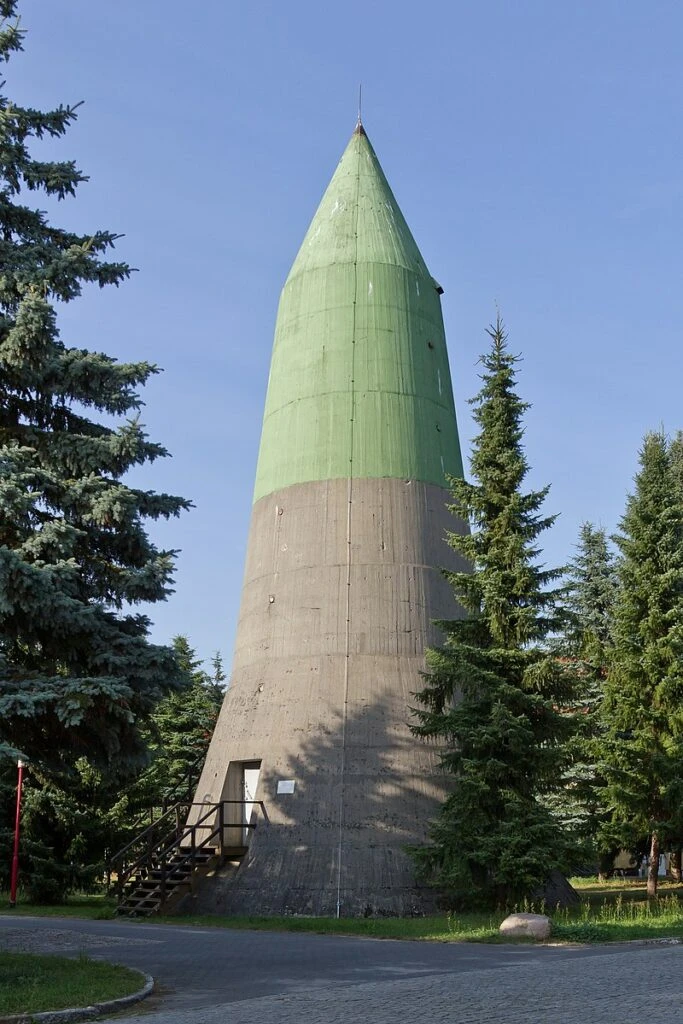
Aboveground section of a cone-shaped bomb shelter
To connect all parts of the shelter, a ring tunnel with a road was dug at a depth of 6-8 meters. A separate branch line branched off from it, extending both deeper and to the side. It led to a radio station located 15 meters underground, capable of communicating with various parts of the world. Hitler and his inner circle visited the Maybach on numerous occasions. 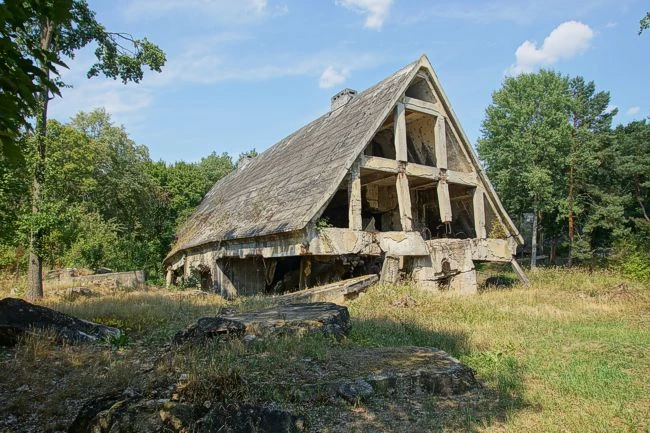
Ruins of the above-ground building in the Maybach
After the war, the entrances to the underground bunkers were sealed and blown up. However, the GDR authorities later restored the bunkers and handed them over to the Soviet army. Today, the Maybach bunker city attracts many tourists. Although not the entire complex is accessible to visitors, what can be seen is quite impressive.
The "Werwolf" bunker
Located in the Vinnytsia region, the "Werwolf" bunker is one of the special sites. It was built not just as a shelter, but as a headquarters and field dwelling for the Führer. Initially, Hitler intended to locate the underground headquarters in the Poltava region. But after the failures near Moscow, the plans were revised, and the village of Strizhenovka near Vinnytsia was chosen as the headquarters. 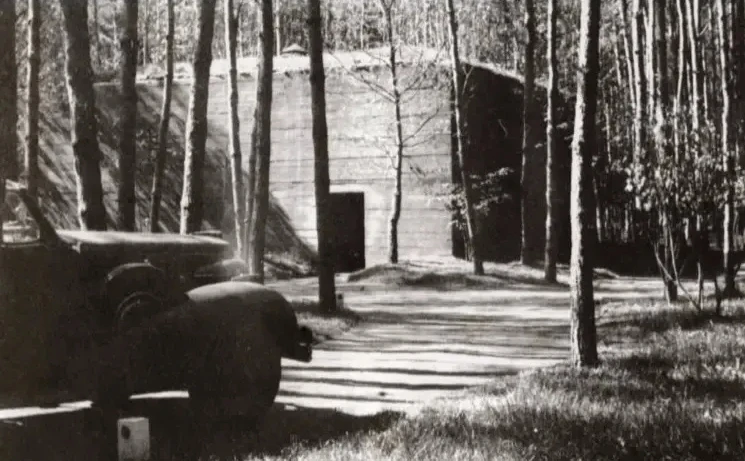
One of the few surviving photographs from the "Werwolf" site. The so-called "Officers' Bunker."
Construction work on the "Werwolf" site lasted from 1941 to 1943. The Todt military construction company served as the general contractor. A total of 4,086 people worked on the construction of the Führer's underground headquarters, including 991 German citizens, 1,425 foreign specialists, approximately 500 soldiers from construction battalions, and 1,100 prisoners of war. 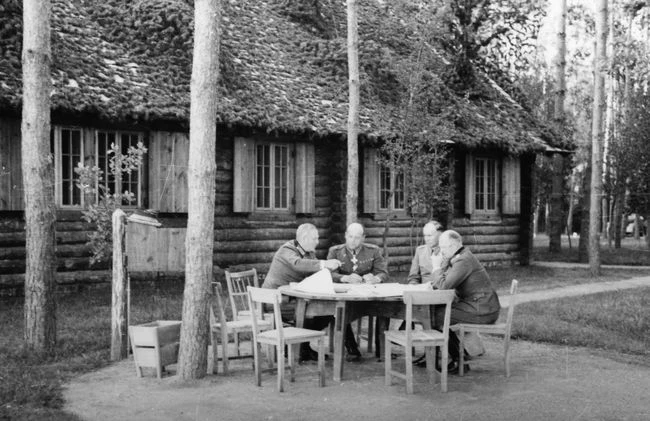
Military meeting outdoors. "Werwolf." 1942
Adolf Hitler visited "Werwolf" on numerous occasions. The Führer had ambitious plans for the future of this headquarters. After victory over the USSR, he intended to relocate the command center for military operations in the Middle East and India here, near Vinnytsia. Fortunately, these plans never came to fruition. Little is known about the underground "Werwolf," as the complex was destroyed on Hitler's orders in 1944. It suffered additional damage from Soviet aircraft. 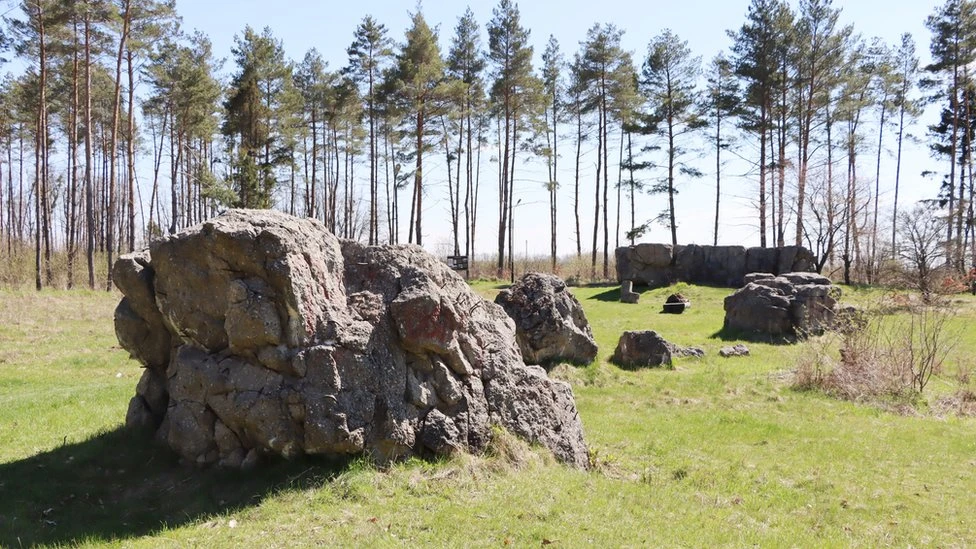
All that remains of the concrete bunker
Experts continue to explore the "Werwolf" bunker today. It has already been established that, at a depth of 20 meters, under 10 meters of granite, approximately 70 rooms of the former headquarters, with a total area of several thousand cubic meters, remain. The bunkers varied in size: the first was 7 by 17 meters, the second 8 by 11 meters, and Hitler's personal bunker was 8.5 by 8.5 meters. The underground complex also included two radio stations, a communications hub with Berlin and Eastern Europe, and a power plant. 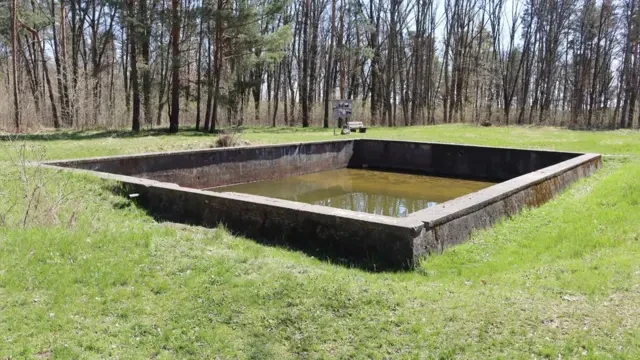
The "Werwolf" pool. Whether the Führer ever swam in it is unknown.
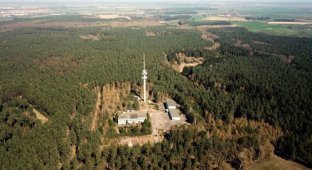
The structure was hidden above by a forest. A military airfield was located nearby, and the forest where the "Werwolf" was located was surrounded by a two-meter-high fence with 36 machine gun towers. The facility was carefully concealed from residents of nearby villages. The Nazis executed any local residents who came suspiciously close to the headquarters fence. Today, the only reminders of this vast underground complex are huge blocks of blasted concrete in the forest and the miraculously preserved pool.
"Bärenhalle" ("Bear's Den")
Another underground bunker of the Third Reich that still holds its secrets is the "Bärenhalle." The Führer's military headquarters, whose name translates as "Bear's Den," was built in Krasny Bor near Smolensk. Its construction lasted from October 1941 to August 1942. As with "Werwolf," Smolensk was planned to house Hitler's headquarters and field quarters. The work was also carried out by the Todt Organization. 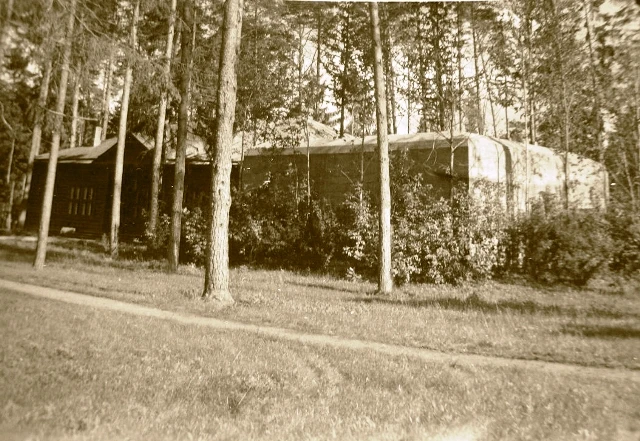
This is what the ground structure of the "Bärenhalle" looked like in 1942
The above-ground portion of the bunker is a massive reinforced concrete building with an area of 43 square meters. Its construction required approximately 900 cubic meters of concrete. 2,400 Todt employees and 950 civilian workers were involved in the construction. A separate railway line was built to the site, designed to transport Hitler's special train. 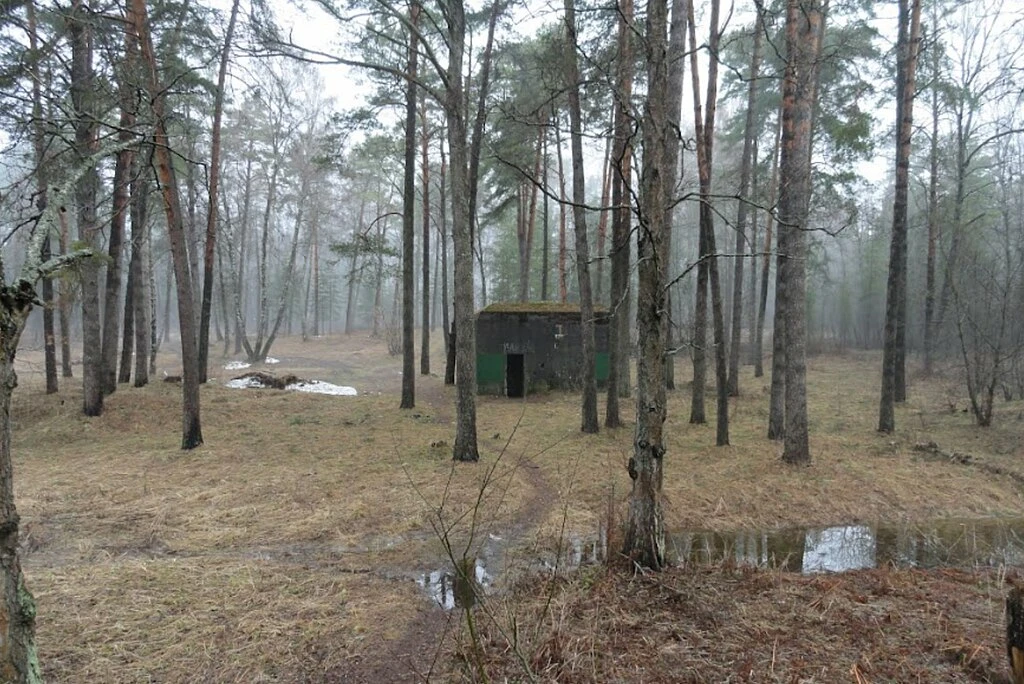
This is what the above-ground portion of the bunker looks like today.
The Führer never visited the bunker, as it was no longer needed by the time it was completed. The "Bear's Lair" was used as the headquarters of Army Group Center. The underground portion of the "Bärenhalle" remains partially explored. On September 25, 1943, the headquarters abandoned the bunker, after which it was partially blown up. In 2003, German specialists conducted a survey of the accessible underground spaces.
Wolfschanze (Wolf's Lair) Complex
Hitler's bunker, the Wolfschanze, or "Wolf's Lair," was considered the Führer's main headquarters during World War II. It was located in the Görlitz forest, near the town of Rastenburg in East Prussia (now Kętrzyn, Poland). Of all such facilities, this bunker remained in use for the longest period—from June 21, 1941, to November 20, 1944. During this period, Hitler spent a total of 800 days there. 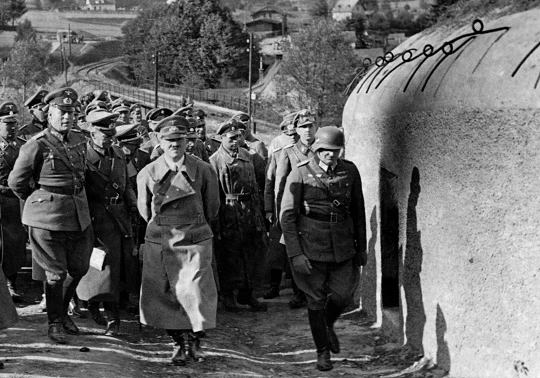
Hitler at the Wolfsschanze headquarters
Hitler's main headquarters included over 80 bunkers and above-ground structures located in a dense forest. The facility covered an area of 250 hectares and was carefully concealed behind artificial trees. It was surrounded by several rows of barbed wire, minefields, camouflaged machine gun emplacements, and anti-aircraft batteries. The complex had its own railway, airfield, and power plant. 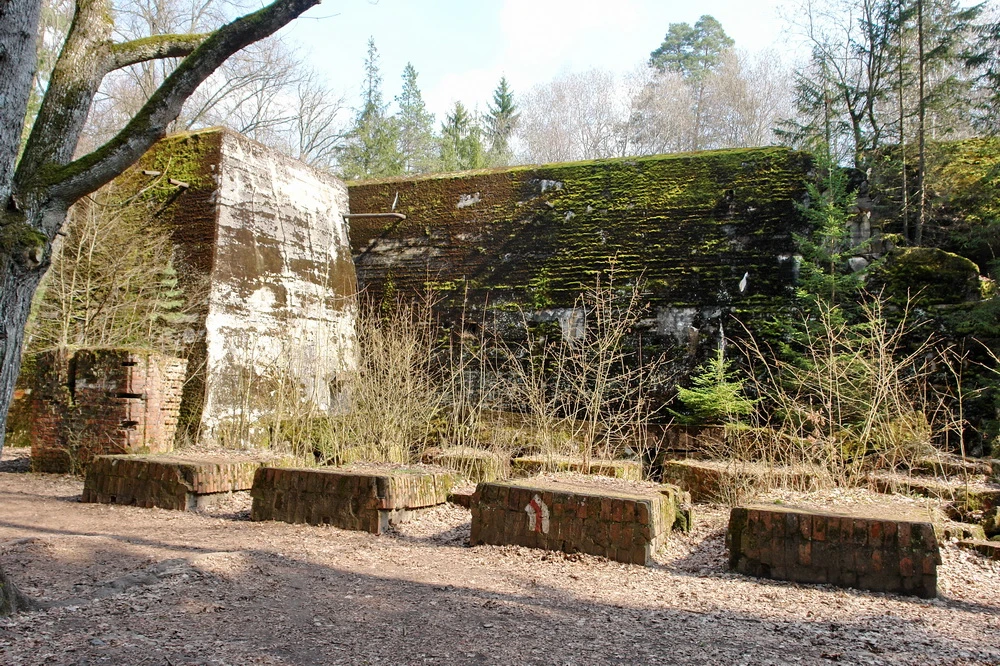
The above-ground structures of the "Wolfschanze" still standing today
The bunkers were blown up on January 25, 1945, when the Red Army's advance units were 15 kilometers from headquarters. Many notable events are associated with this location. It was at the "Wolfschanze" on July 20, 1944, that the most famous assassination attempt on Hitler took place, from which he miraculously survived.
The bunkers of the Third Reich are more than just the remains of concrete structures. They are silent witnesses to the tragedies, ambitions, and paranoia that surrounded one of the most feared dictators of the 20th century. Despite the passage of decades, these places continue to spark debate. For some, they are a historical memory, for others, dark relics best forgotten. What do you think: should such sites be preserved and studied, or should they be consigned to oblivion, along with the ideology that gave birth to them?