Kummakivi: Why This 500-Ton Boulder Doesn't Fall Off a Small Cliff (7 photos)
Kummakivi means "wonderful stone" in Finnish. And this natural landmark, hidden in the forests of southeastern Finland, truly lives up to its name. Imagine: a huge boulder measuring 7 x 4 x 5 meters and weighing approximately 500 tons, balanced on a tiny, convex section of rock measuring just 0.5 square meters. This stone is truly spectacular, and tourists often come to admire it. There are many theories about how this landmark came to be, but scientists have long known how it really happened. 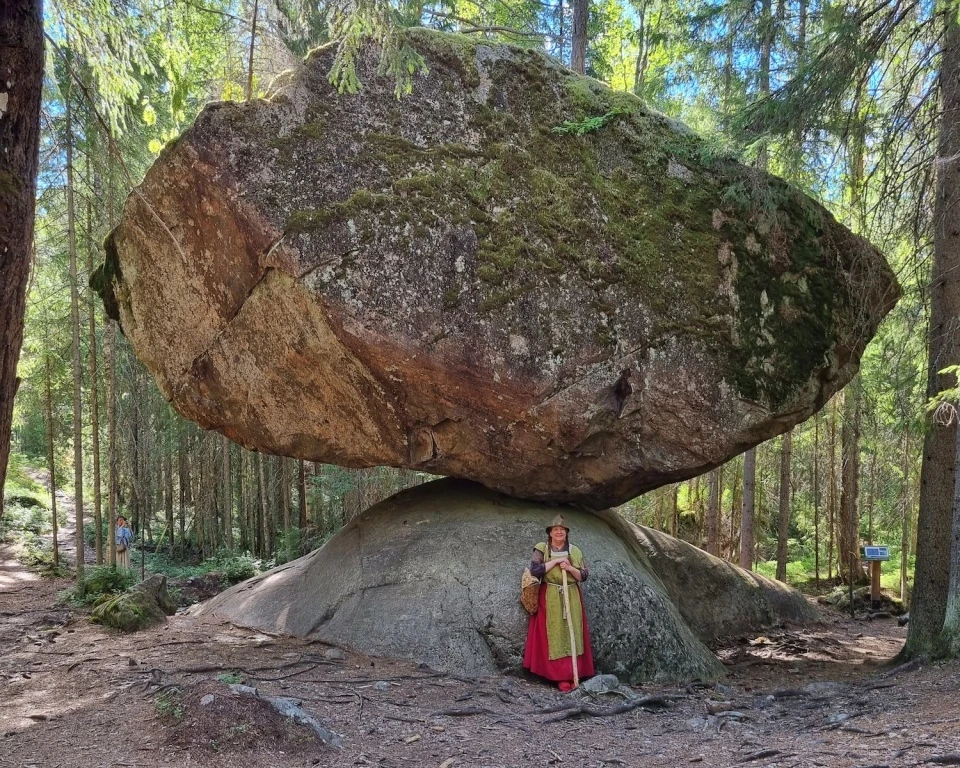
A Forest Giant Surrounded by Legends
Local legend has it: long ago, before humans existed on earth, the forests were inhabited by trolls and giants. A dispute arose between two tribes of giants over territory. To resolve the conflict, they erected a huge boulder on a cliff—it was to serve as a boundary marker. The trolls, feuding with the giants, plotted to topple the boulder. They attempted to do so, but lacked the strength, and their plan failed. 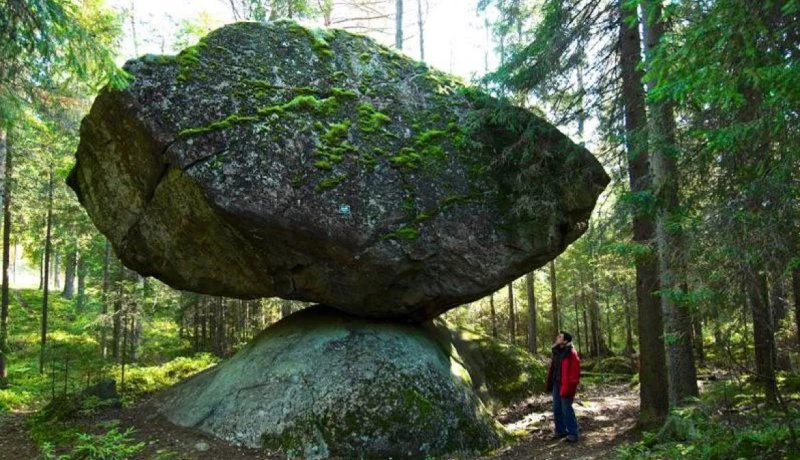
Some romantics claim that Kummakivi is a living stone. According to ancient legends, there is a void within it where a creature lives. Its breathing can be heard on quiet summer nights. Local elders see evidence of the boulder's living nature in the pine tree that once grew right on its top. 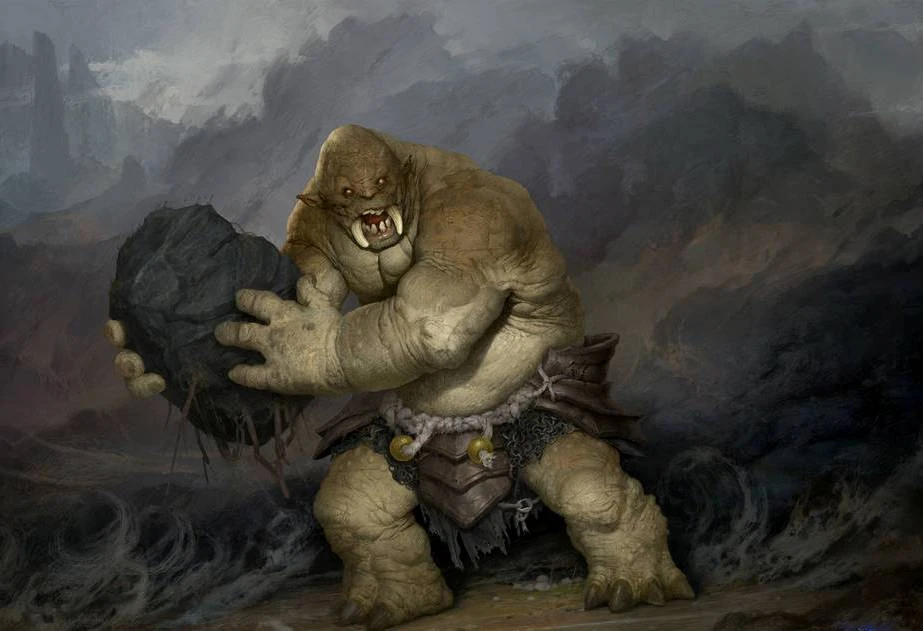
It seems that's how it all happened. Painting by artist Maxim Verekhin
Ufologists and mystics often wander around Kummakivi with amulets, devices, and frames, testing the energy fields. Some researchers believe the boulder was left by a vanished civilization. Others see it as an altar to an ancient Norse god. Still others associate the balancing stone with an alien visit to Earth.
A landmark kept away from tourists
Particularly impressionable enthusiasts examine various images on the stone's surface—from battles between trolls and giants to encounters between early humans and aliens from a neighboring galaxy. A wooden staircase once led to the top of the stone, climbed by those seeking the mysterious. In the 1960s, local authorities conceived of turning Kummakivi into a popular tourist destination. 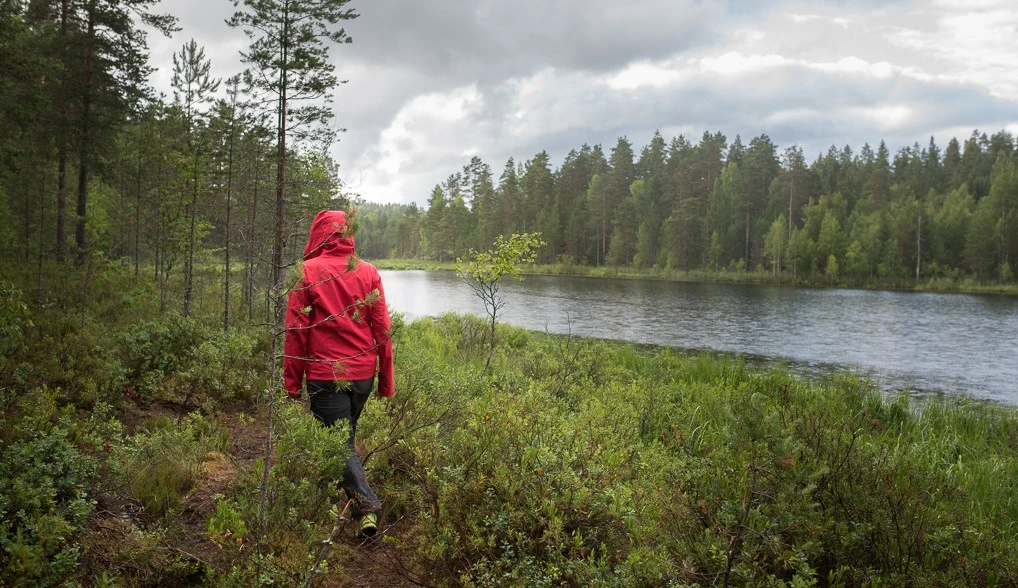
The path to the stone is no less beautiful than the stone itself.
Fortunately, the authorities changed their minds. They reasonably concluded that crowds of curious visitors would damage not only the boulder itself but also the surrounding forest. The staircase was removed, and the idea of creating tourist infrastructure was abandoned. However, the balancing boulder still attracts curiosity seekers, who come here even in winter. In 1962, Kummakivi was added to the register of protected natural sites.
An information board was installed next to the boulder for visitors. However, its information is questionable. If the boulder's dimensions are accurate, then the weight listed in the "passport" is only 182 tons. The volume of the boulder is easily calculated: it is approximately 140 cubic meters. Knowing the density of the rock, one can determine that the forest giant weighs at least 400 tons. Therefore, the most commonly cited figure of 500 tons is much closer to reality.
Scientific Explanation of Kummakivi
Scientists see no mystery in Kummakivi. They know not only how the giant boulder ended up on the cliff, but also when it happened. This natural monument was created by the last Pleistocene Ice Age. It began approximately 116,000 years ago and ended 11,500 years ago. 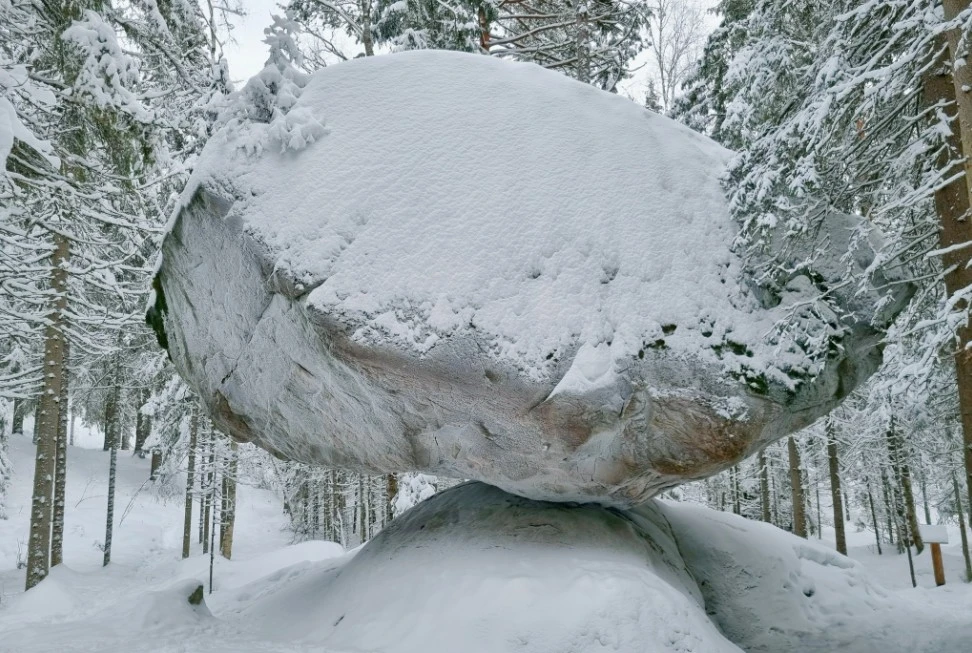
Kummakivi is beautiful in both summer and winter.
The glacier, moving through Scandinavia, carried the boulder "on its back" from Sweden or Norway. These countries are located in the Baltic Shield, a massive folded formation composed of granite and gneiss. This is why enormous boulders are so common there.
Finnish geologist Aimo Keijonen believes the boulder didn't travel far. This is indicated by its sharp, jagged edges. Stones transported by glaciers from afar are usually characterized by smooth, polished sides. Kummakivi lay on the ice for some time, but then the glacier began to melt, and the boulder gradually sank. 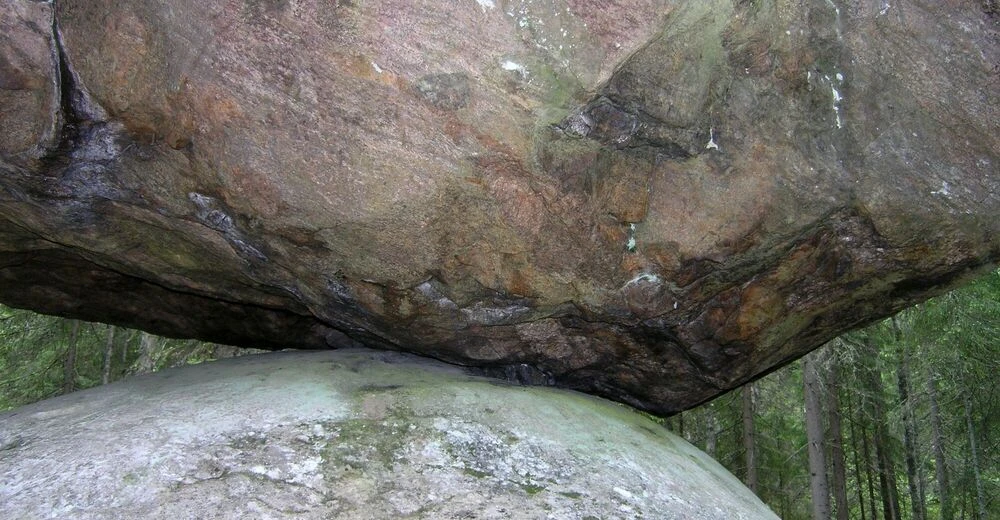
Although the boulder's position appears precarious, it stands very securely.
Unlike thousands of other boulders found in the Finnish and Karelian forests, Kummakivi was fortunate enough to settle gently onto a rocky outcrop. The glacier had already prepared a platform for the "Wonderful Stone," leveling the top of a small cliff. Attempts to determine the stone's "homeland" have unfortunately been unsuccessful—this type of rock is common in northern Europe. It remains to be seen that balancing stones abound worldwide. They can be found on every continent. 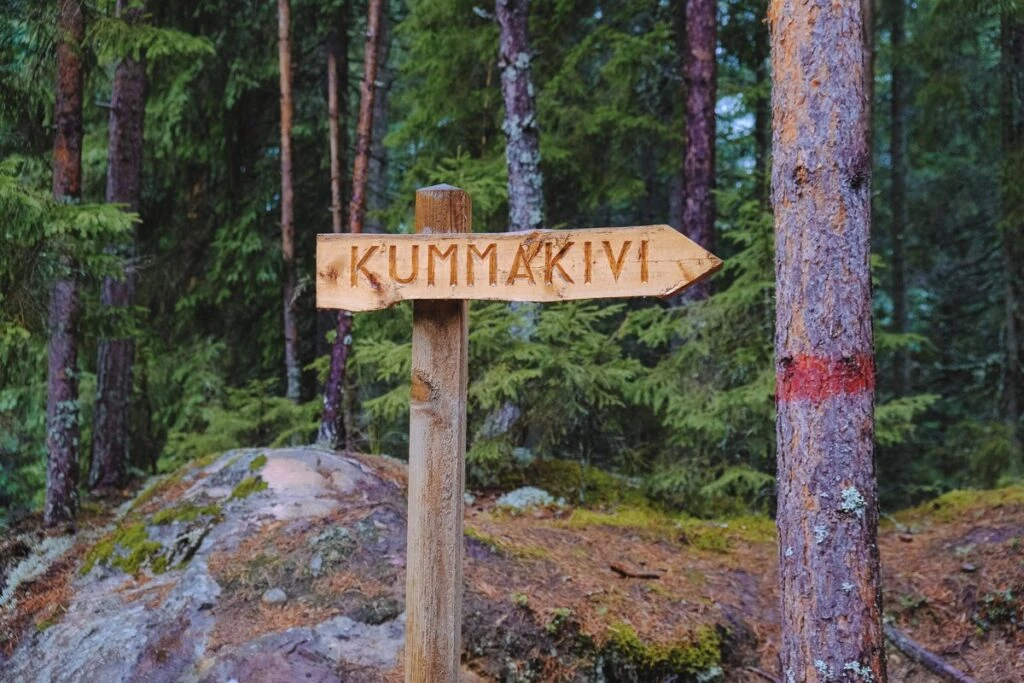
You can reach the stone by following the signs.
So what makes Kummakivi truly amazing—its unusual history, its scientific explanation, or its aura of mystery shrouded in legend? What do you find most intriguing about this natural phenomenon—its geological origin or its mystical theories? Share your thoughts in the comments!