No Peace, No Sex: How Women Stopped Wars and Changed Constitutions by Refusing Intimacy (16 photos)
For centuries, the history of war was written by men, casting women as victims. But more than two thousand years ago, Aristophanes proposed a different narrative: women deny their husbands intimacy to stop war. The idea seemed absurd and ridiculous to contemporaries, but it caught on and went beyond the stage. Iroquois women won veto power over war, Liberian women in white T-shirts brought warlords to the negotiating table, and Colombian women forced the authorities to repair a road—each time using the same refusal as a weapon. We tell the whole story: from "Lysistrata" to the 2011 Nobel Peace Prize. 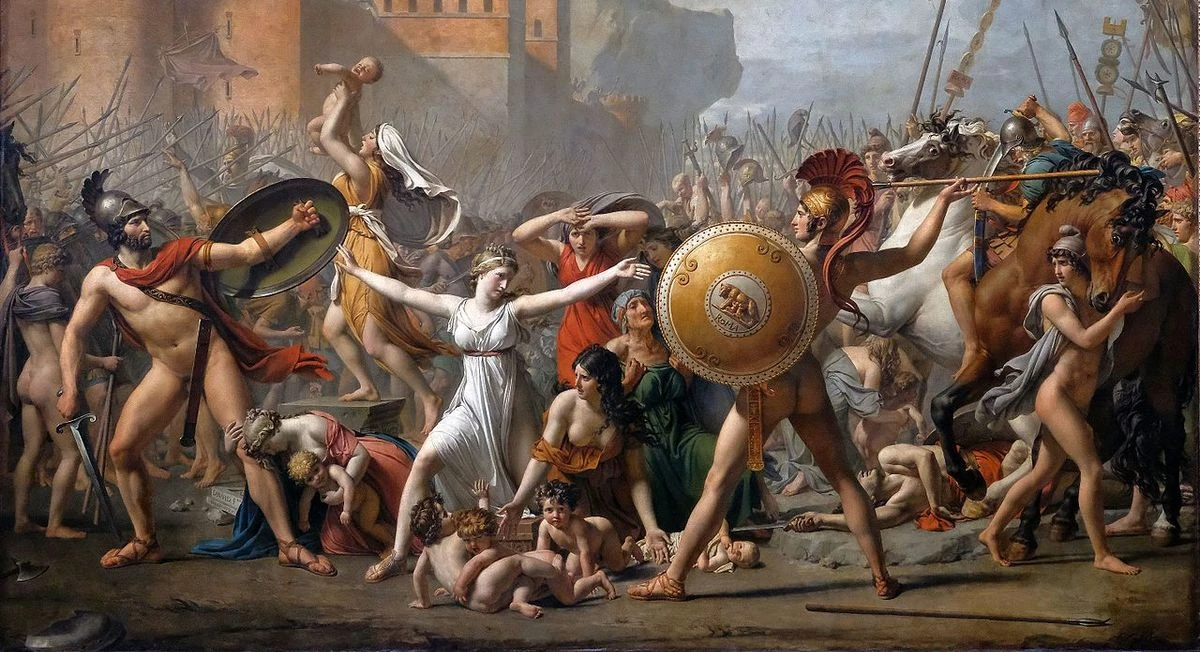
Aristophanes: A Prophetic Joke from 411 BC
In 411 BC, Athens was going through hard times. The Peloponnesian War with Sparta had already been going on for 20 years. Not long before, the Athenian fleet had been routed in the Sicilian Expedition. It was then that Aristophanes performed the comedy "Lysistrata" at the festival of Lenaea. The title translates from Greek as "disbanding the troops." The heroine's name was no accident. 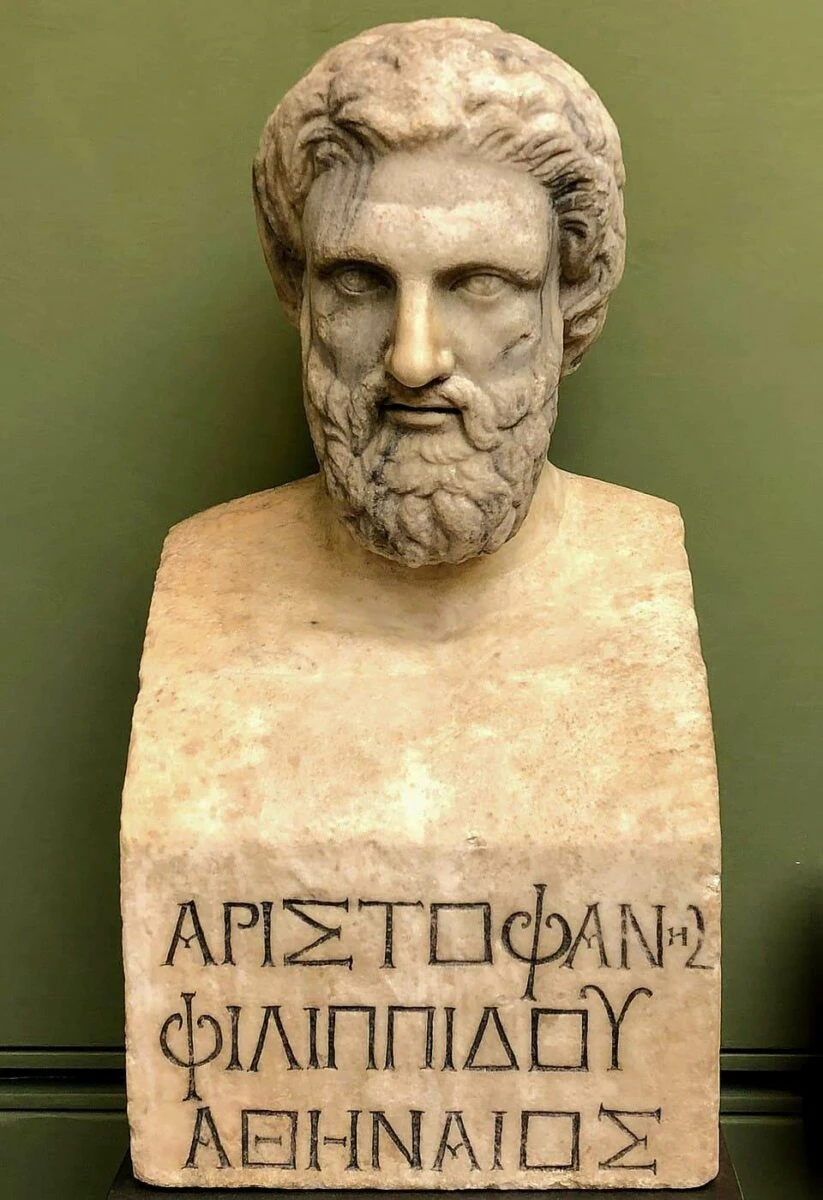
Aristophanes is the author of the comedy "Lysistrata," which gave its name to an entire phenomenon.
Lysistrata convinces the women of Athens and Sparta to lock themselves in the Athenian Acropolis. She orders their husbands to withhold sex until they sign a peace treaty. The capture of the Acropolis had another purpose: the city was deprived of access to the treasury used to finance the war. The bedroom was transformed into a weapon. For the Athenian audience, the very idea of women's political action sounded like a joke. Aristophanes used this comic effect to remind the citizens of the absurdity of the 20-year war. 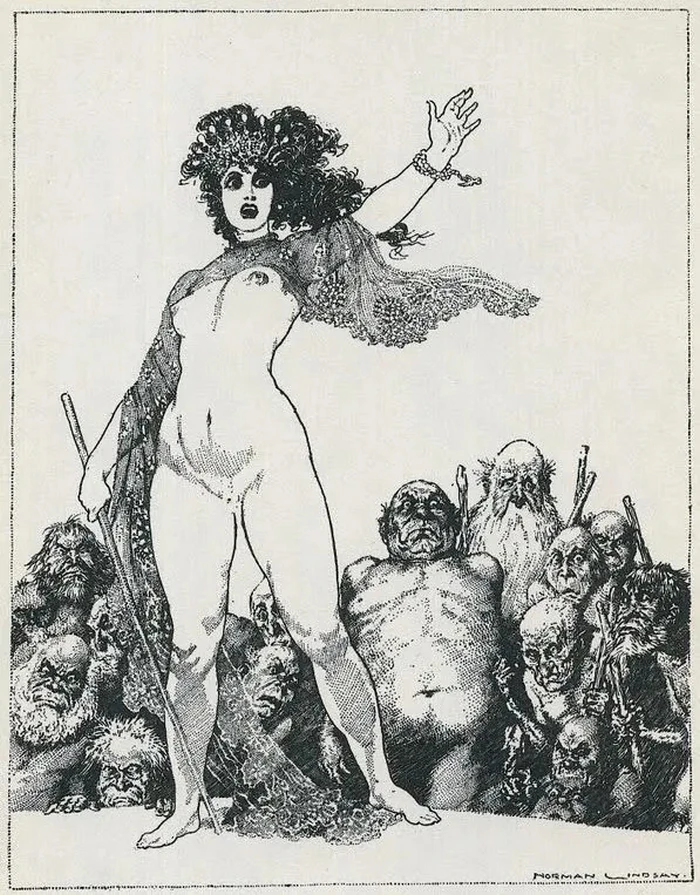
Illustration by Australian artist Norman Lindsay for "Lysistrata." Early 20th century
It's worth emphasizing: Lysistrata had no historical prototype. It's a work of fiction, a sharp satire on a topical issue. But the idea proved resilient. More than two thousand years later, it has earned its own term: "Lysistratic nonaction." This term refers to any instance in which women use the refusal of intimacy as a political tool. The following such instance, unlike the Athenian comedy, was entirely real. 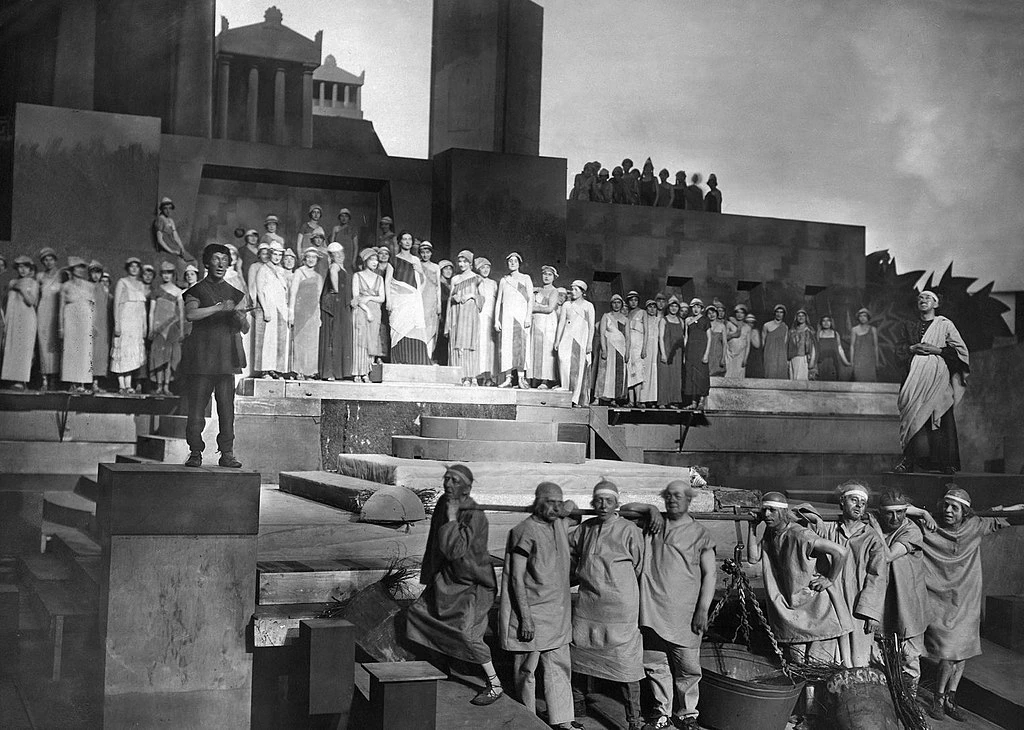
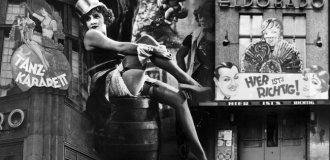
A production of "Lysistrata" at the Grosses Schauspielhaus in Berlin. 1920
The Iroquois: How Women Gained Veto Power in War
In the 17th century, the Iroquois Confederacy lived in northeastern North America. It was an alliance of six tribes calling themselves the Haudenosaunee (meaning "people of the longhouse" in the Mohawk language). The men spent years fighting their neighbors. Decisions about campaigns were made solely by the men, without the women's consent. The Haudenosaunee women were fed up with this. They came up with a way to make the men listen. 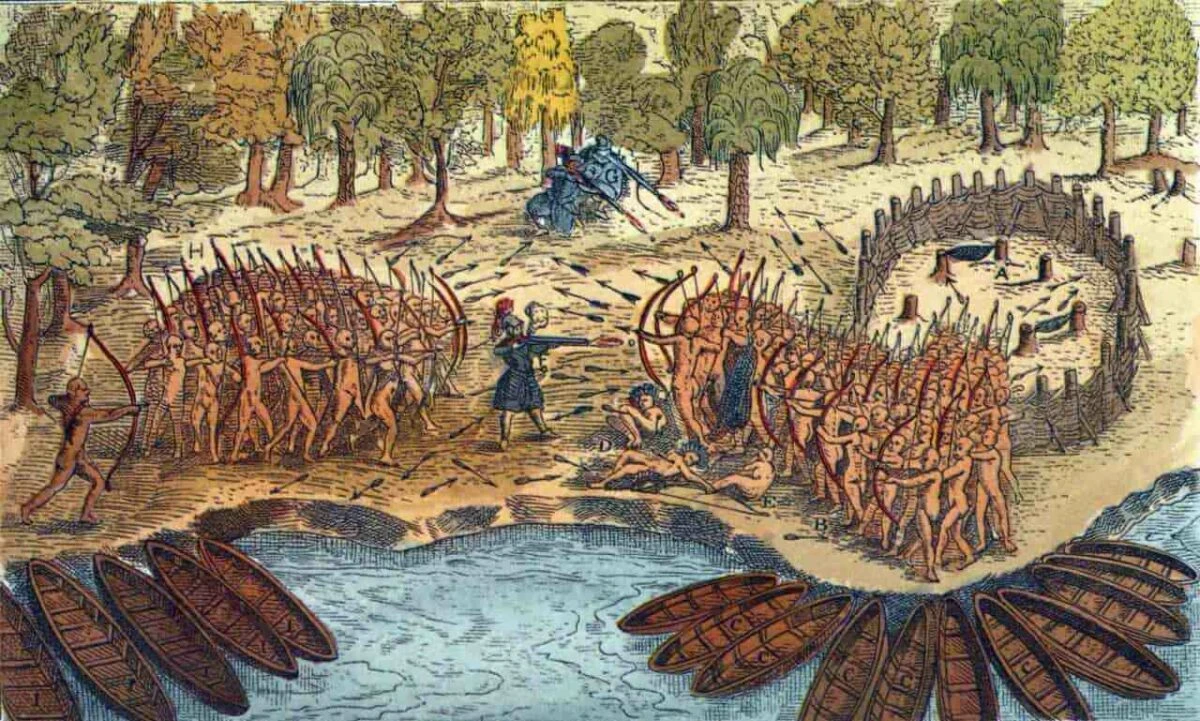
Battle between the Iroquois and the Algonquin Indians, with European participation. Engraving from 1613
Women declared a boycott on two fronts. First, they renounced intimacy and childbearing. In Haudenosaunee culture, women were believed to hold the secret of the birth of new life. Such a renunciation was perceived as a serious threat. Second, women were in complete control of planting and harvesting crops. They also made moccasins and prepared provisions for campaigns. By cutting off supplies, they deprived the warriors of the opportunity to set out on any expedition. 
Among the Iroquois, all household chores were strictly divided between men and women.
The Haudenosaunee men surrendered. Women received official veto power over any declaration of war. Historians call this one of the first documented cases of organized female resistance in North America. 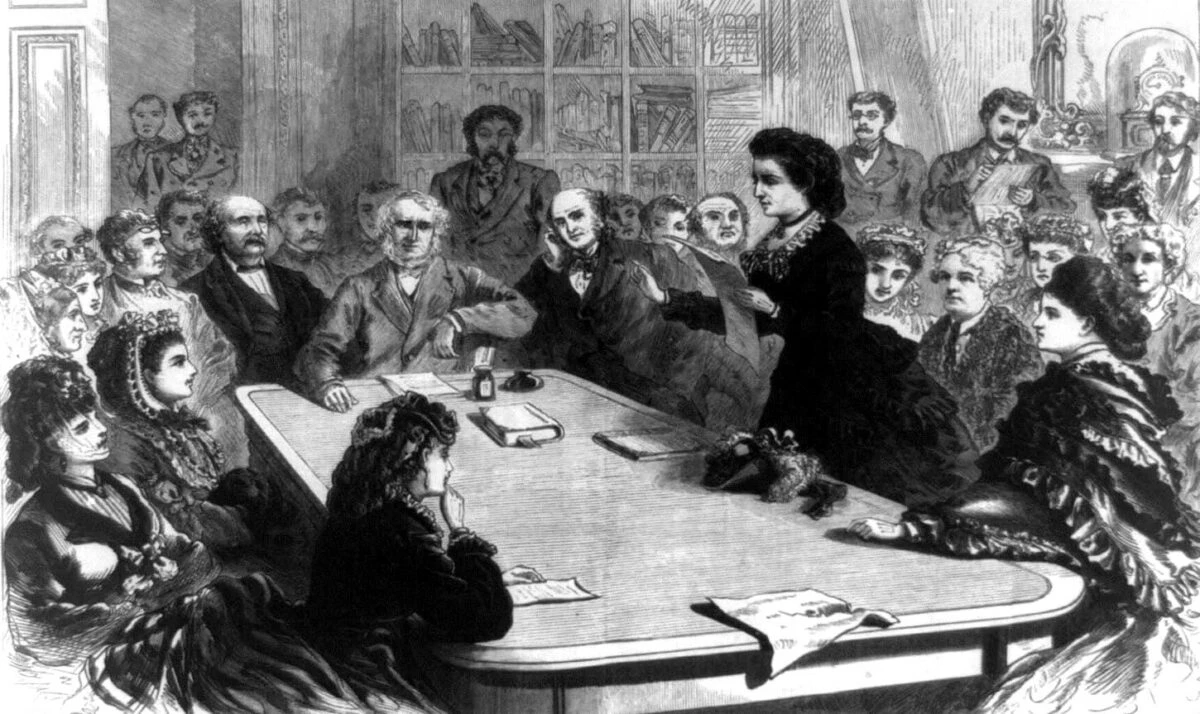
Seneca Falls Women's Rights Convention. 1848
More than two centuries later, in 1848, the structure of Iroquois society inspired the participants of the Seneca Falls Women's Rights Convention. Haudenosaunee women had managed property and participated in community affairs for centuries. For suffragists, this became a powerful argument against the idea of women's natural subordination.
Liberia: The Road to White Shirts
The most famous example of protest by refusal occurred in 2003 in Liberia. The country plunged into civil war for 14 years, unleashed by warlord Charles Taylor. During these years, approximately 250,000 people died—almost one in seventeen people. The human rights organization Amnesty International estimates that 60 to 70 percent of Liberian women and girls have experienced sexual violence. 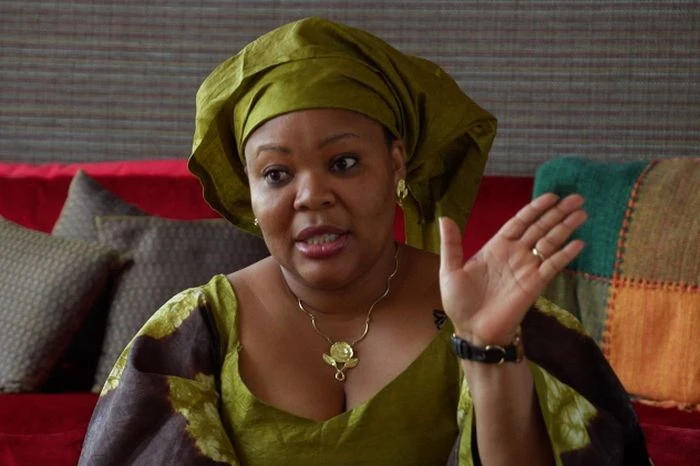
In 2003, Leymah Gbowee led the Liberian women's movement for peace.
Social worker Leymah Gbowee herself experienced domestic violence. For years, she counseled victims of war. Gbowee united Christian and Muslim women in the "Women of Liberia Mass Action for Peace" movement. Hundreds of participants wore simple white t-shirts and white headscarves. The color symbolized peace. Every day, the women gathered at the Monrovia fish market, singing and praying. Later, they began holding sit-ins outside the government building, demanding that Taylor begin negotiations with the rebels.
Liberia: Sex Strike, Curse, and the Nobel Prize
Among the movement's tactics was the one that is best remembered. Women publicly declared a sex strike, abstaining from intimacy with their husbands and partners until the end of the war. Gbowee herself later admitted in her memoirs that the strike had little practical effect. Men quickly found ways to circumvent the ban. However, the media impact was enormous. It was the sex strike that brought the movement the attention of the global press, something neither prayers nor sit-ins had achieved. 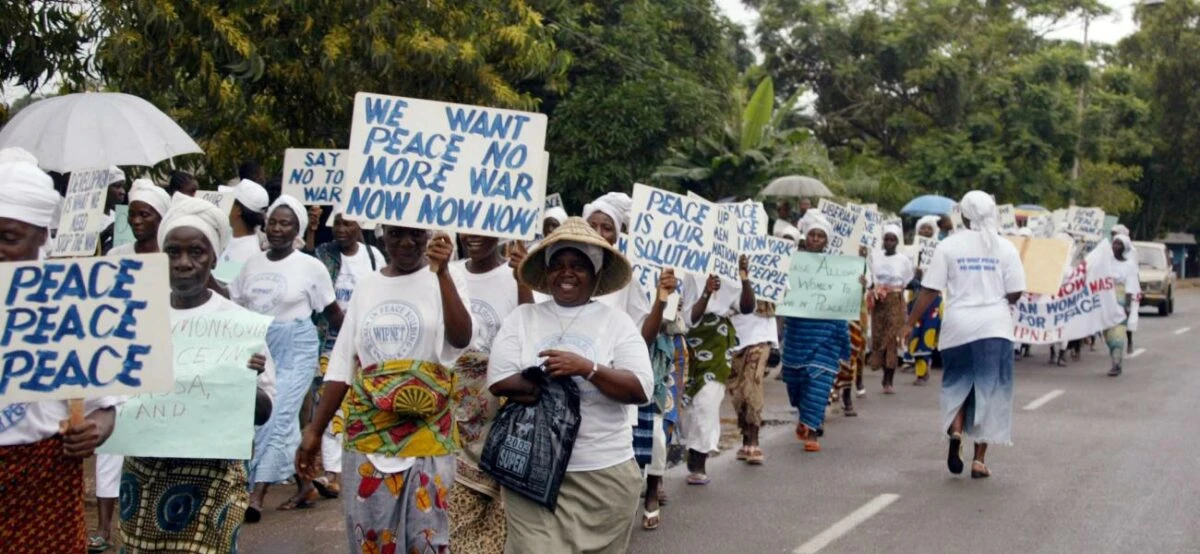
Participants of the Women of Liberia Mass Action for Peace movement at a prayer protest in Monrovia
A turning point occurred at the peace talks in Accra, Ghana. Field commanders had been stalling for weeks. Gbowee and 200 women blocked the exit from the negotiating room, holding hands. Security guards attempted to arrest the activist for obstructing justice. In response, she threatened to strip naked in public. According to West African belief, the sight of a mature woman's naked body brings a curse upon the offender. The threat worked. 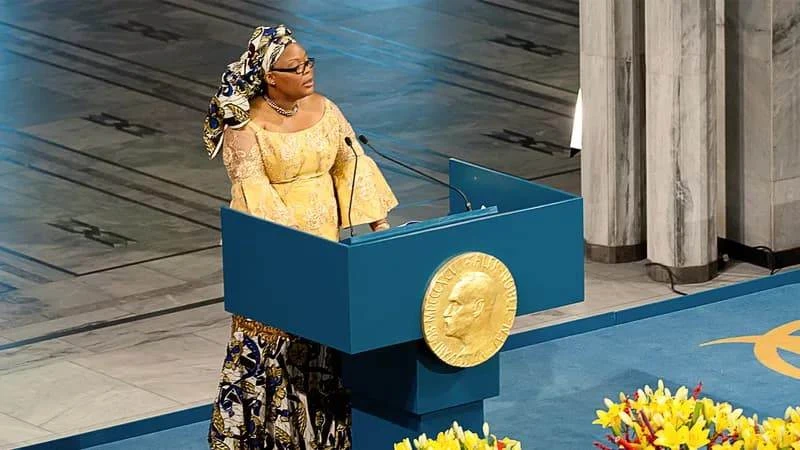
Leymah Gbowee at the Nobel Peace Prize ceremony. 2011
The delegates returned to the table. A few weeks later, on August 18, 2003, the parties signed the Accra Peace Accords. The war ended. In 2005, Liberia elected Ellen Johnson Sirleaf, the first woman to win an election as head of state in African history. In 2011, Leymah Gbowee received the Nobel Peace Prize.
Colombia: Pereira and the Crossed Leg Strike
In September 2006, another protest began with a refusal. The wives and girlfriends of street gang members in the Colombian city of Pereira declared their own strike, "La Huelga de las Piernas Crusadas" (Spanish for "the Crossed Leg Strike"). The reason for this was the 480 deaths from gang violence in the previous year. Pereira then had one of the highest homicide rates per 100,000 residents in Colombia. The women refused to have sex with their partners until they laid down their weapons. The city administration supported the protest as part of a broader campaign to disarm the city's residents. 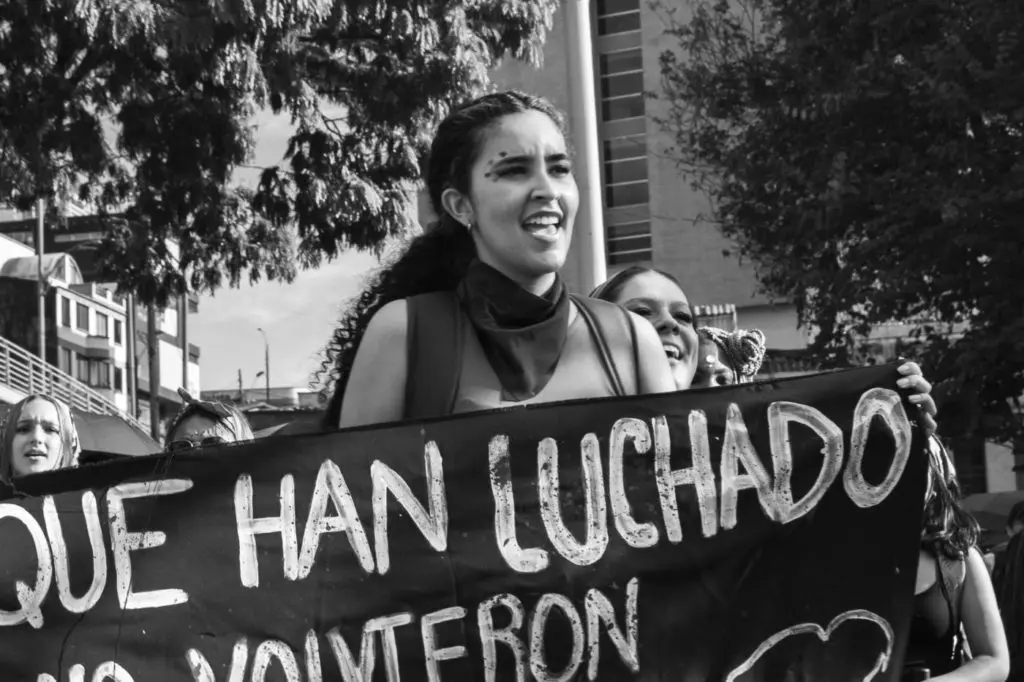
Wives and girlfriends of Colombian gang members refused intimacy to force the men to lay down their arms.
By 2010, the murder rate in Pereira had decreased by 26.5 percent compared to the previous year. City officials called this the most significant decline among Colombian cities. Mayor Israel Londoño attributed the result to the joint efforts of the police, administration, and the residents themselves—not just the women's strike. But the symbolic significance of the 2006 protest remains. It demonstrated that personal protest can become part of urban security policy.
Colombia: Barbacoas and 112 Days Without Sex
A similar story happened in 2011 in the town of Barbacoas in southwestern Colombia. The only road connecting the town with the rest of the country was in terrible condition. The 57-kilometer journey took up to 14 hours. 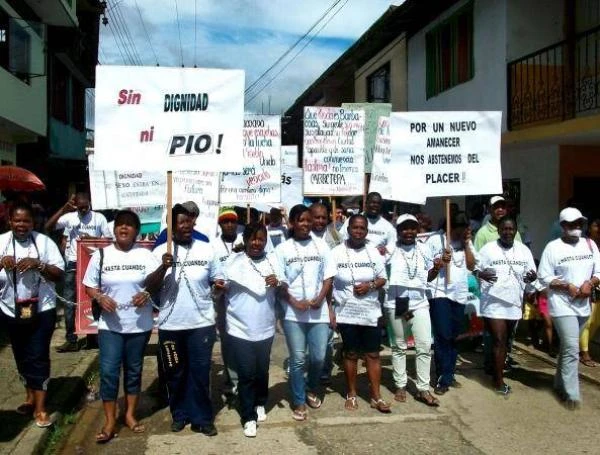
Participants in the "crossed legs" movement in Barbacoas demand road repairs. 2011
Shortly before the protest, an ambulance failed to pass on the road in time. A pregnant woman died in childbirth right in the ambulance. Then, local women began the "crossed legs" movement. They announced they had no intention of having children in a city where medical care was impossible. 
Road repairs in Barbacoas began after the government allocated funds for construction.
The strike lasted 112 days, from June 22 to October 11, 2011. Men of the city gradually joined the protest, beginning a hunger strike in support of their wives and girlfriends. Ultimately, the Colombian government pledged $21 million for road repairs. Within a few weeks, construction equipment was on the road.
Kenya: Sex Strike for Political Truce
In 2009, a political crisis erupted in Kenya. President Mwai Kibaki and Prime Minister Raila Odinga were unable to find common ground. The conflict began in late 2007, following disputed presidential elections. Clashes between supporters of the two politicians claimed the lives of approximately 1,500 people. Another 600,000 Kenyans lost their homes. By 2009, the leadership standoff had reached a stalemate and threatened a new round of violence. 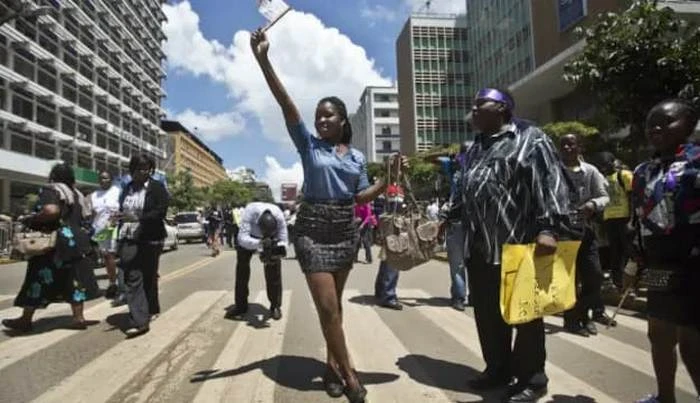
Women's protest in Nairobi. 2009
Ten Kenyan women's rights organizations united to form the G10 coalition. They announced a week-long sex strike from April 30 to May 7. To ensure that the strike reached beyond married women, the organizers offered to compensate sex workers for the week's wages. The wives of both politicians, Ida Odinga and Lucy Kibaki, publicly joined the protest. The strike concluded with a joint prayer. There, Kibaki and Odinga sat down at the negotiating table for the first time in a long time. The coalition government continued its work.
A controversial tool in the hands of the oppressed
This method of protest has its downside. Leymah Gbowee herself has been repeatedly called "the Liberian Lysistrata." She considered the comparison offensive. Gbowee explained that Aristophanes' comedy was a farce, written by a man and full of misogynistic jokes. Liberian women, however, had experienced real war, rape, and the death of loved ones. She categorically refused to equate ancient satire with the tragedy of real people. 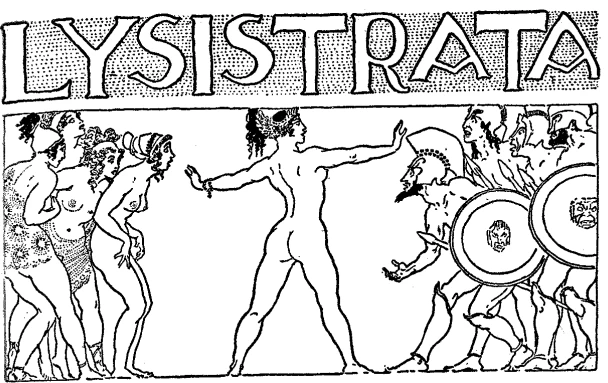
Aristophanes is often invoked when discussing real-life protests involving sexual denial—but the resemblance is deceptive.
Critics of this method have a more general argument. This tactic only works where women have no other leverage over politics. It's a vicious circle: the method seems to confirm inequality rather than destroy it. Women are perceived not as full participants in negotiations, but as possessors of the only resource available to them. Protesters respond differently. If war or dictatorship has closed all normal political channels, any lever that stops the bloodshed is justified. No matter how unusual it may seem from the outside. 
This is how early 20th-century artists imagined the heroines of Aristophanes' play.
One way or another, history repeats the same story from century to century. When women collectively renounce intimacy, even the guns fall silent. This is a reminder: personal life and big politics are more closely intertwined than it seems at first glance.
What do you think: is such protest a way for women to empower themselves? Or does it merely reinforce the idea that a woman's only value to society lies in her body?