How a severe illness and a natural disaster helped create the legendary cowboy hat (9 photos)
The Stetson hat is as much a symbol of the American West as the Colt or whiskey. Buffalo Bill, Calamity Jane, and the Texas Rangers wore them; by 1906, the factory was producing two million hats a year and was the largest in the world. But its creator was a man who came West not for glory, but to die: tuberculosis, floods, army refusal, and a random thunderstorm in the Rocky Mountains. And by 1886, his company had become the largest hat manufacturer in the world. We tell you how it all happened. 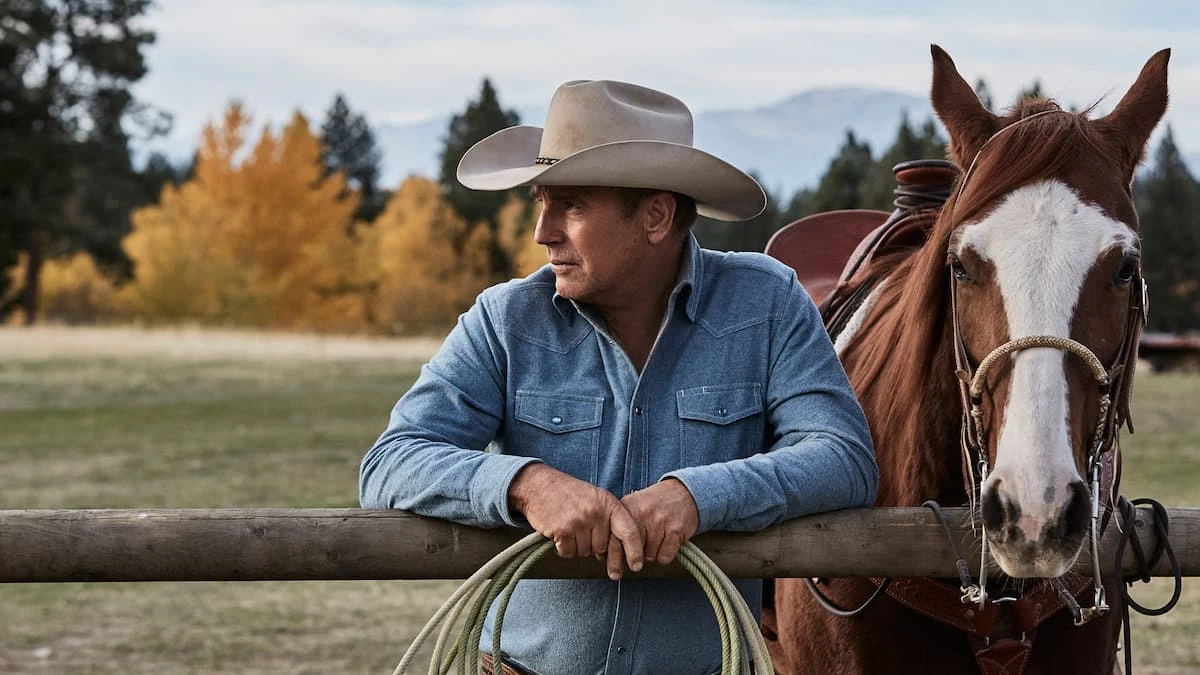
A Hatter's Son
John Stetson was born on May 5, 1830, in Orange, New Jersey. He was the seventh of twelve children of hatter Stephen Stetson. His father owned his own hat shop, the No Name Hat Company, and taught his son the craft from childhood. John mastered the craft while still a teenager: he knew how to cut, sew, and sell hats.
After his father's death, his older brothers inherited the shop. John helped them, but early on he realized he wanted to work independently. He opened his own hat shop, and business was successful. But the profession had a dark side. 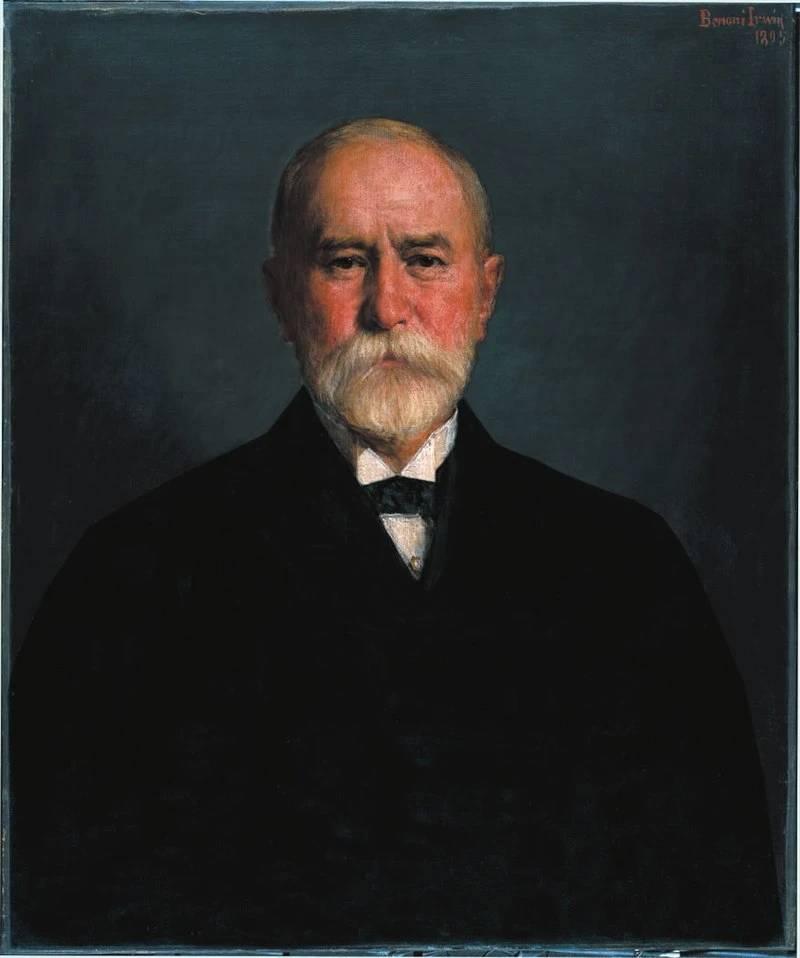
John B. Stetson Hat Company founder
Hat making in the 19th century was a dangerous craft. Felt—a material made from felted wool—was treated with mercury nitrate. This orange liquid was called "carroting" for its color. When heated, it released toxic fumes. Hatmakers inhaled them in cramped, unventilated workshops and went mad. Literally: hand tremors, hallucinations, tooth loss. This is how the expression "mad as a hatter" originated. Lewis Carroll knew this story when he created the Mad Hatter for Alice in Wonderland, published in 1865.
John wasn't immune to problems either. The young hatter contracted tuberculosis. In the mid-19th century, this diagnosis was practically a death sentence—there was no cure. Doctors gave a poor prognosis and advised one thing: change to a warmer, drier climate.
Brick Business
John Stetson set out for the Wild West. In those days, it began not too far from the Atlantic coast—roughly in Missouri and Kansas. Stetson chose St. Joseph, Missouri, and settled there. The change of climate helped: the disease receded, and John soon found work in a brickyard. 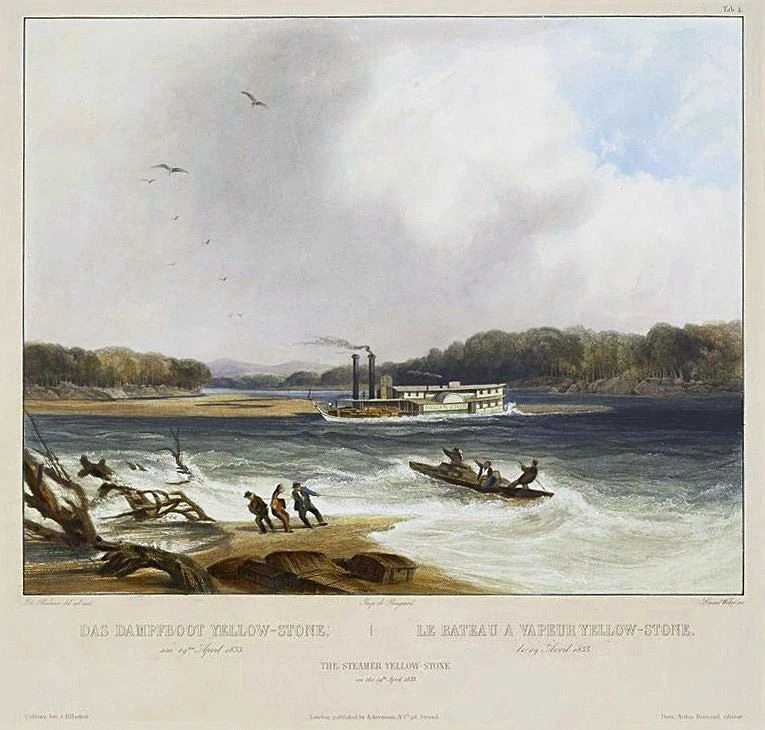
The Missouri River – the main artery of the Wild West. 19th-century postcard
Stetson proved to be a smart and responsible worker. He quickly rose to manager, and then became one of the co-owners. The factory was small, but brought in a steady income. It seemed life had improved. But nature had other plans.
The Missouri River flooded and inundated the factory, along with hundreds of thousands of unbaked bricks. One day, John again found himself without a job and without money. He tried to join the army—it was the Civil War—but he was rejected because of tuberculosis. There was no other work available.
Hats for Prospectors
There was only one option: to seek his fortune with gold miners in the Rocky Mountains. In the spring of 1862, Stetson joined a group of twelve prospectors heading to Pikes Peak in Colorado. But upon arrival, it became clear that mining in a dusty mine with diseased lungs was impossible. 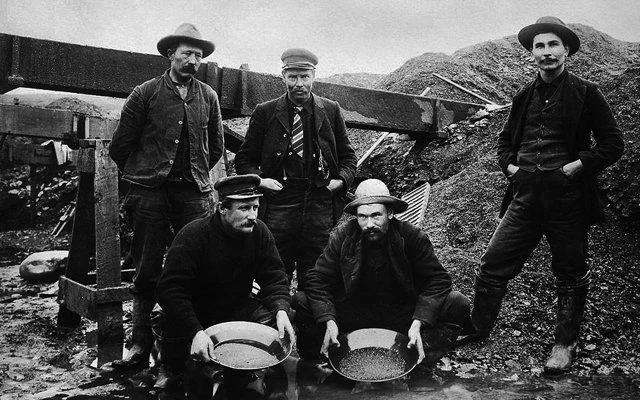
Gold miners in Montana. It was in this environment that Stetson invented his hat.
Stetson decided to make a living doing what he did best. People from all over America flocked to Colorado, and good clothing was in short supply. Hats were in short supply—especially sturdy, wide-brimmed ones that kept water out and prevented stones from falling down their collars.
One day, a thunderstorm broke out in the mountains. Stetson and his companions applied the wool felting technique he had learned since childhood: they made felt fabric from the skins of killed animals—first a tent, then hats. The result was a headdress with a high crown and wide brim. His companions initially laughed at the unusual appearance of the hat—until a cattle driver passed by. He bought the hat from Stetson for five gold dollars. It was the first hat he ever sold. 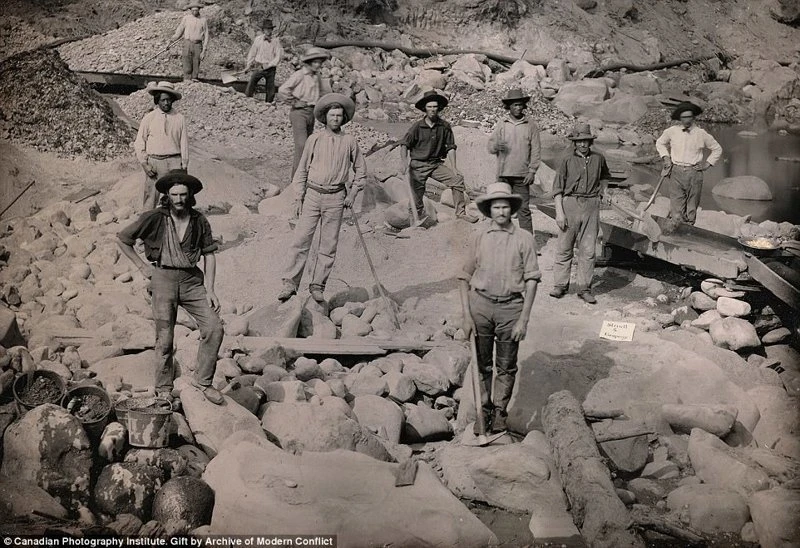
Prospectors of the mid-19th century. Before Stetson, cowboys wore everything from bowler hats to fur hats with tails.
Observing the prospectors, Stetson understood the type of hat they needed: lightweight, durable, waterproof, with a high crown for ventilation and a wide brim to protect against sun and rain. The settlers wore a variety of hats—straw hats, fur caps with fox or raccoon tails. Bowler hats were prized, but their small brims offered little protection. Stetson was inspired by the wide-brimmed sombreros of Mexican vaqueros.
Philadelphia Factory
In 1865, after the end of the Civil War, Stetson returned East. He arrived in Philadelphia with sixty dollars—a loan from his older sister. But this sum was enough to cover rent for a room, tools, and a small supply of material. The risk was obvious: the city had plenty of experienced hat makers. 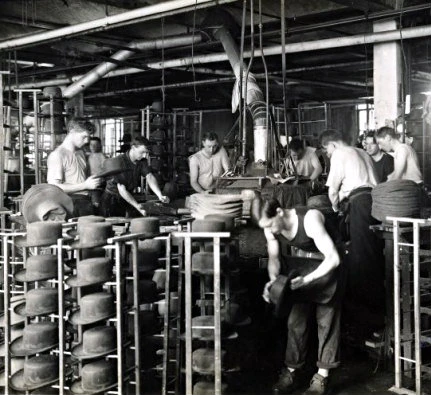
Stetson's Philadelphia factory in the early 20th century – 25 buildings on nine acres
But Stetson chose the right niche. The John B. Stetson Hat Company wasn't targeting urban fashionistas. Its customers were prairie wanderers. The entrepreneur made several dozen "Boss of the Plains" hats and sent one sample each to merchants in the western states. He wrote to them asking for orders – at least a dozen. A reply came quickly.
Within a few weeks, the workshop was inundated with orders. Some customers even included payment in advance to speed up the process. The cattle boom also helped: after the Civil War, large plantations were banned in the South, but horse and cattle breeding was strongly encouraged. Cowboys became more numerous, and they all needed a good hat.
What was Stetson made of?
Soon, everyone from ranchers to ordinary cattle drivers sported Stetson hats. The "Master of the Plains" model became the absolute best-selling hat. The four-inch (about ten centimeters) wide brim protected the face, neck, and shoulders from the rain. The crown, equally high, created a layer of air to keep the head cool. 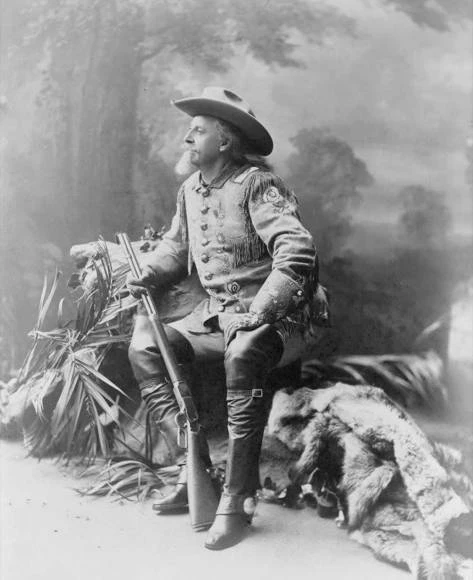
Buffalo Bill Cody – showman and hunter, one of the first celebrities to make the Stetson famous.
The inside of the hat is a fabric lining. On the crown is a band, which the owner could decorate with a feather, buckle, or brooch. This detail also served a practical purpose: it was immediately clear which side was the front. All original bands had "John B. Stetson Company" embroidered in gold. In the early 20th century, it became fashionable to dent the crown – on the top and sides.
Stetson felt was made from beaver fur. The material was water-resistant and lasted for years. In the 19th century, beavers were plentiful in North America, harassing farmers by building dams and causing floods. Therefore, hunting them was encouraged, and their pelts were cheap. In remote corners of the country, they were even used as currency—on par with gold dust.
A Bucket, a Canteen, and an Umbrella in One
The Stetson's water resistance opened up unexpected possibilities. The hat, with its upturned brim, was used as a bucket: it held enough water to water a horse. One of the company's advertising posters even depicted a cowboy holding his hat to his horse's muzzle. The caption read, "Drink to the last drop." After this use, the hat could be put back on without any damage. 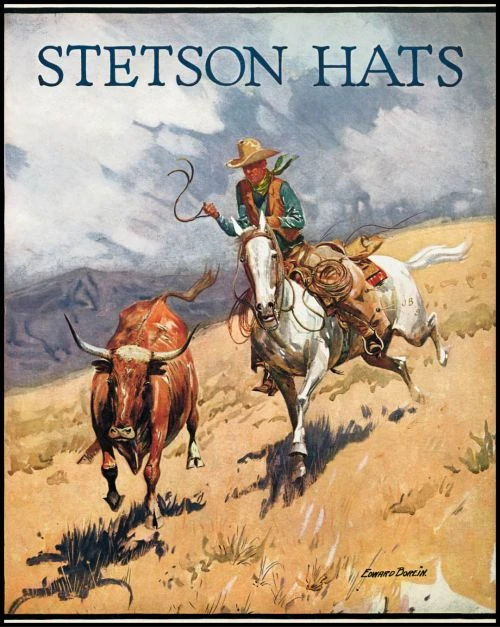
Stetson ad featuring a cowboy
The very expression "ten-gallon hat," which denoted a large Stetson, has nothing to do with volume. According to one theory, it comes from the Spanish word galón, meaning braid or cord. Ten such cords adorned the sombreros of Mexican vaqueros, who inspired Stetson. Thus, folk etymology transformed the band into buckets of water.
Water resistance was no accident. As a fan, the hat fanned a fire or drove away cattle. The wide brim acted as an umbrella. The high crown provided shade for the neck. One contemporary described the Stetson this way: "It blocked the sun from the eyes and neck. The crown served as a bucket for water, the brim as a cup. It could be used to start a fire and chase away a cow."
How Stetson Became a Global Brand
John Stetson grew rich rapidly. By 1886, his company had become the largest hat manufacturer in the world. By 1906, the year of the founder's death, the factory was producing around two million hats a year. After his death, production only increased: by 1915, the 25-building, nine-acre factory employed 5,400 people, producing 3.3 million hats annually. 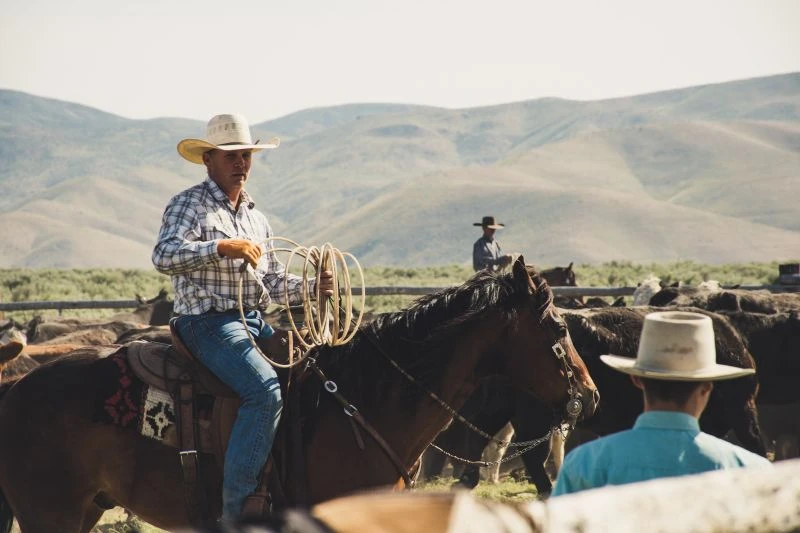
The hat was worn by Buffalo Bill, Calamy Jane, Annie Oakley—and millions of nameless cowboys.
The Stetson was worn by Buffalo Bill Cody, Calamy Jane, Will Rogers, and Annie Oakley. The Texas Rangers incorporated it into their uniform—the first police department in history to make the cowboy hat an official headdress. U.S. Cavalry soldiers and National Park Service employees also wore Stetsons.
The Stetson became more than just a hat, but a symbol of the Wild West—the embodiment of freedom and boundless open spaces. Its name is mentioned by Hemingway and Steinbeck, and it's sung about in folk ballads and rock hits. More than 160 years after it was first sold in Colorado, the hat is still in production. What do you think makes it so enduring? Share your thoughts in the comments!