The Sugar Glider: The Pocket-Sized Pet Breaking Every Cuteness Record (10 Photos)
If cuteness meters actually existed, these little critters would break them every single time. The sugar glider is so impossibly adorable that even the toughest crowd melts at first sight. With a gentle nature, pocket-sized build, and an irresistible sweet tooth, they are hard to resist. But to truly appreciate them, you have to see one in person—or better yet, hold one in the palm of your hand. 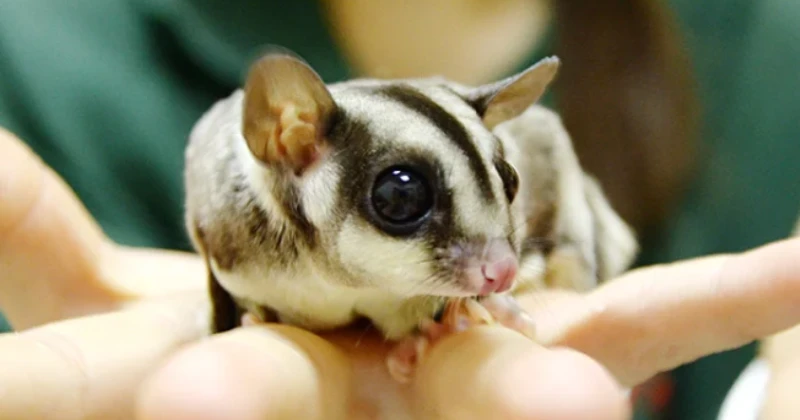
A Creature of Many Names
Scientifically known as Petaurus breviceps and officially called the sugar glider, this tiny marsupial boasts an impressive collection of nicknames, including sugar squirrel, dwarf glider, and short-headed flying squirrel. It is rare for a single animal to inspire so many monikers!
It owes its primary name to its passion for all things sweet. In the wild, it feeds on fruit, tree sap, and nectar. In a home setting, it happily devours honey and dairy-free baby food. 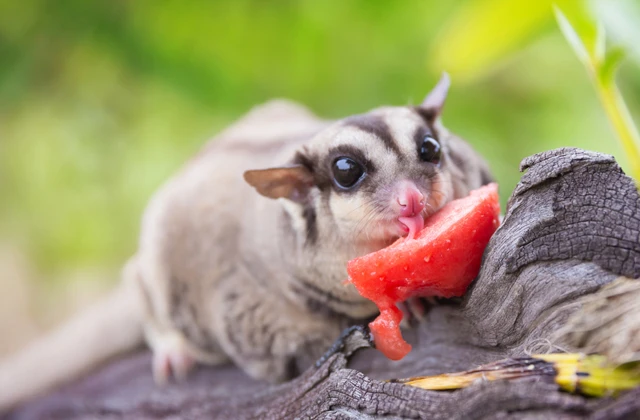
Native to the forests of Australia, New Guinea, Tasmania, and several Pacific islands, the glider is notoriously elusive in the wild—extremely timid and a master of disguise.
By day, it sleeps snugly in leaf-lined tree hollows. But come dusk, the real show begins as dozens of gliders launch themselves through the canopy with limbs outstretched. They can glide across distances of up to 50 meters in a single leap! 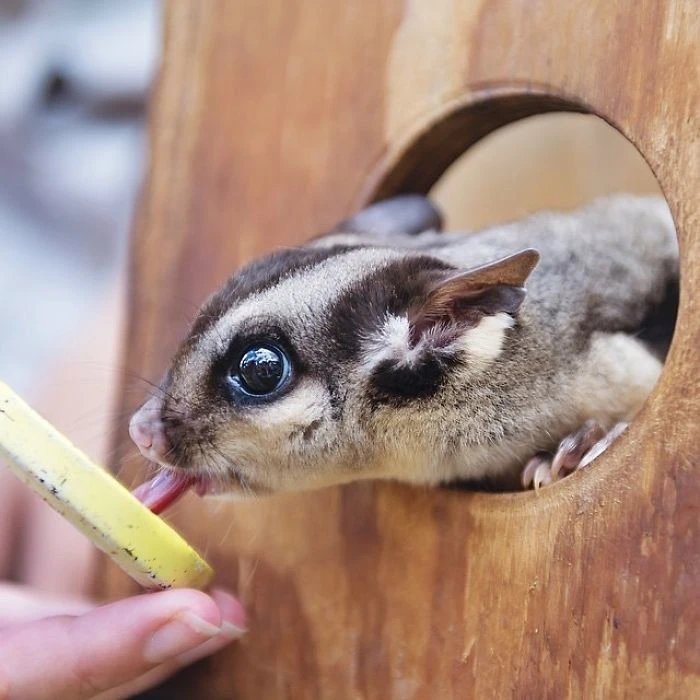
A Born Glider
Stretching between their front and hind legs is a thin membrane of skin—a built-in wing suit. Their bushy tail acts as a rudder, allowing them to pull off impressive mid-air turns of up to 90 degrees.
On the ground, gliders are notably awkward, as their bodies are built purely for life in the trees. Up in the canopy, however, they are in their element, using sharp claws to zip down vertical trunks upside down. 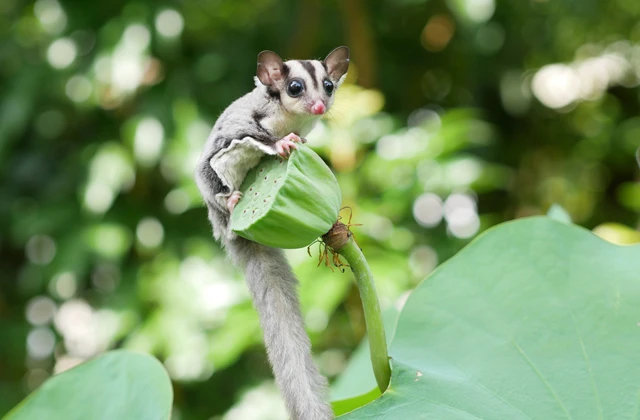
Their night vision is nothing short of extraordinary. Large, bulbous eyes and highly mobile ears take in every detail of their surroundings even in pitch darkness. What's more, their eyes move independently, giving them a near-panoramic field of view.
Their tail, equal in length to their body, functions almost like a fifth limb used to grasp and carry twigs for nest-building. In well-fed individuals, the base of the tail thickens, serving as a storage site for extra fat reserves. 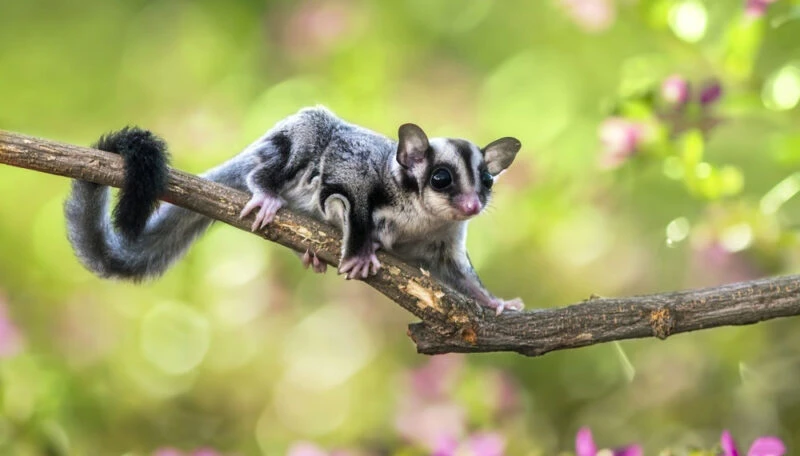
Life in the Colony
They remain modest in size, growing to a maximum of 20 cm in length and weighing just 100 to 150 grams, with females being slightly smaller. Their lightweight build is essential for aerial acrobatics.
Sugar gliders live in colonies of 7 to 12 individuals led by a dominant male, who marks the territory and group members using scent glands on his forehead and chest. Despite a strict social hierarchy, fights are rare; they prefer grooming each other and sleeping huddled in tight clusters. 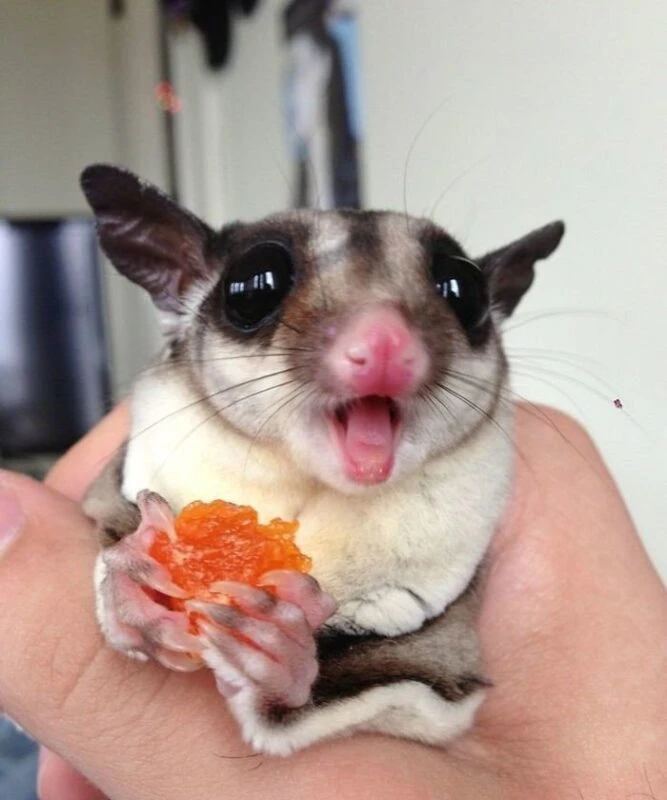
Breeding season takes place around June and July. Being marsupials, females give birth just 15 to 17 days after conception to tiny joeys measuring a mere 5 millimeters—no bigger than a grain of rice!
A litter typically consists of one or two joeys. They climb directly into their mother’s pouch, where they latch on and remain for another 60 to 70 days. Even after leaving the pouch, the mother continues to care for her young for a couple of months, teaching them essential survival skills. 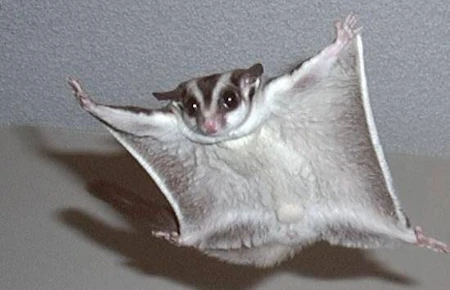
A Sweet Tooth's Diet
Their diet revolves around fruit, nectar, and sweet tree sap, which they extract by chewing through bark. But don't let their innocent looks fool you—these cuties won't turn down animal protein. Insects, larvae, small lizards, and even nestlings frequently feature on the menu.
They are remarkably adaptable survivors. During food shortages or cold spells, sugar gliders enter torpor—a state similar to hibernation—for up to 23 hours a day. Their body temperature drops from 37°C down to 10–20°C to conserve energy. 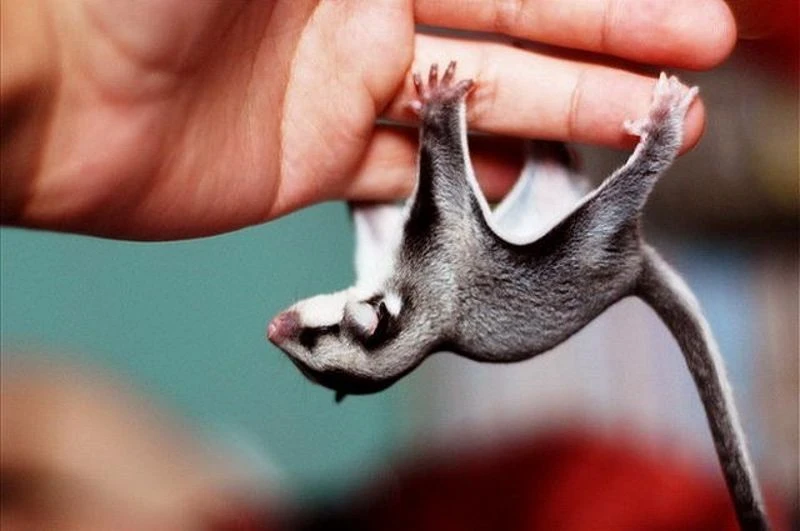
An Exotic Pet for Apartment Life
Their endearing faces, friendly demeanor, and sharp intelligence have turned them into sought-after exotic pets. The trend gained momentum in the United States, Australia, and Canada before sweeping across Europe. 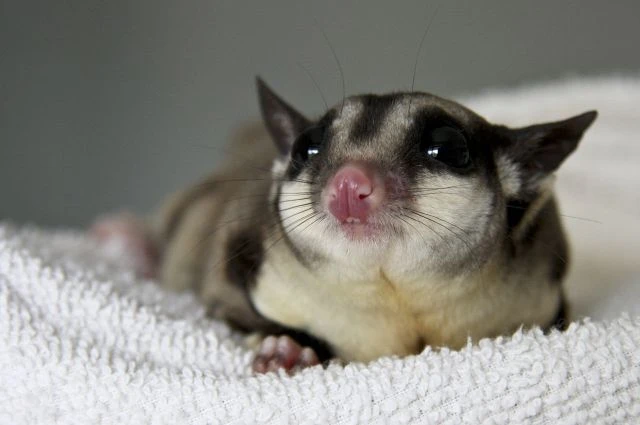
In home environments, they are relatively low-maintenance and tend to get along well with other pets. They often bond with rats and rabbits, and some even enjoy hitching rides on the backs of dogs and cats by clinging to their fur.
There is one catch: while they sleep all day, nightfall turns them into non-stop energy balls. They run, leap, and demand attention—so light sleepers might want to consider a different companion. 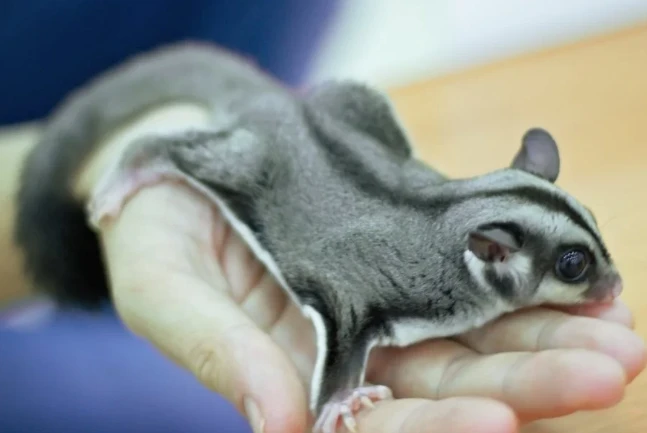
Sugar gliders possess a surprisingly rich vocal repertoire. They bark for attention, click when annoyed, hiss or whistle when frightened, and chatter when happy. They can even make clucking and buzzing noises, making it easy to decipher their mood.
They have a lifespan of 12 to 15 years in captivity, compared to about 9 years in the wild. As deeply social creatures, they thrive on companionship and can grow depressed if kept alone, so keeping them in pairs is strongly recommended.
The only animal that rivals the sugar glider on the cuteness index is the Japanese dwarf flying squirrel, but that species isn't kept as a pet. Would you consider bringing a sugar glider into your home? Are you ready for late-night serenades and mid-air acrobatic routines?