The power of the trebuchet: The siege weapon that changed the art of war (12 photos)
When weapons were forged in forges and assembled in workshops rather than created in laboratories, people learned to use gravity and leverage. This allowed projectiles to fly farther, more accurately, and inflict greater damage. Before cannons and gunpowder, siege tactics relied on missile launchers. The trebuchet, a striking example of ancient engineering that evolved from the simple sling, occupied a special place among them. But how did a shepherd's weapon become a powerful tool that changed the course of history? 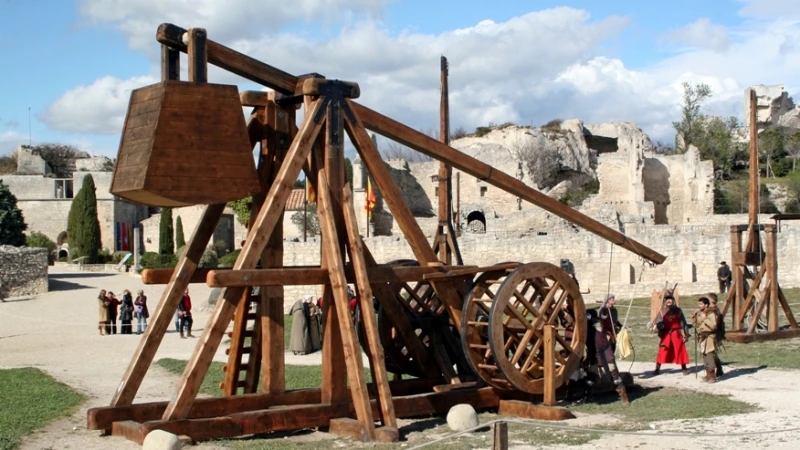
Who thought of improving the sling?
Even in ancient times, warriors and hunters noticed that the length of a thrower's arm greatly affects the thrower's performance. The longer the lever, the farther the projectile flies and the more powerful the strike. That's why someone came up with the idea of attaching a sling to a long stick to increase the leverage. Later, the sling was attached to a frame, and the launching force was combined with the power of several people. 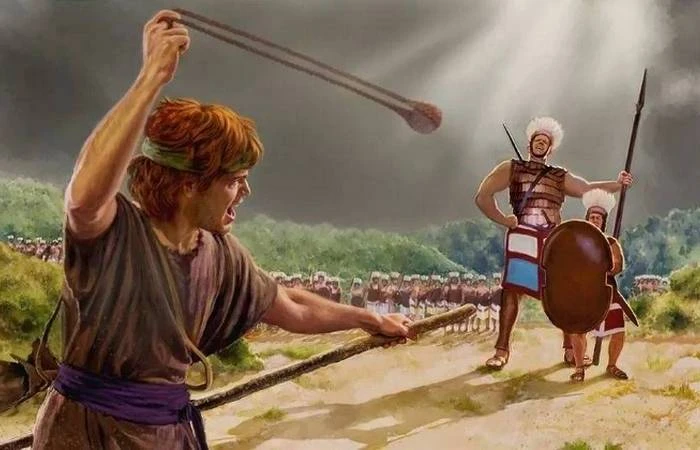
The device was later scaled up, and the weight of a counterweight began to be used instead of muscle power. The longer the lever and the heavier the counterweight, the farther the projectiles flew. At the same time, their mass also increased. Historians believe that gravity-powered throwing machines first appeared in China in the 5th–6th centuries BC. 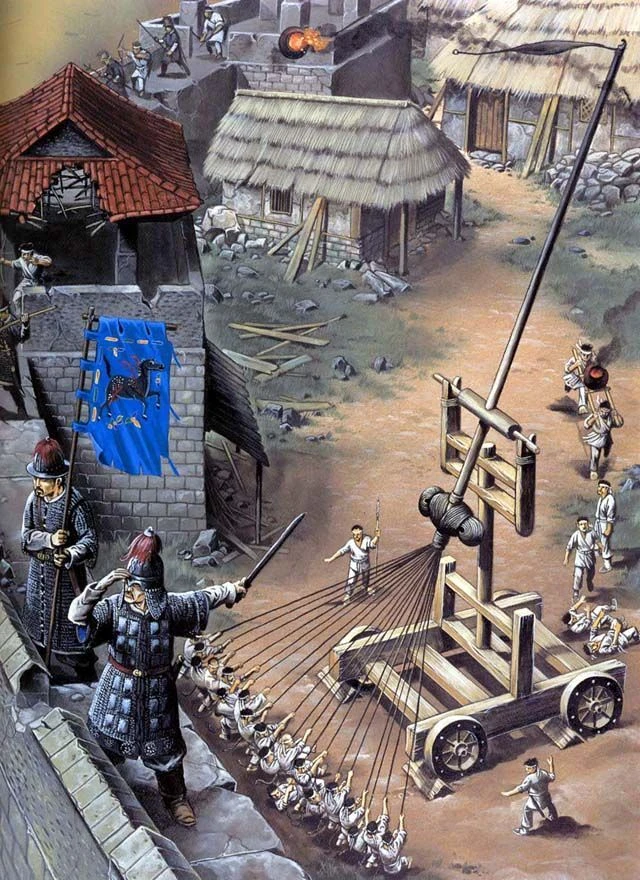
Mobile trebuchet firing molten iron bombs
In China, machines of impressive size and incredible power were built. Preparing the largest of these for firing required the labor of several dozen people, pulling ropes with tremendous force. These stone throwers launched gigantic stones, but their effectiveness was primarily demonstrated during sieges or defenses of fortresses and other fortified structures.
How the Petrobolos Evolved into the Trebuchet and Conquered a Continent
This military technology existed only in China for nearly a thousand years. But in the late 6th century AD, it reached Europe. Nomads likely adopted the idea from the Chinese and brought stone throwers to the walls of Byzantium in the 5th and 6th centuries. Initial attempts at using them did not cause serious damage to the fortifications, but the Byzantines appreciated the design and began using it. One of the first mentions of such machines appears in chronicles from the 580s. In Byzantium, they were called "petrobolos," which translates from Greek as "stone thrower." 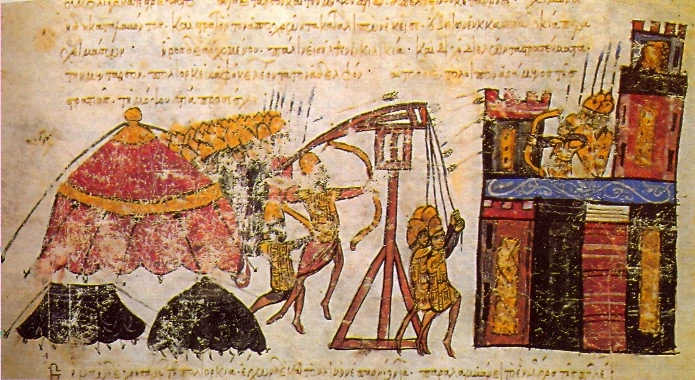
A hand-held Byzantine trebuchet. 12th century
After this, stone throwers began to spread throughout Europe and the Middle East. They were used by the Slavs, Visigoths, Persians, and Arabs. This innovation was so popular that it soon replaced the ballistas and catapults known since antiquity. Over time, their names also changed: in Byzantium, they became known as mangans, in Western Europe as mangonels, and in Arab countries as al-manjanik.
In the 7th century, the Byzantines and Arabs began using pots filled with flammable petroleum-based compounds as projectiles. They also improved the mechanism: they shortened the lever with the weight as much as possible and increased its mass. This made the shot more powerful, and less effort was required to load the machine. 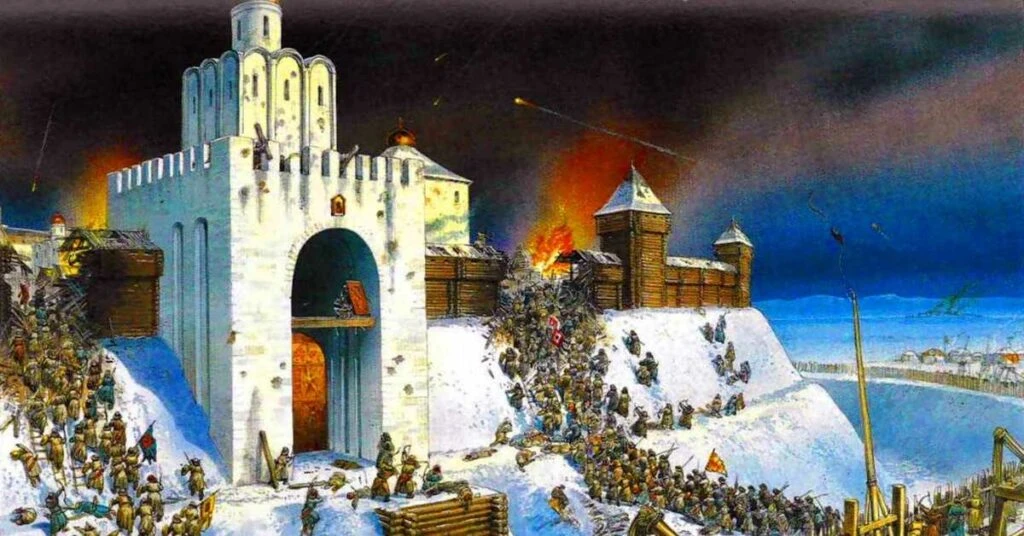
Mongol troops storming a city using Chinese stone throwing machines
In the 9th century, stone throwers reached the Franks. It was then that the machine received its classic name – "trebuchet," derived from the word "trébuchet," meaning "beam balance." In Europe, trebuchets served as siege weapons until the late 14th century. Despite their simple design, these mechanisms significantly influenced siege tactics and the defense of fortifications. Their use did not require professional warriors – townspeople and even peasants could join in.
The Trebuchet: Simplicity Conceals Power
At first glance, the trebuchet appears surprisingly simple. Its design consists of a frame with an axle, to which a lever beam is attached. The beam is divided relative to the axle in a ratio of 1:5 or 1:6. A counterweight is attached to the short end, and a sling with a charge is attached to the long end.
The principle of operation is clear even without explanation: the counterweight is raised to a certain height, then released. The energy of its fall is transferred to the beam, which spins the sling and sends the projectile accurately to its target. 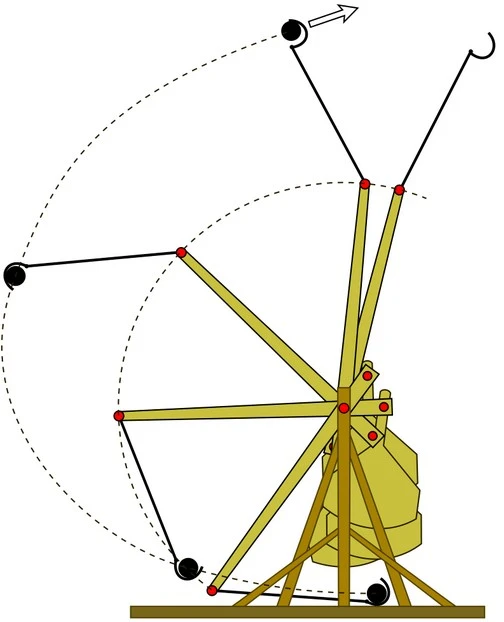
The Trebuchet
But unlocking the true potential of this design isn't easy. A trebuchet with a 4-meter beam and a 100-kilogram counterweight would occupy a significant amount of space, but would only be able to hurl a brick a maximum of fifty paces. Such a machine would probably destroy a neighbor's fence, but would be unlikely to overcome serious fortifications.
How effective are trebuchets?
Traction trebuchets, used in sufficient numbers, could easily change the course of a battle. During a siege, attackers not only knocked defenders off the walls and damaged the walls and towers, but also inflicted damage within the fortifications. Heavy stones, falling inside, caused death and destruction. Pots filled with flammable mixtures set cities ablaze and destroyed enemy throwing machines. 
Hand-held trebuchet with traction ropes
Trebuchets also proved effective in the defense of fortresses. Besieged forces could strike down soldiers approaching the walls, while simultaneously destroying enemy siege towers and missile launchers. The simplicity of the mechanisms allowed for the use of any heavy objects as projectiles. If ammunition supplies ran low, buildings could be dismantled and stones or building blocks hurled at the besiegers.
In the Middle Ages, stone throwers existed that could hurl stone balls weighing 100–150 kilograms up to 200 meters. The accuracy of the shots was quite high—a cannonball could hit a square measuring 5 by 5 meters. The rate of fire was about two shots per hour. Moreover, no scientists were required: experienced carpenters, relying on their knowledge, could build such a machine in just 8-10 days. 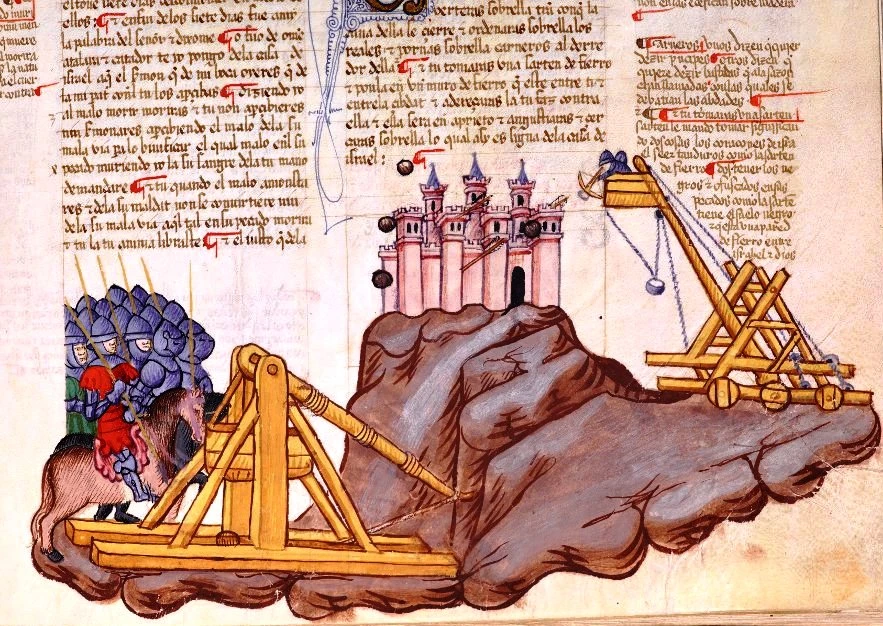
Large European trebuchets in the 15th century
Along with large stone throwers, hand-held trebuchets were also used in the Middle Ages. Even women and children could be taught to use them with great effectiveness. And these are not just empty words. It is known that in 1218, during the siege of Toulouse, Simon de Montfort, leader of the Albigensian Crusade, was killed by a stone hurled from a compact hand-held trebuchet by women.
A Dark Page of History: The Trebuchet as a Weapon of Biological Warfare
A remarkable and tragic incident involving siege engines has profoundly impacted European history. In 1346, the Golden Horde Khan Janibek besieged the Genoese fortress of Kaffa in Crimea. During the siege, he decided to employ an unusual tactic. Janibek ordered stone throwers to be used to hurl the bodies of people who had died of the plague over the city walls. With this brutal move, he intended to demoralize the defenders and force their surrender. 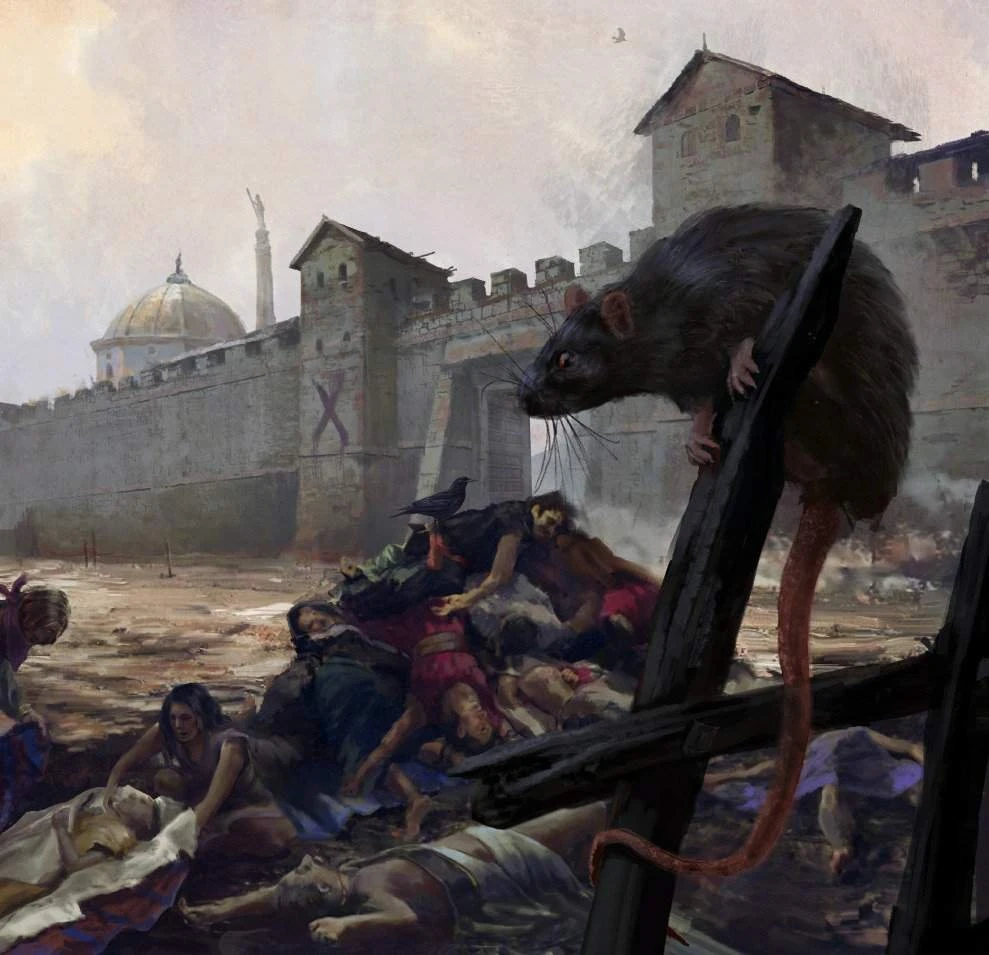
The plague is a terrifying and highly contagious disease. The incubation period can be up to 12 days, and the infection is carried not only by humans but also by animals, especially ship rats. When Caffa fell, Genoese ships abandoned the city, taking their goods and, unfortunately, the plague with them. The disease began its journey westward, moving along trade routes and ports. Over the next seven years, the epidemic wiped out 30 to 60 percent of Europe's population, becoming one of the greatest catastrophes in human history.
Thus, a few volleys from siege engines set off a chain of events that claimed millions of lives. Weapons designed for medieval warfare caused destruction comparable to the effects of a nuclear bomb. It's important to note that this version is based on just one written source. This is why historians continue to debate the accuracy of the details. In any case, the story of Kaffa has become a symbol of how military ingenuity changes the world—often unexpectedly and terrifyingly.
A Simple, Yet Complex Mechanism
Although trebuchets appear to be simple mechanisms, their construction requires a certain amount of experience and knowledge of key components. Failure to take this into account can result in the machine becoming dangerous to the shooters themselves. A striking example is the unfortunate experience of the Spanish conquistador Fernán Cortés. 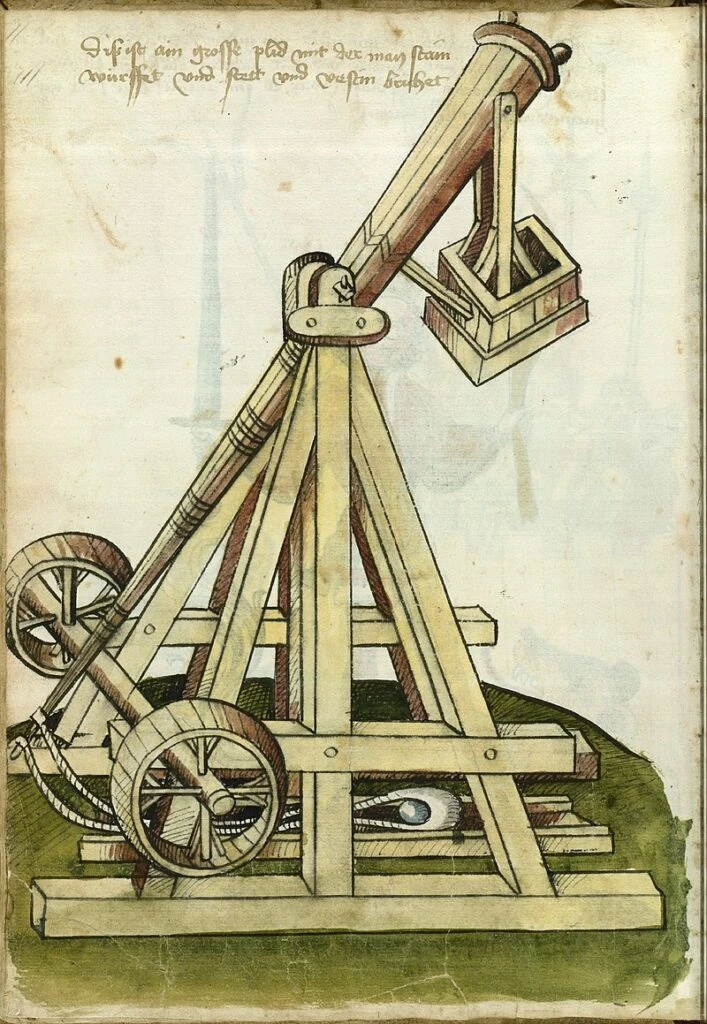
Heavy siege trebuchet. Illustration from 1450
In 1521, while fighting the Aztecs, Cortés ran short of gunpowder. He decided to build a small trebuchet and attack the Indians with stones. But his plan failed. The 11-kilogram boulders fell too close to the machine, and one of them flew straight up and crashed directly onto the mechanism, destroying it. After this, Cortés abandoned what had initially seemed a brilliant idea.
The Last Chords
The final death knell for trebuchets came with the cannons of the early 15th century. Weighing just one and a half tons (ten times lighter than a siege engine), the cannon fired a 130-kilogram cannonball 200 meters at a much higher muzzle velocity. Some monstrous examples launched cannonballs weighing around half a ton 500-600 meters. 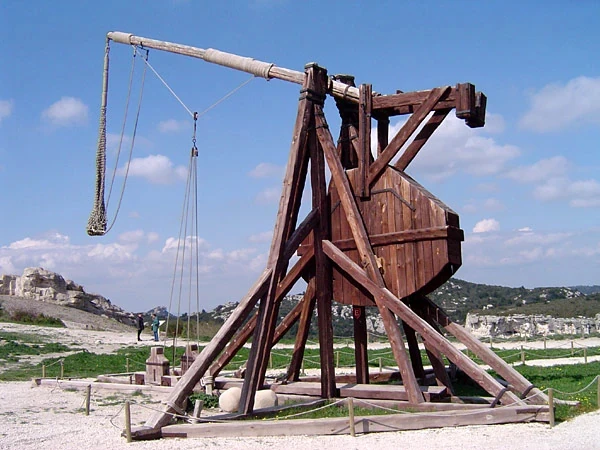
A modern trebuchet, built based on ancient depictions
The art of making stone throwers was gradually lost at the turn of the Middle Ages and the modern era. In 1850, the French Emperor Napoleon III commissioned the military engineer Captain Fave to build a powerful trebuchet. He took on the task and applied precise mathematical calculations during the development process.
Ultimately, Captain Fave created an impressive machine: the lever was 10.3 meters long, and the counterweight weighed 4.5 tons. Of this, 1.5 tons were rigidly attached to the lever, and another 3 tons were stored in a sliding box. The gun's frame was over 5 meters long. The first tests were successful: the trebuchet launched an 11-kilogram cannonball 175 meters and a 30-kilogram sandbag 120 meters. But after the fifth shot, the machine disintegrated, nearly injuring the crew. 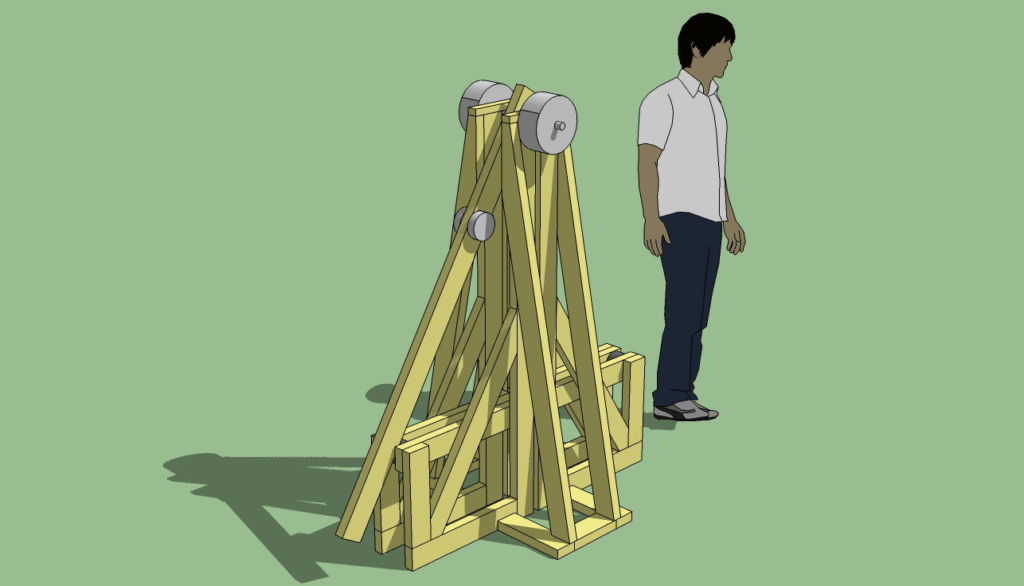
Thousands of years ago, the trebuchet changed the approach to siege warfare, and today it delights us with its ingenious simplicity and power. What do you think: if you had the opportunity to build your own trebuchet—for fun, reenactment, or experimentation—would you dare?