From Statues to Poison: 10 of the Most Elaborate Revenge Plots (11 photos)
An eye for an eye was once an integral principle in many cultures throughout history. Yet even today, some people manage to make headlines with remarkably creative—and extreme—acts of payback.
From spite structures erected directly in the line of sight of hated neighbors to far darker schemes involving poison and murder, here are ten astonishing ways people have settled the score with their rivals. 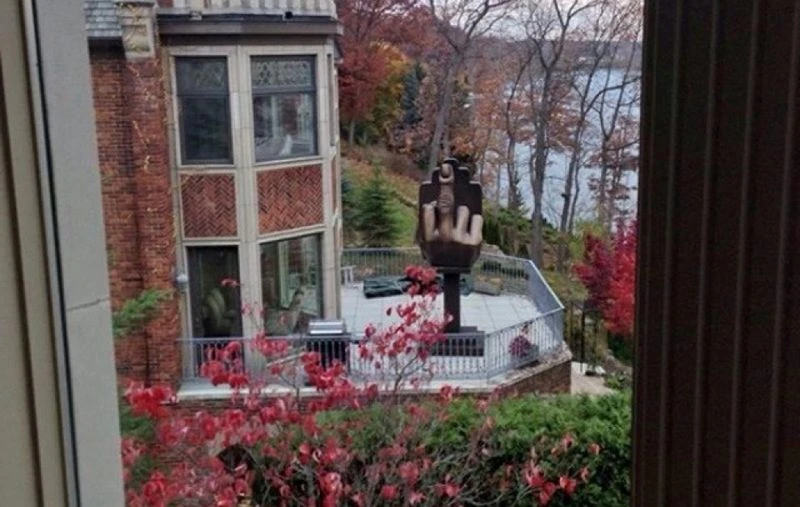

How Egypt Took Revenge on the US with a 600-Foot Tower
The Cairo Tower looms 187 meters (over 600 feet) above the city, serving as a colossal middle-finger gesture aimed squarely at the United States. Built during the presidency of Gamal Abdel Nasser, the landmark owes its existence to an international political scandal. When American officials attempted to bribe the Egyptian leader, Nasser felt so deeply insulted that he decided to spend the money constructing a massive telecommunications tower.
The scandal broke in 1952, shortly after Nasser overthrew King Farouk. CIA officer Kermit Roosevelt approached the newly established Egyptian president with $1 million in cash, hoping to encourage Egypt to turn away from British military and financial influence in favor of American banks and arms. Roosevelt even promised additional funding if Egyptian security forces agreed to buy US equipment.
Outraged by what he saw as dirty foreign politics, Nasser decided to strike back on a presidential scale. He funneled the infamous million dollars into building the Cairo Tower. The ambitious project, which ultimately cost $6 million, was completed in 1961. Locals even gave the tower a sarcastic nickname:
El-Waff Roosevelt
, or "Roosevelt's Fork."
The Cairo Tower has frequently generated controversy over the years. In the 1990s, several Islamic scholars argued that the structure's phallic design was deeply inappropriate and corrupting to local moral standards—a debate that stirred up headlines across the region. 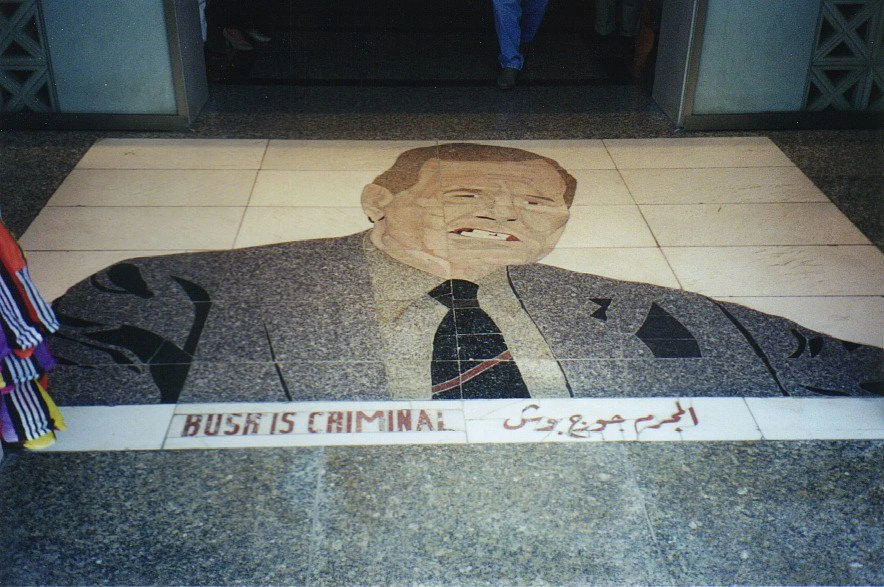
Saddam Hussein's Mosaic Revenge on George H.W. Bush
Following the defeat of the Iraqi army in the 1991 Gulf War, Saddam Hussein took the loss deeply personally. Seeking a way to humiliate US President George H.W. Bush, the Iraqi dictator ordered a floor mosaic depicting Bush's face to be installed in the lobby of Baghdad's premier Al-Rashid Hotel.
The hotel served as the primary lodging for visiting foreign diplomats, politicians, and journalists. The artwork was deliberately positioned right at the main entrance, making it impossible to step inside without walking directly over Bush's face—a daily ritual forced upon every American staying at the hotel.
While Western observers largely laughed off the stunt, it carried heavy symbolic weight in the Middle East, where stepping on someone’s image is considered one of the ultimate personal insults. The mosaic remained in place until the 2003 US invasion of Iraq, when American troops destroyed it along with parts of the hotel. 
Sabotaging a Rival Restaurant Left 38 Customers Dead
In the autumn of 2002, a horrific tragedy claimed the lives of 38 people who had stopped for breakfast at a popular eatery in Tangshan, Jiangsu Province. Driven to desperation by fierce business competition, rival breakfast shop owner Chen Zhengping decided to destroy his competitor's reputation by lacing the restaurant's food with potent rat poison. His plot killed 38 patrons and sent over 200 others to the hospital in critical condition.
Among the victims were numerous schoolchildren and military recruits. Moments after eating the contaminated food, victims collapsed, many bleeding profusely from their eyes, nose, and mouth. The perpetrator panicked and fled the town, but police apprehended him shortly after.
During interrogation, Chen claimed he never intended to cause fatal harm, insisting he only wanted to give his rival's customers severe food poisoning to ruin the shop's trade. The court showed no leniency for his reckless actions, sentencing Chen to death. 
An Anti-LGBTQ+ Senator’s Name Became a Notorious Vulgar Neologism
The LGBTQ+ community enacted an extraordinarily effective campaign of revenge against former US Senator Rick Santorum. The conservative Republican presidential hopeful saw his political momentum severely damaged after making derogatory public statements comparing homosexual acts to bestiality and incest.
Incensed by the politician's comments, advice columnist Dan Savage turned to his readers with a challenge: create a new definition for the surname "Santorum." The winning entry defined the word as a graphic, crude byproduct of anal sex.
Savage established a dedicated website for the definition, which quickly shot to the top of search engine results. Thus began the infamous "Santorum Google problem," where searching for the senator's name led users directly to Savage's provocative site.
The website soon outranked Santorum's official campaign page, creating massive PR headaches during the 2012 Republican presidential primaries. Prospective voters looking for the candidate's platform were routinely directed to pages detailing the vulgar neologism.
Despite complaints filed with Google and efforts by his campaign staff to manage the search results, the activist campaign successfully hijacked the senator's online presence, keeping the crude definition prominently displayed in search queries for years. 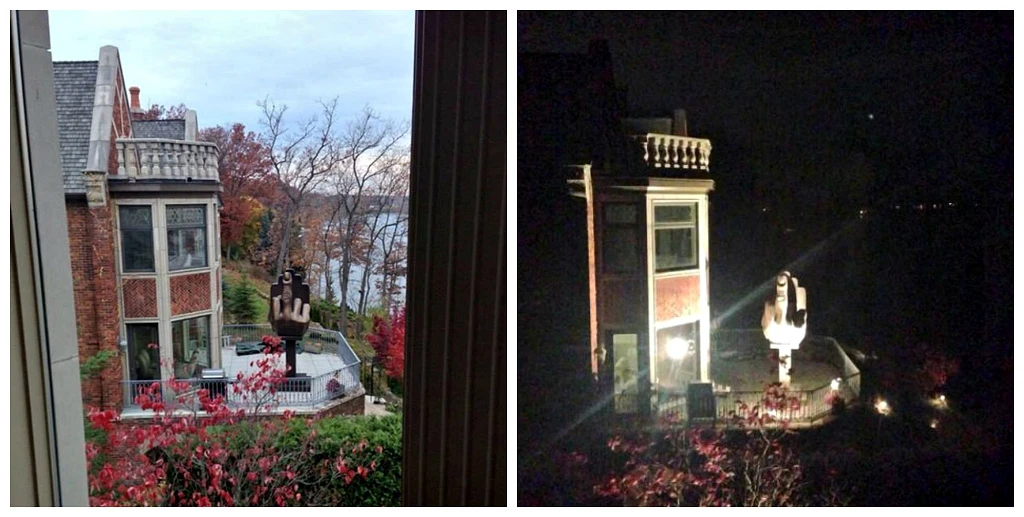
A Giant Middle-Finger Statue Built Just for an Ex-Wife
Following a bitter 2012 divorce from his ex-wife, Lea Tuohy, Michigan strip club owner Alan Markovitz came up with an elaborate way to get the last laugh. He purchased the house right next door to hers and promptly installed a massive bronze sculpture on his back deck—a 12-foot hand giving a giant middle finger, aimed directly at her bedroom window.
The artwork was cleverly angled so as not to offend other neighbors. Equipped with dedicated spotlights, the middle finger was brightly illuminated 24 hours a day, ensuring it remained unmissable to his ex-wife.
Markovitz later clarified that the stunt was actually targeted at his ex-wife's new partner, with whom she had allegedly cheated during their marriage. When he saw the neighboring home go up for sale, he jumped at the opportunity to leave an unforgettably bright reminder. 
Murder and Digital Hoaxing: A Twisted Love Triangle
This perplexing case began in November 2012 when 37-year-old Cari Farver sent frantic text messages to her mother, Nancy Raney, claiming she was cutting ties and moving away after breaking up with her boyfriend. Three days later, Farver's employer received a message stating she was resigning and relocating from Iowa to Kansas.
Over the following months, a new Facebook profile under Farver's name appeared, posting updates about her life and new engagements. Suspicious of the strange messages and total lack of phone contact, her mother reported her missing. It took police four years to uncover the tragic reality: Cari Farver was dead.
She had been murdered by 47-year-old Shanna Golyar, a rival who was obsessively pursuing the same man, Dave Kroupa. The endless stream of social media posts, text messages, and emails were all part of an elaborate cover-up.
To hide the crime, Golyar kept Farver's digital identity alive for years, sending thousands of harassing messages to Kroupa, to Farver's family, and even to herself to frame the victim as a dangerous stalker and evade police suspicion. 
How Lamborghini Built a Supercar Empire Out of Spite for Ferrari
The iconic luxury sports car brand Lamborghini was born out of a heated personal feud between Ferruccio Lamborghini and Enzo Ferrari in the late 1950s. At the time, Ferrari’s road cars were essentially modified race vehicles—fast, but notoriously fickle and demanding.
Ferruccio Lamborghini, a wealthy tractor manufacturer and avid car enthusiast, purchased a Ferrari but quickly grew frustrated with its flaws. The interior felt poorly finished, and the clutch constantly failed, requiring costly and frequent trips to the mechanic.
Being a skilled engineer himself, Ferruccio brought the design flaws directly to Enzo Ferrari. Enzo dismissed him arrogantly, remarking that a tractor maker had no business telling him how to build sports cars. Insulted, Ferruccio vowed to build a superior automobile. He set up his own factory just miles from Ferrari's headquarters and began producing grand tourers that rivaled Enzo’s best models. 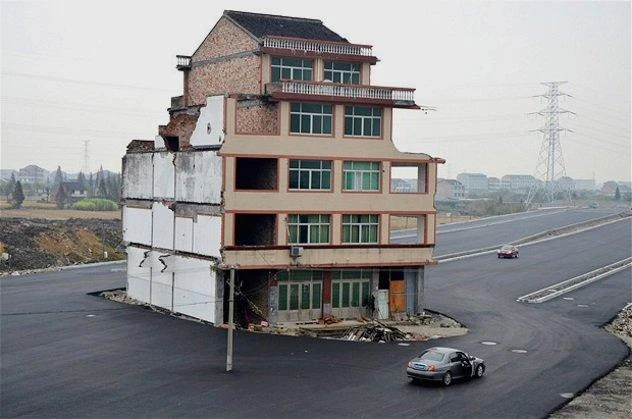
Chinese Authorities Built a Highway Around a Stubborn Homeowner's Building
China's rapid economic growth required vast networks of new highways, but private property owners occasionally stood in the way of development. While the government offered financial compensation packages to relocate residents, some homeowners held out, arguing the buyouts were far too low.
These resisting property owners became known as "dingzihu" or "nail homeowners," and their properties were dubbed "nail houses" because they stuck out like stubborn nails that couldn't be hammered down. Each case represented a rare public stand against local authorities.
One famous incident occurred in 2012, when 67-year-old Luo Baogen refused to sell his five-story apartment building in Zhejiang province. Instead of halting construction, developers built a multi-lane highway directly around the structure, trapping the building in the middle of traffic. Photos of the stranded house quickly went viral worldwide. Luo eventually relented, accepting a 260,000-yuan payout, after which the house was promptly demolished and paved over. 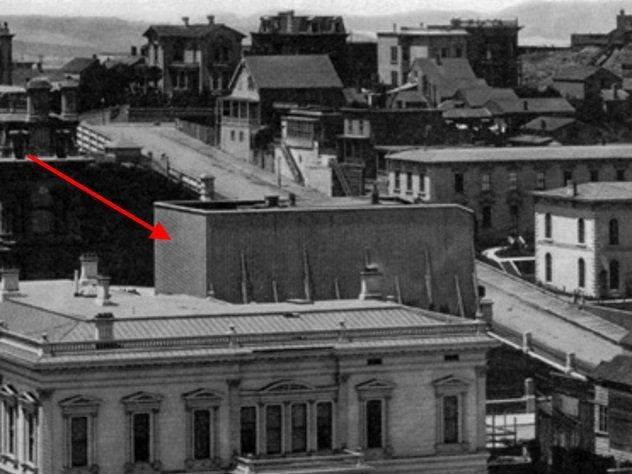
A Railroad Tycoon Enclosed His Neighbor's House in a 40-Foot Spite Fence
In 1855, undertaker Nicholas Yung built a modest cottage on Nob Hill in San Francisco. Fifteen years later, the hill became prime real estate for wealthy magnates drawn to its sweeping city views. Rich buyers quickly began purchasing surrounding lots to build extravagant mansions.
Among them was railroad tycoon Charles Crocker, who bought up almost the entire block—except for Yung's small lot. Crocker tried to force Yung to sell, but Yung steadfastly turned down every offer. Unaccustomed to taking no for an answer, Crocker resorted to aggressive tactics.
Crocker ordered his construction crews to level the surrounding terrain with dynamite, sending rock fragments flying toward his neighbor's home. When Yung still refused to move, Crocker constructed a massive 40-foot wooden wall surrounding three sides of Yung’s property, blocking out all sunlight. The towering structure quickly drew curious crowds and became known as "Crocker's Spite Fence."
Crocker was already a controversial figure, having amassed millions while relying on cheap labor to construct the Central Pacific Railroad, which fueled anti-monopoly sentiment among local labor movements.
The 40-foot fence came to symbolize corporate arrogance, serving as a backdrop for numerous public protests. Yung held out for decades, but long after both original owners had passed away, Yung’s heirs finally sold the lot to the Crocker family in 1904, and the fence was dismantled. The victory was short-lived, however: the Great 1906 San Francisco earthquake and subsequent fires destroyed the Crocker mansion. Today, Grace Cathedral stands on the site. 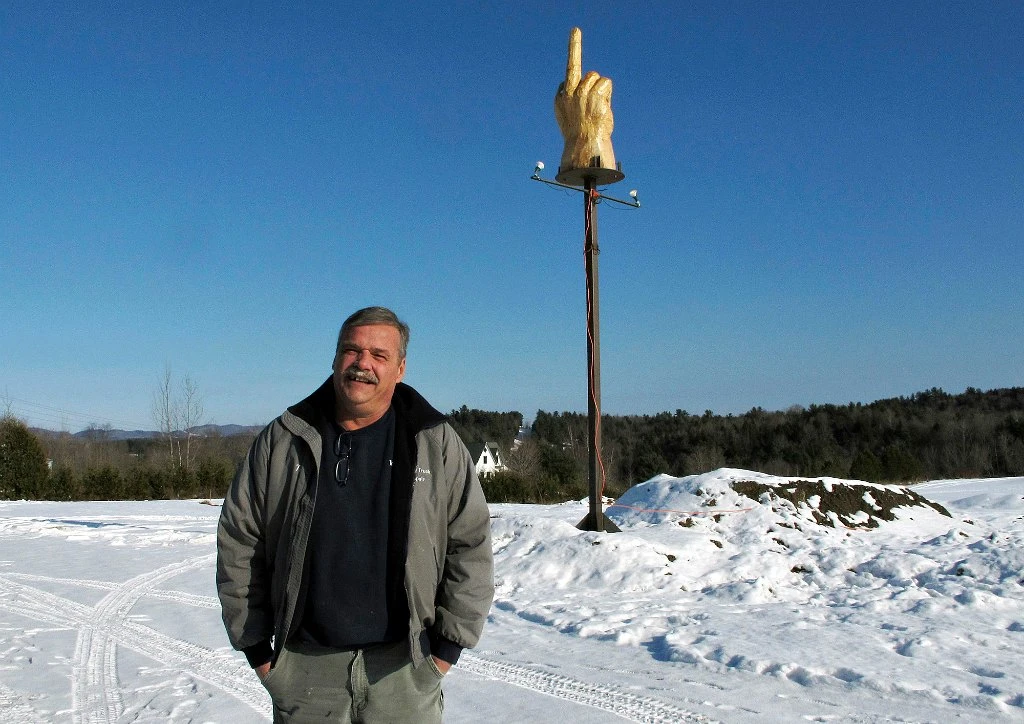
A $4,000 Giant Middle Finger Erected for Town Officials
Local bureaucracy can drive anyone to extreme measures. In 2018, municipal officials in the small town of Westford, Vermont, became the target of an unyielding public display after resident Ted Pelkey spent years trying to get a permit to construct an 8,000-square-foot garage on his property for his business.
Town planners repeatedly denied his applications, claiming the proposed structure failed to meet local development standards. Believing officials were acting out of personal hostility rather than objective regulations, Pelkey decided to fight back.
He commissioned a local artisan to carve a giant wooden middle finger for $4,000, mounted it atop a 16-foot pole on his land, and illuminated it with floodlights. Because it was legally classified as a public art installation rather than a commercial sign or building, town officials were powerless to remove it.