Why the ancient Greek philosopher Diogenes lived in a barrel (8 photos)
Diogenes of Sinope is one of the most famous ancient Greek philosophers. Few can explain the essence of his teachings, but almost everyone knows that he lived in a barrel. Was this really true? And if so, what compelled an elderly and wise man to choose such an unusual dwelling? 
Not in a barrel!
In fact, Diogenes couldn't have lived in a barrel simply because the ancient Greeks didn't make such containers in his time. Most likely, the philosopher's home was a pithos. This refers to a large clay vessel used for storing bulk goods, primarily grain. 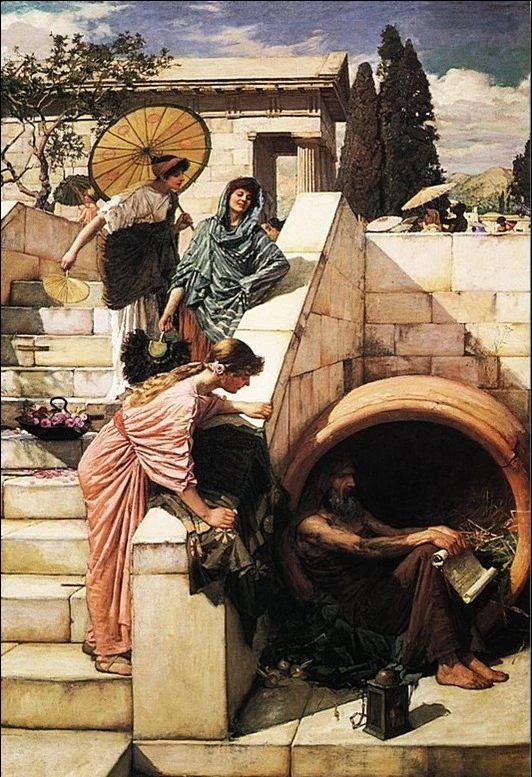
Archaeologists discovered numerous pithos during excavations, both damaged and preserved. These vessels resembled enormous jugs, 1.5 to 2 meters tall. They were completely buried in the ground, maintaining an ideal microclimate for storing grain. The temperature remained stable, without sudden fluctuations. 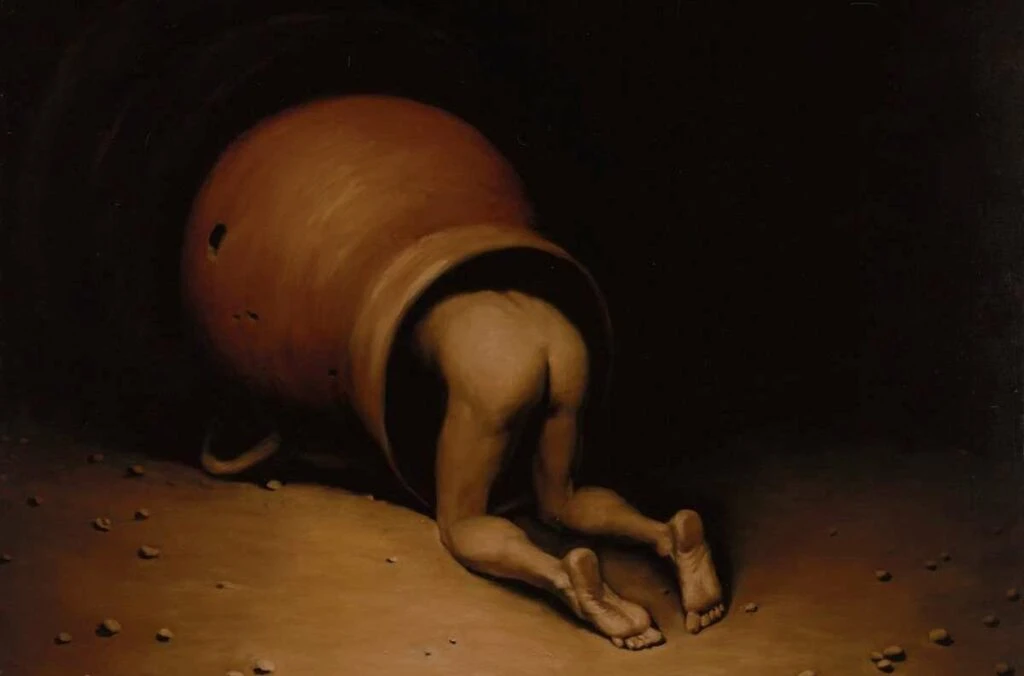
Diogenes. Artist: Alexey Chizhov
Most likely, Diogenes' pithos wasn't buried in the ground, but rather lay on its side. According to surviving information, the philosopher's "house" was located in one of Corinth's squares, where many people always gathered. This allowed Diogenes to easily communicate with the townspeople and offer them advice—whether they asked for it or not.
Troll, Prankster, and Cynic
The philosopher actively dispensed advice on how to achieve spiritual freedom. At the same time, he wasn't shy about making fun of passersby and even being cheeky. Today, Diogenes would likely be called a prankster, a performance artist, a troll, or perhaps even a punk. If he had social media accounts, success as a blogger would have been guaranteed. 
17th-century engraving depicting a reconstruction of Diogenes' tomb
Diogenes often surprised people by talking to statues. He explained that this was his way of training himself to remain content, even when ignored. Diogenes often walked among crowds during daylight hours with a lit lantern. Holding it up to the faces of passersby, he peered intently at them. This symbolic gesture signified his search for virtue and honesty, which, according to Diogenes, were always in short supply in society. When asked what he would be if he could choose, he replied, "I want to be a man." 
Diogenes Looking for a Man
For his simple manners and somewhat importunate nature, he was nicknamed "the one who lives like a dog." In ancient Greek, this expression was "kynikos" or "cynic," which explains a lot. Diogenes was also often called an "idiot," but that's not what you might think. Although the chatty old man from the pithos irritated many, over time he became a landmark in Corinth and later earned a reputation as a sage. 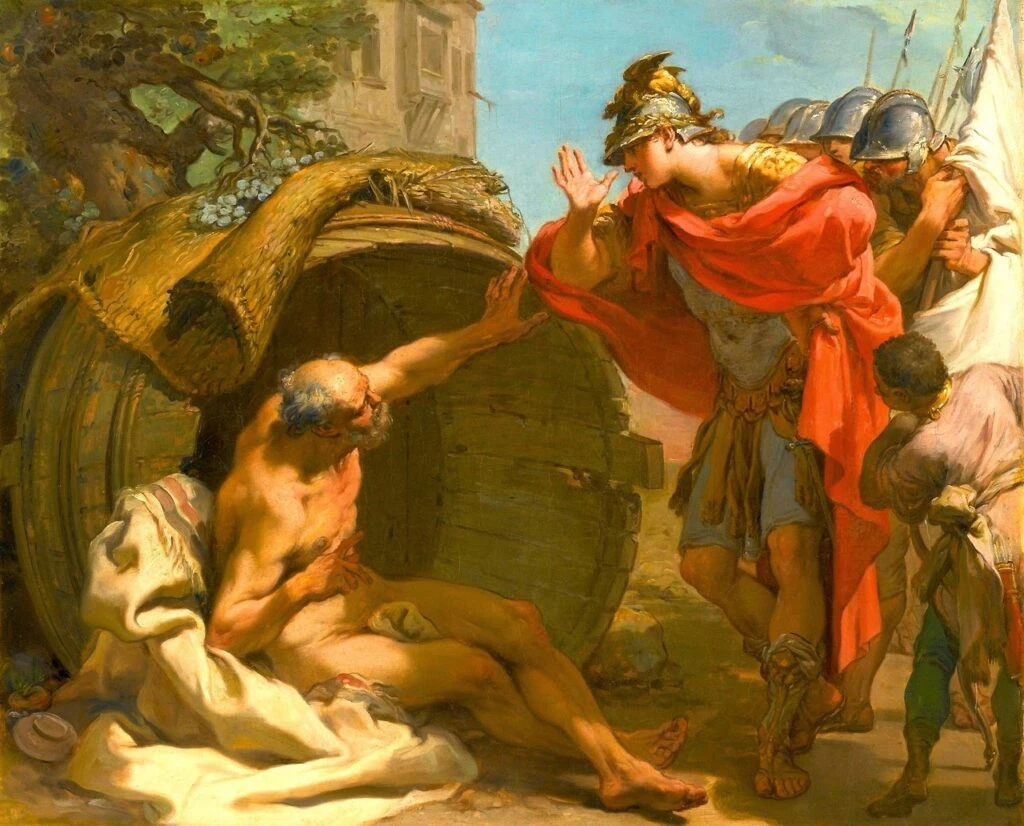
The meeting of Diogenes and Alexander the Great is a popular subject in painting and literature.
People began to come to Diogenes for advice and guidance, even from afar. Gradually, he gained followers. One day, Alexander the Great himself stopped by to see the philosopher. Seeing the sage's modest lifestyle, the king asked how he could help him. To this, the impudent old man immediately replied, "Don't block my sun." Thus, Diogenes demonstrated his disdain for power and wealth, and emphasized the value of self-sufficiency.
Why didn't Diogenes live like others?
Of course, Diogenes didn't choose the pithos simply to prank his fellow citizens. Deep convictions led him to this way of life. The philosopher sincerely believed that true happiness and virtue have nothing to do with external goods or comfort. By living in such conditions, he demonstrated asceticism and a complete rejection of familiar comforts and wealth. 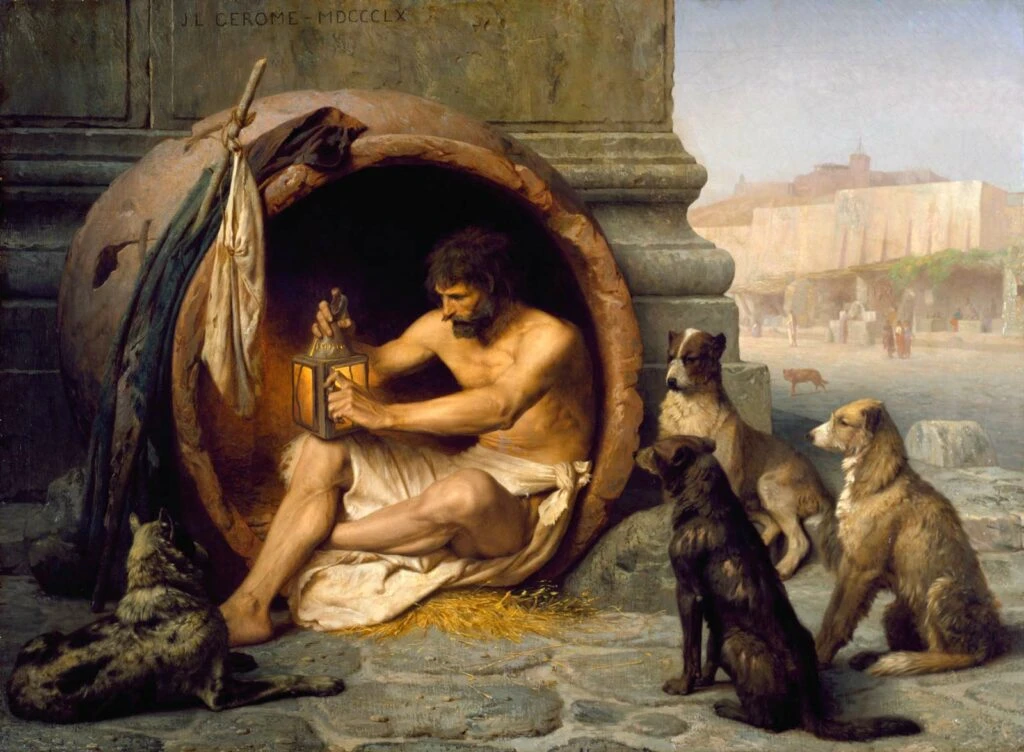
Life in the pithos also clearly demonstrated that a wise and self-sufficient person needs very little to be happy. In this way, Diogenes demonstrated that he was not dependent on the opinions of others and accepted norms. Moreover, this lifestyle emphasized his disdain for accepted values and social standards. 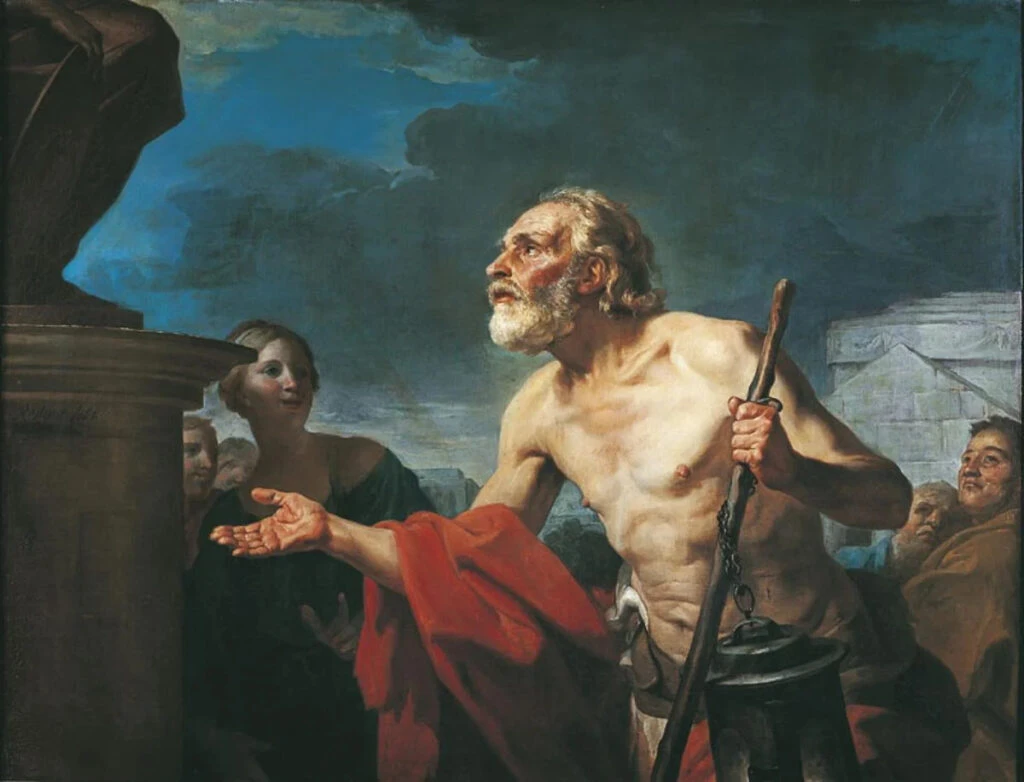
Jean Bernard Restoux. Diogenes begging from a statue. 1767
It's safe to say that living in a pithos was more than just a practical decision. It was a symbolic act, clearly reflecting Diogenes' philosophical views and his challenge to social norms and values. But what do you think: was Diogenes a sage who challenged society, or a flamboyant eccentric seeking attention? Share your thoughts in the comments!