Why the Ancient Greeks Worked Out Naked—and Other Bizarre Facts from the History of Physical Education (11 photos)
Working out is a lot like Mondays: everyone knows it’s coming, yet it always takes people by surprise. August 8 marks Physical Culture Day—a Soviet holiday dating back to 1939. It wasn't created for health, but for military mobilization. More on that later. First, let's take a look at the bizarre and downright wild history of the daily routine we casually call "stretching" or "calisthenics." 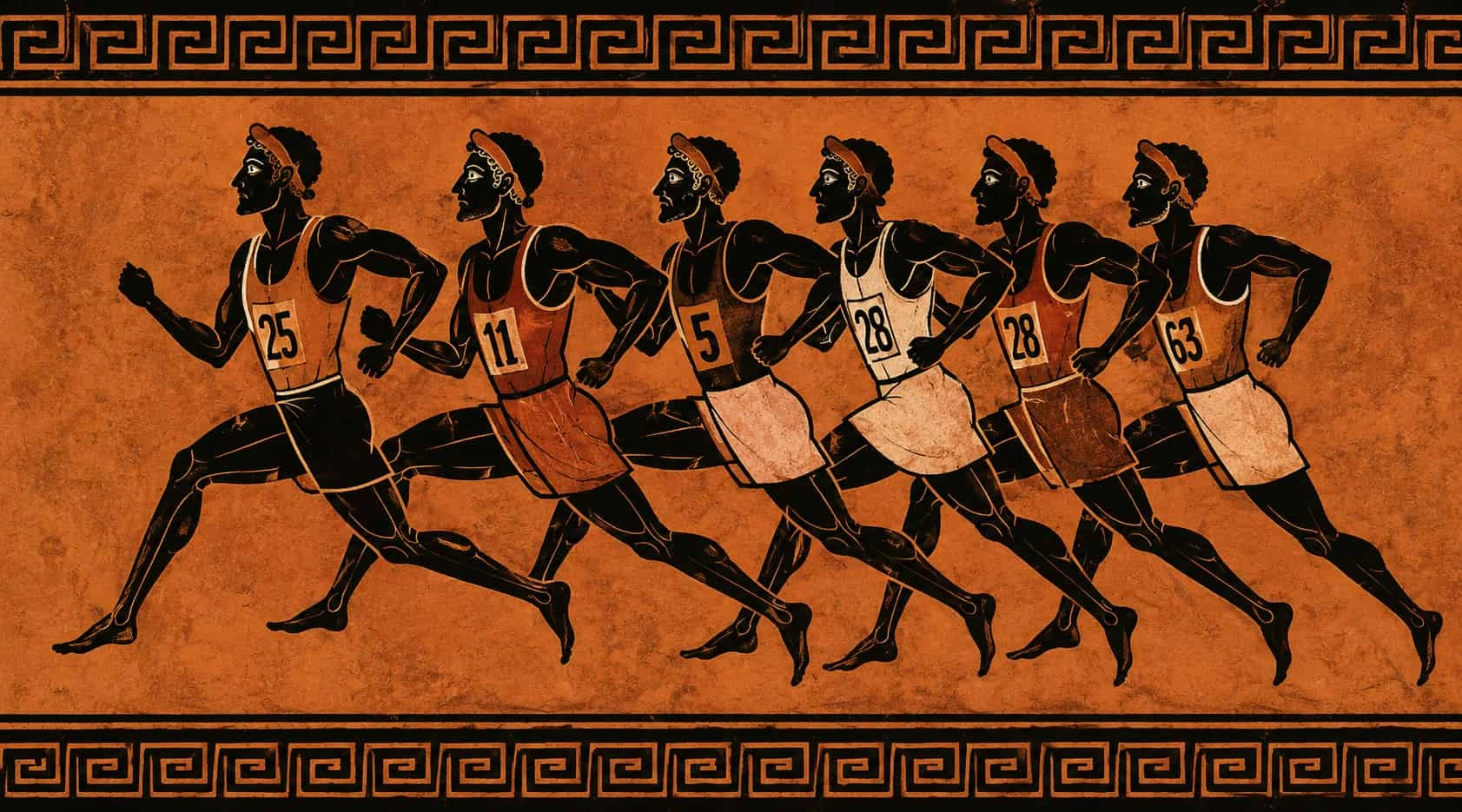
The Word "Gymnasium" Literally Means "A Place to Get Naked"
In Ancient Greek,
gymnos
means "naked." An Athenian gymnasium was a place where men exercised completely in the nude. Athletes would rub themselves with olive oil, dust their bodies with sand, and get to work. Competing clothed was strictly forbidden—an athlete in a tunic faced immediate disqualification. Nakedness was actually seen as a sign of high civilization, setting the Greeks apart from "barbarians" who covered themselves in cloth. 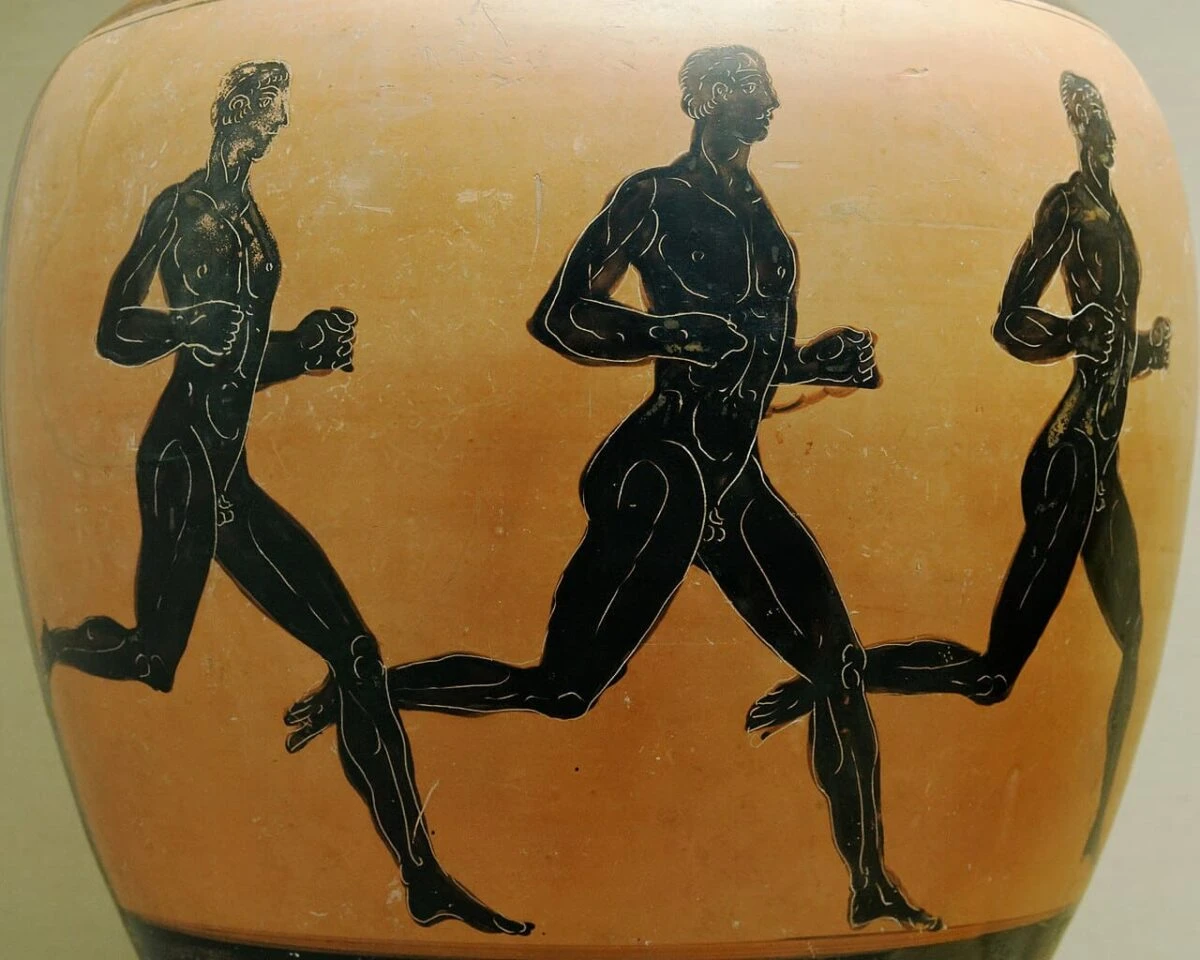
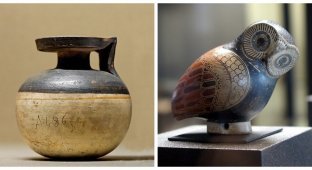
Olympic runners were depicted on vases just as they competed—completely naked
Women were strictly banned from the gymnasium—with one major exception: Sparta. There, young women ran, wrestled, and threw the discus, wearing almost nothing. The rest of the Greek world was scandalized. Spartan women were mockingly dubbed "thigh-displayers." Aristotle even lamented that while the lawgiver Lycurgus tried to regulate men, he proved utterly powerless against Spartan women.
Victorian England Treated "Immoral Thoughts" with Exercise
The 19th century saw the rise of "Muscular Christianity" in Britain. The core philosophy was simple: sports instill Christian virtues like discipline, self-control, and honor. In the 1850s, author Charles Kingsley argued that the playing field gave boys lessons no textbook ever could. Forget Latin—give them pull-up bars and cold showers. 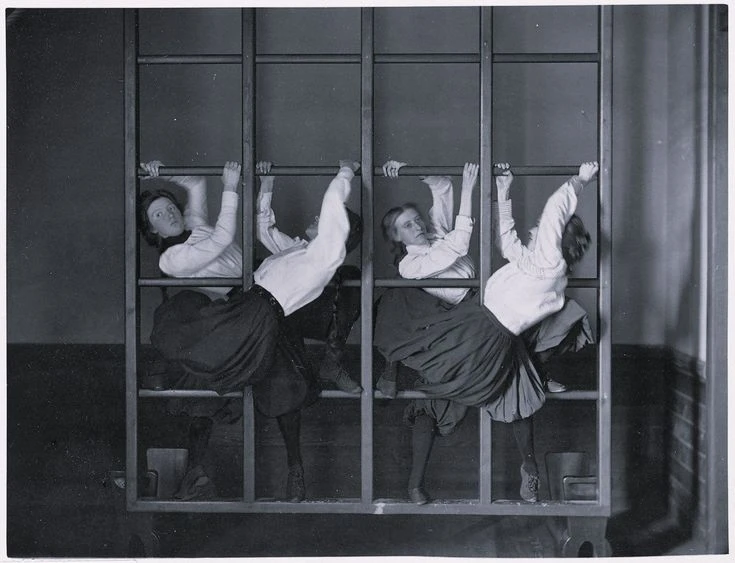
A gymnastics class in a British school, late 19th century. Even young girls were introduced to physical education
Physical exercise was prescribed as a moral remedy. The logic was straightforward: an exhausted body has less energy for wicked thoughts. Swedish gymnastics, developed by Pehr Henrik Ling, spread rapidly through British schools specifically for this purpose—as a tool to build willpower and stamp out "base desires."
Medieval Europe Didn't Have Physical Education—and Nobody Missed It
Peasants plowed, hauled, and built. Without any workout targets, they could easily out-train today's average CrossFitter. Exhausting physical labor was simply a way of life. The nobility, by contrast, viewed manual labor as beneath them. Their idea of "fitness" consisted of fencing, horseback riding, and hunting—essentially direct preparation for war. 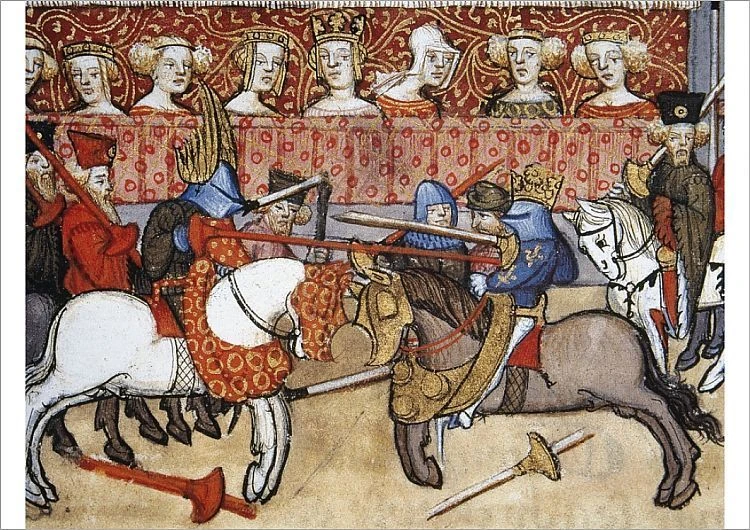
The only "fitness training" for medieval nobility was learning how to kill and avoid getting killed
Following the fall of the Roman Empire, gymnastics as a structured system was forgotten for centuries. The Church viewed any obsession with the body with deep suspicion. It wasn't until the Renaissance that interest revived, when Italian humanists recalled that the Greeks viewed body and mind as inseparable—and picked up exercise equipment once again.
Japanese Radio Calisthenics: Three Minutes a Day Since 1928
On November 1, 1928, Japanese radio broadcast its very first edition of
Rajio Taisō
(ラジオ体操), or radio calisthenics. The idea actually originated in the United States. While visiting America to study the insurance business, Japanese officials noticed morning radio workout broadcasts sponsored by Metropolitan Life and decided to adopt the concept back home. The routine consists of 13 exercises and takes roughly three minutes. It has remained virtually unchanged ever since. 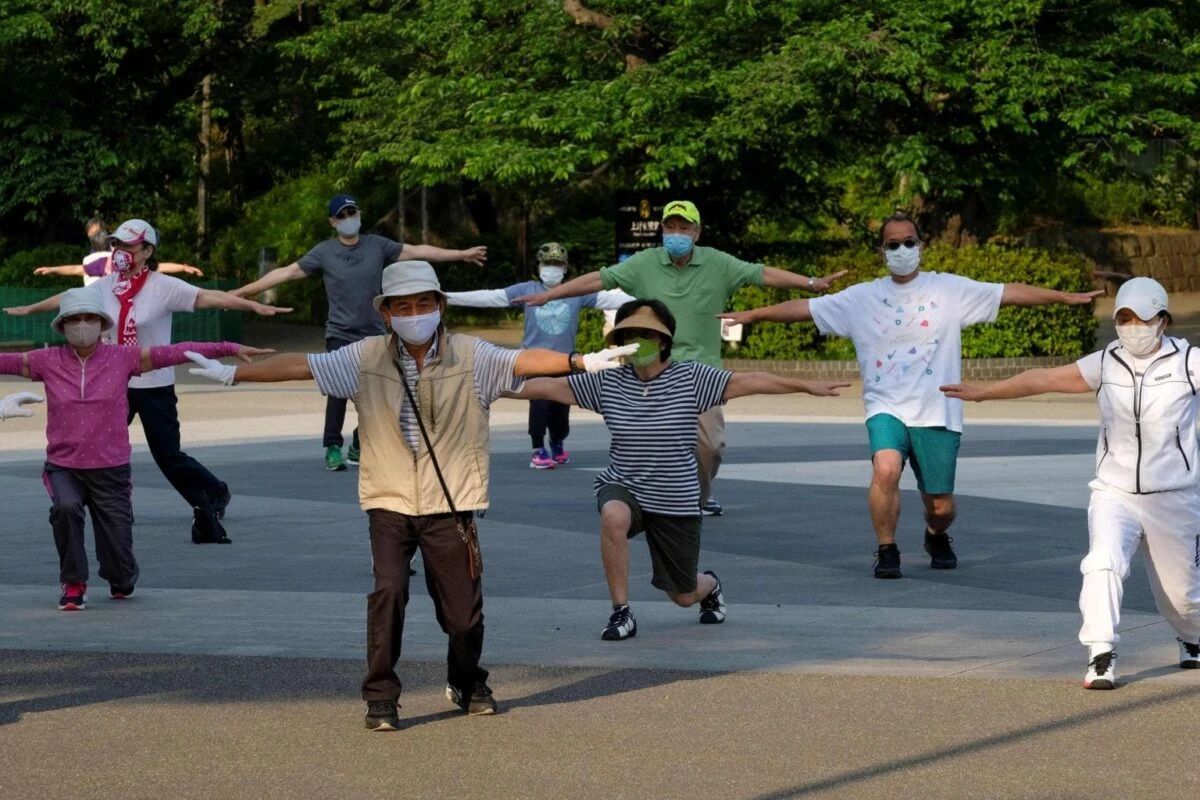
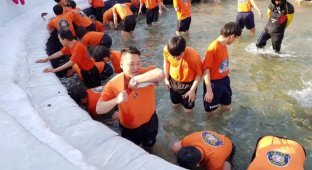
Rajio taisō in Japanese parks: a tradition that began under Emperor Hirohito and continues uninterrupted to this day
Today, NHK Radio 1 airs
rajio taisō
every morning at 6:30 AM. In factories, parks, and schoolyards, millions of Japanese citizens move in sync to the exact same music, as they have for nearly a century. According to Japan Post Insurance, tens of millions of people regularly participate—especially seniors and factory workers.
Soviet Physical Culture Parades: Sports as State Theater
The first physical culture parade took place in Red Square in May 1919, with Vladimir Lenin reviewing it in person. But the phenomenon reached grand proportions in the 1930s, becoming an annual event in 1931. By 1932, 70,000 athletes marched across the square; by 1934–1935, that number rose to 120,000. The first All-Union Parade was held on July 12, 1937, featuring 45,000 participants from 11 Soviet republics building human pyramids before the Lenin Mausoleum. 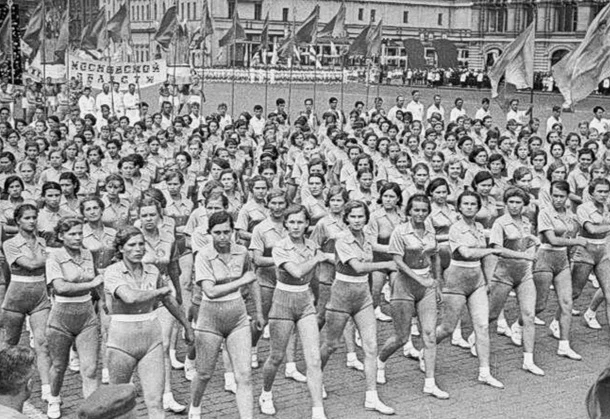
Physical culture parade on Red Square in the 1930s. The synchronized precision of thousands of participants was orchestrated by stage directors and choreographers 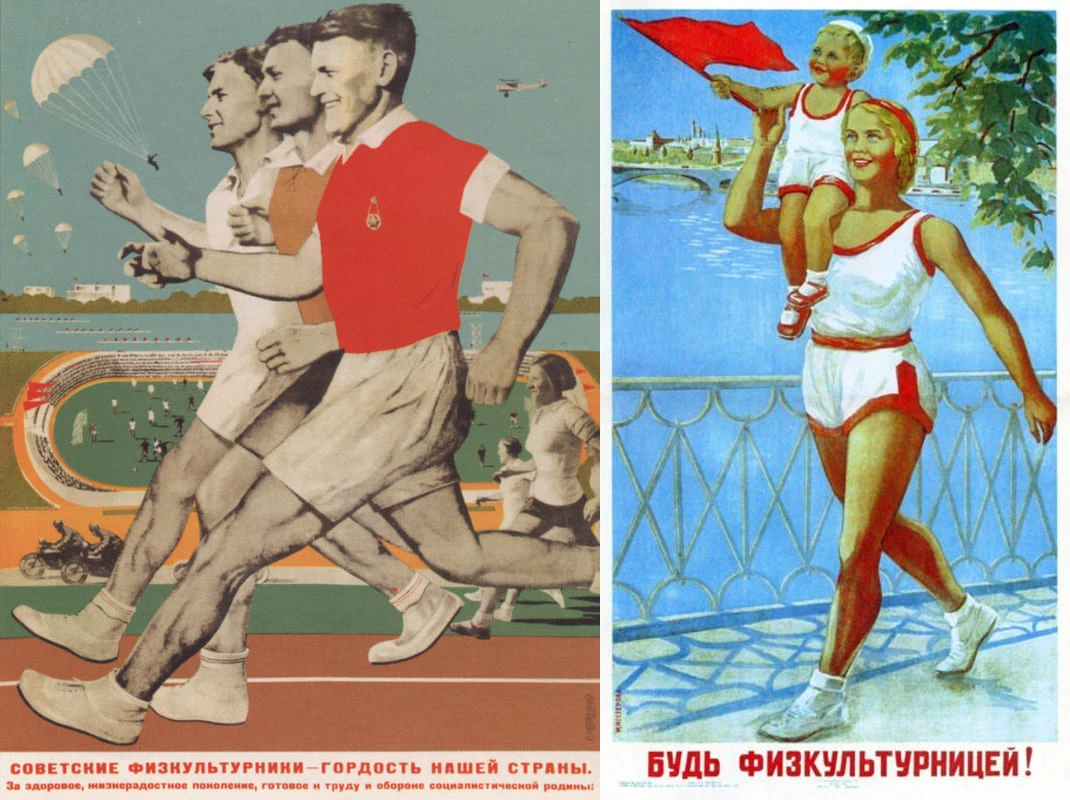
A physical culture poster from the 1930s. The fit body of a Soviet citizen served as a powerful tool of state propaganda
Physical Culture Day was officially established on June 16, 1939. It was designed with a political objective in mind: "Be strong, brave, agile, and daring. That is how your Motherland wants to see you." Directors, choreographers, and set designers worked on every parade. It was pure theater—meticulously staged from the very first step to the last.
GTO: "Ready for Labor and Defense"—and War, Too
On March 11, 1931, the Soviet Union officially launched the GTO program ("Ready for Labor and Defense"). The initiative was pitched by Ivan Osipov, a 20-year-old Moscow fitness enthusiast. In its very first year, 24,000 people earned badges. Targeting citizens aged 10 to 60, the program tested running, swimming, shooting, pull-ups, and skiing. Its military application was overt: the official goal was to "boost the mobilization readiness of the Soviet people." 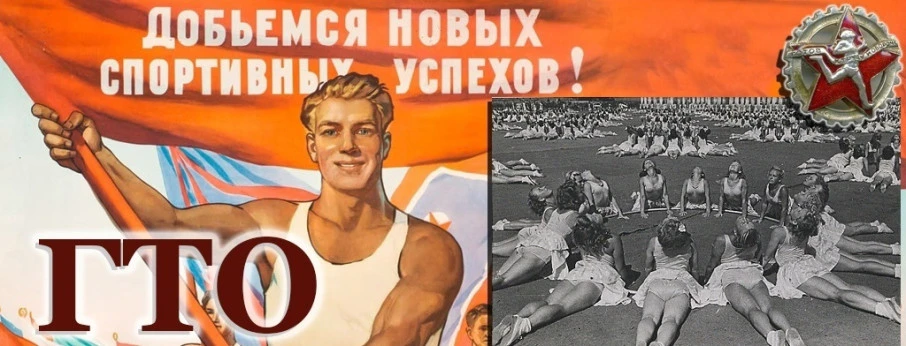
The GTO badge offered perks for university admissions, but its main purpose was military preparedness
Similar programs existed around the globe—in Germany, Great Britain, and the US. Behind them all lay a single core idea: a physically fit citizen is, above all, a combat-ready soldier. High-minded talk about a healthy lifestyle was mostly window dressing. The GTO system survived in various forms from 1931 until 1991. In 2014, Russia revived the program, introducing gold, silver, and bronze badges across 11 age tiers.
How Physical Education Entered Schools—and Why Kids Hate It
Mandatory physical education was invented by German educator Friedrich Ludwig Jahn in the early 19th century. He established gymnastics clubs across Prussia with a single goal: preparing young men to fight Napoleon. The curriculum included apparatus work, war games, and military drills. By 1819, the Prussian government grew nervous about the nationalist movement and banned school gymnastics, imprisoning Jahn in a fortress. The ban was lifted in 1842, and Jahn’s system quickly spread to schools across Europe. 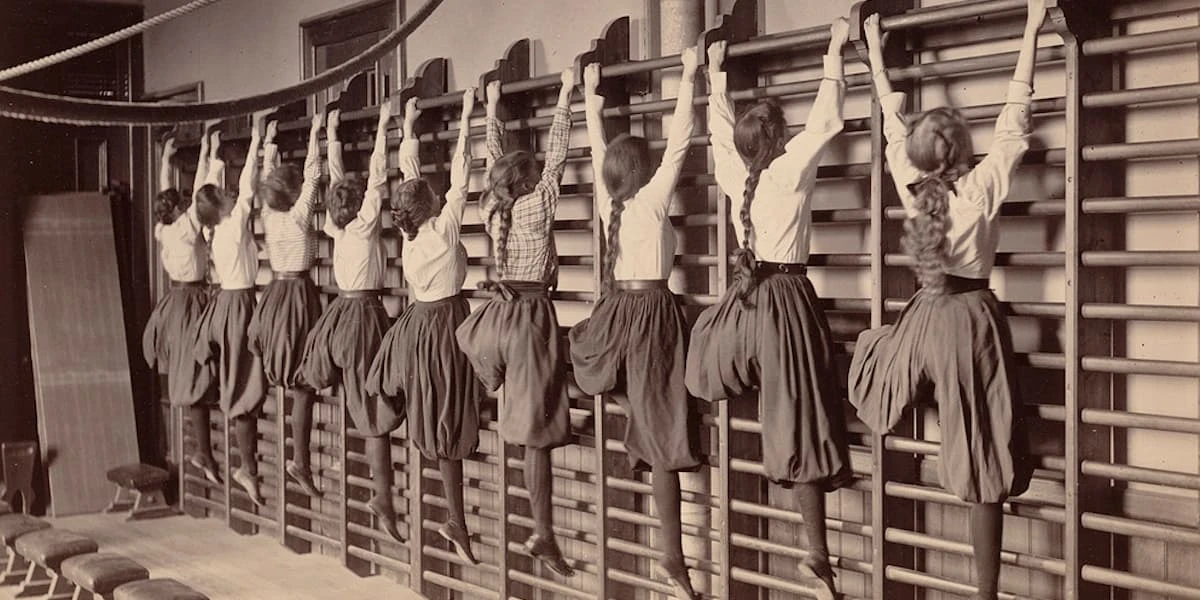
A Swedish gymnastics lesson, late 19th century. No playing around—just strict exercises and discipline
By the late 19th century, physical education had become mandatory in schools throughout most of Europe. Yet its military spirit endured. "Do as you're told"—no debate, no questions asked. A fitness standard was a fitness standard. In 1899, educator Nikolai Filitis wrote that school PE classes were led by "officers and semi-literate non-commissioned officers," while educational field trips had been replaced by military marches. The format has evolved since then, but the core essence hasn't changed much.
Bonus: How Insurance Companies Invented Modern Workouts
In the 1920s, the American firm Metropolitan Life launched a morning calisthenics radio show. The motivation was purely commercial: healthier policyholders get sick less often and file fewer claims. Japanese officials observed this on a business trip and brought the concept back home. That is how
rajio taisō
was born. It outlasted Metropolitan Life’s own program, outlived radio's reign as the dominant medium, and survived through multiple political eras. 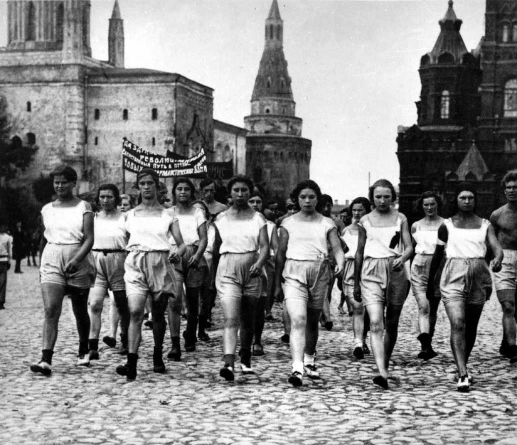
The first physical culture parade in 1919. This marked the beginning of the holiday still celebrated on August 8 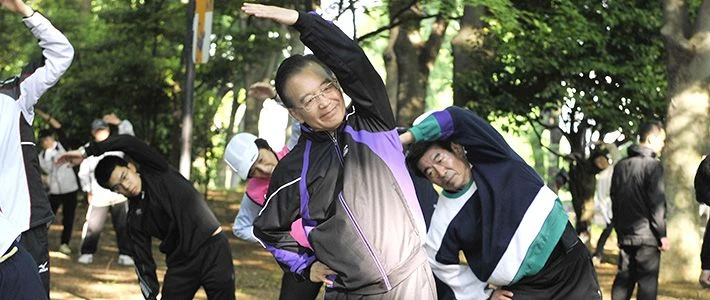
Rajio taisō is one of the few physical culture traditions that has reached us virtually unchanged
The history of physical culture is almost always about someone trying to make people stronger for their own agenda. The Ancient Greeks did it for war and beauty; the Victorians for morality and empire; the Soviets for mobilization; and Japanese insurers for profit. Different motives, same exercises. Well, almost the same—after all, the Greeks did theirs naked.
Do you work out? Every day, once in a while, or are you "planning to start on Monday"?