Imagine a soldier who fights for almost 30 years, unaware that the war is over. Or a woman whose house has a turtle living quietly under a sealed floor for 10 years. 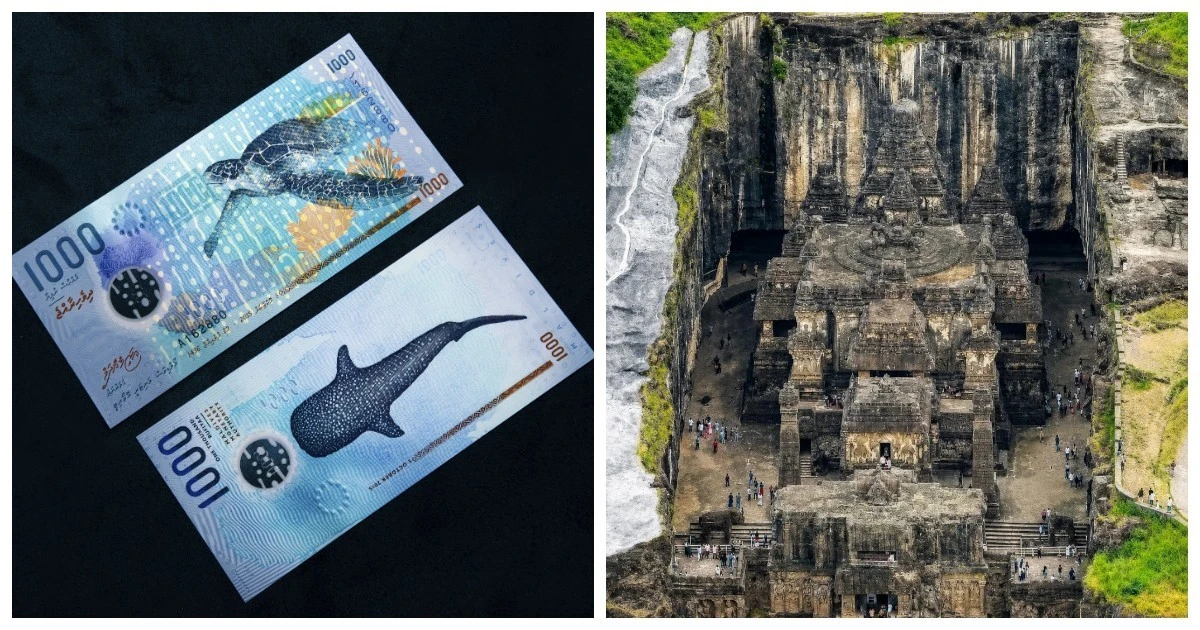
And somewhere in India, craftsmen spent centuries chiseling a rock to turn it into a temple. And they never made a mistake. This collection includes stories that sound like fiction, but actually happened. The soldier who refused to surrender until ordered. The real-life Mowgli, who inspired the legend. Hieroglyphs on shells and dragons that steal venom from jellyfish. Let's get started.
1. An exact replica of the German nuclear reactor they attempted to build during World War II in Haigerloch. 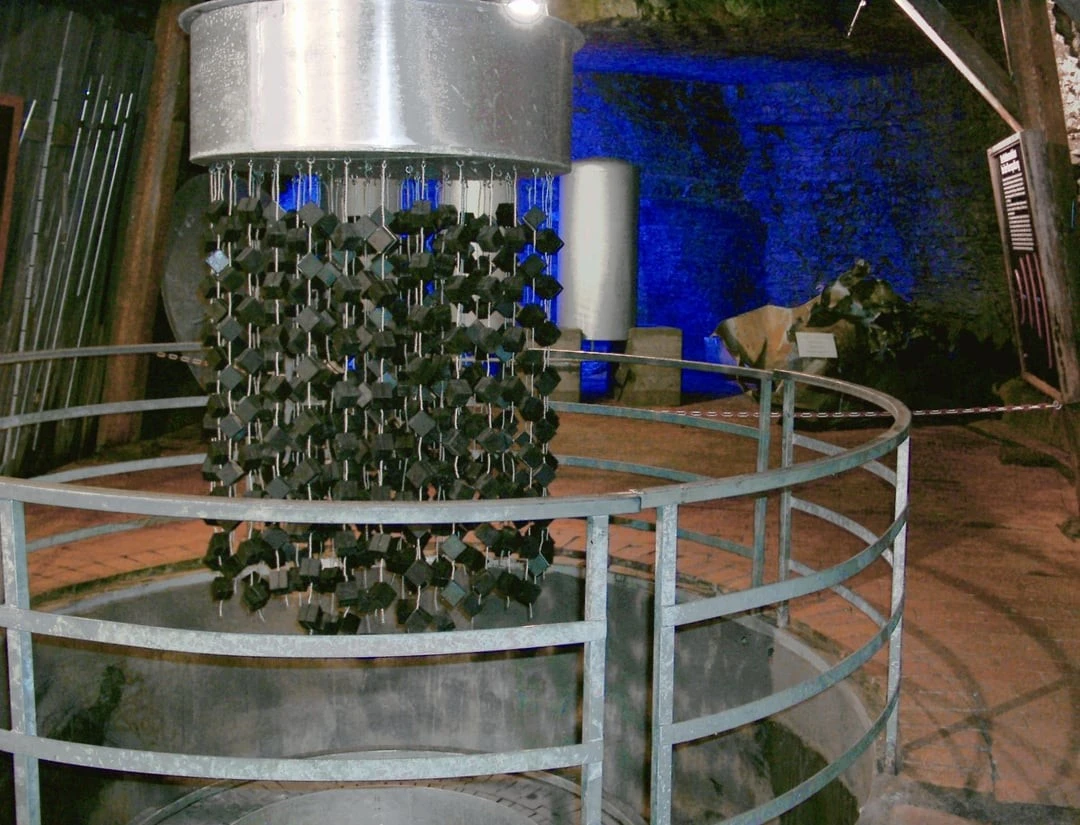
It was discovered in April 1945.
2. Lieutenant Hiroo Onoda, who did not surrender for 29 years after the end of World War II 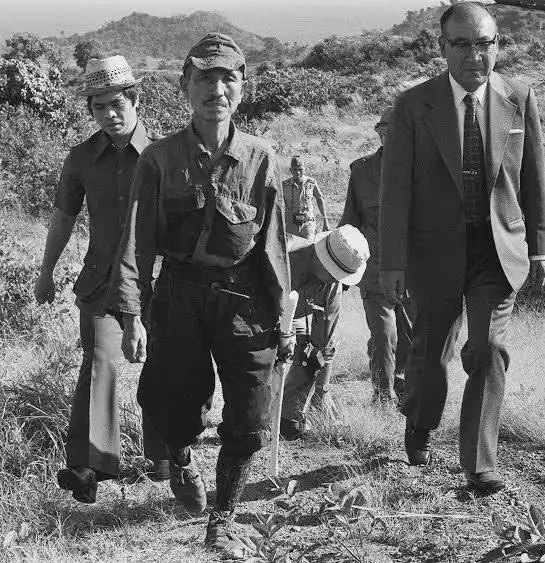
He believed that calls for surrender were enemy propaganda and remained on Lubang Island until his former commander personally removed him from his post in 1974.
In December 1944, Lieutenant Onoda received orders: to wage guerrilla warfare on Lubang and under no circumstances to surrender or commit suicide.
After Japan's surrender in 1945, Onoda and his fellow soldiers disbelieved leaflets, newspapers, and even letters from relatives, considering them enemy propaganda.
The group survived on stolen rice, coconuts, wild fruits, and livestock, periodically engaging in shootouts with local residents and police, whom they mistakenly considered the enemy.
Over the years, Onoda lost all of his fellow soldiers: one surrendered in 1950, and two others were killed (in 1954 and 1972). After 1972, he was left alone.
In 1974, explorer Norio Suzuki found Onoda in the jungle, but he refused to surrender, as he was awaiting orders from his superiors. Upon learning of this, the Japanese government tracked down his former commander, Major Yoshimi Taniguchi, who by then had become a bookstore owner. On March 9, 1974, Major Taniguchi personally flew to Lubang and read Onoda an order relieving him of all military duties.
3. Childbirth is a difficult process not only for mammals 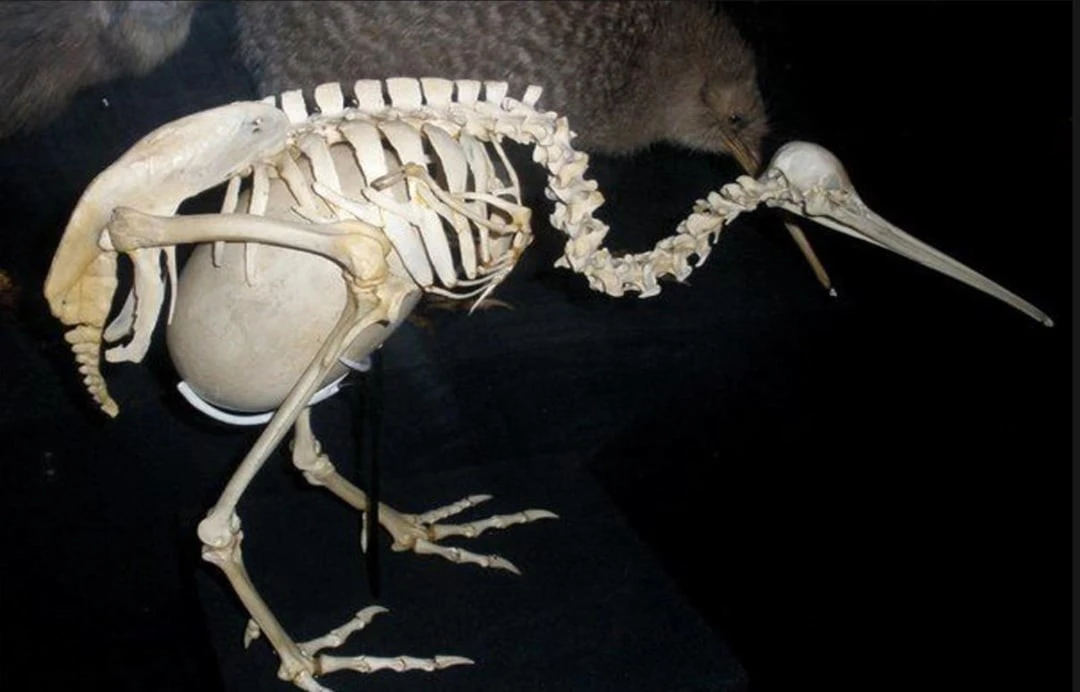
The kiwi's egg is enormous compared to the size of the bird itself, accounting for approximately 15-20% of the female's body weight. Some estimates place this proportion at 25% and even nearly 33% (a third of the female's body weight). In one recorded instance, a 1.7 kg female kiwi's egg weighed 406 g, which is almost a quarter (25%) of her body weight.
4. The Jungle Boy Who Became a Legend 
In 1867, a group of hunters tracked a wolf in the jungles of Uttar Pradesh and discovered a naked boy, 5 or 6 years old, crawling on all fours and growling in a cave. He categorically refused any food except raw meat and sharpened his teeth by gnawing on bones. The child showed no normal human emotions, nor did he smile or laugh.
Despite nearly 20 years in the shelter, Dina never mastered human speech. He demonstrated only a rudimentary understanding of simple words, communicating through howls, growls, and whines. Dina Sanichar is considered the primary inspiration for Mowgli. However, there is no direct evidence that Kipling knew of Sanichar specifically. Kipling's father mentioned stories of "wolf children" in his 1891 book, and Kipling himself cited other sources of inspiration in his memoirs. Nevertheless, the chronology matches—The Jungle Book was published in 1894, and Sanichar died in 1895, leaving news of him rife.
5. A man sitting on the edge of an underwater cliff 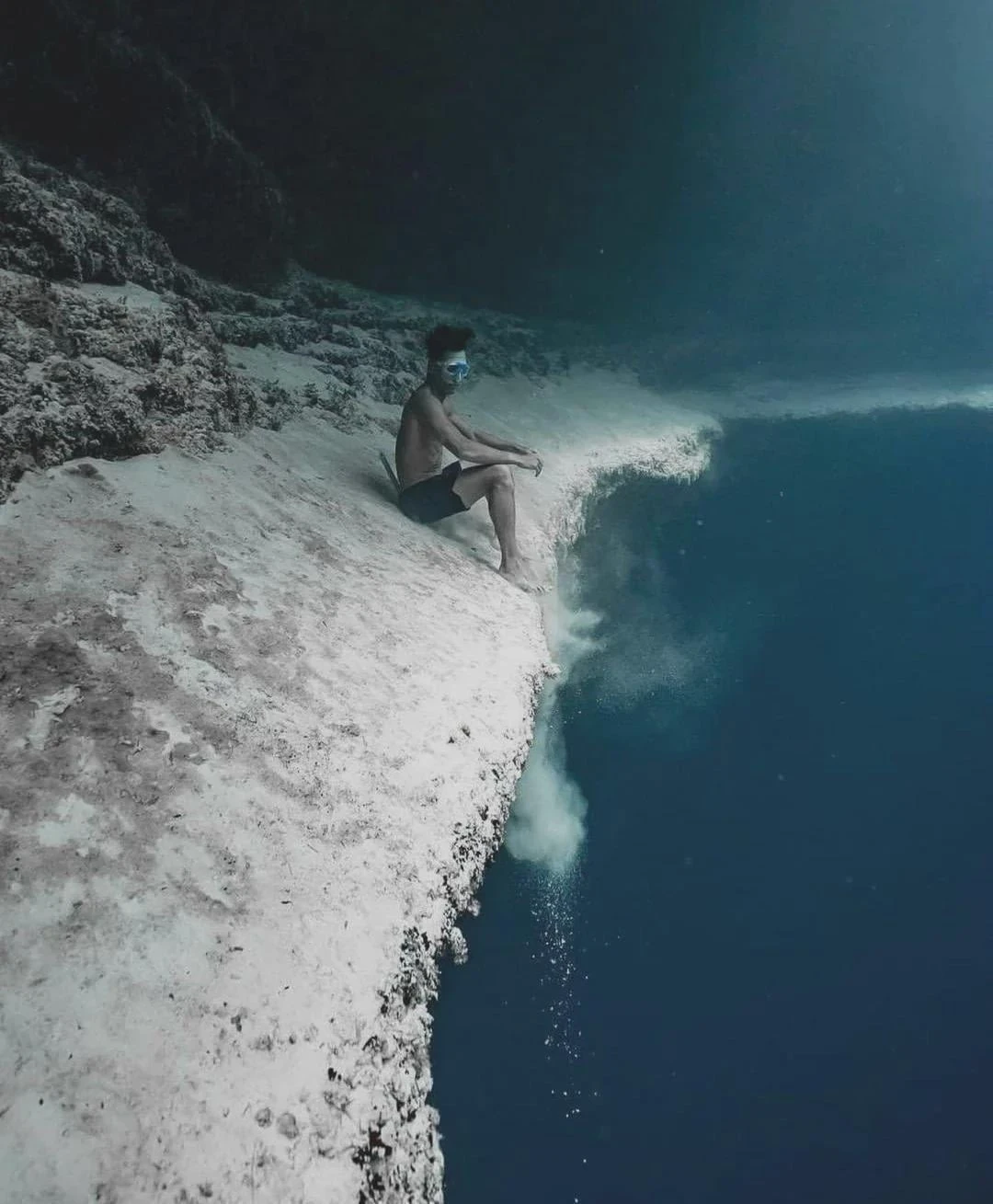
6. A turtle lived for about 10 years in Brazil, trapped under a sealed floor in a house 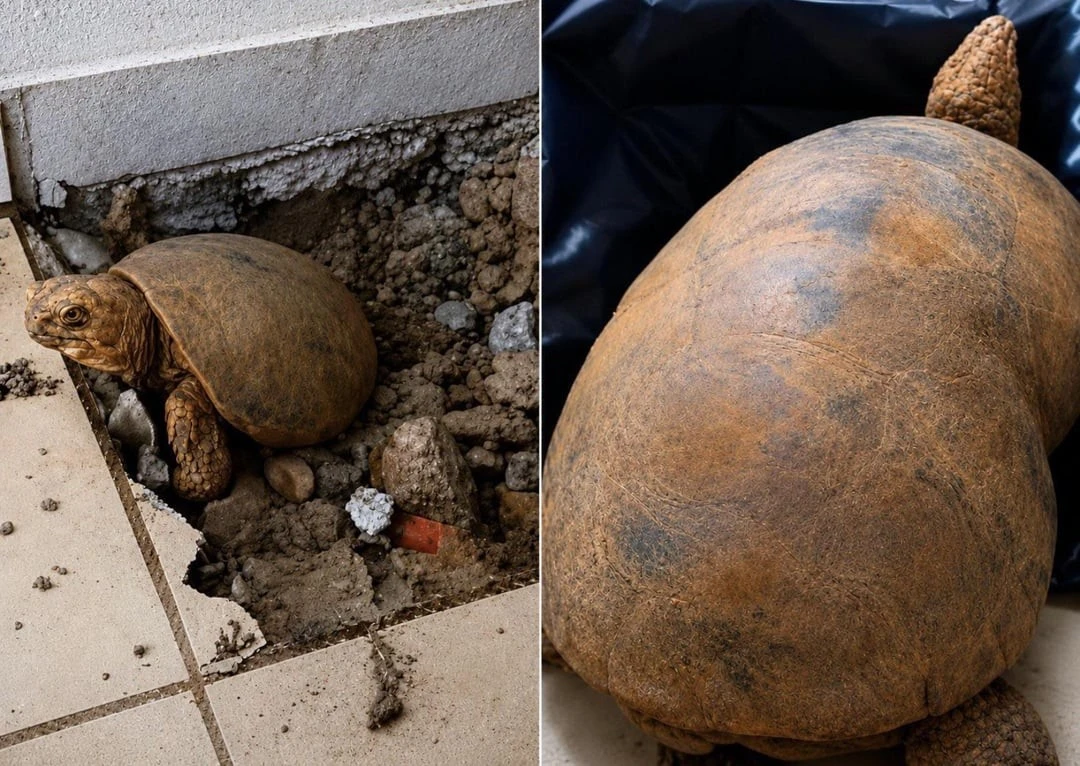
A turtle was found under the floor of the home of 60-year-old Luisa Coelho da Cruz Aguiar in the city of Itacai.
On February 7, 2025, a repairman called to check for dampness under the floor broke a tile and discovered a live reptile. The homeowner claims the outbuilding where the turtle was found was built about 10 years ago, and the floor was poured then. The homeowners' granddaughter mentioned that the floor was laid 13 years ago.
Experts attribute the miracle to the turtle's slow metabolism and ability to enter a state similar to hibernation. The turtle fed on insects found under the floor, and moisture and oxygen likely penetrated through the soil and cracks.
The owner suspects the turtle may have been brought there as a small tortoise, along with gravel brought in for construction. Biologists also don't rule out the possibility that she may have burrowed herself.
Long-term exposure to darkness and cramped conditions has resulted in a deformed shell (it was pressed against the tiles) and increased sensitivity to sunlight. She is currently being kept in a bathtub and fed fruit, but biologists say she requires long-term rehabilitation, gradually acclimating her to light and proper nutrition.
7. The 1,000 Maldivian rufiyaa banknote is considered the most beautiful in the world. 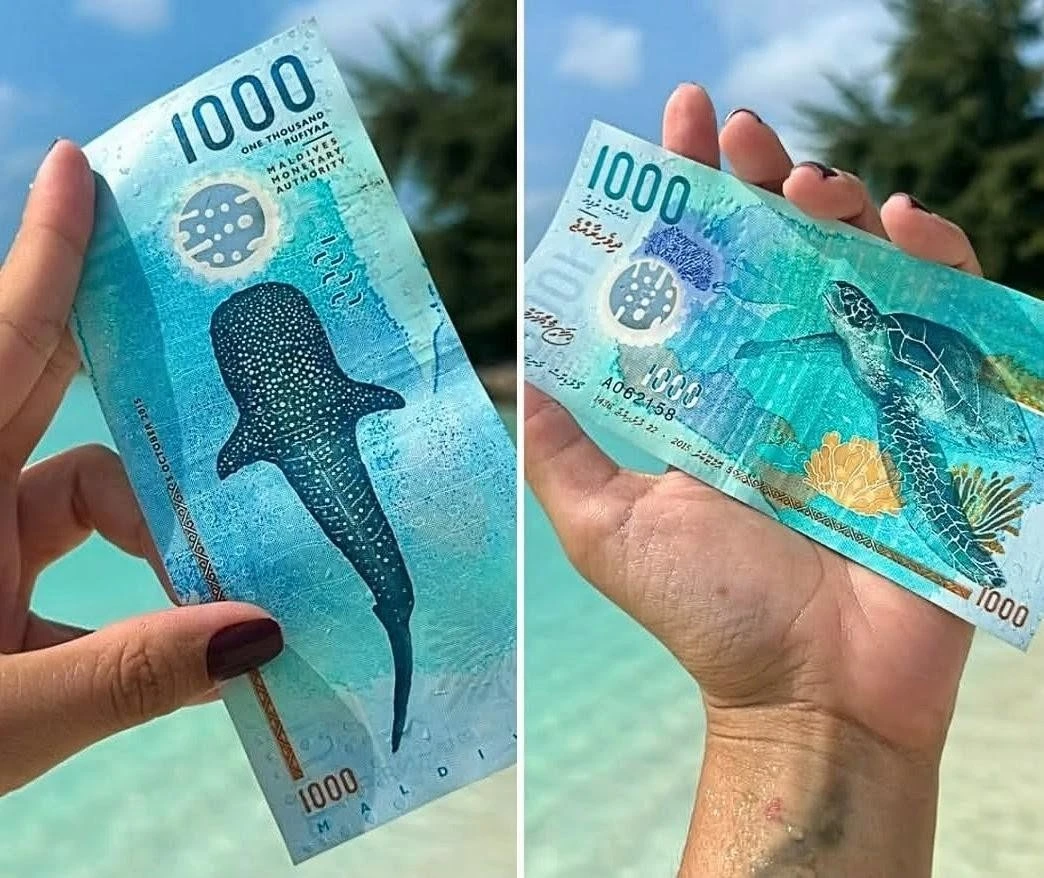
The main feature of the banknote is that it does not feature portraits of politicians. Instead, it is dedicated to the underwater world of the Maldives. The front (vertical) side is dedicated to the whale shark, the largest fish in the world. Its abstract background pattern mimics the natural pattern on the shark's skin.
The back side depicts a green sea turtle, manta rays, and coral.
8. The Blue Dragon Sea Slug (Glaucus atlanticus) doesn't produce its own venom, but steals it from jellyfish and uses it as a weapon. 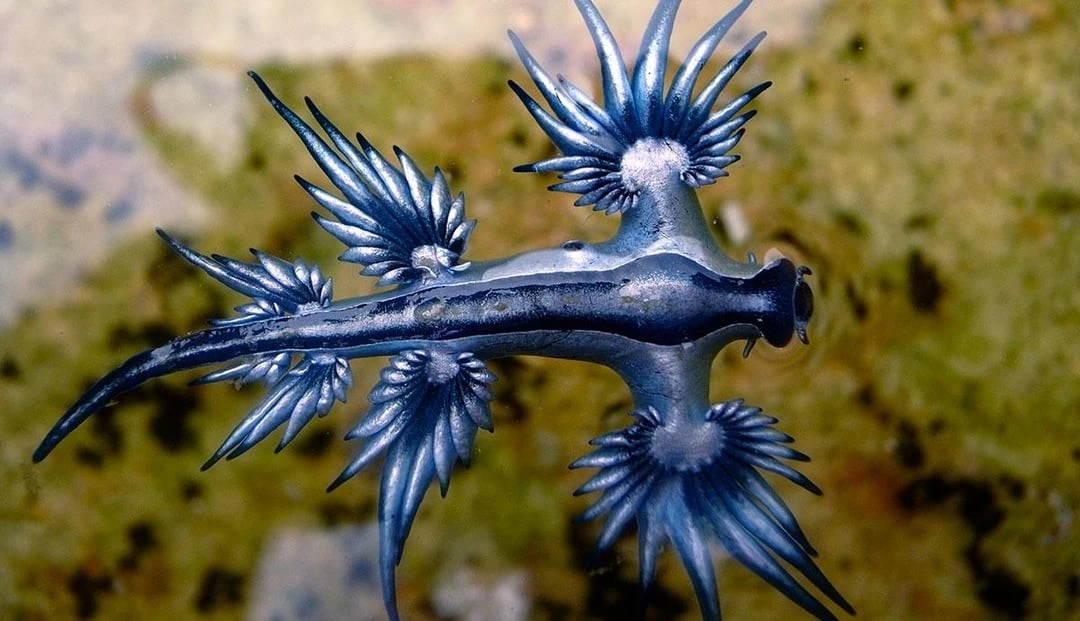
It is immune to the stinging cells (nematocysts) of jellyfish. When eating a jellyfish, the slug doesn't digest its stinging cells, but instead transports them into its lateral projections (cerata).
These cells are not only stored in its body, but also concentrated, making its sting up to three times more painful than that of the jellyfish it ate.
It floats upside down, gulping air to stay near the surface. Its bright blue coloration is camouflage from predators above and below.
9. This may look like the lost writing of an ancient civilization, but it's actually a marine mollusk called Lioconcha hieroglyphica. 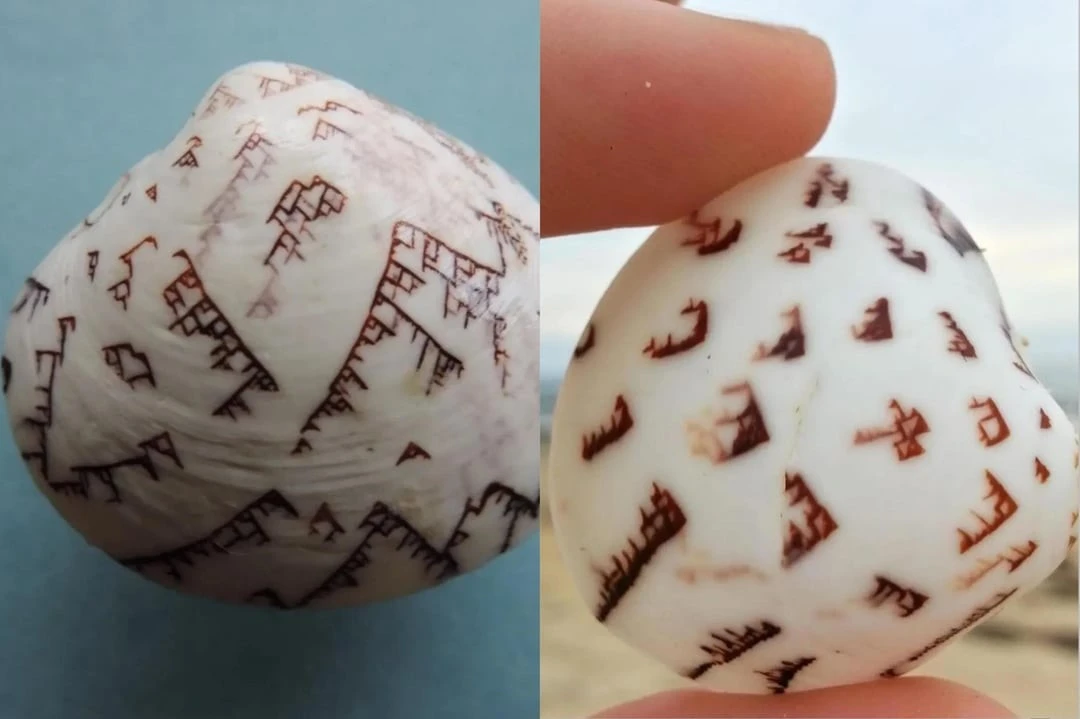
Against the creamy white background, dark brown rod-shaped and angular patterns are clearly visible, resembling cuneiform or ancient Egyptian hieroglyphs with uncanny precision.
Looking at the shell, it's impossible not to think that someone deliberately carved these designs. However, scientists believe these intricate texts are the result of a natural process. One hypothesis suggests that the pattern on this mollusk's shell can be explained by diffusion-mediated chemical cellular automata, similar to how complex patterns appear on the shells of some other mollusks (for example, cones).
10. Kailasanath Temple – a pinnacle of engineering 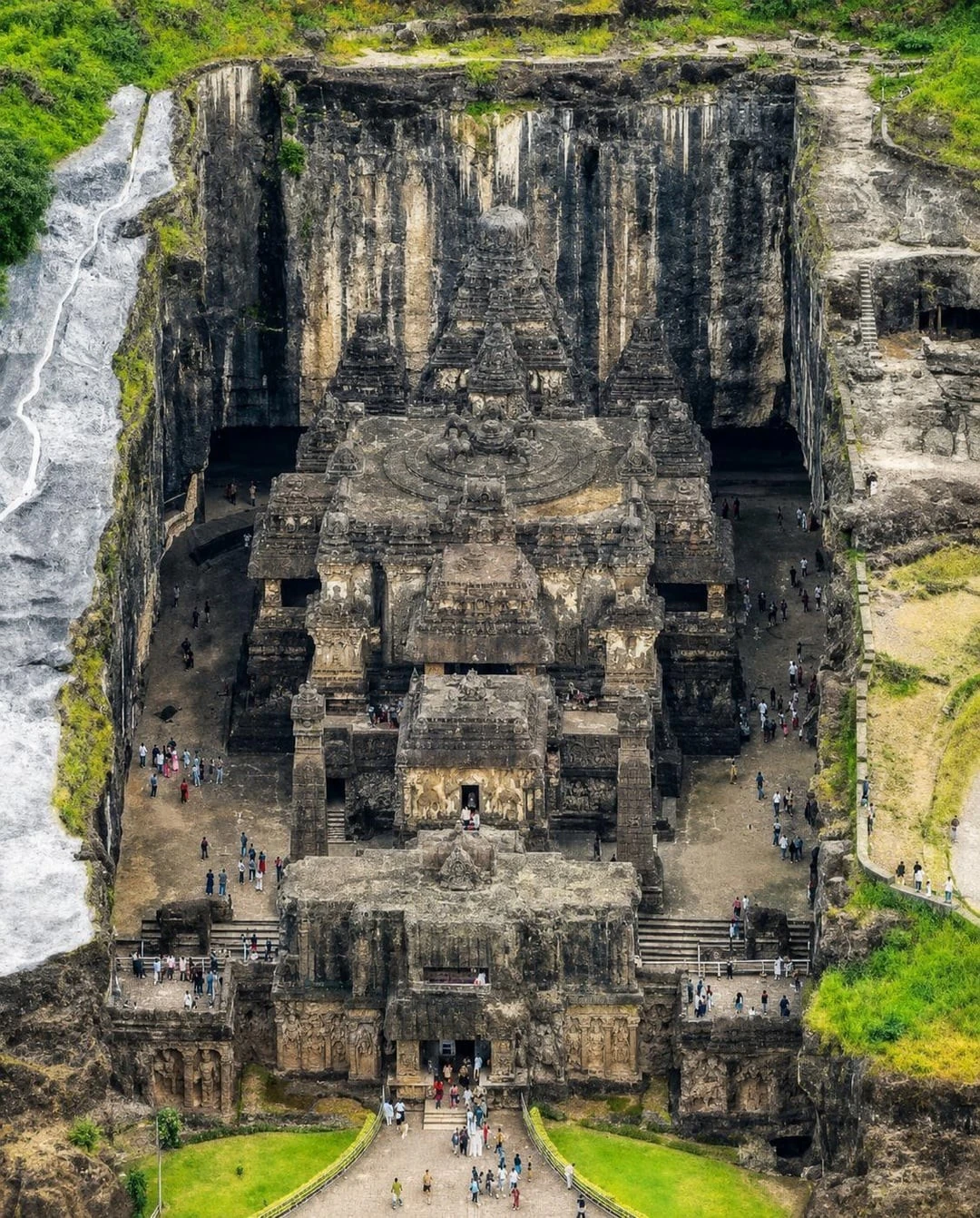
The Ellora Caves are a complex of 34 temples carved into basalt cliffs over a length of over 2 kilometers. They were built approximately from the sixth to the tenth centuries CE and belong to three religions: Buddhism, Hinduism, and Jainism. In 1983, the complex was inscribed on the UNESCO World Heritage List.
The Kailasanath Temple, built in the 8th century during the reign of Krishna I of the Rashtrakuta dynasty (c. 756–773 CE), is a true masterpiece.
Its uniqueness lies in the fact that it was carved from top to bottom from a single piece of rock, rather than constructed from blocks. To create this monolithic temple, craftsmen removed between 150,000 and 200,000 tons of basalt rock.
Add your comment
You might be interested in:












Margaret Hamilton Dies at 90: The Story of the Moon
25 Incredibly Beautiful and Rare Stones (26 Photos)

16 Fascinating and Surprising Facts About Life in Sweden

Hypnotic and Oddly Satisfying GIFs That Show How Food Is

"What Is This Thing?": 20+ Bizarre Objects That

13 "Healthy" Habits You Should Actually Quit (14

Cassini Spacecraft Reveals Saturn’s Rings (10 Photos)
How Germany Got a Mountain Made of Salt (6 photos)

30 Everyday Details That Will Change How You See the World
