Is It True That Black People Were Brought to America Because Native Americans Didn't Want to Work? (5 photos)
A real Indian only needs one thing.
And even that's not much, almost nothing.
If you're an Indian, man, you'll find something to enjoy.
A real Indian always has a good time!
Thanks to books written when Native Americans were almost extinct, and films made a good hundred years later, we have a certain inner conviction that a real Indian is an individual free from the vices of modern society. 
He doesn't seek profit or exploitation of his fellow tribesmen, nor does he accumulate unnecessary junk, but he also has no inferiority complex towards whites. He is perfectly capable of living freely and independently, without regard for kind Uncle Sam, Juan, Pierre, or Willem.
That's precisely why he categorically refuses to work for them – because of his innate pride and habit of being content with little. That's why European colonizers had to import blacks en masse to their American possessions – they were willing to toil, at least if they were watched by an overseer with a heavy stick.
Is this true or an idle stereotype? 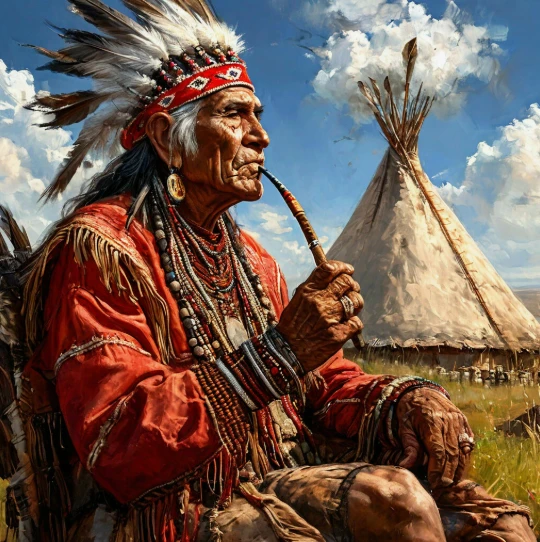
No, it's not true; no one wanted to work. This statement is partially true, but greatly simplified. By the time Europeans arrived in the Americas, only the Aztecs in Mexico, the Incas in Bolivia and Peru, and neighboring peoples similar in origin and culture were practicing agriculture.
Beyond their zone of residence began the rainforest, pampas, and prairies—that is, jungles and steppes unsuitable for agriculture at the current level of technology. Consequently, hunter-gatherer tribes unaccustomed to productive labor lived there. 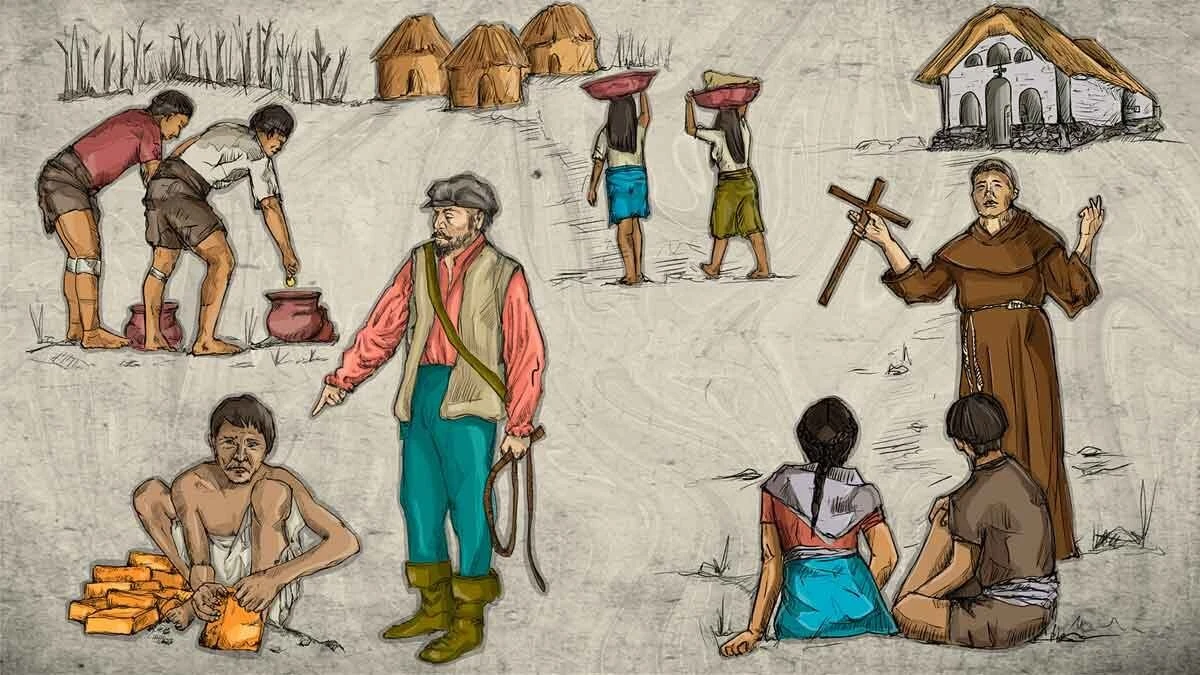
Work, Indians, work. The sun is still high!
But the "civilized" Indians knew full well what this meant. They had developed the social institutions of a nobility, a dependent peasantry, and slavery. They had the necessary culture, and there was no need to force them to work. So the Spaniards simply introduced the encomienda system: previously, the Aztecs and Incas had worked for their uncles in jaguar skins and feathers, but now they toiled for their uncles in lace and gorgueras—the name of the lush neck ornament worn by Spanish nobles.
And these Indians, characteristically, did not protest. Therefore, there was no need to bring black slaves to Central America. No, some planters did so anyway, wanting to expand their cultivated lands when the necessary human resources were not available. Nevertheless, in modern Peru, the proportion of black mulattos is 3.6%, in Mexico—2%, in Bolivia—less than 1%. By comparison, in Brazil, they make up 10%, and another 45% are of mixed race.
But in the hunter-gatherer zone, exploiting the Indians proved difficult. Immediately after landing in the Caribbean, the Spaniards attempted to use the locals as slaves. But they fled into the forests at the first opportunity, refused to work, and under physical pressure, they became apathetic and soon retreated to the lands of the eternal hunt. Consequently, peoples such as the Taino and the Caribs simply died out within one or two centuries of the conquest. 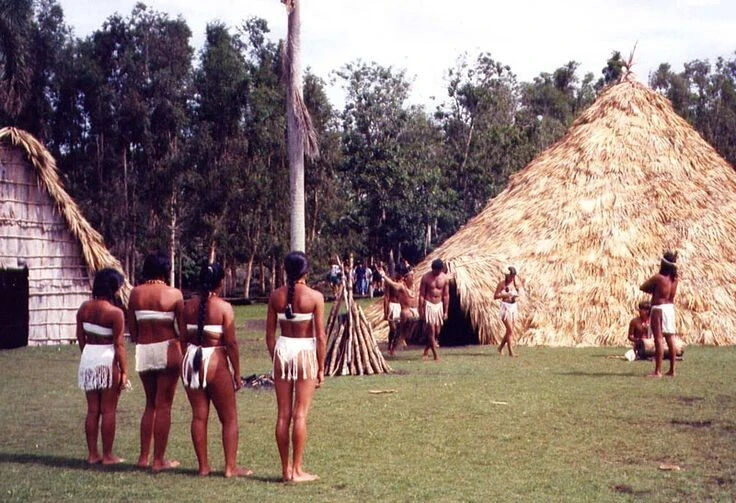
Indian Penthouse
Continental Indians from the rainforest, pampa, and prairie regions shared the same psychological ploy. No, they were resilient and extremely hardy, performing miracles of survival when necessary, courageously overcoming hardships and privations, sitting bare-bottomed in the snow (or anthill). But they refused to work for the whites.
First of all, because in their society everyone was equal. Every free member of the community lived by hunting; the concept of forced labor did not exist. Even captured prisoners of war, including whites, were accepted into the tribe as equals. Unless, of course, they were immediately sent to the Great Spirit.
Furthermore, one shouldn't consider the Indians such defenseless sheep. They fought back, sometimes successfully, waged long wars, allying with other European nations, and their excellent knowledge of the terrain prevented the colonizers from settling their issue completely.
On the other hand, East Africans, who were primarily transported to Brazil, and their fellow sufferers from the Slave Coast region, who were sent to the North American continent, were quite familiar with agriculture, slavery, and the concept of forced labor.
Moreover, they were quite resistant to Old World diseases, which sent the Indians immediately to their gods. They were also accustomed to tropical diseases and living conditions in general. They had some experience growing the crops that the Europeans intended to promote.
However, for people thousands of kilometers from familiar places, the wild flora and fauna were practically unrecognizable. They had nowhere and no one to escape to, since the only people who spoke a familiar language were other slaves and slave traders.
However, true blacks showed that they were no more willing to work than true Indians once they had settled in. In South America, runaway male slaves united with local tribes, achieving relative economic prosperity through their agricultural and ironworking skills.
They maintained their independence for centuries, avoiding the colonial powers and drawing little attention to themselves. The most famous are the so-called "forest negroes," living in the remote areas of French Guiana and Suriname. But there were many similar, less successful communities in Brazil as well. 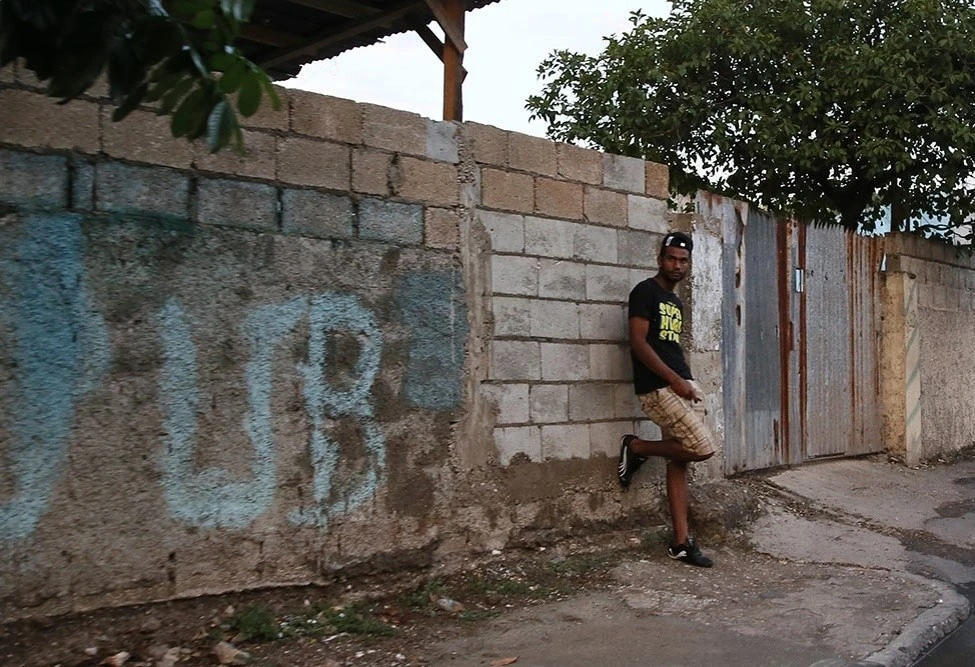
Standing by the wall is a popular Jamaican pastime. Seriously.
When Africans were transported to America, the most resilient were traditionally left behind in Jamaica. Many immediately fled into the forests, while others rebelled, attracting Europeans to their side. As a result, the locals were among the first to achieve the abolition of slavery, and began to do what they did best - nothing.