GM and Goodyear to Develop an Electric Car for Travel on the Moon (3 photos)
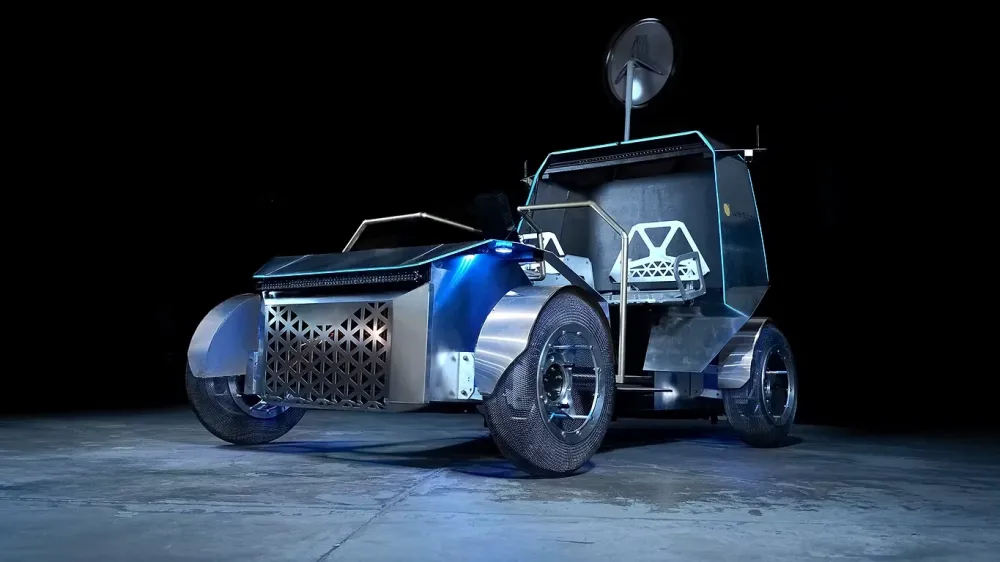
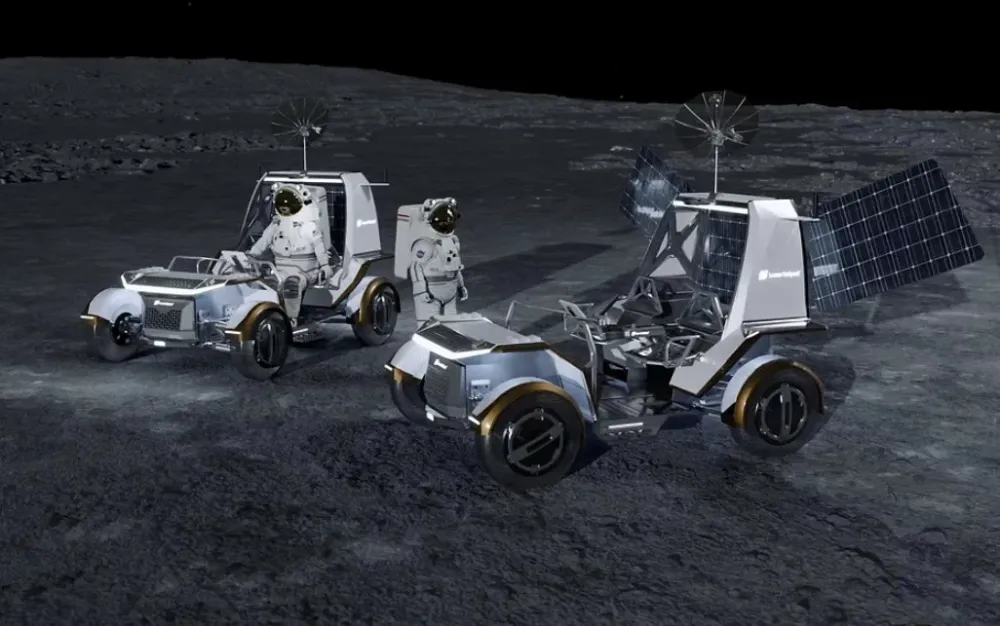
Lunar Outpost, a startup founded in 2024 with the participation of GM and Goodyear, has become part of NASA's Artemis IV lunar mission. Images of the Pegasus electric vehicle, which the startup is expected to develop and build in approximately eighteen months, have been released. However, it differs significantly from the design Lunar Outpost originally submitted to the Lunar Terrain Vehicle (LTV) competition. 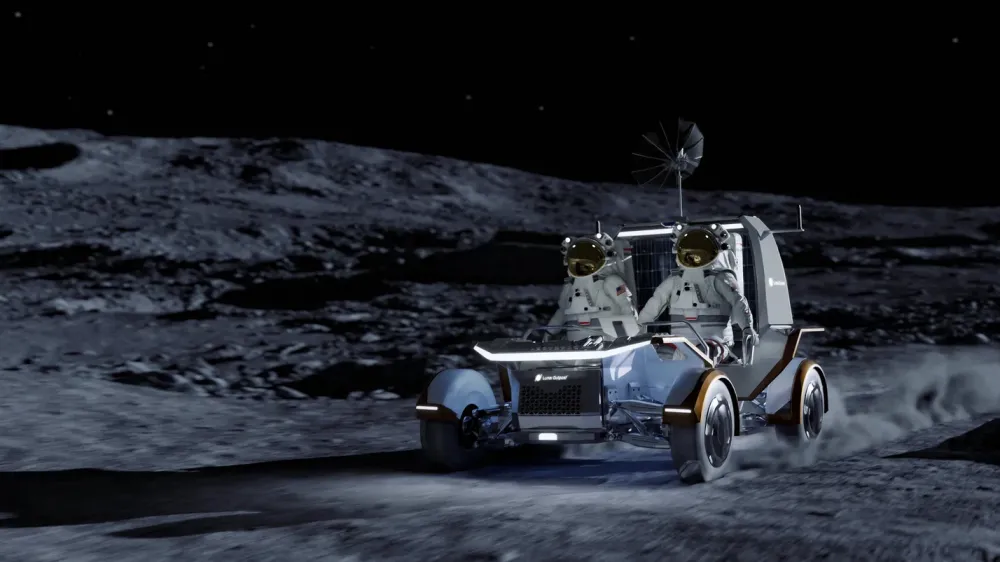
The first lunar rover design, nicknamed Lunar Dawn or Eagle, looked like a futuristic pickup truck with a robotic arm mounted on its platform. Pegasus is significantly more compact. Judging from preliminary images, it is primarily designed to carry two astronauts, although the rover was initially designed to carry a payload of up to 500 kilograms.
It is expected that the technologies planned for Eagle will be almost entirely applied to Pegasus. This means that GM will remain the supplier of all power electronics, which, in turn, will be built on the Ultium platform for mass-produced electric vehicles. Pegasus is expected to have four motors, one for each wheel, and will be able to travel up to 900 kilometers on the Moon on a single charge. However, the rover's maximum speed will be only 14 km/h.
It is also known that the electric vehicle will be able to travel unmanned, controlled electronically or remotely. NASA and Lunar Outpost will likely eventually establish relatively large-scale production of such rovers as part of a large-scale lunar exploration program. The Eagle project also remains a potential future project.